Nothing but Questions for Surgery-Bound Pacquaio After Mayweather Fight
Things have gone from bad to worse for Manny Pacquiao.
The Filipino legend dropped a decisive unanimous decision against longtime rival Floyd Mayweather Jr. on Saturday night in Las Vegas, and he received a substantial amount of criticism post-fight for pointing to a bum shoulder as the reason.
Turns out he wasn't kidding.
TOP NEWS
Emanuel Navarrete vs. O'Shaquie Foster

J-Dub Suffers Gruesome Injury
.jpg?w=2560 "Rams Raiders Football")
Raiders Could Start Mendoza
ESPN.com's Dan Rafael reported Monday night that Pacquiao will be forced to undergo right shoulder surgery to repair a "significant tear" in his rotator cuff.
The news comes from world-renowned orthopedic surgeon Dr. Neal ElAttrache, who has worked on some of American sports' elite, including Kobe Bryant and Tom Brady.
Pacquiao is expected to be out of commission for somewhere between nine and 12 months, and now, suddenly, we have a whole slew of new questions that need to be asked and answered.
Does this call Saturday's result into question? Will the public now demand a rematch? And how will this impact Pacquiao's career and legacy moving forward?
At the post-fight press conference Saturday night, virtually all you heard from members of Pacquiao's team, which included the fighter, his trainer Freddie Roach and promoter Bob Arum, was that a shoulder injury had limited Pac-Man's ability to adequately train and fight.
They claimed the injury happened while sparring about two weeks before the fight, forcing them to consider a postponement, but that they hoped an injection to the area would alleviate the pain and allow their fighter to press on.
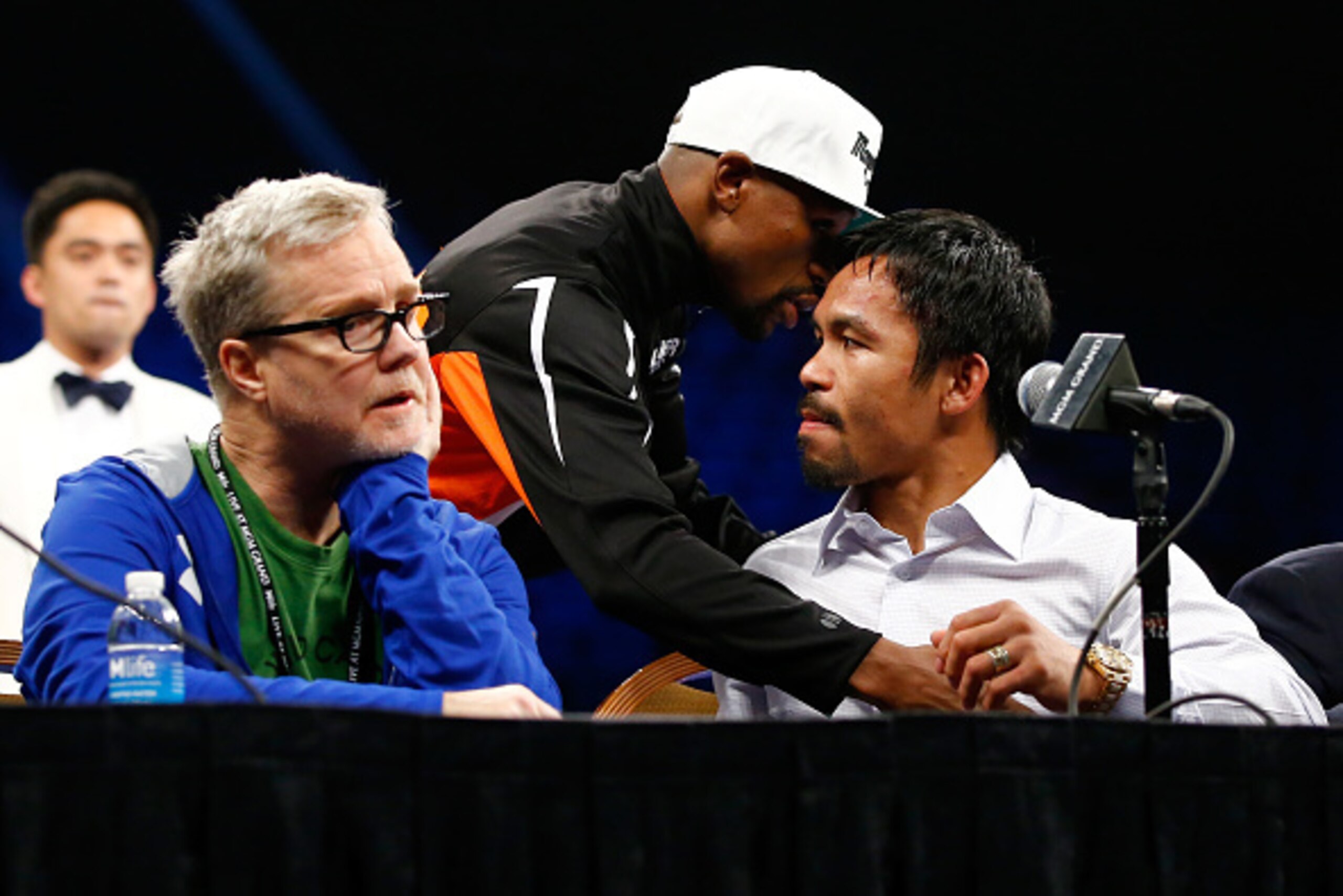
Lance Pugmire of the Los Angeles Times reported that the Nevada State Athletic Commission denied the request for the injection on fight night due to a miscommunication between the fighter's team, the United States Anti-Doping Agency (USADA) and the commission.
NSAC chairman Francisco Aguilar stated that the denial had to do with the commission being uninformed of a shoulder injury until fight night, and had the information come sooner, the decision may have been different.
Sean Wagner-McGough of CBS Sports reported that Pacquiao underwent an MRI on the shoulder soon after the injury, which revealed a tear.
We now know that the tear is significant enough to require surgery with an extended recovery time, and that means Pacquiao's contentions that he was limited in training and in the ring do hold some water.
Enough water to call the result into question?
No.
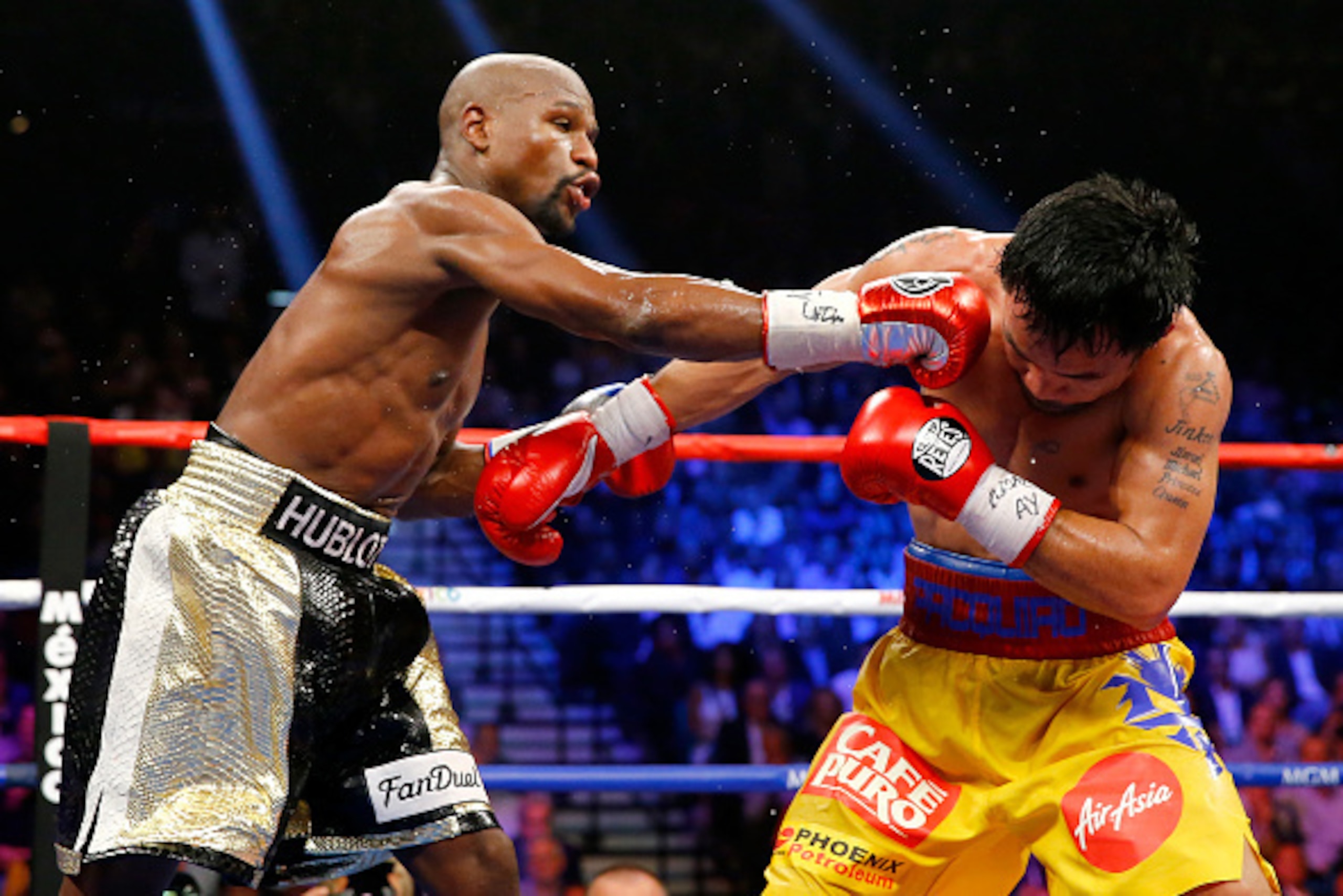
While it's true that fighting a guy as good as Mayweather with two arms is hard enough and doing it with one is a virtual impossibility, it's still extraordinarily hard to see how Pacquiao would have been able to find his way much closer than the 118-110 and two 116-112 scorecards that were read after 12 rounds.
Mayweather's technical savvy, defensive acumen and sheer control of time and space in the ring were the stories. It was about what he was able to do and not what Pacquiao couldn't.
So let's get ahead of this right here and now and say that anyone who opens their Twitter feed, sees this story and says to the guy next to him that Mayweather's win is somehow tarnished is wrong.
Pacquiao and his team knew of the injury. They knew it was severe and limiting training, and they had the option of postponing.
Every major championship in the history of sports was impacted by some injury or another, and nobody is rushing to take those trophies back.
Will it lead the public to demand another Super Bowl of boxing?
Highly unlikely.
There's already enough of a hangover effect from the public forking over $100 to catch what turned out to be a pretty pedestrian "Fight of the Century" on pay-per-view.
Know what's not going to help?
Mainstream attention to the fact that one of the combatants in the seven-years-in-the-making superfight entered the ring with damaged goods.
That's not a good selling point for why people should shell out more cash to see a fight that likely wouldn't be significantly different from the one they already saw and didn't particularly like too much.
Veteran boxing scribe Kevin Iole of Yahoo Sports already pondered whether there could be any legal ramifications over the hugely inflated prices people paid for PPV, tickets, hotel rooms and flights, given the injury and the public's justifiable right to feel they didn't get what they paid for or were promised.
Besides, Mayweather has gone to great lengths, even as recently as after the fight Saturday, to re-emphasize that he's done with the sport of boxing—at least as a fighter—following the final fight of his Showtime contract in September.
And Arum, in comments to David Mayo of MLive.com, already said that a September date for a rematch would be impossible, even before we knew the full extent of the injury.
An optimistic timetable for Pacquiao's return would be late winter/early spring 2016, and by then, the pound-for-pound king should be off enjoying the spoils of his 49-0 career and the hundreds of millions of dollars it earned him.
Will some in the public demand a rematch?
Sure, but that's going to be more of the see-what-you-want-to-see crowd who will use this as a method of pressing forward with the delusion that Mayweather isn't a better fighter than Pacquiao.
In fact, it's probably more likely that we've seen the end of Pacquiao as a professional prize fighter than it is we'll ever see him walk into the ring for a second bite of the hundred-million-dollar apple that is Mayweather.
And maybe that's the best possible outcome here.
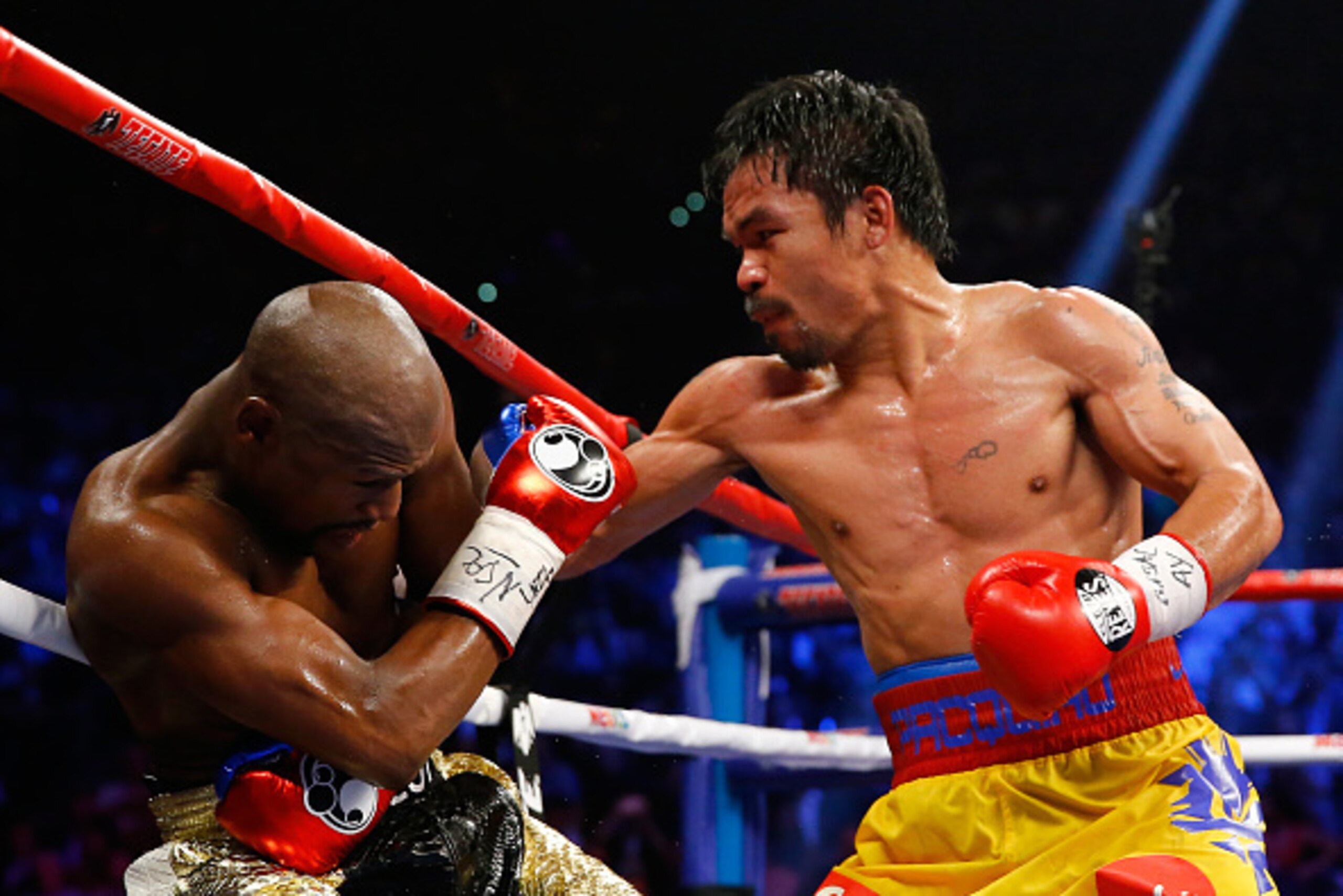
It gives the loyal fans who don't want to accept the outcome of Saturday's fight the ammunition they need to question—and possibly even put an asterisk next to—the result, and it gives Pacquiao some time to really ponder what's next.
It lowers the bar of expectations, should he come back, but will he really want that?
Pacquiao will be 37 years old in December.
He has plenty to keep himself occupied in the Philippines, where he's a congressman and also coaches/plays basketball, and he'll be coming off major surgery and major rehabilitation.
All that combined with Saturday's career-high payday might be enough to force the icon's hand into the greener pastures of something other than boxing for a living.
And that might just be what's best.
Too many great ones hung on for too long.
Pacquiao, even with his loss to his biggest rival, still presents a formidable legacy that will one day put his picture on a plaque at the International Boxing Hall of Fame in Canastota, New York.
For a boxer who won world championships in eight weight divisions—the only such champion in boxing history—10 world titles and four lineal championships and was awarded Fighter of the Decade honors by the Boxing Writers Association of America for the 2000s, there's only one question to ask:
What's there left to prove?
You can follow Kevin McRae on Twitter @McRaeBoxing

.jpg?w=2560 "Steelers Saints Football")

.jpg?w=2560 "Packers Safety Slams Refs 🤬")
.jpg?w=2560 "🚨 Week 8 AP Top 25 Poll")