West Indies Series Provides More Questions Than Answers for England
England came to the West Indies for a three-match Test series looking for answers. Instead, they have left with a 1-1 draw and yet more difficult questions.
The hope was that the three matches would be the perfect way for a struggling side to refind some form. The players and management had the opportunity to put a dreadful World Cup behind them and begin the summer with a confidence boost.
Prior to the series, the incoming ECB chairman Colin Graves was unequivocal about his expectations. He described the West Indies as “mediocre” and said there would be “some enquiries” if England were not to win the series, per BBC Radio Leeds.

.jpg?w=2560 "Rams Raiders Football")

Well, England have not won the series. Encouraging performances have been balanced out by questionable player selection, batting collapses and a spin bowling weakness.
Centuries for Ian Bell, Joe Root, Gary Ballance and Alastair Cook and isolated bursts of old from James Anderson and Stuart Broad offered hope. But Jonathan Trott’s prolonged difficulties, England’s 123 all out in Bridgetown and Moeen Ali’s erratic bowling with Adil Rashid sitting in the stands have left a draw feeling like a loss.
Over the past few years, we have become used to attributing blame in the wake of continual disappointment. So, where will these enquires begin?
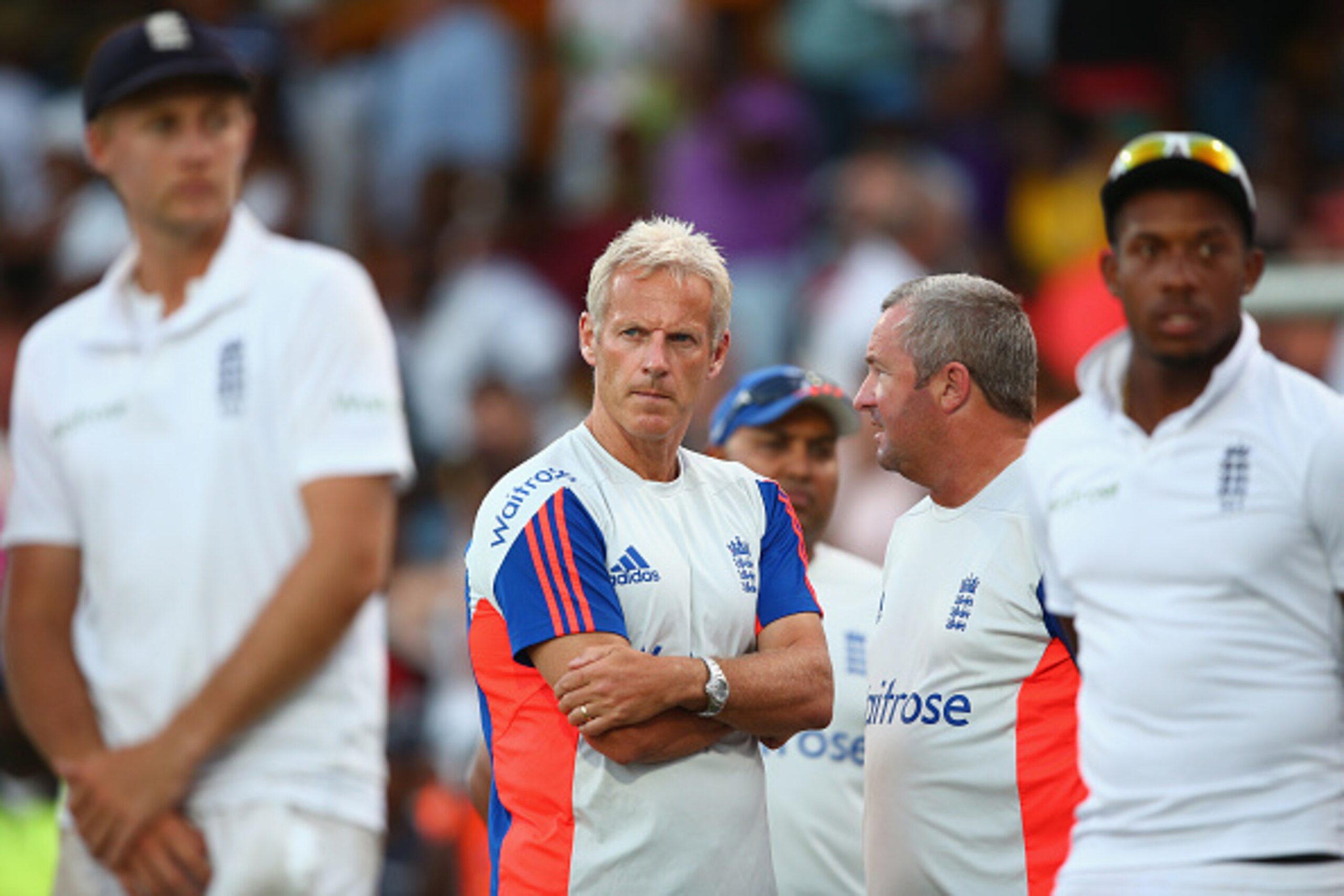
Coach Peter Moores is undoubtedly under increasing pressure. He has only been in charge for a year, but there have already been considerably more downs than ups in his tenure.
Conservatism is a trait often pinned to the former Lancashire coach. In this series, his reluctance to replace Trott with Adam Lyth and give Rashid a chance are particular blots in his copybook.
However, the real failure—the one that lost the final Test match and ensured a series draw—falls at the feet of the batting lineup. Only three players made it into double figures in the second innings in Barbados, leaving a meagre target for the bowlers to defend.
Overall, four of the top five batsmen made centuries in the series, but still there is a sense of missed opportunity and uncertainty surrounding the batting. The components seem to be in place, but the same obstacles are continually being tripped over.
The tried and tested mix of youth and experience seems sensible, yet England are still a long way from attaining a steadfast, settled group. Consistency seems a long way off.
Bell scored a magnificent 143 in Antigua, but followed up one of his greatest-ever innings with just 12 more runs in five innings—including no runs from 20 balls in Barbados.

It was a similar story with the senior bowlers. Both Anderson and Broad produced excellent stand-alone spells of bowling, but without the assurance of high-quality support it was never sustained. Chris Jordan and Ben Stokes appear promising bowlers, but they managed just nine wickets between them across the whole series.
Spin bowling has been a problem for England since Graeme Swann retired in 2013. Moeen, alongside Root, has been entrusted with taking up the mantle. But on a fourth-innings pitch, neither have the consistency nor skill required to take the wickets required, and previously expected, to win games. Rashid could yet provide a solution, but much like the entire situation his team find themselves in, he is far from a quick fix.
England flew to the Caribbean looking for answers. Although they have not found them, the posing of further questions is more welcome now than it would be in a few months’ time.
A new setup is emerging. Graves is set to start work as chairman in two weeks’ time and Andrew Strauss is expected to become the new director of English cricket, per BBC Sport.
They will have their work cut out if England are going to find the answers required to prosper against New Zealand and regain the all-important Ashes.
.jpg?w=2560 "Steelers Saints Football")

.jpg?w=2560 "Packers Safety Slams Refs 🤬")

.jpg?w=2560 "🚨 Week 8 AP Top 25 Poll")