

NFL Draft 2015: The Worst Picks of the Year
The only truly bad picks in the NFL draft are the ones that don't work out, but it will be years before we can definitely determine the successes and failures of the 2015 draft class. We just don't have that kind of time.
If you just focus on the players, we all know anything can happen. Highly touted guys will turn out to be busts, while panned picks will be great and some guy no draftnik liked will end up being a solid starter.
It happens every year.
Russell Wilson happens. Antonio Brown happens. At least a third of the first round will probably end up being busts. According to ESPN's Field Yates, 20 of the 44 starters in Super Bowl 49 were drafted in the fourth round or later.
The worst picks of the year, in reality, aren't about the players selected, they are about the process. The team may have actually selected a good player, so the fans can feel good about that, but a bad pick means it wasn't the best possible pick for that team.
Of course, it's all also just one man's opinion, so have fun in the comments section.
Washington Redskins, Brandon Scherff, OL, Iowa at No. 5 Overall
1 of 8
Brandon Scherff was overwhelmingly considered to be the best offensive guard in the entire draft. Only one problem: The Washington Redskins selected him at No. 5 overall. They also passed on USC defensive lineman Leonard Williams and Clemson pass-rusher Vic Beasley in the process.
Scherff will also play right tackle, according to head coach Jay Gruden, via Mike Jones of the The Washington Post. That makes sense because no pure guard has been selected in the first five picks of the NFL draft since 1985. If Pro-Football-Reference is correct, only four have ever gone that high, although Leonard Davis in 2001 may also qualify and there are probably others.
If Scherff doesn't work out as a tackle, the Redskins got horrible value with a guard in the top five. Even if Scherff is an awesome guard, he'd still be a guard.
If he pans out at right tackle, it's a little better, but the precedent is still shaky. The most recent tackles to go in the first five picks are Greg Robinson, Eric Fisher, Luke Joeckel, Lane Johnson, Matt Kalil, Trent Williams, Jason Smith, Jake Long, Joe Thomas and Levi Brown.
The jury is still out on Robinson, but he didn't start as a rookie. Fisher and Joeckel enter make-or-break seasons as left tackles. Kalil isn't a very good left tackle, Smith and Brown are out of the league, Long is a free agent, and Thomas remains one of the best left tackles in the NFL.
That leaves Lane Johnson as the sole right tackle on the list. Unless Washington thinks it is way ahead of the curve on the value of a good right tackle or great right guard, the value just isn't there with this pick.
You can love Scherff as a player and not like this pick. Unless Scherff becomes Joe Thomas, it's hard to really love it, and it's easy to dislike, because the notion that offensive linemen are safe picks has pretty much been obliterated in recent years.
New York Giants, Ereck Flowers, OL, Miami at No. 9 Overall
2 of 8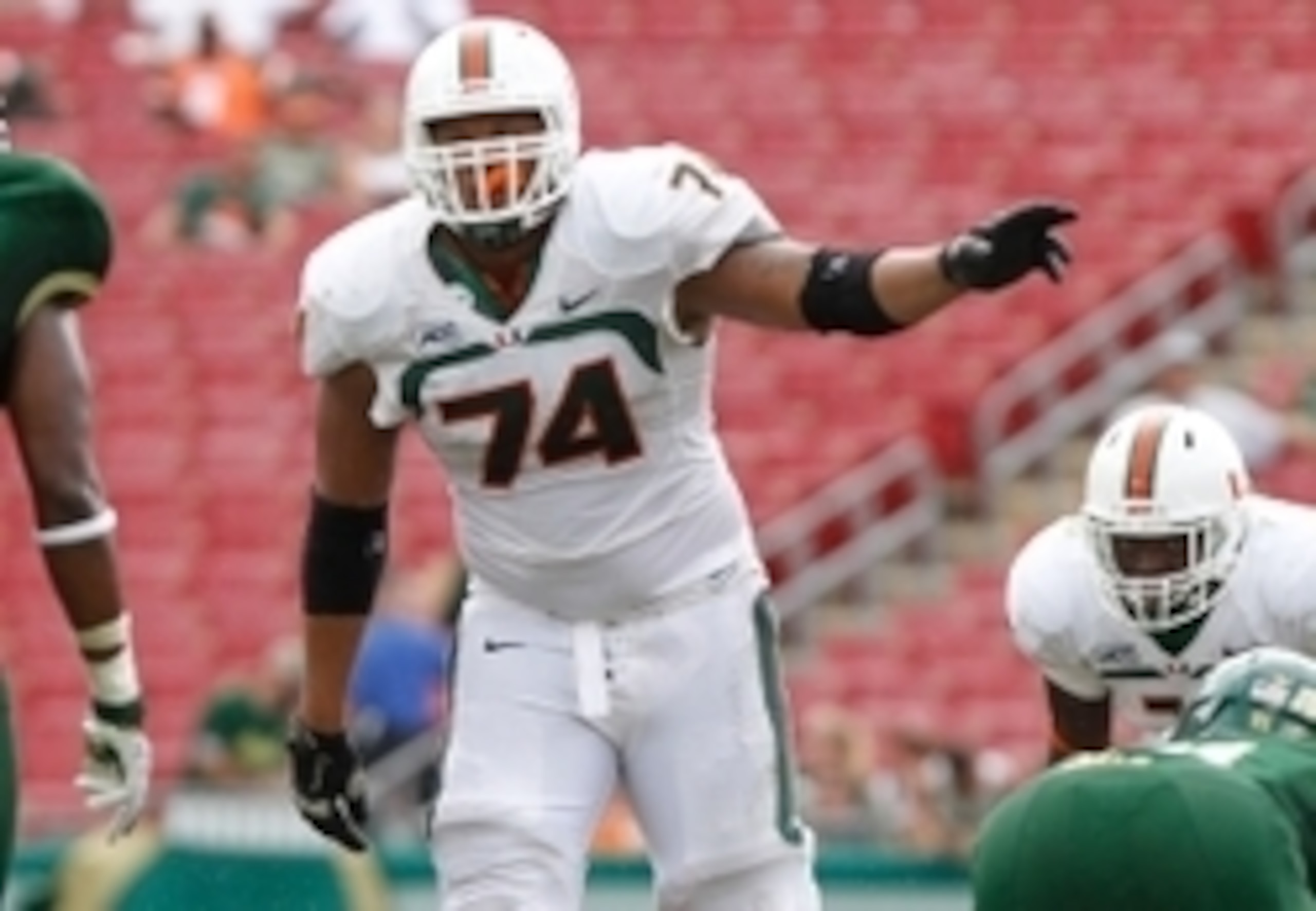
What's worse than selecting an offensive guard in the top five? Selecting the next best one in the top 10. Like Washington, the New York Giants said Ereck Flowers will play tackle as he did in college, according to Bill Pennington of The New York Times.
Not only did the Giants seem to reach for a need in the top 10, but they pretty much have to play Flowers at tackle to justify the pick. It's no secret the Giants wanted Scherff, but the board fell in such a way that they didn't get Williams, Beasley or either of the two top wide receivers in Amari Cooper and Kevin White.
It was a perfect opportunity to roll the dice on a top talent like running back Todd Gurley, who could have helped quarterback Eli Manning just as much as Flowers. While Flowers has potential as a tackle, he'll need to be a good one on the left side to make this pick worth it in hindsight.
San Francisco 49ers, Arik Armstead, DL, Oregon at No. 17 Overall
3 of 8
So Justin Smith's retirement must have sent the San Francisco 49ers into a panic. Oregon's Arik Armstead is clearly a good fit to be Smith's replacement, but right now, he's pretty much just an athlete with upside. Smith was one of the more polished 3-4 defensive ends in the entire league.
Armstead has star potential, but it sure seems like the 49ers caved to need with their first-round pick. Armstead is going to need development, so the 49ers may not be getting an immediate replacement for Smith either, which sort of negates the point.
After the retirements of Patrick Willis and Chris Borland, inside linebacker would have been a better need pick. At No. 17 overall, the 49ers would have had their pick of them. They could have also gone with an outside linebacker like Bud Dupree as they did in the third round with Eli Harold.
There were also tons of other 3-4 ends available later, including Stanford's Henry Anderson, who plays with much better technique than Armstead and can probably make an immediate impact. His upside isn't as high, but the 49ers could have got him in the third round.
Not only did the 49ers appear to reach for need, they went with a high upside player with significant risk. It's the type of pick that could be held against a general manager if the team doesn't perform after jettisoning a great coach like Jim Harbaugh.
.jpg?w=2560 "Rams Raiders Football")

.jpg?w=2560 "Steelers Saints Football")
Carolina Panthers, Shaq Thompson, LB/S, Washington at No. 25 Overall
4 of 8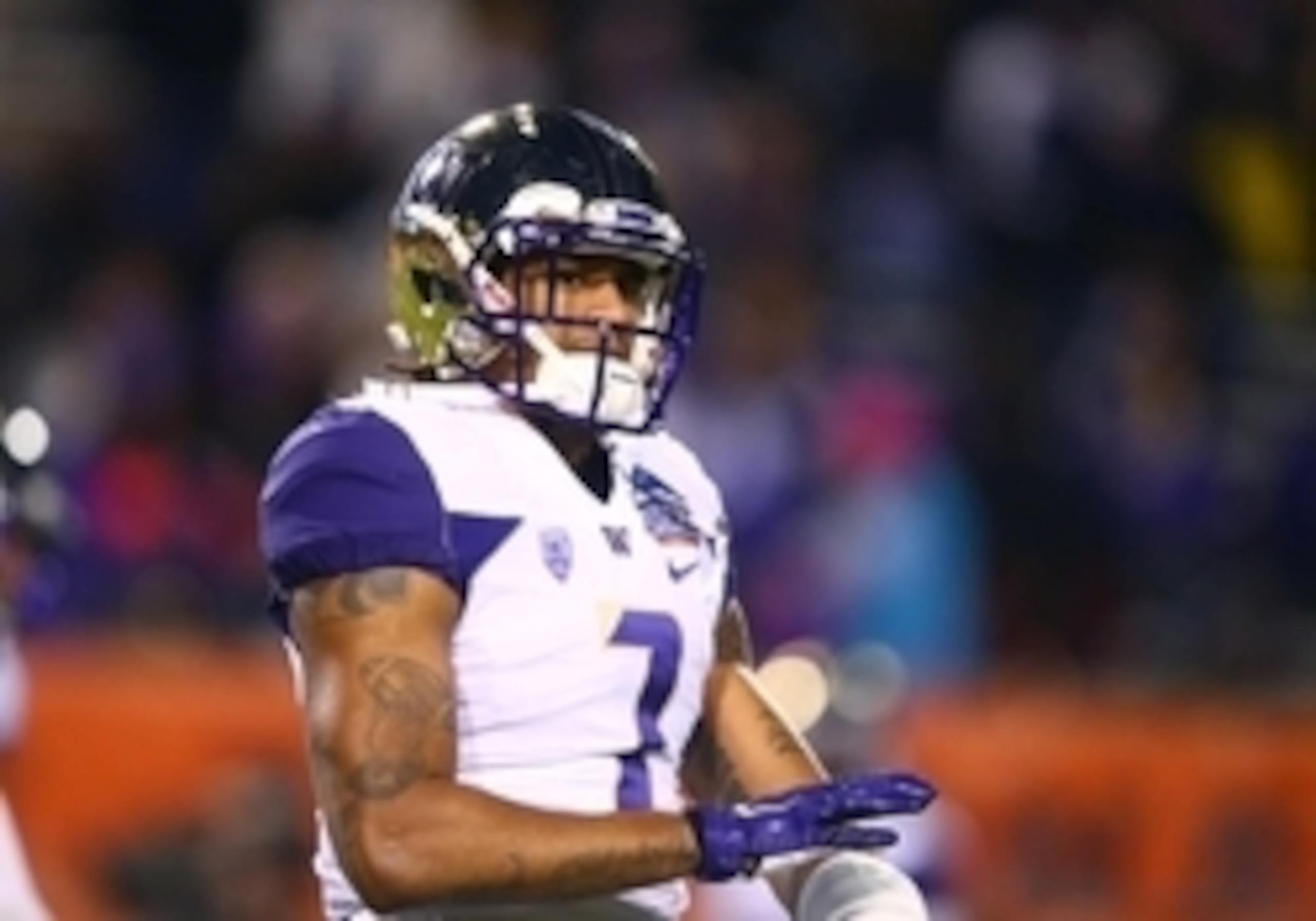
There are few bigger fans of Shaq Thompson than the schmuck writing this slideshow. That's part of why it was disappointing to see Thompson go to the Carolina Panthers in the first round.
By going so early, the Panthers will expect Thompson to be a three-down linebacker right away. He's certainly talented enough to be a good weak-side linebacker, but he needs a lot of work. He played safety, linebacker and running back in college and needs time to refine his game at one position.
"He's like any young kid," Panthers general manager Dave Gettleman said, per Jonathan Jones of The Charlotte Observer. "He's got to learn to play the pro game. They bounced him around a lot. He's got to get better at a lot of things, but he's capable of doing it all and he's really talented."
You have to give the Panthers credit here for sticking to their board, but drafting a big project like Thompson just didn't seem like the way to go. Offensive line and another offensive weapon for quarterback Cam Newton would have been considered bigger needs, which they ended up addressing with their next two picks.
After ignoring the offensive line early, the Panthers gave up their fifth-round pick and a seventh-round pick to move up to the top of the fourth round to get offensive guard Daryl Williams. If the Panthers don't hit on Thompson and wide receiver/tight end Devin Funchess, they might not have much to show from this draft even as far as adding players for depth.
It also seems like UCLA's Eric Kendricks would have been a better pick for the position. He's a little bigger, he's more experienced, and he's much better shifting through contact to make plays. Kendricks is very good in coverage, so it's not like Thompson gives a team something the UCLA linebacker doesn't. Athletically, they tested out about the same.
Thompson will have to mature quickly in head coach Ron Rivera's defense next to Luke Kuechly and Thomas Davis. He'll also have to perform better than the other linebackers drafted in the round or so directly after him, which could be tough to do considering he's still raw.
Oakland Raiders, Mario Edwards Jr, DL, Florida State at No. 35 Overall
5 of 8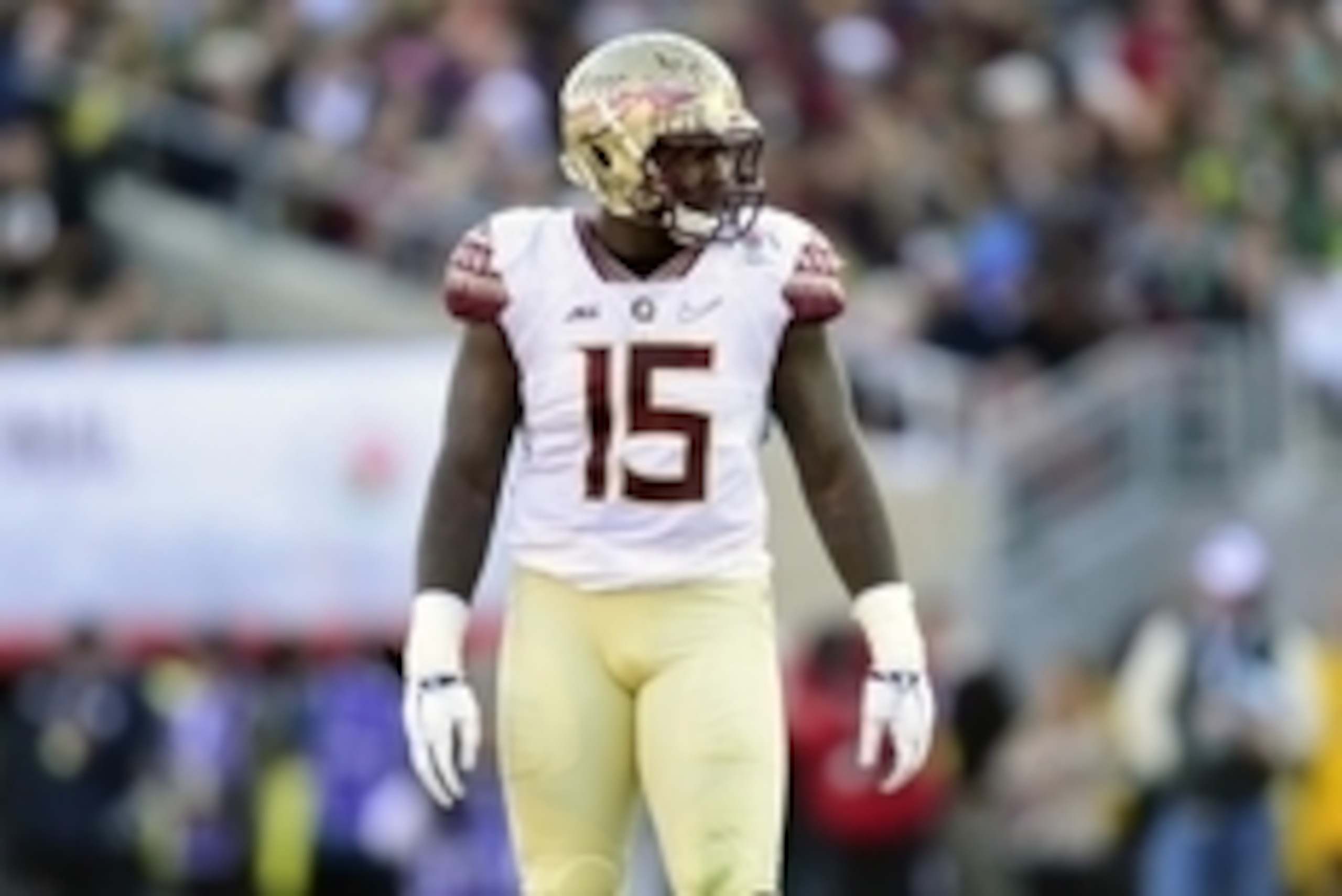
The Raiders needed a pass-rusher, so they drafted Mario Edwards Jr. with the 35th overall pick. That's right, they drafted a guy with a total of eight sacks in three years at Florida State over Mississippi State's Preston Smith, who had nine last year alone.
That's Edwards' eight sacks in the ACC versus Smith's 27 career sacks in the SEC. Even at his best, Edwards probably isn't going to become a 10-sack guy for the Raiders. Athletically, he's far too stiff to be a threat for any more than that.
Edwards also had weight issues throughout his career at Florida State, playing defensive tackle when he was over 300 pounds and defensive end when he was around 280 pounds. The Raiders will ask him to play defensive end around 280 pounds, but there's no way to know if he can stay motivated enough to keep the weight off.
The Raiders hope he can, but it's simply that—hope. It's up to Edwards to stay lean and develop his talent.
It's not hard to see what happened here, as the Raiders' new linebackers coach Sal Sunseri coached Edwards at Florida State for two years. It's called the familiarity effect, and the Raiders fell victim to it with this pick.
The Raiders got more information than other teams on Edwards thanks to Sunseri, which made their confidence in him grow, but not the accuracy of their evaluation. More information is not always better. The Raiders were more confident in their evaluation of Edwards than other players, so they bumped up his grade—subconsciously or not.
Edwards could become a heck of a player for the Raiders. But the process makes this a bad pick. The Raiders have been scouting players for a year and they let whatever insight they got from Sunseri, who was hired a couple months ago, steer their thinking to Edwards. Maybe it was by happenstance, but that's pretty hard to believe.
New Orleans Saints, Garrett Grayson, QB, Colorado St at No. 75 Overall
6 of 8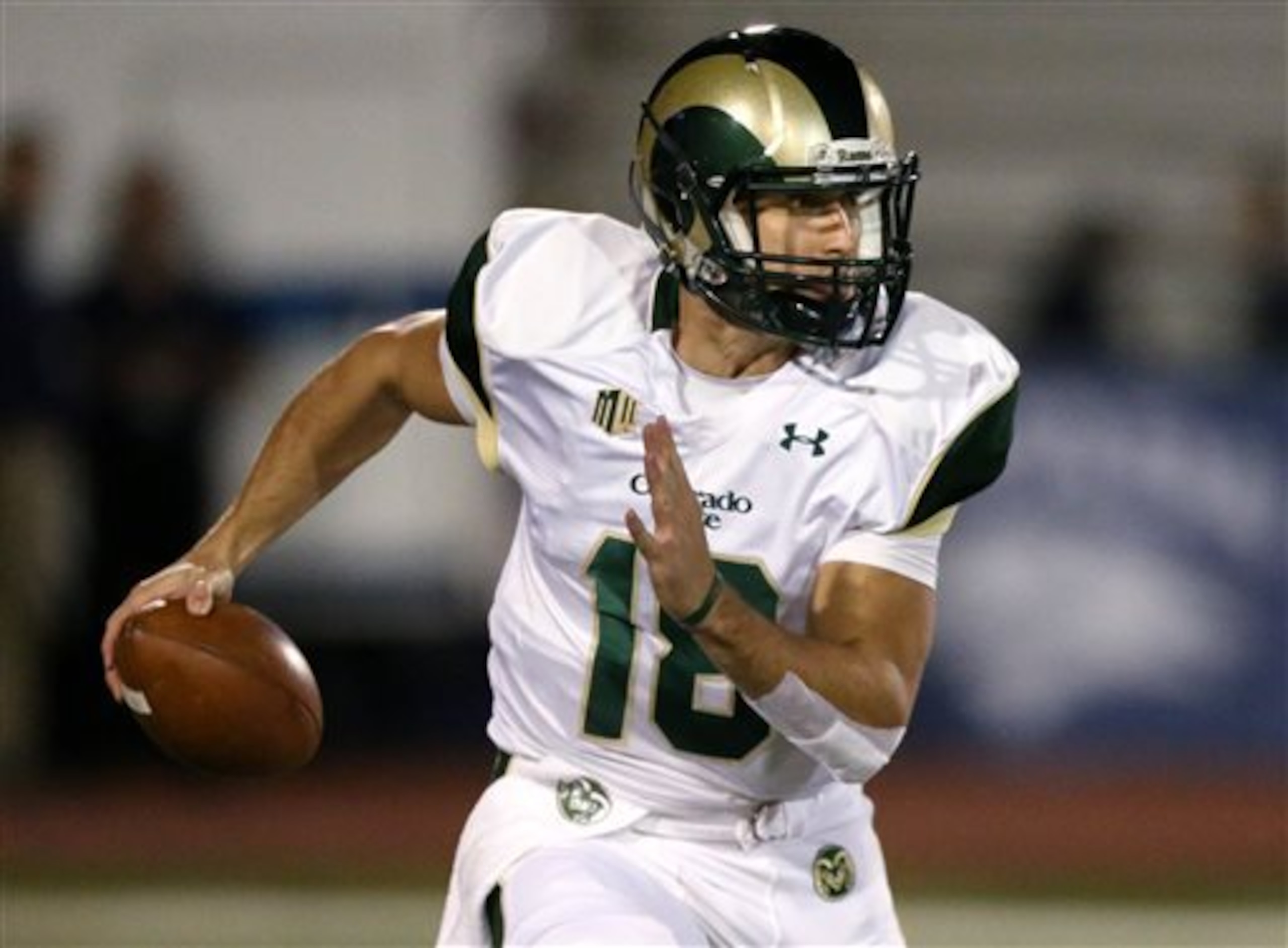
Top 100 picks on non-playoff teams should be able to contribute right away and become a starter in a year or two. Drafting a backup for quarterback Drew Brees with the No. 75 overall pick seems like a waste.
Brees has two years left on his contract, which means that the earliest Grayson could take over, if he's good enough to do so, would be 2017. That's assuming Brees isn't still one of the best quarterbacks in the league, in which case the Saints would be crazy to move on from him unless Grayson is the second coming of Aaron Rodgers.
There's a lot to like about Grayson as a quarterback prospect, but the Saints are making a long-term investment on him in hopes that he's the starter of the future. If history is our guide, he probably isn't going to be a good starter.
Aside from Russell Wilson of the Seahawks, the best quarterbacks to be drafted in the third round over the past decade are guys like Nick Foles, Trent Edwards, Mike Glennon, Ryan Mallett, Colt McCoy and Charlie Frye. There are a few who were drafted even later who fall into the same category.
"Garrett Grayson from Colorado State is my third quarterback, but in saying that, I wouldn't be all that fired up about taking him in the third round," NFL Network's Daniel Jeremiah said, via Bryan Fischer of NFL.com. "I wouldn't even be fired up taking him in the fourth. If you need a quarterback, I wouldn't take one before Round 5."
The Saints probably felt they had to take Grayson in the third round. They probably did, but it doesn't make it a good decision. The Saints could have drafted a wide receiver like Chris Conley or Sammie Coates to give Brees even more weapons instead of a player who will be nothing more than a backup for the next two seasons.
Instead of trying to maximize the last few years of Brees, the Saints seem hellbent on having his replacement. Except they didn't go get a premium prospect, which means they aren't really ready for life without Brees, they just want to dip their toe into the deep end.
St. Louis Rams, Sean Mannion, QB, Oregon State at No. 89 Overall
7 of 8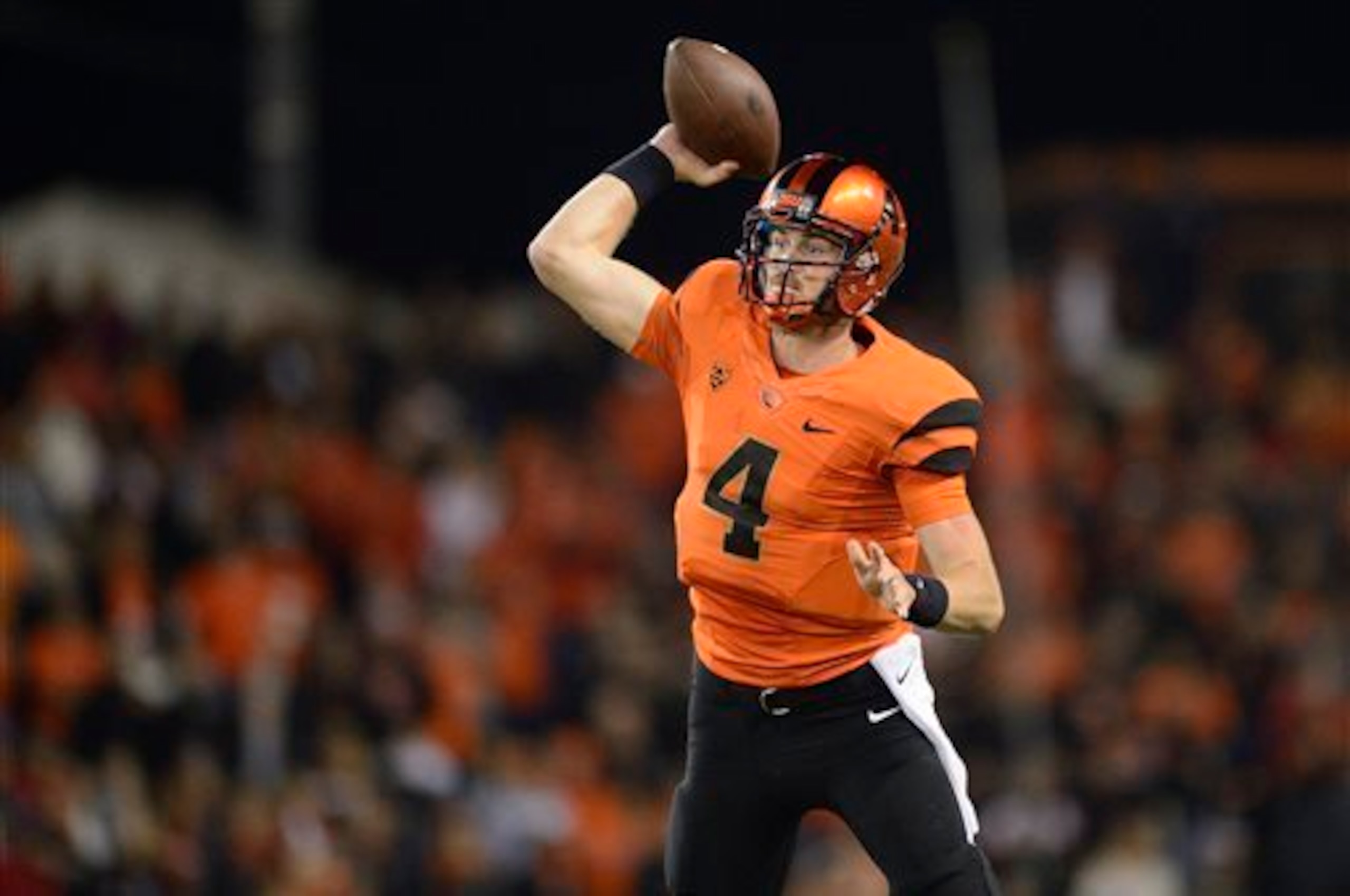
Unlike the Saints, the St. Louis Rams need a quarterback badly. With Nick Foles, Case Keenum and Austin Davis already on the roster, it was clear the Rams were going into 2015 with a need at quarterback. The Rams are going to have a competition at the position, which is rarely a good thing.
Add one more to that quarterback competition in Oregon State's Sean Mannion, who was a turnover machine in college. According to NFL.com, he had 30 fumbles and 54 interceptions in college. He also threw 83 touchdowns, but 37 of those were during his junior year.
What changed? Well, he lost wide receiver Brandin Cooks, who had 16 of those 37 touchdowns his junior year. Mannion threw just 15 in 2014, although he did manage to get his interception rate down.
Much like the Grayson pick by the Saints, the Rams used a third-round pick on a quarterback who probably won't be much more than a backup. If he is a starter, it might only be because the Rams already have three backup QBs on their roster.
Does Mannion really have any more potential than Davis, Foles or even Keenum? Where does he fall into the pecking order now? If it's not clearly above the others on the roster, then there is some flawed logic in this selection.
Basically, the Rams are searching, hoping and praying that those few things Mannion does well turn into something more. As Bleacher Report NFL Analyst Rivers McCown explained, Mannion is nothing more than this year's Tom Savage, who spent the season sitting behind Ryan Fitzpatrick in Houston last year.
The Rams could just be finding as many backups as possible in hopes that one can develop or turn into something more. That's unlikely based on history. There's no doubt the 89th overall pick could have been put to better use.
Seattle Seahawks, Frank Clark, DE, Michigan at No. 63 Overall
8 of 8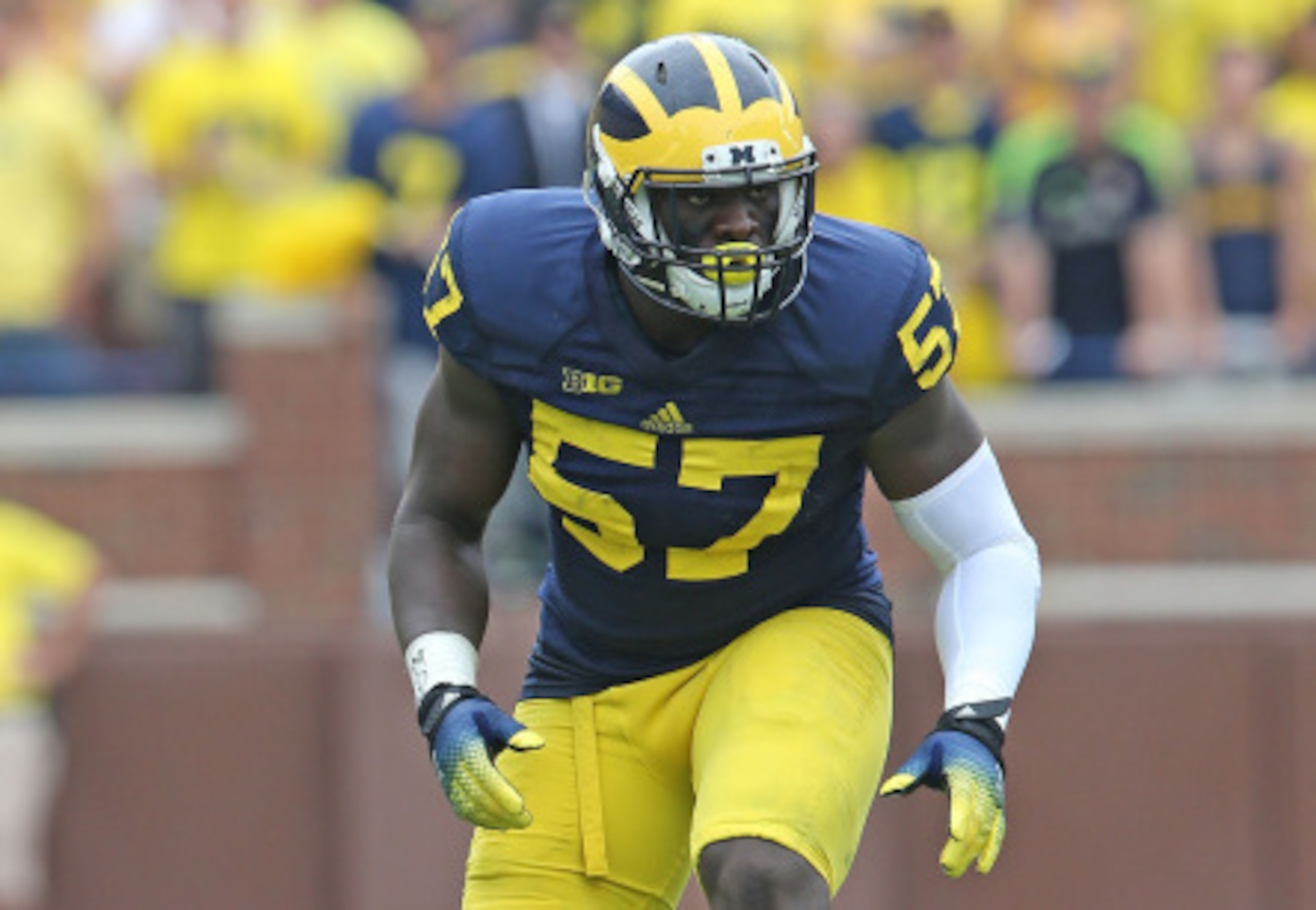
The Seattle Seahawks have been down this path before. It's kind of strange they didn't see the mistake in taking defensive end Frank Clark with the 63rd overall selection.
We just found out a few days ago the Seahawks would decline the fifth-year option on linebacker Bruce Irvin's rookie contract, according to Ian Rapoport of NFL.com. That's a pretty clear indicator that after four years, Irving won't be back with the team despite good production.
Remember the big knock on Irvin coming out of West Virginia? It was his character, but the Seahawks checked into it and decided to take him anyway.
They did the same with Clark, who arguably has many more red flags than Irvin did. Clark was taken a round lower, but he was still the team's top pick.
Then there's the matter of why Clark is such a big character risk. He was charged with domestic violence in November and dismissed from his Michigan team, per NFL.com. He accepted a plea bargain to get a reduced charge. In 2012, he also pleaded guilty to a felony charge for stealing a laptop from a dorm.
The domestic violence charge is particularity troubling in light of the Ray Rice and Greg Hardy situations in the NFL last year. Hardy will miss the first 10 games of the season despite having charges dropped against him.
Although the Seahawks may think Clark is taking responsibility for his actions, that doesn't guarantee he won't be an off-the-field problem. If he does have any trouble, the league will likely come down hard on him.
The Seahawks took a huge risk and a potential headache they simply didn't need to take. They have that luxury because their roster is loaded with talent, but there were plenty of other risks, such as injury risks, they could have taken with equal or better upside.
UCLA's Owamagbe Odighizuwa, for example, went nine picks later and is an even better athlete. The only knock on him was his injury history, but it's hard to imagine the risk of re-injury to Odighizuwa is greater than the risk that Clark has more issues off the field.
.jpg?w=2560 "Cowboys Packers Football")




.jpg?w=2560 "🚨 Week 8 AP Top 25 Poll")