Green Bay Packers Draft Picks: Results, Analysis and Grades
Welcome to Bleacher Report's coverage of the NFL draft! It's been several long months since we've seen the Green Bay Packers play, but it's finally time for the most important part of their offseason.
General manager Ted Thompson has built the Packers through drafting and development. As rookie contracts come on the cheap side of the NFL spectrum, he takes a liking to players on their rookie deals. Since compensatory picks are given to rosters that lose free agents more than they gain, Thompson seemingly won't risk signing big-money players to lose those compensatory picks.
Virtually every player on Green Bay's roster is homegrown, only playing for the Packers franchise in their NFL careers. Even the free agents brought in, like Julius Peppers last season, weren't expiring contracts but cut players labeled as "street free agents." Street free agents don't count against a team in determining compensatory picks, which would explain why Thompson is more apt to take a swing on them.
As we walk you through the three days of the draft process, we'll update this very page to bring you all the information you need to know about the majority of Green Bay's offseason additions.
Currently, the Packers only hold their original picks and two sixth-round compensatory picks, but the squad has historically traded back often, stacking assets in the later rounds. Do not be surprised if selections start to change hands on the second and third days of the event.
Heading into the weekend, there are two major needs for the team: boundary cornerback and inside linebacker.
At cornerback, both Tramon Williams and Davon House left in free agency (to the Browns and Jaguars, respectively). They were the second and third boundary cornerbacks opposite of Sam Shields last season. Because of the way that Dom Capers schemes the defense, they need recovery speed and length on the outside.
Micah Hyde and Casey Hayward are good corners, but they fit more as slot backs due to their lack of elite speed. This creates an issue, as the only boundary corner worth keeping on the roster behind Shields is Demetri Goodson, who will be 26 years old before the season starts and has little experience in the NFL.
On paper, cornerback is the position most likely to be the 30th overall selection, the first-round pick for the squad. Names like Marcus Peters of Washington, Kevin Johnson of Wake Forest, Byron Jones of Connecticut and Eric Rowe of Utah would top the list of realistic possibilities.
At linebacker, the two longtime starters in Green Bay are also gone. A.J. Hawk, the team's 2006 first-round pick, and Brad Jones, who started 36 games in green and gold, were cut. Hawk is now a Bengal, and Jones is now an Eagle.
There might not be an inside linebacker worth a look in the 30th slot, but the position should have a run on Day 2. Early in the second round, we could see Benardrick McKinney of Mississipi State, Stephone Anthony of Clemson, Eric Kendricks of UCLA, Shaq Thompson of Washington and Denzel Perryman of Miami come off the board.
If any one of them should slip, keep an eye out for them as a possibility with the 62nd pick. It's not a stretch to project a trade up for one of them either.
Thompson is a film junkie, though. If he sees a valuable player fall, especially at a premium position, he'll take talent over need. For that reason, it's within the realm of possibility to see him take a nose tackle, edge-rusher or even a running back in the first two days.
Follow along as we try to make sense of the Packers' moves live throughout the event.
No. 30: Damarious Randall, DB, Arizona State
1 of 8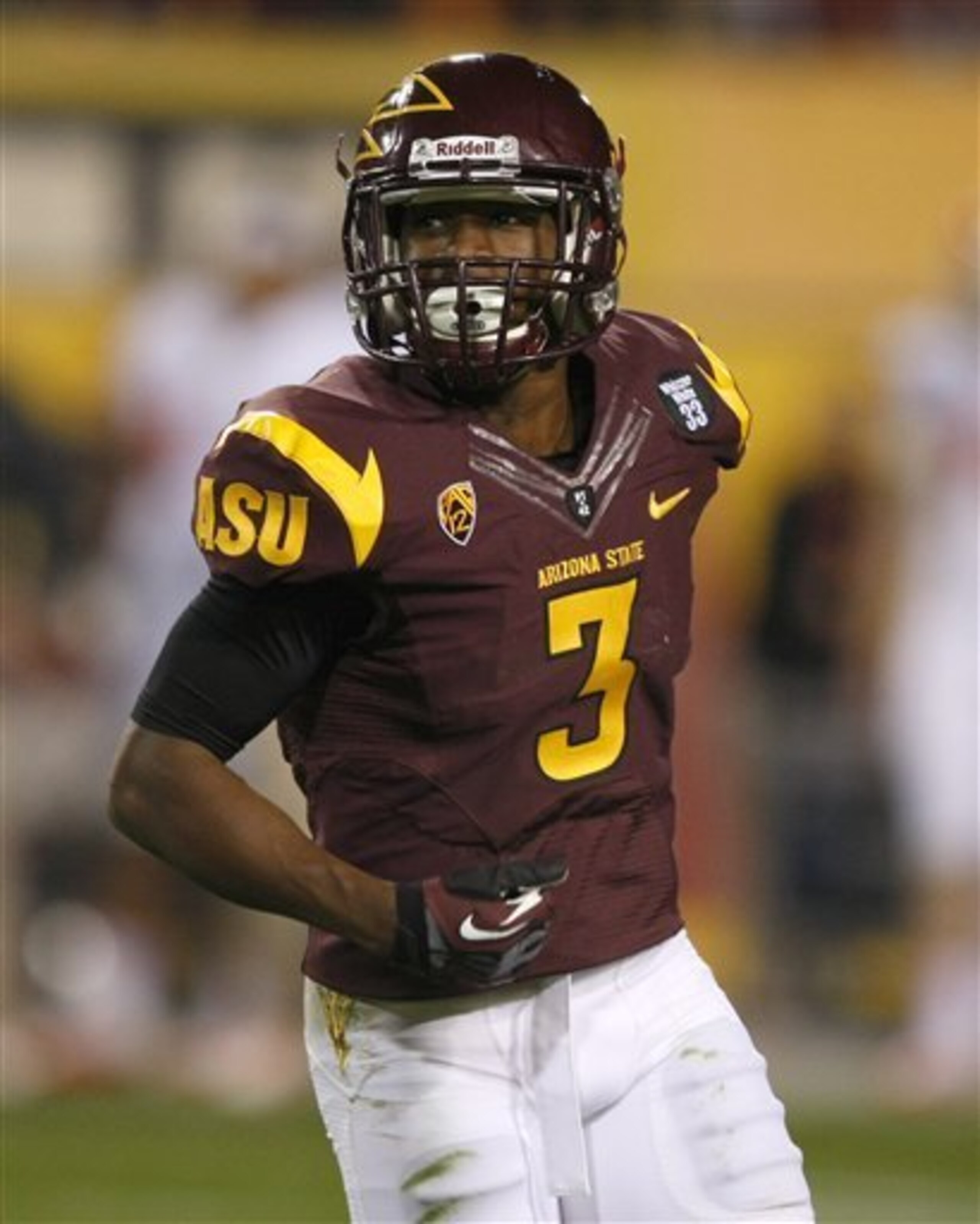
It appears that Damarious Randall will be a cornerback for the Green Bay Packers. The selection of Randall, who played free safety for two years at Arizona State, was shocking when announced, but general manager Ted Thompson stated he will play cornerback, according to Jason B. Hirschhorn of Acme Packing Company.
Randall has great hands as a former baseball player, and he racked up tackles at the college level. With defensive coordinator Dom Capers loving to put his boundary cornerbacks on an island, it makes sense, after stating he'd play outside, that this was the pick.
To some, it's insane that the Packers took Randall over a player like Eric Rowe of Utah, who spent time at cornerback on the Division I level, but Thompson has a way of finding diamonds in the rough.
This past offseason, the Packers lost Tramon Williams and Davon House, the second and third boundary cornerbacks opposite of Sam Shields. As mentioned in the intro slide, the position was one of the two giant needs that the squad had to address early on.
The team might have been able to trade back for an asset like Randall, but at least it got a serviceable body at a big need. That alone has value.
Grade: C
No. 62: Quinten Rollins, DB, Miami (Ohio)
2 of 8
Quinten Rollins is a mid-major player from Miami (Ohio), and unless you sought out MAC games last season, you probably missed his only year as a collegiate football player. Before flipping to football, Rollins was a four-year point guard for the Red Hawks' basketball team.
Like Damarious Randall, Green Bay's first selection of the draft, he's being viewed as a cornerback and safety hybrid. Rollins was able to post seven interceptions in his lone season and was named the MAC Defensive Player of the Year.
At one point, many believed that he was going to be the second MAC defensive back taken on Day 1 in consecutive years, as Jimmie Ward of Northern Illinois was picked in the first round by the San Francisco 49ers last season. His postseason draft cycle didn't go well for him, though.
He was solid at the Senior Bowl in Mobile, Alabama, but his combine performance was below average. At cornerback, according to Mock Draftable's data, he ranked in the bottom quarter of position in the 40-yard dash and both agility drills since 1999. He also ranked in the bottom 10 percent in his 10-yard split.
He's a longer player, but his arms don't match. Is he a safety? Is he a slot corner? Can the Packers trust his lack of arm length and speed to recover on the boundary opposite of Sam Shields? Where will Randall line up?
There's a lot of questions surrounding this pick. He's a good player on tape, but the measurables and film don't totally add up to a plus value.
Grade: C
No. 94: Ty Montgomery, WR, Stanford
3 of 8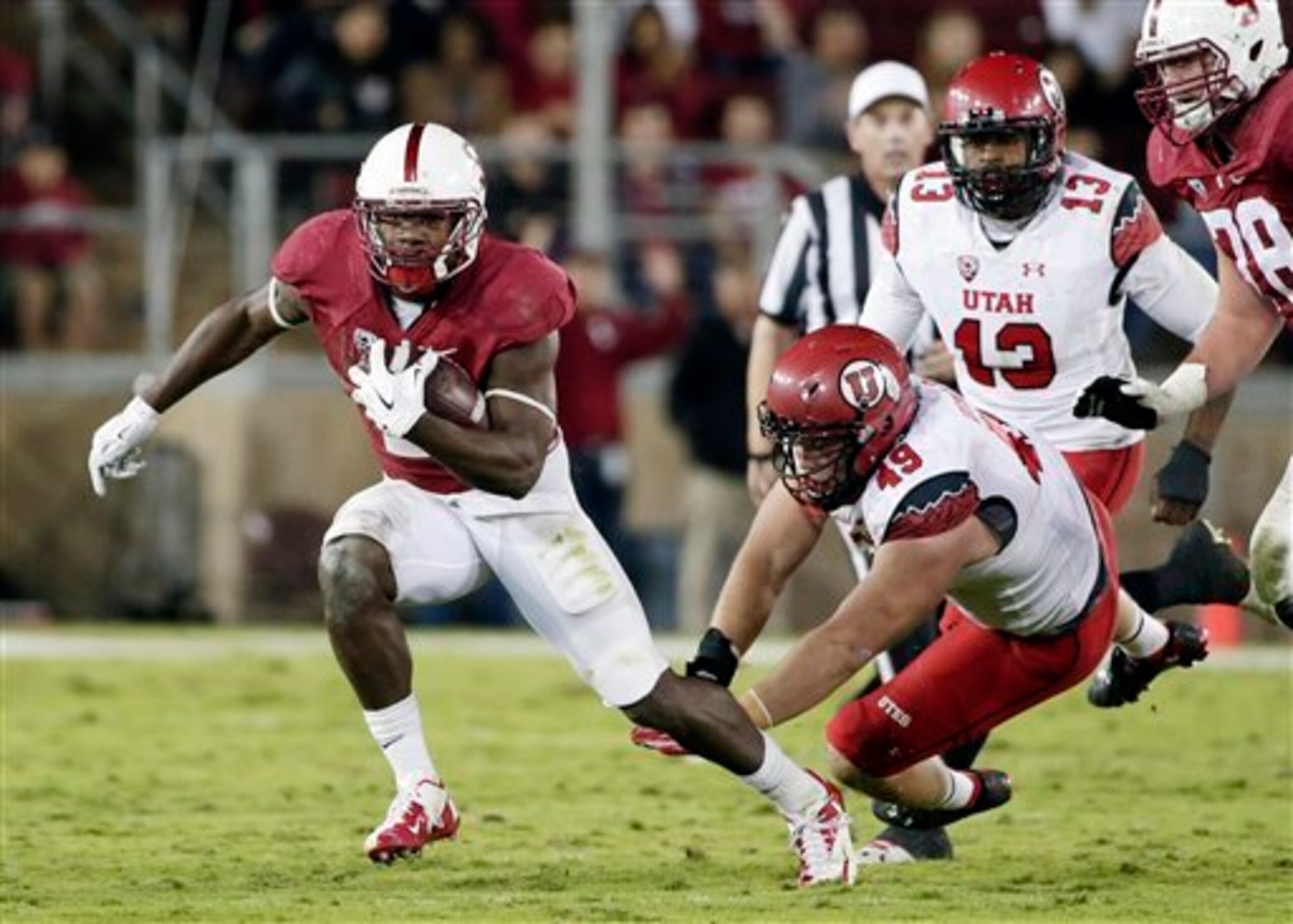
This offseason, the Green Bay Packers re-signed Randall Cobb to one of the largest contracts at the receiver position. As a slot receiver, this is rare, but Cobb was able to produce in the red zone like many slot targets couldn't.
On the outside, the squad has Jordy Nelson, a Pro Bowler, and Davante Adams, who was drafted in the second round just last year. On the bench, they have two other sophomore players in Jared Abbrederis and Jeff Janis, who were drafted in the fifth and seventh rounds last season.
They did not have a receiver need heading into the draft, unless you think the squad needed an upgrade at the fourth receiver slot. Thinking from the perspective of Ted Thompson, the team's general manager, the selection of Ty Montgomery of Stanford at receiver must have been a "best player available" situation on their big board.
Montgomery has some issues with his hands and game speed, but he is a heavy pass-catcher at 221 pounds and has a vertical of over 40". That alone makes him an interesting prospect for the red zone.
The other option might be that he plays running back. While he is slow while running routes, he seems to kick it into another gear when he has the ball in his hands. Maybe the Packers are looking to convert him to a tailback, pairing him as a change-of-pace pass-catcher out of the backfield to complement Eddie Lacy's power style. If nothing else, he should be a return specialist early on.
Grade: C
.jpg?w=2560 "Titans Colts Football")
.jpg?w=2560 "Chiefs Giants Football")
.jpg?w=2560 "Colts Football")
No. 129: Jake Ryan, LB, Michigan
4 of 8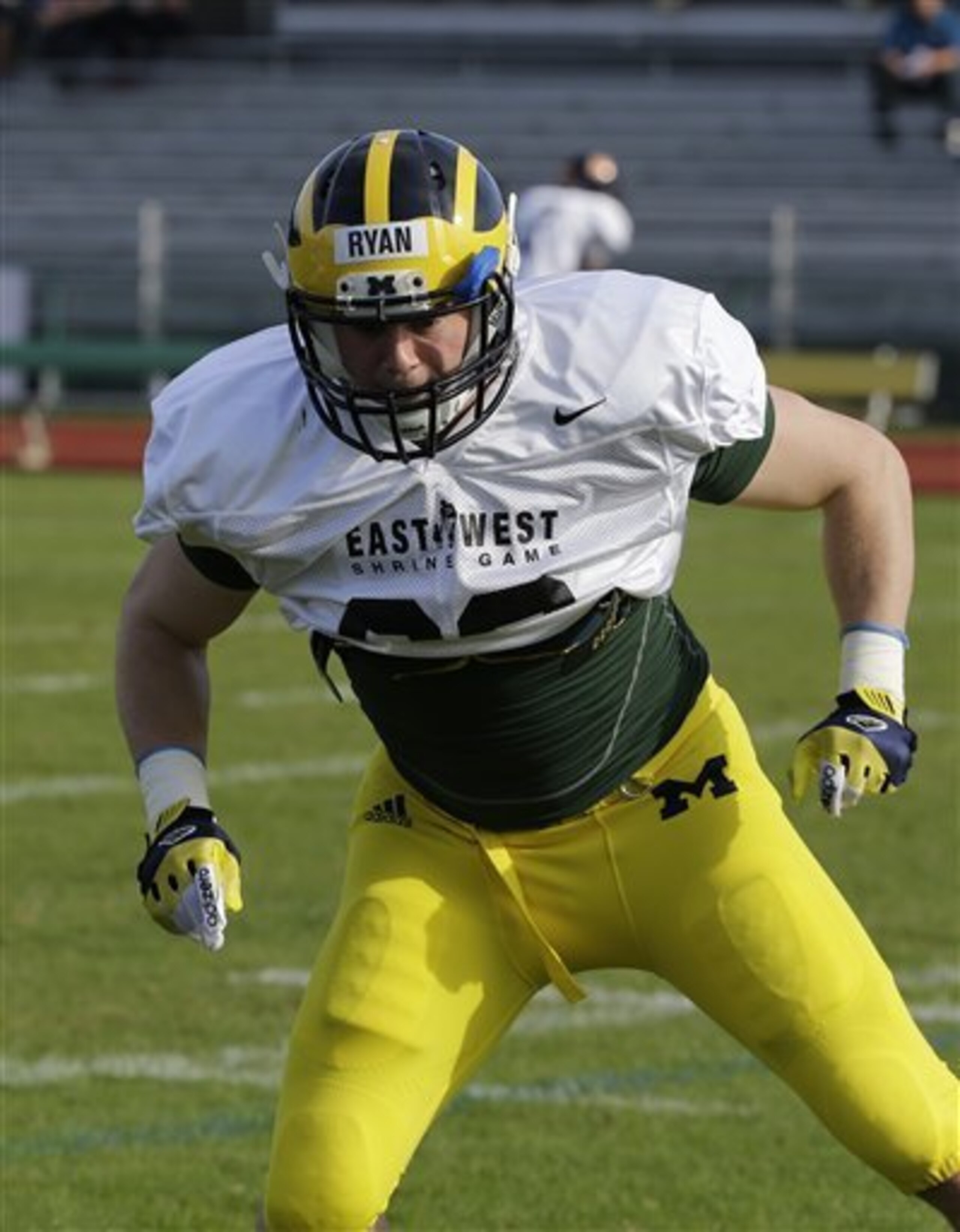
Finally, on the third day of the draft, the Packers address their inside linebacker need. For a long time, the squad has struggled with A.J. Hawk and Brad Jones as the starting tandem on the interior, but they were both cut this offseason.
While that sounds like a positive step toward change, Green Bay only really had one starting-caliber linebacker on their roster in Sam Barrington, who took over for Jones last season. Unless the squad wanted to move edge-rusher Clay Matthews III there full time or trust the inexperienced second-year convert Carl Bradford, it needed to draft a starter.
Jake Ryan of Michigan was the pick in the fourth round and fits the mold for a Ted Thompson selection. Ryan started as a redshirt freshman at defensive end for the squad. He moved to outside linebacker shortly after, even leading the team in sacks as a sophomore.
His senior year, after recovering from an injury which ended his junior campaign, he moved to middle linebacker. There, he was the team MVP, an All-Big Ten player and earned an East-West Shrine Game invite. Running a 4.65 40-yard dash, he's more than athletic enough to make a push into the starting role in 2015. If nothing else, he'll be great on special teams early.
Grade: B
No. 147: Brett Hundley, QB, UCLA
5 of 8
Brett Hundley was once in the conversation with Marcus Mariota as being a top prospect for this draft when they were both redshirt freshmen. Between his freshman and junior seasons, the gap began to separate the two, but Hundley was still well worthy of a Day 2 selection on film.
His feet aren't always synced with his receivers, and he drops his eyes and turns into a runner too quickly, earning him comparisons to Jake Locker, but he's young and talented. If the Packers, specifically head coach Mike McCarthy, can mold him, the squad can ship him out for a valuable draft pick in the final season of his rookie deal.
It's been pretty apparent that the Packers have wanted a mobile quarterback for some time now. With recent signings of Vince Young and Seneca Wallace at the position, they may have tipped their hand. Was the motive for a change of game plan defensively if Aaron Rodgers went down? Was it to mimic mobile quarterbacks in practice, like Colin Kaepernick and Russell Wilson, two passers the squad has struggled against in the past?
They have both now and a developmental starter on their hands. Ted Thompson and Co. got an absolute steal.
Grade: A
No. 206: Aaron Ripkowski, FB, Oklahoma
6 of 8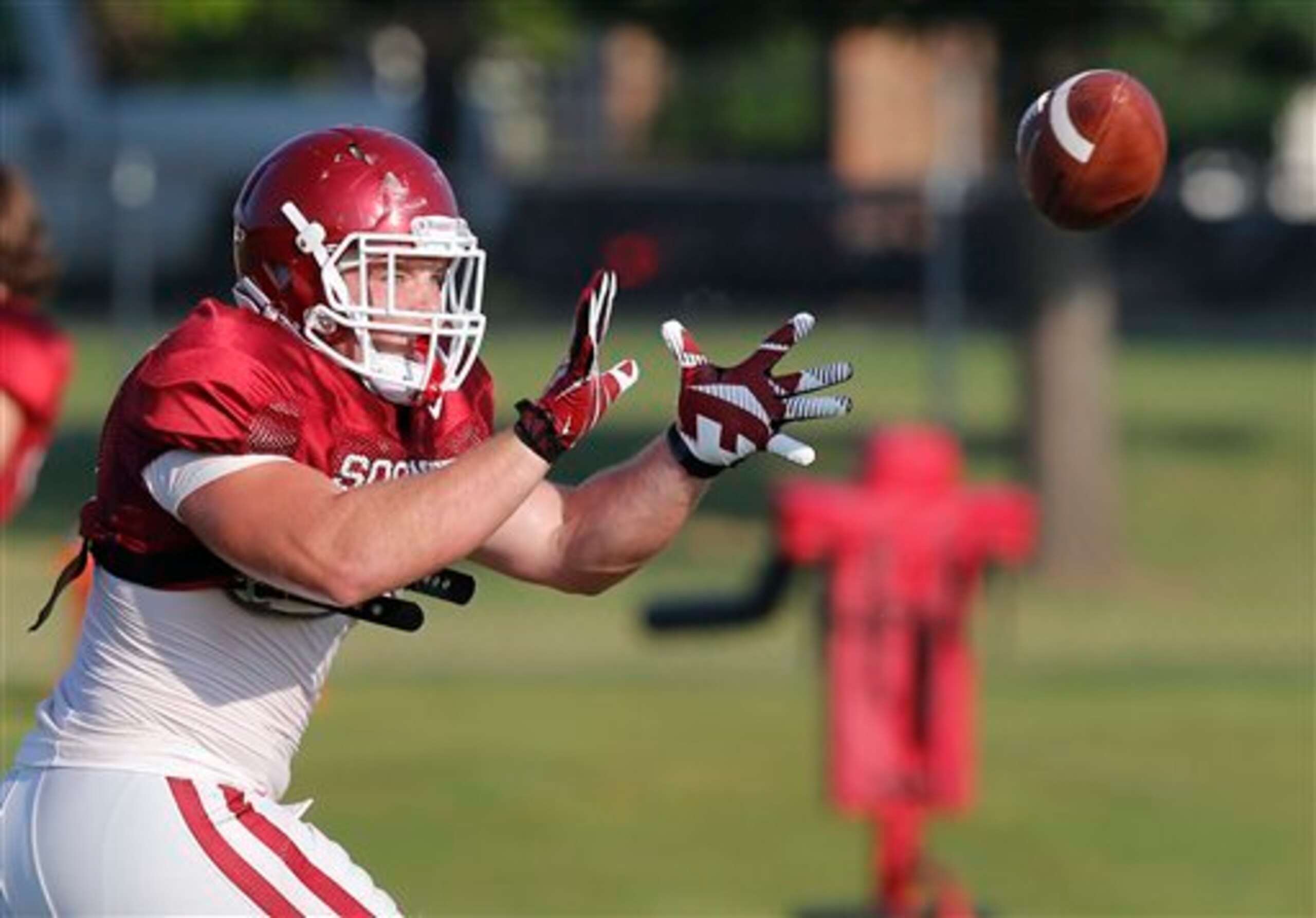
While some Packers fans might have wanted to add a true tailback to compete with James Starks for the second slot behind Eddie Lacy, Green Bay instead took a fullback. While the position is dying in the league, the Packers lean on power football, with the addition of Lacy in 2013, creating a demand for a strong blocker in the backfield.
John Kuhn, the longtime fullback in Green Bay, has been re-signing on a year-to-year basis with the squad recently. At some point, his time is going to come. He's already 32 years old, so that transition might come as soon as this preseason.
With their first of three sixth-round picks, Ted Thompson and Co. took Aaron Ripkowski of Oklahoma. Though he was only a starter for one season, Ripkowski was a situational blocker and special teams player for years for the Sooners. That earned him an invite to the East-West Shrine Game, a senior showcase.
Wisconsin fans might remember Samaje Perine breaking Melvin Gordon's NCAA single-game rushing record. The Sooners' lead backfield blocker during Perine's 427-yard performance? That would be Ripkowski. He has a chance to take one of the 53 roster spots his rookie season, which is all you can ask of a late-round pick.
Grade: B
No. 210: Christian Ringo, DL, Louisiana-Lafayette
7 of 8
A surprise pick, Christian Ringo of Louisiana-Lafayette didn't receive an invite to the combine this season. Buried in the Sun Belt Conference, he did manage to rank up with the leaders in major college football in tackles for a loss with 20.5 and posted 11.5 sacks during his senior year.
On the smaller side of the position, at 6'1" and under 300 pounds, Ringo is more than likely going to be a penetrating 3-technique defensive tackle for the squad. The Packers do run a 3-4 defense in base, but because their front one-gaps, it acts like a 4-3 defense.
Green Bay already has two pretty good 3-techniques in Mike Daniels and Datone Jones, but Daniels' contract is coming to an end. This might be a safety-net option for Thompson in case he can't bring back their best defensive lineman in 2016. He's not going to provide much on run downs, but he can be a player in the passing game.
Grade: C
No. 213: Kennard Backman, TE, UAB
8 of 8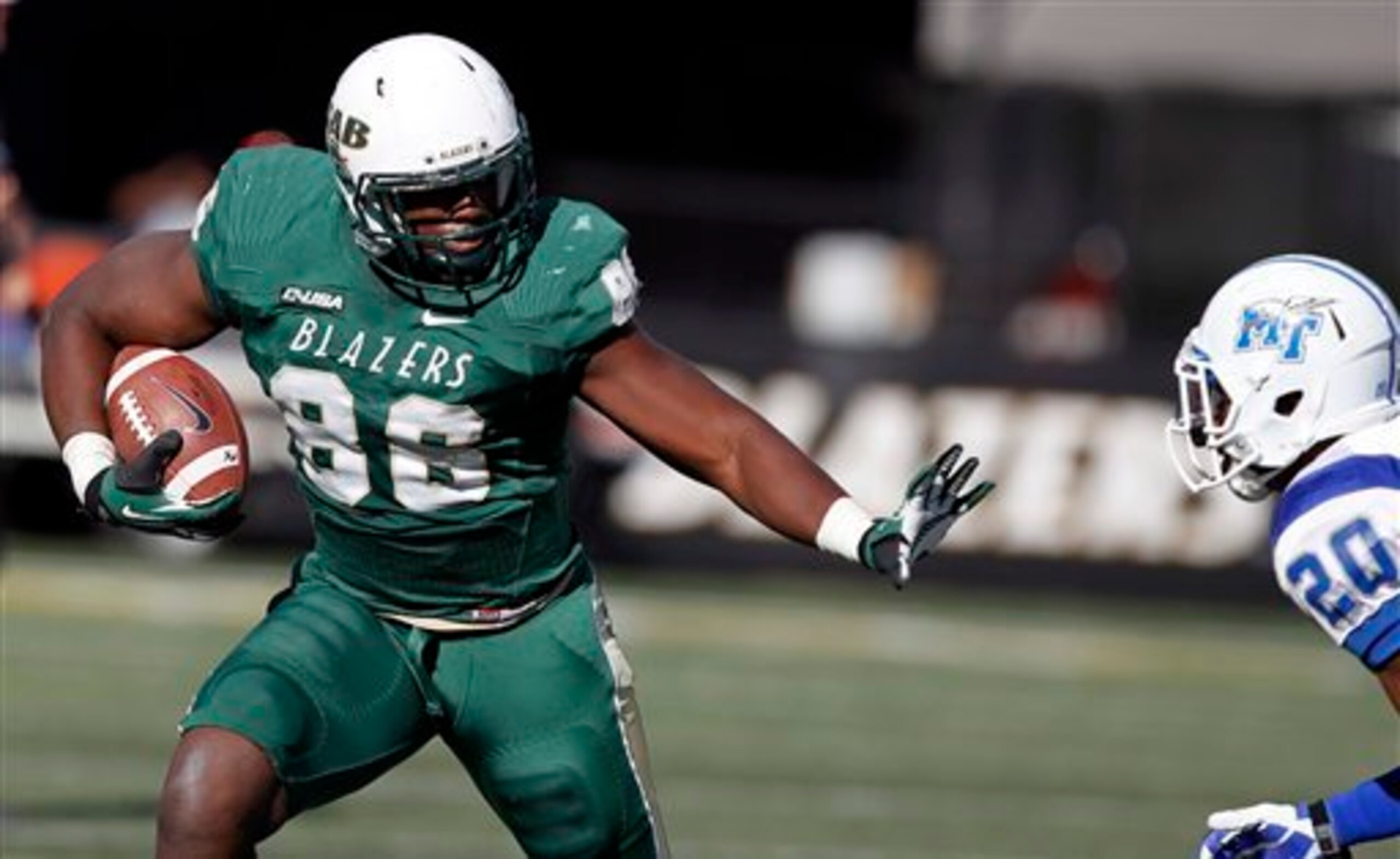
Last season, the Green Bay Packers took Richard Rodgers in the top 100 picks of the draft. A tight end from California, some thought he was the long-term replacement for Jermichael Finley, who suffered an injury that has kept him out of the sport. Rodgers showed some flashed in 2014, but he doesn't possess the upside of a top-20 tight end in the league.
A late flier, the Packers took a shot on Kennard Backman of Alabama-Birmingham, an FBS school that has since shut down its football program. He's not a big pass-catcher at just over 6'3" and 243 pounds, but he can be a hybrid H-back who can move around. Don't ask him to be a true in-line tight end and block, but he can catch the ball from anywhere on the field.
He very well might be what the Packers wanted D.J. Williams, their 2011 fifth-round pick from Arkansas, to be. It's hard to imagine he'll be a starter in the league, but he'll be a high-upside prospect nonetheless. Think of the former basketball recruit as having a peak of a Charles Clay type of athlete.
Grade: C
.jpg?w=2560 "Eagles Jaguars Football")
.jpg?w=2560)