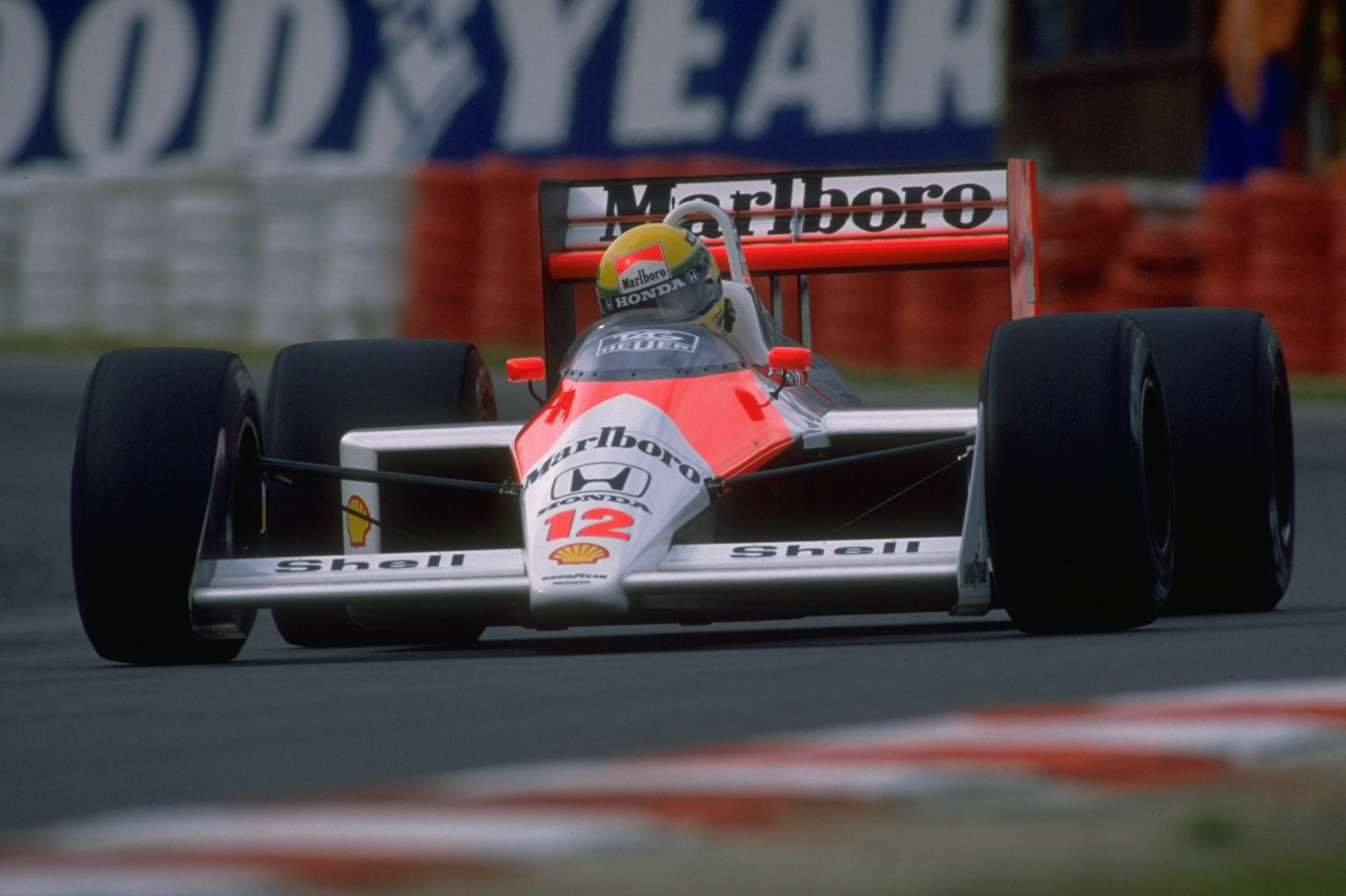

The McLaren MP4/4 and 5 of Formula 1's Most Dominant Cars
The McLaren MP4/4 is the greatest car in the history of grand prix racing.
Driven by Ayrton Senna and Alain Prost over the course of the 1988 Formula One season, the first Honda-powered McLaren, designed by Steve Nichols and Gordon Murray, secured 15 wins and pole positions in 16 races.
It was behind the wheel of the MP4/4 that Senna delivered arguably the greatest lap in F1 history in qualifying for the Monaco Grand Prix, where the Brazilian set a time almost 1.5 seconds faster than his team-mate in the same machinery.
Indeed, the MP4/4 is credited as the car that truly kickstarted one of the most intense, iconic rivalries in sport, as Senna and Prost, as a consequence of McLaren's performance advantage, battled head-to-head for the championship for the first time, with the former ultimately coming out on top.
With a 1.6 litre V6 turbo engine, the RA168E, the car would often produce more than 700 bhp, according to McLaren's official website, which ensured the Woking-based team scored more than three times as many points as runners-up Ferrari in the constructors' standings.
Ferrari's home race, in fact, was the scene of McLaren's only failure in '88 as Prost withdrew with technical problems and Senna collided with Jean Louis Schlesser at Monza's first chicane and retired from the lead just two laps from the chequered flag, ruining the team's hopes of a 100 per cent record.
But the MP4/4, more than any other car before or since 1988, was deserving of that accolade. As the wait for the first golden season continues, here are five dominant cars that could, and perhaps should, have won every race they started.
Ferrari Tipo 500 (1952-53)
1 of 5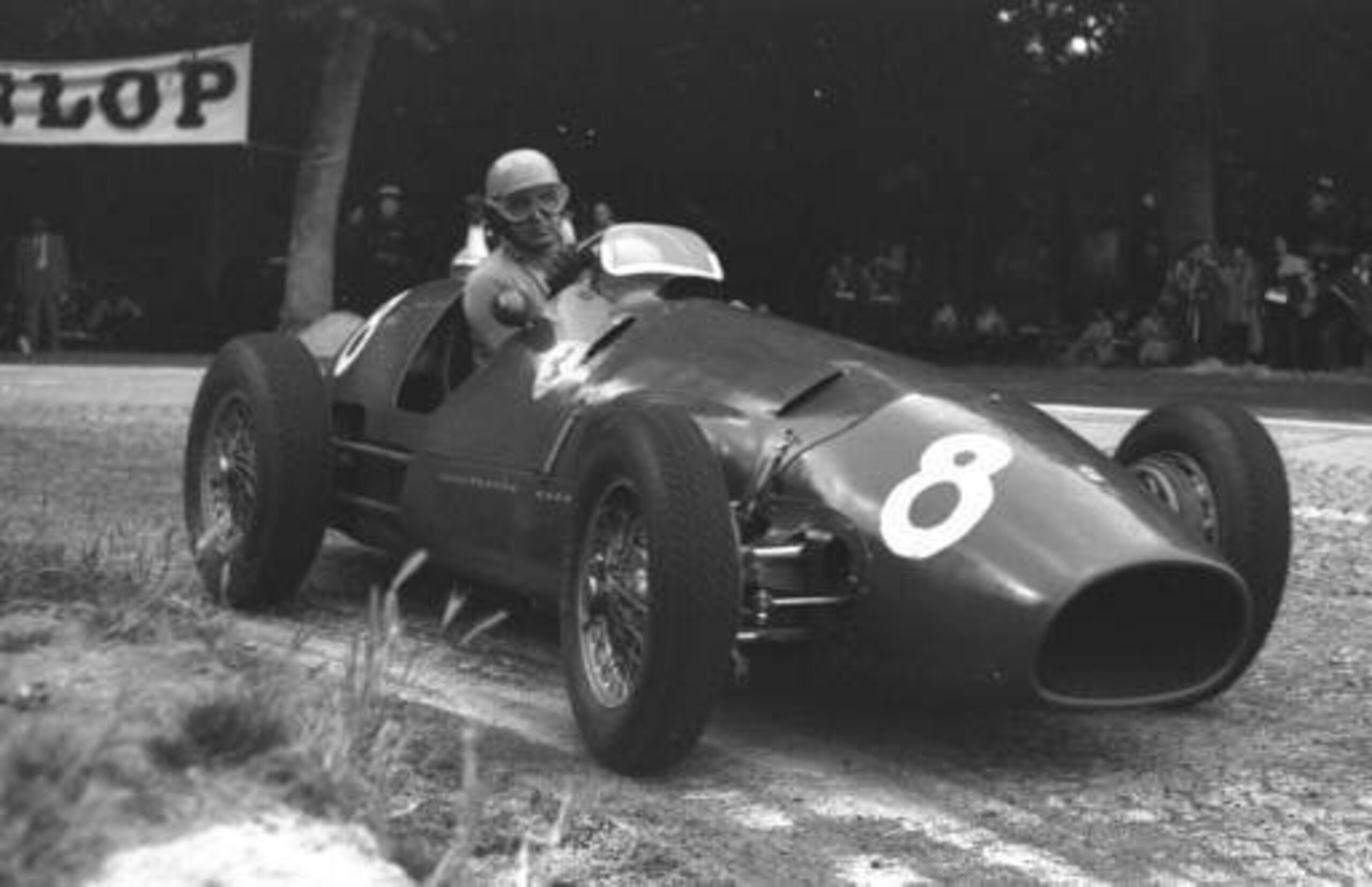
Upon Alfa Romeo''s withdrawal from Formula One at the end of 1951, the FIA announced that cars would run to Formula Two specification for the '52 season.
And with Ferrari the only constructor to have a car designed for those regulations, the Prancing Horse were offered an immediate advantage with the Tipo 500.
Featuring a "simple, in-line four-cylinder twin-cam engine," according to GrandPrixHistory.org, the car was the class of the field, particularly in the hands of Alberto Ascari, who won all but one of 1952's seven races (as well as six non-championship events) en route to his first title.
In fact, the only race the Italian failed to win, the Swiss Grand Prix, was because he was busy competing in the Indianapolis 500, although Ascari's Ferrari colleague Piero Taruffi made up for his absence by winning at Bremgarten.
The Tipo 500 allowed Ascari to win every championship race between June 1952 and June 1953, with the Italian's record nine-race victory streak remaining untouched for over 60 years, when Red Bull Racing and Sebastian Vettel dominated the second half of 2013.
Ascari won a further two races in '53—Mike Hawthorn and Giuseppe Farina also savoured success with the car in France and Germany, respectively—to seal his second consecutive drivers' championship, with Juan Manuel Fangio's triumph for Maserati in the final round at Monza preventing the Tipo 500 from enjoying a perfect season.
McLaren MP4/2 (1984-86)
2 of 5
The most impressive aspect of the McLaren MP4/2 by far was its ability to remain competitive for an extended period of time in an increasingly competitive era of Formula One.
Designed by John Barnard and powered by a 1.5 litre, turbocharged TAG-Porsche V6 engine, the car was at its prime in its first season of competition, 1984, which saw Niki Lauda and Alain Prost run away into the distance.
The MP4/2 was by no means the fastest car over one lap—McLaren set only three pole positions all season—but it was exceptional and reliable over a race distance, with Prost and Lauda winning all but four grands prix between them, including a winning streak of seven in the second half of the season.
Although Prost had the edge in terms of victories—seven to Lauda's two—it was the Austrian who ultimately came out on top, securing his third and final title by half a point.
The chasing pack—Lotus, Ferrari, Brabham and Williams—closed the gap in 1985, and McLaren were once again starved of qualifying pace as Prost took just two poles with a modified MP4/2.
But what the Frenchman lacked in outright speed he again made up on race day, taking five wins and six podiums en route to his first championship and the team's second consecutive constructors' title with the same car.
That the MP4/2 remained a front-running machine as a three-year-old in an '86 campaign dominated by Williams-Honda was a minor miracle, so was Prost's achievement of taking the title race down to the final round in Australia, never mind winning the thing.
Its achievements in 1984 would have been enough to secure its place among F1's most dominant cars, but the MP4/2's overall record—22 grand prix wins, three drivers' championships and two constructors' championships in three seasons—was extraordinary.
The MP4/2 took to the track way ahead of its time, which is precisely why it remained on track beyond its time.
Williams FW14B (1992)
3 of 5
Still regarded as the most technologically advanced car in Formula One history, the Williams W14B powered Nigel Mansell to his only title success in 1992.
In its original form in the 1991 season, the car—designed by Patrick Head and Adrian Newey—proved fast but fragile.
With Mansell and Riccardo Patrese at the wheel, the car secured a total of seven wins but a number of reliability problems, many of which were related to the gearbox, and allowed Ayrton Senna to claim the last of his three world championships.
The end of McLaren's all-conquering partnership with Honda coincided with a number of modifications to the FW14.
A semi-automatic transmission—the first in F1, as Head told Motor Sport magazine—traction control, the controversial active suspension system (developed by none other than current Mercedes technical boss Paddy Lowe), anti-lock brakes and a 3.5 litre Renault V10 engine gave Williams a huge edge. The new engine, according to GrandPrixHistory.org, produced around 30 horsepower more than its rivals.
Mansell, who took a particular liking to the FW14B, broke countless records throughout the year, including for consecutive wins at the start of a season (five), pole positions (14 out of 16) and wins in a season (nine).
The highlight of the campaign arguably came at Silverstone, where Mansell qualified on pole, almost two seconds quicker than second-placed Patrese alone, before taking his fourth British Grand Prix victory.
The title race, if one existed, was done and dusted following the Hungarian GP in mid-August, when there were still five events of the season remaining, and the FW14B finished with 10 victories to its name.
It is true that there were more dominant cars in F1 history from a results perspective—the championship-winning 1996 Williams, for example, won 12 of 16 grands prix—but in terms of outright pace, few come close to the dominance of the 1992 machine.



Ferrari F2004 (2004)
4 of 5
For the sake of variety, we've only included one Ferrari of Michael Schumacher's dominant spell at the team between 2000 and 2004.
And although both the F2002 and F2004 won 15 grands prix each, the fact that the former arrived late to the 2002 season means the '04 car, which took all of its victories in a single campaign, gets the nod here.
With a place in history as the seven-time world champion's last great car, the F2004 was the culmination of around half-a-decade of design and refinement, with the 50th Ferrari F1 machine, according to Crash.net, featuring a lower centre of gravity and improved weight distribution.
And it showed as Schumacher picked up where he left off, recording 12 wins in the opening 13 races as Rubens Barrichello, his perennial wing-man, increased Ferrari's comfort at the top of the constructors' standings with 10 podium finishes in the same period.
Schumacher sealed the title at Spa with four rounds remaining—two rounds later than in '02, albeit with a different points system—and Barrichello underlined the Prancing Horse's advantage by claiming two victories of his own in Italy and China as the season eased to its conclusion.
Having competed at the summit of the V10-engine era, the F2004 remains one of the fastest cars to take to an F1 track and was remarkably reliable as a Ferrari driver stood on the podium at every grand prix, with the team's two retirements coming as a result of on-track collisions.
Mercedes F1 W05 Hybrid (2014)
5 of 5
Mercedes' muted return to Formula One in 2010 led to the German manufacturer writing off their chances of meaningful success in the V8 era, instead choosing to focus on the next wave of regulation changes.
As former development driver Sam Bird told Sky Sports' William Esler, "there were already discussions and developments within the sim world" regarding the team's 2014 car as long ago as 2011 as the Silver Arrows sacrificed short-term pain for long-term gain.
Even in mid-2013, when it seemed as though Lewis Hamilton could mount a serious championship challenge following a surprise Hungarian Grand Prix win, then-team boss Ross Brawn refused to be blinded by the prospect of landing the title, telling ESPN how "we don't want to compromise the 2014 programme."
That patience, and those years of behind-the-scenes planning, were rewarded at the beginning of 2014 when V8 engines were replaced by V6 turbo power units and Mercedes were suddenly elevated from occasional pole-setters and race-winners to become F1's dominant force.
Having realised at an early stage that the rule changes would result in the engine, rather than aerodynamics, making the difference between a fast car and an ordinary one, Mercedes High Performance Powertrains, led by Andy Cowell, produced a revolutionary engine—the PU106A Hybrid, complete with the innovative split-turbo concept—which integrated seamlessly into the W05 chassis.
With the best car on the grid by some margin at their disposal, Hamilton and team-mate Nico Rosberg fought exclusively for the world championship, claiming 18 out of a possible 19 pole positions and winning a total of 16 races, including 11 one-two finishes.
There is a convincing argument that the W05 should have won every single grand prix in 2014, but a crippling energy recovery system failure in Canada, wet conditions (and a poorly timed safety car) in Hungary and a collision between the drivers in Belgium meant three races slipped from Mercedes grasp.
All statistics in this article, unless stated, have been taken from Wikipedia.

.jpg?w=2560 "Chiefs Giants Football")
.jpg?w=2560 "Jonathan Taylor Landing Spots 📍")

.jpg?w=2560 "5 Teams Eyeing Jonathan Taylor")

