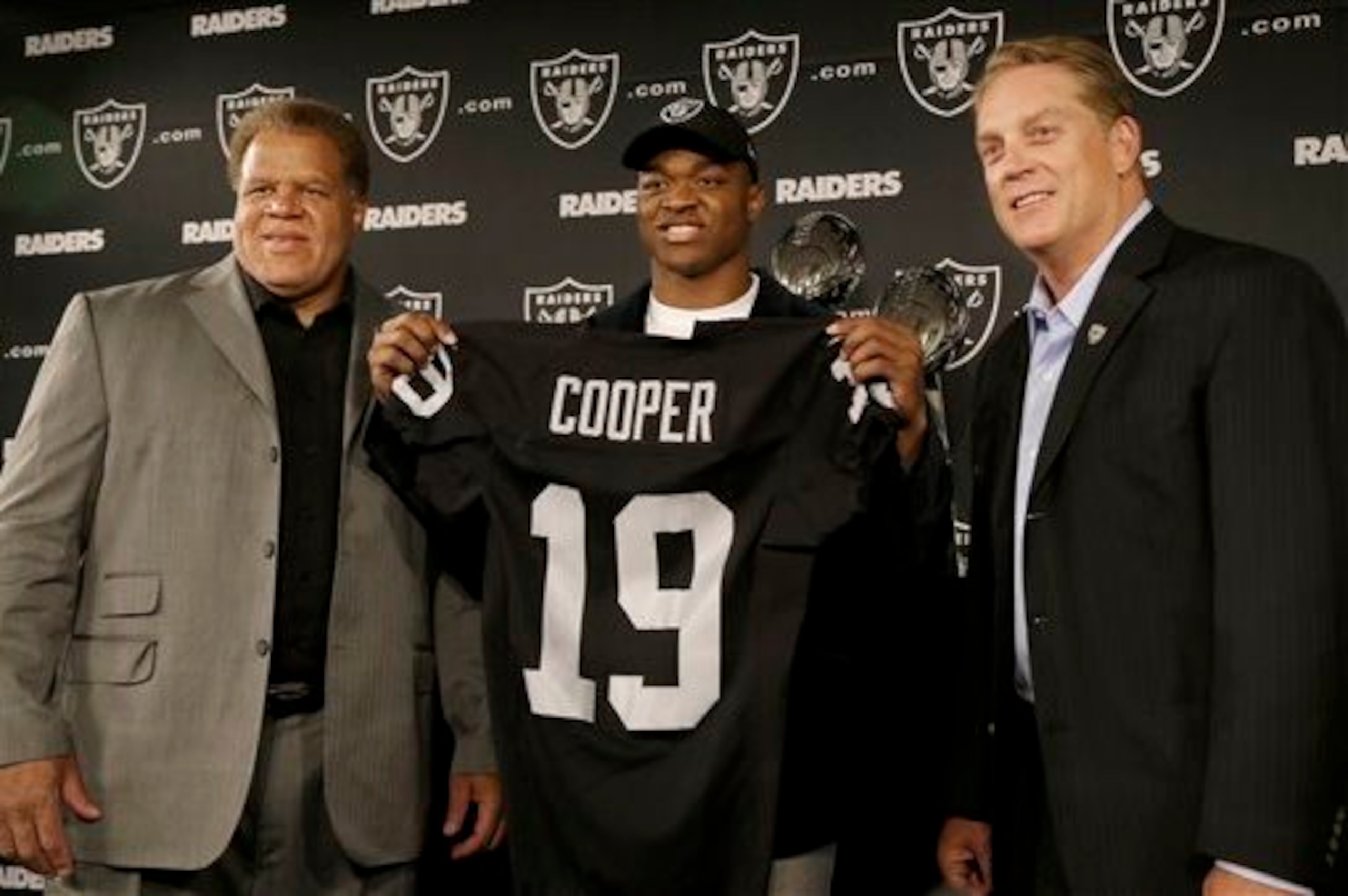


Now that the 2015 NFL draft has come and gone, it's time to take a look at how the Oakland Raiders did. With lots of needs and plenty of picks thanks to a couple of Day 3 trades, the Raiders were in a great position to greatly improve the roster.
In 2014, the Raiders came away with several starters. In 2015, the team once again added 2-3 potential starters. More importantly, Oakland came away this year with much-needed depth at several positions.
Aside from the team's first-round pick, there aren't any big names in Oakland's group of draft picks. But what should become noticeable once training camp begins is that the team now has many more options.
And while the top of the team's overall talent pool might not have changed much, the middle of the roster is much stronger now than it was before.
The Picks
1 of 7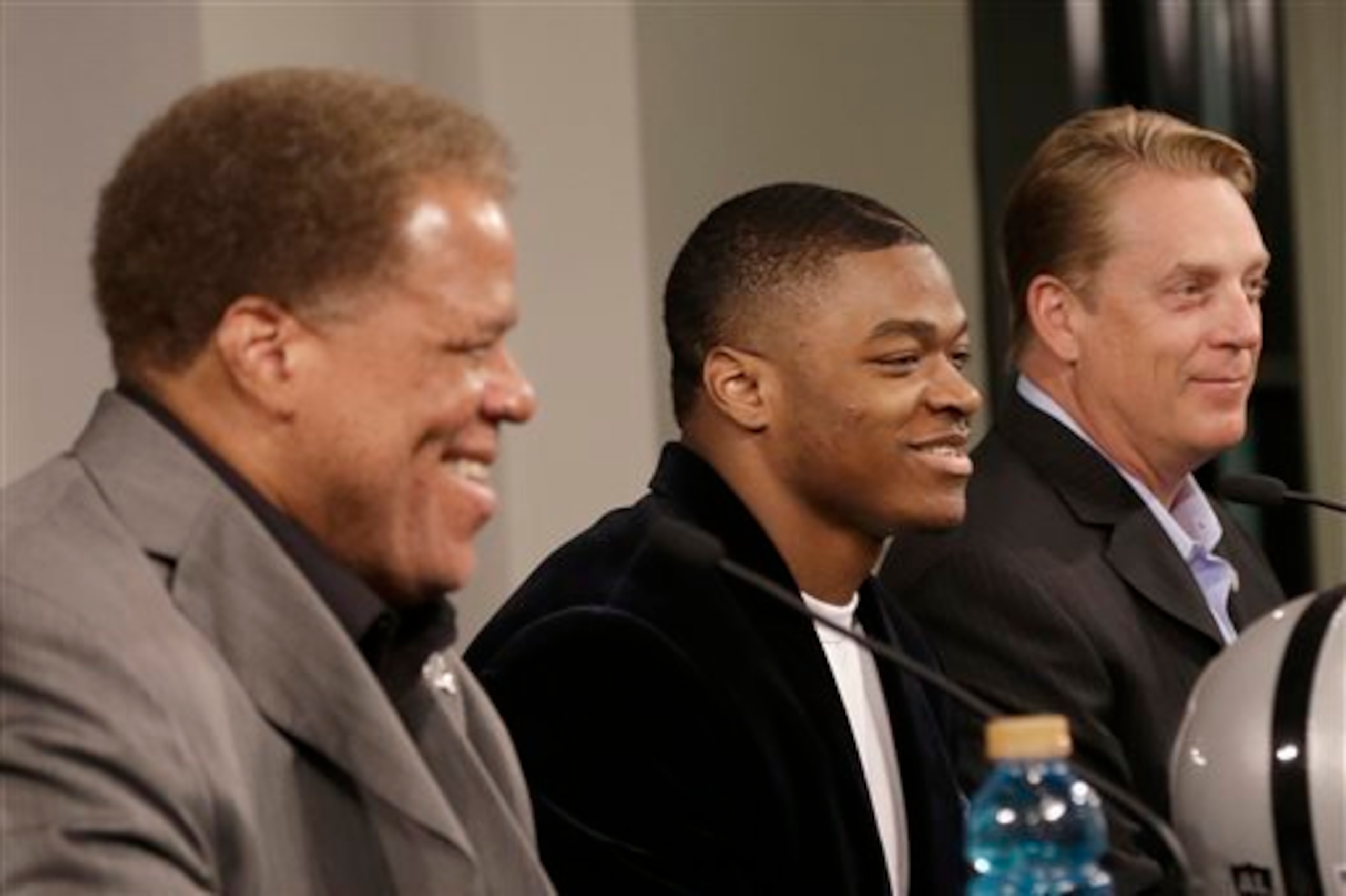
After months of preparation, this is the crop of new talent that Oakland came away with following the draft.
| Day | Round | Pick in round (Overall) | Player | Position |
| 1 | 1 | 4 (4th) | Amari Cooper | WR |
| 2 | 2 | 3 (35th) | Mario Edwards | DL |
| 2 | 3 | 4 (68th) | Clive Walford | TE |
| 3 | 4* | 29 (128nd) | Jon Feliciano | OG |
| 3 | 5 | 4 (140th) | Ben Heeney | ILB |
| 3 | 5* | 25 (161st) | Neiron Ball | OLB |
| 3 | 6 | 3 (179th) | Max Valles | OLB |
| 3 | 7* | 1 (218th) | Anthony Morris | OL |
| 3 | 7 | 4 (221st) | Andre Dubose | WR |
| 3 | 7* | 25 (242nd) | Dexter McDonald | CB |
*Pick acquired via trade
The Raiders stayed where they were through the first two days of the draft, but they opened up the third day with a trade with the Carolina Panthers.
Oakland sent:
- Third pick in the fourth round (102nd overall)
Oakland received:
- 25th pick in the fourth round (124th overall)
- (161st overall)
- (242nd overall)
Oakland then made another trade, this time with the Tampa Bay Buccaneers, to move back again in the fourth round while picking up an additional late-round selection.
Oakland sent:
- 25th pick in the fourth round (124th overall)
Oakland received:
- 29th pick in the fourth round (128th overall)
- First pick in the seventh round (218th overall)
Thanks to a couple of Day 3 trades, the Raiders ended up making 10 picks instead of the seven that they began the draft with without having to sacrifice any future picks.
The Good: Taking Pro-Ready Amari Cooper
2 of 7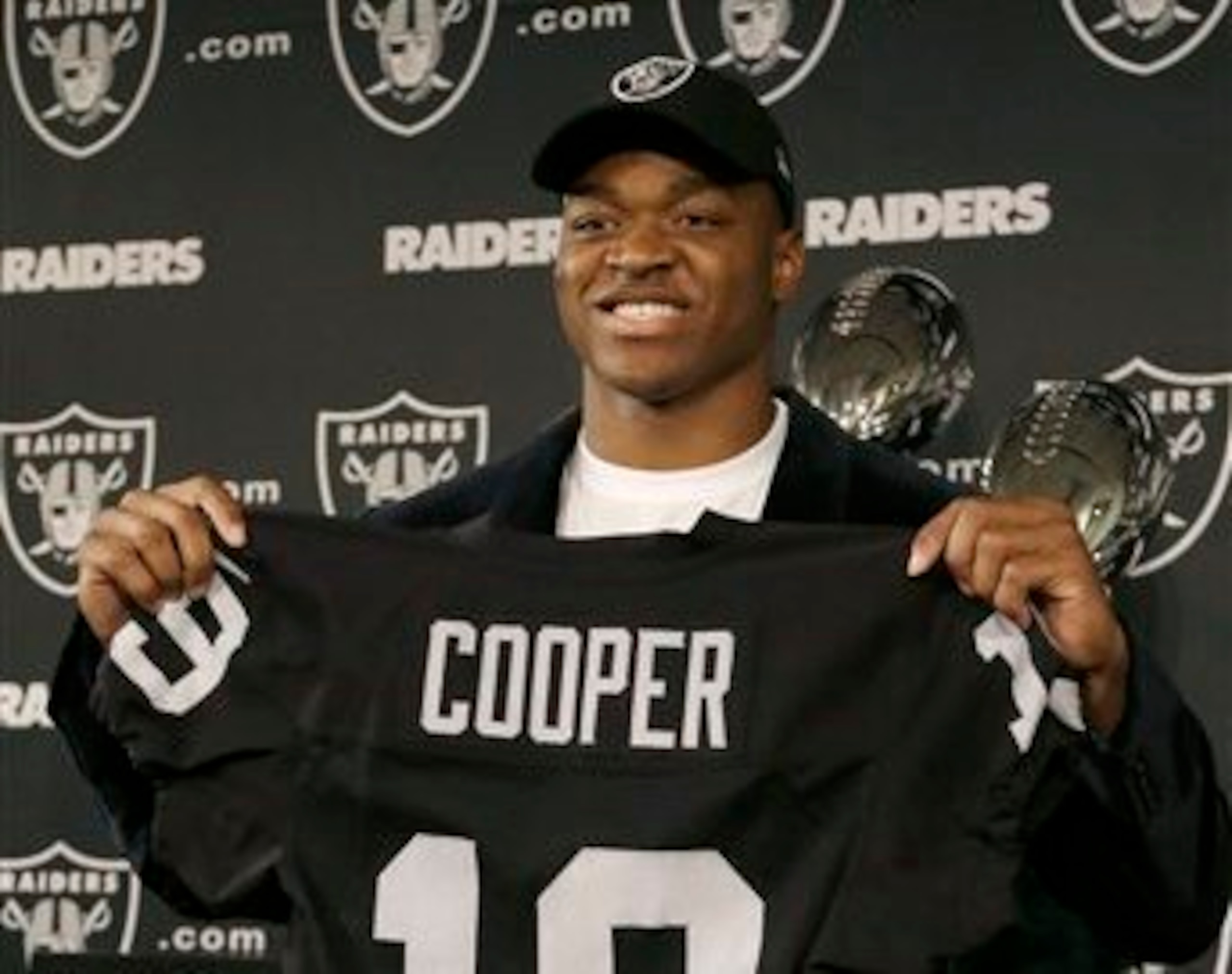
This is the easy answer, but it's also the right answer.
Things couldn't have gone any better for the Raiders in the first round. The three players the team wanted—Cooper, Kevin White and Leonard Williams—where all sitting there. Despite picking fourth, the Raiders were essentially picking first as far as their own big board was concerned.
When Williams fell out of the top three, it seemed inevitable that he would be the pick. But instead of picking the player with arguably the highest upside in the draft, Oakland went with arguably the most polished, pro-ready player available in Cooper.
This was Oakland's best pick for several reasons:
- It addressed Oakland's most glaring need, which was a reliable and dangerous wide receiver.
- The addition of Cooper makes the entire offense better. He'll step in as the team's No. 1 receiver, which means every other receiver will get bumped down the depth chart to a role they're better suited for.
- A legitimate receiving threat will be huge for the development of Derek Carr. And given that they're both young, they will have the opportunity to develop great rapport with one another.
- A real passing attack on the outside will improve the play of the tight ends and of the running game.
General manager Reggie McKenzie should also be given credit for not being pressured into taking Williams, who was the media darling of this draft, or making the sexier pick of White. That's not to say that either of those players would've been a bad selection, but Cooper was the better one.
With one selection, the Raiders greatly improved the entire offense. That's a great selection.
The Bad: Reaching for Mario Edwards Jr. over Proven Defensive Ends
3 of 7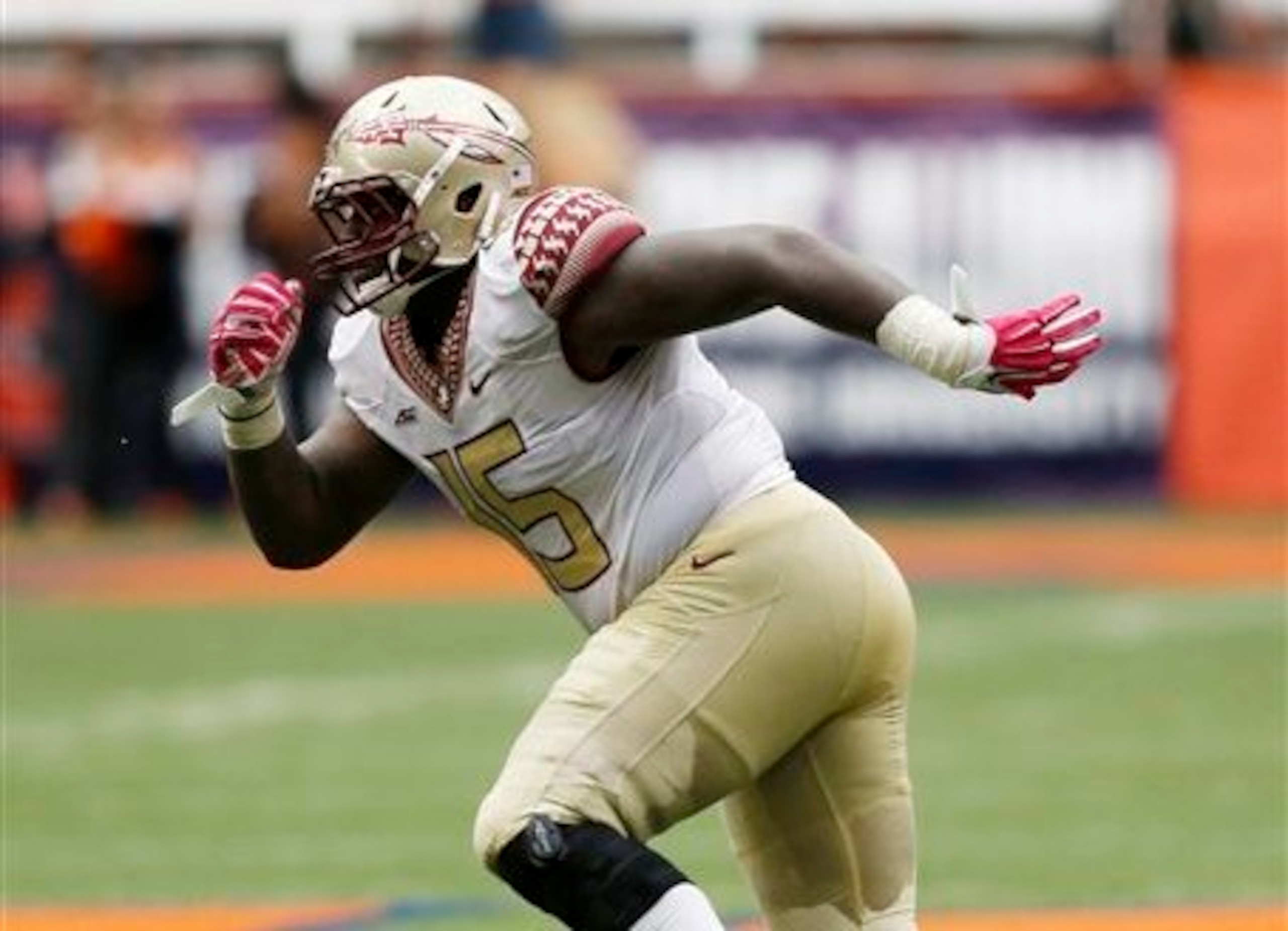
Mario Edwards Jr. is unproven, but he's an impressive athlete. He has a lot of potential. He's surprisingly agile for a man of his size (6'3, 279 pounds). Those are the characteristics you look for in a late-round pick, or maybe one in the mid-rounds. It's not what you want out of a second-round pick.
The Raiders needed to address their two biggest needs in the first two rounds: wide receiver and defensive end. They took care of wide receiver in the first round, which left defensive end as the team's clear option in the second. But instead of addressing the need by taking a proven defensive end like Nate Orchard and Preston Smith, the Raiders opted for a project in Edwards.
There are two major concerns about Edwards coming out of college: weight and desire. He weighed in at 279 pounds at the combine, which is good weight for a defensive end. But he got up to as much as 311 pounds while at Florida State.
Edwards admitted this was an issue for him:
"You have people saying you're this and that... you kind of relax and take your foot off the pedal a little bit. That definitely caused me to gain weight and become worse. Being a little too comfortable and complacent from where I was ranked kind of had its toll on me coming in overweight.
"
"Complacent" and "comfortable" are not words you want to hear your second-round selection using to describe himself.
The fact is that there remains a question as to whether Edwards is a defensive end or a defensive tackle. As far as the Raiders are concerned, he was drafted to play defensive end. That's fine, but it doesn't change the fact that, as a player who only had eight sacks in three college seasons, he's a project and a big reach in the second round.
.jpg?w=2560 "Rams Raiders Football")

.jpg?w=2560 "Steelers Saints Football")
The Baffling: No Proven Cornerbacks
4 of 7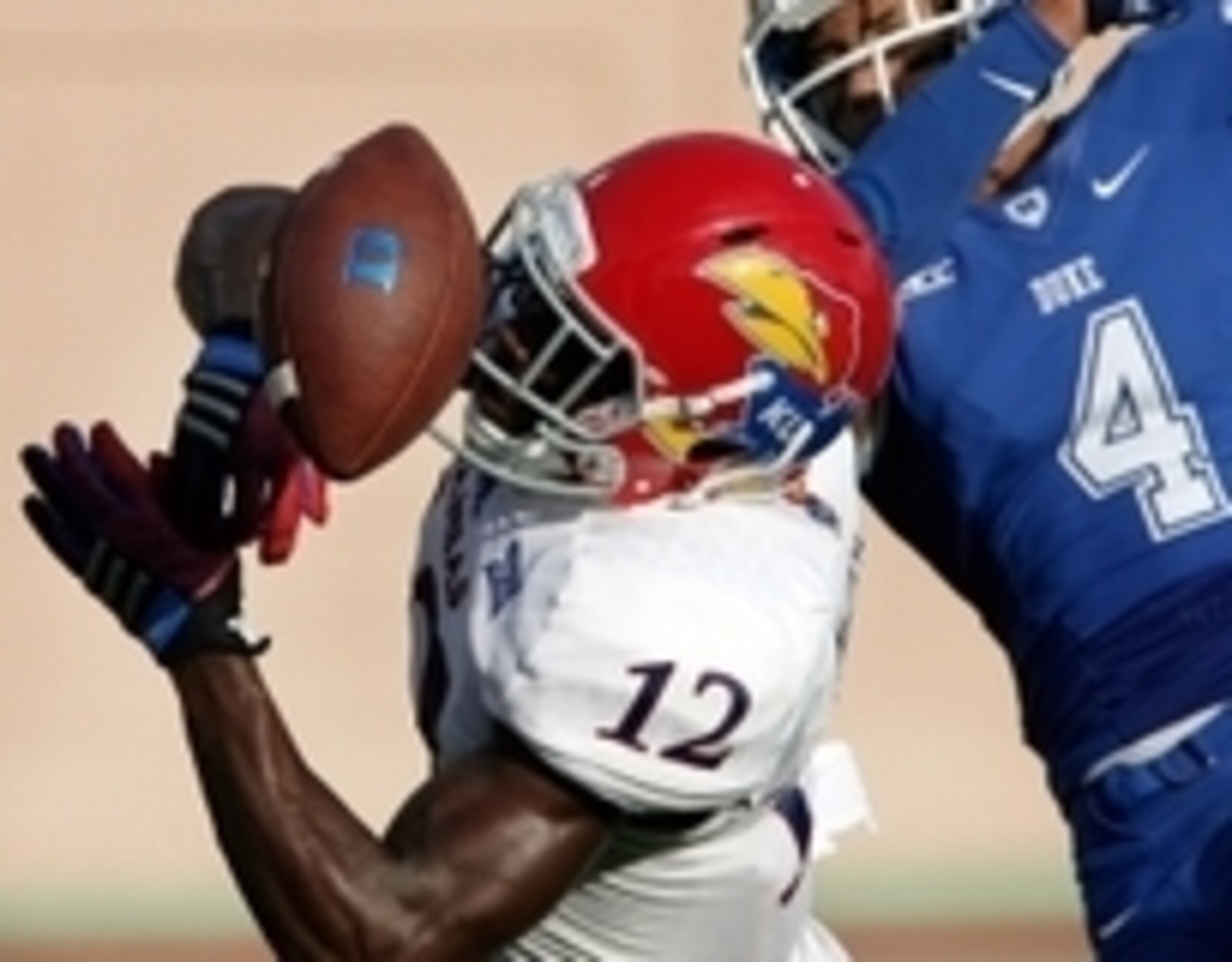
Aside from wide receiver and defensive end, the Raiders entered the draft with a big need for reinforcements at cornerback. As the team began to stockpile picks in the later rounds, it seemed a sure thing that they would be used to address this need.
Instead, the Raiders waited until their very last pick, which was toward the end of the seventh round, to take a cornerback in Dexter McDonald. He has the size teams want in a cornerback (6'1, 200 pounds), but he was an unreliable performer while at Kansas.
The selection of a player like McDonald with the 242nd overall pick isn't a bad one. The bigger issue is that he's the only player Oakland took at the position. Apparently, Oakland has a lot of faith in the team's current cornerbacks. The baffling aspect about this is, what is that faith based on?
Hopefully, for the sake of the team's development, that faith is well-founded. But for now, it seems like a very risky decision by the team to trust its cornerback success on a depth chart that's completely devoid of proven performers.
Smartest Pick: Two-Way Tight End Clive Walford
5 of 7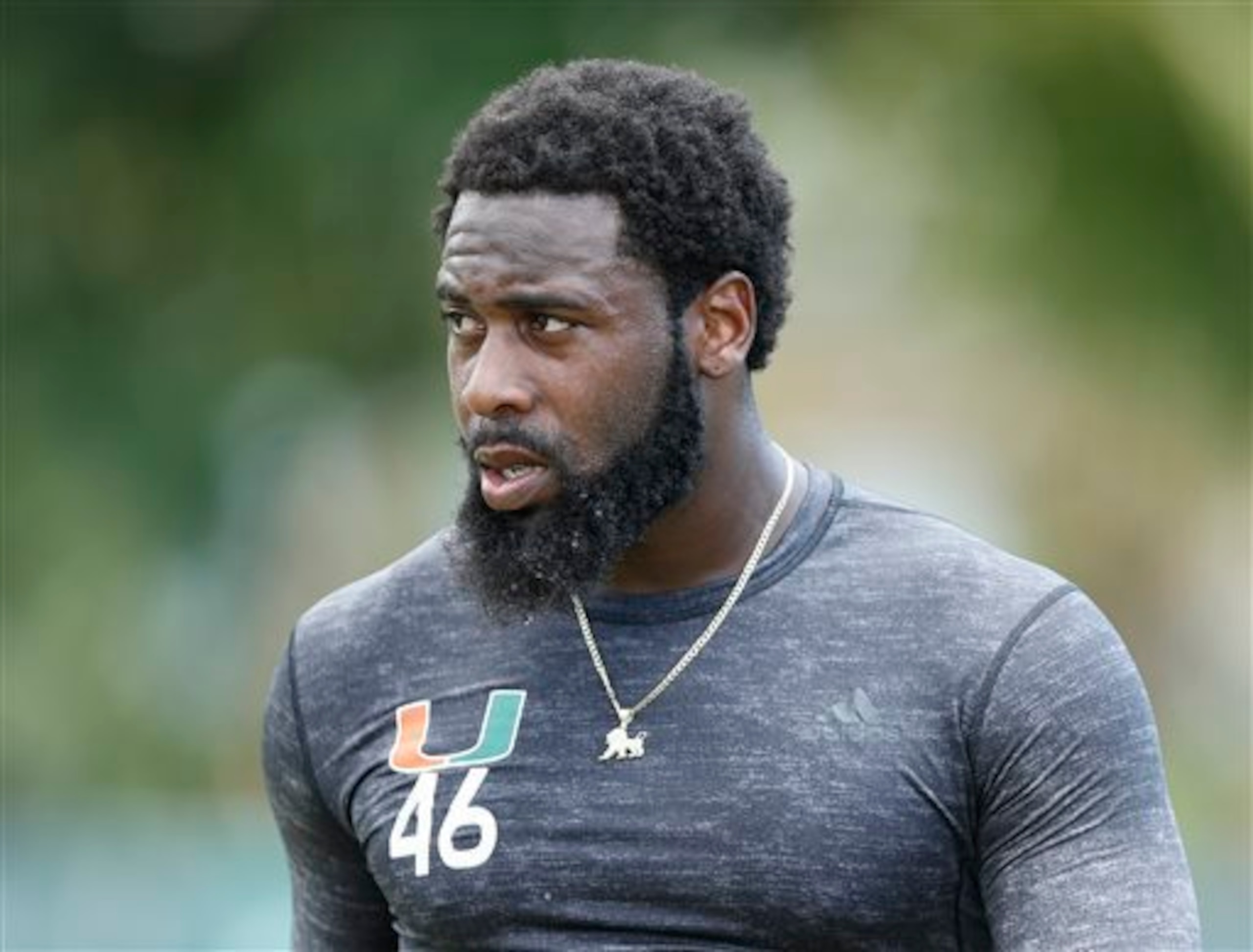
After a suspect pick in the second round, Oakland made one of the smartest picks in the draft by any team by taking tight end Clive Walford in the third round.
The Raiders have a promising pass-catching tight end in Mychal Rivera, and they added Lee Smith, a great blocking tight end, through free agency. As a tandem, the tight end position could be effective with those two players. But in Walford, Oakland added a tight end that can do both.
One of Walford's best attributes is something that won't show up on a stat sheet or on film: his work ethic.
While at the University of Miami, he had some trouble holding on to the ball. So he worked on it and became a sure-handed receiver. He was a weak blocker. So he worked on it and turned himself into a very good blocker. He stayed in school and addressed the major flaws in his game. Now, he's a dangerous receiver, a reliable blocker and a solid route runner with great speed for the position.
The Raiders had a solid group of tight ends, but in Walford they get a player that has a good chance at becoming the team's starter going forward and has very real Pro Bowl potential. That's a great find in the third round.
Oddest Pick: Work-in-Progress Jon Feliciano
6 of 7
The Raiders have a need at right guard. And as the draft progressed, things seemed to be falling their way at the position. Several players that had the potential to start as a rookie at the position began to drop, such as Tre' Jackson and Arie Kouandjio. Instead, the Raiders traded back in the fourth round—twice—and settled for Jon Feliciano.
To Feliciano's credit, he's a mauler with some nastiness in his game, which is what the team was looking for at guard. Also, you have to be a fan of a guy that uses this as his hand-picked profile picture. But he has a long way to go before he's a viable option as a starter. That in and of itself isn't bad, but it does raise the question: What's Oakland going to do at the position in 2015?
Last year's starting right guard, Austin Howard, is moving back to right tackle. This means that for now, the leading candidate to start at right guard is Khalif Barnes. He's not the worst option, but he's more of a reserve. He's certainly not the permanent solution.
This draft provided an opportunity for the Raiders to find a permanent starter at right guard. Instead, the team traded back and settled for a project.
Other Observations
7 of 7
Here are a few observations about the draft in general:
The Florida-to-Oakland Football Pipeline
Five of Oakland's 10 picks came out of the state of Florida: two from the University of Florida (Neiron Ball, Andre Debose), two from the University of Miami (Clive Walford, Jon Feliciano) and one from Florida State (Mario Edwards Jr.). Add to that Miami native Amari Cooper, and the state of Florida in one way or another produced more than half of Oakland's draft.
Perhaps credit should be given to Oakland scout and former Raiders fullback Zack Crockett, who's the team's scout in the region. More likely is that this is just some strange coincidence. Still, it's an odd and interesting footnote to the draft.
Raiders recognize need at linebacker
Of all the things that went wrong for Oakland in 2014, one of the biggest issues was the team's rash of injuries at linebacker. Oakland has made sure that that won't be an issue again.
After adding linebackers through free agency, the team went on a linebacker run in the fifth and sixth round and selected three consecutive linebackers (one middle linebacker, two outside linebackers).
Ultimately, that number will shrink to two given that Max Valles is expected to convert to defensive end. Either way, none of the linebackers the team selected is expected to challenge for a starting spot in 2015. But what Oakland ensured was that depth at linebacker won't be an issue.
Unless otherwise noted, all stats taken from ESPN.com.
What are your thoughts on the Raiders' performance the draft? Which picks do you like? Which do you dislike? Let me know what you think in the comments section below and on at Twitter @BrianJ_Flores.
.jpg?w=2560 "Cowboys Packers Football")




.jpg?w=2560 "🚨 Week 8 AP Top 25 Poll")