
Re-Grading Washington Redskins' Past 5 Drafts
A Pro Bowl left tackle, three-time 1,000-yard running back and a stud pass-rusher. Is that enough of a haul for five drafts? Probably not.
New Washington Redskins general manager Scot McCloughan need only look at the last five drafts to know how much pressure is on him to change things in D.C.
McCloughan is already embroiled in improving a roster that's won seven games in two years. He's probably noticed there aren't many helpful building blocks lying around.
Aside from the headline trio referenced at the top, a fourth-round cornerback currently represents another potential quality starter the Redskins can rely on. Aside from those four though, it really is a case of slim pickings.
Find out how each of Washington's last five drafts grade out with the benefit of hindsight.
2010
1 of 6
| Round | Pick | Player | Position | College |
| 1 | 4 | Trent Williams | OT | Oklahoma |
| 4 | 103 | Perry Riley | ILB | LSU |
| 6 | 174 | Dennis Morris | TE | Louisiana Tech |
| 7 | 219 | Terrence Austin | WR | UCLA |
| 7 | 229 | Erik Cook | C | New Mexico |
| 7 | 231 | Selvish Capers | OT | West Virginia |
The 2010 NFL draft had a familiar look for Washington, in the sense the team didn't own many picks over the opening three rounds. In his first year in charge, then-head coach Mike Shanahan failed to use late-rounders as well as Bobby Beathard and Joe Gibbs did back in the day.
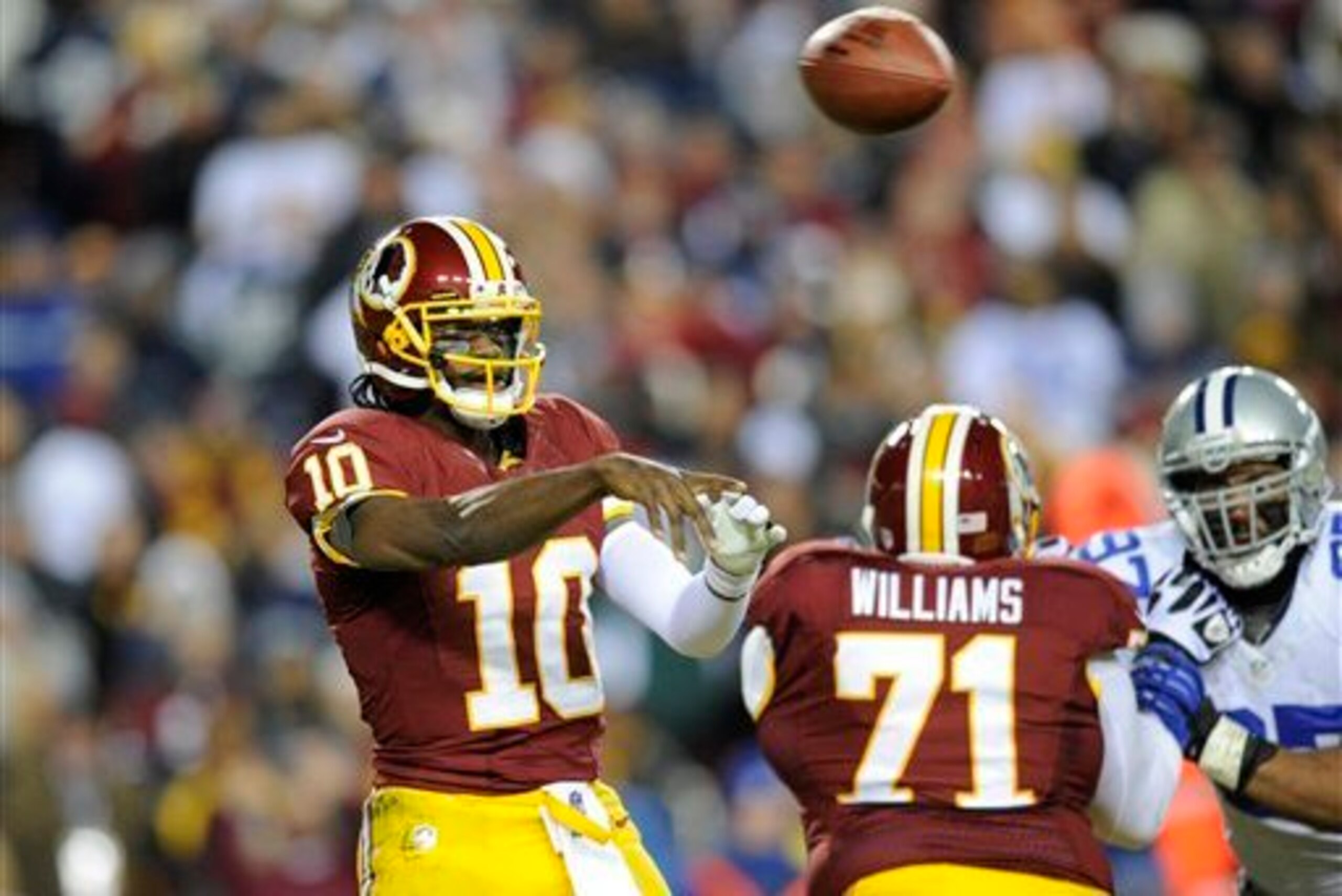
Shanahan scored big when he took Trent Williams off the board. It had been a virtual coin toss between Williams and Russell Okung to be the new anchor of the Redskins O-line.
Even though Okung has won a Super Bowl ring in Seattle, it's tough to dispute Shanahan made the right call. Williams has matured from a raw prospect who occasionally fell afoul of the league office to one of the most dominant left tackles in football.
He's a particularly imposing run-blocker even if his pass protection sometimes still needs work. Yet there aren't many teams who wouldn't take No. 71.
The only other highlight of this draft came in Round 4 when Perry Riley Jr. was added to help with the team's transition to a 3-4 scheme. As the lone defensive player of this class, Riley hasn't been a steal, but he has made the grade as a starter, even a solid one up until last season.
There were certainly problems for Riley in 2014, but it is important to note coordinator Jim Haslett put him in some terrible positions. Remember the sight of Riley isolated one-on-one against Tampa Bay Buccaneers' rookie wide receiver Mike Evans?
As for the rest of the picks, they are only memorable for adding up to one big sigh of disappointment at the lack of impact they made in burgundy and gold.
Grade: C-
2011
2 of 6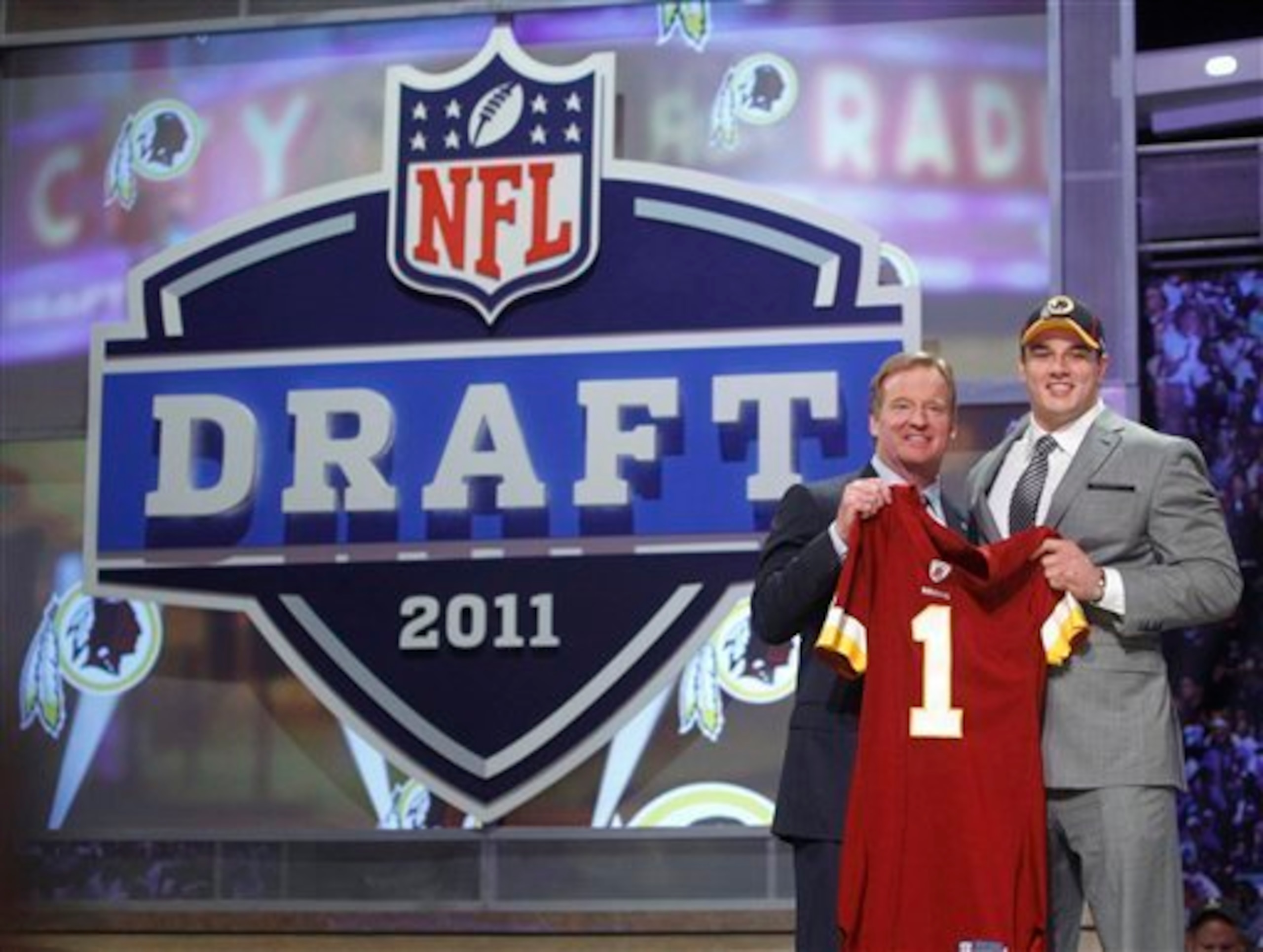
| Round | Pick | Player | Position | College |
| 1 | 16 | Ryan Kerrigan | OLB | Purdue |
| 2 | 41 | Jarvis Jenkins | DT | Clemson |
| 3 | 79 | Leonard Hankerson | WR | Miami |
| 4 | 105 | Roy Helu Jr. | RB | Nebraska |
| 5 | 146 | DeJon Gomes | S | Nebraska |
| 5 | 155 | Niles Paul | TE | Nebraska |
| 6 | 177 | Evan Royster | RB | Penn State |
| 6 | 178 | Aldrick Robinson | WR | Southern Methodist |
| 7 | 213 | Brandyn Thompson | CB | Boise State |
| 7 | 217 | Maurice Hurt | G | Florida |
| 7 | 224 | Markus White | OLB | Florida State |
| 7 | 253 | Chris Neild | NT | West Virginia |
In 2011, it was a rare time when the Redskins actually worked like a proper team should during the draft—at least, what most fans believe to be the way a proper team should work.
Washington was active in acquiring extra picks, executing a flurry of trades that ultimately netted seven players. Mike Jones of The Washington Post detailed how Shanahan helped turn one second-round pick into extra selections:
"The Redskins also had entered the draft’s second round with the 49th overall pick, but traded back three times to stockpile mid- to late-round pick. First they swapped that 49th pick with Indianapolis for the 53rd and 152nd (fifth round) selections, and then sent the 53rd pick to Chicago in exchange for the 62nd and 127th (fourth round) selections.
The Redskins then sent the 62nd pick to Miami and received the Dolphins’ 79th overall pick (a third-rounder), the 146th (a fifth-rounder) and the 217th (a seventh-rounder).
"
After all the wheeling and dealing, the Redskins had loaded up with 12 new faces.
The pick of the new bunch has always been Ryan Kerrigan. Washington moved back from No. 10 to 16 to take Kerrigan. It received the 49th overall choice Shanahan turned into a late-round bundle from the Jacksonville Jaguars as part of the deal.
Kerrigan has been an outstanding addition from Day 1. He's improved his game every year he's been in the league, establishing a niche as a sack specialist with a flair for the big play.
So far, his career has been bookended by the 7.5 sacks and four forced fumbles he tallied as a rookie, to the 13.5 sacks and five forced fumbles registered in 2014. Kerrigan is now one of the league's best at his position.
As for the rest, it is a question of what might have been. Injuries prevented Jarvis Jenkins and Leonard Hankerson from building on early promise. They are now with different teams; Jenkins joined the Chicago Bears, while Hankerson reunited with Kyle Shanahan with the Atlanta Falcons.
Roy Helu Jr. is another player who found a new home this offseason. Washington's offense may miss the new Oakland Raider's versatility on third downs. Helu would have been more than just a rotational player had Alfred Morris not come along and flipped the depth chart at running back.
It's impossible not to feel bad for Chris Neild. The unheralded seventh-round nose tackle has impressed every time he's got on the field. Unfortunately, he's appeared in just 24 games in four years. Injuries have laid waste to a player with starter potential over center.
Aldrick Robinson is a legitimate deep threat who made big plays in his second year but is no longer on the roster. The only other notable player from this class is converted tight end Niles Paul, whom ESPN.com's John Keim rates as a hit: "Hit. A fifth-round choice who receives a second contract after switching positions? That works. He's not a stud and his in-line blocking will never be a strength, but he contributes and is a core special teamer. The question: Can he build off his 39 receptions in 2014?"
Like Kerrigan, Paul has improved every year he's been a pro. He's also become invaluable as an alternative "move" tight end to the gifted but fragile Jordan Reed.
Overall, this class merits a positive grade as much for the intent as the execution. This was one year the Redskins took the draft seriously and tried to make it the foundation of a winning roster. With a little more luck regarding injuries, it might have worked too.
Yet while the class as a whole didn't deliver, Washington got a true blue-chip talent in Kerrigan, along with a precious utility player on the rise in Paul.
Grade: B
2012
3 of 6
| Round | Pick | Player | Position | College |
| 1 | 2 | Robert Griffin III | QB | Baylor |
| 3 | 71 | Josh LeRibeus | G | SMU |
| 4 | 102 | Kirk Cousins | QB | Michigan State |
| 4 | 119 | Keenan Robinson | LB | Texas |
| 5 | 141 | Adam Gettis | G | Iowa |
| 6 | 173 | Alfred Morris | RB | Florida Atlantic |
| 6 | 193 | Tom Compton | T | South Dakota |
| 7 | 213 | Richard Crawford | CB | SMU |
| 7 | 217 | Jordan Bernstine | S | Iowa |
How you judge 2012's draft class, or anything since involving Washington for that matter, will depend on how you view the monster trade to select Robert Griffin III.
Is the decision to send a second-round pick and two future first-rounders to the St. Louis Rams for the right to pick Griffin a bold, daring move that will pay off in installments after looking like an instant windfall in 2012?
Or is that trade the worst draft decision this franchise has made since Heath Shuler was taken third overall in 1994? It's tough to find the middle ground when it comes to RG3.
Of course, there was no need to look initially—not when Griffin guided the Redskins to a 10-6 finish and the NFC East title as the focal point of the most exciting offense in football.
In fact, had Griffin's knee not imploded against the Seattle Seahawks in the first round of the playoffs, a game Washington was dominating up to that point, there may have been no limit on what the Redskins would have achieved in 2012.
But that's not how this story played out. Injuries, bad coaching decisions and the traces of diva evident in the player have turned Griffin from franchise savior to a whisker shy of bust status.
One of the problems he could least control was how the bounty paid for him has impacted the team since. Giving away the farm for a quarterback is OK if your said passer is a regular winner.
In that scenario, a team doesn't miss the first-rounders dealt away. That team doesn't need them as much because it's winning.
But that's just not how things were in Washington in 2012. Shanahan's Redskins were coming off 6-10 and 5-11 finishes. There were holes on the roster Griffin alone couldn't fill.
The quick-fix deal, which is comparable to any bloated contract owner Dan Snyder ever handed out in free agency, prevented steady building of a sustainable foundation.
In fairness though, it's not as if any foundation for sustained success didn't accrue some benefit from 2012's class. The sixth round yielded Alfred Morris, the classic, Shanahan running back steal from the depths of a draft.
Three 1,000-yard seasons in a row are all the proof needed of Morris' status as a major draft hit. He could soon be joined in that bracket by Keenan Robinson.
The smart and ultra-athletic middle linebacker finally stayed healthy long enough to let his talent show in 2014. Robinson is now a true playmaker at the heart of the front seven, somebody a stout defense can build around.
Maybe nobody is building a solid offensive line around sixth-round tackle Tom Compton. But while many fans aren't impressed, the coaches were confident enough to make him a starter last season and bring him back in free agency.
Finally, Kirk Cousins has his critics, just like every quarterback on the roster. But the former fourth-rounder is also a starter-worthy passer. Last season's offense was at its best under Cousins' guidance. Perhaps he won't make the grade at Redskins Park. But Cousins hasn't yet lost the fight to possibly supplant Griffin.
As for the man himself, he wasn't drafted for what he did in Year 1. He was selected to ensure a decade-plus of winning.
Whether you support Griffin or want him gone, the future of the franchise has looked far from rosy since the halcyon days of 2012.
Washington entered this draft determined to get a player who would lead it to a Super Bowl. But in the end, the Redskins were left with one Pro Bowler, a potential Pro Bowler and two decent roster fits who might yet be more.
Grade: B-

.jpg?w=2560 "Cardinals Giants Football")
.jpg?w=2560 "Titans Giants Football")
2013
4 of 6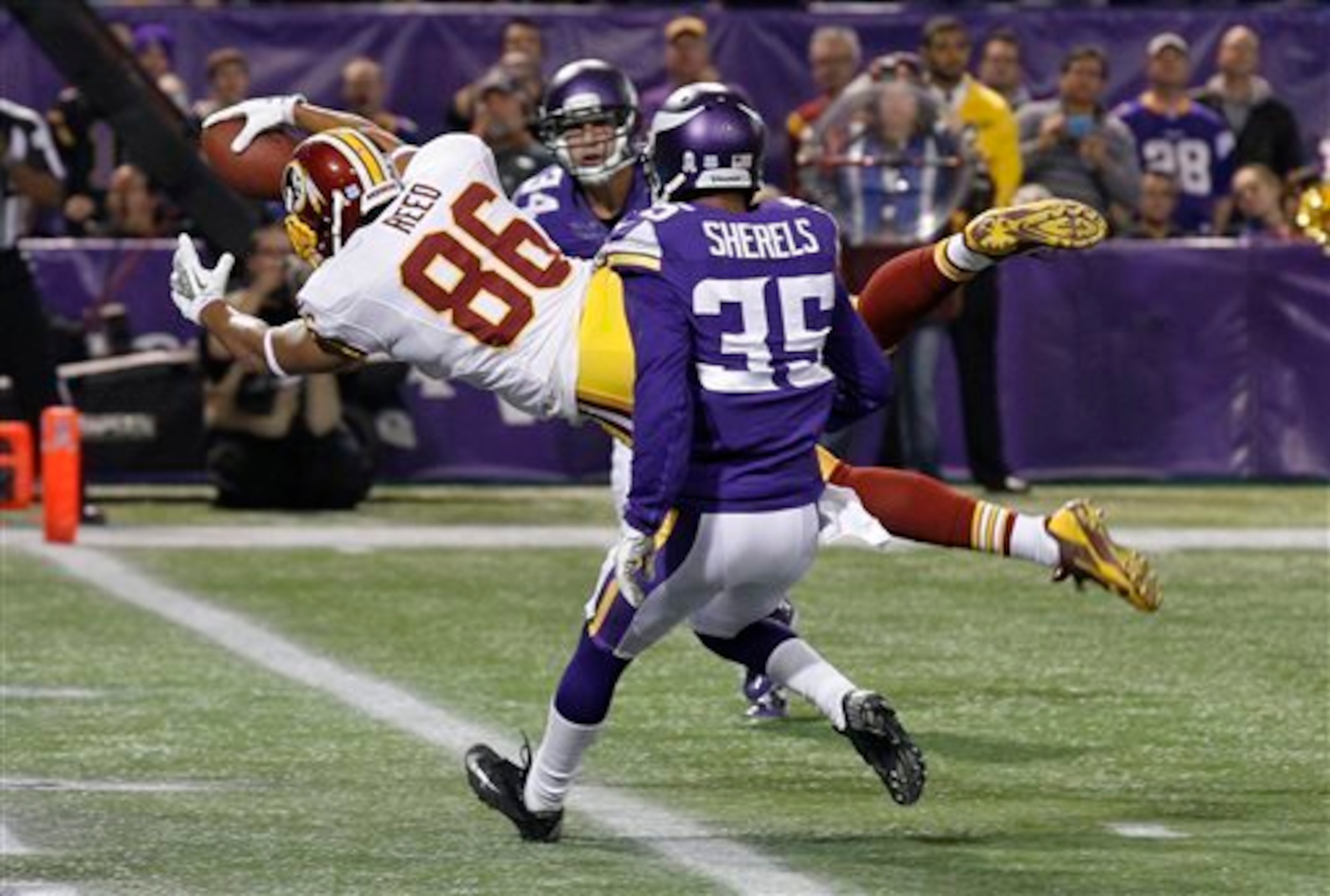
| Round | Pick | Player | Position | College |
| 2 | 51 | David Amerson | CB | North Carolina State |
| 3 | 85 | Jordan Reed | TE | Florida |
| 4 | 119 | Phillip Thomas | S | Fresno State |
| 5 | 154 | Chris Thompson | RB | Florida State |
| 5 | 162 | Brandon Jenkins | DE/OLB | Florida State |
| 6 | 191 | Bacarri Rambo | S | Georgia |
| 7 | 228 | Jawan Jamison | RB | Rutgers |
In the interest of full disclosure, I'll confess to being initially impressed with and enthusiastic about 2013's draft class. As an olive branch to the readers who regularly suffer my drawl, take a look at the grades and analysis yours truly gave each pick at the time.
You'll immediately notice how the grade for Phillip Thomas, a pick I lobbied for before the draft, hasn't exactly meshed with reality.
While my idiocy will no doubt come as little surprise to some, probably many, 2013's draft was always going to be more about what the Redskins didn't have—specifically, the lack of a first-round pick following the Griffin trade.
Initially though, things looked good. The team paid early and ample attention to the secondary. The problem is while Thomas has had trouble just making the final roster, David Amerson has flopped as a starter.
He naturally struggled some as a rookie but also produced enough mildly positive moments to engender optimism ahead of his second season. But any positivity has disappeared since 2014 was consigned to the books.
Amerson was a favorite target for quarterbacks and receivers who were looking for a big play last season. He ended the year thoroughly outperformed by a fourth-round rookie and leaving fans hoping DeAngelo Hall gets back to full fitness as soon as possible.
At least Amerson made it to his second year, though. Bacarri Rambo couldn't even do that. He was torched as a rookie after routinely taking horrible angles in deep coverage. It didn't help that tackling ironically appeared to be a foreign concept to somebody bearing the name Rambo.
The cruel hand of fate has dealt both players and the team a blow when it comes to Jordan Reed and Chris Thompson. Both could be invaluable niche weapons for the passing game if only either could stay healthy.
Reed has the potential to be one of the NFL's best at his position provided he stays upright long enough to develop some real consistency. That quality is the only thing missing from this dynamic playmaker's game.
As for Thompson, the fact he's getting the "first crack" at the third-down running back job, per Mike Jones of The Washington Post, indicates coaches haven't given up yet on the back who's made six appearances in two years.
Overall, this class has teased and tantalized more than it's delivered. At the time, NFL.com writer Gregg Rosenthal identified the pressure the Griffin deal put on this draft: "Without many high picks (or salary-cap room), the Redskins need to hit on some late picks who can contribute right away."
This class hardly yielded those. Rosenthal's assessment of Thomas does at least show more than a few were fooled by this bunch—So did Jason Reid, then of The Washington Post, who saw a coherent plan behind these selections.
Grade: D
2014
5 of 6
| Round | Pick | Player | Position | College |
| 2 | 47 | Trent Murphy | OLB | Stanford |
| 3 | 66 | Morgan Moses | OT | Virginia |
| 3 | 78 | Spencer Long | G | Nebraska |
| 4 | 102 | Bashaud Breeland | CB | Clemson |
| 5 | 142 | Ryan Grant | WR | Tulane |
| 6 | 186 | Lache Seastrunk | RB | Baylor |
| 7 | 217 | Ted Bolser | TE | Indiana |
| 7 | 228 | Zach Hocker | K | Arkansas |
Bruce Allen's first draft in control saw a few trades and a list of selections that appeared to follow one of the league's main principles for constructing a winner: build from the trenches up.
It's tough grading this class because so much is still expected of its principal players. Trent Murphy hardly delivered extra pressure one year after leading the nation in sacks at the collegiate level.
But the former Stanford man did show promise as a smart and stout edge defender who could stand up against the run and play in space. If the current coaches really believe in Murphy, perhaps the Redskins won't opt for a pass-rusher in this year's first round.
The presence of Morgan Moses and Spencer Long certainly seems to have led to a long wait for offensive line help. Jay Gruden has already indicated he's counting on rapid improvement from Long, a contender for the job at right guard, per ESPN.com's John Keim: “We expect Spencer to have an excellent offseason, come in in better shape. When you go from your rookie year to your second year, that’s usually the biggest jump you have to make as a player."
Meanwhile, Moses has a shot at the right tackle spot, according to 247Sports' Jamie Oakes. Gruden has also expressed confidence in the big man on the edge, per Stephen Czarda of the team's official site: “Morgan is a young kid, and played left tackle his last two years at Virginia and then the transition over to the right side wasn’t as smooth as we would’ve liked. But I think with a year under his belt, I think he’s got a chance to be a good, solid right tackle for us.”
Ryan Grant could also be in line for more catches this season. He's the only sure-handed, possession-style wideout on the roster.
At least the Redskins already know they can count on Bashaud Breeland. The tougher-than-a-pine-knot cover man has the core skills to become an elite cornerback.
It's Breeland's presence that so far rescues a draft class whose picks above him haven't delivered, while those selected below couldn't even avoid the final cut.
Grade: C
Over to You, Mr. McCloughan
6 of 6
If he didn't know it already, McCloughan need only look at the last five draft classes to know how much is expected of him in D.C. Not only does the former San Francisco 49ers and Seattle Seahawks team builder need to put the draft front and center, but he also has to do a better job of getting it right while making the picks than his predecessors did.
He'll need to hit on the majority of selections in his first draft because he's been left to inherit so little from these classes. But hitting the bull's-eye almost every time is far from a guarantee for a personnel man who's made a "host" of bad decisions to go along with his successes, per Thom Loverro of The Washington Times.
Free agency was solid for McCloughan. But he's going to be judged on what he does on draft days. His clock will start ticking on April 30.
.jpg?w=2560 "Titans Ravens Football")




.jpg?w=2560 "Tyreek makes another cryptic post amid Chiefs rumors")