2015 NFL Draft: Biggest Boom-or-Bust Prospects in This Year's Class
Next Thursday will be a dream come true for 32 young men. They'll hear NFL Commissioner Roger Goodell call their names, finally putting an end to all the years of unpaid work they put into honing their craft.
Unfortunately, the work does not stop there. Far from it. The reality of being a professional athlete is that the moment your team is off the clock, you are on the clock. NFL draft picks are unicorns in that their contracts are advantageous to both team and player. The league's draft pick slotting agreement has curtailed the massive deals picks signed during the former CBA while guaranteeing these young men millions of dollars.
TOP NEWS
.jpg?w=2560 "Titans Colts Football")
5 Teams Eyeing Jonathan Taylor
.jpg?w=2560 "Chiefs Giants Football")
Mahomes Told Teammate to Leave Meeting
.jpg?w=2560 "Colts Football")
Jonathan Taylor Landing Spots 📍
In the NFL, real, guaranteed cash is a godsend.
It's also cause for instant pressure. Now more than ever, teams are looking for their draft picks to contribute in a huge way. The Seattle Seahawks built a blossoming dynasty on their low-cost superstars, which allowed them to build unprecedented depth through cap room saved. That strategy is going to increasingly become the new norm of the NFL, with teams being far more willing to move on from costly veterans in an effort to infuse youth.
Of course, that means teams will also be more willing to move on from young players who aren't working out. With that in mind, let's take a look at a few likely first-rounders with boom-or-bust potential.
QB Jameis Winston, Florida State
QB Marcus Mariota, Oregon
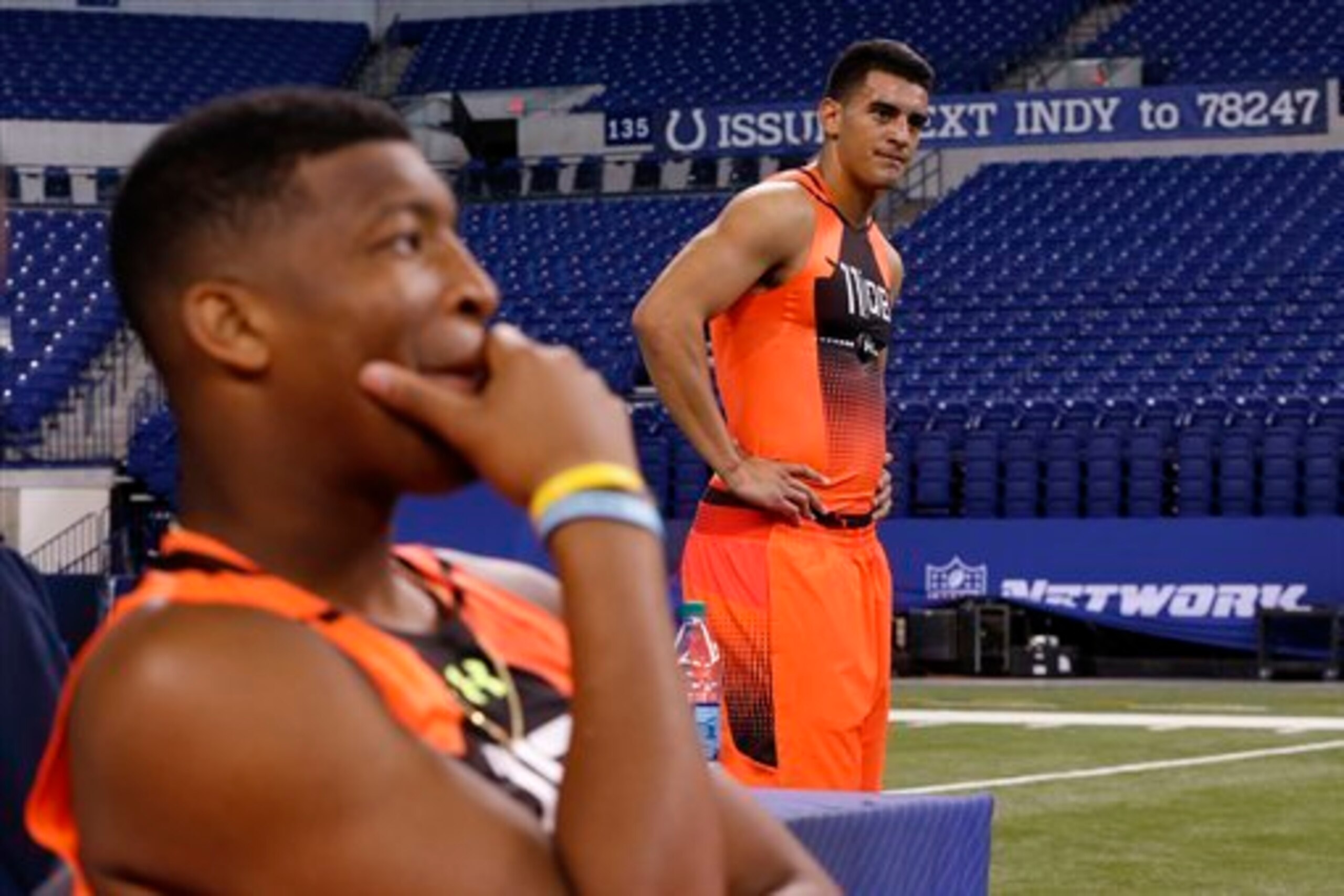
Simple enough premise here. Every quarterback taken in the first round comes with a boom-or-bust distinction. The position is perhaps the source of highest variance when it comes to draft picks. For crude comparative purposes, here is a look at the first-round quarterbacks in the last five drafts:
| 2010 | Sam Bradford | Leaning Bust |
| 2010 | Tim Tebow | Bust |
| 2011 | Cam Newton | Boom |
| 2011 | Jake Locker | Bust |
| 2011 | Blaine Gabbert | Bust |
| 2011 | Christian Ponder | Bust |
| 2012 | Andrew Luck | Boom |
| 2012 | Robert Griffin III | Unclear |
| 2012 | Ryan Tannehill | Leaning Boom |
| 2012 | Brandon Weeden | Bust |
| 2013 | EJ Manuel | Leaning Bust |
| 2014 | Blake Bortles | Leaning Bust |
| 2014 | Johnny Manziel | Leaning Bust |
Overall, there are only two clear franchise quarterbacks out of 13 players, Cam Newton and Andrew Luck. Ryan Tannehill put together a career year in 2014 but can't throw downfield. Robert Griffin III had one of the best rookie years in NFL history before falling off each of the last two seasons. The remaining guys are outright busts or appear to be headed that way, with Sam Bradford a clear bust in St. Louis but a potential reclamation project in Philly.
Both Winston and Mariota come with their clear strengths and potentially career-ending weaknesses.
Winston has all the prototypical physical traits you could want in a young quarterback. He has a big, lively arm that allows him to fit passes into tight coverages and possesses a pro-ready understanding of the game. While he's not super athletic, Winston could easily project as a Ben Roethlisberger type who does just enough to evade edge-rushers.
Issues arise for the former Florida State standout when focus shifts off the field. We don't need to pore over the details of Winston's well-documented past; character (and criminal) questions are going to follow him until he proves himself. Whether that's fair or not is another question entirely given the only things that have been proved about him are relatively minor, but it's reality.
Mariota comes with a squeaky-clean resume on and off the field. He's never had a documented run-in with the law or any other troubles away from football, and his overall resume at Oregon arguably puts him on the short list of greatest college quarterbacks in history.
Concern for NFL teams comes with Mariota's accuracy and ability to read defenses outside Oregon's system. While pro football is increasingly adding facets of the game attributable to Chip Kelly, it's still a game based largely under center. Teams know Mariota can read and react quickly when the decisions are laid out for him. His transition to the pro game will be making them on his own.
WR Dorial Green-Beckham, Oklahoma
When you're 22 years old and already the subject of a (fantastic) Lars Anderson profile about your "resurrection," odds are things could have gone better lately. Green-Beckham entered Missouri as one of the most highly touted wide receiver prospects in history, spending his first two years alternating between sensational and inconsistent.
Incidents off the field ended his time in Columbia early and sent him to Norman, where he unsuccessfully applied for a waiver to join Bob Stoops' Sooners. In the end, Green-Beckham will enter the draft more than a year removed from competitive football and perhaps with more concerns than any other player in this class.
That said, it's impossible to ignore his physical bonafides. Green-Beckham is 6'5", 237 pounds and ran under a 4.5-second time in the 40-yard dash. The only realistic comparison is Calvin Johnson, who is a once-in-a-generation freak and makes Matthew Stafford look 50 percent better than he really is.
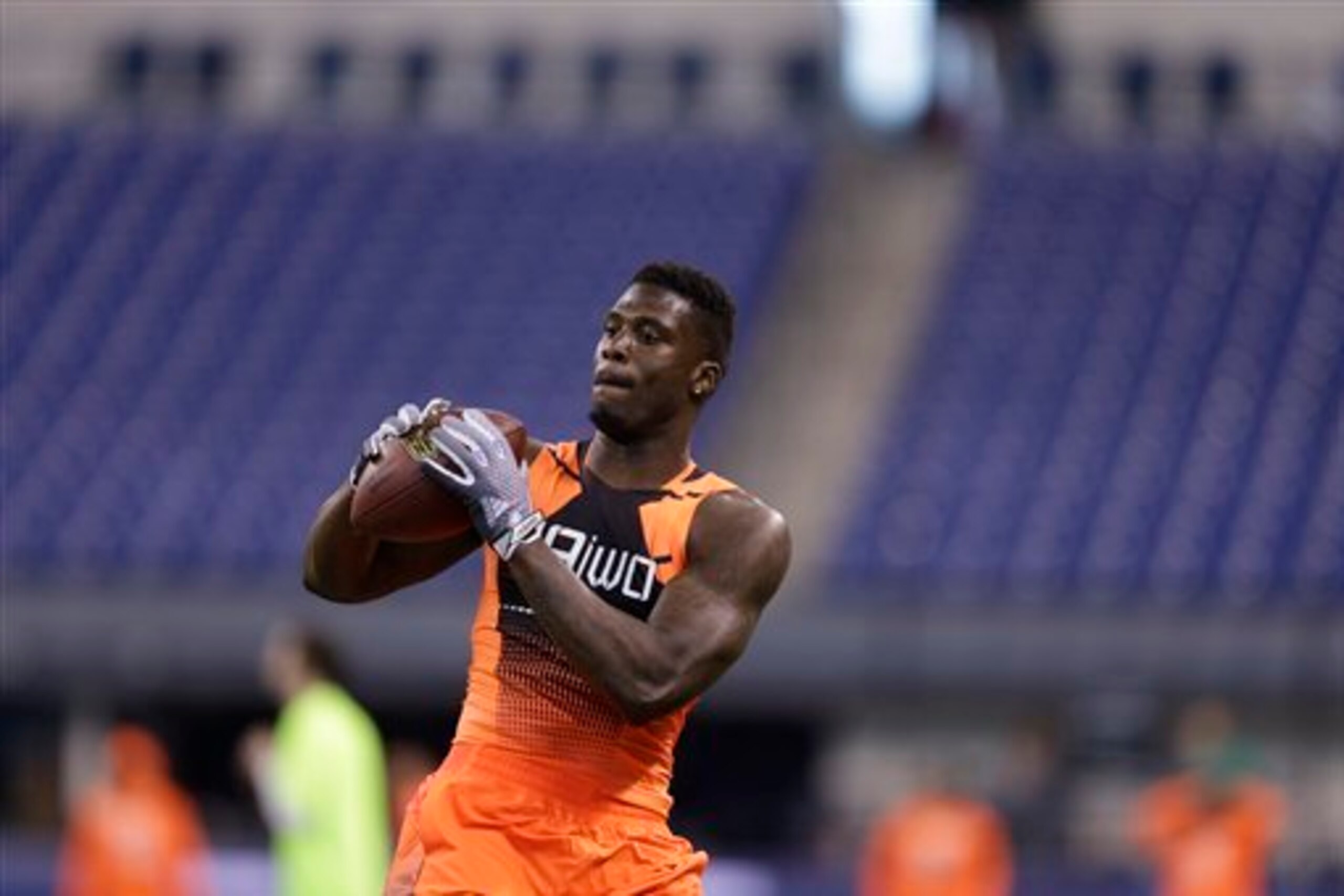
Denver Broncos running back Montee Ball was impressed with Green-Beckham's physical stature, as he told Anderson:
"They don't make receivers in the NFL that look like that other than Calvin Johnson. I've never seen or met Dorial before, but just by looking at him you can tell that this kid is going to be a matchup nightmare. Wow. He's about to get paid. Just...wow.
"
Teams in the back half of the first round would be remiss if they didn't go beyond due diligence in researching this kid. There's a distinct possibility he becomes this generation's Randy Moss, the uber-talented kid with baggage who lives to make people regret passing him on draft day.
There's also a chance a year away from football will do the same thing to DGB as it did to former USC star Mike Williams. The talent level here makes it worth rolling the dice.
WR/TE Devin Funchess, Michigan
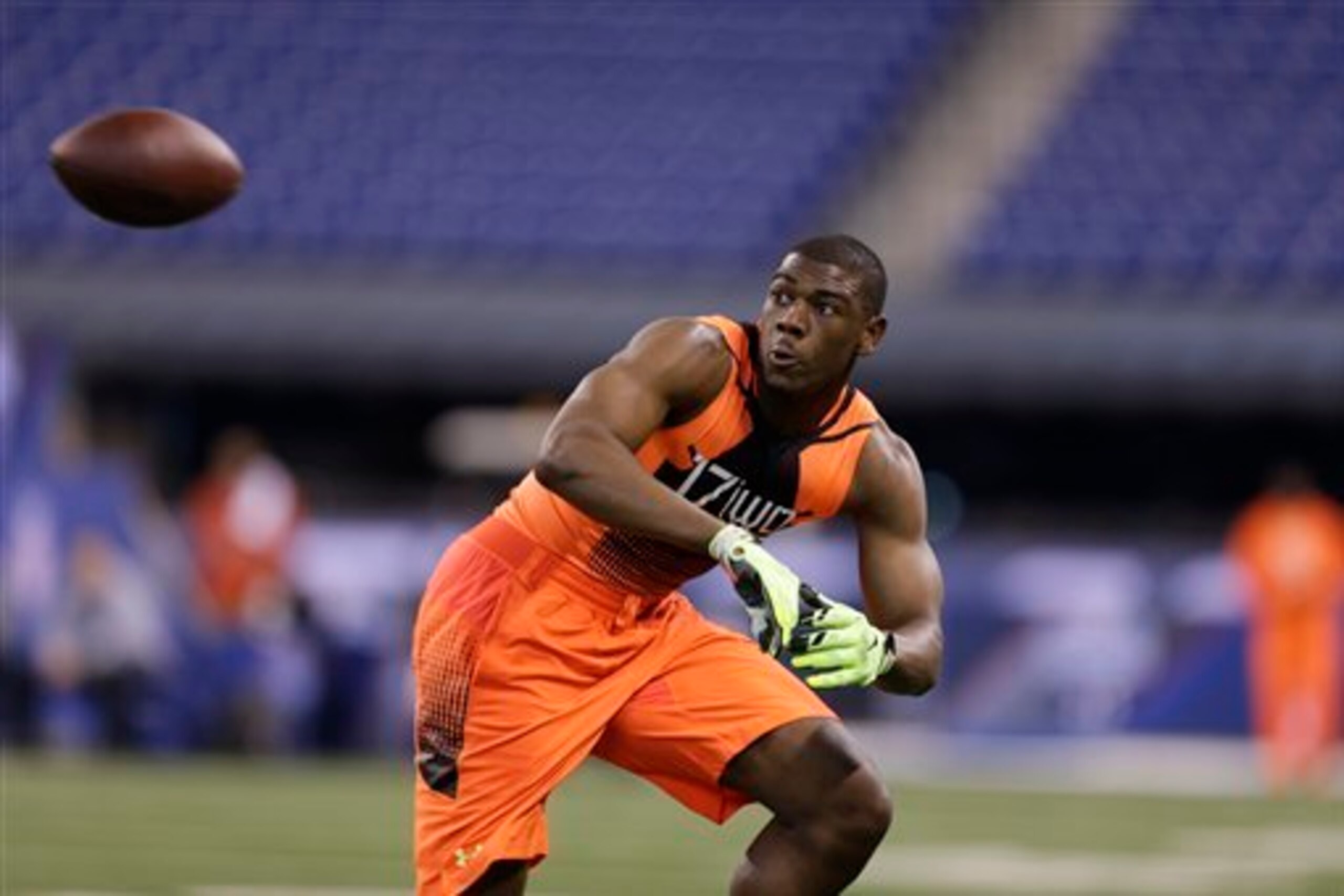
This depends on your definition of a bust. If you are evaluating Funchess as a wide receiver—and it appears many teams are—then he's not a first-round talent. He doesn't have the top-end speed necessary to create separation from top NFL cornerbacks, and his athleticism grades out as merely pretty good.
All it takes is a quick gander at how far his numbers fell off a cliff when he made the switch at Michigan to see we're not talking about an elite receiver prospect. I wouldn't take him before the fourth round if he insists he's a receiver.
The conversation changes, however, if he moves full-time to his more natural tight end spot. There, Funchess can play a Jimmy Graham-like role, moving between the slot and a down stance when formations see fit. Take Funchess' disappointing numbers at the combine and transfer them over to tight ends, and suddenly he goes from not good enough to freak athlete.
So often when evaluating prospects, we forget to look at context. By trying to go round-peg-square-hole with his professional career in calling himself a receiver, Funchess runs the risk of being a "disappointment" when he inevitably moves to tight end. It'd be better for him and the team that drafts him to make that distinction right away.
Otherwise, it's going to be a long road before Funchess can make a legitimate NFL impact.
Follow Tyler Conway (@tylerconway22) on Twitter.
.jpg?w=2560 "Eagles Jaguars Football")
.jpg?w=2560)