West Indies vs England: Anderson's Record Outshines England Performance
James Anderson is now England’s all-time Test record wicket taker. England drew the first Test against the West Indies in Antigua.
There are two pieces of information: A personal achievement and the overall team result after five days of competition. Which is more important?
A casual onlooker would be forgiven for thinking that England had won the match, such was the clamour and adulation in the immediate aftermath.
TOP NEWS

Brown with an all-time summary of relationship with Tatum

Unranked CFB teams cause chaos in Week 8
.jpg?w=2560 "Titans Colts Football")
5 Teams Eyeing Jonathan Taylor
The reality is that England drew a match that they were in a good position to win. Ian Bell and Gary Ballance had both struck determined hundreds to set up a platform for victory.
"Saturday's Times Sport: England's finest #tomorrowspaperstoday #bbcpapers pic.twitter.com/XC0sKgVJMS
— Nick Sutton (@suttonnick) April 17, 2015"
The hosts were set an unlikely 438 to win, leaving England 130 overs to take 10 wickets.
Much like the tourists, West Indies are a side undergoing a rebuild after a disappointing period. Both sides have seen better times, but West Indies have won just one of their last 14 series against the top eight nations.
This is not a side at the peak of their ability. This Test series is clearly an opportunity for England to regain a semblance of their old selves.
When first innings centurion Jermaine Blackwood inside-edged Chris Jordan behind West Indies were 189-6. England had 50 overs to find four wickets.
England did not find those four wickets. Jason Holder played the innings of his life, scoring a magnificent maiden century to deny England and hold out for the draw.
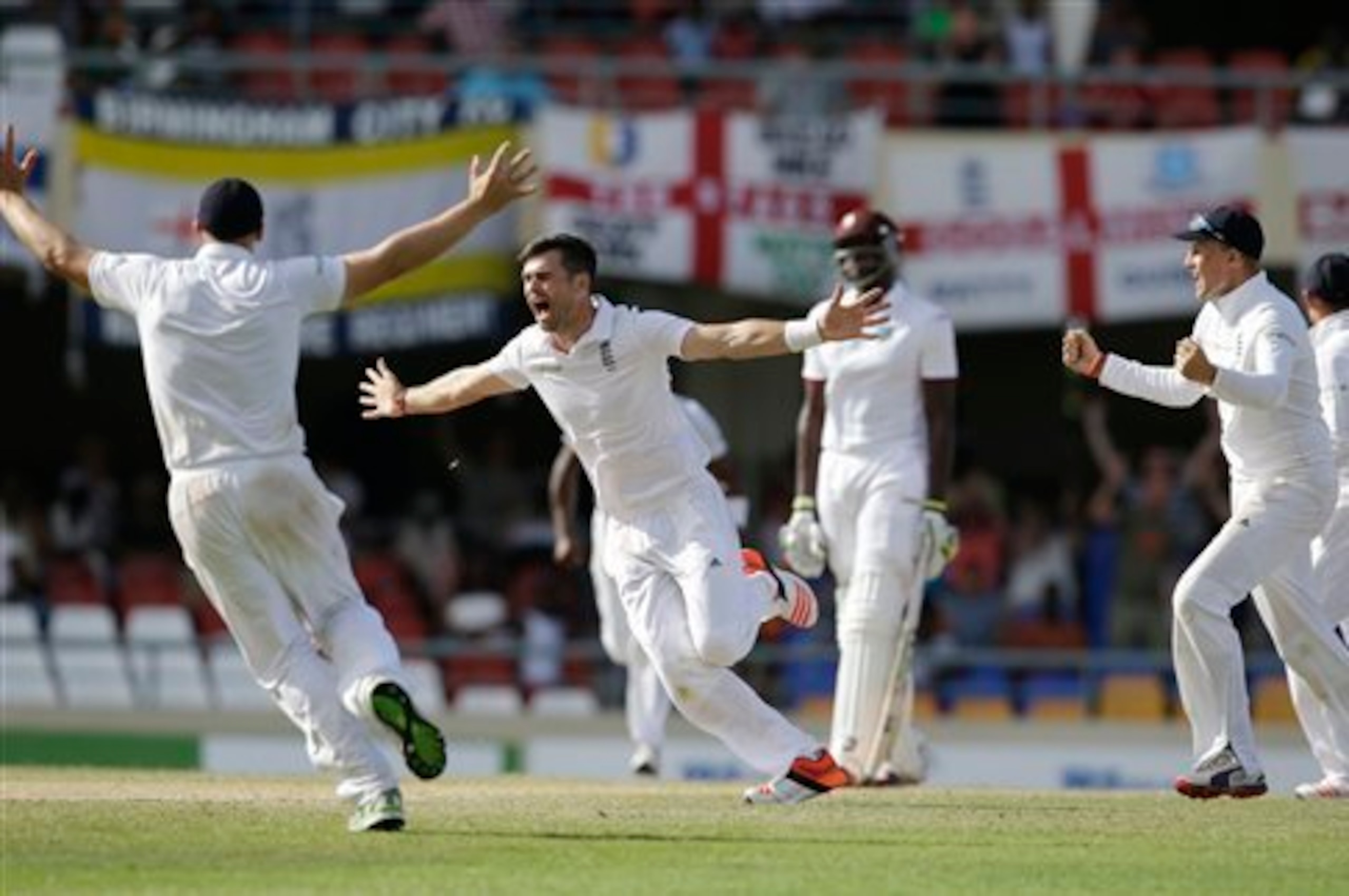
Not to worry. England may not have taken the four wickets required to win the match, but they did take the one wicket required to make the headlines; the all-important, all-encompassing wicket everyone had come to see.
Anderson found the outside edge of Denesh Ramdin’s bat. It flew to captain Alastair Cook at first slip who took the catch. Sir Ian Botham’s longstanding record had been broken. Three hundred and eighty-four Test wickets for the mild-mannered record-breaker.
The result no longer mattered. The narrative had been written. The journalists would dig out their praise pieces for an England great. The glossy career-highlights package would be primed and ready to go after the handshake.
"CELEBRATION: Jimmy wheels away after making history #Jimmy384 #Jimmy100 #WIvEng pic.twitter.com/5szBO81LH0
— England Cricket (@ECB_cricket) April 17, 2015"
The ECB even had two separate hashtags to mark the occasion.
It felt momentous, like this was the moment the whole match had been waiting for. We had constantly been reminded that it was coming, and now here it was.
Of course every England fan is happy for Anderson—he has been a wonderful bowler who has produced some amazing moments and won many Test matches. But this was not a testimonial. This was a Test match and it had been drawn.
England appeared quite content with the result. Cook’s post-match interview was not one of a downhearted captain ruing a missed opportunity. They had given it a good go on a docile wicket. Now, let’s talk about Jimmy.
Good teams are ruthless. They seize on every opportunity to gain an advantage and they invariably find a way to win. Right now England are a side perfectly happy with a draw, after all one of their players is the finest English bowler of all time.
For England to progress—to get back to where they once were—every player needs to be contributing. A draw should feel like a missed opportunity and the coverage should reflect that.
Anderson has every right to be proud of a fantastic achievement, but personal landmarks should be a footnote under an overall team performance, not the headline.
.jpg?w=2560 "Chiefs Giants Football")


.jpg?w=2560 "Jonathan Taylor Landing Spots 📍")