Higuain Effort Highlights Serie A's Need for Technology, but Are There Limits?
The issue of technology to help the referees in Serie A has been discussed for quite a while. The issues came to a head after the top-of-the-table clash between Juventus and Roma in October. Referee Gianluca Rocchi had one of the worst nights in recent memory that day, and the controversy that was unleashed lasted for weeks afterwards.
Part of the problem is that Rocchi is a substandard referee who should never have been trusted with such an important match. But after the game, a number of people called for the increased use of technology to assist the officials.
That week, Udinese manager Andrea Stramaccioni, in reaction to both the Juve game and a controversial penalty call against his own team that week, was quoted in a press conference (h/t Football Italia) as saying that technology was essential to "make football credible again."
TOP NEWS

Final Men's Ballon d'Or Rankings 📊

Live Highlights and Viral Moments 🍿

Most to Blame at Man Utd? 😡
But it seems that more voices are coming against the use of technology rather than in favor of it. UEFA president Michel Platini has been a long-term opponent of its use and reiterated that after the Juve/Roma feud. Juve manager Massimiliano Allegri added his voice to that list. Even Roma full back Maicon—who had been on the business end of one of Rocchi's questionable penalty awards in Turin—went on record as saying that replay would be bad for the game.
This weekend, the question of technology was again raised during the match between Napoli and Fiorentina. It was an important fixture—one that could potentially decide a European place—which made it all the more distressing when Gonzalo Higuain's long-range screamer in the 36th minute slammed into the bar, hit the turf and bounced back into play.
The goal-line official had his eyes on it but did not grant the goal, even though subsequent replays showed that the ball had crossed the line by the barest of margins.
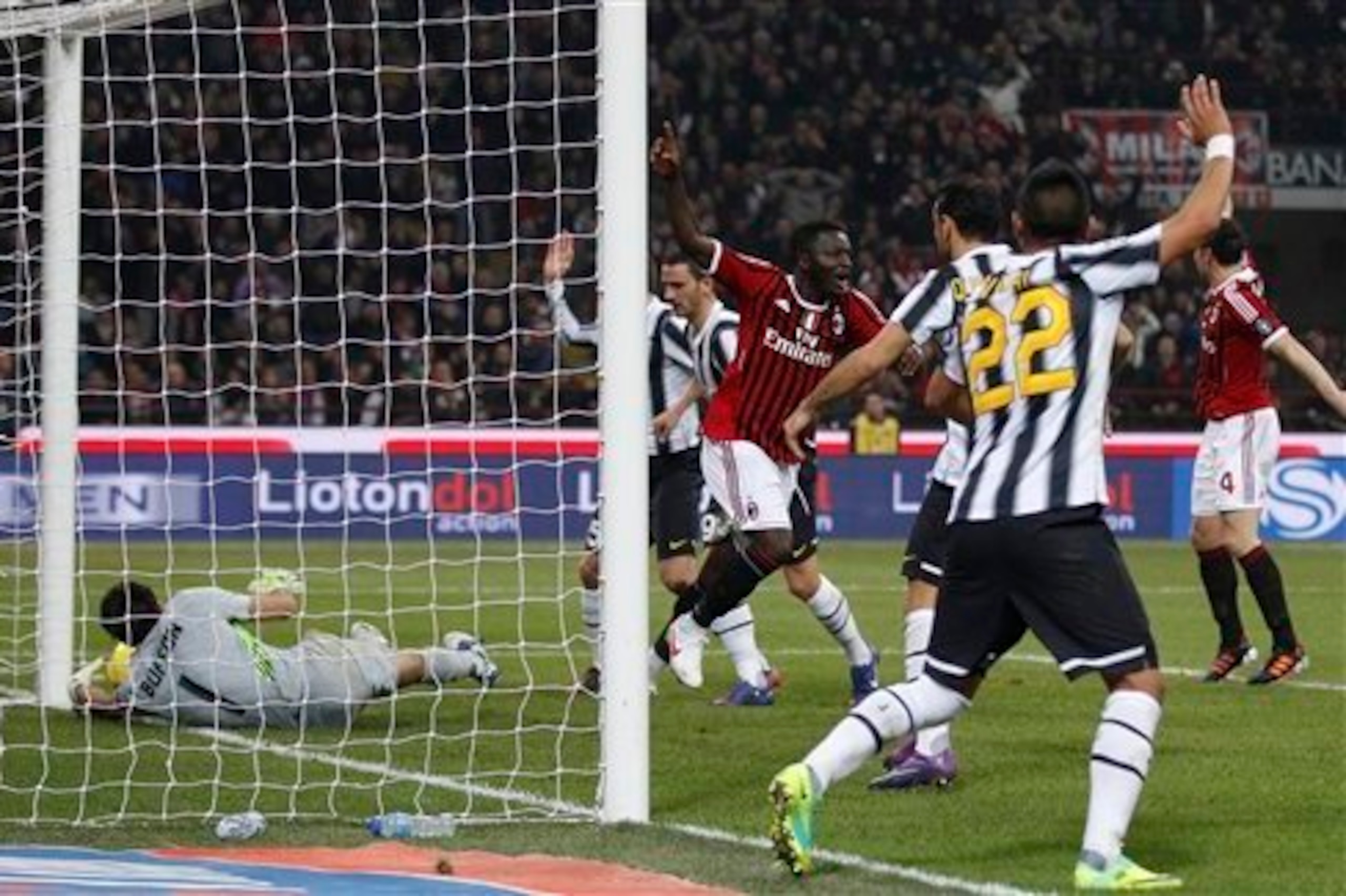
Thankfully the call didn't end up mattering too much. Napoli were the better team on the field from the get-go and won 3-0 going away. But if Fiorentina had managed to turn the game around and grab a point or three—a result that would have both teams in very different positions than they are now—it would have gone into the annals of phantom goals like Sulley Muntari's ill-fated strike against Juventus three years ago.
Milan fans railed about that call, which ended up being the difference between a likely Rossoneri win and the 1-1 draw that the game turned into.
The stakes in that case were even higher—the Scudetto was in the balance in the top-of-the-table clash. Juve ended that season unbeaten and four points ahead of Milan, so assuming that all subsequent results were the same Juve still squeezed out the title. But had that call truly decided the title, the talk would be even worse.
Measures are being taken to ensure that such calls never become an issue again. In February the Lega Serie A approved the use of goal-line technology. Last week league president Maurizio Beretta announced (h/t Football Italia) that the HawkEye system would make its debut at the Coppa Italia final between Lazio and Juventus in June, with the rest of the league implementing it at the beginning of next season.
Italy is the second of two major European leagues to announce its approval after the Bundesliga did so in December. It's a good thing. The mistakes that saw goals chalked off for Muntari and Higuain will be almost totally eliminated. Moments that could have turned into raucous controversy will now become footnotes.
This, however, is where Serie A should stop. One of the main advantages of goal-line technology is that the referee receives the message that the ball had crossed the line within a second. It has absolutely no effect on the flow of a game.
On the other hand, to add replay technology to other calls such as offside, whether a foul occurred inside or outside the box, or whether an infraction is worthy of a red card is a recipe for disaster. While it is conceivable that a system similar to goal-line technology may be able to aid in offside calls if developed, any other use of instant replay will necessitate a halt to proceedings on the field.
If a call is particularly close, that delay could end up being lengthy. To see 22 players mill about the field while someone tries to divine the slimmest of margins between one call or another could end up laughable.
American sports leagues all rely on replay reviews in some form, particularly the NFL. The difference between all of those leagues, however, is that America's major sports all have some form of natural stoppage of the action. In soccer, only two such times exist—halftime and full time.
In a game that is constantly in motion, to bring everything to a grinding halt—and if the NFL is an example, especially close calls could take as much as five minutes to decide—would completely kill the action. There simply isn't space within the framework of the game to allow such a thing to be done.
Goal-line technology is a step in the right direction and one that any league that can afford it should take. To go further, though, would be to go down a rabbit hole that could harm the way the game is played—and that's not acceptable.


.jpg?w=2560 "5 Teams Eyeing Jonathan Taylor")
.jpg?w=2560 "Mahomes Told Teammate to Leave Meeting")


.jpg?w=2560 "Jonathan Taylor Landing Spots 📍")