

Pakistan's Mohammad Amir Deserves a Chance to Revive His International Career

"I believe cricket suffered because of me."
Those were the words of Mohammad Amir in January 2014 when interviewed for the documentary Death of a Gentleman (h/t ESPN Cricinfo), as the Pakistani discussed his role in the spot-fixing scandal of 2010 that saw him hit with a five-year ban and six-month prison sentence.
"Fans were disheartened because of me. I want to make them happy and win them over again," the fast bowler added. "They felt bad for cricket, I have to tell them that cricket is a gentleman's game and I am going to prove it."
TOP NEWS

Brown with an all-time summary of relationship with Tatum

Unranked CFB teams cause chaos in Week 8
.jpg?w=2560 "Titans Colts Football")
5 Teams Eyeing Jonathan Taylor
Naturally, many will feel Amir doesn't deserve that chance. Regardless of his tender age, his vulnerability and inexperience, he—along with former team-mates Salman Butt and Mohammad Asif—dealt cricket an immeasurable blow, undermining the most sacred aspect of sport: the purity of the contest.
Sport is what it is because, at any given moment, anything is possible. Its unpredictability is its defining feature. But for one summer under the watch of Amir, Asif and Butt, it wasn't.
Instead, it was predetermined.

What followed was an elongated saga that saw the career of the world's hottest fast-bowling talent derailed. Though lamentable, it was necessary—cricket needs integrity more than it needs impressive speedsters.
But now Amir is on the comeback trail, one that began as early as 2012.
Almost three years ago, the disgraced left-armer met with the Pakistan Cricket Board as part of his rehabilitation process. A year later in 2013, an International Cricket Council sub-committee reviewed the governing body's conditions imposed on banned players to open the door for Amir to use the PCB's practice facilities.
By early 2014, the ICC had planned to streamline the return to cricket for banned players, before approving to changes to the anti-corruption code later that year that allowed disgraced players to return to domestic cricket ahead of the conclusion of their ban.
In January this year, Amir was cleared to return to the domestic game, and in March, made a much-awaited but low-key appearance for Omar Associates in Pakistan's Grade-2 cricket.

Inevitably, Amir's re-emergence will stir polarising opinions and contrasting emotions. He's a mouth-watering talent we want to see, yes, but he's also a player who committed sport's most heinous act.
"I am coping with hell at the moment and nobody can understand how difficult it is to live away from cricket," the Pakistani said a year into his ban. "I made a mistake and paid the price for it, but everyone gets a second chance and I want it too."
Cynics will say remorse means little once the deed is done. But as noted by Mike Selvey for The Guardian, "unlike the pair sentenced with him—Salman Butt, then the Pakistan captain, and Mohammad Asif—he has been genuinely remorseful and fully cooperative with the ICC anti-corruption unit."
The same point was expressed by ESPN Cricinfo's Umar Farooq: "Unlike Amir, who pleaded guilty during the criminal investigation in London, Butt and Asif continued to insist they were innocent, even in the face of evidence against them, confessing only after they had lost all option of appealing against their bans."
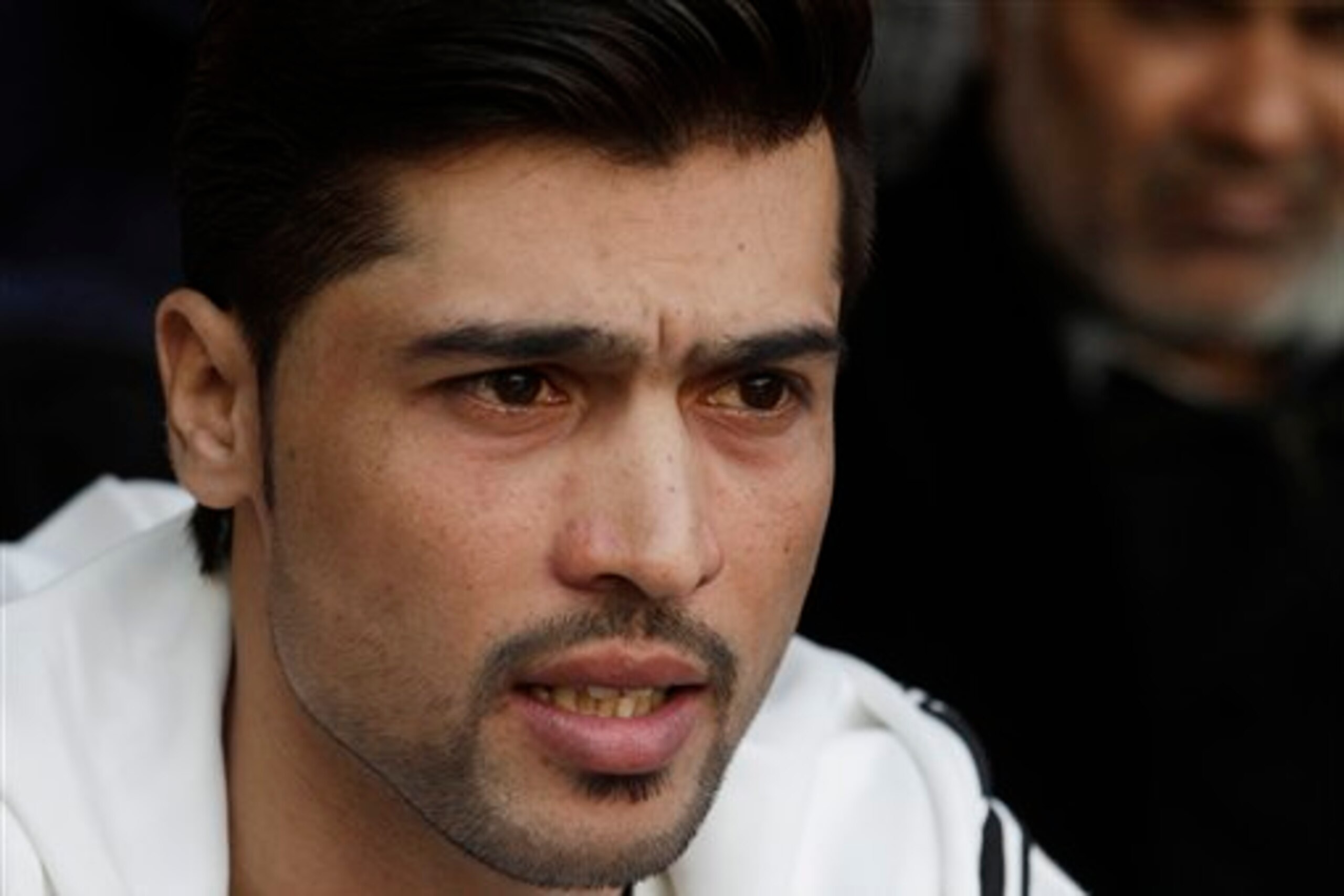
Such a difference is a small but significant one. Remorse is important in these circumstances, particularly when you consider the anxiety and stress he candidly discussed experiencing during an interview with Michael Atherton for Sky Sports in 2012.
"Everybody knows that prison is not a good place for anyone and nobody would feel proud to be there," he said, when asked about his time behind bars.
Whichever way you look at it, he paid a high price for a single moment of naivety, of weakness. He lost a blossoming career. He lost friends. He lost supporters. He lost respect. He lost a livelihood. He temporarily lost his freedom.
"Cricket suffered because of me," he remarked, but due to one moment of credulity, he also suffered because of the nasty figures who linger within cricket.
He, remorsefully, has endured consequences most won't ever comprehend. It's been a high price. A lesson learned.
A comeback, a second chance, is an opportunity he deserves.
.jpg?w=2560 "Chiefs Giants Football")



.jpg?w=2560 "NFL investigating Eagles")
.jpg?w=2560 "Jonathan Taylor Landing Spots 📍")
