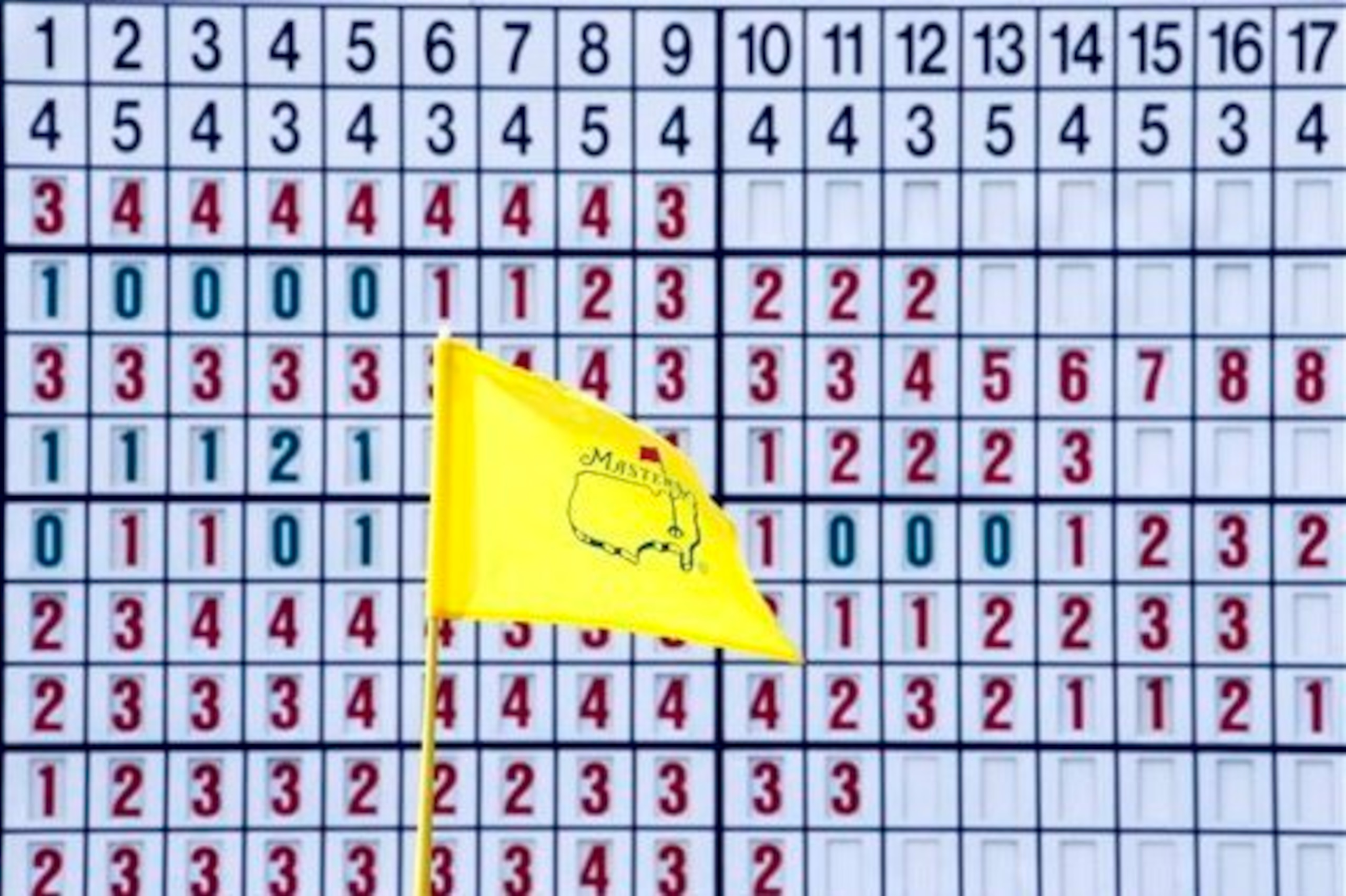


As the folks at CBS will tell you, it’s a tradition unlike any other.
And whether it’s a stirring rally from a past-prime veteran, an epic field-lapping by an untested youngster or the always compelling snatching of defeat from the jaws of victory by a green jacket-less wannabe, the Masters always translates to four unforgettable days at Augusta National Golf Club.
The only question now—a few days before competition starts—is who’s going to do what?
To bide time until the Butler Cabin ceremony on Sunday afternoon, click through to see our collection of the 10 most memorable moments in Masters history and feel free to drop a comment or two along the way.
10. Roberto De Vicenzo Scorecard Snafu, 1968
1 of 10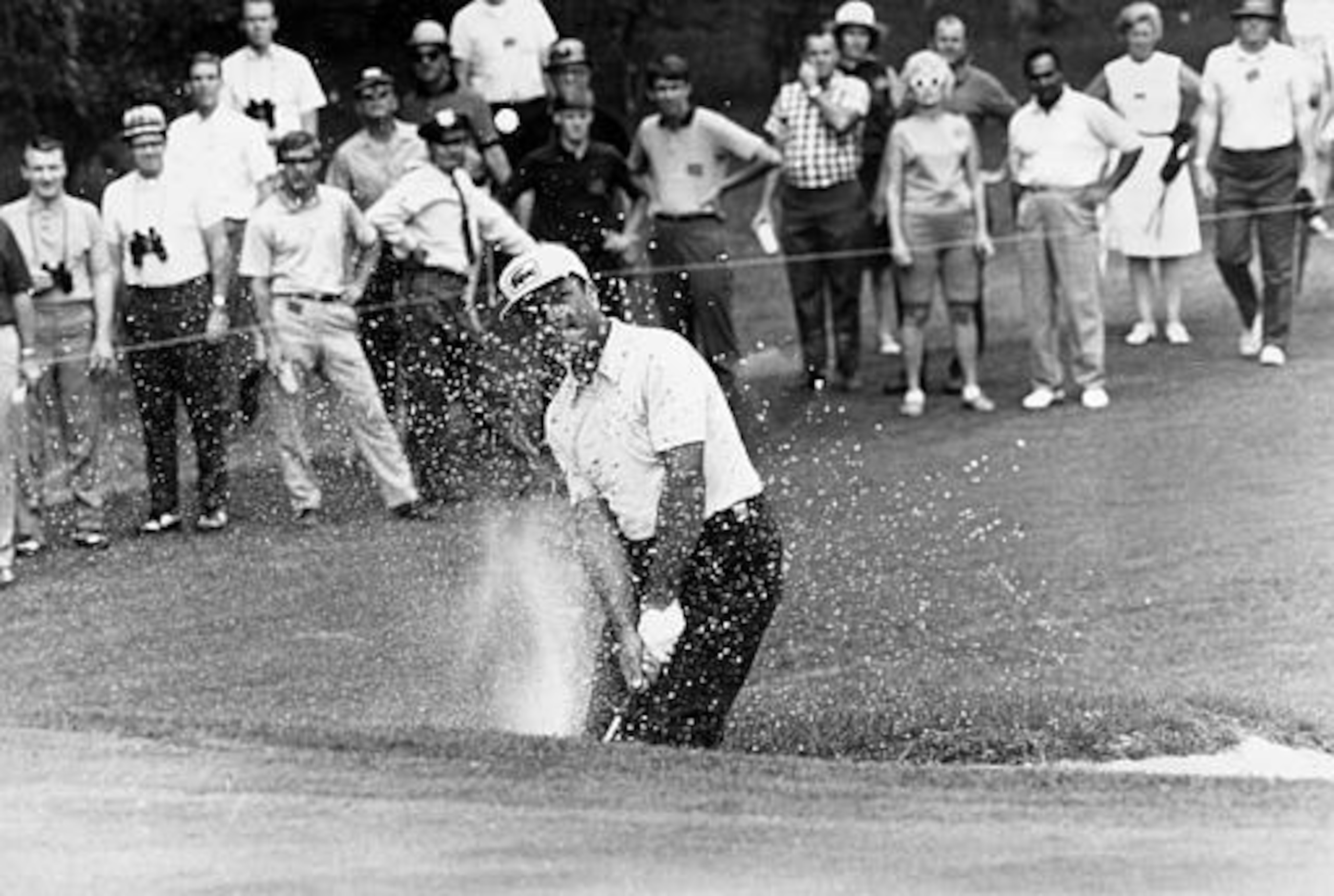
Argentine veteran Roberto De Vicenzo had won the British Open in 1967 and was on the brink of a chance to add another major trophy at Augusta the following spring, until fuzzy math intervened.
The newly minted 45-year-old—his birthday was the day of 1968’s final round—birdied the 15th and 17th holes and bogeyed No. 18 to finish with a 65 and qualify for a playoff with Bob Goalby.
Instead, it was revealed shortly after the round concluded that playing partner Tommie Aaron had written down a 4 instead of a 3 for De Vicenzo at No. 17. The rules of the game mandate that if a player’s card indicates a higher score than he shot, the score must stand.
If Aaron had given De Vicenzo credit for a lower score, De Vicenzo would have been disqualified.
So, rather than a tie and a playoff, the birthday boy had to settle for second place behind Goalby, his best finish in 15 appearances at the tournament.
9. Larry Mize's Improbable Chip, 1987
2 of 10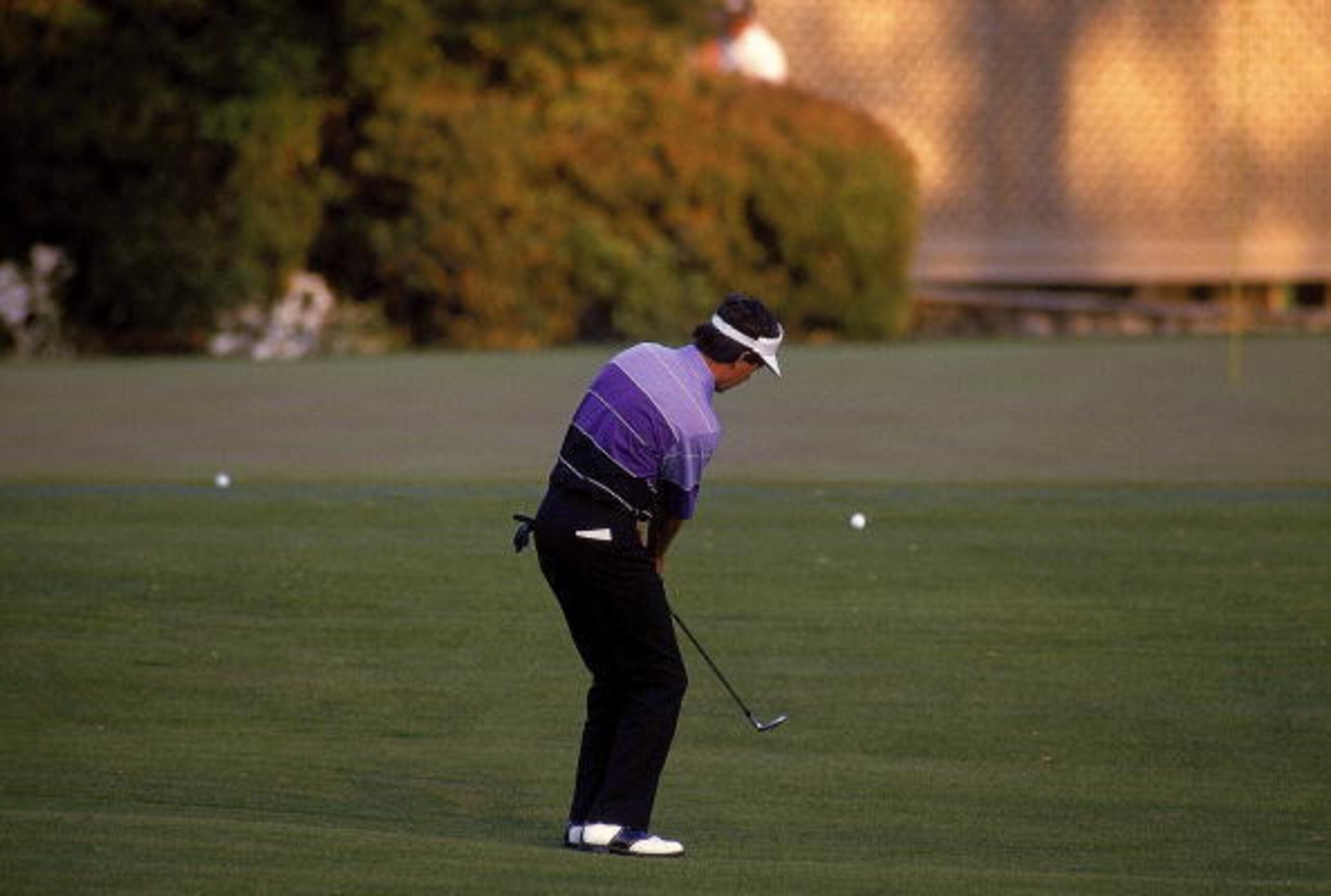
Think about it. A sudden-death playoff has three competitors. Two of them—Seve Ballesteros and Greg Norman—enter with a combined five major victories between them. And the other is Larry Mize.
Who do you like?
Ballesteros went one hole and out after missing a five-footer for par at No. 10, leaving Norman and Mize to continue as a pair at the 11th. Norman outdrove Mize by 30 yards off the tee and reached the fringe of the green in two, while the less heralded Georgian misfired on an approach and was short of the green—about 50 yards from the flag.
Mize pulled out a 56-degree sand wedge for his third and saw the ball bounce twice before reaching the green and commencing a roll directly into the center of the cup. He threw his club in the air in jubilation while Norman quickly attempted to refocus on his putt, which, needless to say, missed.
“I didn’t think Larry could get down in two from where he was, and I was right,” he said at the post-round press conference. “He got down in one.”
8. Gary Player's Birdie Binge, 1978
3 of 10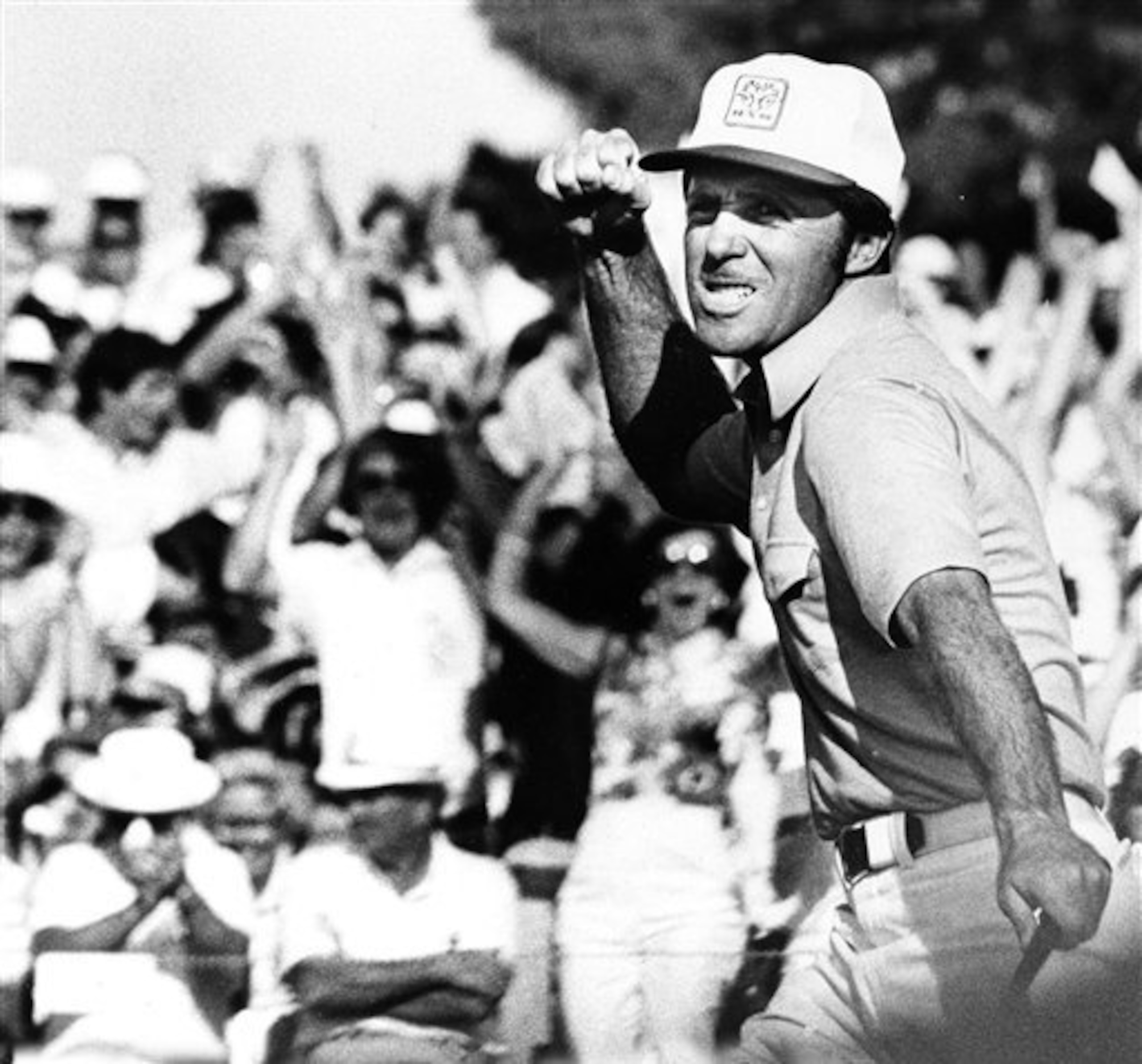
Gary Player finished in the top 10 no fewer than 15 times at Augusta, including a third-place finish, two seconds and three wins. But no performance was more dramatic than the final 18 holes in 1978.
The South African was seven shots off the pace of front-runner Hubert Green to begin championship Sunday, but he blitzed the course for seven birdies in the final 10 holes—including a 15-footer on the 18th to wrap up a 64 that still stands as the best closing round in tournament history.
He was in the clubhouse well before Green and other contenders who’d been closer as the round began, and he had to watch as Green set up for a four-foot birdie putt on the final hole with a chance to force a playoff. The putt missed, though, leaving Green tied for second with Tom Watson and Rod Funseth.
The win, at age 42, made Player the oldest winner in the event’s history.
Until, that is… Oh, never mind, we’ll get to that one later.



7. Ben Crenshaw Pulls the Heartstrings, 1995
4 of 10
If you’d have laid odds on the year that Ben Crenshaw would add to a Masters resume already crowded with a win, two second-place finishes and two thirds, chances are 1995 would have been a long shot.
He hadn’t exactly set the golf world on fire with his pre-Augusta performances that spring, and then, just days before play began at Augusta, he was emotionally rattled by the death of noted instructor Harvey Penick—his longtime friend and mentor—and served as a pallbearer at the funeral.
Crenshaw shot 70 in the opening round to make himself relevant, then followed up with subsequent rounds of 67, 69 and 68 to finish 14-under par, one shot ahead of Davis Love III in second place and three up on Jay Haas and Greg Norman in a tie for third.
Upon sinking the clinching putt on the 18th, Crenshaw collapsed in tears in the arms of caddie Carl Jackson. And by the way, also notable that day was the five-over par finish of a guy named Tiger Woods, the reigning U.S. Amateur champion in his first major tournament.
6. Ben Hogan's Redemption, 1953
5 of 10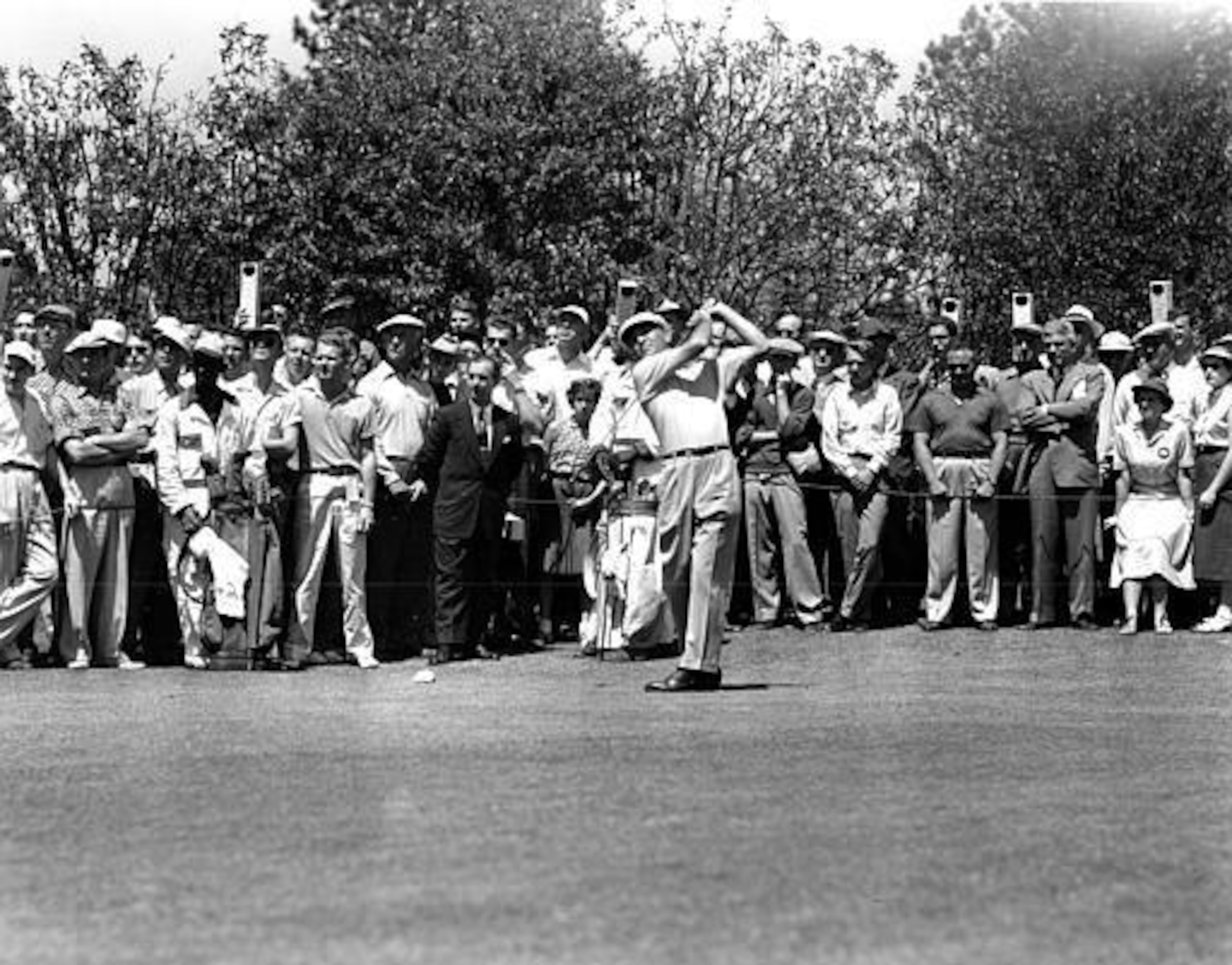
To say Ben Hogan arrived at Augusta in 1953 with major urgency would be understating things.
He was tied for the lead after 54 holes in 1952, but he shot 79 in the final round. Then, at the U.S. Open a couple of months later, he was tied for the lead after 36 holes before carding consecutive 74s.
Additionally, he turned 40 shortly after that tournament, starting the competitive clock ticking.
Hogan eschewed any competitive pre-Masters tournaments in 1953, then shot 70 and 69 in the opening two rounds to assume a one-shot lead. A 66 in the third round quadrupled the lead to four, and a final-round 69 that included five birdies and two bogeys brought him home at 14-under 274.
Later that year, he bagged the U.S. Open and British Open, and finished the season with five wins in six tournaments.
5. Tiger Woods Gets His 'Slam,' 2001
6 of 10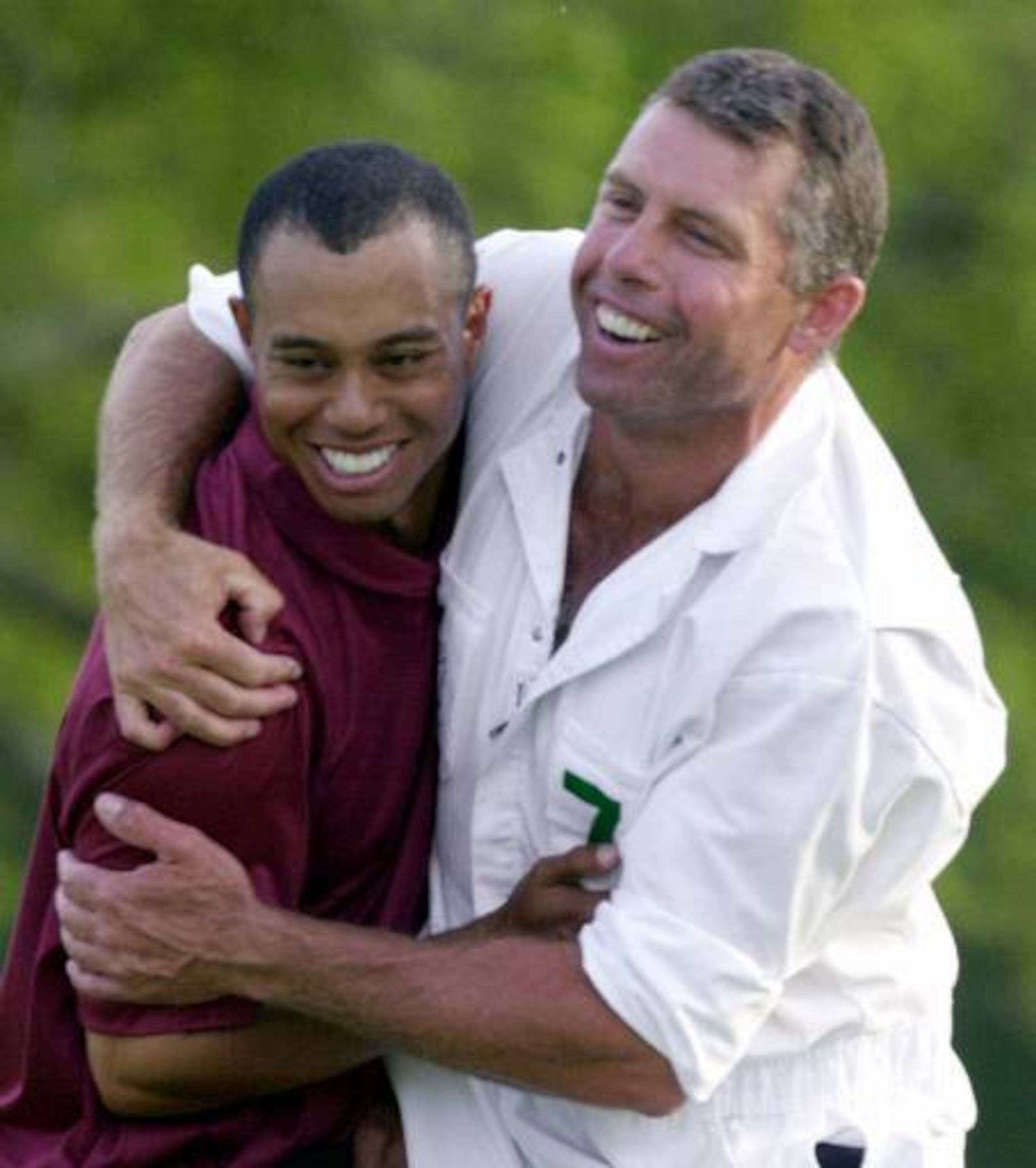
When Tiger Woods placed fifth at the 2000 Masters, six shots off the pace set by Vijay Singh, it would have been hard to comprehend what he was about to unleash over the subsequent 12 months.
But by the time he lapped the field for a nine-shot win at the U.S. Open, finished seven shots up to win the British Open and eased into a five-shot win at the PGA Championship, all eyes were on Augusta to see if what had been deemed as the “Tiger Slam”—him winning all four majors consecutively, if not in the same calendar year—was actually possible.
Here’s a spoiler…it was.
A first-round 70 left him five shots off the early pace set by Chris DiMarco, before consecutive rounds of 66 and 68 transformed the five-shot deficit to a one-shot lead on Phil Mickelson and two each on DiMarco and Mark Calcavecchia. That left the final round, where he overcame a brief push from David Duval to shoot 68 and reached the finish line two shots in front.
In its April 16, 2001 edition, Sports Illustrated (h/t Golf.com) framed the mastery like this:
"In its way, this kind of play is scarier. Let the DiMarcos of the world have their fun on Thursday and Friday because, underlying each event, there is the inevitability of Woods, picking up strokes here and there until it's over.
"
4. Greg Norman's Final-Round Meltdown, 1996
7 of 10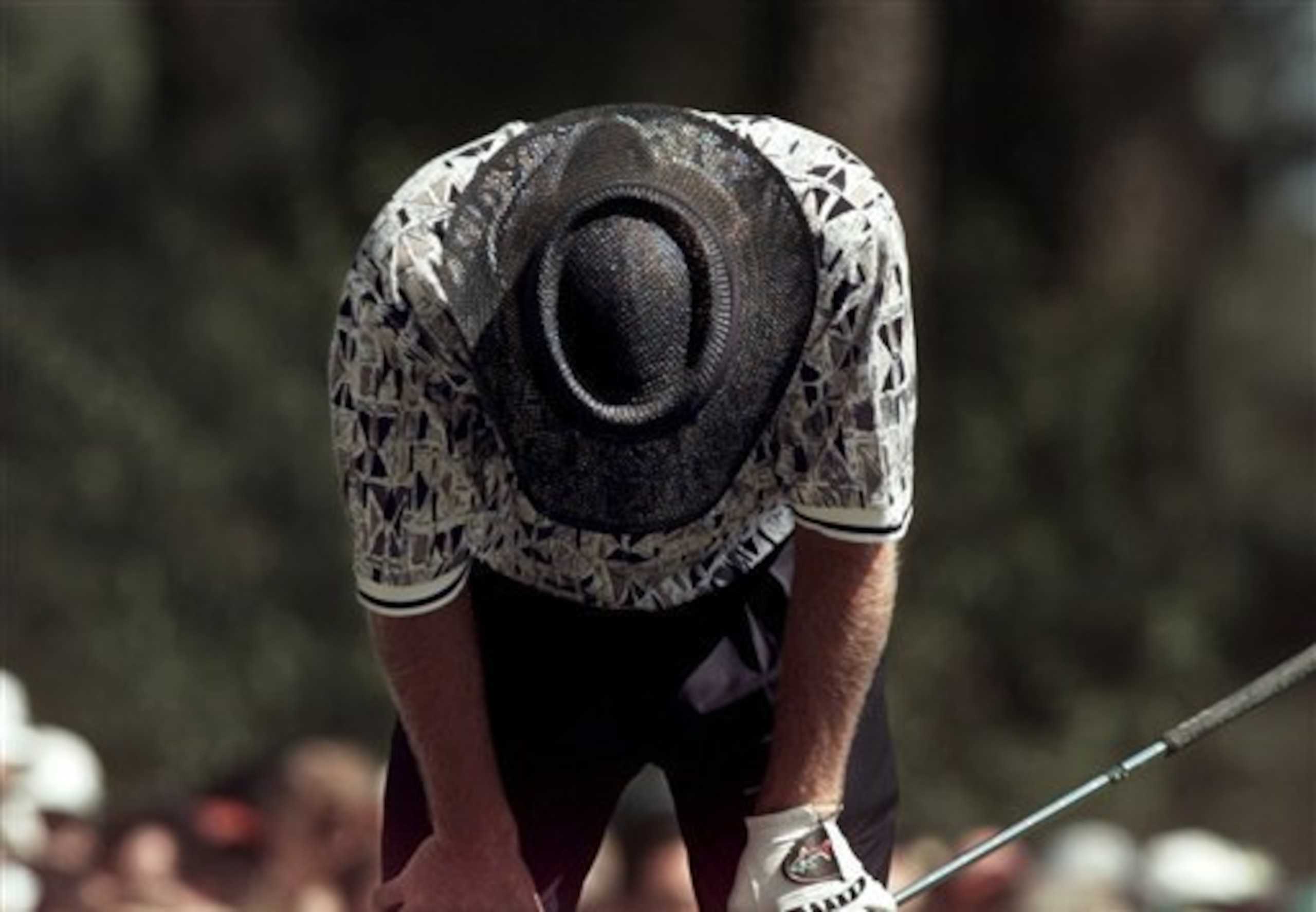
The third time, so they say, is the charm.
Or, when it comes to Greg Norman, well…maybe it’s something else.
The Australian was even with Jack Nicklaus heading up the 18th fairway in 1986 before spraying his approach shot wide. Then, a year later, he was preparing for a birdie putt from the green-side fringe when Larry Mize chipped in from the fairway.
This time around, rounds of 63, 69 and 71 gave the “Shark” a six-shot advantage over Nick Faldo heading into the final 18 holes. Bogeys on the first, fourth and ninth holes trimmed the edge to two by Sunday’s midway point—and the two were in a flat-footed tie after additional bogeys on Nos. 10 and 11.
Faldo took command after Norman’s double-bogey on the 12th and ultimately finished five shots ahead of the now-thrice-disappointed Aussie, who ballooned to 78 and established a dubious record with the largest blown lead in major championship history.
3. Gene Sarazen's Miraculous Albatross, 1935
8 of 10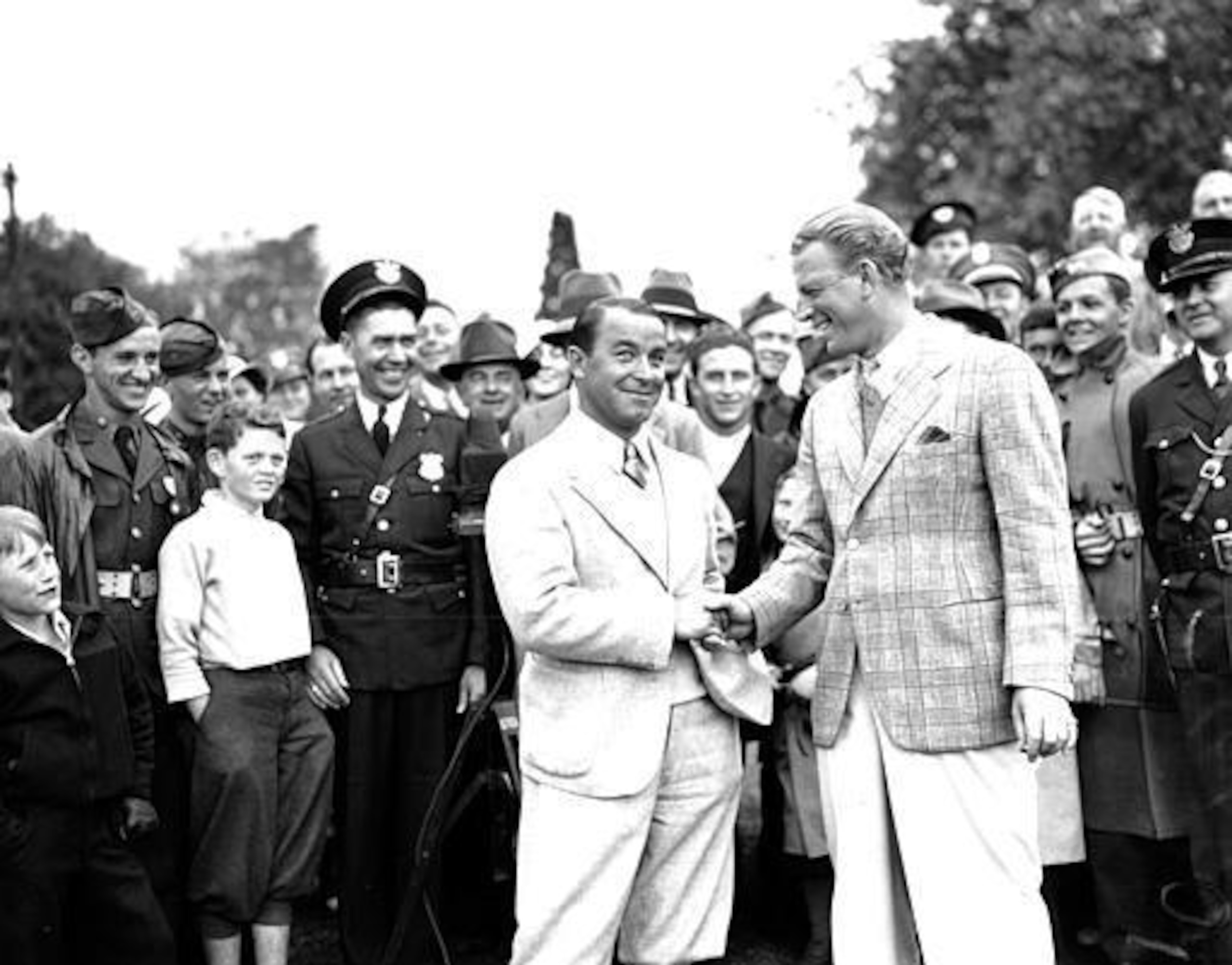
You might have learned that the “Shot Heard ’Round the World” was what started the Revolutionary War, but when it comes to the Masters, it’s something else.
Gene Sarazen was three shots behind on the back nine after leader Craig Wood birdied the 18th hole, but he simultaneously erased the deficit and made history when a shot from the fairway on the par-five 15th hit a bank alongside a green-side water hazard, skipped onto the putting surface and rolled in.
It was a double-eagle 2, the first in the tournament’s history. He followed up with pars on 16, 17 and 18, then routed Wood by five shots the following day in a 36-hole green jacket-seizing playoff.
No less an authority than USA Today included it on a collection of “Masters shots to remember” in 2013, suggesting:
"Even if the first great shot in Masters history would not get voted today as the greatest shot, we can, without fear of contradiction, say this: No one with the high-tech clubs and energized golf balls that followed can ever really top it.
"
2. Tiger Woods Begins His Era of Dominance, 1997
9 of 10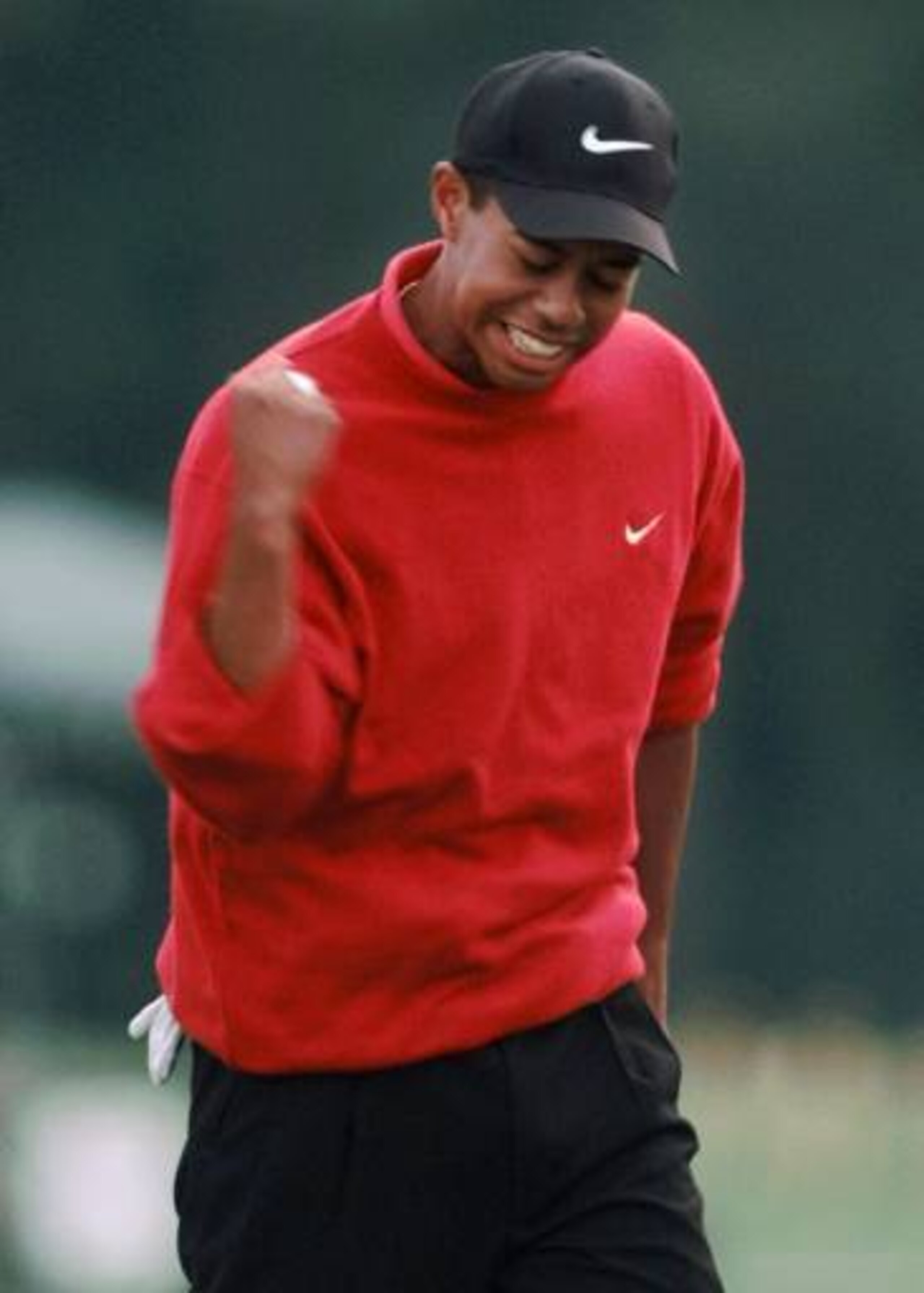
At age 21, with the rest of the 1997 Masters field—his closest pursuer was 12 shots off the pace, after all—desperately gasping for breath, the player making his professional Augusta debut was on the brink of a stretch of unprecedented competitive dominance.
Tiger Woods led the field in driving distance, was a respectable 13th in putting and donned the green jacket after establishing the largest—at the time—victory margin in the history of major championships.
He opened with a 70 and gradually revved up with rounds of 66, 65 and 69, ultimately playing the final 63 holes at 22 under par, while playing the back nine in a composite 16-under over four days and not bogeying a single hole on the back nine for the entire tournament. His 270 was a tournament record by a shot and promoted the sort of breathless praise reserved only for those on another level.
“He's out of this world, he really is,” two-time champion Ben Crenshaw said after the tournament. “It was just amazing. Words fail you.”
Another two-time winner, Tom Watson, echoed Crenshaw’s sentiments. “He may be the type of player that only comes around in a millennium,” he said. “[He's] got the heart of a lion.”
1. Jack Nicklaus' Epic Back-Nine Charge, 1986
10 of 10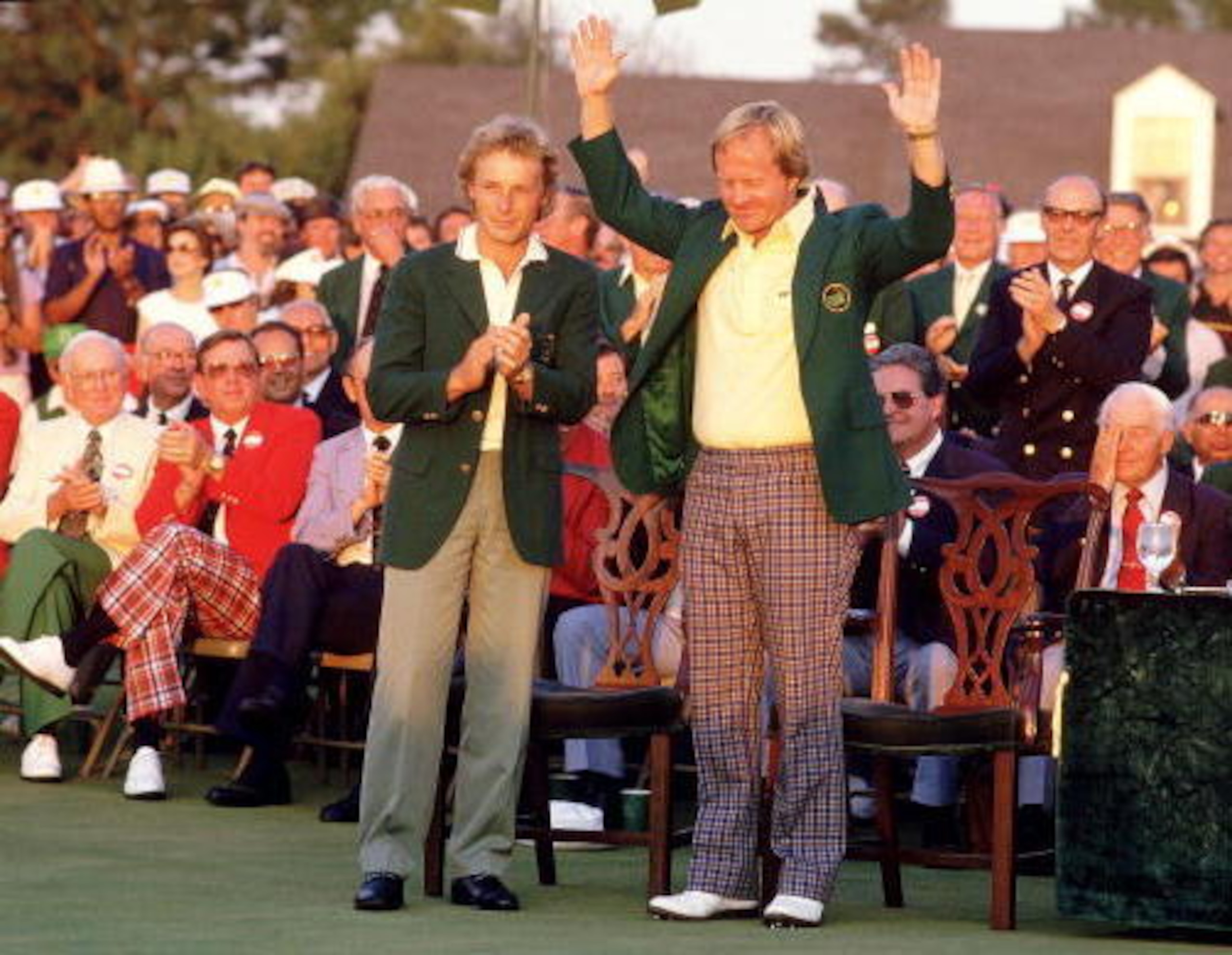
After shooting 74 and 71 in the opening two rounds of the 1986 Masters, Jack Masters was just old.
And though a 69 on Saturday provided a youthful uptick, his even-par effort through the final round’s opening eight holes was nothing if not a geriatric return to earth.
Little did anyone know, though, the 46-year-old geezer was just warming up.
Long putts on the ninth, 10th and 11th got things started, and by the time he drained a 12-footer for eagle on the 15th, Nicklaus was a legitimate contender. Birdies followed at 16 and 17, and a par at the 18th finished off a back-nine 30 that gave a supposedly “Olden Bear” the clubhouse lead.
Tom Kite and Greg Norman had chances to tie as their rounds finished, but neither could produce a birdie at 18—landing the legend a permanent track on the sport’s “Forever Young” soundtrack.
Dan Jenkins, in a Golf Digest piece recapping the greatest Masters, said it like this:
"On that final afternoon of the Masters Tournament, Nicklaus' deeds were so unexpectedly heroic, dramatic and historic, the taking of his sixth green jacket would certainly rank as the biggest golf story since Jones’ Grand Slam of 1930. That Sunday night, writers from all corners of the globe were last seen sitting limply at their machines, muttering, "It's too big for me."
"

.jpg?w=2560 "Chiefs Giants Football")
.jpg?w=2560 "Jonathan Taylor Landing Spots 📍")

.jpg?w=2560 "5 Teams Eyeing Jonathan Taylor")

