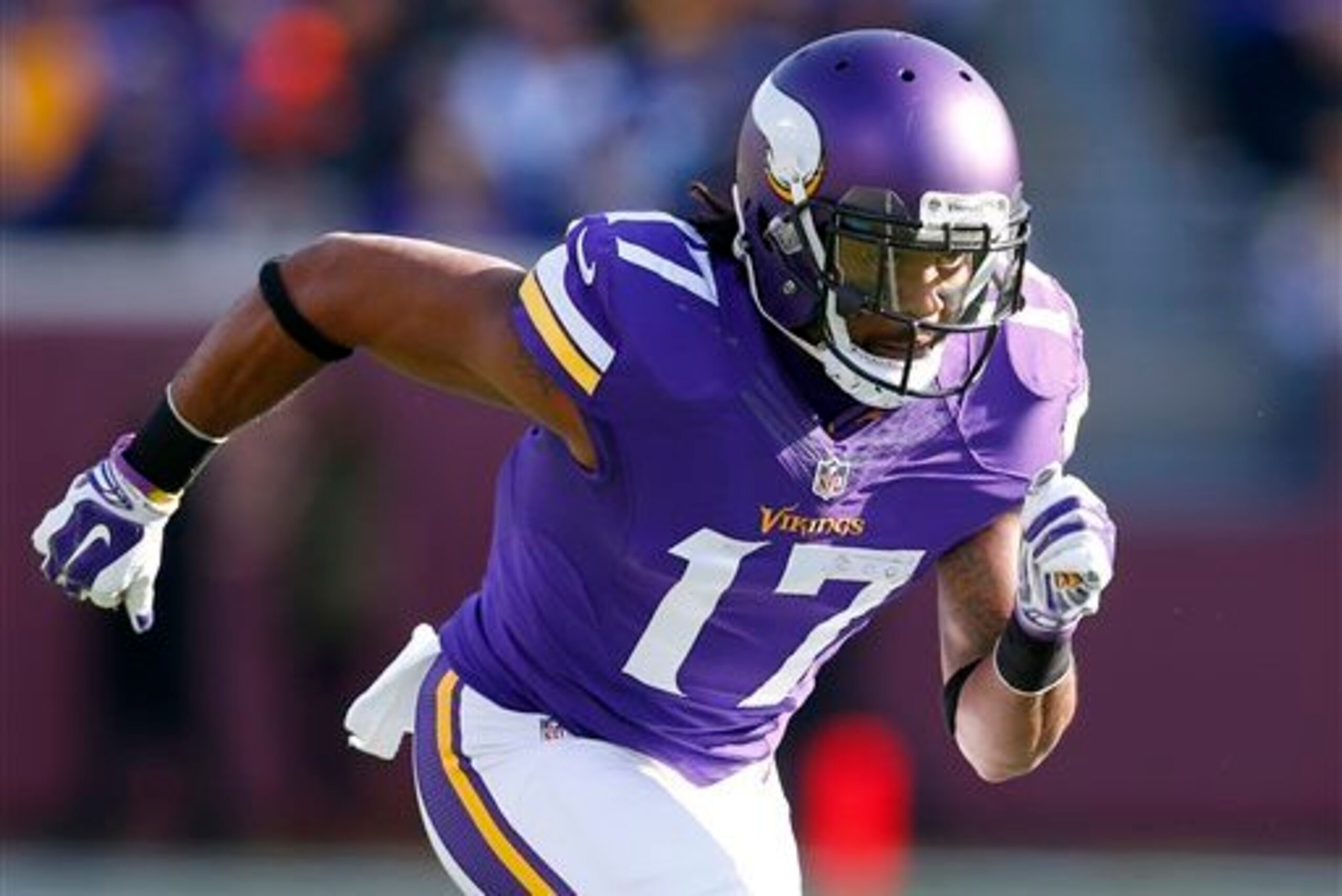

5 Minnesota Vikings Players Who Should See Their Roles Expand in 2015
Two weeks ago, we looked at Minnesota Vikings players who should see their snap count increase, but for the most part we didn't discuss what it would mean for their role for the offense or defense. This week, we'll take a look at what it means for a sub-package player to get promoted to a full-time gig.
Every year, roster turnover means that players who were ghosts in the previous season burst onto the scene as full-time starters or even as role players who didn't get their due a year earlier. On occasion, it's to be expected; anyone who didn't see receiver Cordarrelle Patterson's promotion to starter was willfully blind.
It would probably have taken Nostradamus, on the other hand, to predict that a player from another team's practice squad would take his place.
As it stands, a number of players for the Minnesota Vikings shouldn't just see their snap counts increase but their functions change as they evolve to take on more responsibilities.
Scott Crichton, DE
1 of 5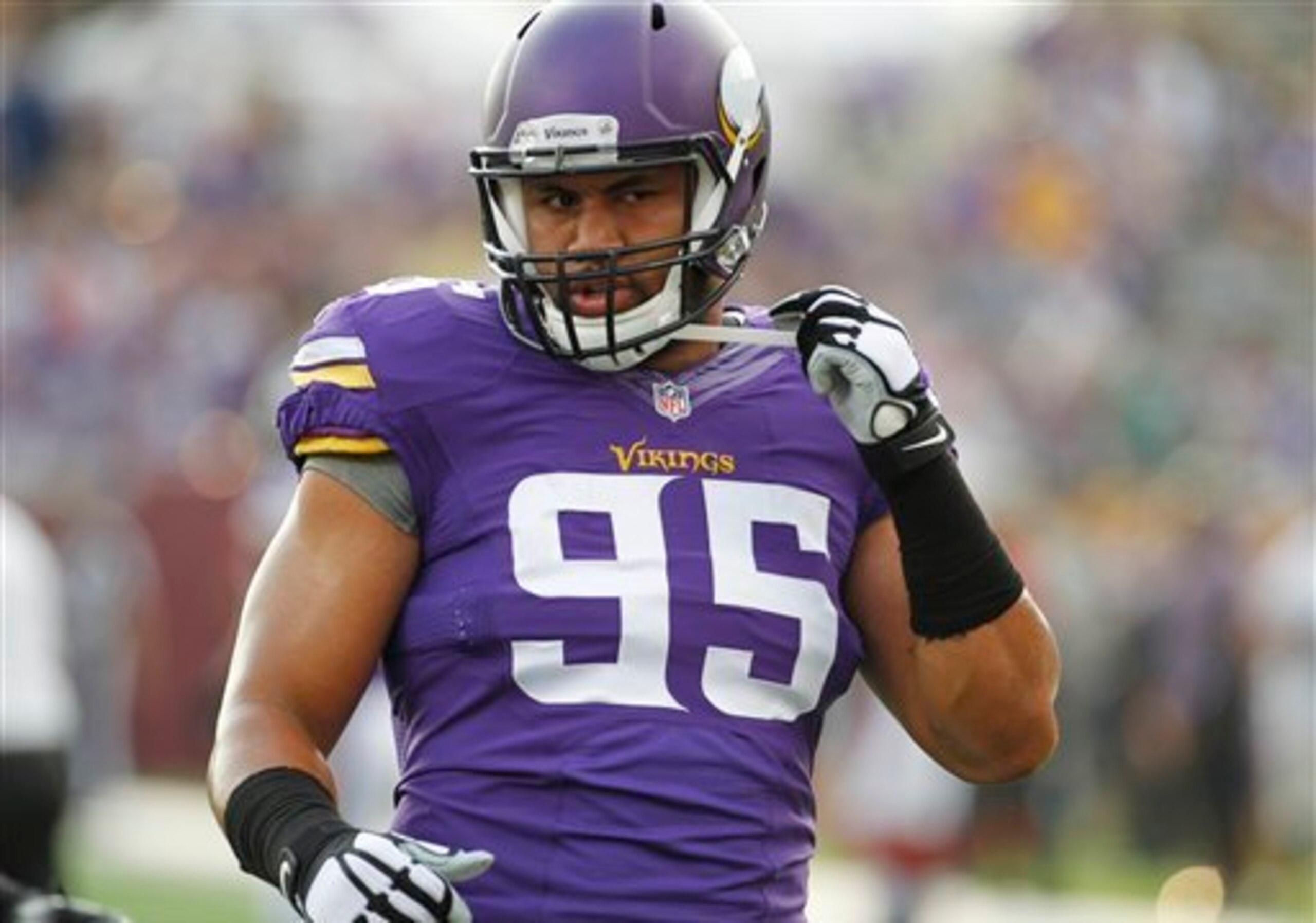
Previous Role: Backup Defensive End
New Role: Sub-package Rotational Defensive Lineman
Corey Wootton, sadly, took all of Scott Crichton's defensive end snaps in 2014, though it may have also been accurate to say that Crichton didn't do enough to take those snaps for himself.
Either way, Crichton wasn't in the rotation; he was an emergency reserve to be deployed should something happen to one of the starters or backups. That never happened, so Crichton languished on the bench, if he was even there at all—he was only active for eight games, after all.
This year, expect Crichton to play two positions: defensive tackle and defensive end. At Oregon State, he relished his role as an edge-rusher, but the coaches saw opportunities to use him all along the line, including a memorably good game against in-state rival Oregon where he played nose tackle.
While the Vikings probably won't have him play the nose anytime soon, reprising the role that Everson Griffen and Brian Robison both played earlier in their careers as inside nickel rushers could be the next step for Crichton as he learns the ins and outs of the position.
Given that his strengths rest with explosion more than they do with bending the edge, it should be a fine transition for him.
Charles Johnson, WR
2 of 5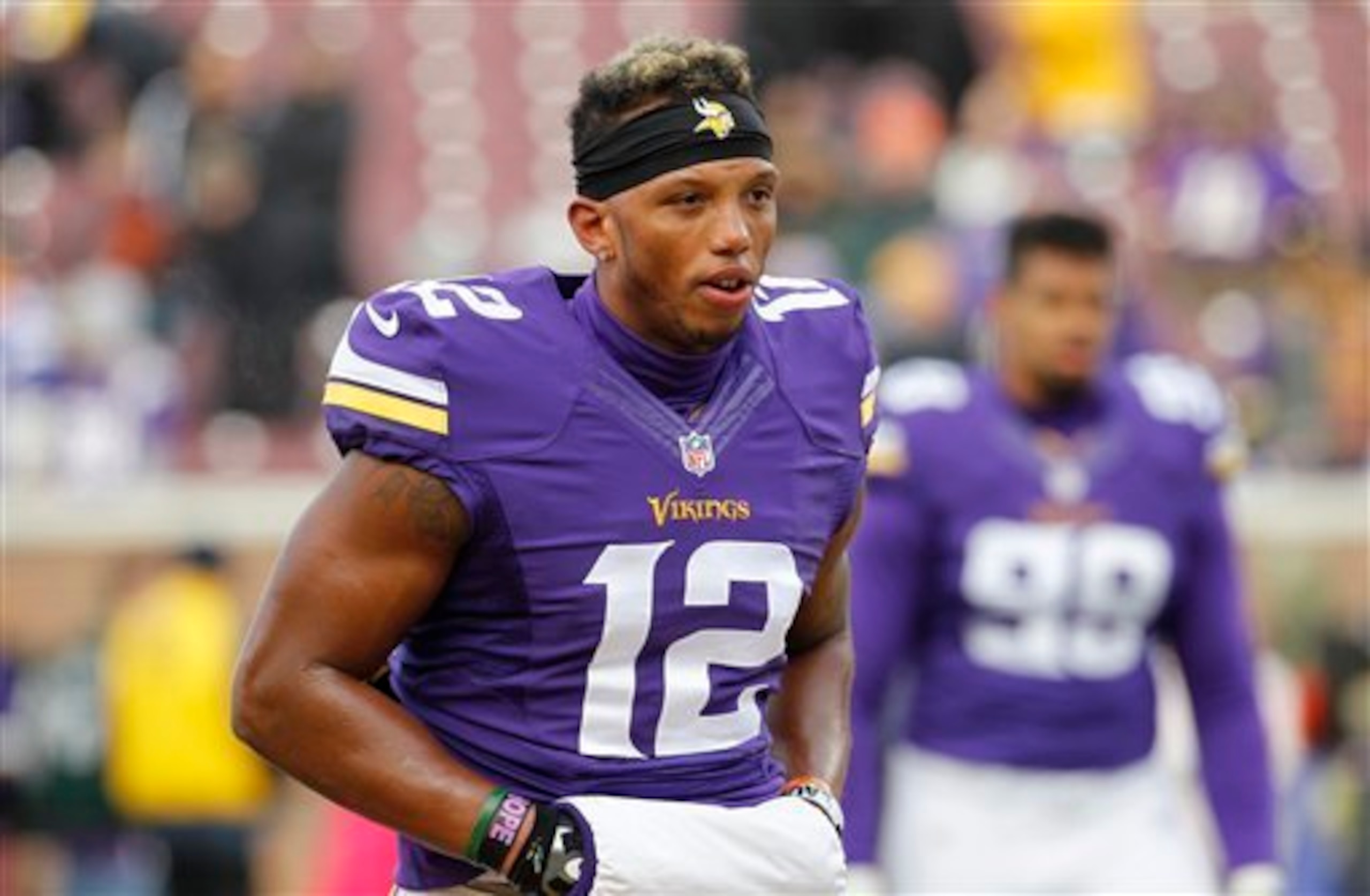
Previous Role: Deep Threat
New Role: Jack-Of-All-Trades
The presumed starters at wide receiver for the Minnesota Vikings do not present a diverse corps of players, at least as far as the routes they predominantly ran last year go.
For the most part, post routes, go routes, slants and screens were the order of the day for Charles Johnson, Jarius Wright and Mike Wallace.
Wallace's development as a receiver is "baked in the cake." He is who he is, and his success running deep will lead to him running deep routes. That's fine, so long as the rest of the offense is variable enough to make sure that first downs are consistent and not reliant on deep shots every play.
Wallace may see some route diversity added to his repertoire, but expect the rest of the offense to pick up the slack.
Known as a raw, athletic freak, Charles Johnson displayed a lot of talent and even sophistication at the receiver position for the Vikings. Though not the best at jump balls, he was excellent at getting open downfield and even winning in the middle of the field against talented, experienced cornerbacks.
The Vikings still opted to use Johnson at what he was best at, which included taking short receiving options to the house or finding his way open deep. But the former Grand Valley State receiver does possess the basic footwork and hand technique to create separation throughout the route and can run intermediate routes just fine.
In Minnesota's final game against the Chicago Bears, Johnson's first route was an in-breaking dig route that he had to muscle open against first-round pick Kyle Fuller. It was a reception for 18 yards.
The second route of the game was also a target, this time on a comeback route, but he was called for offensive pass interference.
He has the basic quickness and footwork to play those routes, but he needs to develop them more in order to get open on a consistent basis. Strong enough to play against physical corners and fast enough to run any route, Johnson will have to work on route deception, release off the line of scrimmage (after all he and Wallace can't both be flankers) and physicality at the catch point in order to expand his route tree.
For now, however, he's a better option than Wallace at doing so and could give the offense something more than "four verts" on every play.
Antone Exum, S
3 of 5
Previous Role: Special Teams Ace and Backup Strong Safety
New Role: Nickel Linebacker
The Vikings have a number of players who could either be safeties or linebackers, including newly signed Taylor Mays from the Cincinnati Bengals and Brian Peters from the Saskatchewan Roughriders, a CFL team—he played safety for the Roughriders but is listed as a linebacker by the Vikings.
In addition to those two players, the Vikings have re-signed a player they cut last year, former Pitt safety and Bears linebacker Dom DeCicco.
All of those players provide intriguing hybrid options (as do Landon Collins and Shaq Thompson in the upcoming NFL draft), but so does Antone Exum, who played both cornerback and safety for Virginia Tech. A powerful hitter with average quickness for a safety, Exum could end up as a run-stopper on nickel downs and the perfect player to cover faster tight ends.
There's precedence for this sort of position; Mays moonlighted as a linebacker in his final year with Mike Zimmer in Cincinnati and could do so again.
Whether it's Exum or another player on the roster, the point isn't that he may be the one who does it, but that the position may be created at all.
.jpg?w=2560 "Titans Colts Football")
.jpg?w=2560 "Chiefs Giants Football")
.jpg?w=2560 "Eagles Jaguars Football")
Jarius Wright, WR
4 of 5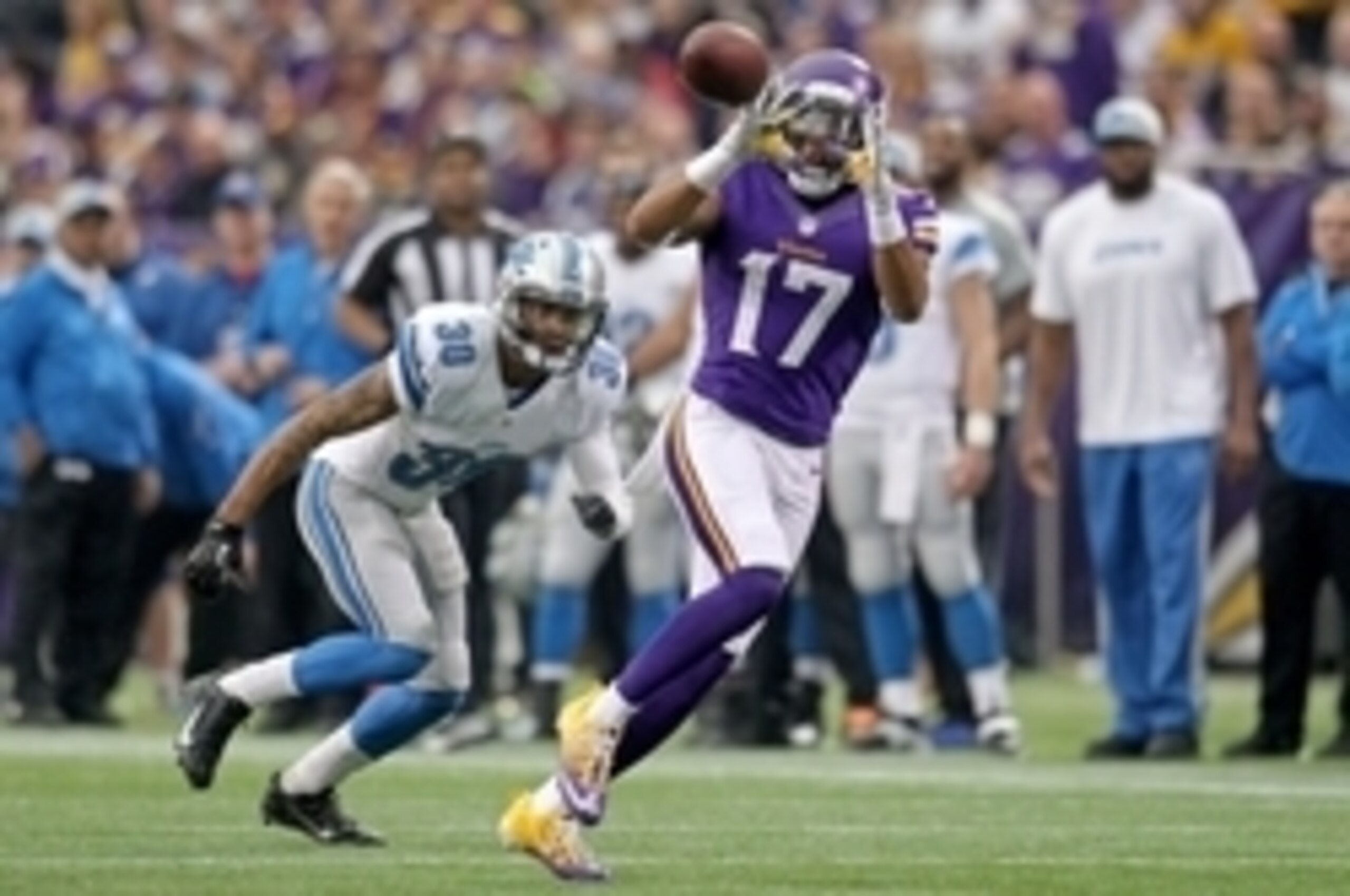
Previous Role: Slot Deep Threat
New Role: Slot-Of-All-Trades
Perhaps it's cheating to double-dip, but it's difficult to emphasis that an offense must be able to threaten every area of the field. It's not just a Walsh-ian idea to exploit every inch of space the defense gives you—it's the foundation of every successful offense in the NFL.
In order to threaten deep, a team needs to punish defenses for overcorrecting for deep threats and not just by playing against possible screen passes. It means using the most important shape on the football field, the triangle.
The slot receiver may be best positioned to take advantage of this fact, and Jarius Wright's presumed role as the slot receiver in the Vikings offense makes him the fulcrum.
Playing from inside the hashes can place more importance on the slot receiver than the impact he has purely by creating yards. By attacking the middle of the field, he can simplify reads for the quarterback and receivers so they know which option routes to run and how to adjust their timing for the defense around them.
Attacking the safety in the middle isn't the only way to do that; a slot receiver who runs drive routes to the opposite sideline or short stick routes on his side of the field will reveal in short order whether or not the defense is running man, zone or pattern-matching concepts and therefore accelerate reads for the quarterback.
But if that slot receiver isn't enough of a threat to run every route, then defenses can employ looser coverage in the middle of the field and wait to reveal their hand.
Moreover, they can assign weaker defenders in the middle zone coverage while still running man-coverage concepts to the outside, as the Vikings have done on occasion throughout 2014. That confuses the reads even more for the quarterback and can lead to some disastrous consequences.
It should also help the offense in more immediate ways if Wright can run possession-style routes. Though he has a lot to learn in this respect, if it so happens that Charles Johnson does not develop intermediate route-running skills, it will fall upon Wright to convert on third down when the offense has no other options.
That can be immensely valuable.
Cordarrelle Patterson, WR
5 of 5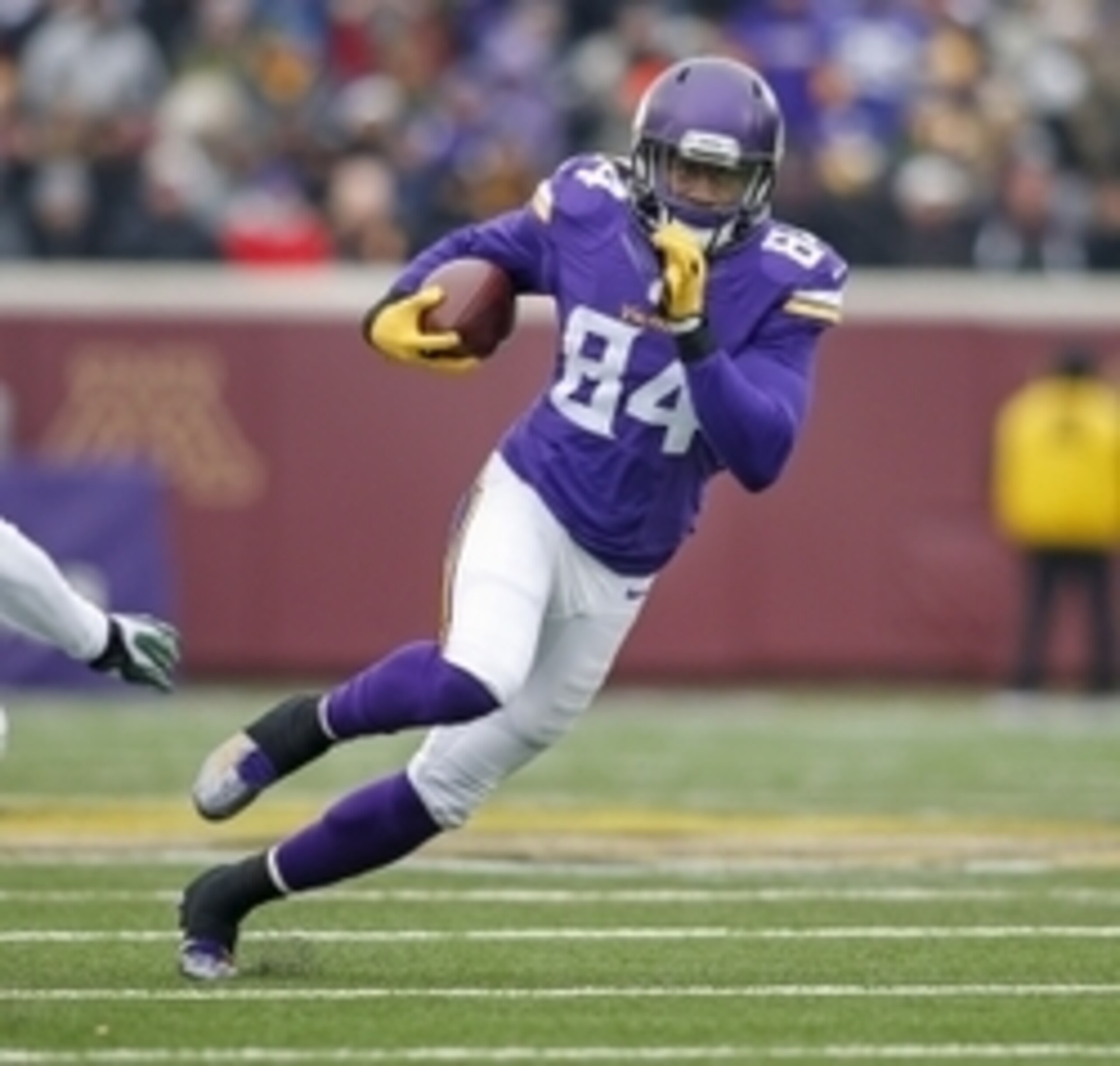
Previous Role: Gadget
New Role: Wide Receiver
This isn't a particularly novel concept, but it's true that Patterson is "in line" for a new role with the Minnesota Vikings, one they wanted him to grow into last year.
Patterson has dropped off the radar for many Vikings fans and even more fantasy football owners, but that doesn't mean he's not a preternaturally talented athlete.
Within the right constraints, he can be the most dangerous player on the field, and that danger could triple with a competent quarterback manning the offense. Unfortunately, Patterson hasn't held up his end of the bargain and has proved to be a liability at the position.
Whether it's lackadaisical route-running, a surprising variability in the speed he provides or an inability to get off jams at the line of scrimmage, Patterson hasn't shown the ability to be anything more than a player who can only play after the ball is in his hands, not before it.
Unfortunately, options are limited for a player who needs easy ways to get the ball. Screen passes, pitches and reverses only do so much, and defenses keying in on outside plays have shut that sort of thing down. Patterson has shown inconsistency to win slant routes even, so his abilities must expand commensurate to his athletic potential.
He doesn't need to run every route in the tree. He could be what Jarius Wright was last year but more explosive and dynamic, even if it's on a limited basis.
He just needs to run routes.
.jpg?w=2560 "Colts Football")
.jpg?w=2560)





