
How a Texas High School Football Coach Saved Another's Life
Though the world may disagree, Matt Beeler doesn't consider himself a hero.
Spontaneous? Sure. Free-spirited? Definitely. Loyal? Without question.
A hero? No.
TOP NEWS
.jpg?w=2560 "Chiefs Giants Football")
Mahomes Told Teammate to Leave Meeting

Brown with an all-time summary of relationship with Tatum
.jpg?w=2560 "Titans Colts Football")
5 Teams Eyeing Jonathan Taylor
He may be the only one. Particularly as he continues to rest up from one of the most unselfish acts of the year.
On March 26, Beeler, a high school football assistant coach at Houston's Cypress Ridge High School, gave 63 percent of his liver to John McWilliams, who suffers from familial transthyretin amyloidosis, a hereditary disease causing buildup of abnormal deposits of the amyloid protein on organs.
Keep in mind, McWilliams isn't an immediate family member. He isn't even a distant cousin. He's Beeler's co-worker, a fellow assistant coach at Cy Ridge.
So why do something so serious?
"When I get asked that question, I say, 'Why not?' " Beeler said. "I'm put in a position to help somebody in a tremendous way. You're not given this kind of opportunity many times in life, if at all. When you have a chance to change somebody's life, it's a higher calling. It was meant to be. I was put in that place for a reason."
Back in November, McWilliams addressed the coaching staff with his medical issues. Cy Ridge head coach Gary Thiebaud remembers some wondered if McWilliams' nonchalant request was to be taken seriously.
"We were all in eating lunch at [the] main coaches office, and he said he was going to have to go on the donor list," Thiebaud said. "When he said it, at first I thought, is he kidding? But he wasn't. And then, Beeler went to Coach Mac and said, 'Coach I'm your guy.'
"Here's a guy, where they're not really running-around buddies, teammates on a coaching staff, and he was there to help one of his teammates. What an awesome guy."
The condition, fatal if untreated, ultimately causes damage to the organs, beginning with the liver, and it puts pressure on the heart. Treatment for McWilliams included a liver transplant from someone with Type O blood. The liver is the only organ able to regenerate, and full regeneration time is a little less than four months.
Enter the hero. Last week, the majority of Beeler's liver became McWilliams' liver. Both are recovering well but will not return back to school for the rest of the year. Beeler, a 32-year-old strength and conditioning coach who also coaches the defensive line at Cy Ridge, is eyeing a return in the summer.
McWilliams, on the other hand, can add anywhere from 10-15 more years to his life because of his coaching colleague.
"I honestly wasn't expecting everything to happen as fast as it did," McWilliams said. "My primary doctor kept pushing me to find someone who would qualify [for the transplant]. When [Beeler] said he'd do it...
"I mean, who does that?"
Heroes finding heroes
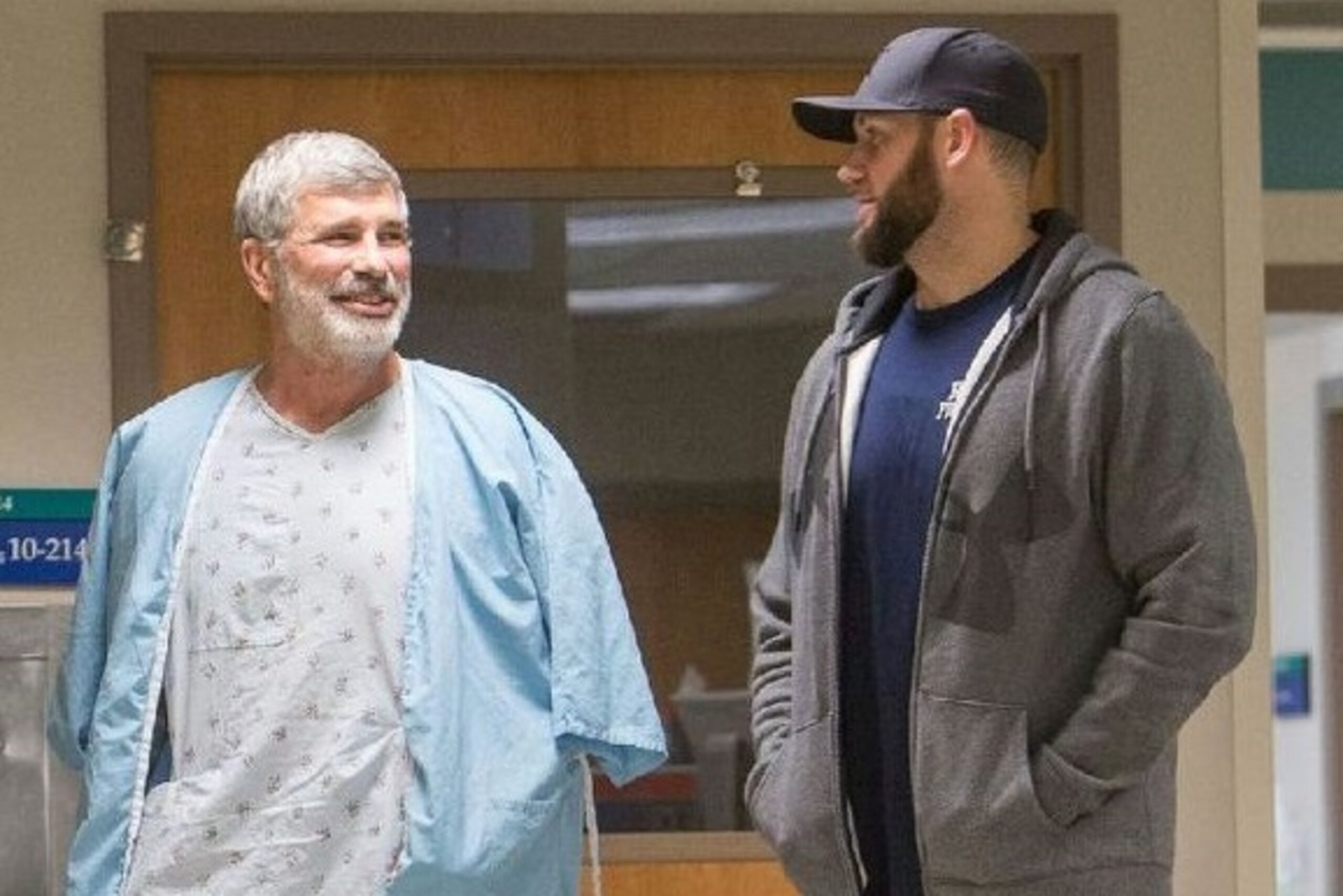
This is McWilliams' 40th year of coaching. He's the one who's always been considered a hero to many young athletes. They look at him as a coach, a mentor, a father figure and a counselor.
"The kids love him," Thiebaud said of McWilliams. "He's just a great guy."
McWilliams and Beeler met three years ago when Beeler was new to Cy Ridge. McWilliams was the wily veteran, always willing to offer advice here and there to those who would listen.
Beeler was one of those who listened. Perhaps that's why he was so quick to assist the way he did.
McWilliams, at 62, is proof, that people of all ages can find new heroes. Beeler is his.
"This was a godsend," McWilliams said of Beeler's action. "No doubt that three years ago, he was sent [to Cy Ridge] for a reason, no doubt in my mind. God's got a plan for all of us, and Beeler was in my plan."
While McWilliams continues to get stronger at a Greater Houston medical facility, Beeler's legacy grows more and more—even though he didn't do any of it for the publicity.
"I look at it as something I was supposed to do," Beeler said. "In football, you step up when your number is called. Maybe years down the road, it'll sink in, but to me, I didn't think twice about doing the surgery."
McWilliams is dealing with the liver condition and atrial fibrillation, an abnormal heart rhythm. He said he's done so for 20 years.
There's so much McWilliams could complain about. But he doesn't. And he won't.
Reason being: He's got things to do once he gets out of the hospital. Like returning to coaching and teaching. And using his story as a testimony for those who could use the positive reinforcement.
And then there's finding Beeler, over and over again, just to say thank you.
'Surgery No. 7'
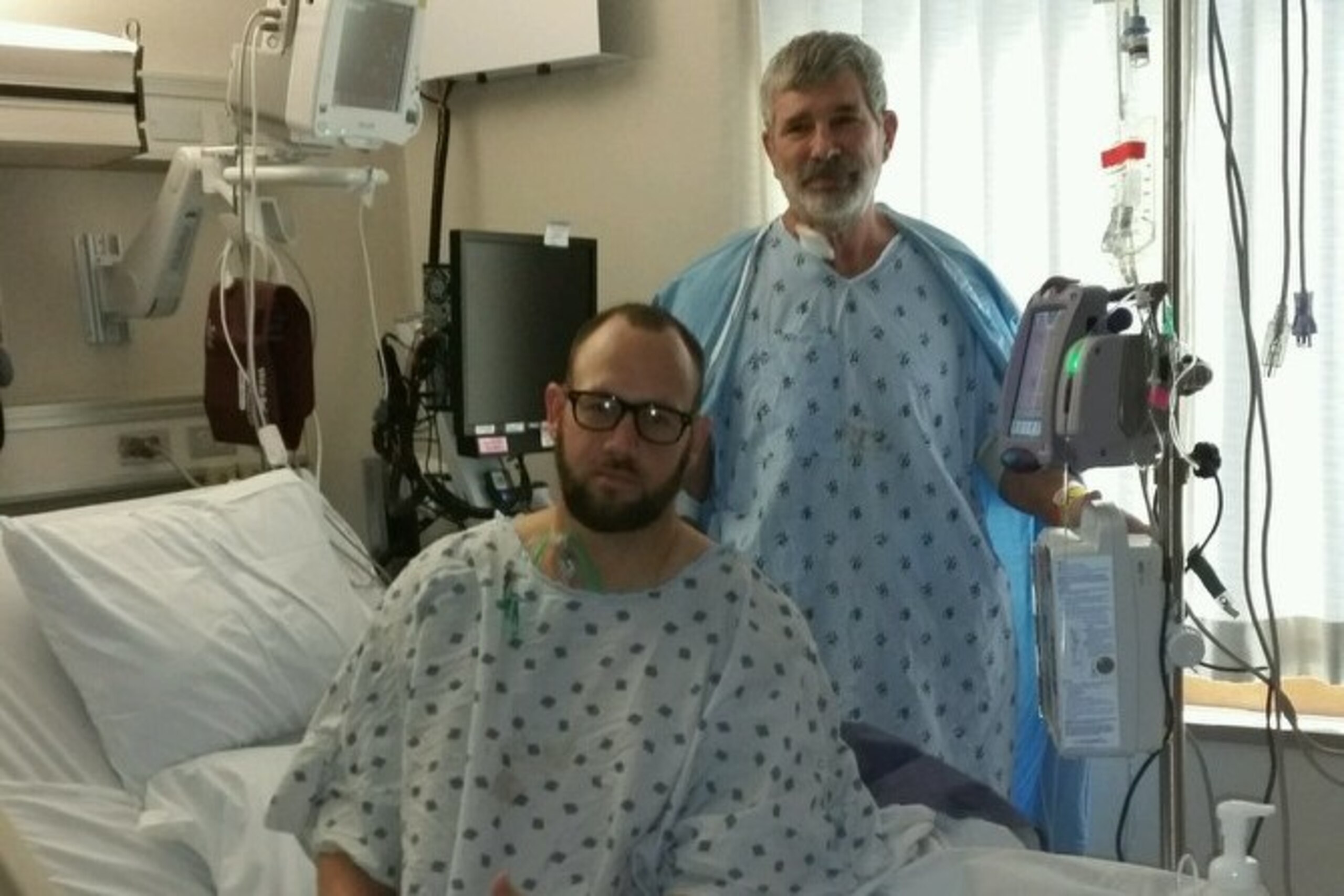
Eight days after the procedure, Beeler says he's wearing a hockey-stick scar from the ribs to the belly button and then directed to the oblique, but is recovering well. A full recovery will take four to six months. It'll take roughly three months before he can move around and lift weights again. He's restricted to lifting no more than the contents of a milk carton.
Mostly, Beeler's been dealing with fatigue, but that's expected after something like this.
"I'm doing all right. It has its ups and downs, nothing real major," he said. "I'm kind of learning how to sleep on my back now. I don't sleep much."
McWilliams is alert and doing well, making sure he is properly medicated, Beeler said, adding that the veteran coach hopes to be moved to a recovery group home soon.
The idea of Beeler helping McWilliams at this level boggles the mind for some. For Beeler, the decision was easy. He simply viewed it as "surgery No. 7."
Beeler played tight end at Katy High School outside Houston and then played college ball as a walk-on at Texas State, where he switched from tight end to defensive end. Beeler went on to play Arena football before getting into coaching. As a player, he had six surgeries.
"I had other surgeries, so I mentally prepared myself like it was nothing, like it was routine," Beeler said. "I have some of the best doctors in the world. I couldn't be at a better facility. I fully entrusted in the doctors."
McWilliams said Beeler is one of those guys who is "really friendly to everybody" and personifies what a true educator should be. He loves the students he works with, and he loves the environment around him.
Turns out, he also loves his coaching stuff. Very much.
"How many people would step up and donate a part of their organ to someone else so he can live a longer life?" McWilliams said. "There aren't many people who would do that. Some would for family members, but not just for any individual.
"If that's not something a hero would do, I don't know what else a hero could be."
No I in team
Thiebaud describes Beeler as a high-energy guy with excellent people skills who stresses the concept of "team" with everything he does. When it comes to dealing with the athletes, few can connect with them like Beeler can.
When Thiebaud privately asked if helping McWilliams to this extreme was something Beeler wanted to do, he didn't hesitate to answer.
"He said, 'Coach, we're a team,' " Thiebaud said. "We talk to the players about being a team, and we need to do the same. He said it wasn't his decision; he was put here to do this. When he said that, I was floored. Even talking it about now gives me goosebumps."
When it comes to Cy Ridge's team concept, Beeler has been all in since first arriving on campus more than three years ago. He believes that in order for the athletes to believe in the concept, the coaches must go above and beyond first.
Needless to say, Beeler has set the bar sky high.
"I would have done it for anyone else in [the] coaches office. I probably would have done it for the kids if I had to," Beeler said. "It's what you’re supposed to. All I have to do is get cut open and go through a couple months of recoveries, and I can extend someone's life? It's a no-brainer."
Here's the bonus win in this story: With the liver transplant, Beeler gave McWilliams his liver, and McWilliams passed his on to a domino recipient. Because McWilliams' condition is hereditary, Beeler said, someone else without the family gene will be able to use McWilliams' liver.
In other words, there's an opportunity for two individuals' lives to be saved.
"Maybe that part of it will hit me down the road," Beeler said.
The community responds
So what's next? Thiebaud said the entire Cy Ridge community has been working to either volunteer its time to cover Beeler and McWilliams or fundraise to help with medical costs. "Team McBeeler" shirts have been on sale around the campus. Additionally, a barbecue benefit dinner is set for April 25.
McWilliams has a National Foundation for Transplants page, which has generated more than $40,000. The goal is $100,000.
"After what Beeler did," Thiebaud said, "everybody wants to do something."
Beeler has been very happy with the community's reaction. It goes along with the lessons he asks his athletes to apply to be successful: being unselfish and being open to making sacrifices.
Beeler's actions are all about practicing what he preaches. And once he's fully recovered, if he had to do it all over again, he would, he said.
"I'm just a regular old guy. I'm simple and cut-and-dry," Beeler said. "But if this had to happen again, no doubt, I'd do it—with no hesitation."
The story has fascinated the entire Texas high school coaches fraternity. Beeler reiterates that his actions weren't done for a story.
They were done because that's the kind of person he is.
"A very nice gentleman prolonged my life," McWilliams said. "How do you honor someone like that?"
Damon Sayles is a National Recruiting Analyst for Bleacher Report. All quotes were obtained firsthand unless noted. Follow Damon via Twitter: @DamonSayles



.jpg?w=2560 "NFL investigating Eagles")
.jpg?w=2560 "Jonathan Taylor Landing Spots 📍")