
Comparing Liverpool's 2013-14 Stats to Their 2014-15 Figures
Like it or not, football is becoming a heavily statistics-reliant game, but how can Liverpool compare their 2013/14 season statistics to their 2014/15 figures?
Reds owner John W. Henry is a man who attests heavily to the merits of statistical analysis in sport, as his success helming the Boston Red Sox, applying the methods of Bill James and Billy Beane (coined, by writer Michael Lewis, as Moneyball) to great success.
On the takeover of Liverpool by Henry's Fenway Sports Group in 2010, Duncan White of The Telegraph outlined their model.
"The essence of the method is a scientific approach to recruitment, avoiding big stars on inflated salaries and targeting players in new markets who have the potential to become the next big stars. It is common sense backed up by statistical evidence," White claimed.
Whether this approach is wholly translatable to football, with Liverpool lying three places below their second-place finish for 2013/14 this term, is debatable.
Nevertheless, comparison and context clearly provides Henry with his view of long-term success, and here we compare Liverpool's 2013/14 output with that of the current season.
Rounding off with a look at the form of a subjectively ordained group of key players, how have Liverpool fared this season compared to 2013/14's statistics?
Goalkeeping
1 of 5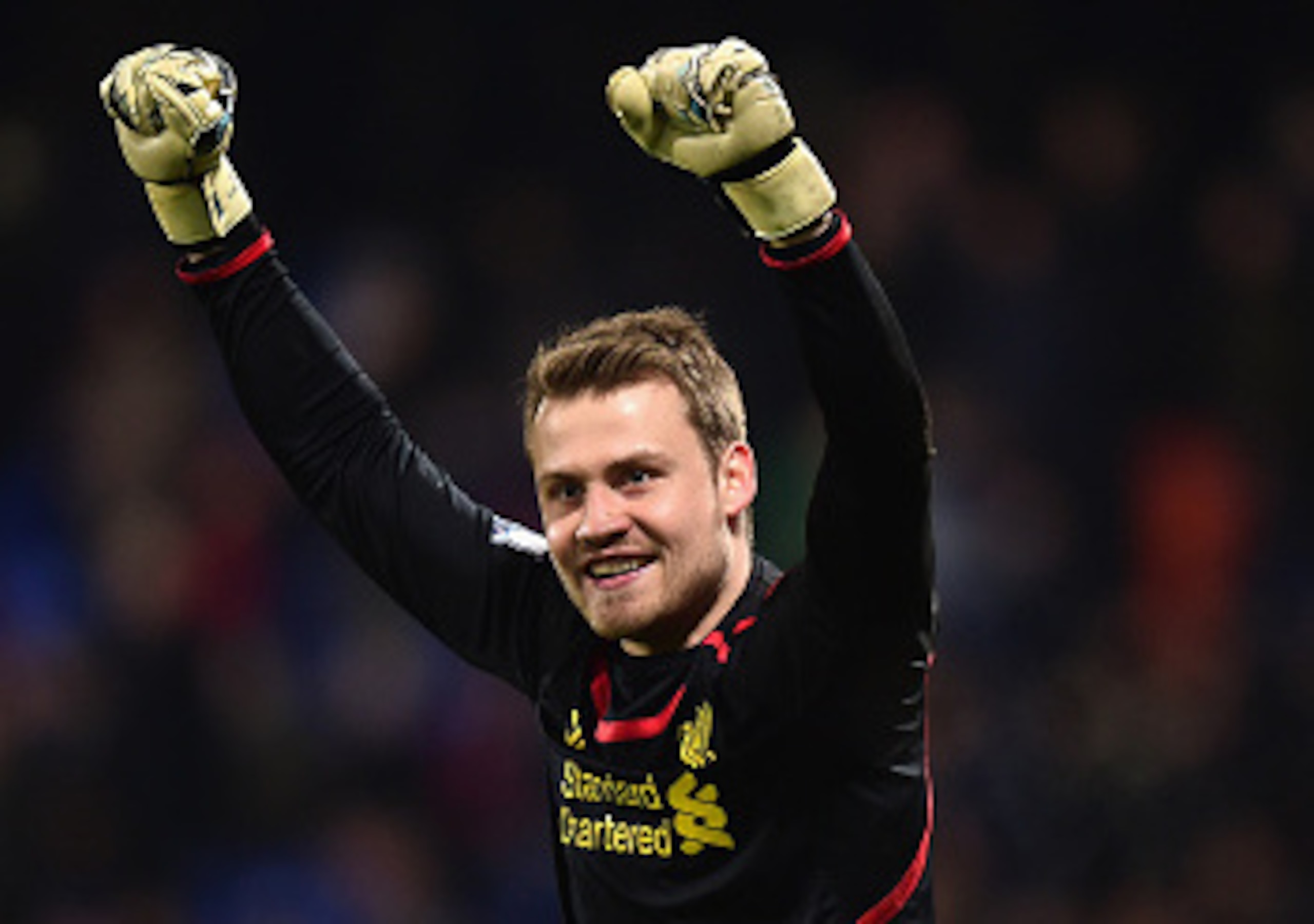
Liverpool manager Brendan Rodgers caused a stir earlier this season when he dropped first-choice goalkeeper Simon Mignolet for December's 3-0 loss to Manchester United at Old Trafford.
"I felt I had to change it because we have to find solutions throughout the squad to be better," Rodgers said, via BBC Sport, referencing a run of poor form for Mignolet. "I said to Simon that it's for an indefinite period."
This drop in form represented a major concern for Liverpool, with Chris Bascombe of The Telegraph reporting the club's interest in Club Brugge goalkeeper Mat Ryan back in January, ostensibly as a replacement for Mignolet.
But comparing Mignolet this season to the last, should they have worried?
Simon Mignolet in 2013/14
- Appearances: 38
- Clean sheets: 10
- Rate of games per clean sheet: 3.8
- Average of goals conceded per game: 1.32
- Average of saves per goal conceded: 1.70
- Average claim success: 96 per cent
- Average of punches made: 42 per cent
- Distribution success: 69 per cent
Simon Mignolet in 2014/15
- Appearances: 28
- Clean sheets: 12
- Rate of games per clean sheet: 2.3
- Average of goals conceded per game: 0.96
- Average of saves per goal conceded: 1.84
- Average claim success: 88 per cent
- Average of punches made: 61 per cent
- Distribution success: 68 per cent
In a raw form, this season Mignolet has statistically performed much better than in 2013/14, with more clean sheets to appearances, fewer goals conceded and more saves made per goal conceded.
In terms of his approach to crosses, Mignolet's output has changed significantly this season, with less success in terms of claiming the ball, but a drastically higher percentage of punches made per game.
This may stem from his February admission, as told by The Guardian's Andy Hunter, that he had "made the decision that rather than thinking too much I would be more decisive and commanding."
Mignolet seems to decided on his strength in commanding the box, and that is a more fundamental, "if it's not in the box, they can't score" approach of clearing the ball from the area by punching it away from danger.
One main weakness prevails, of course, in his work in possession, with his distribution dropping by one per cent this season.
However, it seems that by way of Rodgers' management and, as to be discussed shortly, some resolute defensive work, Mignolet has improved in 2014/15.
Defensive Work
2 of 5
Have Mignolet's flatteringly improved clean-sheet statistics more to do with an improved defensive make-up than his personal development?
Liverpool defensive statistics for 2013/14
- Games: 38
- Goals conceded: 50
- Goals conceded per game: 1.32
- Clean sheets: 10
- Rate of games per clean sheet: 3.8
- Tackles won: 48 per cent
- Headed duels won: 49 per cent
- Blocks, interceptions and clearances on average per game: 53
Liverpool defensive statistics for 2014/15
- Games: 30
- Goals conceded: 32
- Goals conceded per game: 1.07
- Clean sheets: 12
- Rate of games per clean sheet: 2.5
- Tackles won: 46 per cent
- Headed duels won: 47 per cent
- Blocks, interceptions and clearances on average per game: 50
Interestingly, Liverpool's success in terms of tackles, headed duels and rate of defensive actions (blocks, interceptions and clearances) has decreased for this season.
However, this is clearly not an issue, with the all-important rates of clean sheets and goals conceded lowering significantly in 2014/15.
In particular, this record has improved since Rodgers' installation of a back-three defensive system from the loss to United in December, with Emre Can, Martin Skrtel and Mamadou Sakho regularly starring in a stable back line.
Liverpool defensive statistics since the introduction of the back three
- Games: 15
- Goals conceded: 13
- Goals conceded per game: 0.87
- Clean sheets: 8
- Rates of games per clean sheet: 1.88
- Tackles won: 43 per cent
- Headed duels won: 44 per cent
- Blocks, interceptions and clearances on average per game: 46
With a back three, Liverpool have kept more clean sheets and conceded fewer goals, while their rate of tackles, headed duels and other defensive actions has once more lowered.
This could well point towards more emphasis on a collective, opposition-stifling defensive approach, with the results clearly going in Rodgers' favour this season.
Based on statistics, the back three seems to be the way to go.
Possession Play
3 of 5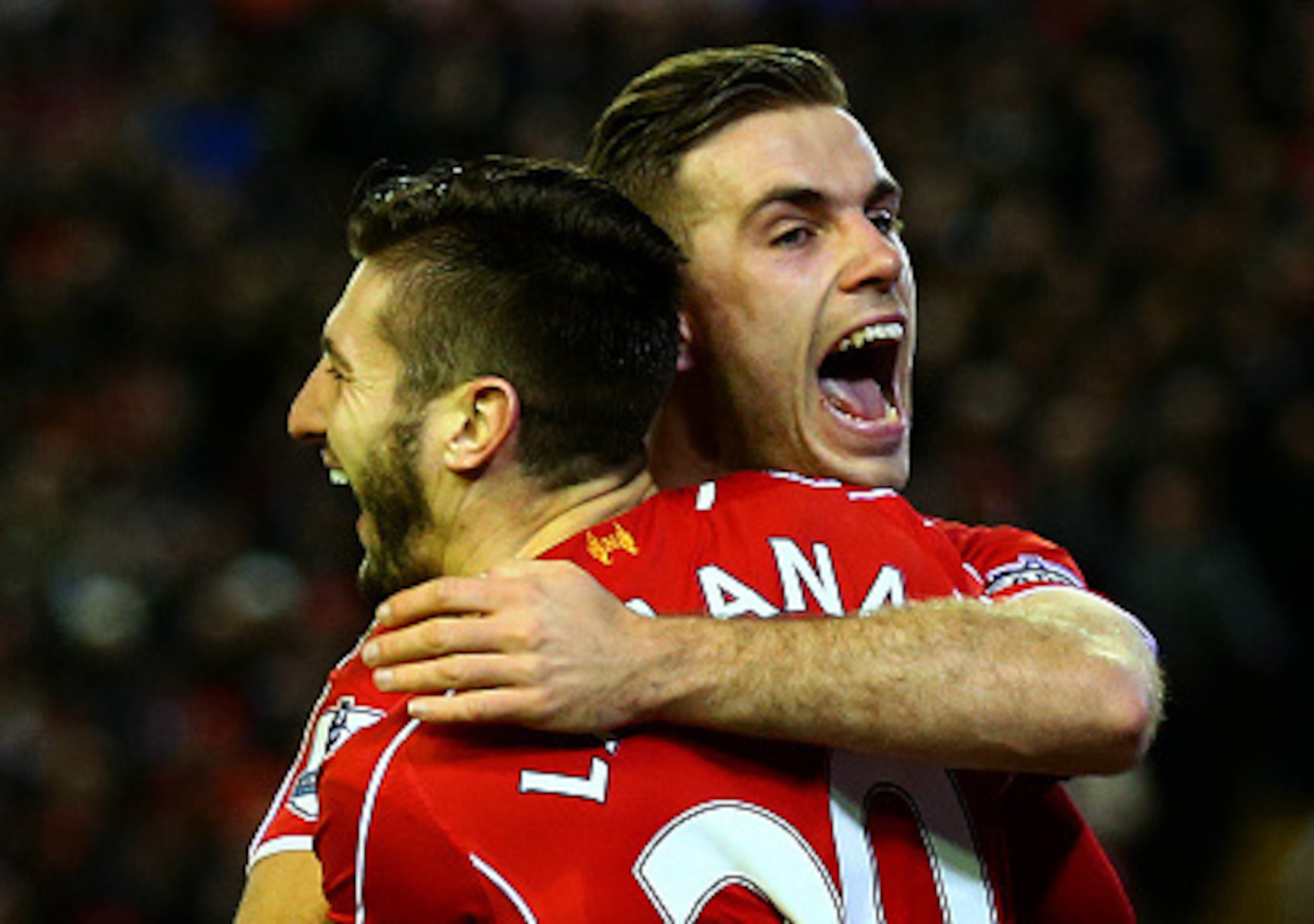
Shortly after taking over as Liverpool manager, Rodgers held a discussion group with reporters, including This is Anfield's Matt Ladson, and outlined his tactical approach.
"If you’re better than the other team, with the ball, you’ve got an 8 out of 10 chance, nearly, of winning the game," Rodgers claimed.
"When you’ve got the ball 65, 70 per cent of the time it’s a football death for the other team. We’re not at that stage yet, but that’s what we’ll get to, it’s death by football."
Rodgers' theory is entrenched in the analysis of statistics, and Liverpool have arguably achieved death by football many times under Rodgers.
But how has Liverpool's possession play, in keeping the ball and creating chances, compared from last season to this?
Liverpool possession statistics for 2013/14
- Average possession: 54 per cent
- Average passing accuracy: 85 per cent
- Average pass length: 19 metres
- Chances created: 488
- Chances created per game: 12.8
- Top three assist-makers: Steven Gerrard (13), Luis Suarez (12), Daniel Sturridge/Jordan Henderson/Philippe Coutinho (7)
Liverpool possession statistics for 2014/15
- Average possession: 53 per cent
- Average passing accuracy: 83 per cent
- Average pass length: 19 metres
- Chances created: 338
- Chances created per game: 11.3
- Top three assist-makers: Jordan Henderson/Raheem Sterling (7), Philippe Coutinho (4), Adam Lallana (3)
This season has seen a marked depreciation in Liverpool's possession play, not only in superficial aspects such as holding on to the ball more than their opponents, but also in creating chances.
So how has this affected their goalscoring?

Goals
4 of 5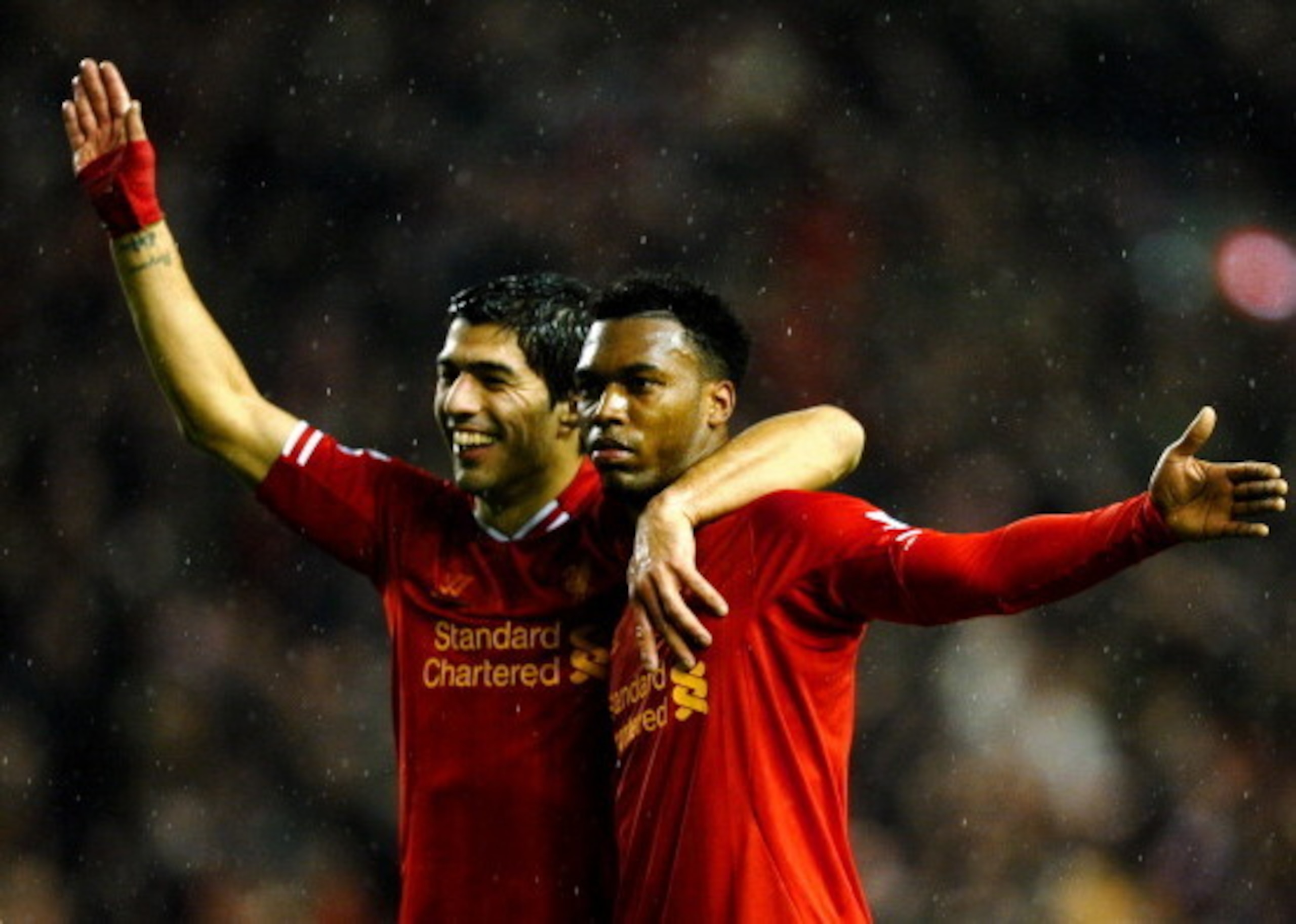
Ultimately, Rodgers' "death by football" style requires his sides to finish the chances that have been created, but how has Liverpool's goal rate compared this season to the last, and just how have these goals been scored?
Liverpool goal statistics for 2013/14
- Games: 38
- Goals: 101
- Goals per game on average: 2.66
- Games with 3+ goals scored: 21 (55 per cent)
- Goals from set pieces (free-kicks, corners, throw-ins, penalties): 36 (36 per cent)
- Headed goals: 14 (14 per cent)
- Top three goalscorers: Luis Suarez (31), Daniel Sturridge (21), Steven Gerrard (13)
Liverpool goal statistics for 2014/15
- Games: 30
- Goals: 44
- Goals per game on average: 1.47
- Games with 3+ goals scored: 5 (17 per cent)
- Goals from set pieces (free-kicks, corners, throw-ins, penalties): 7 (16 per cent)
- Headed goals: 4 (9 per cent)
- Top three goalscorers: Raheem Sterling/Steven Gerrard (6), Jordan Henderson (5), Adam Lallana/Daniel Sturridge/Philippe Coutinho (4)
Perhaps predictably, Liverpool's rate of goalscoring has decreased significantly this season when compared to the last, with a loss of over a goal per game on average.
Not only this, but the Reds' prowess from both direct and indirect set-piece situations, as well as aerially, has diminished—last season, for example, centre-back Skrtel scored seven goals, while this season he has scored just one.
Alarmingly for Rodgers, his highest goalscorers this season are Raheem Sterling and Steven Gerrard with just six goals and, while there are eight games left to play, it is within all probability that they will not reach Gerrard's third-placed tally of 13 for last season, let alone Luis Suarez's 31 goals.
While Liverpool have shored up their back line compared to 2013/14, there has been a disappointing drop-off in terms of goalscoring.
Key Players
5 of 5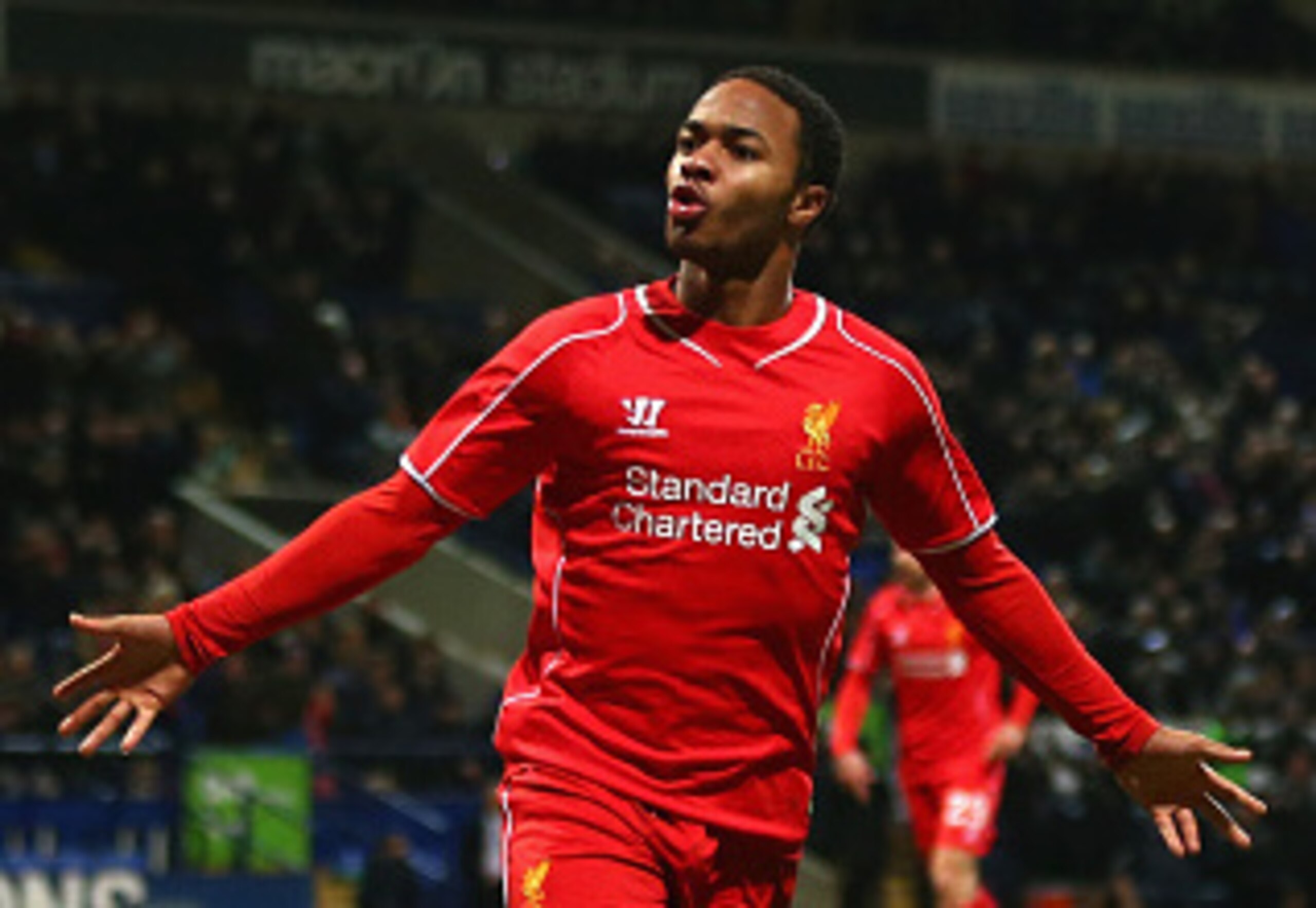
One of the main notions of Moneyball is to ascertain the value of players based on statistics, and with Sterling, for example, being linked by Jack Pitt-Brooke of The Independent with a move away from the club, it may become a harsh reality for Rodgers to face sooner rather than later.
This, of course, worked exceptionally with the sale of Suarez to Barcelona, receiving £75 million from the Catalan club after his 31-goal season—over £50 million profit, after his £22.7 million signing in 2011.
Here we have subjectively selected a group of three of Liverpool's key players (one from defence, one from midfield and one from attack) over the past two seasons.
Using this group, we have compared their key statistics (based subjectively on their respective positions) from 2013/14 and 2014/15 to measure their output and, perhaps, their value to the club:
Martin Skrtel
While Sakho has risen to perhaps become Liverpool's best defender, his on-off status in Rodgers' first team up until the turn of the year suggests Skrtel remains the Reds' key defender at present.
Skrtel's key statistics for 2013/14
- Games: 36
- Tackles won per game: 1.4
- Headed duels won per game: 3.6
- Blocks, interceptions and clearances on average per game: 15
Skrtel's key statistics for 2014/15
- Games: 27
- Tackles won per game: 1.1
- Headed duels won per game: 3.6
- Blocks, interceptions and clearances on average per game: 13
Verdict: A slight statistical drop in form in 2014/15.
Jordan Henderson
Henderson has risen from near-exile under Rodgers to his widely believed captain-in-waiting, assuming a key playmaking role in the centre of midfield.
Henderson's key statistics for 2013/14
- Games: 35
- Assists: 7
- Rate of games per assist: 5
- Key passes: 1.8
- Average number of passes per game: 57.9
Henderson's key statistics for 2014/15
- Games: 29
- Assists: 7
- Rate of games per assist: 4.14
- Key passes: 1.6
- Average number of passes per game: 58.3
Verdict: A continuation of 2013/14's good form, with a more clinical creative touch.
Raheem Sterling
Sterling rose to true prominence alongside Suarez and Sturridge in 2013/14, maturing as an attacking player, culminating in his being awarded the 2014 European Golden Boy award; in 2014/15, he has continued this form.
Sterling's key statistics for 2013/14
- Games: 33
- Goals: 9
- Assists: 5
- Rate of games per goal/assist: 2.36
- Dribbles: 2.8
Sterling's key statistics for 2014/15
- Games: 28
- Goals: 6
- Assists: 7
- Rate of games per goal/assist: 2.15
- Dribbles: 3
Verdict: Unsurprisingly, Sterling has continued his growth this season, becoming a more clinical attacking player.
While evaluating this season upon its climax, and inevitably comparing it to last season's near-triumph, Rodgers, and Henry's Fenway Sports Group, will no doubt note a decrease in attacking prowess, as well as a major improvement in defensive work.
However, a salient note is that from this small sample of key players, on the whole Rodgers' squad is improving—would Liverpool really be wise to sell Sterling, if he is progressing so healthily?
Comparing Liverpool's statistics from 2013/14 to this season's figures there is a lot to draw encouragement from, but also clear areas where Brendan Rodgers must regroup his side, work on and improve.
Statistics via Squawka.com and WhoScored.com.
.jpg?w=2560 "Chiefs Giants Football")
.jpg?w=2560 "Titans Colts Football")


.jpg?w=2560 "NFL investigating Eagles")
.jpg?w=2560 "Jonathan Taylor Landing Spots 📍")