

4 New York Knicks Who Shouldn't Return Next Season
The New York Knicks may be the worst team in the NBA, but in the second half a handful of players have stepped up in an effort to earn a place on next year's squad.
For every Andrea Bargnani or Alexey Shved, however, there are also members of the team who are demonstrating that New York will probably be better off without them. Whether for reasons based purely on their performance or the financial aspects of keeping them around, here are four players the Knicks should be moving on from in 2015-16.
Shane Larkin
TOP NEWS

Brown with an all-time summary of relationship with Tatum

Heat, Giannis were down by 20+ in each of their 3 losses
Worst NBA Predictions 🫣
The writing was already on the wall for Shane Larkin that he may not have a long-term future in the Big Apple when Phil Jackson refused to pick up his third-year team option back in October. The emergence of Shved and Langston Galloway at point guard since then all but confirms he won't have a place in next year's rotation at the position.
It wouldn't necessarily hurt to keep Larkin around. He's fast and sneaky and has, at times, showed signs of being an effective role player. But if the Knicks are looking for an upgrade at the point in free agency or the draft, it would appear he's the odd man out.
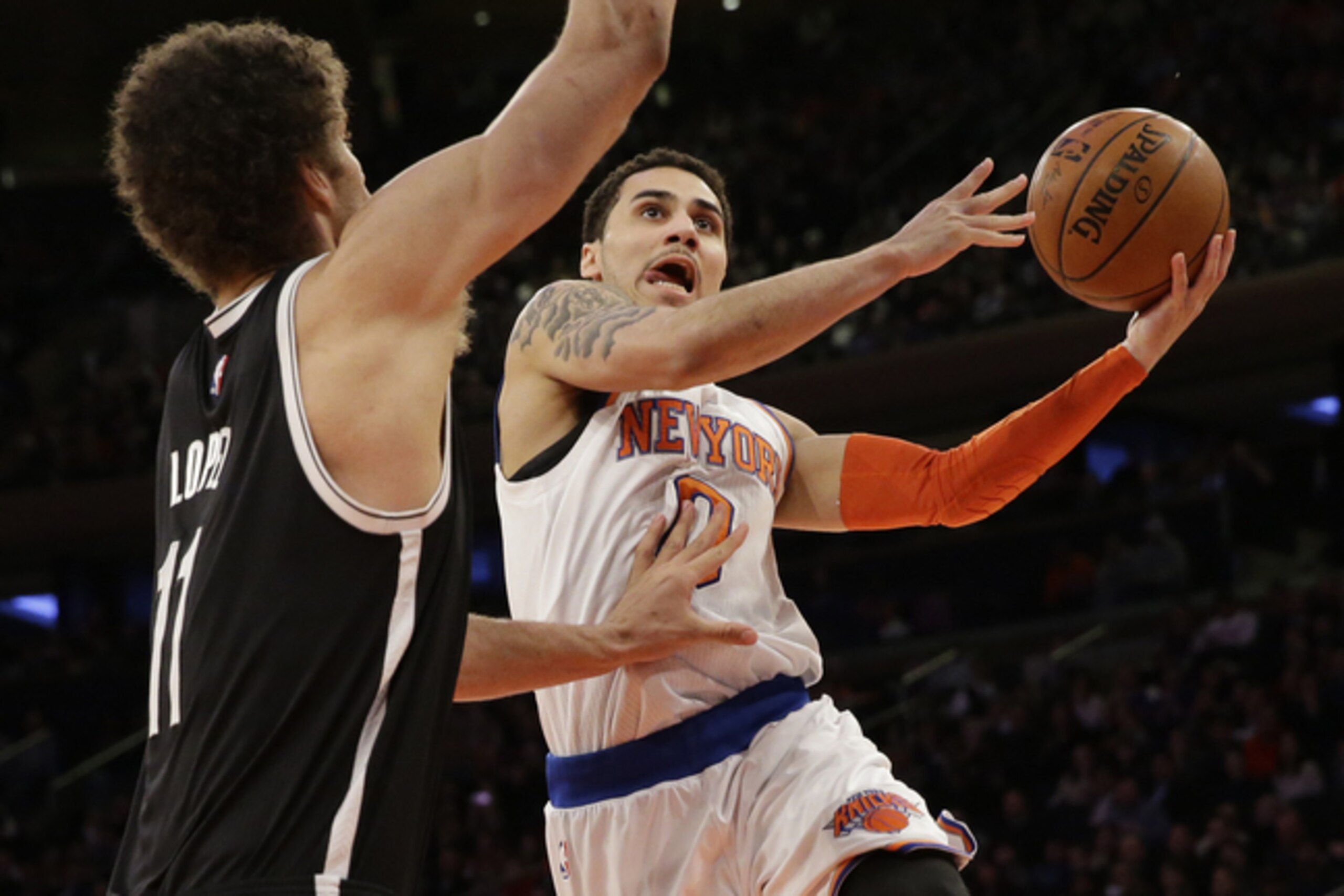
Larkin is undersized and underproductive, standing at 5'11" and averaging just 5.9 points and 2.9 assists per game. That isn't going to cut it at the NBA's most stacked position.
Though he's only 22 years old, his height and lack of any major strengths make it hard to view him as a serious prospect. A spot may open up as a role player somewhere, but unlike his counterparts Galloway, Cleanthony Early and Tim Hardaway Jr., he isn't someone who needs to be kept around simply by virtue of his age.
Lou Amundson
As with Larkin, Lou Amundson should fall victim to an improved depth chart if the Knicks succeed this offseason. A revamped starting frontcourt would (assuming they are kept) push Cole Aldrich and Quincy Acy permanently to the bench, leaving little room for a player like Amundson. It's an even tighter squeeze if you factor in New York potentially bringing Bargnani back, too.
Amundson is a solid hustle player who grabs boards and defends fairly well at his position, but he doesn't bring anything particularly unique to the table. Where Aldrich and Acy have upside, we know exactly who Amundson is, and that is a player not worth occupying anything other than one of the last few roster spots on a competitive team.
If the Knicks don't manage to fully upgrade their bigs, there's nothing wrong with bringing Amundson back for the minimum again. But in an ideal world, he'll be no more than an afterthought.
Jason Smith
Jason Smith has had an up-and-down season, at times looking like one of the Knicks' better players and at others looking like he has no place out there on the court. Overall, the sum has been underwhelming for a player New York spent its mid-level exception on back in July.
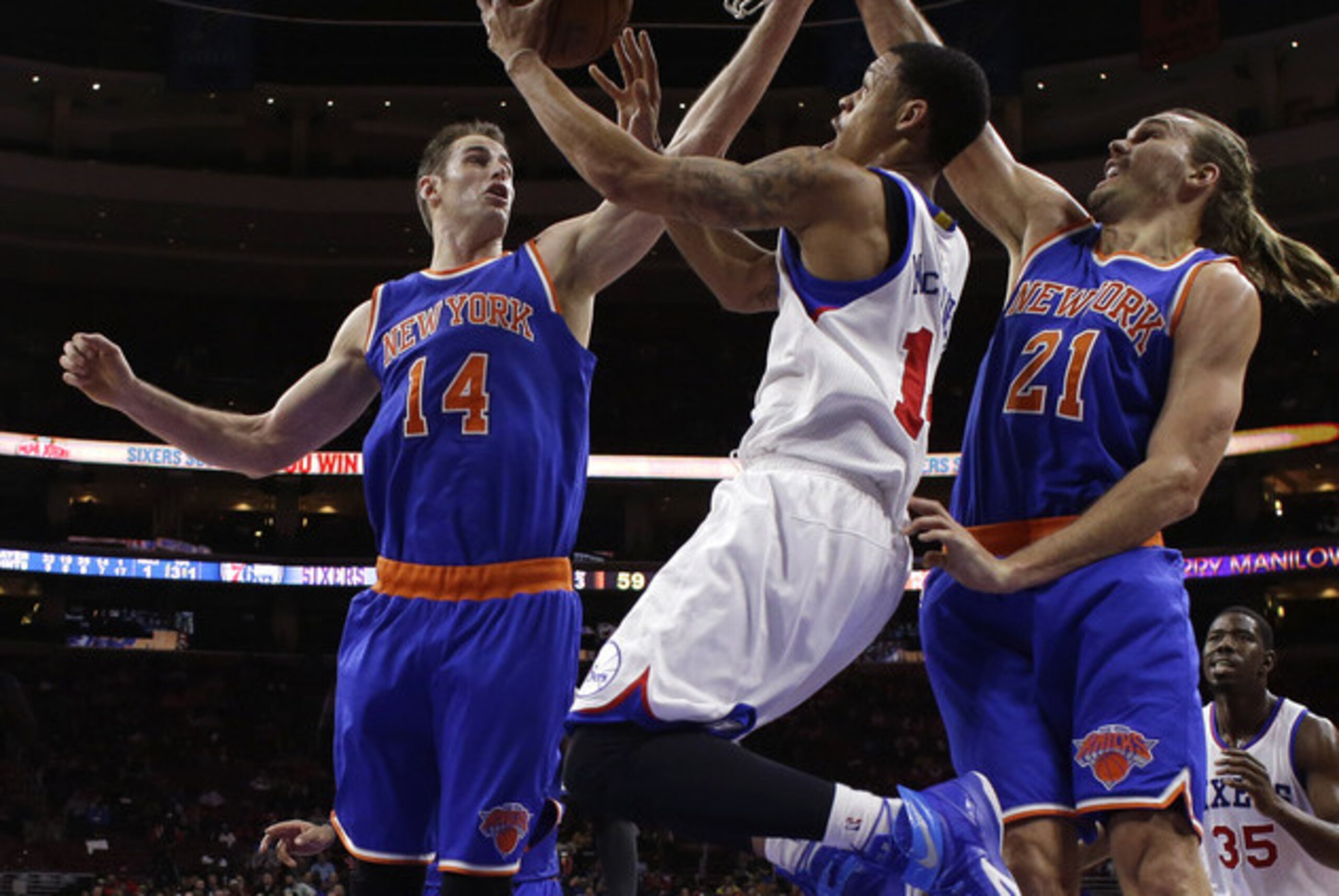
For the minimum, it may be worth bringing back Smith—who has a history of performing well off the bench for competitive teams—for another shot. The full $3.3 million he made this year, however, could definitely be put to better use elsewhere.
Again, the Knicks should be looking to add at least one new starting big, which will push everyone a step down the depth chart. As for who should be kept to fill those smaller roles, the priority should go toward those who are younger (he's 29) and more consistent than Smith.
New York will also want to establish a culture that emphasizes defense and effort on the boards, two key areas of weakness for Smith, who has pulled down a career-low 6.4 rebounds per 36 minutes on the season, per Basketball-Reference.com.
Jose Calderon
When the Knicks traded away Tyson Chandler this past summer, the main selling point (beyond getting rid of Chandler's contract) was that Jose Calderon would be a huge upgrade over Raymond Felton. As it turns out, there hasn't been much difference in production between the two, and Calderon's contract is looking like yet another financial handicap.
Calderon has arguably been the most disappointing player on the Knicks this season, which is quite an achievement on a team this bad. He's been averaging just 9.1 points and 4.7 assists per game on a career-low 42 percent from the floor, with Shved and Galloway outplaying him for much of the second half.
One of Calderon's biggest issues has been his health. He's appeared in just 42 games (on pace for the fewest appearances in his career), suffering from a strained Achilles, to the point of requiring a walking boot.
There is a chance that he could bounce back next year with time to recover and more talent around him, but regardless, New York should look to get rid of him to maximize flexibility this summer.
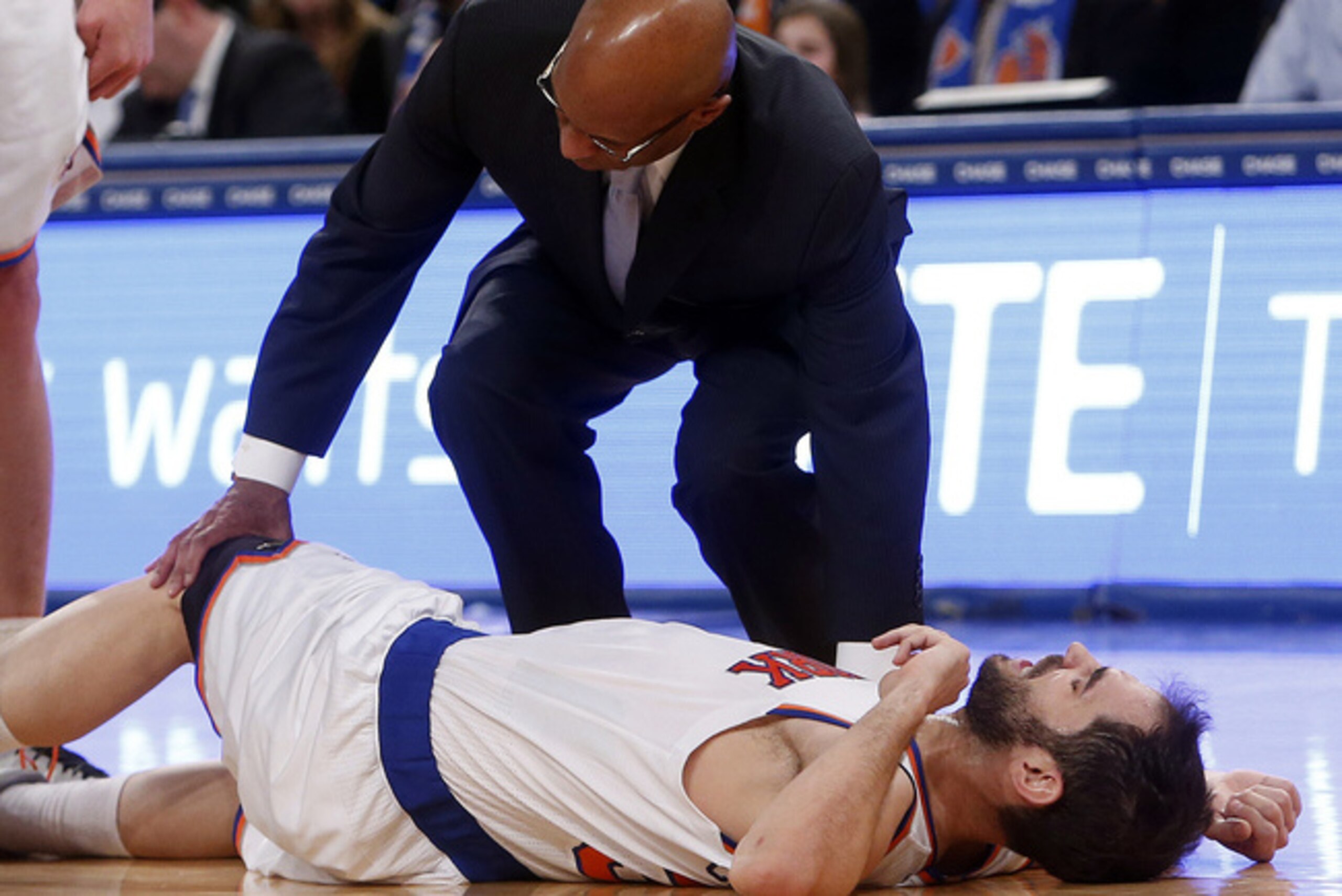
Luckily for the Knicks, mitigating the remaining two years and $15.1 million on Calderon's contract doesn't have to be too big of a hurdle. A trade would likely require relinquishing Hardaway, but if that fails or is deemed undesirable, making use of the stretch provision could be an alternative.
Using the stretch provision, the Knicks would be able to waive Calderon and spread the cost of his contract over five years, for a total of $3 million per year. That would save $4.4 million for the coming offseason and shoot the Knicks' spending money up to just less than $30 million—enough to potentially add three decent starters.
Of course, no team wants to be paying a player no longer on its roster five years into the future, but with the NBA's salary cap expected to increase drastically in 2016 when the new TV deal kicks in, it may not be too much of an issue.
Be it through the draft or free agency, New York should be looking for someone younger and more effective defensively at the 1, at which point Calderon would become entirely expendable. Considering the money he's making, it's a no-brainer for Jackson to cut his losses now in time for the franchise's most important offseason in years.




.jpg?w=2560 "Mahomes Asked OT to Leave Meeting")
.jpg?w=2560 "Jonathan Taylor Landing Spots 📍")

.jpg?w=2560 "Five Teams Eyeing Taylor")
