


Australia clinched their fifth Cricket World Cup title on Sunday, defeating New Zealand by seven wickets in front of more than 93,000 people in Melbourne.
Led by an outstanding bowling performance from Mitchell Starc, Mitchell Johnson, Josh Hazlewood and James Faulkner, the hosts tore through the Black Caps lineup in the game's first innings to set up a straightforward chase under lights at the Melbourne Cricket Ground.
In a high-scoring tournament, it was a rare case of the ball dominating the bat, but also a reminder that world-class bowlers are the only answer to the explosive batsmen currently dominating amid a period of rapid evolution in the one-day international arena.
With that in mind, we've ranked the top 20 bowlers from the 2015 Cricket World Cup, using a statistical algorithm (explained across the following slides) to evaluate each and every performance across the tournament.
Calculating the Rankings Step 1: Points Allocation
1 of 24
Just like it was in previous rankings we've compiled, it was critically important to remove the heavy bias of opinion from these World Cup bowler rankings by formulating an algorithm that could objectively evaluate the performances of each player.
The first step in that process was to award points for each basic bowling statistic accumulated by each player across the course of the 2015 Cricket World Cup.
The points awarded for each basic statistic are listed below:
| Wickets | 20 |
| 4WIs | 40 |
| 5WIs | 50 |
Note: Extra points have been awarded for four and five-wicket hauls to reward bowlers who put together game-changing spells.
Calculating the Rankings Step 2: Accounting for Economy Rate
2 of 24
Unlike Test cricket, where the sheer weight of wickets ultimately determines a player's rank, ODI cricket presents a different challenge with regard to evaluating performance.
Given the format's time constraints and its emphasis on the rate of scoring, it was vital that each player's accumulated statistics were measured against economy rates.
To do this, it was necessary to establish a "par" measurement, by averaging the economy rates of all players across the 2015 Cricket World Cup.
| 5.55 |
With that "par" number attained, each player had his statistics measured against their relative economy rate for the tournament.
Examples:
| Bowler 1 | 375 | 6.43 | 5.55 | 0.86 (5.55/6.43) | 322.5 |
| Bowler 2 | 200 | 3.21 | 5.55 | 1.73 (5.55/3.21) | 346 |
As you can see, performing this step ensures that tight bowling is rewarded, helping our rankings to reflect one of the standout factors in limited-overs cricket.
Calculating the Rankings Step 3: Adjusted Points Per Match
3 of 24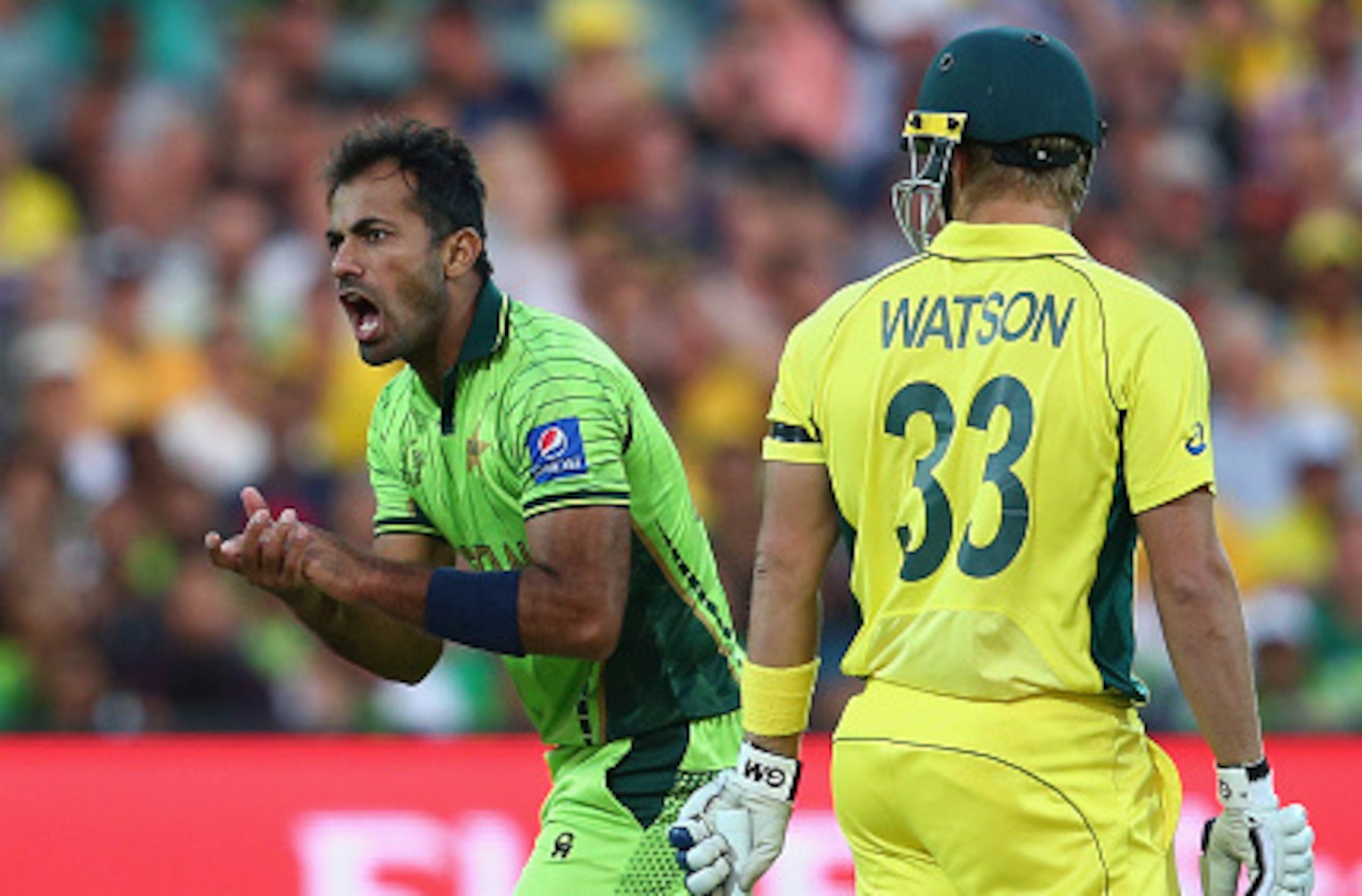
The final step in the algorithm averages a player's Adjusted Points Total across each match in order to rank players on a per-match basis.
This ensures that players of all nations are judged fairly, rather than basing the rankings on the total number of points accumulated, which is simply a product of matches played.
To do this, the Adjusted Points Totals for each player were divided by the number of matches played to determine each player's Adjusted Points Per Match.
Example:
| Example | 346 | 7 | 49.43 |
For a player to qualify, he must have competed in a minimum of 5 matches in the 2015 Cricket World Cup.
.jpg?w=2560 "Chiefs Giants Football")
.jpg?w=2560 "Titans Colts Football")

Limitations of the Ranking Algorithm
4 of 24
Every statistical algorithm has its limitations, and this one is no exception.
However, it's important to outline the limitations that are inherent in this objective ranking system.
1. The formula can't account for the match situation. Therefore, wickets taken in the first 10 overs don't carry more significance than those claimed at other times.
2. The system can't account for the varying degrees of scoring that occur in different conditions and venues.
3. The formula can't factor in the significance of the contest. For instance, these rankings don't separate wickets taken in group games from wickets taken in knockout matches.
4. The system can only judge a player on accumulated statistics. For example, a bowler who goes wicketless in an impressive spell will receive fewer points than a bowler who claims two fortunate wickets in an otherwise loose spell.
20. Shakib Al Hasan (Bangladesh)
5 of 24
Matches: 6
World Cup Record: 8 wickets at 37.25; economy 5.16
Adjusted Ranking Points per Match: 35.85
Having arrived at the World Cup on the back of a strong run with the ball against Zimbabwe in late 2014, Shakib Al Hasan continued to be one of Bangladesh's standouts at the global tournament.
After claiming two wickets in a tidy spell against Afghanistan to open the World Cup, the left-armer was miserly against Scotland and England before picking up four key wickets (including the top three) against eventual finalists New Zealand.
And on surfaces hardly conducive to spin, maintaining a economy rate of 0.39 runs per over below the tournament average was an impressive achievement.
19. Mohit Sharma (India)
6 of 24
Matches: 8
World Cup Record: 13 wickets at 24.15; economy 4.98
Adjusted Ranking Points per Match: 36.22
A late replacement for the injured Ishant Sharma, Mohit Sharma put together a strong tournament as part of an Indian pace attack that enjoyed surprising success at this World Cup.
With two superb spells against Pakistan (two for 35) and South Africa (two for 31), the right-armer helped MS Dhoni's side to an emphatic opening to the tournament, setting the 2011 champions on their way to a dominant campaign in the group phase.
Also impressive against the West Indies, Zimbabwe and Bangladesh, Sharma's only disappointing performance came in the semi-final against Australia, when he conceded 75 runs from his 10 overs.
18. Tim Southee (New Zealand)
7 of 24
Matches: 9
World Cup Record: 15 wickets at 31.46; economy 5.82
Adjusted Ranking Points per Match: 37.08
After four games in this World Cup, it looked as though Tim Southee was on track to break all sorts of wicket-taking records in the global tournament.
With an astonishing seven-wicket haul against England and three two-wicket performances against Sri Lanka, Scotland and Australia, the New Zealander had raced to 13 scalps from his opening four matches.
But in his next five games, Southee went wicketless on four occasions and was dreadfully expensive against the West Indies in the quarter-final and against Australia in the final.
17. Sohail Khan (Pakistan)
8 of 24
Matches: 7
World Cup Record: 12 wickets at 30.33; economy 5.88
Adjusted Ranking Points per Match: 39.10
With so many of Pakistan's first-choice bowlers sidelined, it was remarked that the men in green were able to field an incisive attack at the 2015 Cricket World Cup.
A prominent component of that revamped bowling ensemble was Sohail Khan, who, with only five games of international ODI experience behind him, claimed figures of five for 55 in his World Cup debut against India in Adelaide.
The right-armer continued to pick up wickets thereafter (Pakistan's clash with Zimbabwe was his only wicketless performance), but he was expensive in the pivotal meetings with the West Indies, South Africa and Australia.
16. James Faulkner (Australia)
9 of 24
Matches: 6
World Cup Record: 10 wickets at 19.70; economy 4.70
Adjusted Ranking Points per Match: 39.36
The first of four Australians in the top 20, James Faulkner saved his best for the heavyweights in the 2015 Cricket World Cup.
After a slow opening to the tournament, the left-armer's three for 48 against Sri Lanka was critical in the hosts' campaign, given that it helped his team to their most important victory of the group phase.
Faulkner then repeated that effort in both the semi-final and final, claiming three wickets in each match and bowling the game-changing spell against New Zealand that crippled the Black Caps' innings at the MCG.
15. Shapoor Zadran (Afghanistan)
10 of 24
Matches: 6
World Cup Record: 10 wickets at 26.50; economy 5.19
Adjusted Ranking Points per Match: 42.77
The Associate nations were an absolute joy to watch at this World Cup, and Afghanistan were undoubtedly the highlight among the bunch.
Playing a big part in that was the rawness of the side—a characteristic that was best illustrated by Shapoor Zadran.
With an epically long run up, the left-armer seemed to take an age to get to the wicket, but delivered the ball with real pace when he eventually did.
That genuine speed helped Shapoor claim wickets in five of his six matches at the tournament, with his most impressive display coming against Scotland when he finished with figures of four for 38.
14. Mitchell Johnson (Australia)
11 of 24
Matches: 8
World Cup Record: 15 wickets at 21.73; economy 5.13
Adjusted Ranking Points per Match: 45.98
It took Mitchell Johnson a little while to work his way into this year's World Cup, as the left-armer appeared to struggle for rhythm in the tournament's opening stages.
But after expensive spells against New Zealand and Sri Lanka, Johnson came alive in the knockout phase.
Against Pakistan, he was hostile and miserly, going on to complete his two most impressive performances against India and New Zealand in the semi-final and final, respectively.
Indeed, his dual capture of Rohit Sharma and Virat Kohli completely changed the complexion of India's chase at the Sydney Cricket Ground and was key in Australia's victory.
13. Jerome Taylor (West Indies)
12 of 24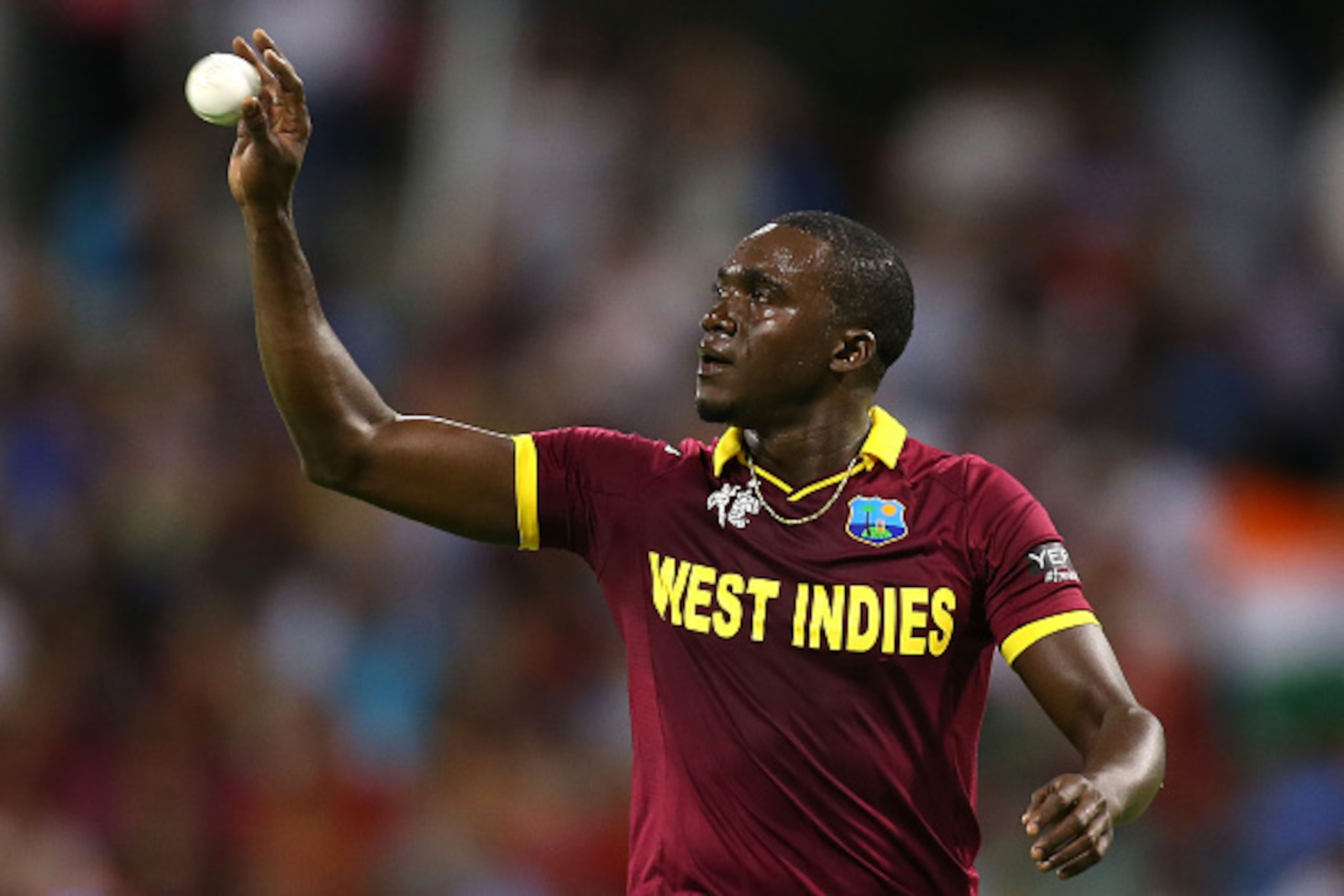
Matches: 7
World Cup Record: 17 wickets at 19.29; economy 5.70
Adjusted Ranking Points per Match: 47.29
From a strike-rate perspective, Jerome Taylor was as good as anyone at this World Cup, claiming his scalps at 20.2 balls apiece.
After dismantling both Pakistan and Zimbabwe in the opening stages of the tournament, the West Indian was impressive when taking two for 33 against India to give MS Dhoni's side a scare in their small chase in Perth.
But Taylor was also expensive at times, conceding more than eight runs per over against Ireland, South Africa and New Zealand.
12. Ravichandran Ashwin (India)
13 of 24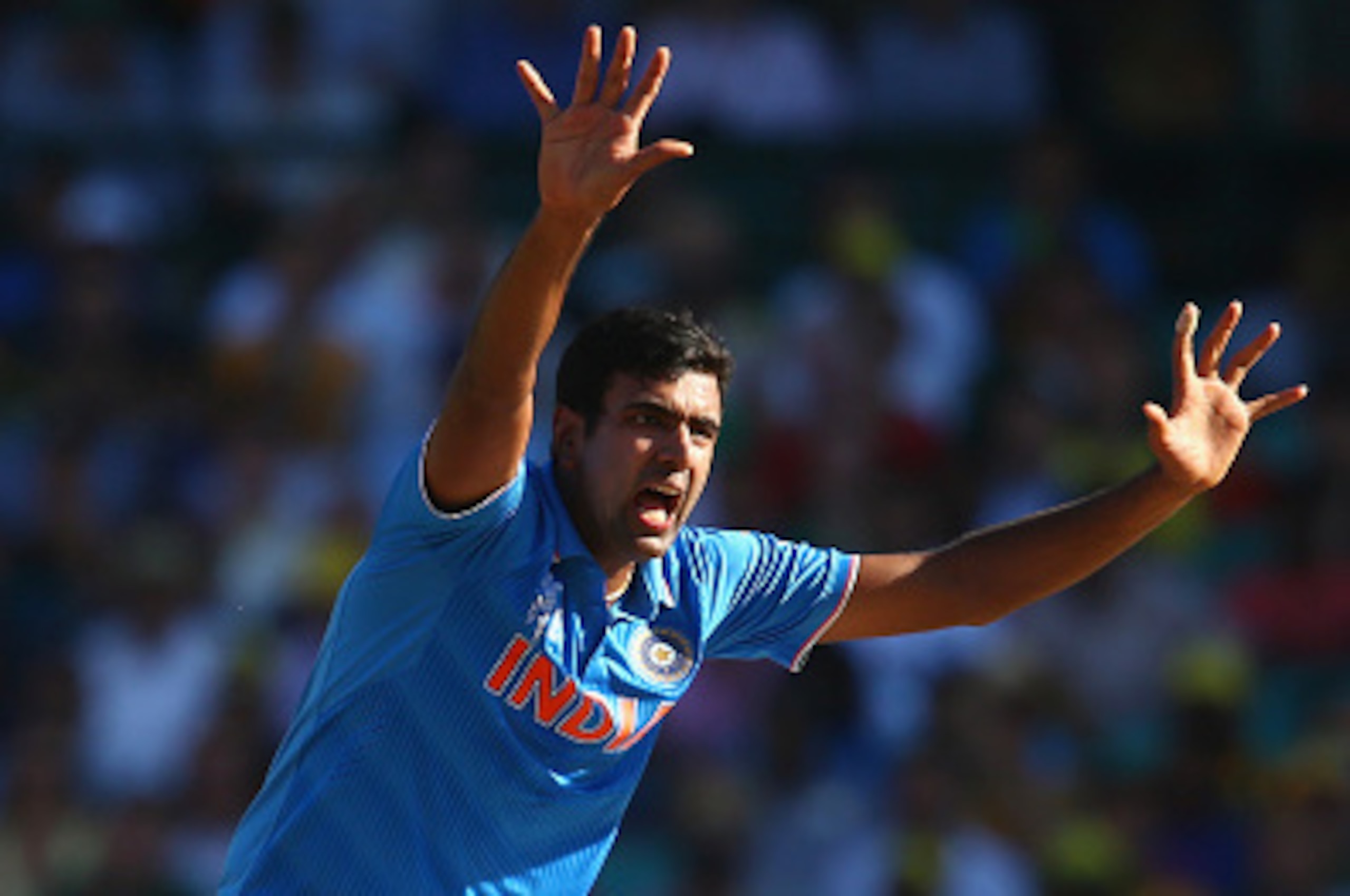
Matches: 8
World Cup Record: 13 wickets at 25.38; economy 4.28
Adjusted Ranking Points per Match: 48.63
One of only four spinners in the top 20, Ravichandran Ashwin continues to be a valuable asset for this Indian side in limited-overs cricket.
Operating with an outstanding economy rate throughout the World Cup, the finger-spinner utilised his height, impeccable length and array of variations to stifle even the best batsmen in the tournament.
Against South Africa, he was exceptional while claiming figures of three for 41, while in the semi-final against Australia, his concession of only 42 runs in 10 overs was notable given the way his team-mates were blasted around the SCG by the hosts' powerful batting lineup.
11. Josh Hazlewood (Australia)
14 of 24
Matches: 5
World Cup Record: 7 wickets at 25.14; economy 4.10
Adjusted Ranking Points per Match: 48.73
Though his seven wickets were the lowest number of any bowler in the top 20, Josh Hazlewood combined with Mitchell Starc to form the most effective opening partnership throughout the World Cup's knockout phase.
Against Pakistan in the quarter-finals, the tall right-armer claimed figures of four for 35 in a Man of the Match performance, before completing tight spells against India and New Zealand in the semi-final and final, respectively.
10. Mohammad Irfan (Pakistan)
15 of 24
Matches: 5
World Cup Record: 8 wickets at 23.25; economy 4.53
Adjusted Ranking Points per Match: 49.01
It was a real blow for Pakistan when Mohammad Irfan went down with injury in the latter stages of the group phase.
Indeed, until that point, the towering left-armer had enjoyed the fast surfaces on offer at the 2015 Cricket World Cup, thriving with the extra bounce and carry that made him incredibly uncomfortable for opposing batsmen.
After figures of four for 30 had destroyed Zimbabwe, Irfan then dismantled South Africa with three for 52 to help Pakistan claim an unlikely victory over the Proteas.
9. Josh Davey (Scotland)
16 of 24
Matches: 6
World Cup Record: 15 wickets at 20.73; economy 6.22
Adjusted Ranking Points per Match: 50.56
Although Scotland endured a difficult time at the 2015 Cricket World Cup, Josh Davey's performances with the ball were mightily impressive.
After opening the tournament with a three-wicket haul against New Zealand, the seamer grabbed four scalps against England before going on to collect another three against Sri Lanka.
Such a string of outstanding displays means Davey is the only bowler from the Associates to rank among our top 10, as well as the only bowler who didn't participate in the knockout phase to do so, too.
8. Wahab Riaz (Pakistan)
17 of 24
Matches: 7
World Cup Record: 16 wickets at 23.00; economy 5.56
Adjusted Ranking Points per Match: 51.34
When we look back on the 2015 Cricket World Cup in the years ahead, we're going to remember little moments rather than complete games. Grant Elliott's six, Mitchell Starc's dismissal of Brendon McCullum—those sort of moments.
Among them will be Wahab Riaz's short spell to Shane Watson in Adelaide, when the Pakistani put an entire stadium on edge with one of the most thrilling exhibitions of fast bowling seen in years.
But that wasn't Riaz's only notable performance. He also took four wickets against Zimbabwe, three against both South Africa and Ireland and a further two against the United Arab Emirates.
7. Daniel Vettori (New Zealand)
18 of 24
Matches: 9
World Cup Record: 15 wickets at 20.46; economy 4.04
Adjusted Ranking Points per Match: 51.90
During New Zealand's group-stage clash with Australia, it looked as though the Kiwis would be chasing something in excess of 400 when David Warner and Aaron Finch flew out of the blocks in Auckland.
But then Daniel Vettori came on, immediately sapping the life out of Australia's innings to bring about a collapse from the eventual champions.
Though Vettori only claimed two wickets, it was his control that changed that game and stood as the perfect example of what the left-armer did throughout the tournament and has always done during his career.
That's reflected by his World Cup economy rate of just 4.04—an outstanding figure given the immense scores witnessed in Australia and New Zealand.
6. Morne Morkel (South Africa)
19 of 24
Matches: 8
World Cup Record: 17 wickets at 17.58; economy 4.38
Adjusted Ranking Points per Match: 53.85
For so long, Dale Steyn has been the spearhead of the South African attack, but in this World Cup, it was Morne Morkel who took the leading role for the Proteas.
Benefiting from the fast, bouncy surfaces seen in Australia and New Zealand, the imposing right-armer made life uncomfortable for batsmen, claiming his wickets at 24 balls apiece in this World Cup.
The most notable aspect to Morkel's tournament was that he claimed two or more wickets in seven of his eight games and didn't go wicketless in a single one.
5. Umesh Yadav (India)
20 of 24
Matches: 8
World Cup Record: 18 wickets at 17.83; economy 4.98
Adjusted Ranking Points per Match: 61.30
Given the indifferent performances we'd seen from Umesh Yadav during the Australian summer prior to the 2015 Cricket World Cup, what he achieved during the tournament was actually quite remarkable.
Indeed, after spending several months being clattered around by the Australians, Yadav emerged as a potent weapon for India in the World Cup, claiming two or more wickets in six of his eight matches in the competition.
Most notable was the way he tore through Bangladesh in the quarter-finals, destroying any hope the Tigers might have had for causing a major upset with figures of four for 31.
4. Mohammed Shami (India)
21 of 24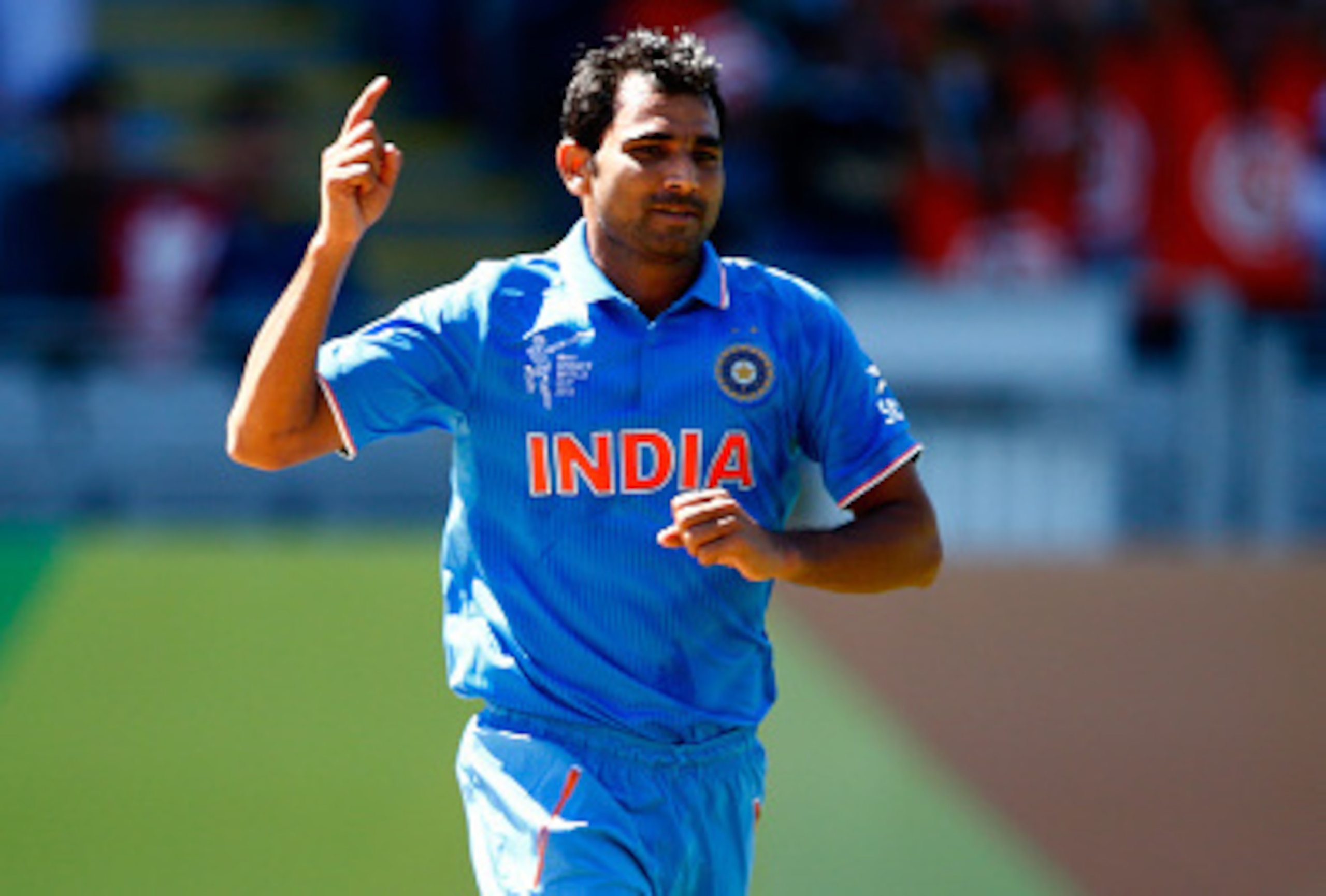
Matches: 7
World Cup Record: 17 wickets at 17.29; economy 4.81
Adjusted Ranking Points per Match: 62.64
At the other end to Umesh Yadav, fellow speedster Mohammed Shami was equally impressive during India's run to the semi-finals.
Like Yadav, Shami had spent much of the Australian summer being torched by the hosts, but sprung back to form with an impressive four for 35 in his team's World Cup opener against Pakistan.
That match started a run of six straight games in which Shami claimed two or more scalps, with his most impressive performances, pleasingly, coming against the tournament's bigger teams.
3. Imran Tahir (South Africa)
22 of 24
Matches: 8
World Cup Record: 15 wickets at 21.53; economy 4.23
Adjusted Ranking Points per Match: 63.96
If you'd suggested prior to the 2015 Cricket World Cup that Imran Tahir would outshine Dale Steyn for South Africa, you would have been laughed at.
But that's just what happened.
While Steyn endured a tournament that could, by his standards, be considered below par, Tahir was outstanding for his captain, AB de Villiers, and gave the Proteas' attack another dimension.
Enjoying the extra bounce on offer at this World Cup, the leg-spinner became an awkward opponent for batsmen looking to attack after the initial pace barrage, seeing him claim five for 45 against the West Indies and four for 26 in the quarter-finals against Sri Lanka.
The latter, completed against one of the world's most adept outfits at playing spin, was among the standout performances of the tournament.
2. Trent Boult (New Zealand)
23 of 24
Matches: 9
World Cup Record: 22 wickets at 16.86; economy 4.36
Adjusted Ranking Points per Match: 74.96
Across the last 18 months, Trent Boult has enjoyed a steady rise in all formats of the game on the international stage, but it's been this World Cup that has truly announced him to the world.
Operating in tandem with Tim Southee, Boult was a destructive weapon for the Black Caps, utilising his impeccable control of late swing to consistently trouble batsmen right throughout an innings.
In the group-stage clash with Australia, he was dynamic in claiming five for 27—a haul that was sandwiched between six other performances in which he claimed two or more wickets.
Now, everyone knows just what Boult is capable of.
1. Mitchell Starc (Australia)
24 of 24
Matches: 8
World Cup Record: 22 wickets at 10.18; economy 3.50
Adjusted Ranking Points per Match: 105.05
Mitchell Starc's dismissal of Brendon McCullum in the World Cup final perfectly summed up his tournament: Even for the best the competition had to offer, he was too good.
And just take a second to observe the Australian's adjusted ranking points per match determined by our algorithm.
From No. 2 to No. 20 on this list, just 39.11 points separate 19 players; another 30.09 separate Starc at No. 1 from Trent Boult at No. 2.
Using the most potent combination of searing pace, unerring accuracy and devastating late swing, the left-armer put together one of the finest stretches of fast bowling in limited-overs history in this World Cup.
An average of just over 10, a strike rate of less than 18 and an economy rate under four: it's a phenomenal record.
All statistics courtesy of ESPN Cricinfo.
.jpg?w=2560 "Steelers Buccaneers Football")


.jpg?w=2560 "🚨 Week 8 AP Top 25 Poll")
.jpg?w=2560 "NFL investigating Eagles")
.jpg?w=2560 "Steelers Roll Saints in Paris")
