
Malaysian Grand Prix 2015: Winners and Losers from Sepang Race
Sebastian Vettel won the 2015 Malaysian Grand Prix on a day when Formula One proved its doubters wrong.
After reigning constructors' champions Mercedes controlled the season-opening race in Australia from start to finish, the sport was, as it always seems to be nowadays, in crisis.
With one team running away at the front, and with not enough action further back to satisfy even the die-hard enthusiasts, this season was supposed to be one to forget.
Until, of course, F1 arrived at Sepang.
Mercedes' considerable advantage was almost wiped out in the debilitating heat of Malaysia, with Vettel's Ferrari team taking the fight to the Silver Arrows. And the rest got their act together to deliver a wonderfully exciting, tense race, with plenty of action throughout the field.
On the day when a Vettel win, previously booed by spectators, was universally welcomed, here are the winners and losers of the 2015 Malaysian Grand Prix.
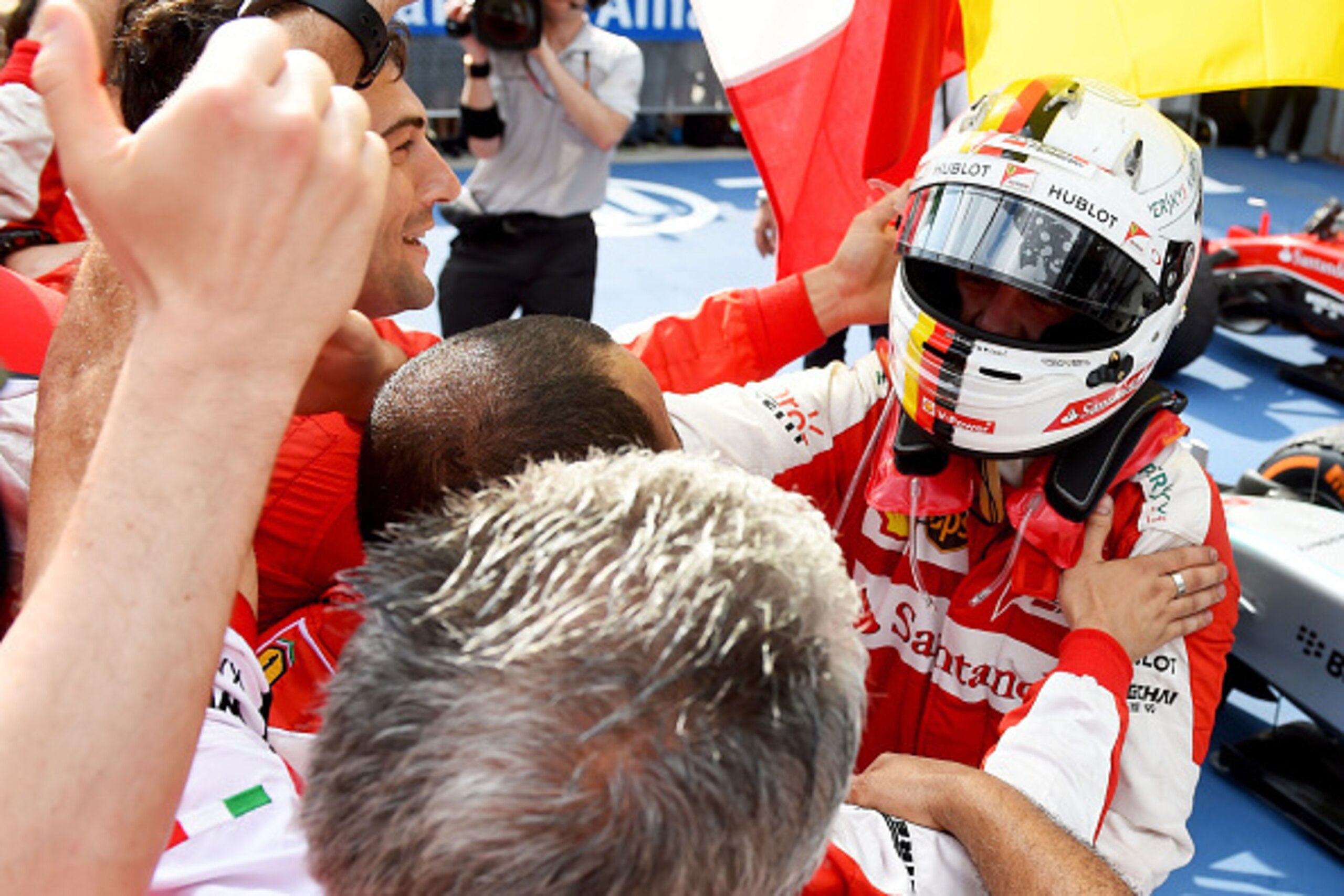
Winner: Sebastian Vettel
1 of 10
The finger is back.
While Malaysia 2015 may not be regarded as the greatest win of Sebastian Vettel's Formula One career, it is certainly one of the most important.
Not only was this the German's maiden win for Ferrari, a highlight of any driver's career, it was the four-time world champion's first victory under the new-spec regulations, confirming Vettel, despite a humbling 2014 campaign, has lost none of his class.
In splitting the Mercedes' of Lewis Hamilton and Nico Rosberg—who between them had won the last eight races—in qualifying before implementing a near-perfect two-stop strategy and managing his tyres, Vettel not only recovered, but also enhanced his reputation at Sepang.
The sheer nature of his performance—going toe-to-toe with the best and convincingly coming out on top—ridiculed the belief that Vettel was merely a passenger behind the wheel of the fastest car during his successful years at Red Bull.
As the German and Italian national anthems rang around Sepang, Vettel, with tears in his eyes, had taken his first step toward emulating the success of Michael Schumacher.
Loser: Mercedes
2 of 10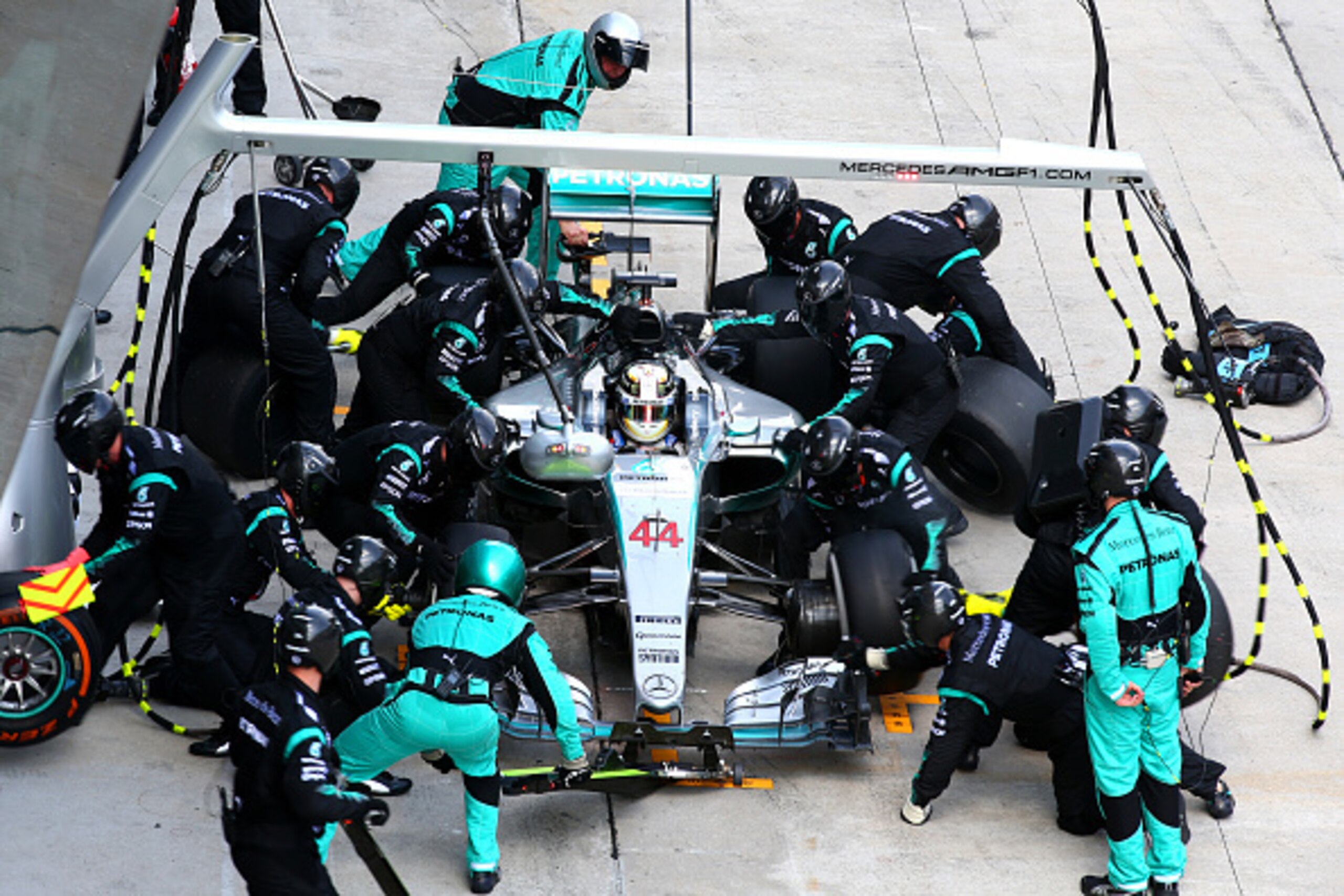
Mercedes looked unstoppable at the Australian Grand Prix, claiming an extremely comfortable pole position and crossing the finish line over 30 seconds ahead of the next-best car.
On the back of that performance, the Malaysian GP—and, indeed, most races in 2015—was theirs to lose.
But lose it they did, for this was a grand prix the Silver Arrows really should have won—in spite of Sebastian Vettel and Ferrari's brilliance.
The turning point came when the safety car was deployed, with Mercedes opting to pit both Hamilton and Rosberg for hard tyres. This decision sacrificed their track position to Vettel when, in hindsight, they should have either stayed out or split their drivers' strategies.
From there, the team were always playing catch-up. Vettel scampered away in clear air while Hamilton and Rosberg were forced to come through traffic.
Mercedes seemed to drop a clanger at the final pit stop, too, fitting Hamilton's car with new hard tyres rather than a scrubbed set of mediums, which might have given the reigning world champion a better chance of launching a late attack on Vettel.
"Maybe this is the wake-up call that we needed,", team principal Toto Wolff told Sky Sports' James Galloway at the end of a race that saw Mercedes underestimate the might of Ferrari and then panic in their efforts to close the gap.
Winner: Kimi Raikkonen
3 of 10
It has become fashionable to regard Kimi Raikkonen as someone who performs strongly when the car is to his liking but just doesn't bother when things don't go his way.
But the 2007 world champion proved that theory wrong in Sepang, putting in a tremendous recovery drive when it looked as though his race was going nowhere.
Raikkonen suffered the misfortune of being eliminated in the damp Q2 session in qualifying—forced to start in 11th when he could have been in the top-three—and his bad luck continued into the first lap of the race when his rear-left tyre was punctured by Felipe Nasr at the final corner.
Faced with an entire lap on three wheels before making it back to the pits, Raikkonen was effectively in a separate postcode to the leaders by the time Marcus Ericsson spun on Lap 4, but the subsequent safety car period was the Ferrari driver's saving grace.
Having resumed the race in 17th, Raikkonen was back up to 12th in the space of just six laps, utilising a three-stop strategy to finish a strangely comfortable fourth.
Raikkonen's recovery, finishing that high up despite a disastrous start to the race, only underlined Ferrari's improved pace in 2015.
.jpg?w=2560 "Chiefs Giants Football")
.jpg?w=2560 "Titans Colts Football")

Loser: Williams
4 of 10
Williams, in the eyes of many, entered the 2015 season with the second-fastest car behind Mercedes, but it's all gone downhill since Felipe Massa qualified third behind Hamilton and Rosberg in Australia.
Massa proved unable to stop Vettel taking third on race day at Albert Park, and the Grove-based team were very much isolated in Sepang.
The FW37's low-downforce characteristics meant Massa and the returning Valtteri Bottas could only manage seventh and ninth, respectively, in the wet qualifying session, but the bright, hot conditions of Sunday didn't herald a significant upturn in performance.
Although Bottas and Massa came home in formation in fifth and sixth, respectively, the Finnish driver was classified, according to the official F1 website, 70.409 seconds behind Vettel and 27.353 seconds in front of seventh-placed Max Verstappen.
The last-lap scrap between Bottas and Massa, in fact, was symbolic of their team's current situation: Williams are too good for the rest, but nowhere near fast enough to fight among the best.
Bottas' claim to Williams' official website that he "made the most of the performance of the car" was concerning, especially on a day when Ferrari snatched the kind of opportunity Williams let slip through their grasp in 2014.
Winner: Toro Rosso
5 of 10
Seventh and eighth was the best result available for Toro Rosso at Sepang, and the two rookies, Max Verstappen and Carlos Sainz, made sure the team secured a good haul of points.
Verstappen, despite a brief off-track detour when entering the pits, built upon his outstanding qualifying performance by showcasing his racing ability.
The 17-year-old, now the youngest points-scorer in F1 history, was unfazed as he played dare with the senior Red Bull car of Daniel Ricciardo on the exit of Turn 2, brutal when pushing Valtteri Bottas wide at Turn 1 and spectacular in taking his team-mate by surprise at Turn 4.
Sainz deserves much credit for just spotting Verstappen's late lunge down the inside, but the youngsters' wheel-to-wheel combat wasn't even the most impressive aspect of Toro Rosso's race.
Sepang is arguably the most difficult track for a rookie, with intense heat—F1 journalist James Allen says drivers can "lose around three litres of body fluid in sweat"—and challenging corners.
That both Sainz and Verstappen managed to maintain their concentration and performance levels throughout the grand prix, then, was a reflection of how well they have adapted to F1.
It was another good day for Toro Rosso, and you suspect there'll be more to come.
Loser: Red Bull
6 of 10
Two years ago, the Red Bull drivers—one an Australian, the other a European—raced wheel-to-wheel in the Malaysian Grand Prix, with the latter coming out on top.
The same happened at Sepang on Sunday, but the battle between Daniel Ricciardo and Daniil Kvyat was nothing compared to the Multi-21 war between Mark Webber and Sebastian Vettel in 2013.
Unlike Webber and Vettel, scrapping with all their strength for the race win at the height of Red Bull's dominant spell, Ricciardo and Kvyat were play-fighting for ninth, out-paced by their B-team for the second consecutive weekend.
Saturday's wet qualifying session, which saw Ricciardo start fourth and Kvyat fifth, only masked the team's true place in the pecking order, with the four-time world champions, in truth, on the fringes of the top 10.
There's a lot of work ahead for Red Bull and engine supplier Renault.
Winner: Pirelli
7 of 10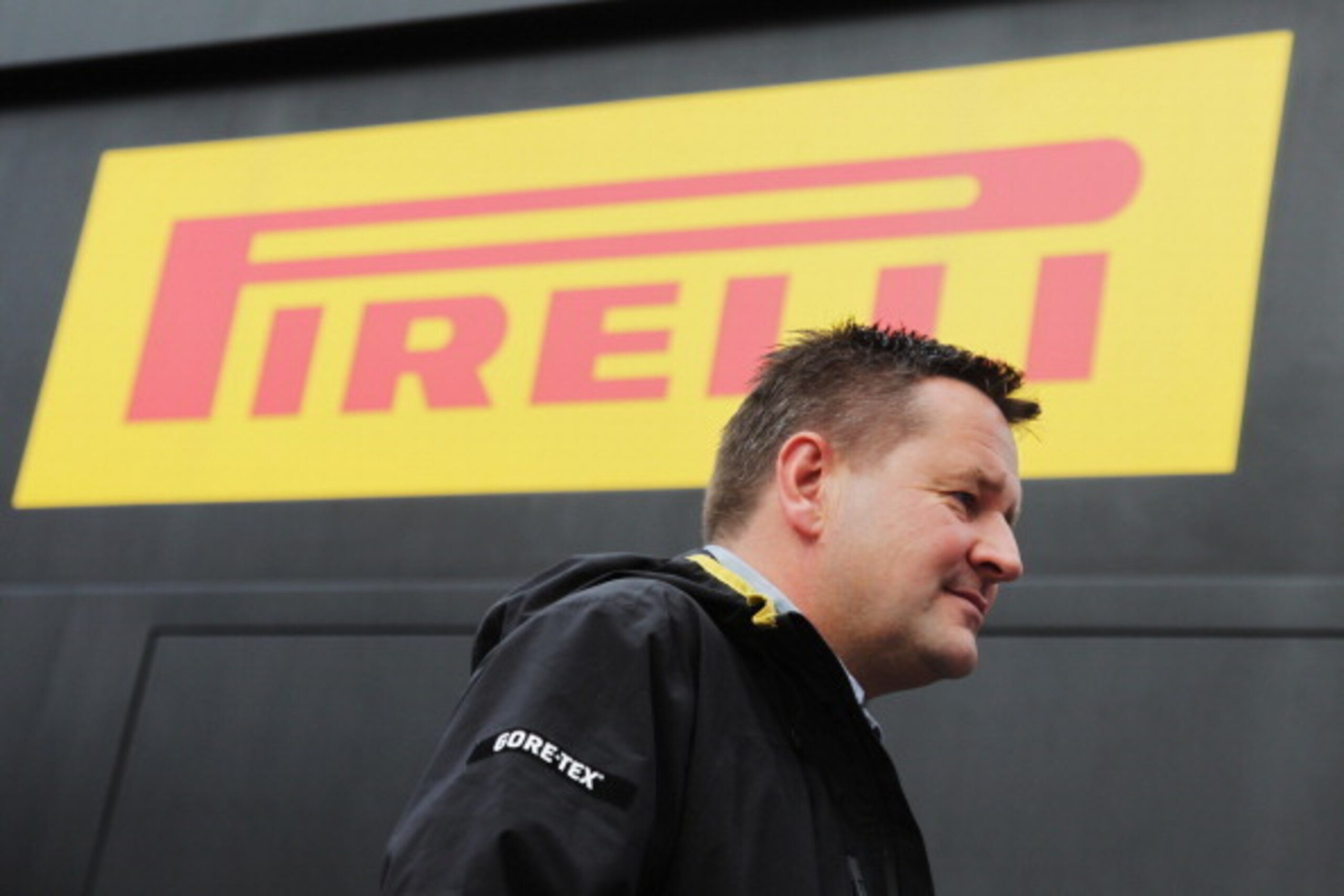
You could almost hear the hearts of F1 folk drop like stones back in January when Paul Hembery, the Pirelli boss, told Sky Sports' William Esler how the tyre manufacturer would adopt an "aggressive" strategy for 2015.
It was feared Pirelli's radical approach would result in a return to the dark days of 2012 and '13, when tales of degradation, wear, blistering, graining and flat-spotting dominated many a race weekend and tyre preservation, not driving fast, became the key to victory.
On an unusually abrasive surface and with a track temperature in excess of 60 degrees, as per the official F1 Twitter account, there was a genuine risk the Malaysian GP would become one of those complex, hard-to-keep-up-with races.
And although the race was tyre-limited, Pirelli managed to provide plenty of intrigue, creating an enjoyable spectacle with close competition and contrasting strategies throughout the field, without ever daring to take centre stage.
For that, Hembery and his colleagues deserve as much credit for injecting renewed life into this season as Vettel and Ferrari.
Loser: Force India
8 of 10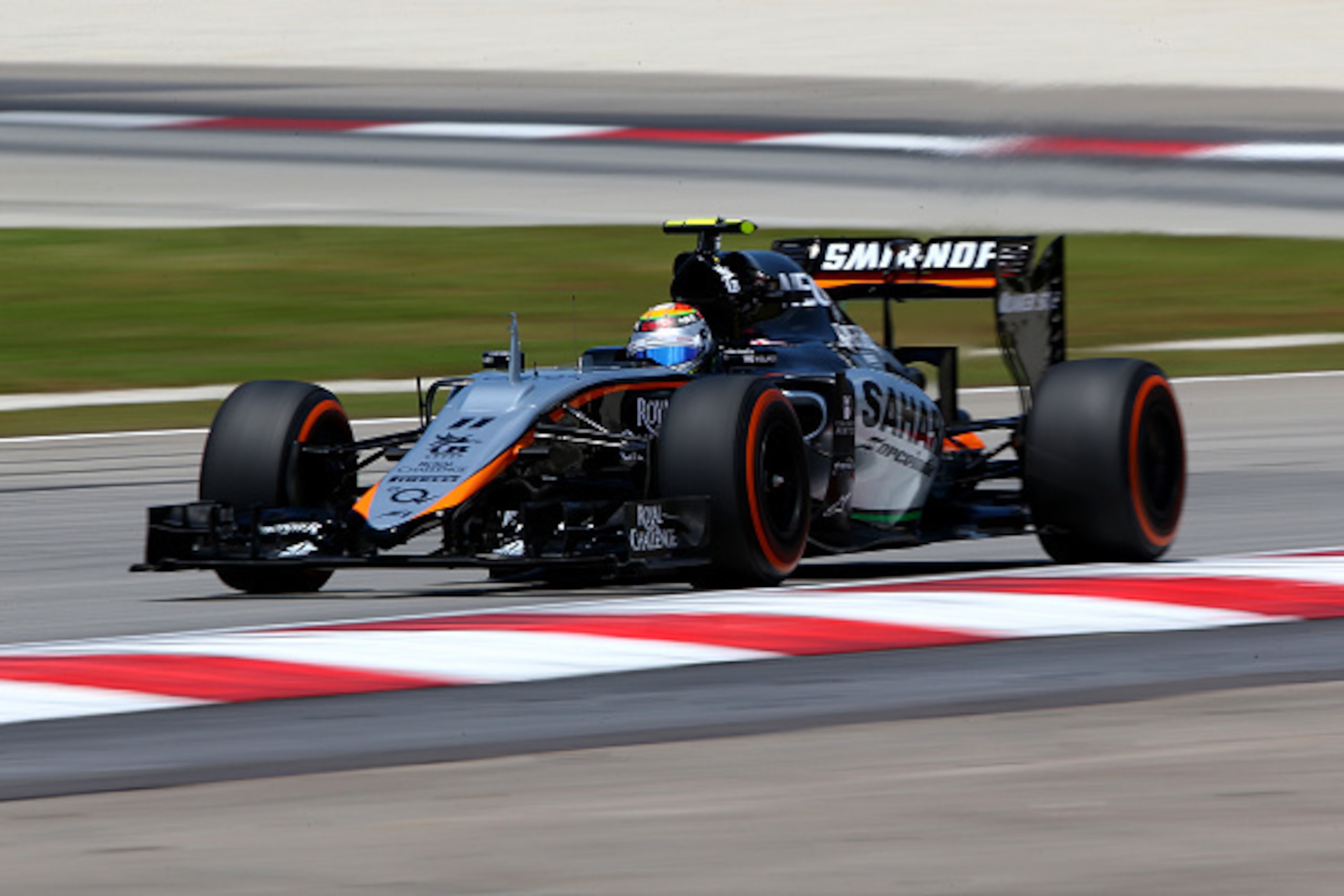
Late in unveiling their 2015 car, the early stages of the new season were always going to be a struggle for Force India.
But their drivers aren't really helping matters, with Nico Hulkenberg and Sergio Perez both picking up penalties for causing collisions.
Hulkenberg was handed a 10-second time penalty and two penalty points for spinning Daniil Kvyat at Turn 2, a punishment that, although harsh for what looked like a racing incident, was probably correct.
Perez, meanwhile, was given an identical penalty for what could have been a far more serious incident after failing to accept defeat to Romain Grosjean's Lotus at Turn 12.
The Mexican has arguably been the worst performer in 2015 thus far, with his contact with Grosjean coming a fortnight after an Australian GP which saw Perez make a horrendous start, crash into Jenson Button and finish as the lowest of the points-scorers in a race where merely finishing guaranteed a point.
Having finished only 13th and 14th at Sepang, Force India are miles away from where they were at this point a year ago, and the team will need some cooperation from Perez and Hulkenberg to get back on track.
Winner: Roberto Merhi
9 of 10
You wouldn't have known Roberto Merhi was on track throughout the Malaysian Grand Prix, but that is precisely the point.
Driving the severely uncompetitive Manor Marussia in his first F1 start, Merhi was never going to challenge the McLarens, Saubers and Force Indias of this world.
So his job for the day, apart from getting a race distance under his belt for the back-from-the-dead outfit, was to stay out of the way of the likes of Sebastian Vettel, Lewis Hamilton, Nico Rosberg and, in fact, every other driver.
And to all intents and purposes, he did that well. Sure, he may have finished three laps down, but Merhi did get to the end of the race, making an important step for both driver and team.
Loser: Sauber
10 of 10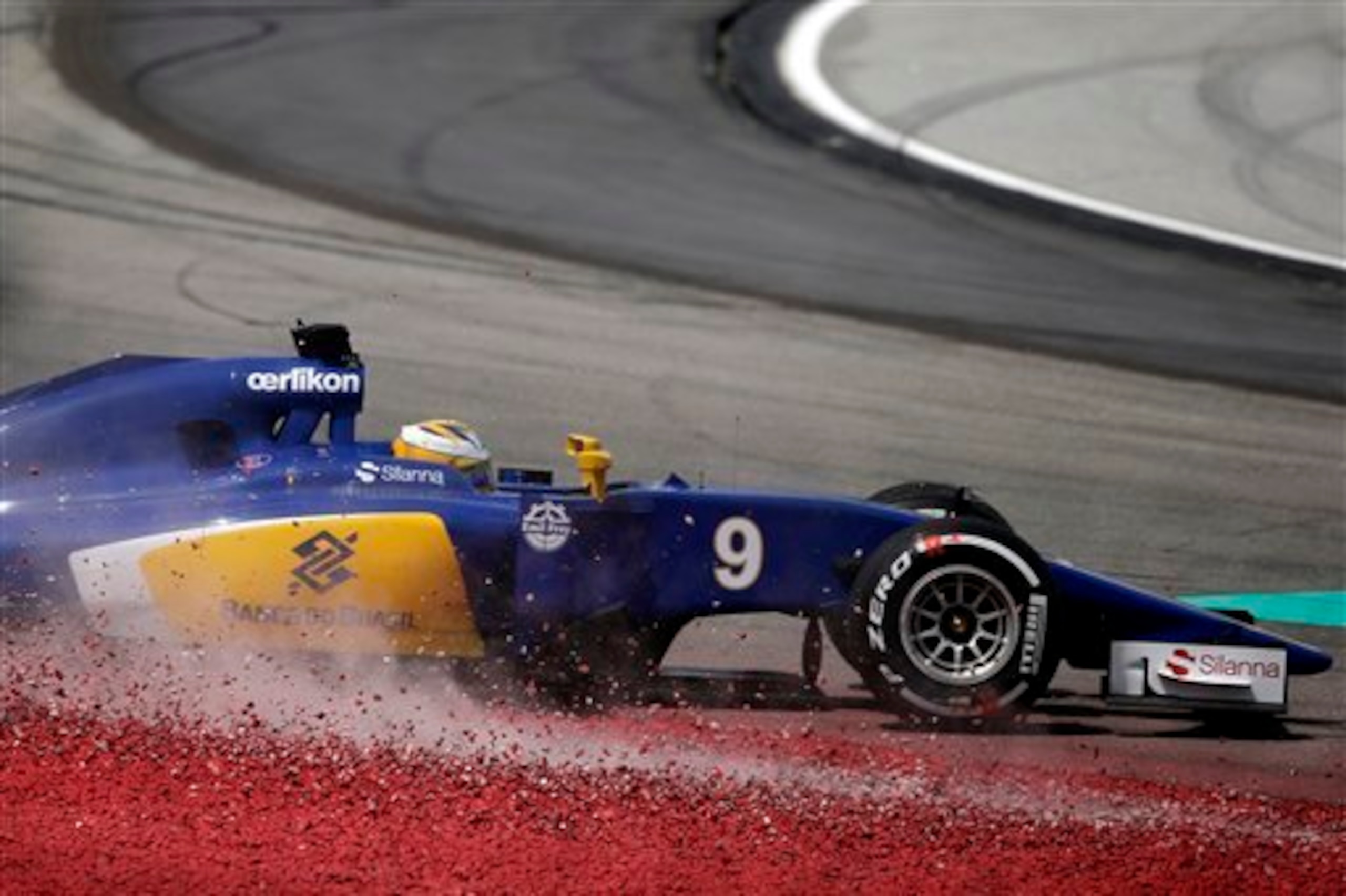
What a difference a fortnight makes.
Two weeks ago in Australia, Sauber produced the story of the weekend as Felipe Nasr secured fifth place on his F1 debut and Marcus Ericsson scored his first points with eighth position, putting the Swiss team third in the constructors' championship.
Despite Ericsson breaking into Q3 for the first time, normal service resumed in the Malaysian GP, as Nasr was eliminated in Q1 before running into the back of Kimi Raikkonen on the first lap, damaging his front wing.
Soon after, Ericsson ruined his good work by carrying too much speed into Turn 1 at the start of Lap 4 while challenging Nico Hulkenberg for seventh, spinning in the run-off area and beaching his C34 in the gravel trap.
Although neither Sauber scored a point—Nasr went on to finish an anonymous 12th—the race didn't prove too costly as far as the constructors' championship is concerned, with the team still as high as fourth.
.jpg?w=2560 "Steelers Buccaneers Football")


.jpg?w=2560 "🚨 Week 8 AP Top 25 Poll")
.jpg?w=2560 "NFL investigating Eagles")
.jpg?w=2560 "Steelers Roll Saints in Paris")
