
For Russell Wilson, Is Baseball a Dream or a Future Reality?
Rewind the clock.
The senior quarterback at Wisconsin runs through the growing late-afternoon shadows that stretch across the field at Camp Randall Stadium, smiling luminously, imploring his teammates to keep up with him during a final sprint before the end of practice. It is a cold autumn day in 2011—the quarterback’s breath comes out in white puffs of air—and Russell Wilson has only been on campus for three months, but one thing is already clear: The Badgers are his team. He’d been elected a co-captain several weeks earlier.
After practice concludes that evening in Madison, Wilson leans against a wall outside of the locker room and reflects on how his love for another sport—baseball—is what caused the path of his life to unexpectedly wind into the wilds of Wisconsin.
.jpg?w=2560 "Chiefs Giants Football")
.jpg?w=2560 "Titans Colts Football")

“I guess you could say if I never played baseball, I never would have come up here to Wisconsin,” says Wilson, who a year earlier in 2010 was the runner-up ACC Offensive Player of Year at North Carolina State. “But I just followed my heart. Baseball is special to me, and it always will be.”
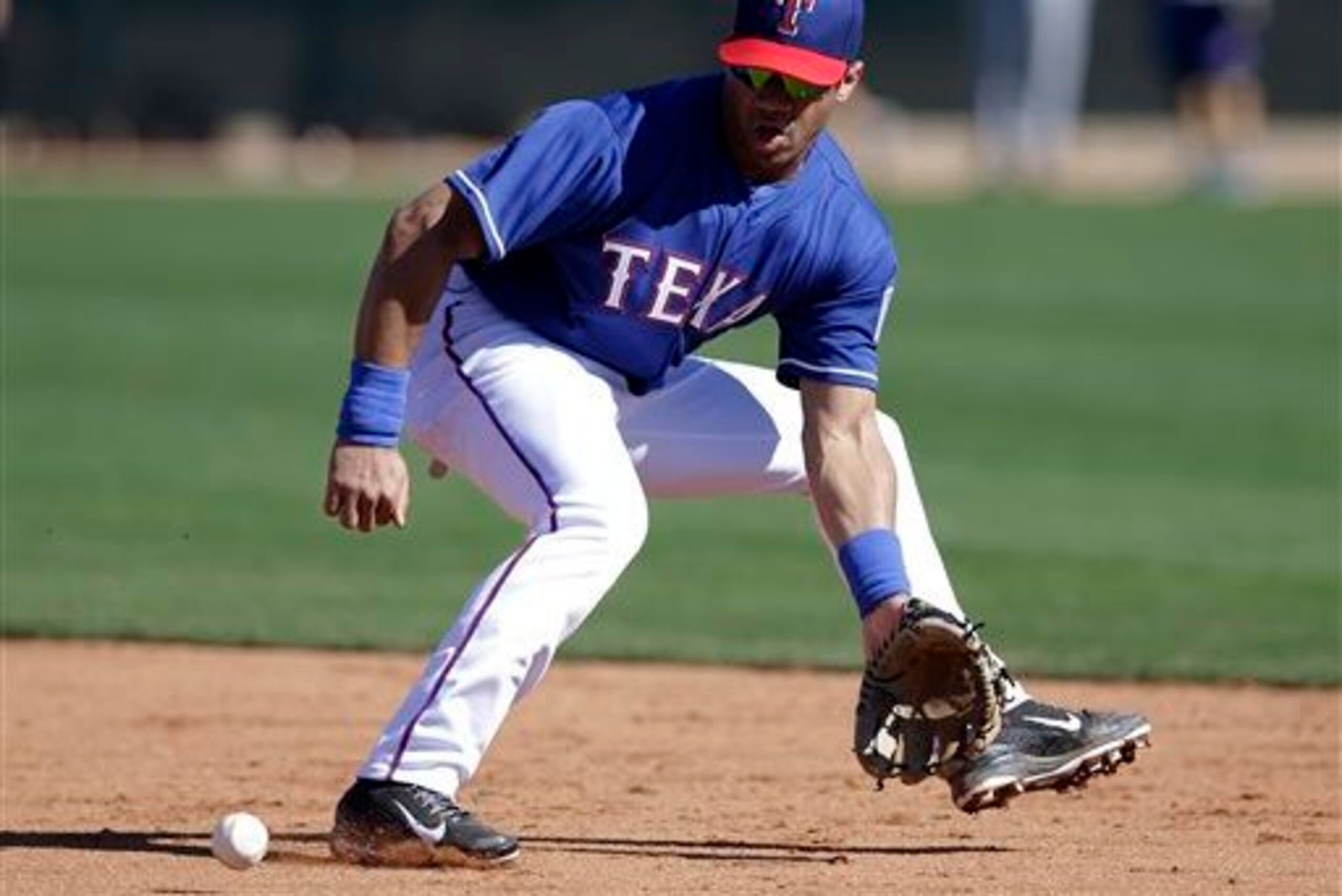
Indeed it is. And so we really shouldn’t be surprised to see Wilson this Saturday outfitted in a Texas Rangers uniform in suburban Phoenix at the organization’s spring training facility, taking batting practice and fielding balls in a morning workout, and then generally living out a childhood reverie by suiting up for an afternoon exhibition game against the San Diego Padres. (No word yet on whether he actually will play.)
Wilson, 26, the Seahawks' three-year quarterback who has started in the past two Super Bowls, will only spend about 12 hours with the squad that selected him in the Rule V draft off Colorado’s roster on Dec. 12, 2013. Still, the outing at this one-day fantasy camp of sorts will raise several questions—questions that, if nothing else, could stir a barroom debate.
Could Wilson have made it as a major league player? Could he have been his generation’s Bo Jackson and Deion Sanders and flourished as a two-sport athlete? And, most germane, will he one day give baseball one final try?
To find hints at answers, which Wilson figures to be asked about on Saturday, we start by going back, back, back deep into his life.
Once upon a time, when little Russell Carrington Wilson was a little boy, he grabbed a Wiffle bat in his Richmond, Virginia, home and began swinging away. Russell’s grandfather, Harrison Jr. Wilson, couldn’t take his eyes of his toddler grandson. Harrison had played football and baseball at Kentucky State in the 1950s and later coached basketball at Jackson State and became the president of Norfolk State.
Now as he watched little Russell seemingly blast away for the fences with the Wiffle bat, he proclaimed to the rest of the family that this kid was a natural, that one day he would grow to be an athletic marvel. This was how the fairy tale of Russell Wilson began.
Sports ran deep in young Russell’s blood. Harrison Wilson III, Russell’s father, played baseball and football at Dartmouth. Harrison excelled as an infielder and wide receiver. He contemplated trying out for the NFL after he graduated in 1977, but then was accepted to the University of Virginia Law School. To stay in shape while he studied in Charlottesville, he ran hills loaded down with a vest full of weights, still hoping for a shot at an NFL roster. After earning his law degree in 1980, he tried out for the San Diego Chargers—he was dubbed “Professor” by his teammates—but was released during the final round of roster cuts.
The father’s athletic dreams lived on through the second of his three children. A standout quarterback at Collegiate High in Richmond, Virginia, Russell threw for 3,009 yards and 34 touchdowns as a senior. That same year, as a shortstop for Collegiate, he hit .467. What’s more, he had a magnetic personality—he was voted class president and was the school’s homecoming king. Wilson’s mailbox filled with scholarship offers from Division I football and baseball coaches from around the nation.
But baseball appeared the most promising for Wilson. After graduating from Collegiate, Wilson was invited to the Area Code Games in Long Beach, California, which is a showcase summer tournament for the nation’s top prep baseball players. His roommate was a strapping pitcher from Hickory, North Carolina, named Madison Bumgarner, the future 2014 World Series MVP of the San Francisco Giants. To many scouts at the camp, the two roommates both flashed big-league potential.
The Baltimore Orioles selected Wilson in the 41st round of the 2007 major league draft, but Wilson opted to accept a football scholarship to North Carolina State.
“I wanted to go to a place where I could play both football and baseball,” Wilson told me back in 2011. “At that point, I really didn’t know what direction I would go in terms of my future.”
On June 9, 2010—the day after Wilson was selected in the fourth round (140th overall) in the draft by the Colorado Rockies—his father passed away at the age of 55 from complications related to diabetes. When a scout from the Rockies called Wilson and asked if there was anything he needed, Wilson had a quick reply: He needed someone to pitch him batting practice.
And so there was Wilson, one day after losing his father in Richmond, taking cuts at a batting cage with a scout from the Colorado organization. At that point, it sure looked like Wilson, who had hit .306 as a junior at NC State in 2010, was destined for a career in baseball. After all, a 5’11’’ big-league shortstop is considered normal. A 5’11’’ NFL quarterback? Not so much.
“There is no doubt in my mind that Russell was on his way to being a major league player,” said Elliott Avent, who has been the head baseball coach at NC State since 1996. “The only thing that hurt Russell was the lacks of reps. He had the football commitment in the spring, so he missed valuable time, and that put him behind. But the minute he would be done with his football responsibilities for the day, he’d be in our dugout just supporting the other guys, even if his day started at 5 a.m. lifting weights with the football team. In all my years, and I’ve been around a long time, I’ve never seen a better leader than Russell Wilson.”
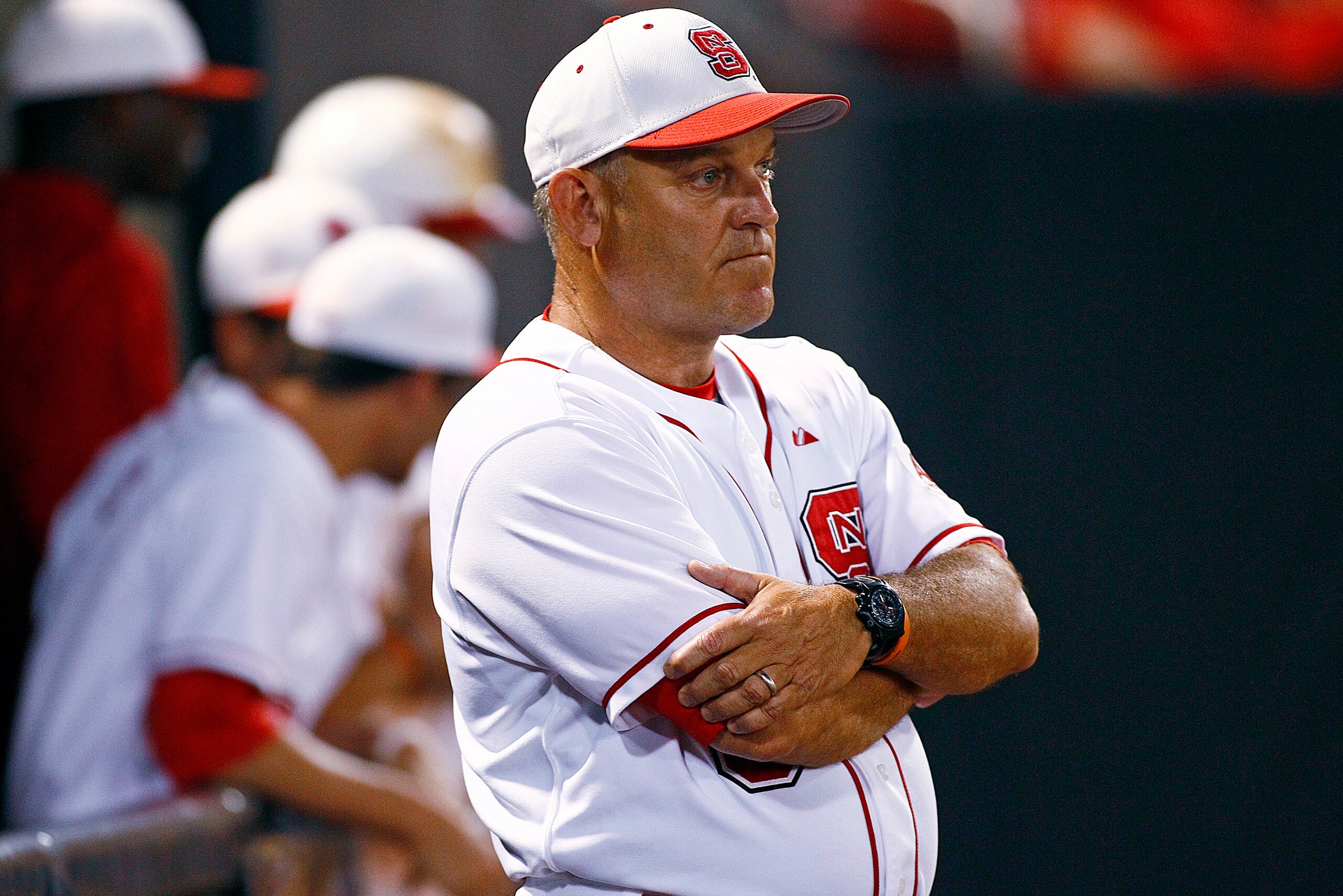
Avent has a favorite Wilson story. A few days before the Wolfpack played Virginia Tech in a football game in the fall of 2010, Avent stopped at Wilson’s favorite restaurant in Raleigh, North Carolina—a Chinese joint called Red Dragon—to order takeout. As he waited for his order, he saw Wilson seated at a table. A stranger approached Wilson, dropped a $50 bill on the table and said, “Hey man, take it easy on my Hokies on Saturday.”
Wilson tried to give the money back, but the man disappeared. Wilson caught Avent’s eye. “Coach, what should I do?” Wilson asked.
“It’s your call, Russell,” Avent replied as he walked out of the restaurant.
A few days later—after Wilson had thrown for 362 yards and three touchdowns in NC State’s 41-30 loss to Virginia Tech—Avent returned to the restaurant for another meal. That was when he overheard a waiter still gushing about a $50 tip some college student had recently left him.
"Even when no one is looking,” Avent said, “Russell is doing the right thing. Always. That’s why every baseball coach and teammate he ever had at NC State just loved him.”
Wilson spent the summer of 2010 with the Tri-City Dust Devils, the Rockies' low-A farm team in Pasco, Washington. Though he moved from shortstop to second base—a position Wilson had never played before—he committed only one error in 31 games and had a fielding percentage of .993.
Wilson struggled at the plate, especially with fastballs (he hit .230 for Tri-City in 122 at-bats), but the Rockies brass was confident he could evolve into a scrappy line-drive hitter. And once on base, he already possessed the quickness, speed and instinct to be a threat to steal on virtually any pitch.
“Russell was a student of the game,” said Fred Ocasio, who was the Tri-City manager in 2010. “He was always looking for extra work—hitting, defense, whatever. …[Even] during games he was always asking questions.
“The big question mark was whether or not he was going to be able to hit, and that’s pretty much the big question with everybody. I remember he hit a couple of balls out to left field where a lot of people don’t hit them. He was a strong kid. He had some pop, but with his speed and the defense, if he had a chance, it was going to be as a guy who hit for average. With Russell, he was going to find a way, just like he’s doing in football right now. He finds a way to get it done.”
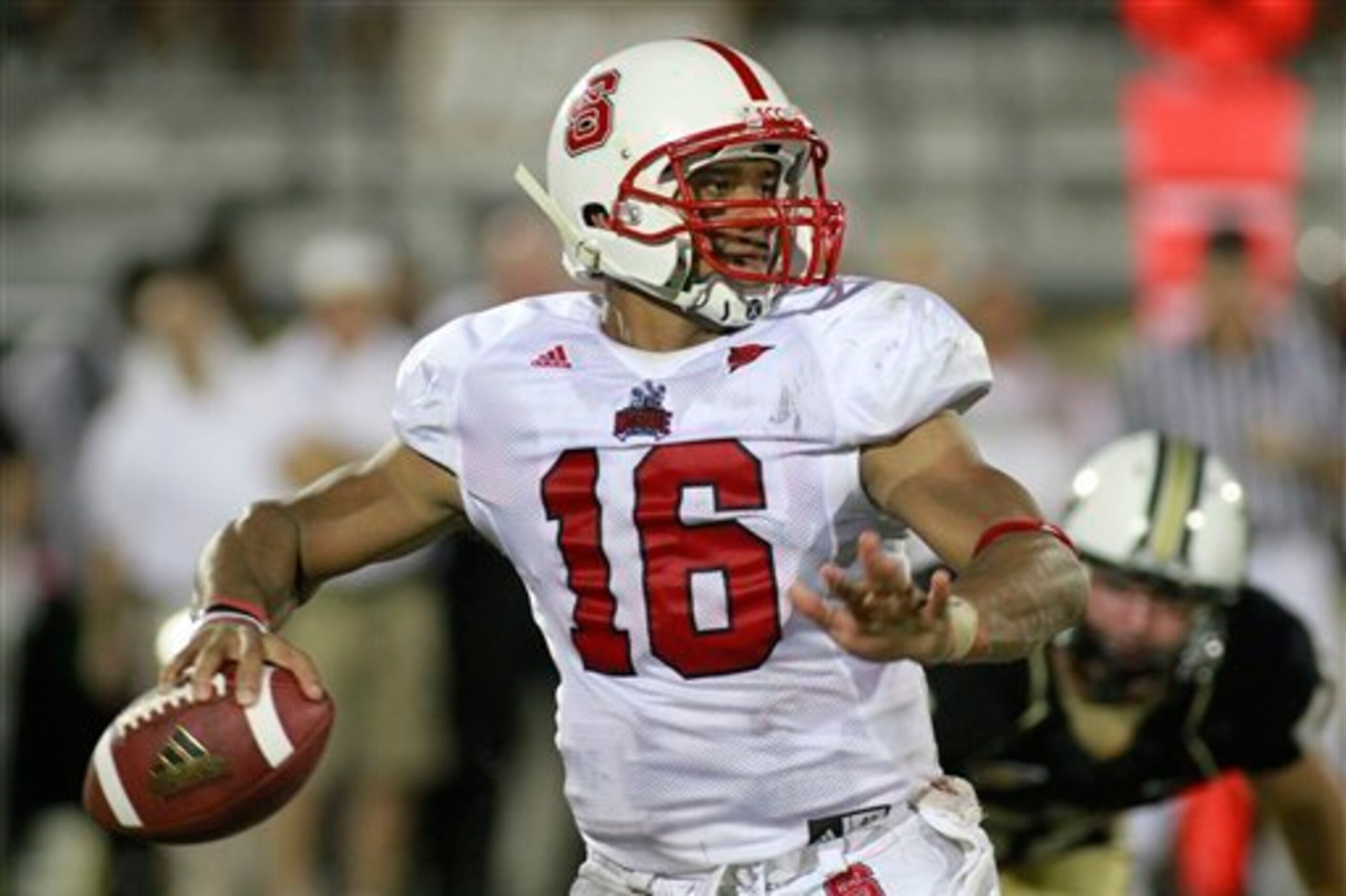
Wilson returned to NC State for his junior season. He led the Wolfpack to a 9-4 record, throwing for 28 touchdowns and running for nine more. But then, after Wilson finished second in the ACC Player of the Year voting behind Virginia Tech quarterback Tyrod Taylor, NC State coach Tom O’Brien gave him an ultimatum: Fully commit to football or be forced to compete for the starting position with sophomore Mike Glennon.
Unwilling to abandon his dream of baseball, Wilson refused to comply. O’Brien—in a move that still baffles Avent—released Wilson from his scholarship.
“That whole situation was not right,” said Avent, the Wolfpack baseball coach. “Russell wanted so badly to end his career at NC State. He was going to set records here. This was his home. Him leaving was just one of the oddest things I’ve ever seen in college sports. But another quality of Russell’s is that once something is over, he moves on. He didn’t show animosity. He was classy the entire time. But I wish I could have had some say in that.”
Because Wilson had already earned his degree, he was free to transfer to any non-ACC school and play immediately in his senior year. But before deciding where to transfer, Wilson wanted to give baseball one more shot. So in the spring of 2011, he packed a few bags and moved to Asheville, North Carolina, where he played for the Tourists in the Class A South Atlantic League. His manager on the Rockies farm team was Joe Mikulik.
“Russell never gave any notion of playing football again. We didn’t know he would go back,” recalled Mikulik. “The way he was going about his business here, it didn’t look like he was going to go back and play football. … And [NC State coaches] felt like Russell was going to play baseball.”
“We sat down and talked a couple of times,” Mikulik continued. “He asked me what I would do. Growing up in Texas, I loved football. I told him, ‘Russell, I’m not going to tell you stay here. What does Russell want to do?’ He looked me right in the eye and said, ‘I can throw with any quarterback right now.’ And I didn’t doubt him because he could throw a football.”
Halfway through the spring baseball season, Wilson whittled his choices of transfer destinations down to Wisconsin and Auburn. He still had trouble catching up to fastballs at the plate—he hit .228 in 193 at-bats that spring for Asheville—but that never impacted his joyful demeanor. One day, he bounded into Mikulik’s office, his face aglow. “I’m going to go play at Wisconsin,” Wilson told his manager, who instantly became a diehard Badger fan.
Wilson then walked into the clubhouse and declared to his teammates, “I’m going to take my talents to Wisconsin,” which caused the room to erupt in cheers. They all hugged Wilson like a best friend from childhood.
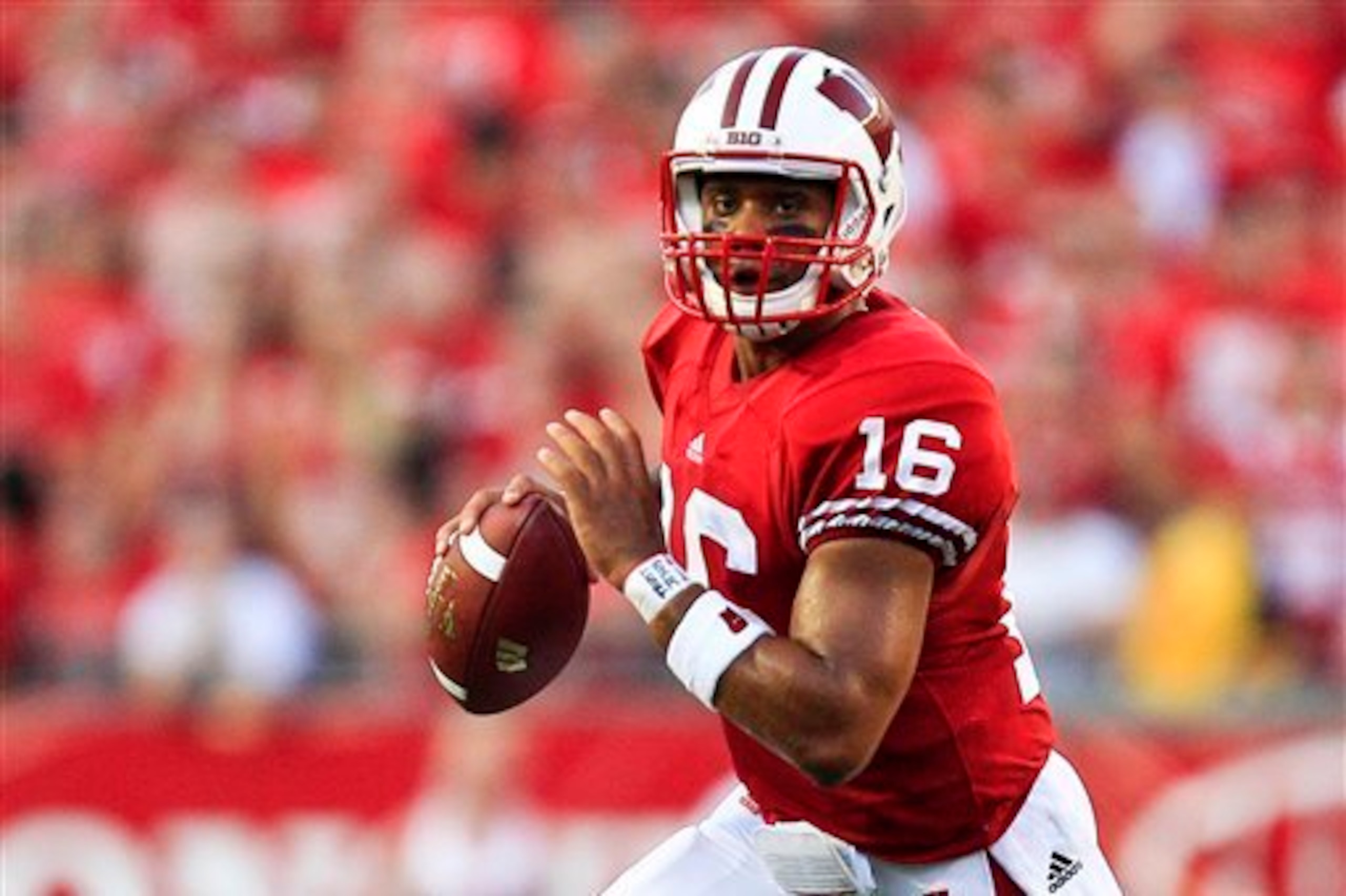
Could Wilson have made it to the major leagues? “Yeah, I think he would have,” said Mikulik. “With [his] athleticism and preparation, I think he would have willed his way to become a major league player. How long it would have taken, I don’t know. But I saw the swing starting to come. It was just a little long. He had to shorten it up a little bit. But the athleticism at second base, he could turn a double play, his speed, his instincts on the bases were pretty solid.”
The Rangers still hold out hope—faint as it is—that Wilson will one day re-commit to baseball. That is why, for the second straight spring, the organization is bringing him to Surprise, Arizona, to spend the day at their spring training complex.
“I wouldn’t put it past him playing baseball,” said Texas general manager Jon Daniels. “I look at his background. … His dad challenged him to graduate college in three years, so he did—while playing both sports. Everyone said you can’t transfer and jump in, and he transferred to Wisconsin and learned the playbook in a month and led the Badgers to 11 wins and got them to the Rose Bowl. People said you can’t start at QB as a rookie, and so he does. Guys who have the ability and drive, the rules don’t always apply.”
Yes, Russell Wilson has always pushed the edges of what we view as normal, but surely he couldn’t possibly find the time to be a starting NFL quarterback and a major league second baseman? Right?
Right?
Scott Miller, who covers Major League Baseball as a national columnist for Bleacher Report, contributed to this report.
.jpg?w=2560 "Steelers Buccaneers Football")

.jpg?w=2560 "NFL investigating Eagles")
.jpg?w=2560 "🚨 Week 8 AP Top 25 Poll")
.jpg?w=2560 "Steelers Roll Saints in Paris")
.jpg?w=2560 "Jonathan Taylor Landing Spots 📍")