

Weaknesses Andy Murray Needs to Overcome to Win Another Major
With the clay-court season heating up and as the fallout from Indian Wells continues, questions about just who will become the most successful Grand Slam player this year continue to spring up. Andy Murray is one such name on many lips—but will he be able to overcome his weaknesses to do so?
Without a major win since his 2013 Wimbledon glory against Novak Djokovic, the Scottish player is going through yet another dry spell.
Coming close to breaking his duck time and again, victory has evaded Murray too often over the course of the last two years, and at 27 years of age, he needs to capitalise on his youth while he's still able.
.jpg?w=2560 "Chiefs Giants Football")
.jpg?w=2560 "Titans Colts Football")

Make no mistake, 2015 could be a huge year; he just needs to sidestep a few of his shortcomings to make sure the opportunity doesn't bypass him.
So let's examine where Murray needs to improve.
Psychological resilience needs to be tended to
It's no secret that Murray has long since struggled with his ability to maintain a mental toughness. Often derided for his lack of steel, the Glasgow-born star remains one of the best players in the world.
Far removed from the famous British resilience, it's been a shame to see much of his great work on the courts undone time and again by a confidence vacuum, then often see him vent his frustrations by smashing his racquets, as seen here at last year's Shanghai Masters.
Information compiled by the official ATP website shows that the player affectionately dubbed Muzzard has a better head-to-head record against only four of the top 10 players in the world right now (Kei Nishikori, Stanislas Wawrinka, Marin Cilic and David Ferrer).
Hardly damning evidence of his implosive mentality, but it proves that he has been frequently undone by the best of the best. And it's easy to see why others' big-game understanding has played a part in that distinction.
Indeed, this is best put by the Huffington Post's Dr. Raj Persaud and Adrian Furnham:
"That tennis is a sport which uniquely involves psychology seems particularly pertinent to Murray - the more he fails in high pressure situations, the more difficult it might be to maintain high self belief that when faced with a similar predicament in the future - an Open Tennis Final - he is not going to mentally collapse.
"
Failure to capitalise on momentum shifts
One of the most glaring weaknesses Murray has is his failure to capitalise on the displacements of power that often occur during tennis matches.
Looking back at his performance against Grigor Dimitrov in the fourth round of the Australian Open earlier this year, it's clear that Braveheart has taken advantage of momentum shifts in the past. At 5-2 down in the fourth set, Murray broke back, eventually winning, 6-4, 6-7, 6-3, 7-5.
Watching the highlights below, he took the next five games in style as he relentlessly battled to make the most of the Bulgarian's yielding.
However, this is a rarity indeed.
Often getting drawn into long rallies, as he was against Novak Djokovic when they met at the Indian Wells semi-final, he finds himself overwhelmed against the confident play of the big guns.
Finding his chances to take control of contests increasingly limited as his opponents often storm away with the lead, he struggles to rally himself.
Against Djoker in California, we saw just how susceptible he can be to faltering instead of fighting.
At 3-1 down inside the opening set, instead of returning serve well, he slumped and ending up winning a mere four games in the blistering sun.
Murray's second serve remains a big foible
Without a doubt, second serve is Andy Murray's biggest weakness.
And no, we don't mean the 1986 Anthony Page film.
According to The Telegraph's Simon Briggs, he recorded an average of 85 mph throughout the Aussie Open, something that clearly needs to be worked on if he is to become more of a threat.
As detailed by the ATP official website, Murray won only 48 percent of his second serve at the BNP Paribas Open semi-final (and just 50 percent of his first serve), which was only marginally better than the 34 percent he managed in the Aussie Open final.
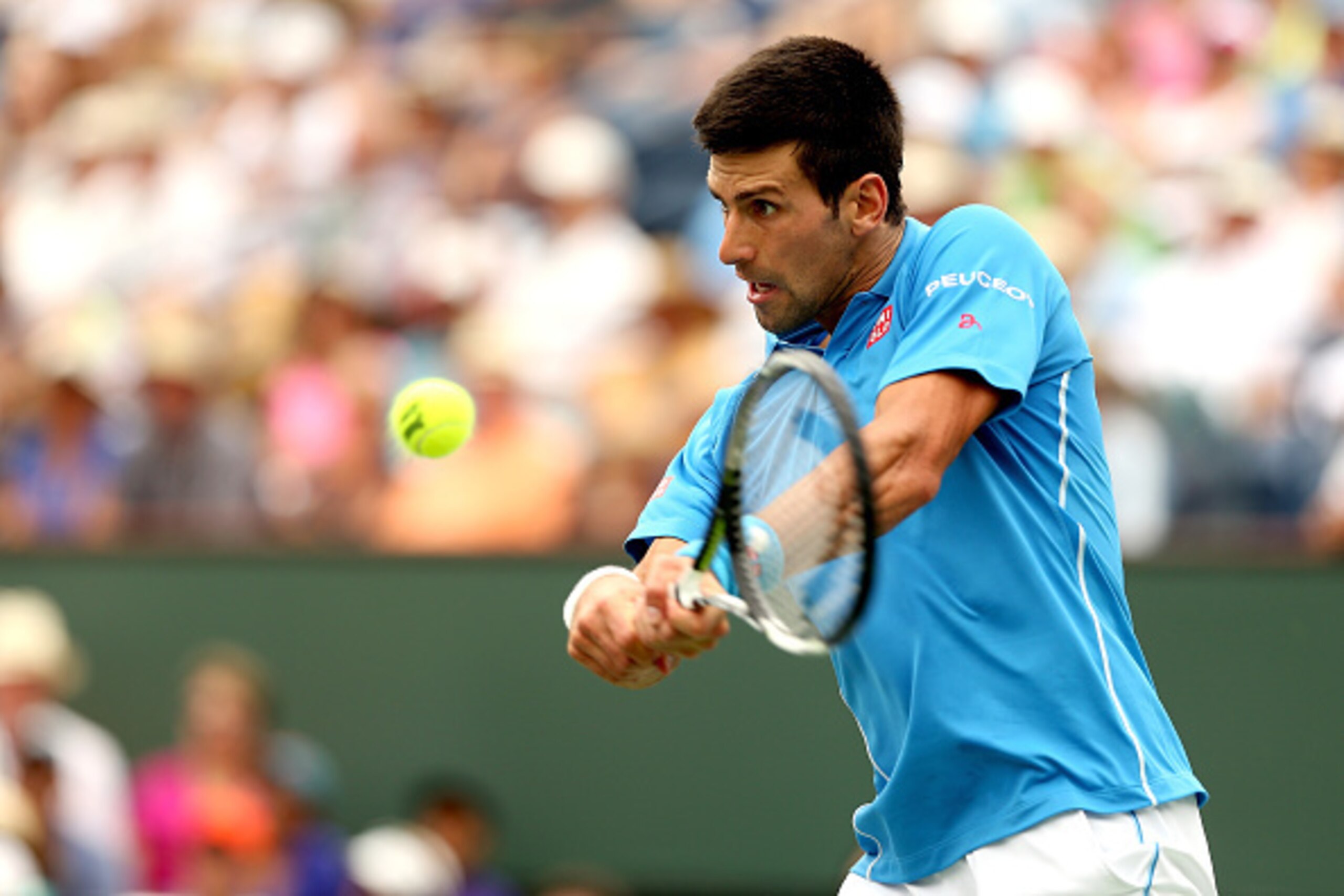
Djokovic performed much better in this regard, which also makes you wonder just how adaptable Murray needs to become in the future.
As relayed by Reuters' Matt Smith, his loss late in February to Borna Coric underlines that although youngsters like the Croatian might not see too many of his technical weaknesses, the more experienced professionals will: "He doesn't have any weak spots that you can actually say I need to play on his backhand or on his forehand."
In short, Muzzard needs to take advantage of these sort of points more often.
Selling himself short, the battling Scot is nearly always fighting an uphill battle before a match even starts.
Conclusion
When the 27-year-old built on his triumph at Flushing Meadows with a glorious win that saw Britain's 77-year wait for a homegrown champion end, many thought the Scot had finally shaken off his bad luck.
In the intervening years, though, he hasn't exactly set the sporting world alight.
Far from a disaster, he has shown some good form this year. Yet if he works on each of the three flaws mentioned, he will have a great chance of winning another Slam.
It won't be easy, but Murray has rarely been a favourite and will relish the challenge like no one else does.
.jpg?w=2560 "Steelers Buccaneers Football")

.jpg?w=2560 "NFL investigating Eagles")
.jpg?w=2560 "🚨 Week 8 AP Top 25 Poll")
.jpg?w=2560 "Steelers Roll Saints in Paris 🇫🇷")
.jpg?w=2560 "Jonathan Taylor Landing Spots 📍")