

Grading Minnesota Vikings' Free-Agency Plan so Far
The Minnesota Vikings have been every bit as quiet in free agency as general manager Rick Spielman suggested the team might be.
With exception to the trade that brought wide receiver Mike Wallace to Minnesota—which technically isn't a free-agent acquisition—the Vikings have not done much of anything this year. While it is a bit unfair to do so, Minnesota's efforts in free agency this offseason will certainly be characterized by the players the team failed to acquire rather than those it succeeded with.

.jpg?w=2560 "Cardinals Giants Football")
.jpg?w=2560 "Jets Dolphins Football")
Minnesota wasn't expected to be a big player in free agency—and it really didn't need to be—but that didn't keep fans from hoping the team may fill a positional need with a high-end free agent. Over the past week, the Vikings have been linked to multiple players who would fulfill this request, but none of these players ended up agreeing to wear purple next season.
Among others, the Vikings failed to ink defensive end Michael Johnson (signed with Cincinnati Bengals), offensive guard Clint Boling (signed with Cincinnati Bengals) and safety Rahim Moore (signed with Houston Texans).
Despite missing out on a handful of surefire upgrades, Minnesota signed a backup quarterback to replace the traded Matt Cassel and managed to hold on to the bulk of its most important free agents.
Shaun Hill, Quarterback
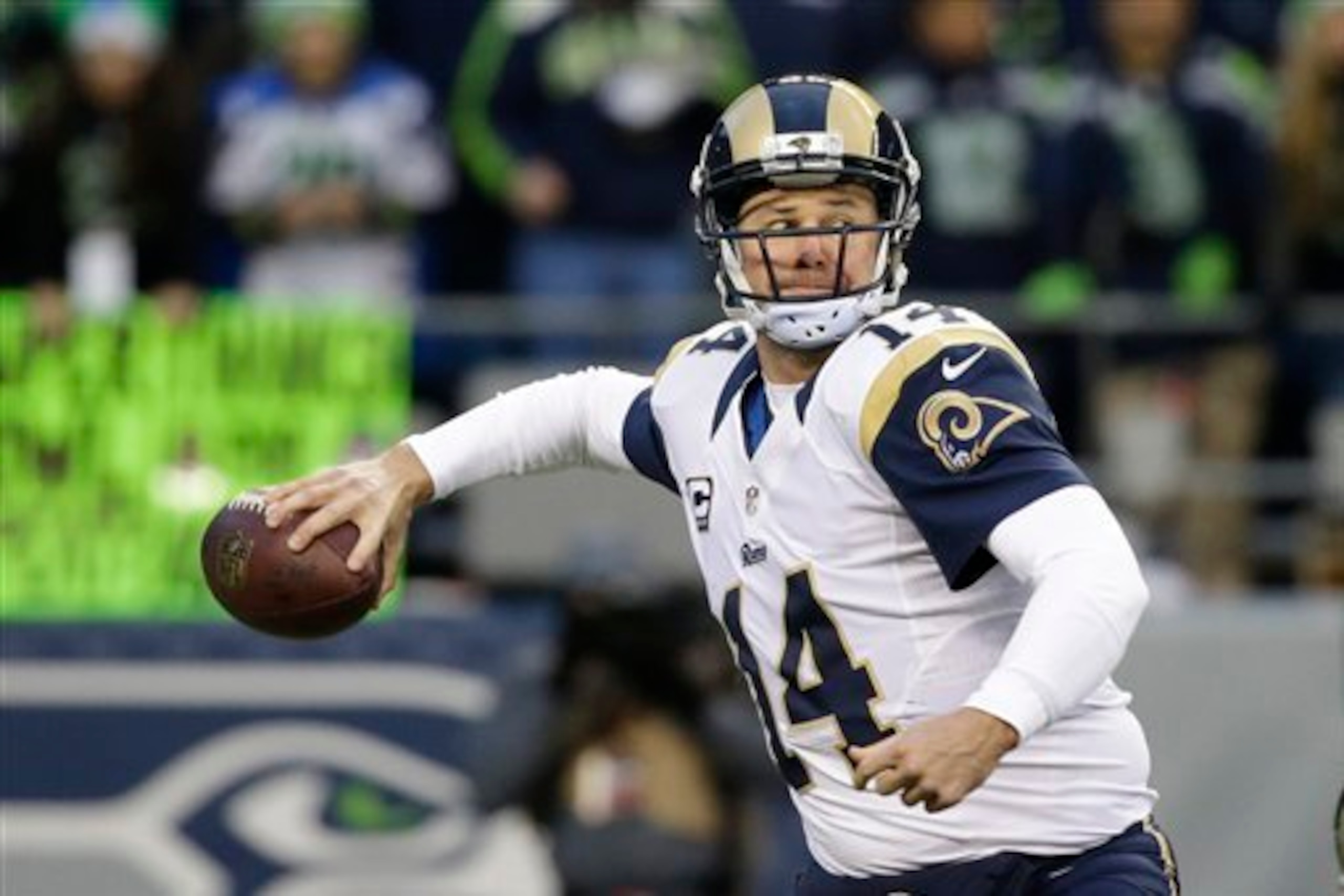
During the opening days of free agency, the Vikings came to terms with quarterback Shaun Hill on a two-year, $6.5 million contract to become the team's backup to Teddy Bridgewater. By no means is this the big-name signing that fans get excited about, but the acquisition certainly fills a need very well.
Hill, a nine-year NFL veteran, began his career with the Vikings back in 2005. Since then, he has spent time with the San Francisco 49ers, Detroit Lions and, most recently, the St. Louis Rams. He has proven to be a viable option at his position, compiling a 16-18 win-loss record, a 62.2 completion percentage and 49 passing touchdowns throughout his career, per Pro-Football-Reference.
The upside of signing Hill won't be found in his career statistics—rather, it is his salary-cap savings, veteran leadership and understanding of his role that will prove most beneficial to the Vikings.
According to Spotrac, Hill's contract carries an average annual value of $3.2 million, which, in comparison to Cassel's contract—Minnesota would have had to pay him $4.75 million in 2015—saves the Vikings nearly $1.6 million.
In addition, there is a mutual understanding between the Vikings organization and Hill on what his role with the team will be. He is strictly a backup quarterback and a mentor to Bridgewater, something that could not necessarily be said about Cassel.
Overall, this free-agent signing isn't very flashy, but it serves a purpose.
Grade: B
Tom Johnson, Defensive Tackle
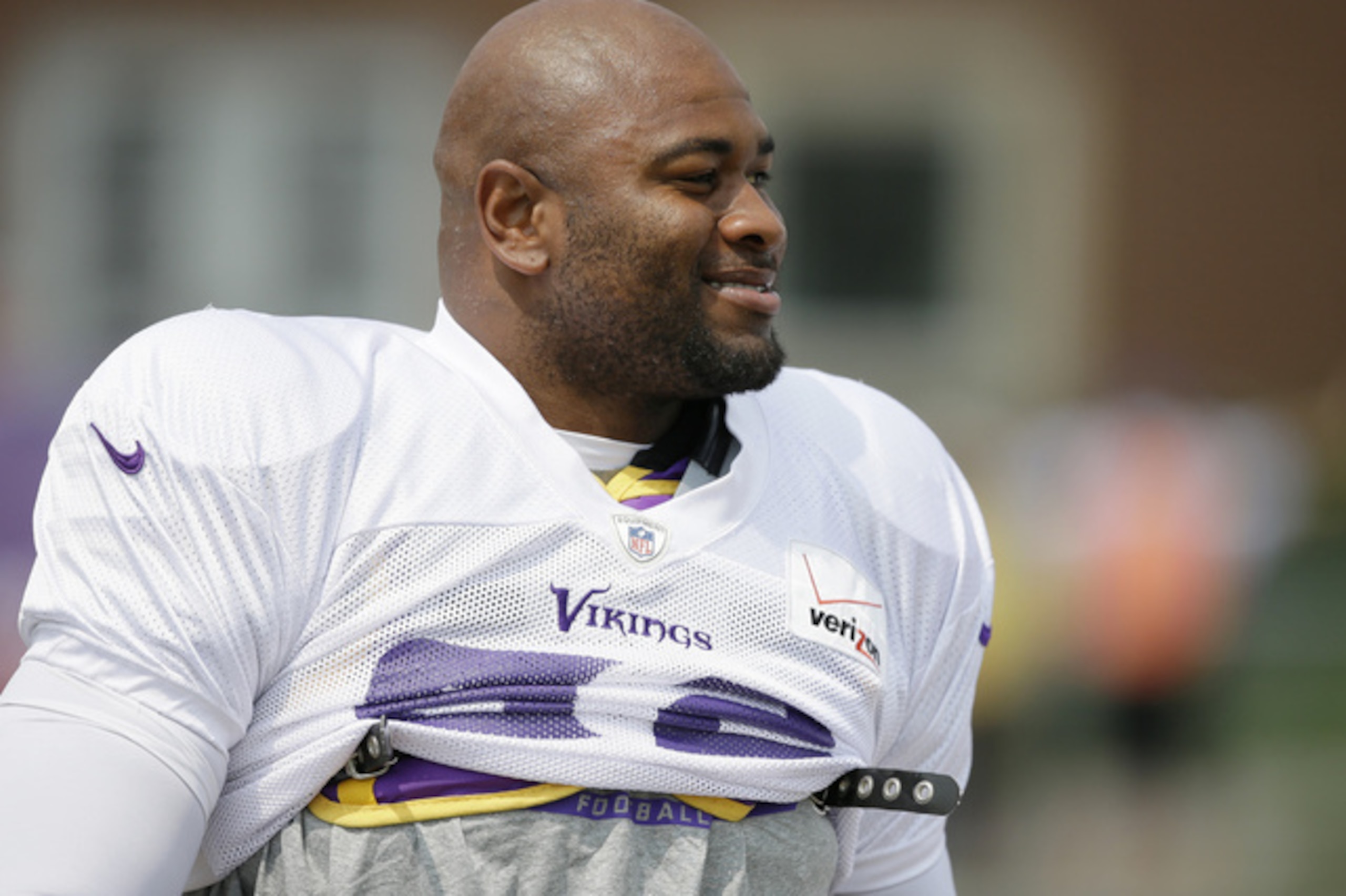
Tom Johnson was the one impending free agent that Minnesota truly benefited from re-signing—returning running back Matt Asiata and offensive lineman Joe Berger may also prove helpful as well—and the team managed to work out a three-year, $7 million contract to keep the disruptive defensive lineman in Minnesota.
It is arguable, but between Johnson and Hill, it's relatively clear that this has been the biggest signing by the team during free agency to date.
According to Pro Football Focus, Johnson ranked ninth in the NFL in pass-rushing productivity (8.0) and accounted for 30 total quarterback pressures despite playing in a rotational role with starting defensive tackles Linval Joseph and Sharrif Floyd.
Overall, returning Johnson to Minnesota keeps the interior defensive line a major strength while allowing the team to focus on other positional needs during the rest of free agency and the NFL draft.
Grade: A-
What Could Have Been
As previously stated, a lot of this free-agency period for the Vikings will be characterized by "what could have been." With that said, Minnesota's free-agency plan can be viewed optimistically as well.
While the Vikings haven't signed any positional upgrades to date, the team has also not overpaid for talent as it has in the past—see the Greg Jennings signing from 2013. This isn't to say that Jennings played poorly during his time in Minnesota, but more that he didn't truly fulfill the massive contract handed down to him.
Additionally, the fact that Minnesota didn't go above and beyond to sign, for example, Boling or Moore, may signal that the team has confidence in the development of guard David Yankey and/or safety Antone Exum. Both 2014 draft picks have high upside and may have just needed a season of grooming before stepping into impact roles.
Looking at how Minnesota has handled free agency as a whole, it's certainly easy to be skeptical. It's never easy to be optimistic when a team reportedly fails to bring in players who appeared to be well within striking distance. However, "failing" in free agency isn't as big of a deal as it may seem right now.
The team's overall free-agency grade (to date) reflects trust in Minnesota's upper management and coaching staff. Although it may appear the Vikings blew it this year, it is generally the teams that don't overpay for players that truly win free agency.
Overall Grade: B
For more Vikings news and analysis, find me on Twitter @RobertReidell.


.jpg?w=2560 "Ward Nearly Walks Out of Presser ▶️")
