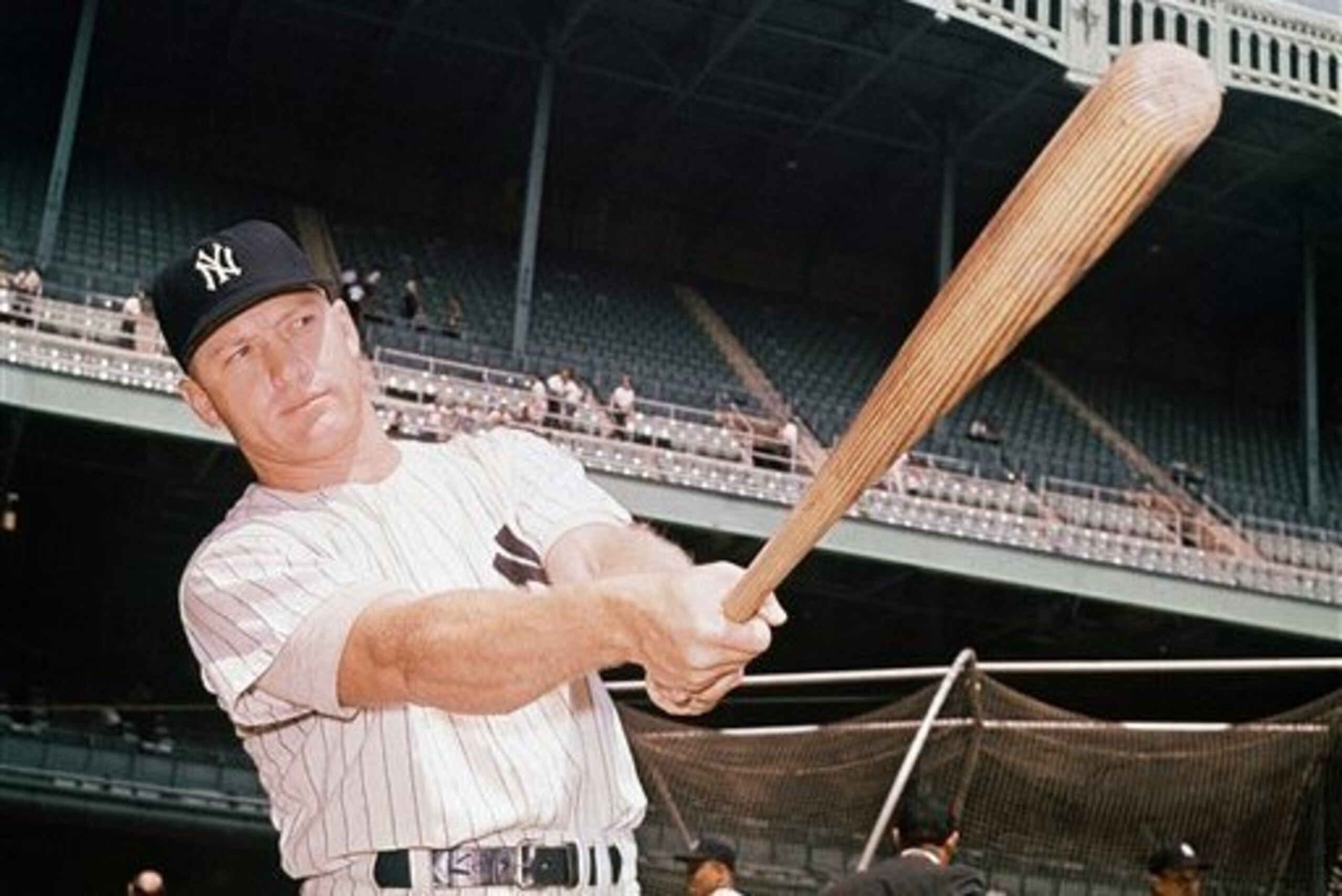

Selecting the Perfect All-Time MLB Lineup, 1 Through 9
Tasked with digging through all of baseball history and assembling the perfect all-time MLB lineup, who would be penciled onto your lineup card?
The following is my answer to that question.
First, let's lay down some ground rules on what exactly went into assembling the perfect lineup.
- This is not simply a list of the best player at each position, with those nine guys moved around to make up a lineup. Basic lineup construction ideals were taken into account.
- That meant a classic leadoff hitter at the top, a solid contact hitter in the two hole and a good righty/lefty mix throughout the lineup.
- Players had to play at least 500 games at a position to be considered eligible to play there, with the exception being designated hitter.
- Defense played no role whatsoever in deciding who made this lineup. Only offensive skills and accomplishments were considered.
- While not necessarily a requirement, an effort was made for this lineup to feature players from a number of different eras.
In an exercise of this nature, there is really no right or wrong answer. It's simply a matter of opinion.
So with that being said, I encourage you to share your own idea for what would constitute the perfect all-time lineup in the comments below.
1. LF Rickey Henderson
1 of 10
Bats: Right
Career Stats
| .279/.401/.419 | 127 | 3,055 | 510 | 297 | 1,115 | 1,406 | 110.8 |
Player Overview
The most dynamic leadoff hitter the game has ever seen, Rickey Henderson was an easy choice as the table-setter for this juggernaut of a lineup.
His combination of base-stealing skills and on-base abilities is simply unmatched.
He led the league in stolen bases 12 times, stealing 75-plus bases an impressive seven times, on his way to the all-time record by nearly 500 over Lou Brock.
Henderson also wrapped up his career with an on-base percentage over .400, and he ranks second all time with 2,190 career walks. Add in some decent pop, and there is really nothing more you could ask for out of the No. 1 hitter in any lineup.
2. 2B Rogers Hornsby
2 of 10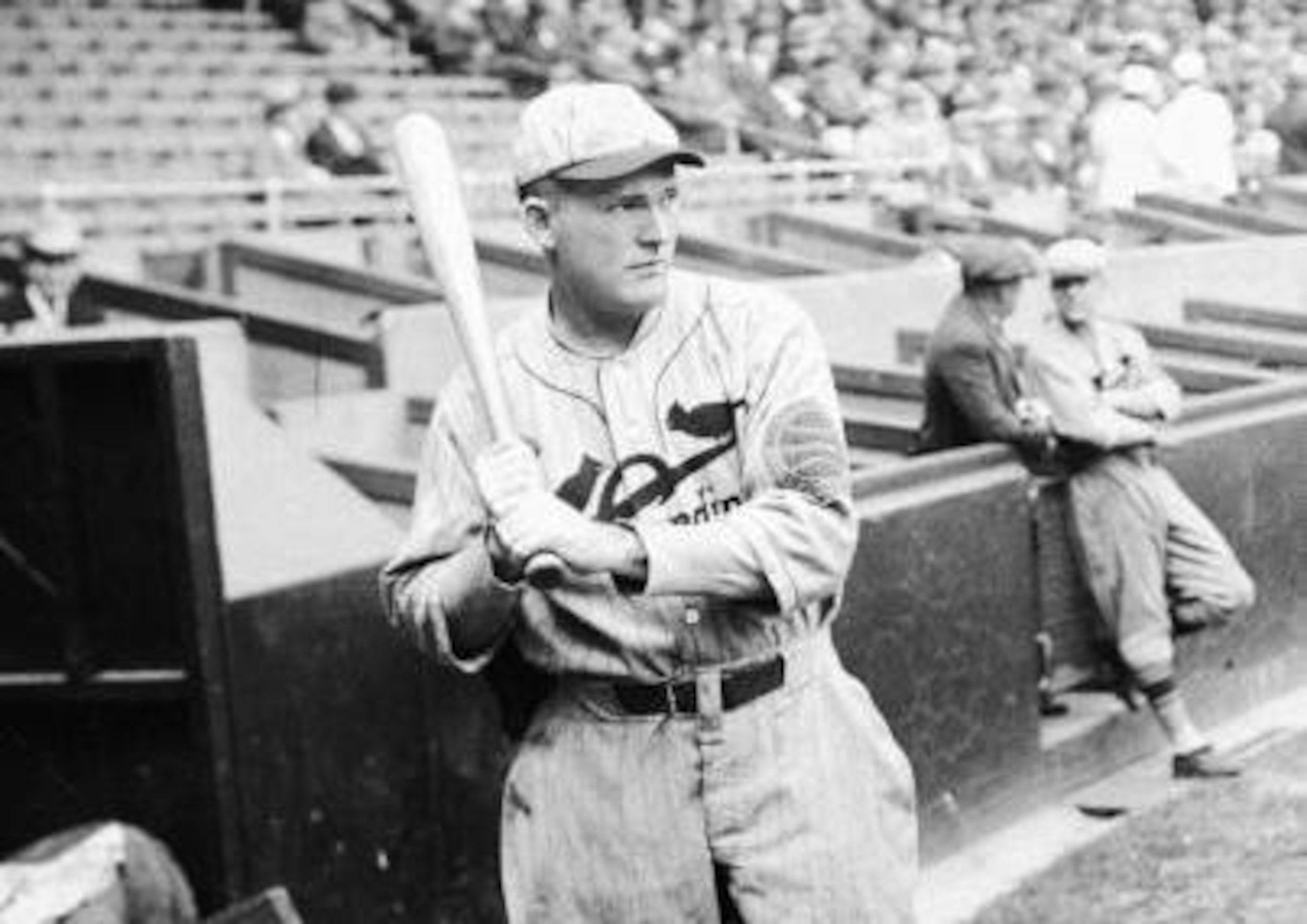
Bats: Right
Career Stats
| .358/.434/.577 | 175 | 2,930 | 541 | 301 | 1,584 | 135 | 127.0 |
Player Overview
An ideal No. 2 hitter ranks among team leaders in batting average and on-base percentage while rarely striking out. A nice mix of power and speed is a plus, but moving along the leadoff hitter and getting on ahead of the middle-of-the-order run producers is the name of the game.
Rogers Hornsby fits the bill across the board.
His career average (.358, second) and on-base percentage (.434, eighth) both rank among the top 10 all time, and he walked more (1,038) than he struck out (679) over the course of his 23-year career. He also won seven batting titles, led the league in on-base percentage an impressive nine times and even added a pair of home run titles.
Hornsby spent most of his career hitting in the cleanup spot for the St. Louis Cardinals, but he's a great fit to bat second in this all-time lineup.
3. DH Ted Williams
3 of 10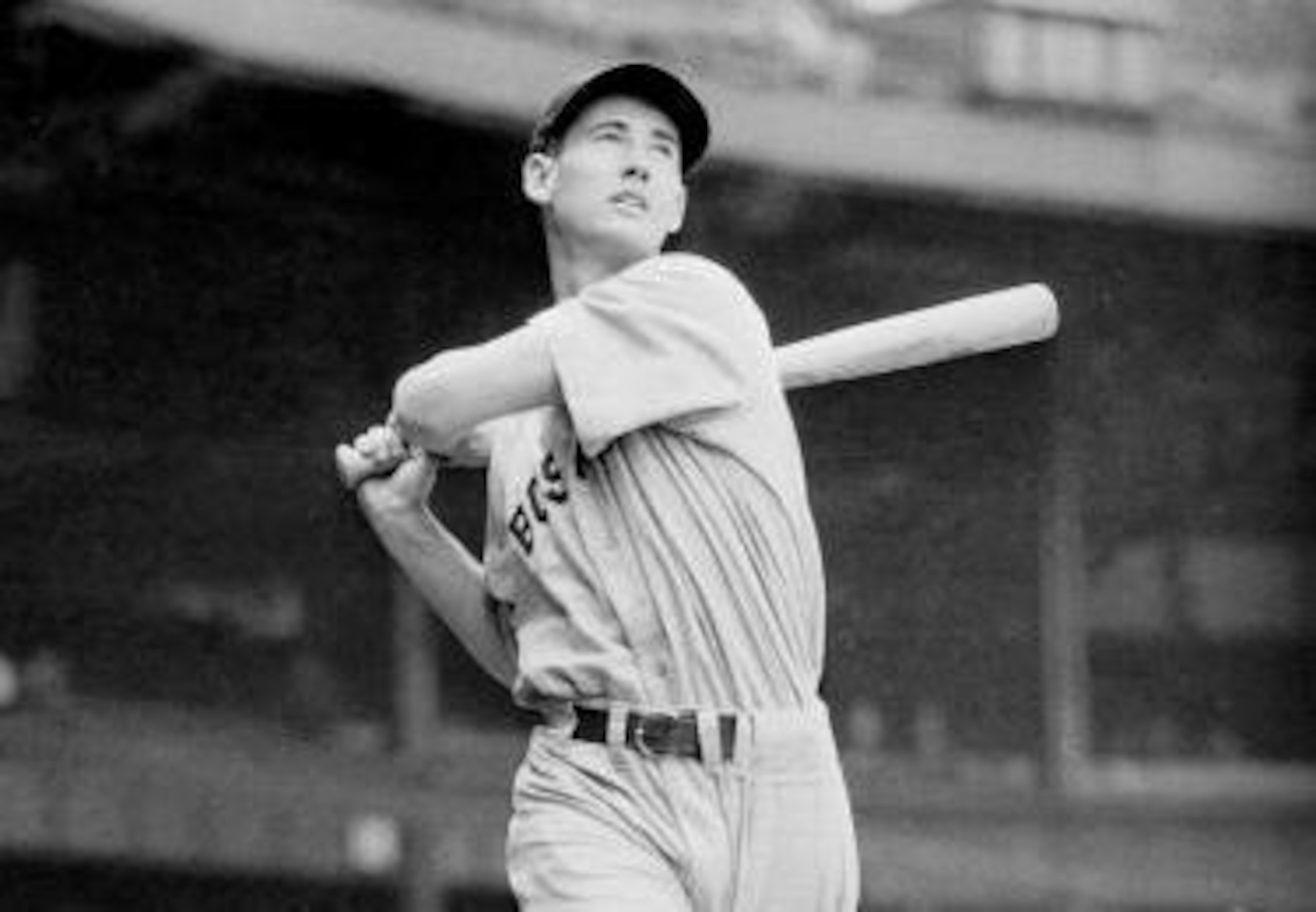
Bats: Left
Career Stats
| .344/.482/.634 | 190 | 2,654 | 525 | 521 | 1,839 | 24 | 123.1 |
Player Overview
The No. 3 spot in any lineup generally belongs to a team's best all-around offensive player. Someone capable of eclipsing the .300 batting average/30-homer/100-RBI plateau is the ideal candidate. While there were a number of worthy candidates, in the end, it came down to Ted Williams vs. Babe Ruth.
Spoiler: Both players made this lineup.
It was simply a matter of deciding who to hit in the No. 3 spot and who to hit in the No. 5 spot, and the superior hit tool of Williams got the nod over the legendary power of Ruth.
Williams ranks first all time in on-base percentage (.482), and he won six batting titles on his way to a .344 career average. He also managed to pile up 521 career home runs, despite missing three seasons in the prime of his career while serving in World War II.
Ruth is the greatest player of all time, but Williams is the greatest hitter the game has ever seen, so he is the choice for the No. 3 spot.


4. 1B Albert Pujols
4 of 10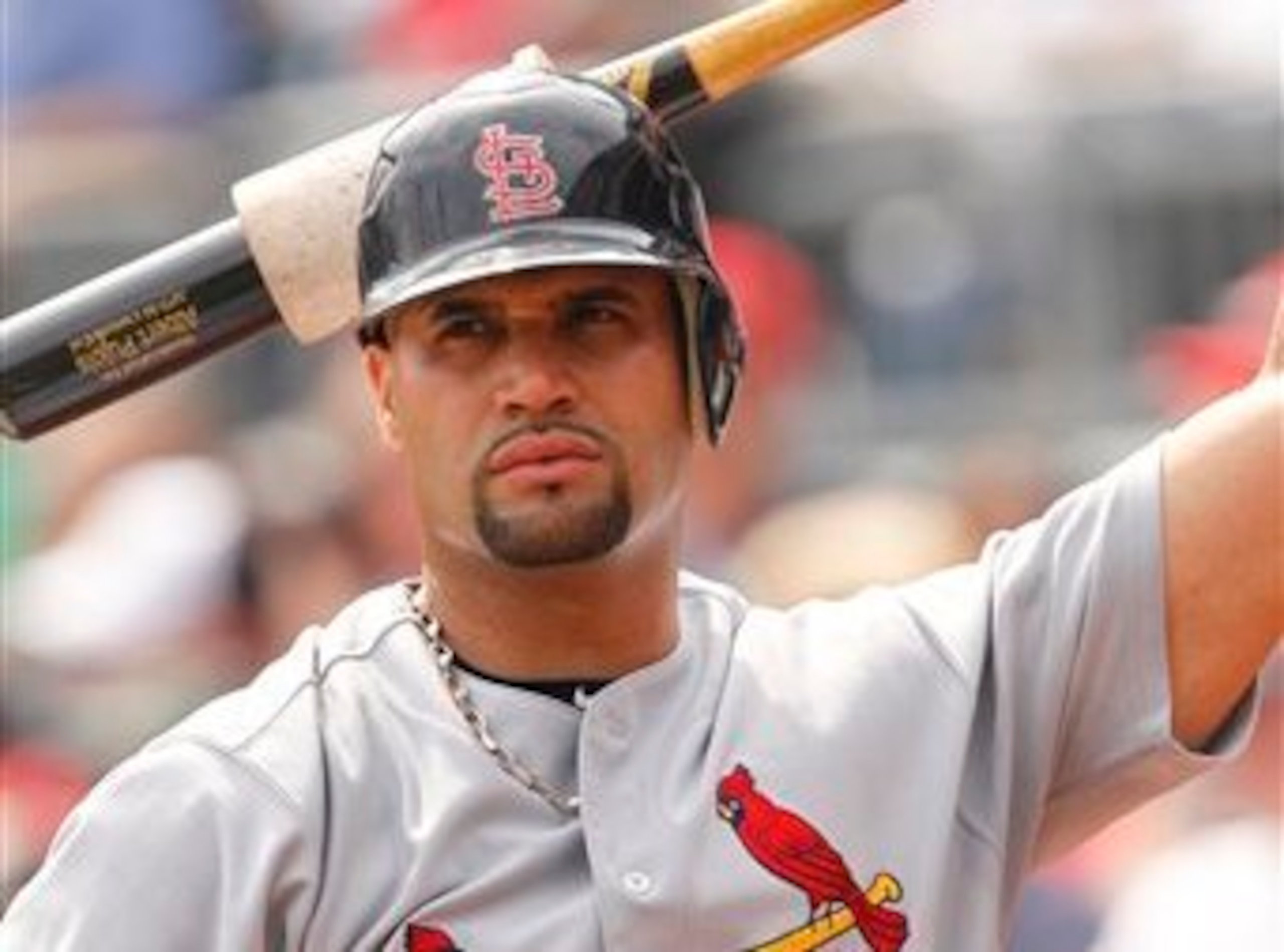
Bats: Right
Career Stats
| .317/.403/.588 | 162 | 162 | 561 | 520 | 1,603 | 98 | 97.0 |
Player Overview
In search of some balance to truly make this the ideal lineup, the target for the cleanup spot was a right-handed power hitter. Based on the rest of the lineup, it eventually boiled down to which first baseman to choose.
Lou Gehrig and Stan Musial were incredibly tough omissions, but with both of them batting from the left side of the plate, it came down to Jimmie Foxx vs. Albert Pujols.
All due respect to Foxx, who was an absolute monster during the prime of his career and finished with 534 home runs and 1,922 RBI in essentially 14 full seasons worth of games, but Pujols gets the nod.
The two come from very different eras, and while Foxx has the more impressive counting stats, they have nearly identical OPS+ (162 vs. 163).
In the era of pitcher specialization and flame-throwing relievers, Pujols was the most dominant offensive player in the game for roughly a decade. He hit at least .300 with 30 home runs and 100 RBI in each of the first 10 seasons of his career, topping the 40-homer mark an impressive six times during that span with a batting title and three MVP awards.
It's hard to gauge exactly where Pujols stands among the all-time greats given the fact that he's still playing, but there is little question he's one of the greatest the game has ever seen.
5. RF Babe Ruth
5 of 10
Bats: Left
Career Stats
| .342/.474/.690 | 206 | 2,873 | 506 | 714 | 2,214 | 123 | 163.0 |
Player Overview
To put it simply, Babe Ruth revolutionized the game of baseball.
When he hit .376/.532/.847 with 54 home runs and 135 RBI during his first season with the New York Yankees in 1920, it was a season the likes of which the game had never seen.
From there, he went on to cement his place as arguably the greatest player in the history of the sport, shattering records and leading the Yankees to seven AL pennants and four World Series titles over a 12-year span.
We could spend pages and pages running through the record-setting numbers, but at this point, most baseball fans are well acquainted with his offensive exploits.
An argument can certainly be made for ignoring the lefty/righty makeup of this lineup and simply slotting Ruth in the cleanup spot, but he'd be just as dangerous and likely see just as many RBI opportunities out of the No. 5 spot.
6. CF Mickey Mantle
6 of 10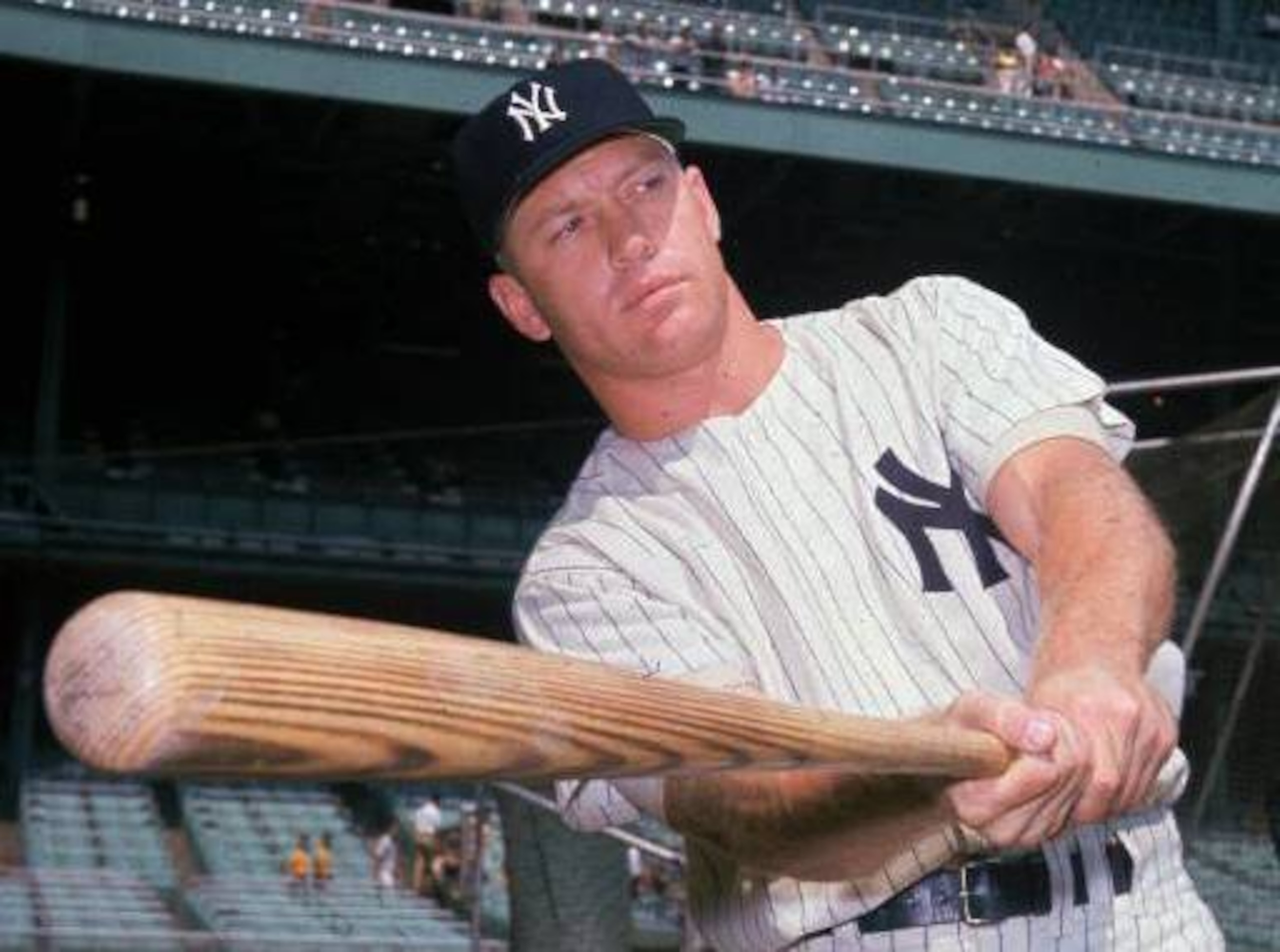
Bats: Switch
Career Stats
| .298/.421/.557 | 172 | 2,415 | 344 | 536 | 1,509 | 153 | 109.7 |
Player Overview
The Mickey Mantle vs. Willie Mays argument was a compelling one during the 1950s, and it came into play once again here when deciding who would be manning center field and hitting sixth.
With defense taken out of the equation, Mantle gets the nod for his distinct advantage in on-base percentage (.421 to .384). The fact that he is a switch-hitter also brings some added balance to the middle of the lineup.
Injuries eventually cut into his production, but in his prime, Mantle had as much raw power and natural athletic ability as any player the game has ever seen. He won three AL MVP awards, four home run titles and the AL Triple Crown in 1956 when he hit .353/.464/.705 with 52 home runs and 130 RBI for an 11.2 WAR.
Outside of Mays, the likes of Ty Cobb, Joe DiMaggio, Tris Speaker, Ken Griffey Jr. and Duke Snider also earned consideration for the all-time center field job, but at the end of the day, Mantle is a welcome addition to this stacked lineup.
7. SS Honus Wagner
7 of 10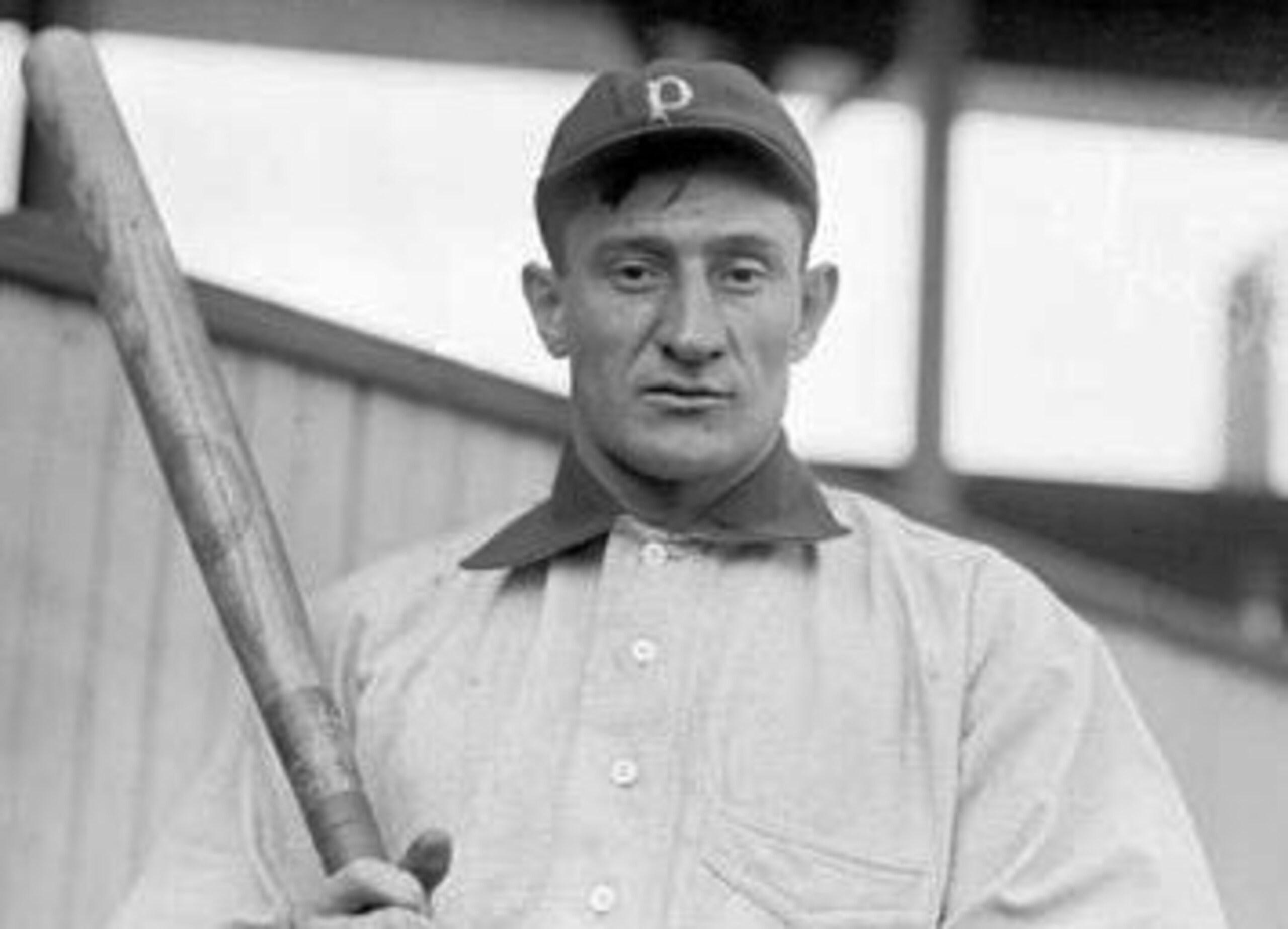
Bats: Right
Career Stats
| .328/.391/.467 | 151 | 3,420 | 643 | 101 | 1,732 | 723 | 131.0 |
Player Overview
Honus Wagner joined the Pittsburgh Pirates as a 26-year-old in 1900, and over the next 18 seasons, he established himself as the best player in the history of the franchise and the greatest shortstop the game has ever seen.
Despite hitting just 101 career home runs, he topped 100 RBI nine different times on his way to 1,732 career RBI, good for 21st on the all-time list. While he was an easy choice as the shortstop in this lineup, deciding where to slot him in the lineup was a bit more difficult.
He won eight batting titles on his way to a .328 career average and regularly had an on-base percentage over .400, and that coupled with his 723 career stolen bases made him an intriguing option for the No. 2 spot in the lineup.
However, Hornsby had him bested in career average and on-base percentage, so he winds up slotted here in the No. 7 spot, where his run-production skills would be put to good use.
8. C Mike Piazza
8 of 10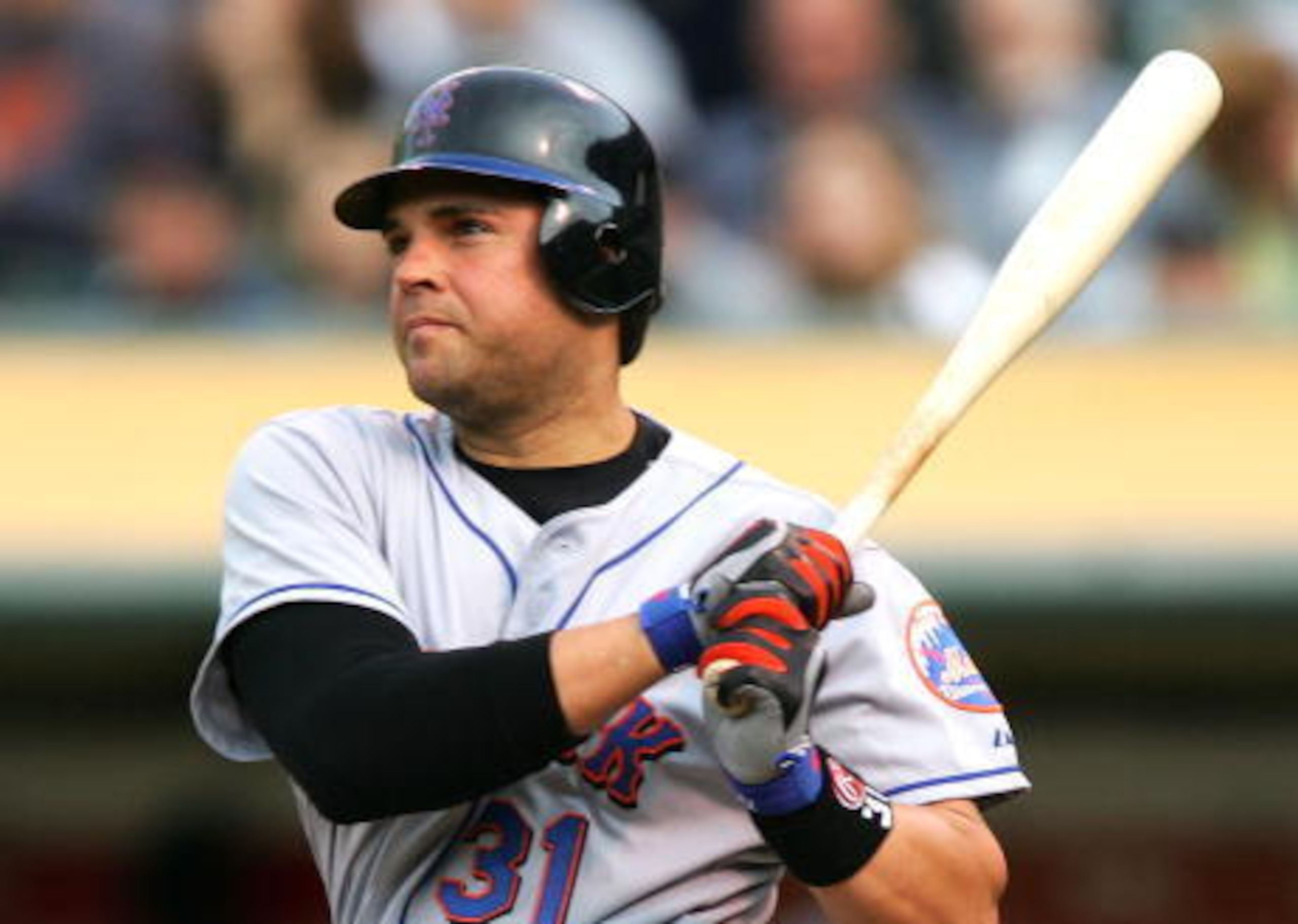
Bats: Right
Career Stats
| .308/.377/.545 | 142 | 2,127 | 344 | 427 | 1,335 | 17 | 59.4 |
Player Overview
All due respect to Johnny Bench, Yogi Berra and Mickey Cochrane, but with defense removed from the equation, Mike Piazza is a relatively easy choice as the catcher in this lineup.
The 62nd-round pick burst onto the scene in 1993, hitting .318/.370/.561 with 35 home runs and 112 RBI to run away with NL Rookie of the Year honors and announce himself as the top offensive catcher in the game.
Over the first 10 seasons of his career, he hit .322/.389/.579 while averaging 35 home runs and 107 RBI, making the All-Star team and winning Silver Slugger honors in every year.
Piazza retired as the all-time leader in home runs (427) and OPS (.922) among catchers, and he is one of just seven catchers with at least 3,000 career at-bats and an average over .300.
Peak seasons from Joe Mauer and Roy Campanella were also worthy of consideration on this list, but Piazza is the choice here thanks to his consistent middle-of-the-order production for the Dodgers and Mets.
9. 3B Pete Rose
9 of 10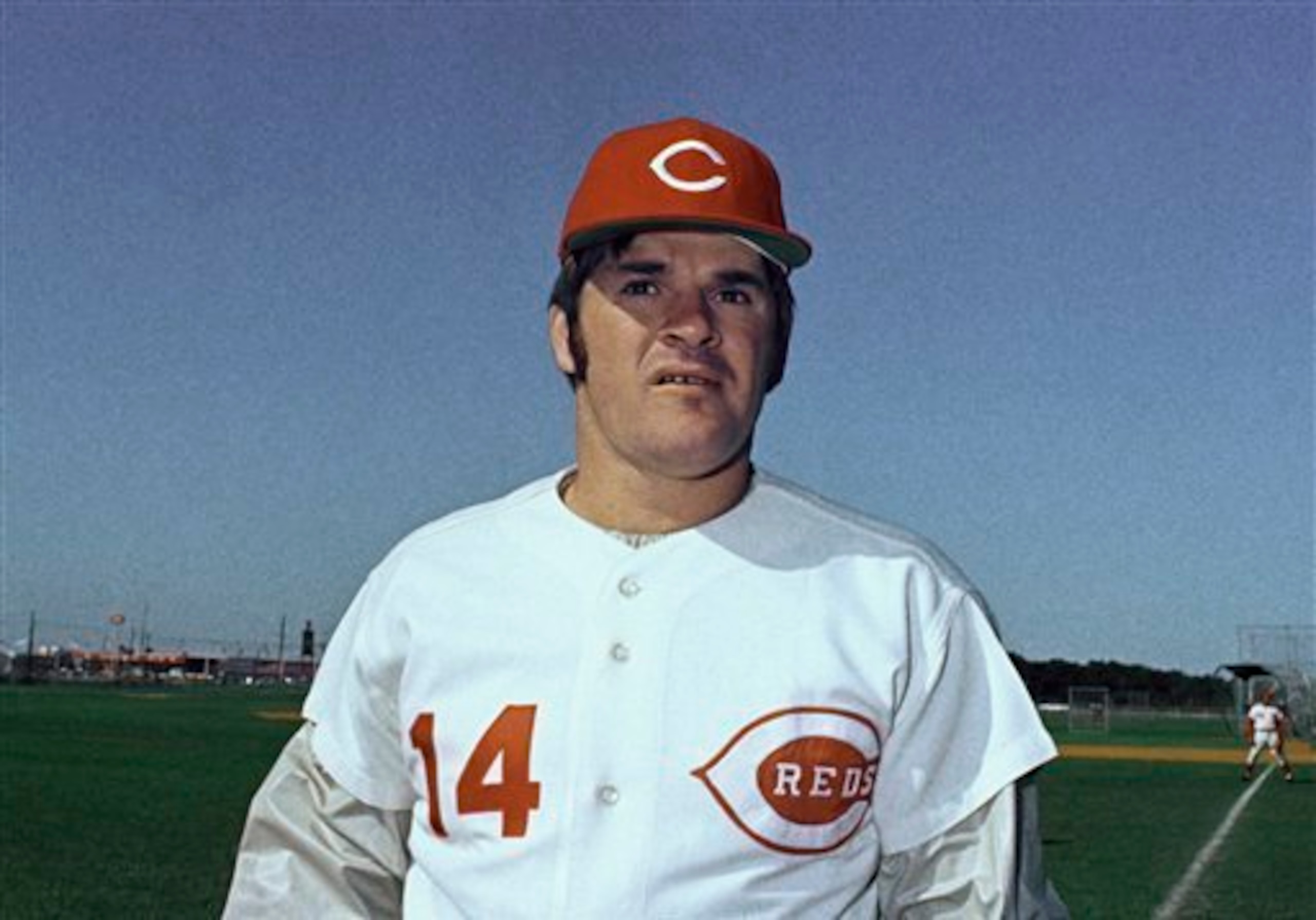
Bats: Switch
Career Stats
| .303/.375/.409 | 118 | 4,256 | 746 | 160 | 1,314 | 198 | 79.1 |
Player Overview
Pete Rose may not have a place in the Baseball Hall of Fame, but the all-time hits leader earns the final spot in this all-time lineup.
Ideally, the No. 9 spot in a lineup that features a designated hitter can serve as a second leadoff hitter of sorts for when the batting order rolls around. Rose may not have been a big base-stealing threat, but he spent a good chunk of his career on the basepaths.
While longevity no doubt played a role in Rose piling up 4,256 career hits, he had plenty of impressive single-season performances, topping 200 hits 10 different times and hitting over .300 in a total of 15 seasons.
Rose also gives this lineup a second switch-hitter, something that Chipper Jones also could have brought to the table. Those two, along with Mike Schmidt, George Brett, Wade Boggs and Eddie Mathews were all legitimate options as the third baseman.
In the end, Rose seemed like the best fit to round out this lineup.
Additional Thoughts
10 of 10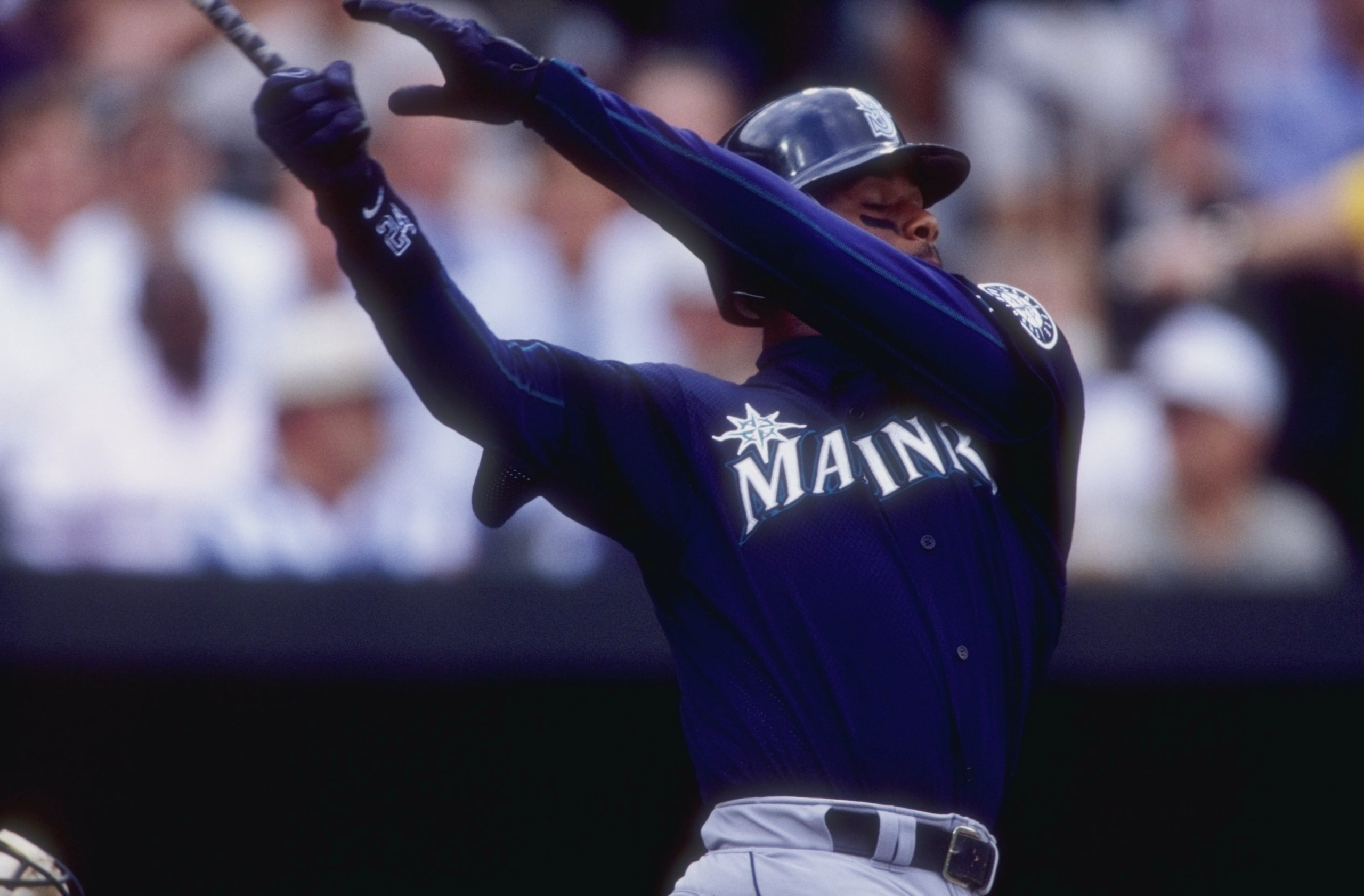
Whittling the entire history of MLB position players down to just nine guys was virtually impossible, and everyone will have his or her own idea of what would constitute the perfect lineup.
Here are a few other thoughts I had while putting this together.
- Henderson is the easy choice as the greatest leadoff hitter of all time, but I debated whether including him here was the best choice for the lineup. Going with Cobb in center field, Mantle at DH and Williams in left field crossed my mind more than once.
- I liked the idea of getting a couple of switch-hitters into the lineup, which was a big chip in Mantle's favor in center field. I also went back and forth between Rose and Jones as the pick at third base. In the end, Rose was an attractive option as a second leadoff hitter of sorts out of the No. 9 spot.
- Eddie Collins also received some legitimate consideration to be the choice at second base. He's more of a traditional No. 2 hitter than Hornsby and with better speed, but that was not enough to offset the advantages Hornsby had in several other areas.
- Like many kids of the 1990s, Ken Griffey Jr. is my favorite player of all time, and I would have loved to find a way to include him. However, Mantle, Mays and Joe DiMaggio all rank above him on the all-time center fielder list in my book.
All stats courtesy of Baseball-Reference, unless otherwise noted.



.jpg?w=2560 "Love's Body Already 'Tired'")


.jpg?w=2560 "Tyreek Deal May Come Soon")
.jpg?w=2560 "Ward Nearly Walks Out of Presser ▶️")