

Austrian Team's Fortunes Are Defining Concluding Alpine Ski World Cup Battles
Be it the NFL, the English Premier League, NCAA basketball or—in this case—Alpine skiing, the variation in how competitors peak over the course of their respective seasons always makes for fascinating viewing.
The Austrian ski team has provided numerous examples of this leading up to the end of the World Cup season. Indeed, the fortunes of several of its stars during and since the World Championships have come to define the battles for the overall and individual discipline globes.
.jpg?w=2560 "Cardinals Giants Football")

.jpg?w=2560 "Jets Dolphins Football")
A year ago, Anna Fenninger used Olympic success (gold in the super-G, silver in the giant slalom) as a springboard for a strong finish leading up to the World Cup. Although she had only won one race prior to Sochi, she had consistently scored enough points to be either in contention or in a lofty position in every event but the slalom.
Placing second in the Crans-Montana downhill and capturing successive giant slalom wins in Are, Sweden, set Fenninger up to win her first overall title. Victory in the latter event was also secured at finals week in Lenzerheide. As was second place in the speed disciplines.
This year, Fenninger's season has run a similar course (except her first win came in October, rather than in December).
It might not have been her plan, given the impressive way she wrapped up proceedings last time. But with Tina Maze revitalised after a quiet World Cup in 2013-14, and the return of Lindsey Vonn from injury, it is better that the Austrian has peaked since February than not at all.
Along with the versatile, former World Cup winner Maze, Fenninger was one of the stars of the World Championships (both won two golds each, Mikaela Shiffrin claimed the last remaining one in slalom). While Maze's form initially stuttered when she failed to finish either of the races at home in Maribor, Fenninger maximised her midseason confidence boost.
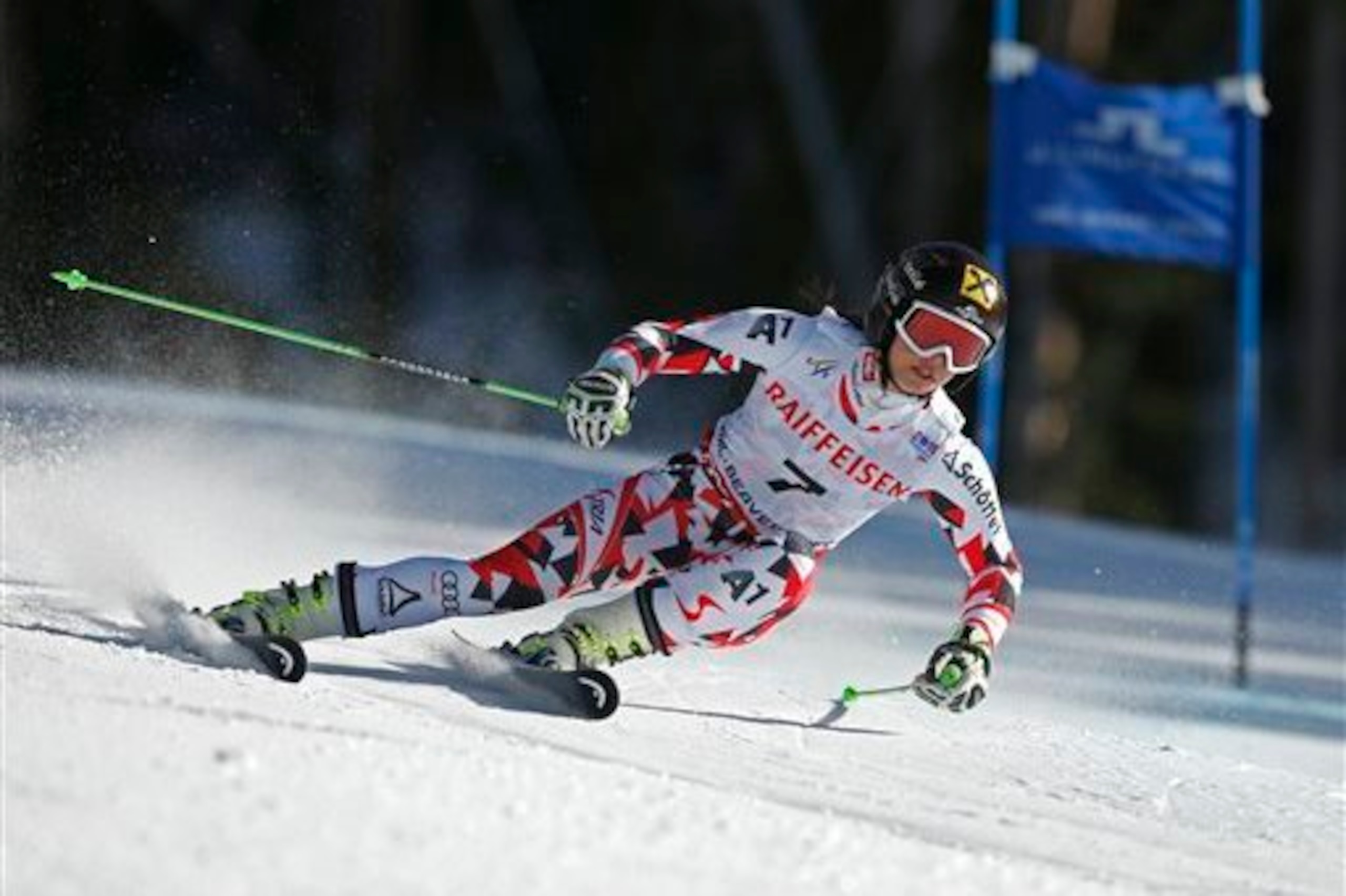
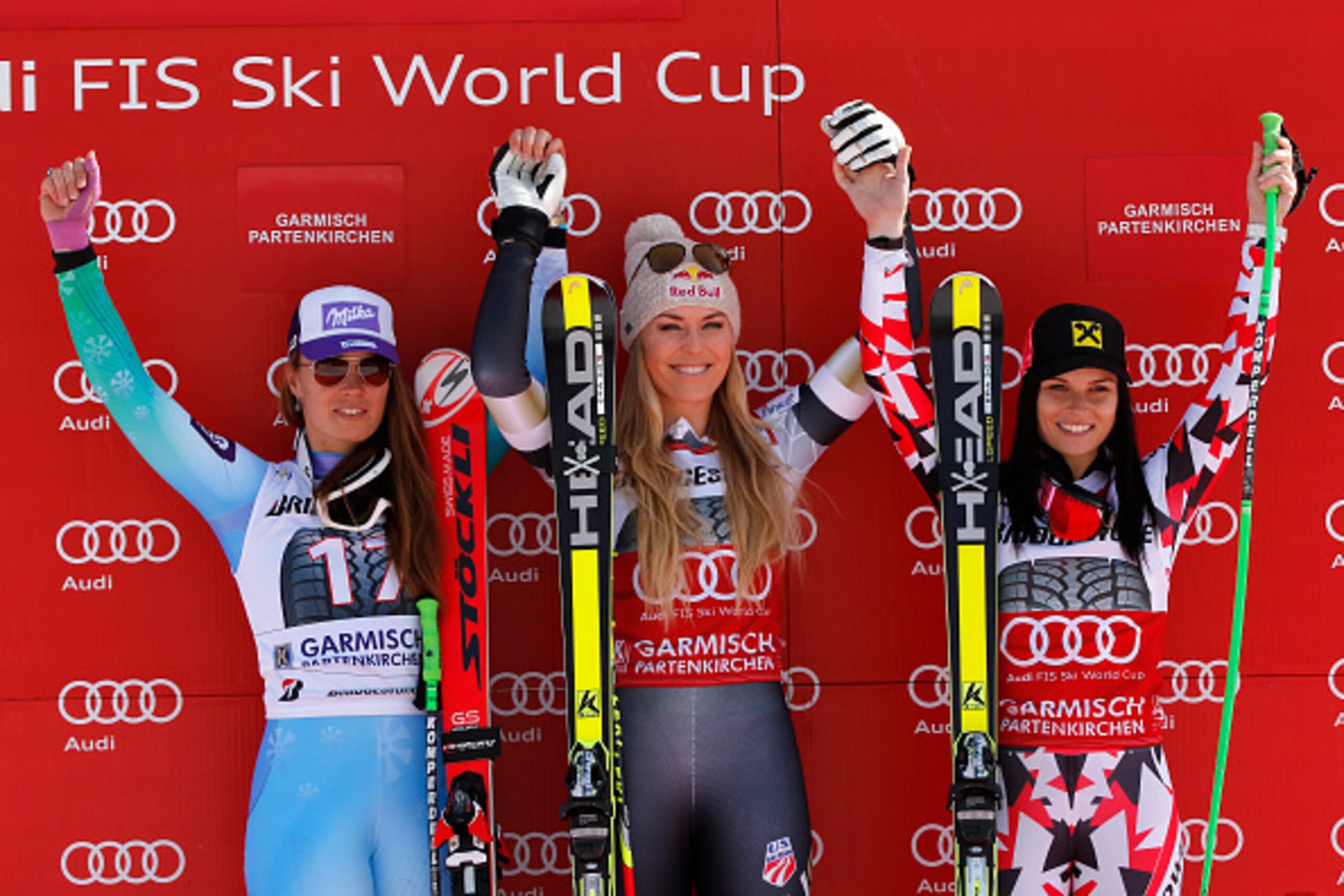
The 25-year-old's performance in Bansko showed an athlete at the top of her game. Victory eluded her at Garmisch-Partenkirchen last week, but another two podiums in downhill and super-G kept her in contention to win both events in this year's finals week in Meribel.
Should Fenninger triumph in either (or both), she would confirm herself as the season's best yet again. With Vonn—the all-time leader in World Cup wins—ahead of her in the individual competitions, and Maze topping the overall leaderboard, Fenninger taking home any of the globes would be an extraordinary achievement.
It is perhaps understandable why her focus right now is firmly fixed on the giant slalom, the one table she currently tops. Taking place on Friday the 13th, she will hope luck does not go against her with fellow Austrian Eva-Maria Brem close behind.
"I am focusing on my strengths, this is why I am not going to race slalom [in Are, on Saturday, March 14] next week," Fenninger said in Germany last Sunday, per the International Ski Federation's (FIS) website. "Now I have to train giant slalom in order to show my best skiing and maximise my chances to win the giant slalom globe."

In the men's speed disciplines, Fenninger's compatriot Hannes Reichelt has followed a similar path in terms of turning good, pre-Worlds work into potentially great season-ending rewards.
Reichelt's lack of involvement in technical events made competing for the overall crown a long shot. But consecutive downhill victories at Garmisch-Partenkirchen and Kvitfjell have kept the competition with Norwegian Kjetil Jansrud alive.
Reichelt's super-G hopes are a long shot. The new world champion skied in Norway, as too did Matthias Mayer after he briefly looked to be in contention. Mayer—an Olympic downhill champion himself—had endured an underwhelming year until he raced brilliantly on home snow in Saalbach (see below) and took first place in the weekend's two speed outings.
Jansrud secured his first-ever crystal globe with his super-G victory. The man leading him for overall glory with just over a week to go is the Austrian who has had more success than just about anyone on the tour in 2014-15.

Marcel Hirscher has stood atop the podium in seven of his 16 World Cup races this year. In five more he was on either of the lower steps.
Similarly to a year ago, these results have been spread throughout the campaign, constantly adding to his confidence and piling the pressure on others.
It has not been a perfect season. The men's slalom supremo of the past couple of years has been severely tested by Felix Neureuther and is 66 points behind with two races to go. When he skied in the Worlds edition, he fell dramatically short (while he was unlucky to be beaten by an inspired Ted Ligety in the giant slalom).
Disappointed as Hirscher would be to lose his slalom crown, his performances in said event have been sufficient enough, combined with his superior giant slalom form, to underpin his attempts to keep the big, crystal globe in his trophy cabinet. As for his standout moments, they have been unparalleled.

In Colorado last month, Hirscher did just enough to be in the top 30 for the slalom section of the Alpine combined. He took the lead and held it all the way through.
That was impressive. On March 1, in the Garmisch-Partenkirchen giant slalom, Hirscher produced something truly phenomenal.
A day prior to his 26th birthday, he extended an already handsome first-run lead to beat the second-place Neureuther by over three seconds. His final time of two minutes, 43.23 seconds prompted such responses as this from his rival Jansrud:
Fenninger, Brem, Reichelt, Hirscher and Kathrin Zettel (who faces an uphill battle to catch Shiffrin in the slalom) will all hope that the Austrian national anthem is played in their honors in Meribel next week.
They have not all gotten to this point in as smooth a manner as their skiing-mad nation would have liked. But each has a chance to win. That, whatever the sport, is the main thing.
.jpg?w=2560 "Titans Ravens Football")



.jpg?w=2560 "NFL investigating 2 referees for separate viral exchanges")
