

Mayweather vs. Pacquiao: How Each Fighter Plans to Win
Wow...so what you’re saying is there’s actually a fight to dissect?
Yes indeed, though it’s been discussed, rumored and openly fantasized about for what feels like much longer than six years, the time has finally arrived to assess the pluses and minuses that Mssrs. Floyd Mayweather Jr. and Manny Pacquiao figure to bring to the MGM Grand ring on May 2.

.jpg?w=2560)
Though their respective ages—Mayweather will be 38 on February 24; Pacquiao turned 36 in December—suggest far greater proximity to retirements than peaks, both men remain fixtures at the premier ends of the most highly regarded talent assessments.
In fact, The Ring slots Mayweather No. 1 and Pacquiao No. 3 in pound-for-pound ratings on its website, and the Independent World Boxing Rankings have them at first and second, respectively, in the most recent rundown for the 147-pound class.
In other words, the fight remains relevant not only for the star power the fighters possess outside the ring, but just as much for the world-class acumen they’ve carried into their twilight years inside of it.
And now that a deal is done...the discussion can at last turn from supposition to strategy.
Manny Pacquiao: What will it take?
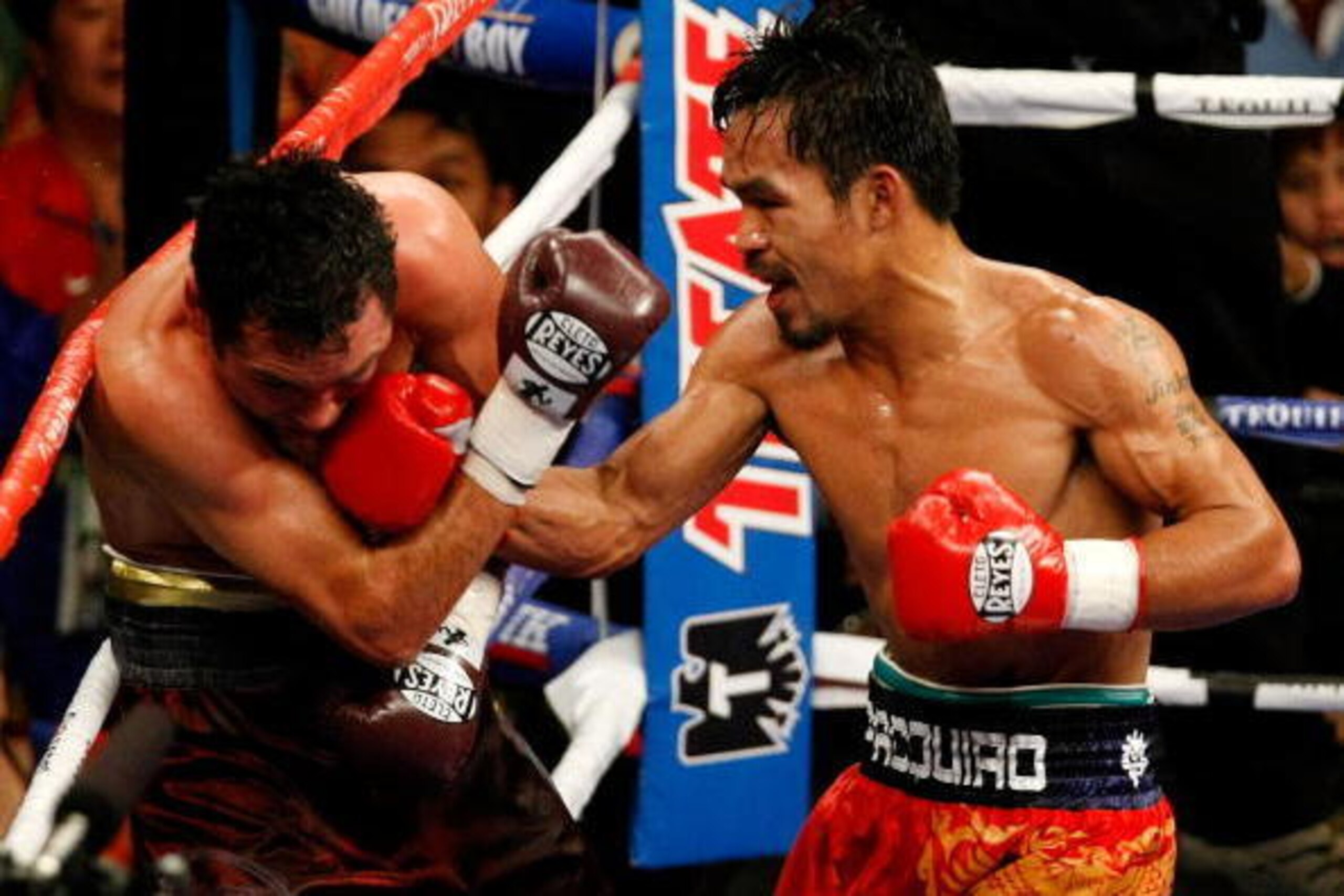
The Filipino superstar’s success in May will depend on whether he can still channel that youthfulness of six years ago.
The Pacquiao who earned raves and collected title belts through a pummeling of a catchweight Miguel Cotto possessed irrepressibly fast hands, agile feet and enough pop in his left to either render a foe loopy with one shot or make it impossible for said foe to keep him stationary long enough to deliver an impactful reply.
But while consensus suggests he’s won eight of nine outings since dethroning Cotto, the perception needle that had plunged so regularly into “unforgettable” territory has more often occupied space branding him as “clearly superior to most, but not quite what he used to be.”
One thing seems certain: If he lacks the strength to land a single paradigm-shifting shot (a la Ricky Hatton in May 2009) or the juice to step on the gas for multiple rounds and sap his foil’s willingness to compete (a la Oscar De La Hoya five months earlier), it’ll be a sad night in Manila.
Mayweather has toyed with a generation of fighters who arrived bent on “making him fight” three minutes each round but instead get so dizzied by counters that they compromise their offense to protect the home front. Nearly every foe he’s faced has seen his work rate drop significantly from past fights. And most have remained vertical in the late going based as much on preservation as prowess.
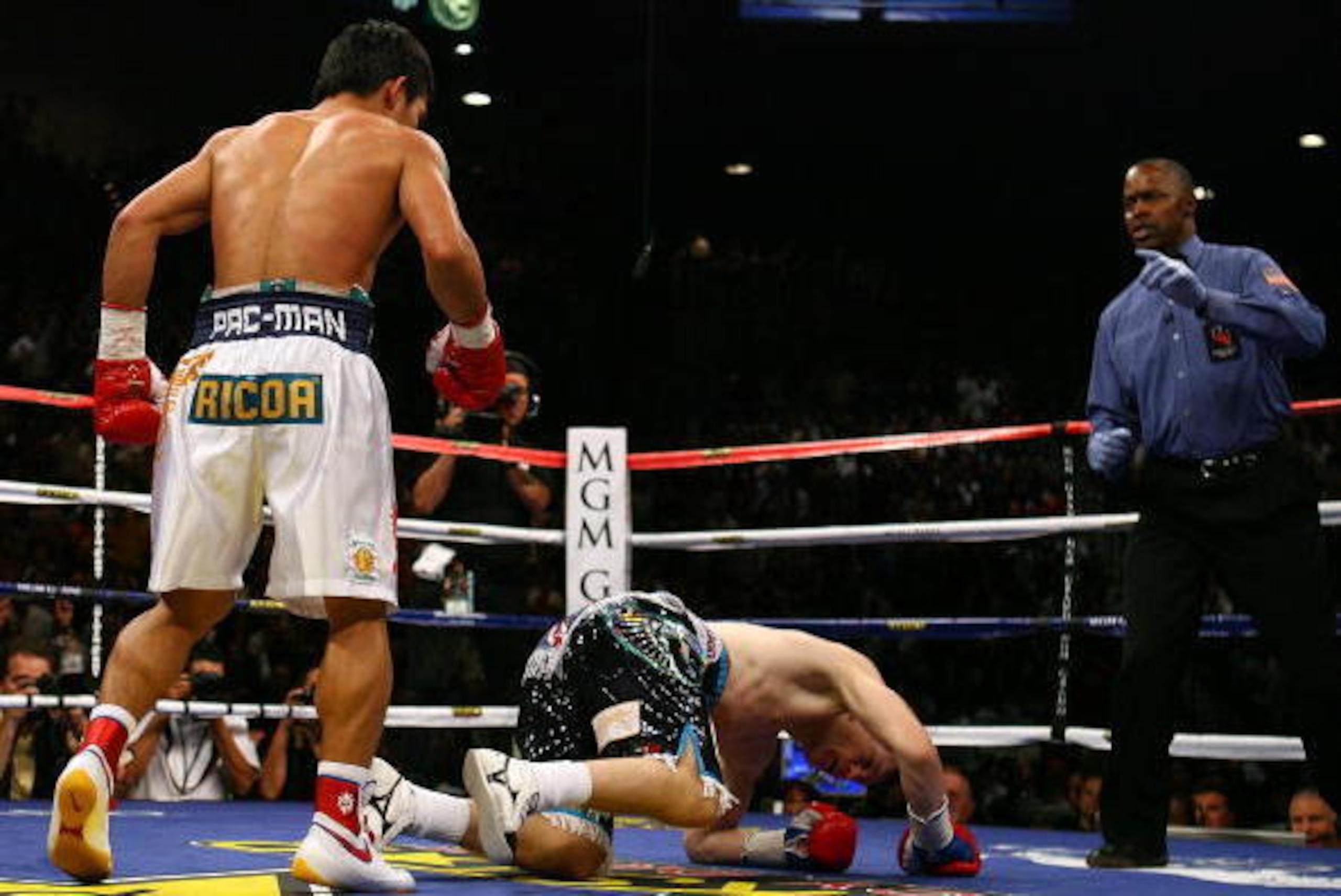
Simply put, Pacquiao can’t be one of those guys.
He has to force the fight. He has to move his head and hands. He has to make Floyd uncomfortable. And he has to be in the condition to maintain a frenetic pace from the opening minute of the first round to the closing minute of the last, never letting Mayweather find a moment of clarity.
He may or may not still possess the one-shot power that devastated Hatton—on what, ironically, will be precisely six years ago come fight night—but he’s shown intermittent evidence against lesser foes that the other tools he used during his rise are still in working order. If he brings them all to the MGM Grand on May 2, there’s no reason to believe he can’t make it feel like 2009 all over again.
Floyd Mayweather Jr.: What will it take?

Some love him; many hate him. But few objective observers will argue that Mayweather isn't the best fighter in the sport today for the very same reasons he ascended to that position years ago.
Even well into his late 30s and armed with a financial arsenal most countries would covet, he still prepares for each match like a hungry 20-something seeking a first big break. And because he’s managed to get through 47 fights with few prolonged violent skirmishes, neither his reservoir of ring intelligence nor his myriad physical abilities seem to have diminished much with advanced age.
He still stands well within punching range, yet his rough-and-tumble opponents are unable to either locate him with single, paralyzing shots or disassemble his defensive matrix, even from in close.
In Pacquiao, though, he faces the potential for a threat unlike one he’s seen in recent memory.
Though 2014 dance partner Marcos Maidana was as determined and physical as they come, neither his fundamentals nor his athletic prowess come close to what the Filipino has possessed. And though Canelo Alvarez was younger, bigger and stronger in 2013 than Pacquiao will be in May, his toolbox was also nowhere near as extensive as what Pac-Man, even at 35, showed as recently as November.
The same goes for Victor Ortiz, Cotto and Robert Guerrero, whom Mayweather beat in succession from 2011 to 2013 thanks largely to the same edges he had over Alvarez and Maidana. In fact, one has to go all the way back to Shane Mosley—then coming off a win against Antonio Margarito—to find a Floyd foe who presented an all-around challenge of speed, power and ring smarts like Pacquiao’s.
Lest anyone forget, a pair of right hands in the second round on May 1, 2010, had Mayweather in more competitive peril than he’s been at any point in five years and 74 rounds since. And more so than the five adversaries who’ve come subsequently, his imminent opponent has a real chance to put him there again.
History shows Mayweather ultimately dominated the second half of their fight, but what Mosley had early on that the next five haven’t had at all was enough hand speed to challenge Mayweather’s defensive radar and enough pop on his shots to make tangible impact with those that sneaked through.
Pacquiao is the first opponent in five years whose speed is even arguably in the same area code as Mayweather’s. And while his power may not be as devastating at 147 as it had been at lighter weights, he still dropped Juan Manuel Marquez once and had him reeling badly just before the KO loss.
His brand of speed-centric pressure is more precise and potentially dangerous, too, than the plodding roughhousing Maidana displayed, because it’ll make it more difficult for Money to deliver his own pinpoint replies.
Once Mayweather created space against the Argentine, the fights were less messy and the exchanges more one-sided. Against a guy like Pacquiao, who relies less on grappling and more on athleticism, the in-fight change of spatial relationships may be far more easily promised than accomplished.
Gentlemen, start your hyperbole.



.jpg?w=2560 "2 NFL Officials Suspended")

.jpg?w=2560 "Viral Rams Coach Vid 🖕")