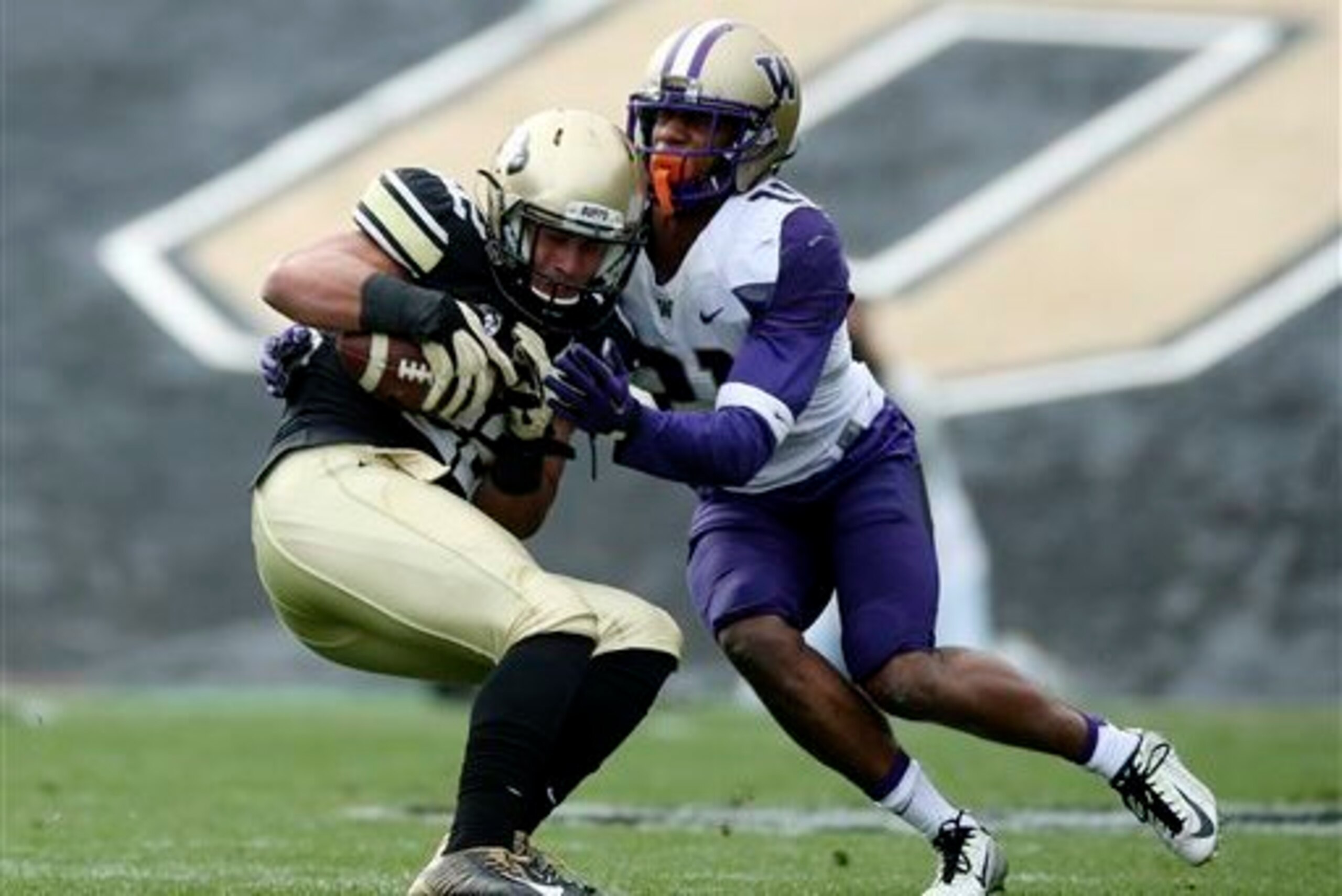

The Top Defensive Building Blocks in the 2015 NFL Draft
Every spring, NFL teams drastically change the fate of their franchises by bringing in a new class of young talent to their squads. This season will be no different. Across the board, there are plenty of talented players, despite this class being labeled as "weak" by some.
The offensive side of the ball really is solely determined by the quarterback. Touching the ball on every single play will swing the position's value like that. On defense, though, there isn't one such position. One can make the case for a dominant edge-rusher, but interior defensive linemen, like Houston's J.J. Watt, and defensive backs, like Seattle's Richard Sherman, can also give a defense an edge.
When looking at this particular class from a broad sense, there many players who have that potential. These prospects can give a defense an identity for years to come.
Leonard Williams, DL, Southern California
1 of 10
At 6'5" and 298 pounds, Leonard Williams is built more like an athletic offensive lineman than a defensive player. That's not a knock, though, as he's somehow able to generate power despite his less-than-filled-out frame. Overall, there's room to grow for Bleacher Report's Matt Miller's second-ranked player overall.
At USC, Williams went through a 4-3 Tampa 2 style defense as well as 3-4 transition, so he's well-versed in just about any scheme you can imagine him in. For 4-3 teams, you're looking at a defensive tackle who can potentially be an Ndamukong Suh type of prospect in two years, when his body matures.
When Suh left Nebraska, he was about 10 pounds of good weight heavier than Williams, so he still has a way to go for that praise. If he stays on his current path, though, he should be able to get there in a couple of seasons, becoming a terror for offenses for years to come.
In a 3-4 defense, he's perfect for a 5-technique role as a defensive end, either on the strong side or the weak side. He projects best there, as he can use his length and strength to his advantage, two-gapping offenses. His versatility as both a run-stopper and pass-rusher allows him to play on either end, providing even more value for the junior declaree.
His talent projects to be top-five in most classes, and he might go as high as the top-three this season.
Randy Gregory, EDGE, Nebraska
2 of 10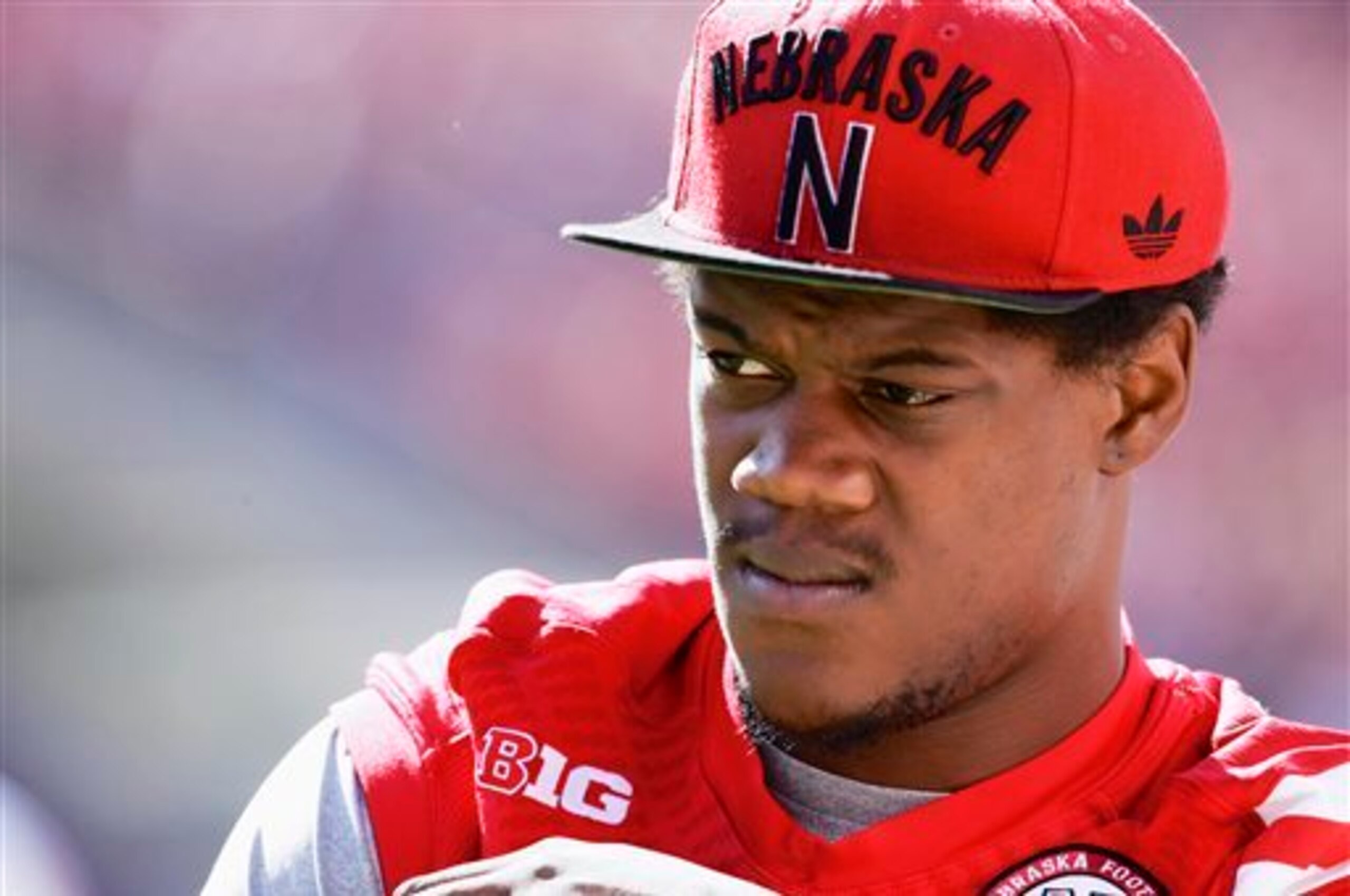
In only two years at Nebraska, Randy Gregory became a college star. Miller's third overall player, he should also, like Williams, be a top-five selection.
Some might question his build for the NFL, as he's currently listed at 245 pounds, but at his length of 6'6", there's plenty of room for him to grow. Because of his size, many are projecting him as a 3-4 outside linebacker, a role to which undersized college defensive end Clay Matthews transitioned when being drafted by the Green Bay Packers.
It's not a stretch to imagine him in a hybrid strong-side 4-3 outside linebacker role in base while dropping to the line on nickel downs, though. Gregory's biggest knock is probably his get-off at the jump of the snap, but that flaw only occurs when he's on the line scrimmage. For that reason alone, he may be best-suited overall for a linebacker-only role in either a 4-3 or 3-4 defense.
Linebackers such as Bruce Irvin and Von Miller have seen success in these hybrid roles with creative defensive coordinators since leaving college as small edge players. If Gregory hits on all cylinders, it's not out of the question that he evolves into a Matthews or Miller type of key contributor.
Danny Shelton, DL, Washington
3 of 10
If you're talking about a player who can give a defense identity, Danny Shelton fits the mold perfectly. At 332 pounds, there's no other position for him to play than as a big, strong interior defensive lineman.
Some have suggested that he goes as high as the top 10, such as NFL.com's Lance Zierlein. Mocking him to the Chicago Bears at seventh overall, Zierlein said, "the Bears could take Shelton to plug in as the anchor of their new 3-4."
Many project him to be a nose tackle, as his weight would suggest, but he's not limited to that role. Long gone are the days of a three-down 0-technique, as NFL defenses have become more hybrid to match professional offenses. So, while he did play that in college, he also showed the production and talent to get into the backfield, not just to be a run-only lineman.
Because of that, he can play as a 0-technique at the center of a 3-4 defense, but he can also play as the big body 1-technique in 4-3 defenses. There's another school of thought that says he could even flex out to 5-technique, playing a strong-side Haloti Ngata role, another big-body defensive lineman who came from the northwest.
Either way, if Shelton can keep some of the bad weight off, he should be an absolute force at the next level. His largest issue is being gassed, which was evident in the Oregon matchup in 2014, Ngata's former stomping grounds. But if he can fix that aspect of his game, he can be that Dontari Poe or B.J. Raji that everyone hopes he can be.
.jpg?w=2560 "Rams Raiders Football")

Vic Beasley, EDGE, Clemson
4 of 10
The 2014 Lombardi Award winner, Vic Beasley probably could have left college last season and been a first-round selection. At only 235 pounds, it's hard to project him as a base end at the next level, but he's got the talent to at least attempt it from a team's perspective.
Beasley can convert speed to power, has great hand usage and can bend the edge, an elite trait for pass-rushers. The issue is just what to do with him on first and second downs, when he wasn't stout enough for run games in the ACC, let alone in the NFL. On third down, everyone will want him on the field.
Ideally, he plays in a 3-4 defense and is allowed to play on the weak side, where he can shine chasing down running backs and quarterbacks alike from behind. Speed, speed, speed is what you see when you watch Beasley on film.
He's very unique, which may hesitate defensive coordinators from pulling the trigger on him, but with the combine coming up, he might be the "big riser" everyone falls in love with again. If nothing else, he could project as a hybrid linebacker and rush end, in the mold of Bruce Irvin, who went 15th overall to the Seahawks based largely off tape that isn't up to snuff with Beasley's.
Both Jacksonville and Atlanta have teams now led by former Seattle defensive coordinators, who have seen Irvin thrive in their system. Also both in need of that final edge-rushing piece for their 4-3 under defenses, there are multiple squads where Beasley's a "perfect fit."
Shaq Thompson, LB, Washington
5 of 10
Many are confused by Shaq Thompson's position at the next level, as he played safety and linebacker on defense for the Huskies but also contributed as a running back on offense. His traits as a weak-side outside linebacker prospect make him the most special there, though.
Thompson is blazing fast and is a highlight reel on defense, scoring four touchdowns in his final year at Washington. If he played in the SEC, there might have been Jadeveon Clowney-type Heisman hype for the linebacker as a junior. Instead, playing for a mid-level Pac-12 school, he's largely unseen by the general public.
With lightening-fast instincts and feet that can run for days, he's a perfect match for a 4-3 squad in need of that Will linebacker. Very similar to Lavonte David, who was a Pro Bowler his second year in the league, Thompson can make an impact big enough to completely change the direction in which a defense is going.
Good with the ball in his hands, as evident by his defensive touchdowns and offensive opportunity, he's a threat to score on any play on defense. Ed Reed was that type of player as a defensive back. J.J. Watt is that type of player as a defensive lineman. The NFL's linebacker mold just might be this prospect from the top left corner of the country.
Marcus Peters, CB, Washington
6 of 10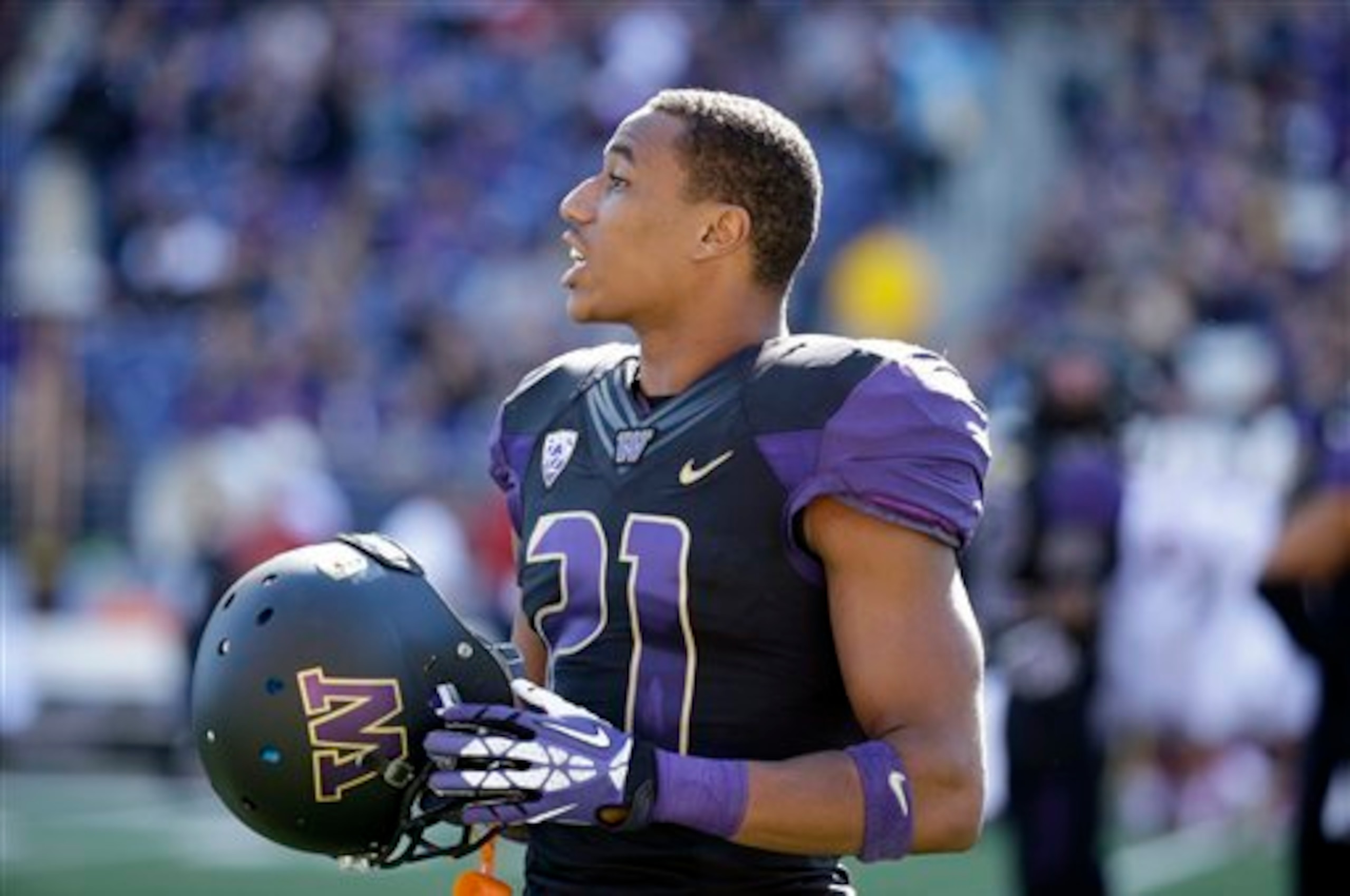
According to NFL.com's Bucky Brooks, Marcus Peters, who was a star cornerback for Washington last season, was dismissed for issues with his coaching staff:
"From speaking with several scouts familiar with Peters and his interaction with the Washington coaches, I've been told that the dismissal stems from his inability to get along with coaches and team officials. Peters reportedly has a strong personality and didn't mind challenging authority about various situations on and off the field.
"
His character can be weighted heavily throughout the draft process from team to team, so it's hard to truly peg where he'll be drafted in April, but one thing's certain: He can make all the plays on the field.
A long (6'1"), rangy defensive back, he's got all the tools you'd build for a corner to succeed in today's NFL. On top of that, he's not a finesse player. More often than not, he's more content with abusing a receiver in press coverage than simply running down the sideline hip to hip.
College players get away with more than NFL players because of the rule differences between the two levels of play, but Peters' aggressive style of play compares favorably to Richard Sherman of the Seattle Seahawks.
As a talent, he's the best cornerback of this class, maybe even the best since Patrick Peterson in 2011. There's no halfway drafting a player. If his character sparks up once more, allegedly, it won't matter if he's a top-five selection or a Day 3 one, in terms of impact culturally for a team.
If you're willing to bet on the man, there's no reason he can't be the type of prospect that completely shifts what a defense can do, in a Sherman or Darrelle Revis type of way, shutting down an entire side of the field.
Jordan Phillips, DL, Oklahoma
7 of 10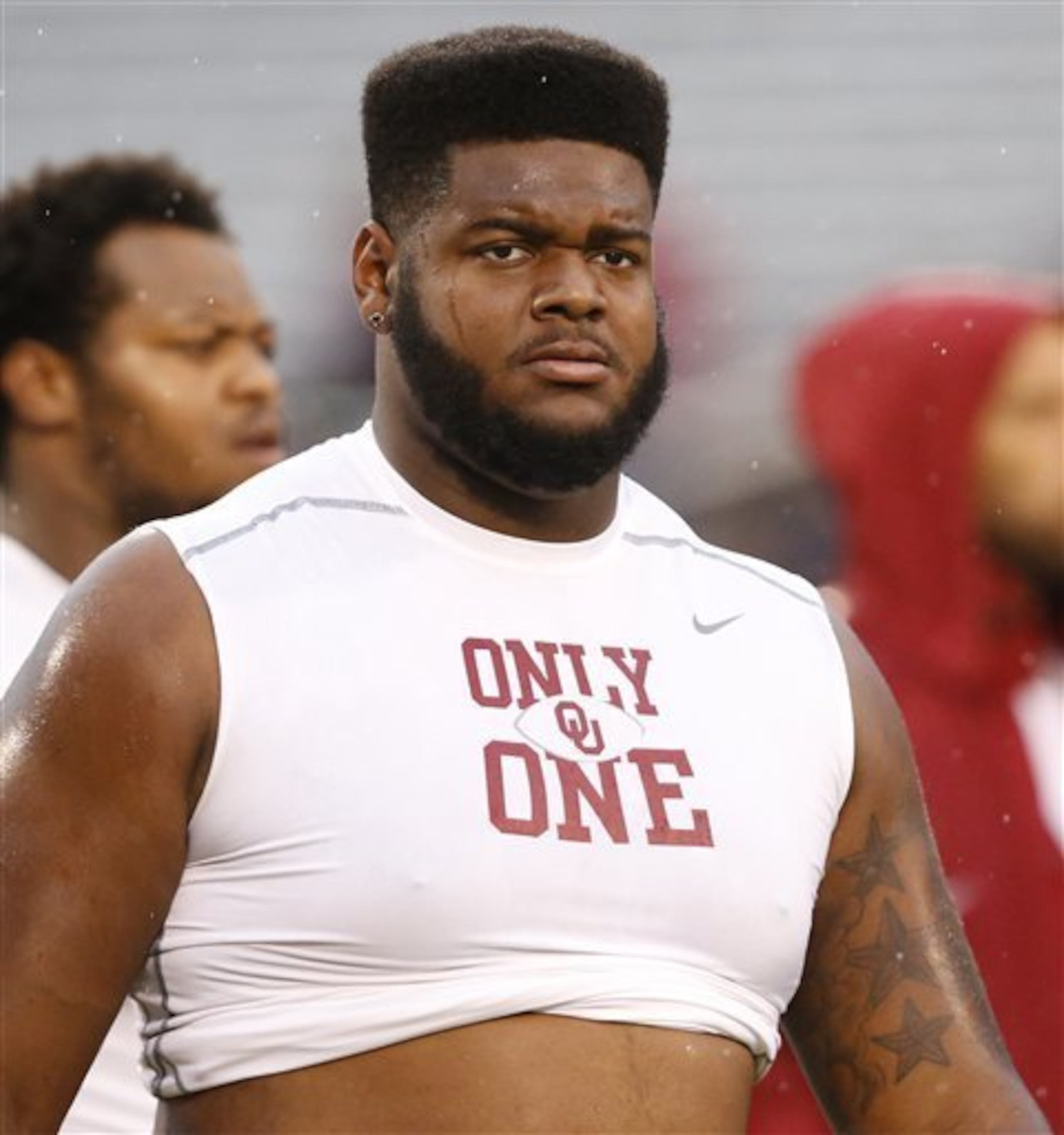
Jene Bramel of The New York Times once talked about the school of thought regarding drafting large defensive linemen, citing former Giants head coach Bill Parcells, stating:
"Parcells called it the “Planet Theory” – i.e. there are only so many men on the planet big and skilled enough to play 2-gap defensive line techniques in the N.F.L.
"
That's the best way to describe Oklahoma big body Jordan Phillips, who at 6'6" and 334 pounds is one of the largest humans in the draft class. He's far from a finished—or even a consistent—product, but he shows potential to play three downs at a position which largely is scarce for those rare talents.
At nose tackle, Phillips can be game-changer for a team. The issue is that he may take some time to come around. For example, Terrance Knighton, a player to whom Phillips favorably compares, spent his first four years in the league as a Jacksonville Jaguar, trying to put the pieces together, before eventually finding himself in Denver.
The value in today's contracts come during first-rounders' rookie deals, which makes projects less and less likely to be drafted higher. That being said, if Phillips can speed up the process, maybe even drop a little weight doing so, compared to Knighton's start of his career, that reward could turn out great for the team that took the risk.
There's only so many 6'6" 334-pounders in the world, and this one is athletic. Rolling the dice on a "Planet Theory" player is how Houston ended up with J.J. Watt, after all.
Ifo Ekpre-Olomu, DB, Oregon
8 of 10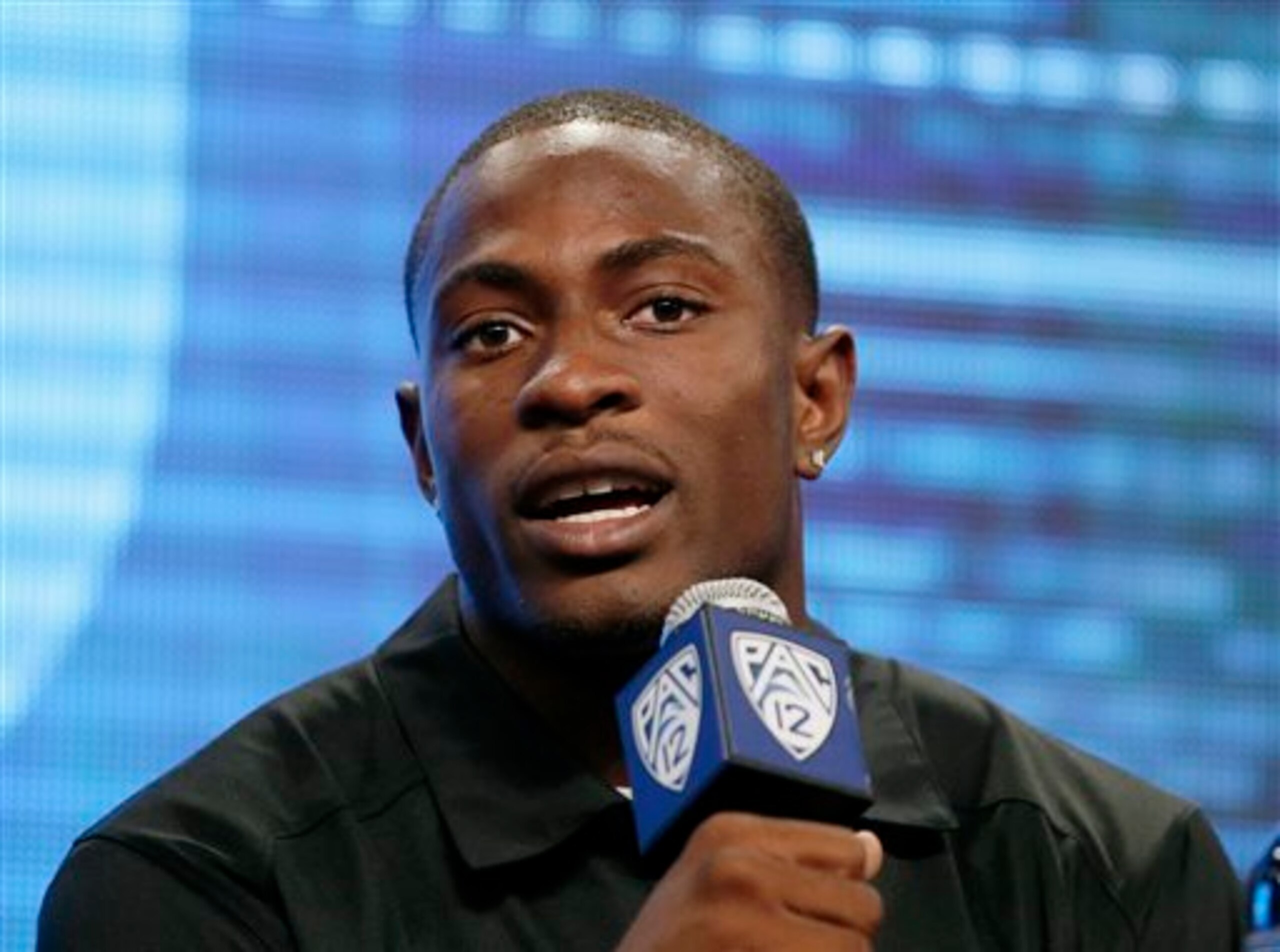
At only 5'9", Ifo Ekpre-Olomu isn't the prototypical cornerback in the NFL. Not the way the league is trending, anyway. Combine that with rehabbing a knee, and some would disregard his NFL prospects. I'm not one of those people.
Ekpre-Olomu may not be in the best spot to compete for a starting boundary-corner gig at the next level, but he could kick inside and be more valuable at another position: safety.
On film, he shows the range to track balls, the ball skills to catch and return said interceptions and the aggressiveness to actually contribute in the run game as a defensive back, something college players typically hesitate doing. Those three skills sound more like a safety than a cornerback, and at the professional level, there's a dry spell of elite safety talent since players like Ed Reed have aged and moved past the sport.
It's not out of the question that Ekpre-Olomu could emerge as an Earl Thomas, another player who spent time at cornerback in college, if he recovers well from his knee injury. Length is much less of a factor for safeties, as Thomas, at 5'10", is an All-Pro example of.
Ekpre-Olomu's size and scheme, as an off-coverage cornerback, is only a weakness if you project him in the wrong role. Suiting best as a Cover 3 or Cover 1 safety, he has the potential to be a top-five free safety in the NFL after having a three-time All-Conference career as a corner at Oregon.
Eddie Goldman, DL, Florida State
9 of 10
As a 320-pounder, Eddie Goldman projects as a nose tackle in a 3-4 or 4-3 defense, playing either a 0-technique or 1-technique role. After his All-ACC performance in 2014, leading Florida State in sacks, he decided to call it a college career and bounced for the NFL, despite leaving the ACC Championship Game with an injury and being hindered in the Rose Bowl against Oregon by said knee.
He's a pretty up-and-down talent, streaky at times, but when he's on, there might not have been a better defensive lineman in college football. Andy Staples of the Monday Morning Quarterback even ranked Goldman as the fifth overall player in college football at one point during the season.
He's done more than enough at the college level to warrant being an early selection, but he's got plenty of work ahead of him. Speed and size are assets every defensive line coach in the league would like to get their hands on, and Goldman will press to come off the board early.
If he does pan out, the team that drafted him could be handcuffing a multiple-time All-Pro at one of the most valuable positions in the NFL: the defensive line.
Danielle Hunter, EDGE, LSU
10 of 10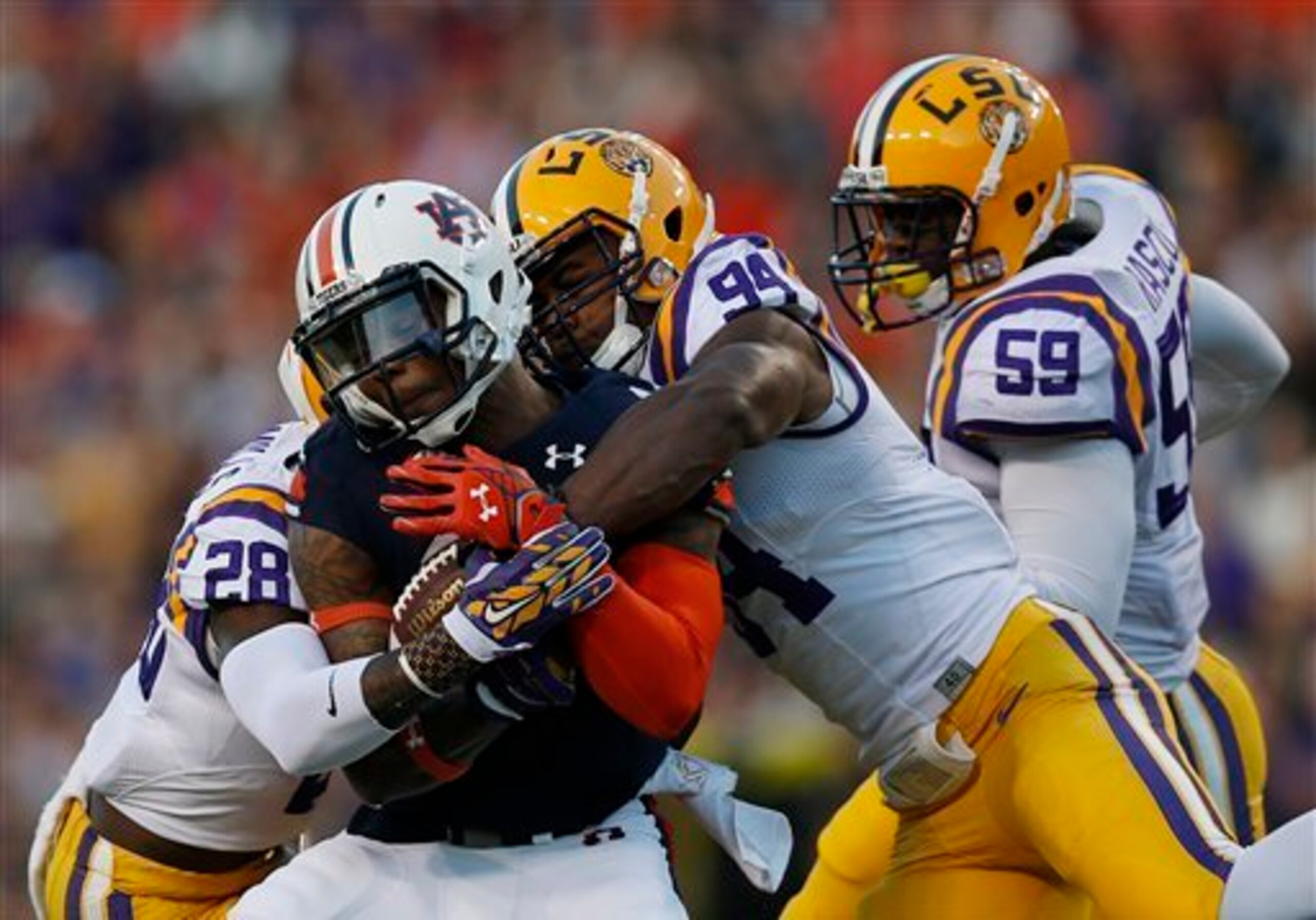
Danielle Hunter may be one of the most interesting players in the class, because he's simply not ready to get NFL reps at this point. When watching the footage of his 2014 season, everything is based on how you project the former LSU pass-rusher.
It wasn't until 2013, as a true sophomore, that he started receiving quality spin at the SEC level. For the first two months that he'll be on an NFL roster, he'll still be 20 years old, cashing in professional checks before he can legally drink.
He's an off-the-charts freak with great length at 6'6", but he looks more like a blue-chip high school recruit than a first-round pick. That being said, there's still value in having him. A bit of a sleeper, if Hunter is drafted in the third round in 2015, then turns out first-round production in 2017, a team saves tremendous value down the line by spending a late Day 2 selection on a Day 1 player, simply coaching him up on the bench for two years.
The upside of Hunter is one that very few have, and maybe that's why he figured he could declare after only three years at LSU. It's also why teams should strongly consider drafting him, even if he needs a redshirt year from the jump.
The draft weekend is about finding value in spots others don't. Some teams may be pressed in win-now mode, but for a patient team, a Hunter selection could set them up with a 10-year solidification at pass-rusher, one of the most important roles in the sport, for just simply acknowledging that he's one or two years away.
.jpg?w=2560 "Steelers Saints Football")



.jpg?w=2560 "🚨 Week 8 AP Top 25 Poll")
