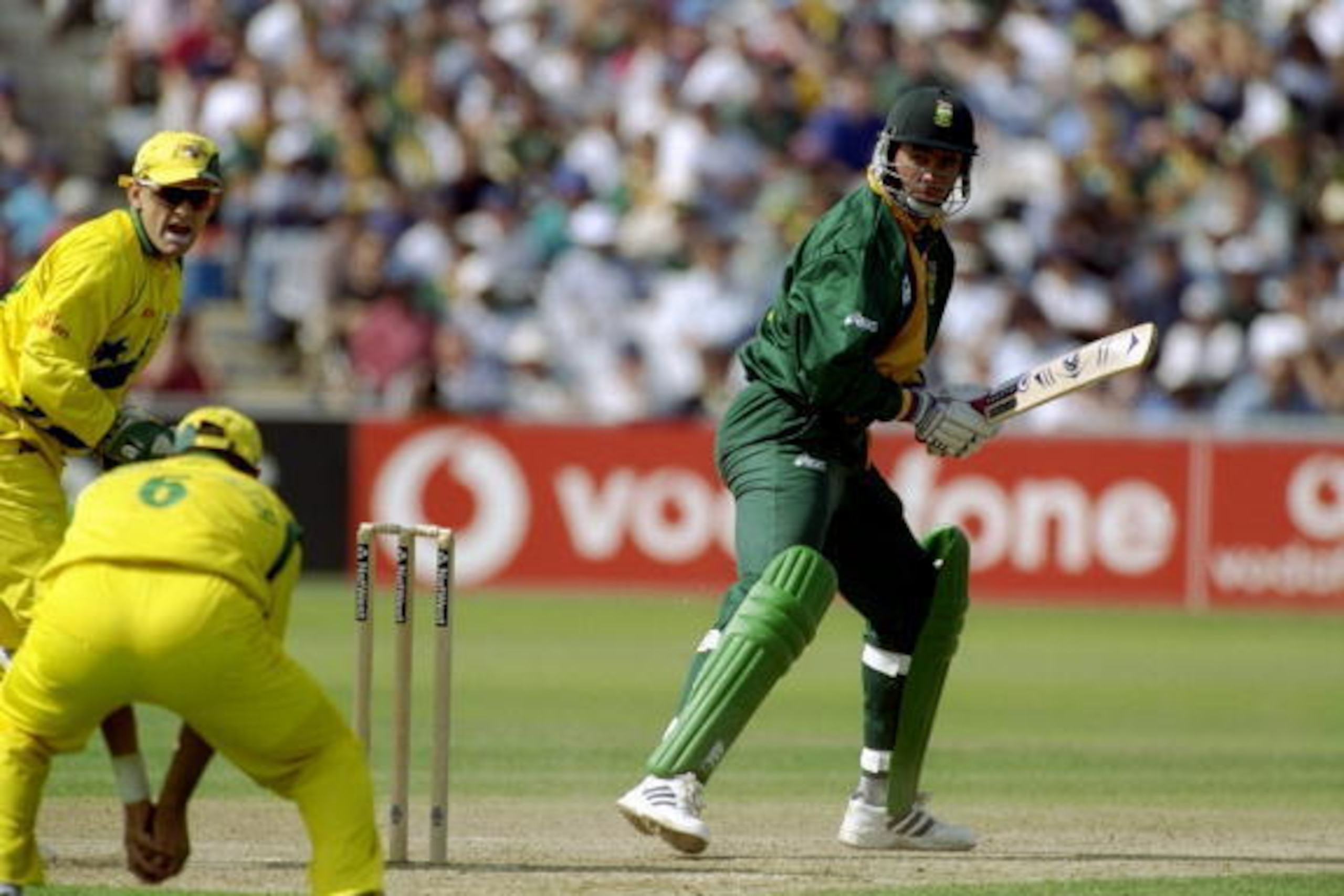

Cricket World Cup: Ranking the 10 Most Iconic Moments Ever
The Cricket World Cup has thrown up some great moments down the years. Trying to pick the top 10, and then ranking them in order, was not an easy task.
While the list includes some highlights from individuals, the thin line between success and failure is also heavily featured.
Of course, there are some honourable mentions for those moments that did not quite make it into the final selection.
Somehow, there was no room to squeeze in Kapil Dev lifting the trophy at Lord's after India's famous victory over West Indies in 1983. Likewise, Aravinda de Silva's century in Sri Lanka's final triumph over Australia in 1996 does not feature.
Gary Gilmour's 6-14 against England in 1975 was a strong candidate that narrowly failed to make the cut, while there were also some lighter moments that missed out.
Who can forget the time when United Arab Emirates captain Sultan Zarawani faced Allan Donald in a floppy hat?
If you strongly disagree with the final cut, then have your say by using the comments section.
10. Wasim Akram Destroys England in 1992 Final
1 of 10Pakistan's progress through to the 1992 World Cup final was far from smooth.
Rain saved them from suffering an almost certain defeat against fellow finalists England in the group stage, while they needed Australia to beat West Indies just to reach the last four.
They then stunned New Zealand in the semi-finals, with a young Inzamam-ul-Haq leading them home in an unlikely run chase at Eden Park, Auckland.
Wasim Akram hit a quick 33 in his side's innings of 249-6 in the final against England at the MCG, though that is not the reason why he makes the list.
England had slipped to 69-4 in their reply, but Allan Lamb and Neil Fairbrother repaired the early damage with a fifth-wicket stand worth 72.
However, Akram put paid to any glimmer of hope England had of lifting the trophy.
The left-arm seamer dismissed Lamb and new batsman Chris Lewis in successive deliveries, both bowled on the angle.
Pakistan went on to win the match by 22 runs, allowing skipper Imran Khan to lift the trophy.
9. Dwayne Leverock's Catch Briefly Rocks India in 2007
2 of 10A Bermuda player may not have expected to make the list, but it would be inconsiderate not to find a place for Dwayne Leverock's catch in 2007.
At the start of the second over, India batsman Robin Uthappa wafted his bat away from his body to the first delivery from seamer Malachi Jones.
The ball found the edge and Leverock—who, considering his size, was probably covering first and second slip—took off to his right to grab a one-handed stunner.
He set off running in celebration, blowing kisses to the crowd in the process. David Lloyd, on commentary duty, said "the earth shook" as the fielder landed with the ball still somehow clasped in his hand.
Mind you, seeing as he was a policeman back home in Bermuda, Leverock was perhaps used to catching things.
It was a rare moment of success for the minnows; they would lose the game to India by the small margin of 257 runs.
8. Sachin Tendulkar Carried Around Mumbai in 2011
3 of 10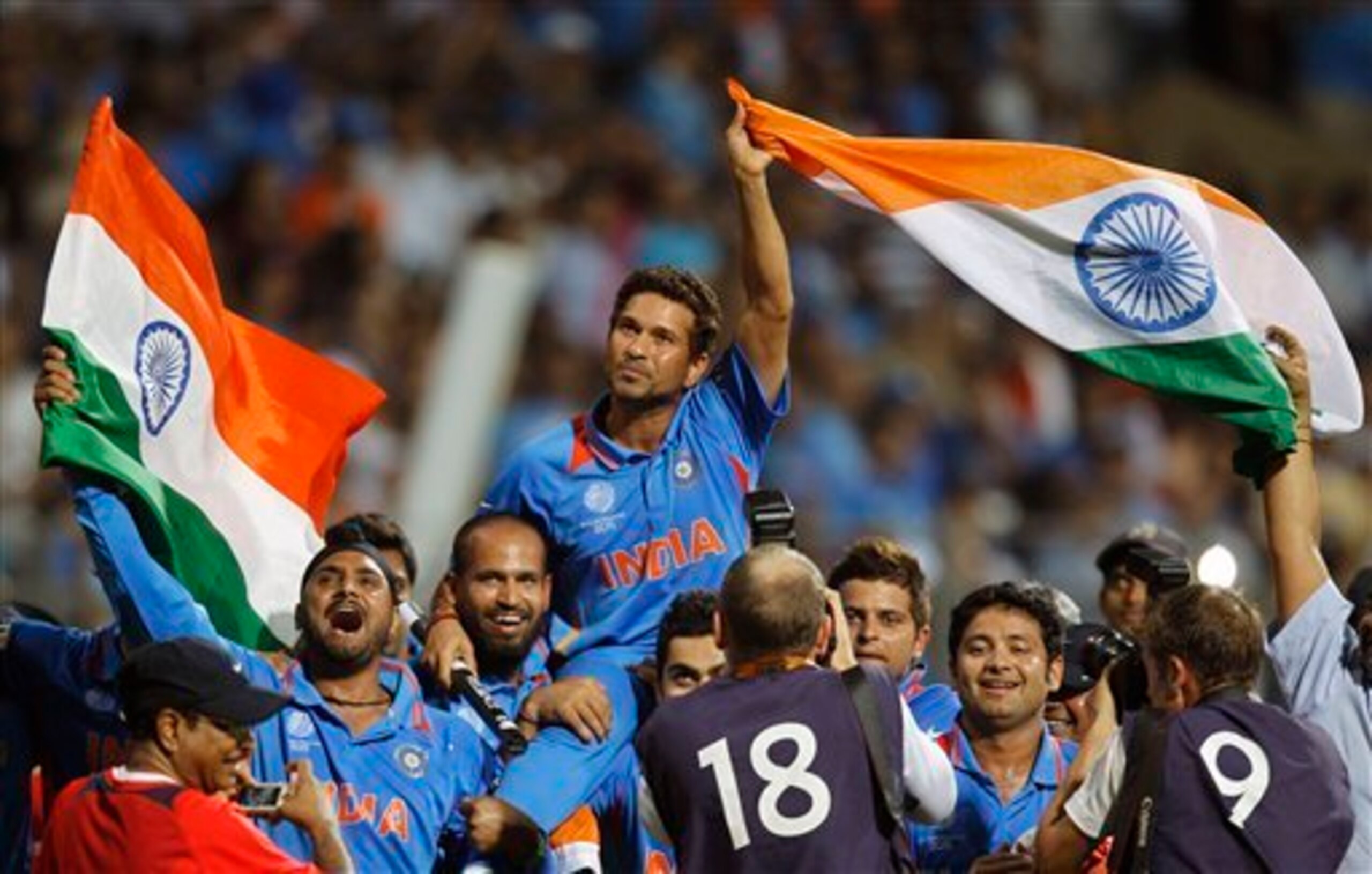
Bowing out as a champion on home turf was the fairytale finish to Sachin Tendulkar's World Cup career.
In his sixth and final tournament, the Little Master was finally able to get his hands on the trophy as India chased down Sri Lanka's total of 274-6 with 10 balls to spare.
Although he had contributed just 18 runs with the bat, Tendulkar was obviously the centre of attention in the celebrations.
The veteran batsman was carried around the Wankhede Stadium, his home ground in Mumbai, by his team-mates during the lap of honour.
Virat Kohli rather beautifully summed up what the moment meant to both the player and the country as a whole, via Cricket Country: “Tendulkar has carried the burden of the nation for 21 years. It is time we carried him on our shoulders.”
No player has managed more than Tendulkar's tally of 2,278 runs in World Cup action.

.jpg?w=2560)

7. Herschelle Gibbs Hits 6 Sixes in 2007
4 of 10A huge 221-run win for South Africa over the Netherlands in 2007 would not be so memorable were it not for the stunning batting feat produced by Herschelle Gibbs.
The right-hander became the first player to hit six sixes in an over of international cricket during the group game in Basseterre.
Daan van Bunge was the bowler on the receiving end of the record, the leg-spinner having no answer as Gibbs continuously launched him over the rope.
A short boundary at Warner Park might have helped, but the ruthless display of hitting brightened up a day when rain had forced a delayed start to proceedings.
Despite the match being cut to 40 overs each, South Africa still made 353-4. Jacques Kallis made an unbeaten hundred, though his efforts were overshadowed by those of Gibbs.
Gibbs contributed 72 from 40 balls and managed only one other maximum in his innings before being dismissed by Luuk van Troost.
6. Mike Gatting Regrets Playing the Reverse Sweep in 1987
5 of 10England have become accustomed to falling just short in the World Cup; they have reached three finals and lost them all.
The closest they came to getting their hands on the trophy was back in 1987, when they took on Australia in front of a packed house at Eden Gardens.
Having held their Ashes rivals to 253-5, England looked to be on course for victory when skipper Mike Gatting and Bill Athey were together at the crease.
The pair put on a 69-run stand for the third wicket to carry the score to 135-2 by the time Australia skipper Allan Border came on to bowl his left-arm off-spin.
Facing the first delivery from his opposite number, Gatting opted to go for an adventurous reverse sweep.
He made contact with the ball but only managed to deflect it into the air via his own shoulder, allowing Australia wicketkeeper Greg Dyer to take the catch.
The wicket proved costly; with Gatting gone for 41, England lost their way and ended up finishing seven runs short of their target.
5. South Africa Suffer in the Rain in 2003
6 of 10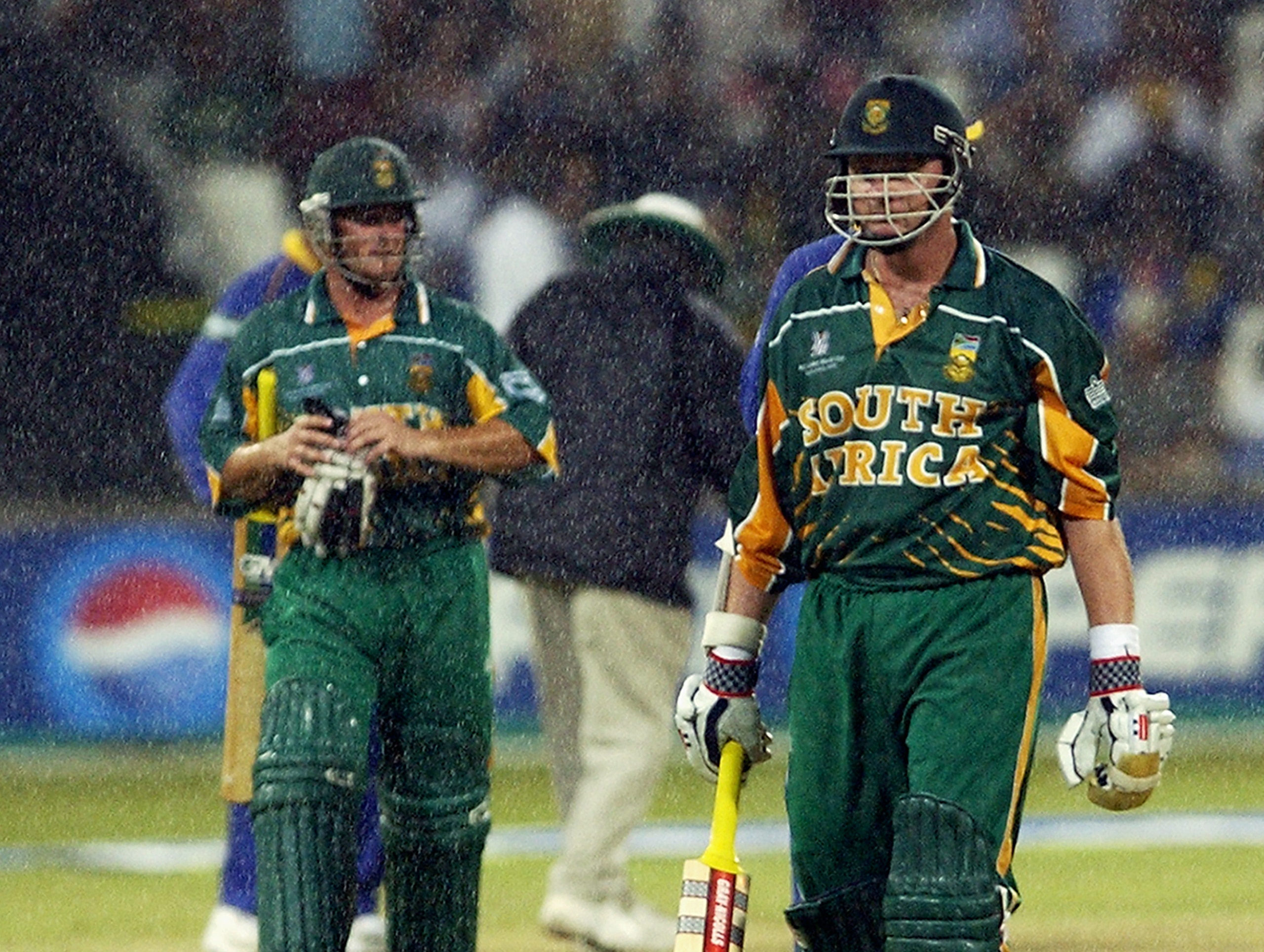
The weather has never been too kind to South Africa at World Cups.
In 1992, they were denied the opportunity to reach the final when the rules for bad weather worked against them.
They had been on course to beat England in Sydney, but delays in play resulted in them eventually being left needing an impossible 21 from one ball.
Move on to the 2003 tournament, the Duckworth-Lewis method had been put in place to make sure the side batting first did not gain an unfair advantage.
The Proteas were hosts and needed a win in their last group game, against Sri Lanka, to reach the Super Six.
The threat of rain was a distraction for them as they tried to reach a target of 269, though a six from Mark Boucher off Muttiah Muralitharan seemed to put them ahead of the requirement. But they had only 229 on the scoreboard—the par total according to the Duckworth-Lewis method (h/t Cricket Country).
Boucher, though, thought it was enough. He did not get a single run from the following delivery, the last of the over.
The umpires took the players from the field after that, leaving South Africa to sit and watch as their dreams of glory washed away.
4. Kevin O'Brien Helps Ireland Stun England in 2011
7 of 10When Kevin O'Brien started hitting big shots against England in Bangalore in 2011, it just seemed like it would reduce the margin of defeat for Ireland.
By the time he had finished hitting big shots, his country were on the brink of a famous victory over their rivals.
The all-rounder came to the crease with his team on 106-4 in reply to England's sizeable total of 327-8 in the Group B fixture.
What followed was a stunning display of power hitting. In the 63 deliveries he faced, O'Brien managed 113 runs.
He hammered six sixes and 13 fours in total, with England simply having no answer to his aggression.
O'Brien reached three figures from 50 balls with a scampered two out to deep square leg, making it the fastest century in the history of the tournament.
Although he was not quite able to see the job through, his efforts helped Ireland—no strangers to causing World Cup upsets—record a famous three-wicket victory.
3. Steve Waugh and Australia Somehow Survive in 1999
8 of 10
Herschelle Gibbs did not quite have the World Cup in his hands in 1999, but he did have the chance to knock out the eventual winners.
Australia knew they needed a victory over South Africa at Headingley to make it beyond the Super Six stage of the tournament.
The Proteas, already certain of a place in the last four, made 271-7 after opting to bat first, Gibbs leading the way with 101.
However, his fine innings was not his most notable contribution to the match.
Having suffered a poor start to their run chase, skipper Steve Waugh and Ricky Ponting battled hard before the former flicked a delivery from Lance Klusener in the air in the 31st over.
Gibbs barely had to move at mid-wicket, and though he initially took the ball cleanly, it slipped from his grasp as he attempted to throw it up in celebration.
Given an almighty reprieve, Waugh went on to make an unbeaten 120 and see his side to a three-wicket win. It also set up a repeat clash in the semi-finals (more on that later).
2. Henry Olonga and Andy Flower Make a Stand in 2003
9 of 10
The 2003 World Cup saw the focus too often turned away from the action taking place on the field.
The decision to play matches in Zimbabwe was not universally approved; England refused to travel there, forfeiting their game against the co-hosts for security reasons.
A pair of Zimbabwe players also took the opportunity to take a stand against the political situation in their home country.
Pace-bowler Henry Olonga and batsman Andy Flower wore black armbands for the group game against Namibia, revealing in a press release that it was to "mourn the death of democracy," per ESPN Cricinfo.
The move was particularly brave, and not just because it would mean the end of their international careers.
Olonga played just once more in the tournament before he left Zimbabwe after a warrant for his arrest was issued on charges of treason.
Flower, meanwhile, carried on playing, as his team-mates threatened to strike if he was dropped. He would continue his career after the World Cup by playing domestic cricket in Australia and England.
1. Australia Defy the Odds to Beat South Africa in 1999
10 of 10While arguments could be made over the rankings in this rundown, there can be little argument against the moment that tops the list.
Australia and South Africa tied in a dramatic semi-final at Edgbaston during the 1999 World Cup. Both teams were bowled out for 213, though simply stating the scores does not explain half the story.
Batting second, South Africa's chase had stalled due to the brilliance of Shane Warne, only for Lance Klusener to swing the game back in the Proteas' favour in the closing stages.
Needing nine from the final over with only last-man Allan Donald for company, Klusener belted the first two deliveries, sent by Damien Fleming, to the boundary.
However, left requiring a solitary run from the remainder of the over to book their place in the final at Lord's, South Africa failed to get over the line.
Donald was run out from the fourth ball of the over, he and Klusener ending up stuck at the same end of the pitch following confusion over a potential game-winning single.
The result meant Australia went through thanks to their victory over the same opponents in the Super Sixes (when Herschelle Gibbs dropped that catch).
They went on to demolish Pakistan in the final to lift the trophy.
.jpg?w=2560 "Falcons Saints Football")
.jpg?w=2560 "Rams Eagles Football")
.jpg?w=2560 "Injury-stricken Seahawks signing veteran RB")


.jpg?w=2560 "2 NFL Officials Suspended")
