

Ranking the Most Unstoppable Offenses in College Basketball
Defense has been the identity of two of the nation's top teams this season, Kentucky and Virginia. However, no team can expect to advance far in the NCAA tournament without the ability to score points in a variety of ways.
Some teams feature attacks that seem almost unstoppable, which will make them a problem for any postseason opponent.
Besides the requisite scoring talent, the most consistently productive offenses typically have three elements: versatility to deal with various tempos and defenses, scoring balance to offset a poor game by any single player and at least one player who can create offense on his own when things bog down.
On that basis we rank this season's 12 most unstoppable offenses in college basketball.
12. Arkansas
1 of 12
Arkansas' offensive production is somewhat spotty. The Razorbacks depend on their pressure defense to force turnovers and speed up the game. When that doesn't happen, their offense suffers, which is why they have been held under 62 points in three of their past six games.
However, Arkansas' explosive potential coupled with the presence of Bobby Portis make the Razorbacks offense dangerous enough to include on this list.
The 101-87 victory over Auburn on Tuesday provided the most persuasive evidence. Shooting 25 free throws (making 20) helped the Razorbacks reach triple figures in that game, but they also shot 53.8 percent from the floor and hit 11 of 23 three-point shots.
Portis is one of two Arkansas players capable of getting 20 points in a given game, the other being Michael Qualls, who scored 30 in the 93-91 overtime win over Alabama.
However, Portis has been the key figure on offense lately. The 6'11" sophomore is averaging 17.9 points, tops in the Southeastern Conference, on 56.4 percent shooting while playing less than 30 minutes a game. In Arkansas' 11 conference games, Portis is averaging 19.3 points.
The Razorbacks lead the SEC and are ninth nationally in scoring at 80.25 points per game. In a conference that features outstanding defensive teams, such as Kentucky and Florida, that means something.
11. Ohio State
2 of 12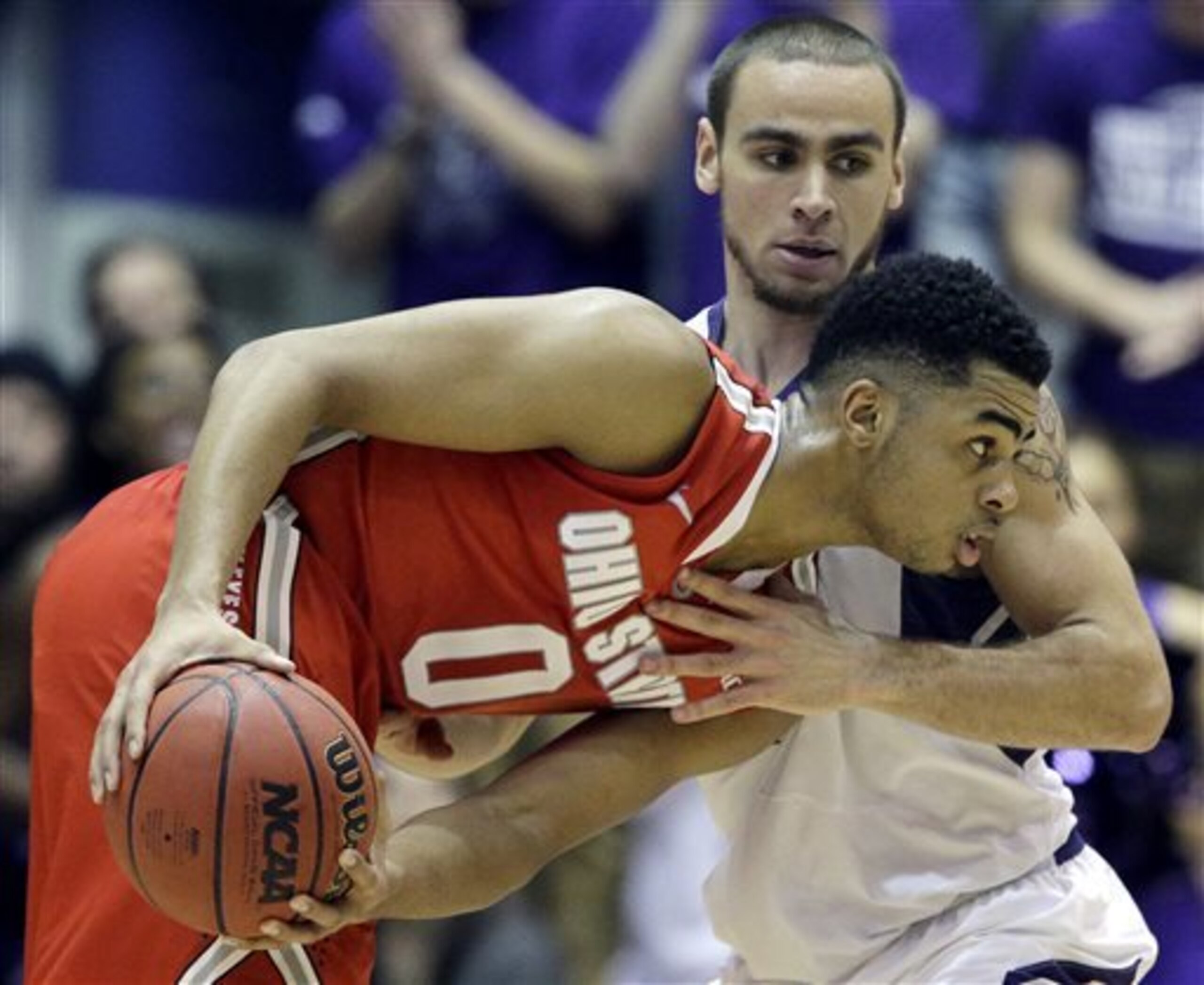
The recent production of freshman D'Angelo Russell lifted Ohio State onto this list. His presence gives the Buckeyes an explosive scorer who can create scoring opportunities for himself and others when the offense is stymied.
Russell is averaging 19.4 points for the season, but over the past 11 games he's averaging 22.1 points on 49.1 percent shooting, including 44.1 percent on three-pointers.
The suspension of forward Marc Loving, the team's second-leading scorer at 11.7 points game, has sidelined the sophomore the past three games and has hurts the Buckeyes offense. But Loving is expected to return to action soon, perhaps for Saturday's game against Michigan State, according to a report from Cleveland.com (h/t CBSSports.com's Michael Hurcomb).
Forward Sam Thompson, the third Buckeyes player averaging double figures in scoring, had a season-high 22 points in Ohio State's 20-point win over Penn State on Wednesday, suggesting he is ready to make bigger contributions down the stretch.
The Buckeyes have the athletes and the discipline to play a transition game or a half-court game, and they seem to be getting more productive as the season goes along. They are currently 15th in the nation in scoring at 79.0 points per game, and their 50.1 percent shooting from the field makes them one of just four Division I teams making better than 50 percent of their shots.
Although they are 11th on our list of unstoppable offenses at the moment, the Buckeyes have the elements to move up by the time the NCAA tournament rolls around.
10. Kentucky
3 of 12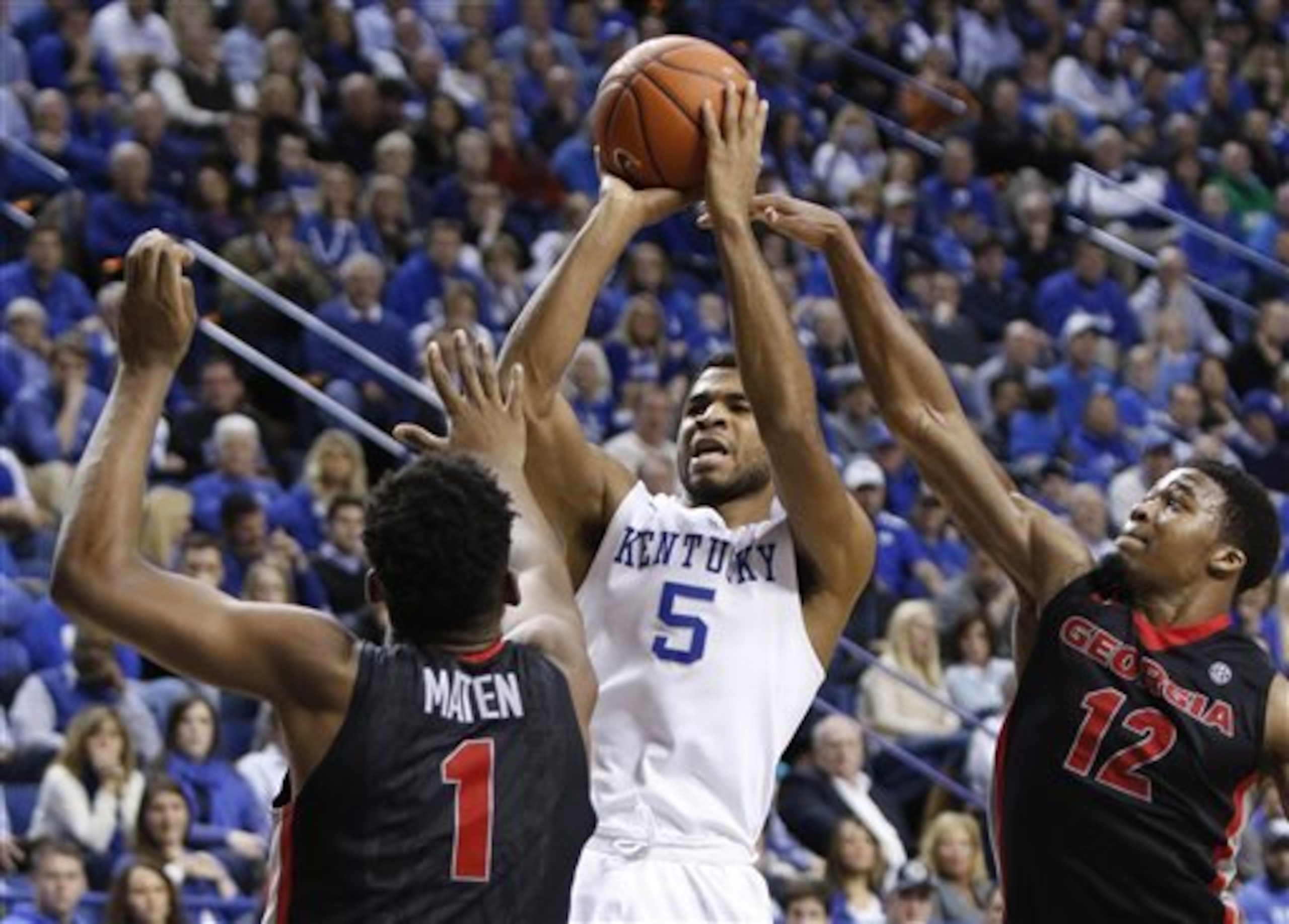
There is no question that Kentucky's strength is its defense. The Wildcats are first in the nation in field-goal percentage defense and rank only 51st in scoring, with no player averaging better than 11.5 points a game.
However, no team from a major conference can be undefeated at this stage of the season without some offensive firepower. And just look at the offensive weapons John Calipari has at his disposal. Kentucky has eight high school McDonald's All-Americans on its active roster, and that kind of recognition does not come by being a lockdown defender.
With up to four Kentucky players expected to be taken in the first round of the upcoming NBA draft, according to DraftExpress, and three others likely to be taken in the second round, the Wildcats simply have too much talent not to be a formidable offensive force.
Eight different Kentucky players have led the team in scoring at least once this season, and five have scored at least 19 points in a game. Shutting down one or two particular Wildcats players is not going to be enough to slow Kentucky's attack.
With their athleticism, the Wildcats can score in transition. With their four talented big men—7-footer Willie Cauley-Stein, 6'11" Karl-Anthony Towns, 7-footer Dakari Johnson and 6'10" Trey Lyles—the Wildcats can pound opponents in the half-court game. Their ability to collect offensive rebounds for easy putbacks adds to their offensive strength.
Their only presumed weakness is outside shooting, but Devin Booker is hitting 47.1 percent of his shots from beyond the arc, and Aaron Harrison has developed a reputation for hitting clutch three-pointers.
Even with Alex Poythress out for the season, Kentucky has more than enough weapons to be a frightening offensive team when it needs or wants to be.

.jpg?w=2560)

9. Villanova
4 of 12
Villanova's offensive strength is based on two factors: balance and experience.
No Villanova player averages more than 13.0 points, but six average better than nine points. And these are veteran players who have seen virtually every defensive game plan and have experience with every tempo.
Seven different players have led the team in scoring at least once this season, and all seven received significant playing time last season. Darrun Hilliard and JayVaughn Pinkston are in their fourth years as starters, and Ryan Arcidiacono and Daniel Ochefu both started a significant number of games the previous two seasons.
Six Villanova players have scored at least 18 points in a game this season, and four have scored at least 21. However, none has scored more than 25, suggesting the Wildcats can be productive even if one or two players has an off night.
The Wildcats don't have much size in their guard-oriented attack, but they have a lot of speed and quickness, the most difficult elements to defend. Their top four backcourt players, Hilliard (6'6"), Arcidiacono (6'3"), Dylan Ennis (6'2") and Josh Hart (6'5"), are all capable three-point shooters, which makes guarding them that much more difficult.
Defense is Villanova's calling card, but developing a defensive game plan to stop the Wildcats' attack is a major challenge.
8. Iona
5 of 12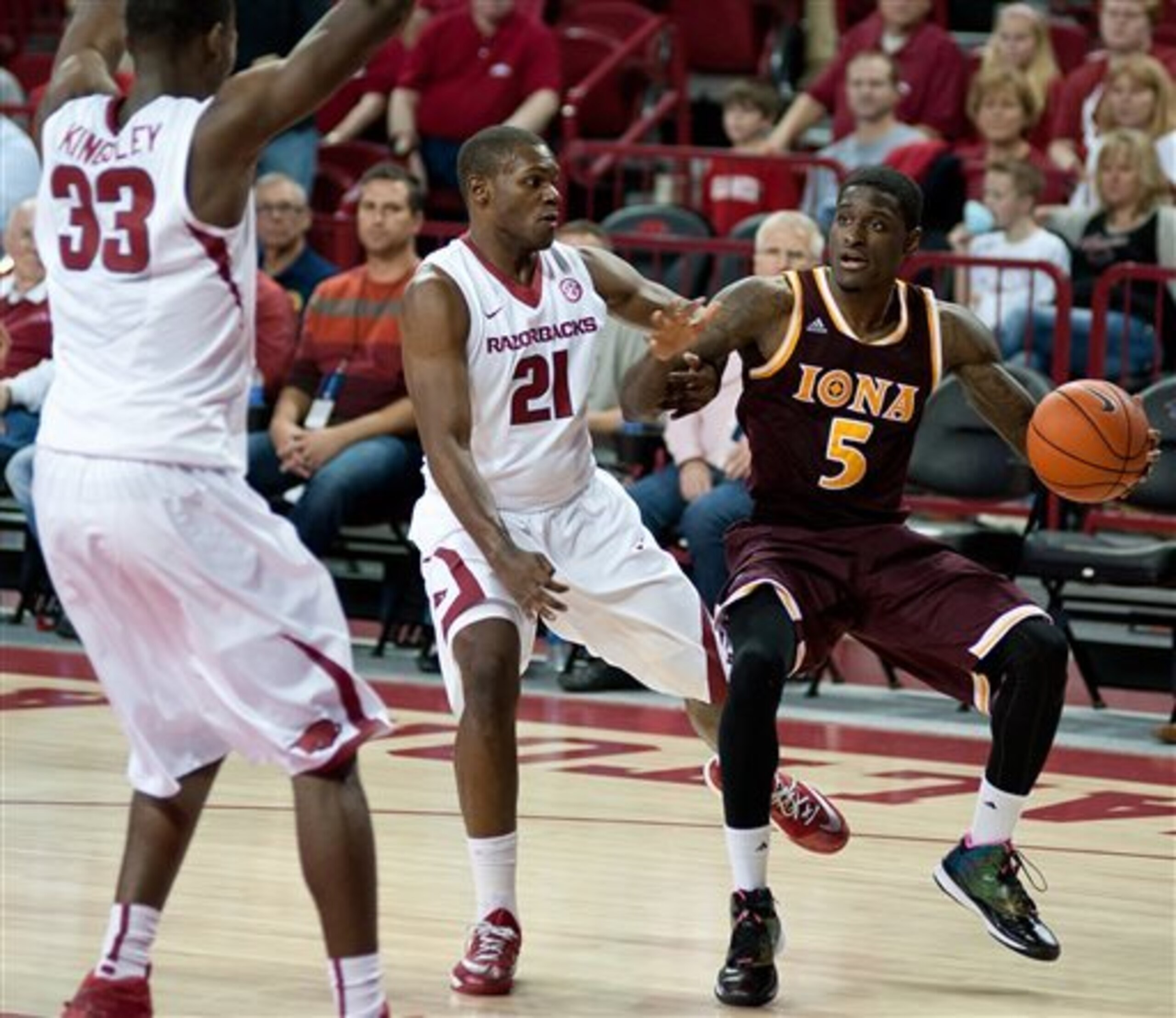
Iona is third in the nation in scoring at 82.8 points a game, has scored more than 80 points 18 times this season and has been held under 73 points just once.
The fact that Iona plays in the Metro Atlantic Athletic Conference diminishes its offensive accomplishments slightly, but no opponent has been able to significantly slow down the Gaels' fast-paced attack.
Coach Tim Cluess' off-to-the-races offense is as entertaining as it is productive, and three things make it particularly effective.
First, the Gaels are excellent shooters and are not shy about launching, ranking fourth in the nation in both three-point shooting percentage (41.6) and three-pointers made per game (10.5).
Second, they share the ball, ranking fourth nationally in assists, with six players averaging at least two assists each.
Third and perhaps most importantly, the Gaels have two players capable of putting up 30 points on a given night. David Laury averages 21.2 points, and A.J. English averages 20.1—and both can score inside or outside. English has scored 30 points or more three times this season, and Laury has done it twice.
Oh, by the way, the Iona season high for points in a game is 40, accomplished by freshman guard Schadrac Casimir, who also poured in 33 points in Sunday's victory over Marist.
Even with Isaiah Williams and his 14 points a game sidelined by a foot injury the past three weeks, the Gaels continue to put up big offensive numbers.
7. BYU
6 of 12
BYU leads the nation in scoring, averaging 84.9 points. The Cougars have scored 90 points or more 10 times this season, and they have been held under 74 points only twice.
Granted, it's easier to put up big numbers in the West Coast Conference than it is in, say, the Big Ten. However, BYU put up 80 points against Gonzaga, a strong defensive team that has held opponents to 38.3 percent shooting this season.
The Cougars' style certainly helps, as coach David Rose encourages up-and-down play and quick shots.
"They are a terrific transition team," Gonzaga coach Mark Few said after playing the Cougars, according to Brandon Gurney of the Deseret News. "They’re as good (in transition) as probably anyone in the country. They are as good as anyone in the country and it cost us. It burned us."
BYU has the personnel to make it work. Besides having a prolific scorer like 6'5" guard Tyler Haws, who ranks second in the country in scoring at 22.5 points a game, the Cougars have a surrounding cast that can score. Three other BYU players average 13.0 points or more, so even if Haws struggles, the Cougars can produce points.
Haws rarely has an off night, though, having scored at least 20 points in each of the last 10 games. But when he was limited to 14 points against Santa Clara, the Cougars still put up 81 points.
BYU's offense is aided by having one of the nation's most versatile players in Kyle Collinsworth. He set a single-season NCAA record on February 7 when he recorded his fifth triple-double of the year in an 87-68 victory over Loyola Marymount.
Finally, BYU augments its production by getting to the foul line and converting once it gets there. The Cougars average 19.9 made free throws per game, tops in the nation.
6. North Carolina
7 of 12
Some have suggested, only partly in jest, that North Carolina's best offense is a missed shot.
North Carolina gets offensive rebounds on 40.7 percent of its missed shots, which is third best in the country. And the field-goal percentage on follow shots off offensive rebounds is extremely high.
Big men Kennedy Meeks and Brice Johnson, both 6'9", do much of the work on the offensive glass, but wing players Isaiah Hicks and J.P. Tokoto are particularly effective on the offensive boards.
Tokoto gives the Tar Heels an outstanding weapon in the transition game coach Roy Williams teaches, and Hicks' 21-point effort against Boston College last weekend indicates he is ready to be the offensive force he was expected to be when he arrived in Chapel Hill last season.
The key to the North Carolina offense, though, is 6'1" guard Marcus Paige. He was the top vote-getter in the Associated Press' preseason All-American team and was the preseason Atlantic Coast Conference Player of the Year. As the only reliable perimeter threat on the team, Paige needed to duplicate or surpass last season's performance, when he averaged 17.5 points and hit 38.9 percent of his three-point shots.
Paige started poorly this season, and the Tar Heels offense suffered. However, he seems to be coming out of his offensive funk. Over his past eight games he's averaging 15.9 points on 45.8 percent shooting on three-pointers.
If Paige can consistently provide the outside threat to complement the athleticism of the wings and the inside scoring of the big men, North Carolina can improve on its already impressive scoring average of 78.8 points per game.
When Paige hit four of seven three-point shots while scoring 22 points against Syracuse, the Tar Heels put up 92 points against the Orange's zone defense, which usually throttles opposing offenses.
5. Wisconsin
8 of 12
Wisconsin is not known as a high-flying, fast-breaking offensive machine. The Badgers rank only 49th nationally in scoring, and they failed to score more than 65 points in their past two games. They don't get a lot transition baskets off steals that lead to easy baskets and quick points.
However, Wisconsin's offensive efficiency and versatility make the Badgers one of the toughest teams to defend.
Bo Ryan has been running the swing offense for years, and he has the ideal personnel for it this season.
He has an athletic small forward in Sam Dekker who can break down defenders on his own. He has a versatile power forward in Nigel Hayes, who can score in a variety of ways out to 15 feet. He has excellent shooters in Josh Gasser and Bronson Koenig. And if and when Traevon Jackson returns from his broken foot, he has a bold, strong point guard who can penetrate off the dribble and hit the big shot.
But the most important player is center Frank Kaminsky, who is probably be the most valuable half-court player in the country.
Kaminsky is nearly unstoppable against single coverage when he gets ball down low with his back to basket, and he can find open shooters if he gets double-teamed. He's even more dangerous when he gets the ball facing the basket on the perimeter. He is an agile 7-footer who makes 40 percent of his three-pointers—which drag a big defender 20 feet from the basket, where that defender may be uncomfortable.
Kaminsky can also put the ball on the floor and drive past defenders who try to take away his outside shot.
The Wisconsin offense is all wrapped up in a disciplined, error-free package. The Badgers seldom make mistakes that cost them possessions. They commit the fewest turnovers in the country, averaging just 7.5 per game.
Wisconsin is not an explosive offense that is likely put up 10 points in two minutes. But preventing the Badgers from scoring is a major challenge. Indiana found that out in a 92-78 loss to Wisconsin, which made 60.6 percent of its shots that night. Iowa also discovered it in an 82-50 loss to the Badgers, who committed just one turnover in that game.
4. Notre Dame
9 of 12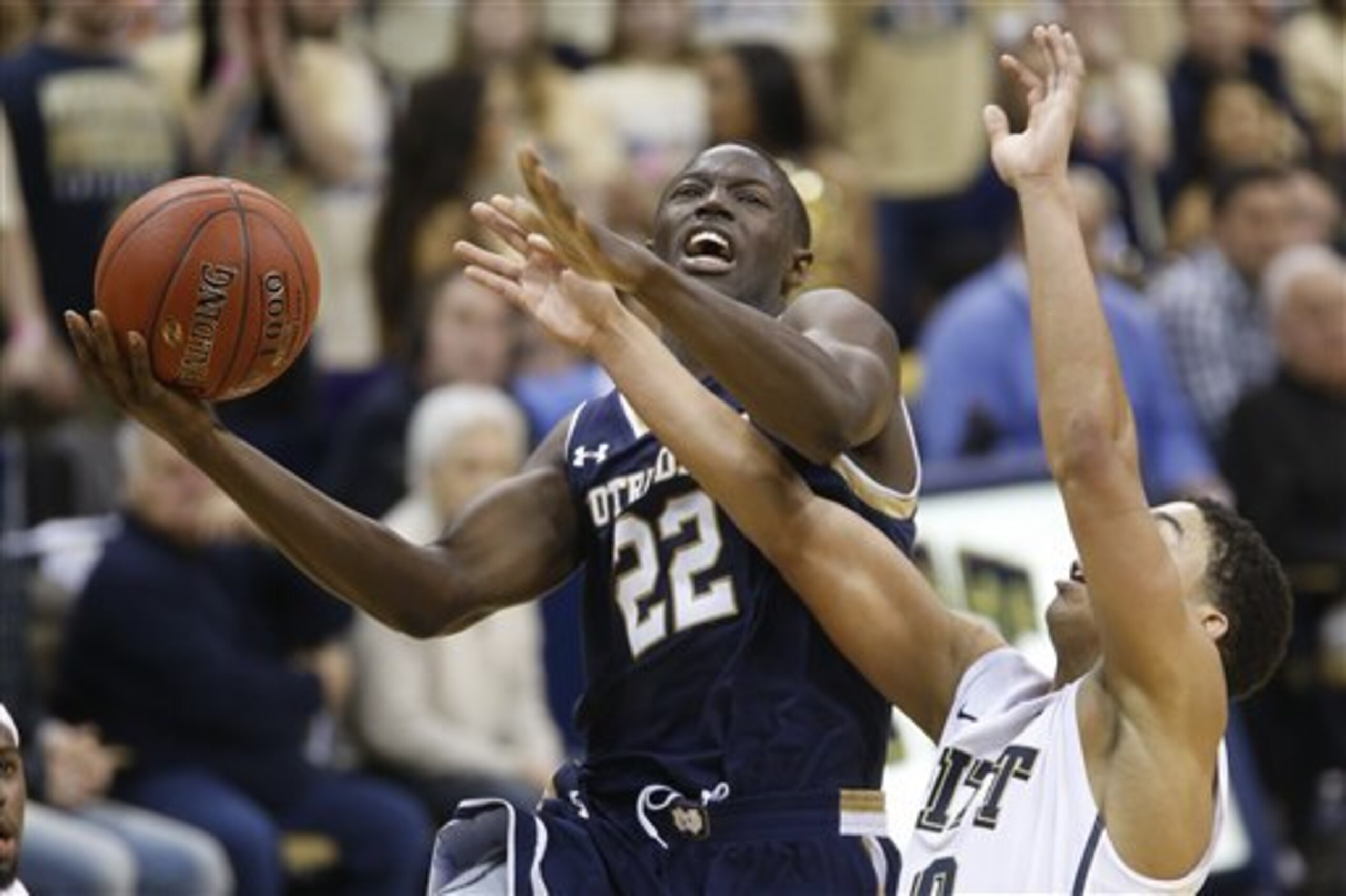
Notre Dame has struggled offensively recently, scoring just 60 points in each of its last two games. But the Irish have proved their offensive capabilities over the course of the season and should break out of their mini-slump soon.
They rank second in the nation in field-goal percentage at 51.2 percent and 18th in three-point percentage at 40 percent, despite taking a lot from long range. Just as significant is the fact that the Irish average just 9.2 turnovers a game, fourth best in the country.
That translates into an efficient offense that averages 79.2 points a game, which is more impressive considering Notre Dame plays in the Atlantic Coast Conference.
Notre Dame has four players averaging better than 12 points a game, and three of them are outstanding three-point shooters.
Pat Connaughton and Demetrius Jackson are both excellent, high-percentage shooters, and 6'10" Zach Auguste provides an inside threat while making 60.8 percent of his shots. Auguste's lack of production in the Irish's past two games contributed to Notre Dame's offensive struggles.
The key, though, is Jerian Grant. Not only does he coordinate the offense from his point guard spot, but he can score at critical moments or when the offense breaks down. He can create his own shot in a variety of ways, making him particularly difficult to defend. He can spot up and hit a three-pointer, or he can penetrate off the dribble and finish with a dunk.
An opposing defense can do everything correctly and then see its good work ruined by an individual effort from Grant.
3. Iowa State
10 of 12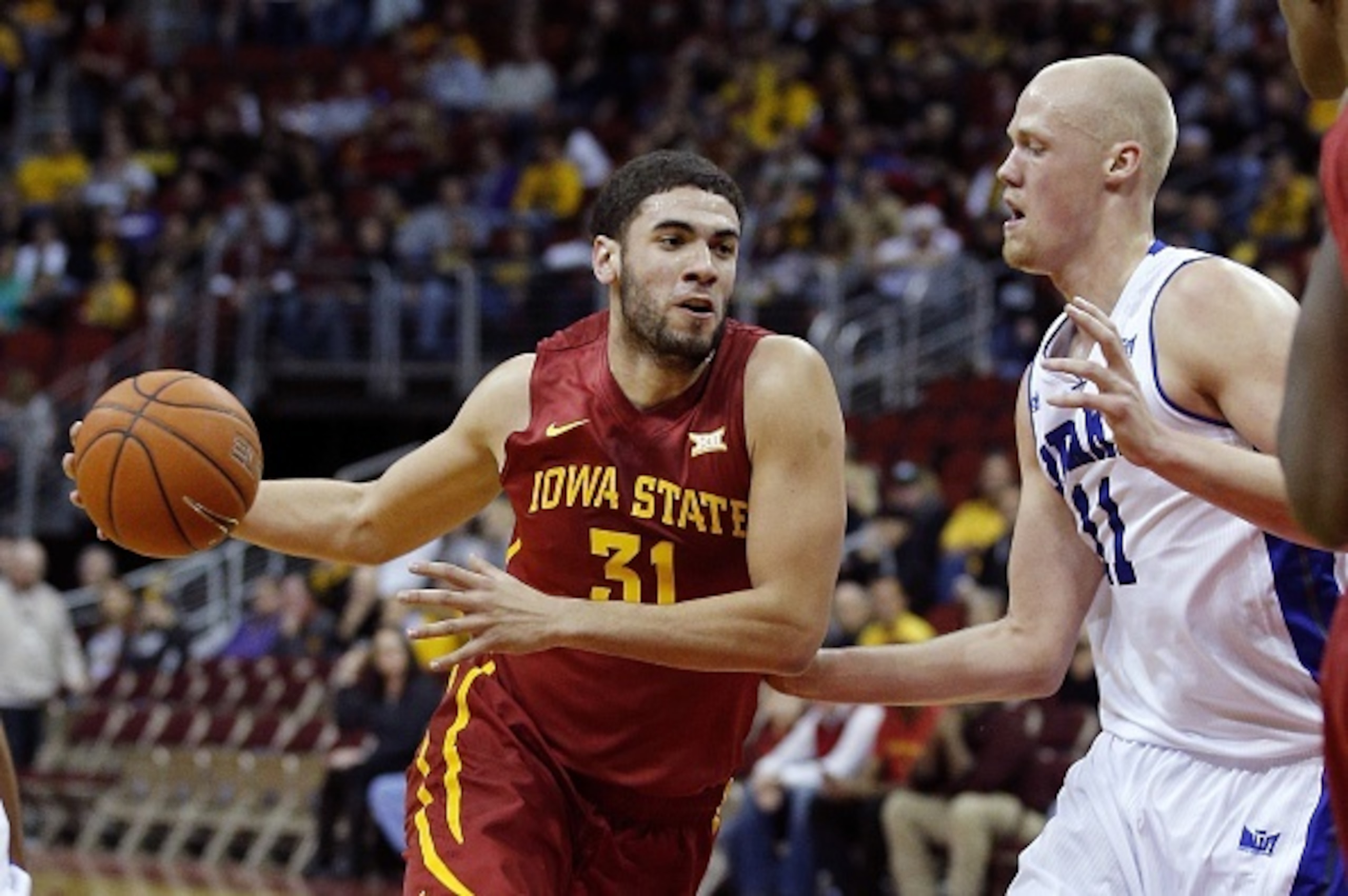
Iowa State just has too many offensive weapons to defend.
The Cyclones are the only Division I team that has six players averaging double figures in scoring, and an already potent offense got stronger when transfer Jameel McKay became eligible in December.
Eight different players have led Iowa State in scoring at least once this season, and the Cyclones are blessed with two versatile big-time scorers in Georges Niang, who had 30 points in the season opener, and Bryce Dejean-Jones, a transfer from UNLV who scored 27 against Arkansas this season. Seven players have scored at least 17 points in a game, and four have scored 20 or more.
Every player except McKay is encouraged to shoot three-pointers, and Fred Hoiberg's fast-paced, equal-opportunity offense works because every player is willing to share the ball. The Cyclones rank second in the nation in assists at 17.5 a game.
A major emphasis of the Hoiberg offense is to avoid two-point jump shots. He wants either three-pointers or baskets at the rim. Anything else works against maximum point production.
“I feel like, to an extent, it’s outsmarting our opponent if they’re going to shoot long twos," Niang told The Topeka Capital-Journal's Jesse Newell. "If we play in a game and you’re going to shoot long twos instead of threes, it just mathematically doesn’t make sense, and there’s proven facts behind that.”
It adds up to a team that ranks 11th in nation in scoring at 80.0 points per game and 11th in field-goal percentage at 48.8 percent.
2. Gonzaga
11 of 12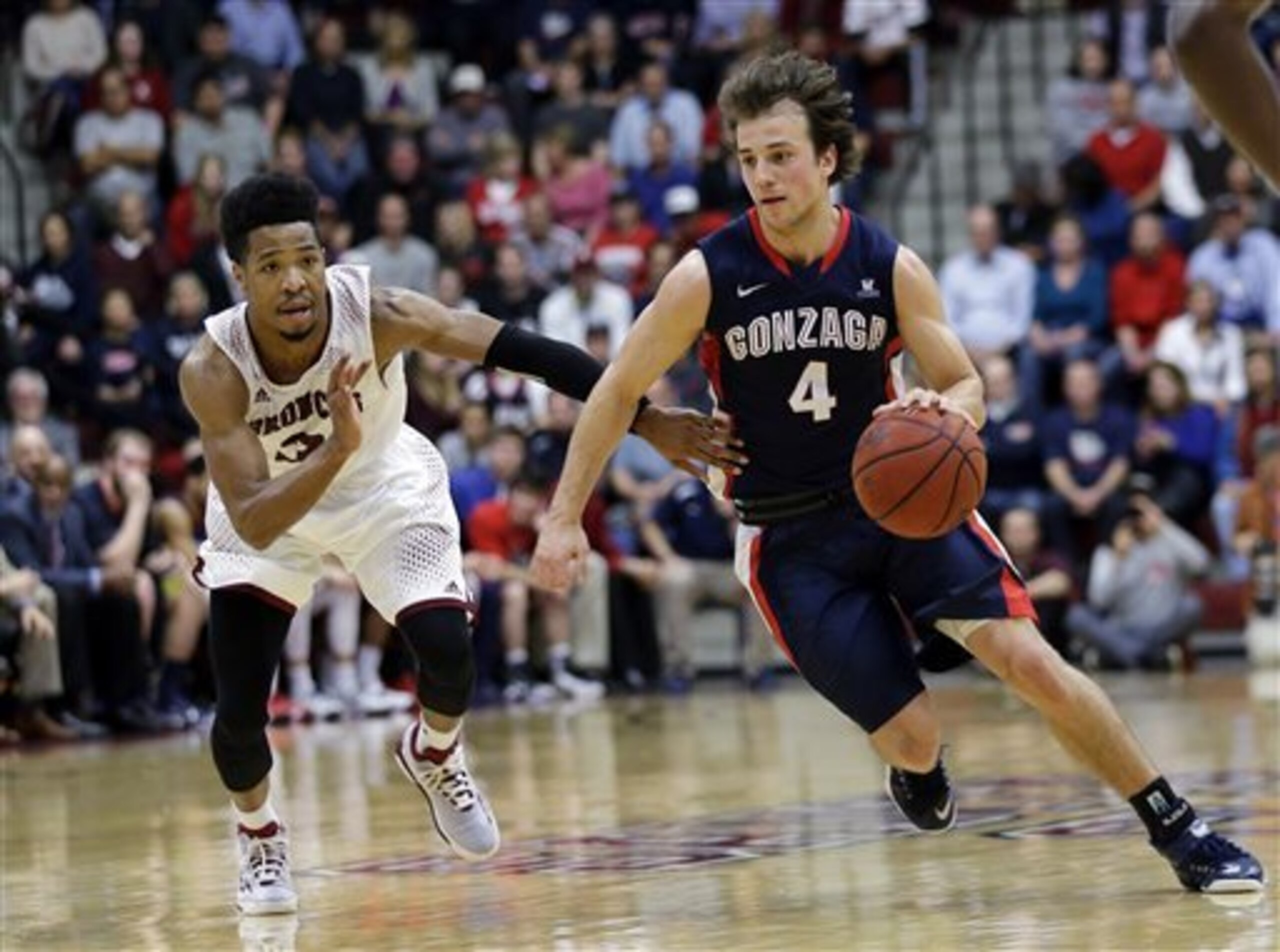
Gonzaga has had some good offensive teams in the past, but this looks like Mark Few's best offensive squad because of its versatility and scoring potential at every position.
"It's definitely different from what we've had in the past," Few said. "We can score at all five positions."
The Bulldogs are seventh in the nation in scoring at 80.7 points a game, but, more significantly, they lead the nation in field-goal percentage at 53.2 percent. Four of Gonzaga's top five scorers are shooting 50 percent or better, and none of the five is shooting worse than 48.9 percent.
Gonzaga has shot 50 percent or better from the field in 11 of its past 12 games, a rather remarkable accomplishment, considering only five Division I teams are shooting 50 percent or better for the season.
And they aren't just shooting layups. Gonzaga ranks 12th in the country in three-point field-goal percentage at 40.7 percent, with its top two scorers, Kyle Wiltjer and Kevin Pangos, both shooting better than 44 percent from long range.
But it is the offensive balance that makes this team special. Neither Pangos nor Wiltjer attempted a single shot in the first 15 minutes of the February 5 game at Santa Clara, and Pangos only attempted one shot for the entire game. However, Gonzaga shot 69 percent from the field in that 14-point victory, including 5-of-6 shooting on three-pointers.
Since transferring from Kentucky, Wiltjer has shown a complete game, able to maneuver on the low block as well as hit from long distance. Byron Wesley, a transfer from USC, gives the Bulldogs a penetrator and creator they have not had in recent years.
Veterans Pangos and Gary Bell Jr. provide consistency and outside shooting in the backcourt, and 7'1" Przemek Karnowski and 6'9" Domantas Sabonis average around 10 points apiece while shooting better than 61 percent from the field.
Playing in the West Coast Conference makes things a bit easier for the Bulldogs, but their numbers cannot be dismissed.
When a player as talented as Bell is only the team's sixth-highest scorer, you know it has some offensive firepower.
1. Duke
12 of 12
You can put a checkmark beside Duke's name for virtually every factor that leads to a consistently productive offense.
Low post scoring? Check. It's debatable whether Jahlil Okafor is the best player in the country, but there is little question that the 6'11" freshman is the best low-post player in the country.
A low-post presence may be the No. 1 ingredient in consistent offensive production, and the Blue Devils are unmatched in that category with Okafor, who is likely to be the No. 1 overall pick in this year's NBA draft, according to DraftExpress.
Leadership at the point? Check. The Blue Devils have two of the best point guards in the country, and they are both in Duke's starting backcourt.
Quinn Cook gave up his role as the point guard this year, so freshman Tyus Jones could slip into that spot. You could make a pretty good case that Jones is the best point guard in the country, and he seems to be getting better. He has averaged 16.0 points over the past seven games, hitting 50 percent of his three-point shots in that stretch.
A slasher who can create his own shot? Check. Freshman Justise Winslow may turn out to be the best pro player among the current Duke players. He is likely to be a lottery pick, according to DraftExpress and NBADraft.net, and his athleticism, skills and ability to penetrate foil nearly any defensive scheme.
Cook gives the Blue Devils an experienced leader and consistent scorer, while Matt Jones provides another outside threat.
The one shortcoming is a lack of depth, and that became a bigger issue when the team dismissed Rasheed Sulaimon. But the Blue Devils have done pretty well without that bench support, averaging 80.3 points and ranking sixth in the nation in field-goal percentage at 49.8 percent.
The proof of Duke's offensive power came against Virginia, when the Blue Devils scored 22 points in the game's final 5:08, slicing up a stubborn, disciplined Virginia defense that leads the nation in scoring defense.
.jpg?w=2560 "Rams Eagles Football")
.jpg?w=2560 "Falcons Saints Football")

.jpg?w=2560 "Injury-stricken Seahawks signing veteran RB")

.jpg?w=2560 "2 NFL Officials Suspended")
