

Marussia Deserved to Be Treated with More Respect by Formula 1 Strategy Group
So after months of uncertainty and plenty of defiance, the fight for a return to Formula One finally seems to be over for Marussia.
The popular backmarkers, despite entering administration soon after making their last grand prix appearance in Russia last October, had always retained hope of rejoining the grid in 2015, even when there appeared to be no hope at all.
Even after the team's administrators confirmed that Marussia would be wound up on the eve of last season's Brazilian Grand Prix, president and sporting director Graeme Lowdon told Sky Sports' Mike Wise of his refusal to accept there was "no way back."


.jpg?w=2560)
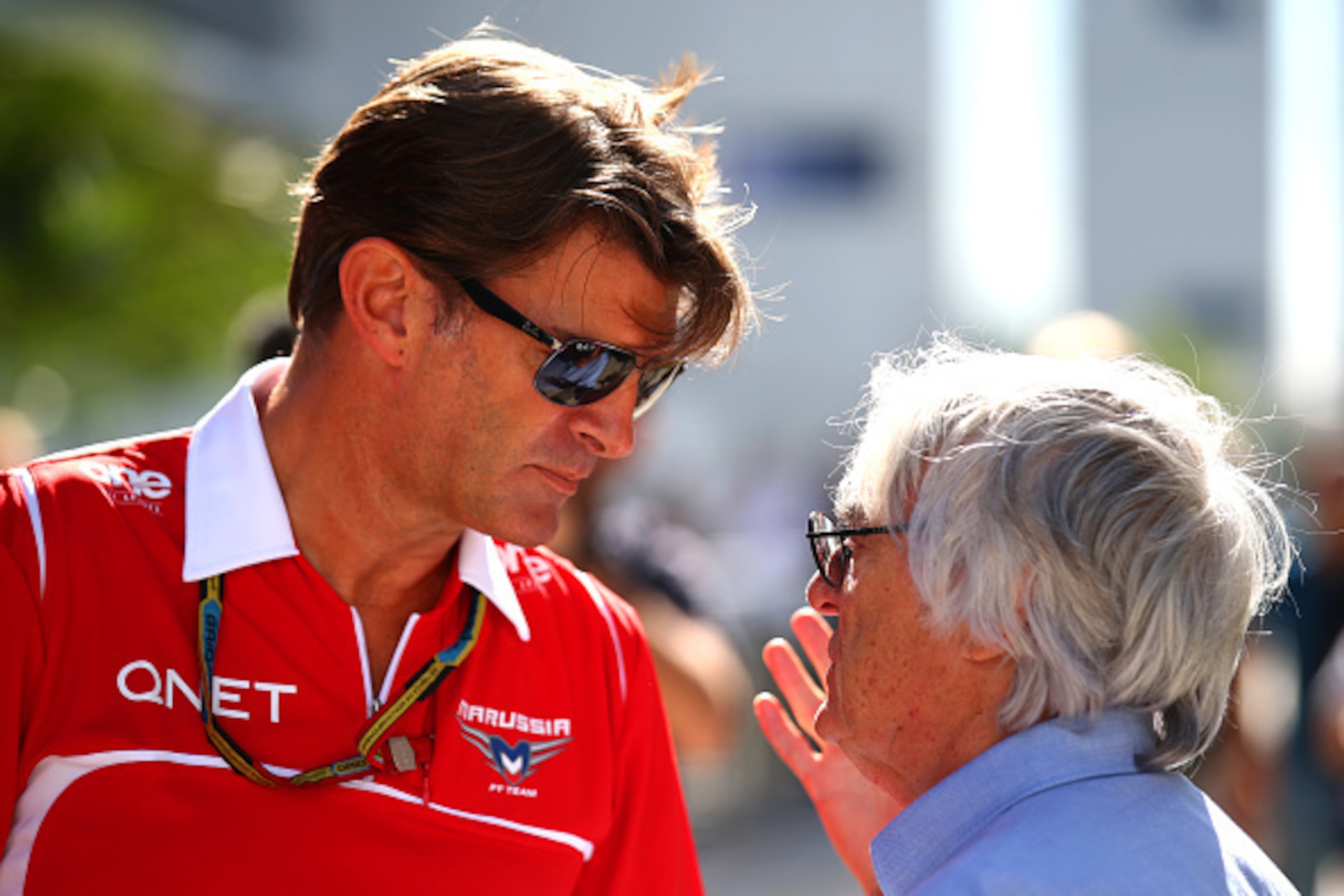
Even when the team had been stripped to its bare bones, those remaining—as reported by Reuters' Alan Baldwin—were ready to jump on a plane and participate in the season-ending Abu Dhabi Grand Prix, only for a breakdown in investment negotiations to stop them in their tracks.
Even when Gene Haas' purchase of the team's Banbury factory, as per Autosport's Jonathan Noble, left Marussia without a home after an ominously quiet winter, there remained hope.
That hope had threatened to become expectation in January when an auction of the team's remaining assets, as reported by Sky Sports' William Esler and Pete Gill, was cancelled.
The good news was followed up on Wednesday as Sky News' Mark Kleinman revealed that Justin King, formerly the chief executive of the Sainsbury's supermarket firm, was behind a "multimillion pound rescue bid" for the team, who were set to race under the name of Manor Grand Prix.
Yet the flickers of optimism were, to all intents and purposes, permanently extinguished just 24 hours after the news of King's interest came to light when Marussia were handed a death sentence.
Not, you understand, by the FIA, the sport's governing body, nor the team's administrators—but by Marussia's fellow competitors, dressed up in the ghastly guise that is the F1 Strategy Group.
Marussia's return in 2015 depended, among other things, on being given permission to race with their 2014 car, the MR03, in the new season, which required a unanimous vote across the Strategy Group, made up of Mercedes, Red Bull, Ferrari, McLaren, Williams and, for this year, Force India.
Although Bernie Ecclestone, the F1 supremo, later told The Independent's Christian Sylt that "three or four" teams were prepared to reject Marussia's plans, it was Force India who were the first to shake their heads at the proposal, bringing an instant end to the voting process.
Bob Fernley, Force India's deputy team boss, attempted to justify the decision by telling Sky Sports that Marussia's plans "lacked substance," but the damage had been done.
Less than three weeks after we wrote that F1's rulebook, and its interpretation of its own rules, left a lot to be desired, the sport has scored yet another own goal as far as off-track matters are concerned.
In letting the teams themselves rule on affairs as crucial as the inclusion of competitors in the world championship, the FIA have once again failed to exert their authority, leaving the authorities asking for trouble as existing outfits put their own interests before those of the sport.

With the absence of Marussia set to see the outfit's estimated 2014 prize money of £34 million shared between the existing teams, according to The Independent's Sylt, it was inevitable that some teams—especially those with financial concerns of their own—would be against the backmarkers' return.
And with Fernley recently forced to reassure Autosport's Dieter Rencken and Jonathan Noble that Force India will make the season-opening Australian Grand Prix after being forced to delay the unveiling of their 2015 car, it is no surprise that the Silverstone-based team were just one of a number of outfits eager to take advantage of Marussia's downfall.

Despite Marussia's clear enthusiasm to continue in F1, quite how the team were going to do so, and remain on the grid for several years, remains a mystery.
Since the team were initially sidelined last November, many members of staff have found alternative employment, with the most high-profile departure being chief engineer Dave Greenwood, who has become Kimi Raikkonen's race engineer at Ferrari.
With further losses to what was already a thin team in terms of employees, Marussia would most likely have been forced to operate with skeleton staff at least for a while upon their return.
And what of the car itself?
Even a modified MR03 risked being totally out of place on a 2015 grid after almost every other team made improvements in downforce over the winter, meaning the Marussia drivers—whoever they might have been—would have been reduced to roadblocks, getting in the way of the front-runners and lapping several seconds off the pace.
There is a convincing argument that allowing an outfit to race just for the sake of racing, as Marussia seemingly planned to do for at least 2015, would have been more detrimental to F1 than the decision to veto their return, especially when the sport is in constant search for a more competitive, high-quality field.
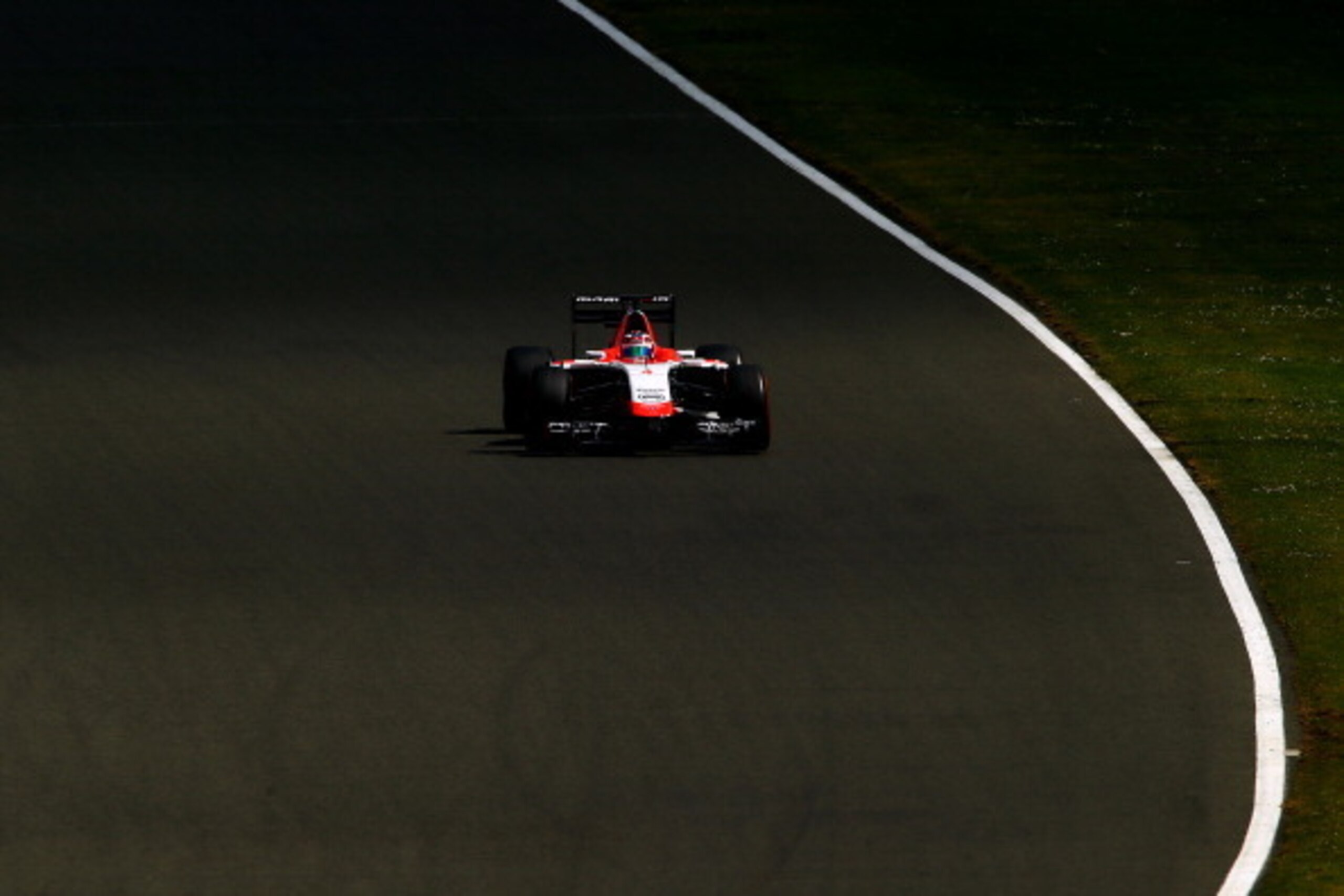
Yet despite there being no shortage of financial and sporting reasons to prevent Marussia's return, there is a great sense of unease as the remaining teams prepare to tuck into the cash left behind.
The reason why Marussia were due a huge payout, after all, was due to their ninth-place finish in the constructors' standings, which was only achieved thanks to Jules Bianchi's heroics in the Monaco Grand Prix.
On that May afternoon, Bianchi drove like a man possessed.
After starting second-last on the grid, the Frenchman pushed to the absolute limits of himself, his car and, indeed, legality, racing with a simple message: He was not leaving Monaco that day until he got some points.
Just as his team would do in their difficulties following his life-threatening accident in the Japanese Grand Prix, Bianchi—despite being handed two separate penalties over the course of the race—never gave up fighting. He never gave up trying.
He never gave up hope.
And he was duly rewarded with P9, his first points in Formula One and Marussia's first points at the 83rd time of asking.
Right up until his horrific collision with a recovery vehicle at Suzuka last October, Bianchi would have been under the impression that those funds were enough for Marussia to consolidate their future and make the next step up the F1 ladder.

As he continues to fight for his life in hospital in his hometown of Nice, France, the idea that the money which Bianchi drove with all his heart to earn for the team, his team, in Monaco is soon to be snatched by the vultures is as unthinkable as it is unforgivable.
Jules, and Marussia, deserve to be treated with so much more respect.
.jpg?w=2560 "Rams Eagles Football")
.jpg?w=2560 "Texans-Mixon Released Football")
.jpg?w=2560 "Bijan's INSANE 1st Half 🤩")

.jpg?w=2560 "2 NFL Officials Suspended")

