

Where Each Top 2015 NBA Draft Prospect Must Improve
As good as some of these 2015 NBA draft prospects have looked during their collegiate (and in some cases, professional) careers, they each have a flaw or two.
Even Duke's Jahlil Okafor isn't perfect.
However, most of these players' weaknesses, whether it's finishing, shooting, creating or defending, can be corrected over time.
We broke down the major weaknesses of every consensus top NBA prospect and suggested how each one can improve in that particular area.
Jahlil Okafor, Duke, 6'11", C, Freshman
1 of 14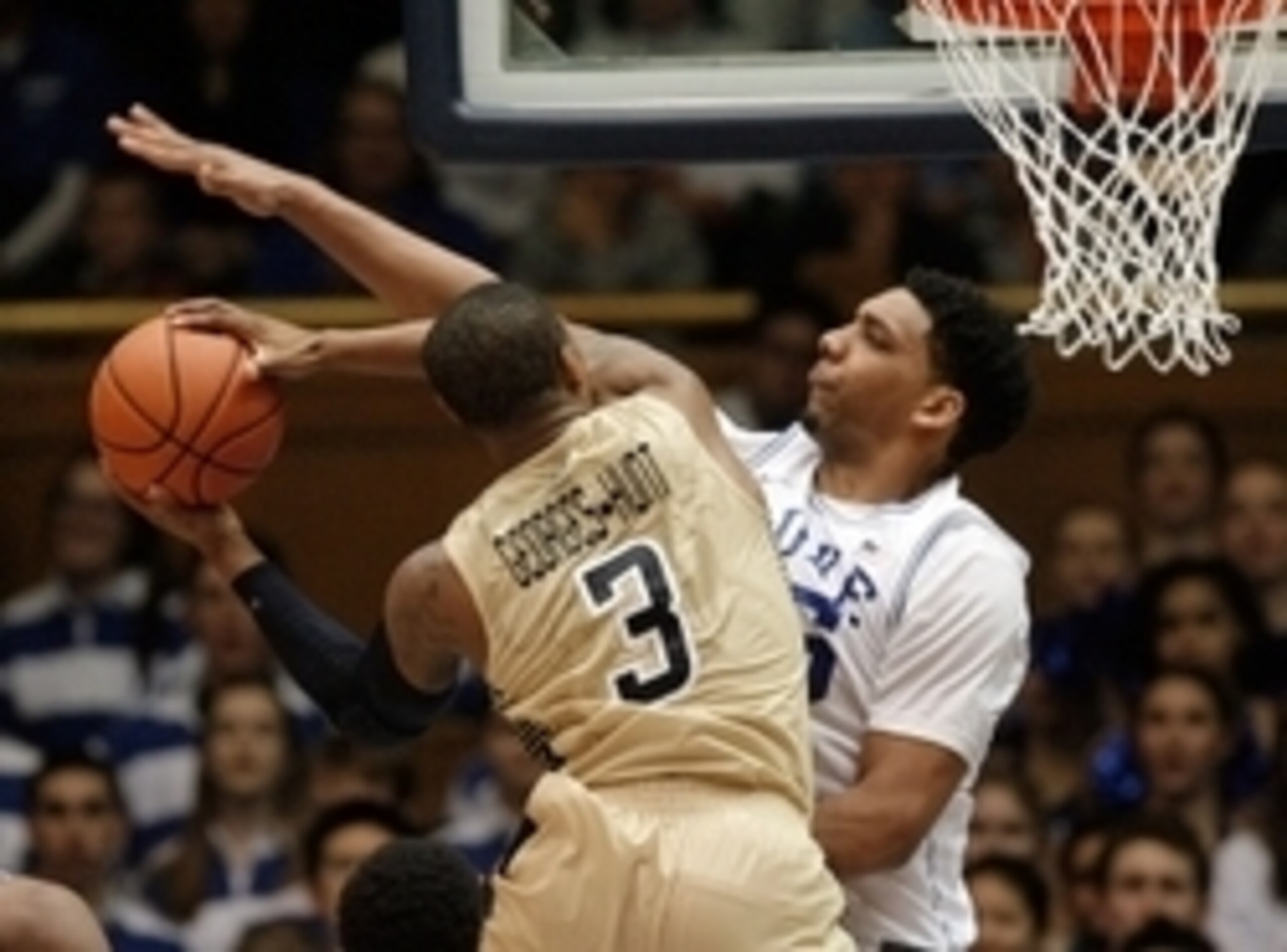
Must Improve: Defense (rim protection, pick-and-roll)
While there isn't much to question regarding his offensive game, Jahlil Okafor's defense needs work.
He's struggled at times as a rim protector—not just blocking shots but challenging them. Although, his block rate is also awfully low for a player with Okafor's physical tools.
Despite his 6'11" size and massive 7'5" wingspan, he's swatted just 33 shots in 677 minutes. In comparison, Kentucky's Karl-Anthony Towns has 51 blocks in 432 minutes, and Texas' Myles Turner has 62 blocks in 489 minutes.
Okafor isn't the quickest to react, nor does he get off the ground very high. But sometimes, it doesn't even look like he's making an attempt to help and contest. Okafor needs to show a little more effort and become more active defensively around the rim, regardless of whether he's blocking shots or not.
Defending pick-and-rolls has been another issue for Okafor, whose mediocre lateral quickness has made him a target. Duke has even started playing zone, which can hide Okafor's struggles in this area.
Again, he's just slow to react in these situations. He often gets caught in the middle of nowhere after the initial screen is set. His switches and hedges have just been too slow or nonexistent.
When you're scoring 18.1 points and grabbing 9.3 rebounds a game, these mishaps are easy to overlook. But they won't be in the NBA. Big men who don't defend or protect the paint just don't hold as much value.
Emmanuel Mudiay, China, 6'5", PG, 1996
2 of 14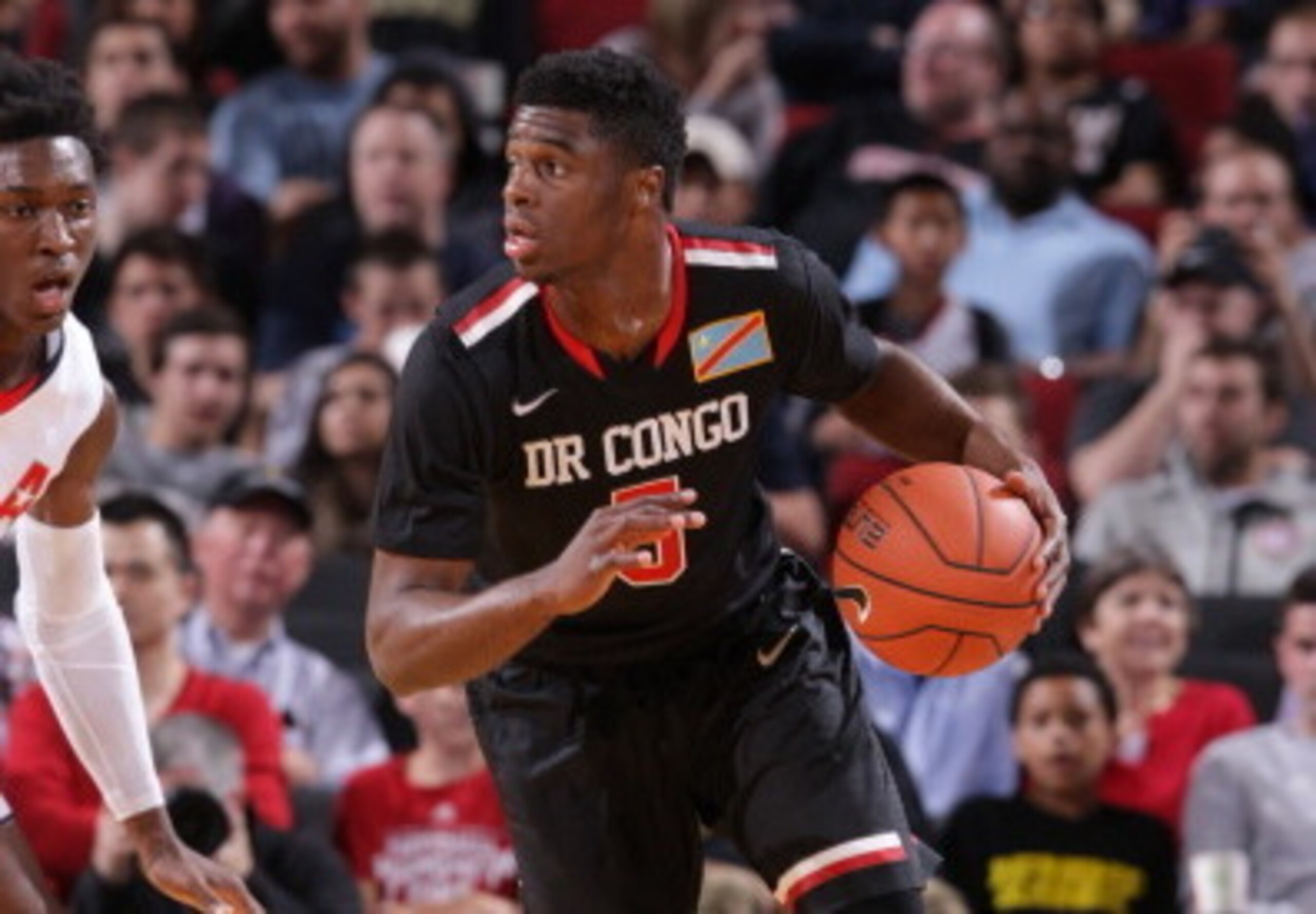
Must Improve: Shooting
At 18 years old, Emmanuel Mudiay possesses some of the same strengths and weakness as John Wall did coming out of Kentucky.
Mudiay has terrific size (6'5"), burst and quickness for a point guard. He can get to the rack at will, take over games as a scorer or set the table for teammates off pick-and-rolls and drive-and-dishes.
And though capable on the perimeter, the farther away he is, the shakier the shot attempt.
Mudiay shot 9-of-30 from downtown through 10 games in China. And for what it's worth, in the McDonald's All-American Game, the Jordan Brand Classic and Nike Hoop Summit, he combined to shoot 1-of-11 on three-pointers, per Real GM.
During the spring Nike EYBL session in 2013, he shot just 6-of-41 from deep, according to DraftExpress' Jonathan Givony.
Ball security is another area of the game Mudiay must improve, but to really take that big leap as an NBA point guard, he'll need to become more of a consistent outside threat.
D'Angelo Russell, Ohio State, 6'5" PG/SG, Freshman
3 of 14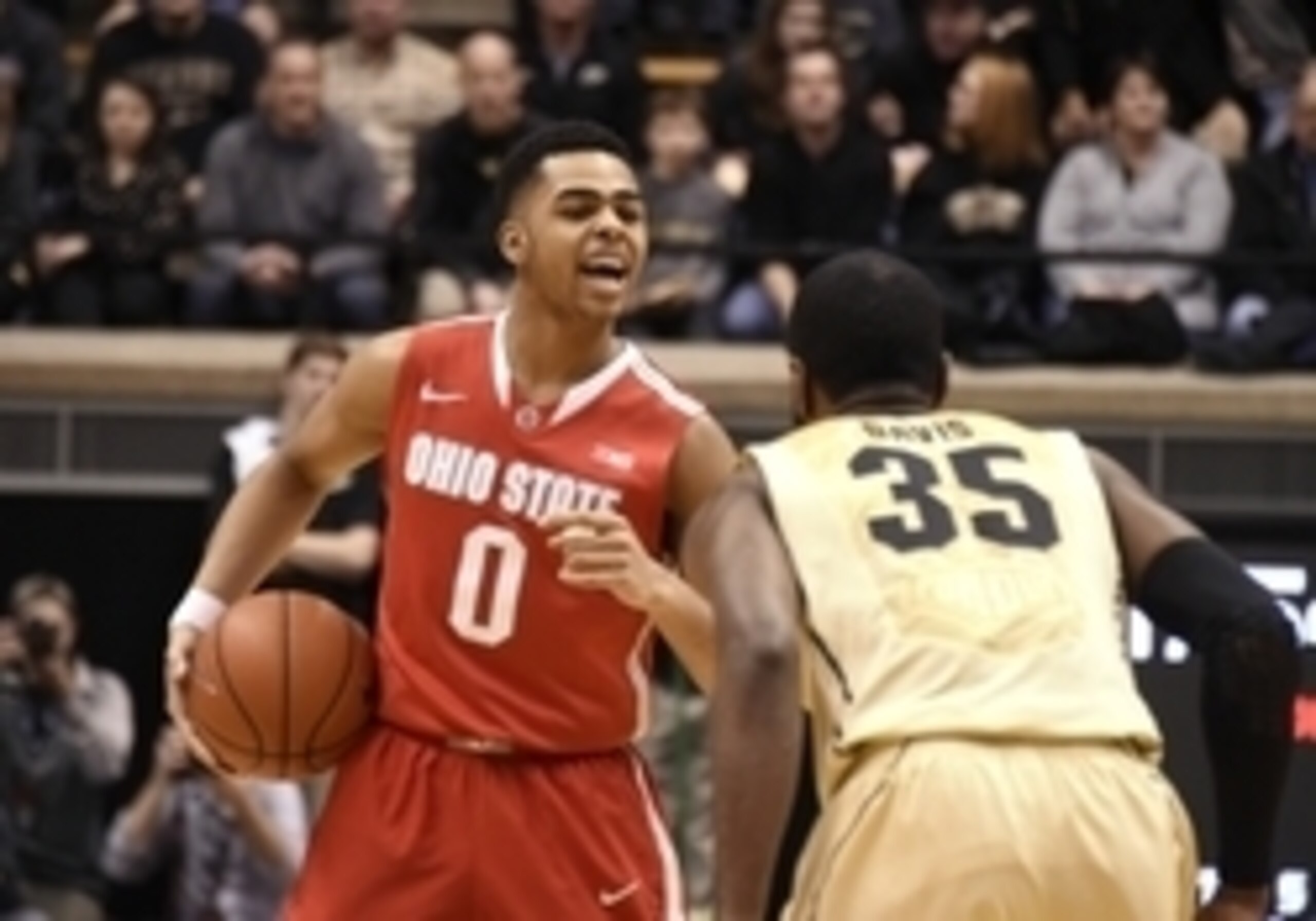
Must Improve: Attacking the rim, defense
There isn't one weakness that typically stands out when breaking down D'Angelo Russell. He's advanced in just about every aspect of the game, from shooting and scoring to passing and rebounding.
However, he hasn't exactly been a ball-stopper defensively on the perimeter. Russell tends to let ball-handlers get by a little too easily.
Offensively, he just might be the most complete guard in the country. But if there's a complaint to be made, it's that he settles too much for perimeter shots.
Even in the open floor, Russell tends to avoid the paint. Of his 103 field-goal attempts in transition (within the first 10 seconds of a possession), only 30 have come at the rim.
Russell loves to show off his shooting touch and ability to stop-and-pop on a dime, but he could certainly bump up his aggressiveness in terms of attacking the basket. He takes 6.4 threes a game to just 3.9 free throws.


Karl-Anthony Towns, Kentucky, 6'11", PF/C, Freshman
4 of 14
Must Improve: Touch, toughness
Karl-Anthony Towns has flashed all the physical tools and skills. But we haven't seen them work consistently throughout the year, although his role and playing time have been somewhat limited on Kentucky's deep roster.
While he's shown the ability to create his own shot in the post—mostly jump hooks—he has missed too many of them. Towns' hands aren't the softest. Depending on the separation he gets, you might see the ball stick to his palm on the release when it should be farther toward his fingertips.
Towns is shooting only 52.5 percent on two-pointers, a number you'd expect to be higher given his size and talent (Okafor shoots 65.2 percent on twos).
His toughness has also come into question.
"Look at Karl like he's my son, but I killed him today. It was too physical for him," Wildcats coach John Calipari told reporters after the South Carolina game on January 24, via 247Sports' Jon Hale.
"The knock on Karl Towns in high school was he's a little bit soft at times. Calipari hinting at that in explaining why he's not playing more," tweeted DraftExpress' Jonathan Givony.
Given the upside tied to his two-way versatility, it would be hard to imagine Towns not landing in the top five of the 2015 draft. But he'll have to refine both his power and finesse games as he continues to develop.
Mario Hezonja, Croatia, 6'8", SG/SF, 1995
5 of 14Must Improve: Shot selection
Mario Hezonja is as talented as any wing in the projected 2015 field. A spectacular athlete with mismatch size, he's dangerous from outside and electric in the open floor.
But his half-court shot selection is questionable. Of Hezonja's 164 field-goal attempts on the season, 92 have come from behind the arc, per Real GM. He loves getting into his jumper, whether he spots up from deep or pulls up for a long two-pointer.
In 525 minutes this season, he's taken just 23 total free throws. Some of that has to do with his role, but there's no doubt Hezonja gets caught settling for lower-percentage shots.
He also tends to let the ball stick to his hands before making his move, which is almost a separate issue in itself.
Hezonja will ultimately have to make adjustments to his scoring arsenal for those days when the jumper just won't fall.
Stanley Johnson, Arizona, 6'7", SF, Freshman
6 of 14
Must Improve: Finishing at the rim
At 6'7", 245 pounds, Stanley Johnson has a physical, punishing, athletic frame for a wing. Only he's shooting just 52.5 percent at the rim and an ugly 36.8 percent at the rim in the half court (shots taken with less than 25 seconds on shot clock). In comparison, Duke small forward Justise Winslow shoots 62.4 percent at the rim and 56.4 percent at the rim in the half court.
To Johnson's credit, he gets to the line six times a game. But he also has a tendency to attack with reckless abandon, as if he's looking to draw the foul instead of actually finish the play.
Johnson has a solid in-between and floater game in the mid-range, and he's knocking down a three-pointer a night. But the rim protection will only strengthen as he moves from college to the pros.
Kristaps Porzingis, Latvia, 7'0", PF, 1995
7 of 14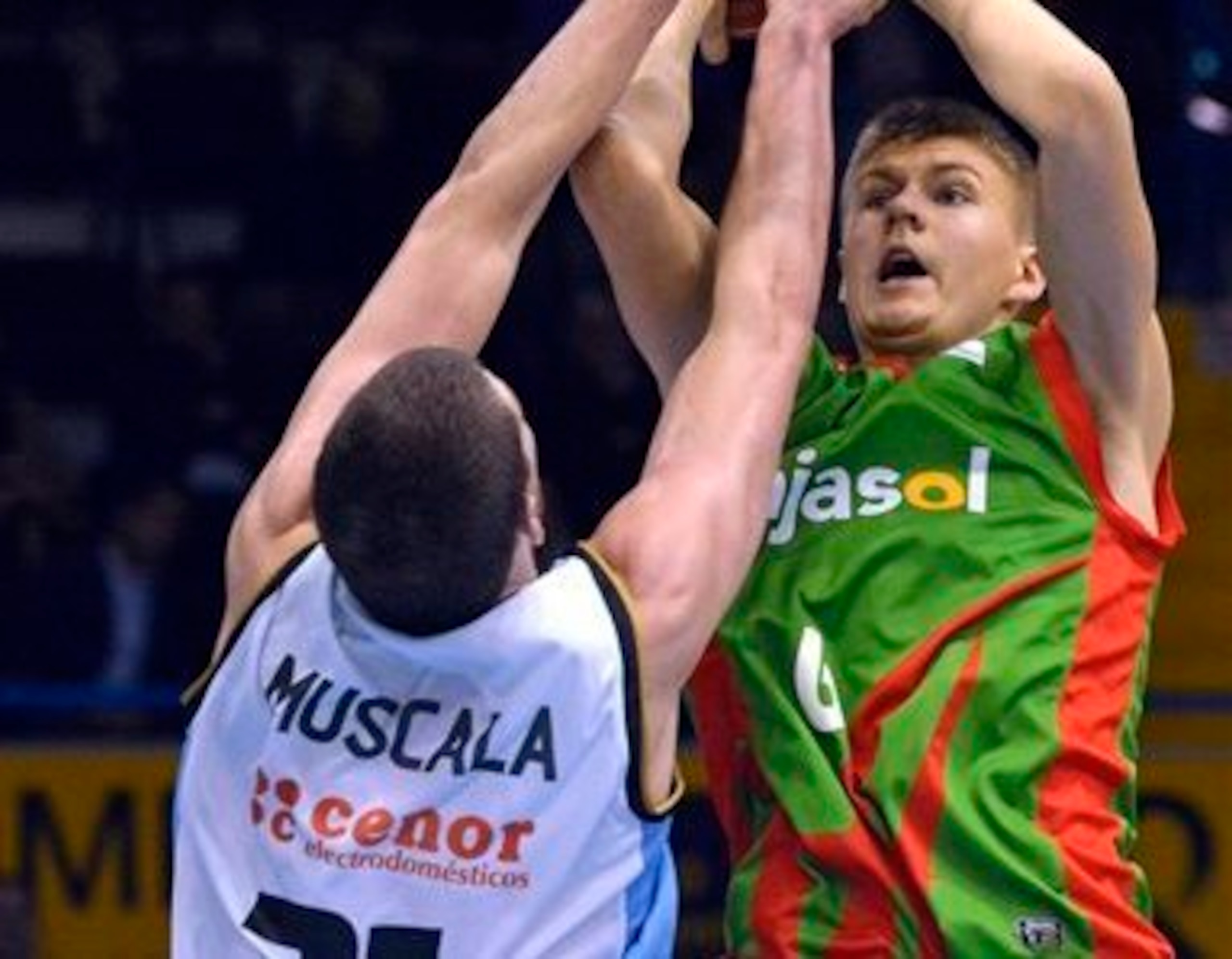
Must Improve: Strength, interior offense
The draw to Kristaps Porzingis revolves around his size, athleticism and perimeter ball skills for a big man. At 7'0", he can stretch the floor as a shooter, separate and score in the mid-range and soar above the rim.
But at 220 pounds, he's not strong enough to bang down low. "Has to add weight to play in post but he has time," tweeted ESPN's international basketball guru Fran Fraschilla.
It's not that he shies away from the interior. Porzingis has moves to go to when given the ball at the block or elbow. It's moving defenders with his body and playing through contact that's been the issue.
And chances are that isn't likely to change until his frame fills out. But it shouldn't prevent teams from targeting him early in the draft—Porzingis' NBA-ready timetable will just be lengthier than most.
Willie Cauley-Stein, Kentucky, 7'0", C, Junior
8 of 14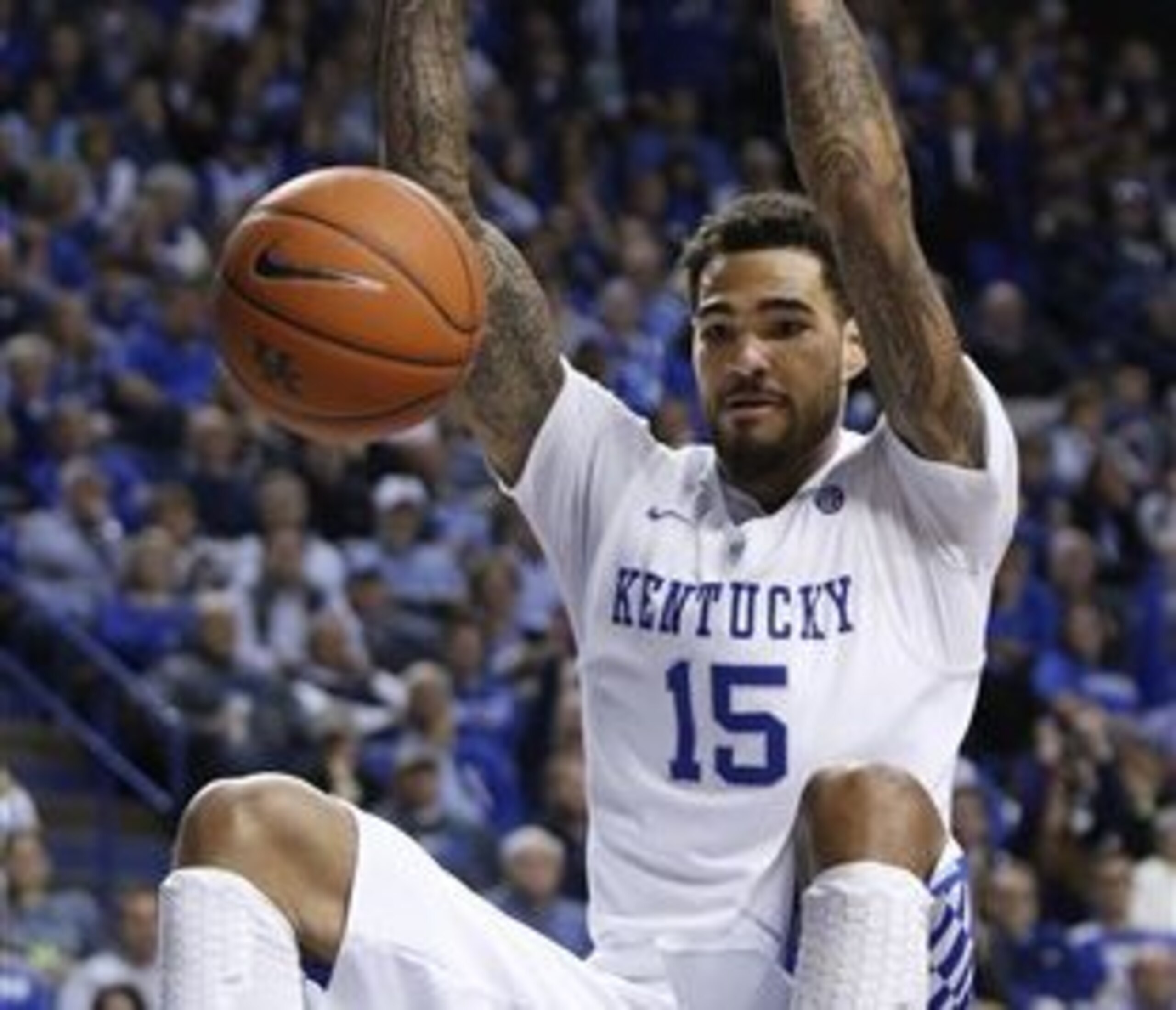
Must Improve: Ball skills
Willie Cauley-Stein's appeal revolves around his ability to impact games without needing offensive touches. Among his energy, rebounding, finishing, shot blocking and pick-and-roll defense, Cauley-Stein can make his presence felt while not using a dribble all game.
But unless he's set up with a lob or dump pass around the rim, or a rebound bounces his way off the offensive glass, it's rare to see Cauley-Stein score against a set defense from a shot he created himself.
He doesn't even usually look at the hoop unless he happens to be within a couple of feet.
We've seen him convert jump hooks on occasion, and every once in a while, he'll stick in a baby jumper. But at this stage, it's not part of the everyday repertoire.
Cauley-Stein's value and purpose would increase dramatically if he were able to threaten the defense as a scorer from more spots on the floor.
Kevon Looney, UCLA, 6'9", PF, Freshman
9 of 14
Must Improve: Low-post game
Kevon Looney's perimeter skills fuel some unique versatility. At 6'9", he has a good-looking shooting stroke, along with the ability to put the ball on the floor, step back or pull up into jumpers.
However, he hasn't given UCLA much of a go-to option in the post. At 220 pounds, he'll certainly need to bulk up. He's only shooting 56.9 percent at the rim, a below-average number for a projected power forward. His moves down low also lack fluidity. Rarely have we seen Looney separate with his back to the basket.
Inside, he's relied on easy catch-and-finishes, as well as offensive rebounds for points. Of his 70 buckets at the rim, 39 have come off putbacks.
Looney's ability to face up and score could create all sorts of matchup problems in the pros. But he's had nine games this year where he's converted just three field goals or fewer (he played at least 27 minutes in eight of them). As a big man, he'll eventually need to add a post game to the repertoire in order to balance out his offensive attack.
Myles Turner, Texas, 6'11", PF/C, Freshman
10 of 14
Must Improve: Interior offensive presence
Myles Turner is exceptionally skilled for a 6'11" freshman, particularly on the perimeter, where he has a smooth delivery on his jumper and the ability to separate into it.
But he's almost a little too comfortable outside. In fact, 74.2 percent of his shots come away from the rim. That's a whole lot for a big man.
Despite his size and skill level, Turner is only shooting 44.9 percent from the floor. He's shot below 30 percent nine different times already this year, a result of relying too heavily on outside shooting or difficult shot-making.
Turner doesn't move particularly well, and I'm not sure how much he'll be able to improve his mobility over time. But adding strength is a must. Big men who can't score in the paint just don't hold as much value.
Justise Winslow, Duke, 6'6", SF, Freshman
11 of 14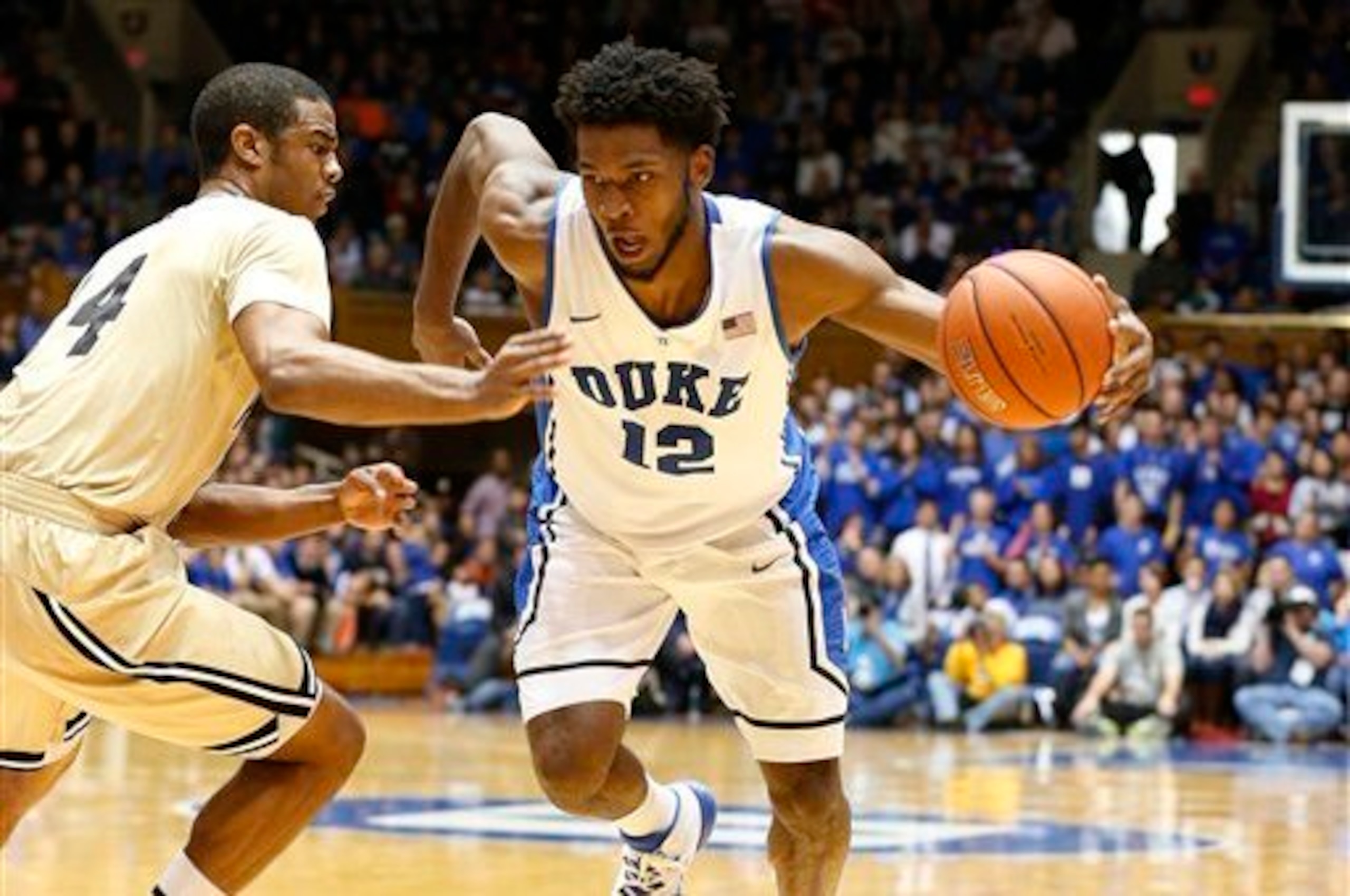
Must Improve: Shot creativity
While Justise Winslow is at his best in the open floor, slicing through a lane or spotting up from behind the arc, he isn't a particularly threatening one-on-one scorer or playmaker.
Winslow has trouble scoring against a set defense unless he's set up for a hoop by a teammate.
He's had a number of games where you forget he's even out there on offense, like against Wisconsin on December 3, when he finished with six field-goal attempts in 32 minutes, or against Louisville on January 17, when he took just three shots in 38 minutes.
Winslow is knocking down 1.2 three-pointers a game, which has helped his scoring average. But I'm not sure he's a good enough shooter that he'll be able to rely on his jumper for offense in the pros.
Improving his ball skills and ability to create shots will sit atop his priority list when making the NBA jump.
Kelly Oubre, Kansas, 6'7", SF, Freshman
12 of 14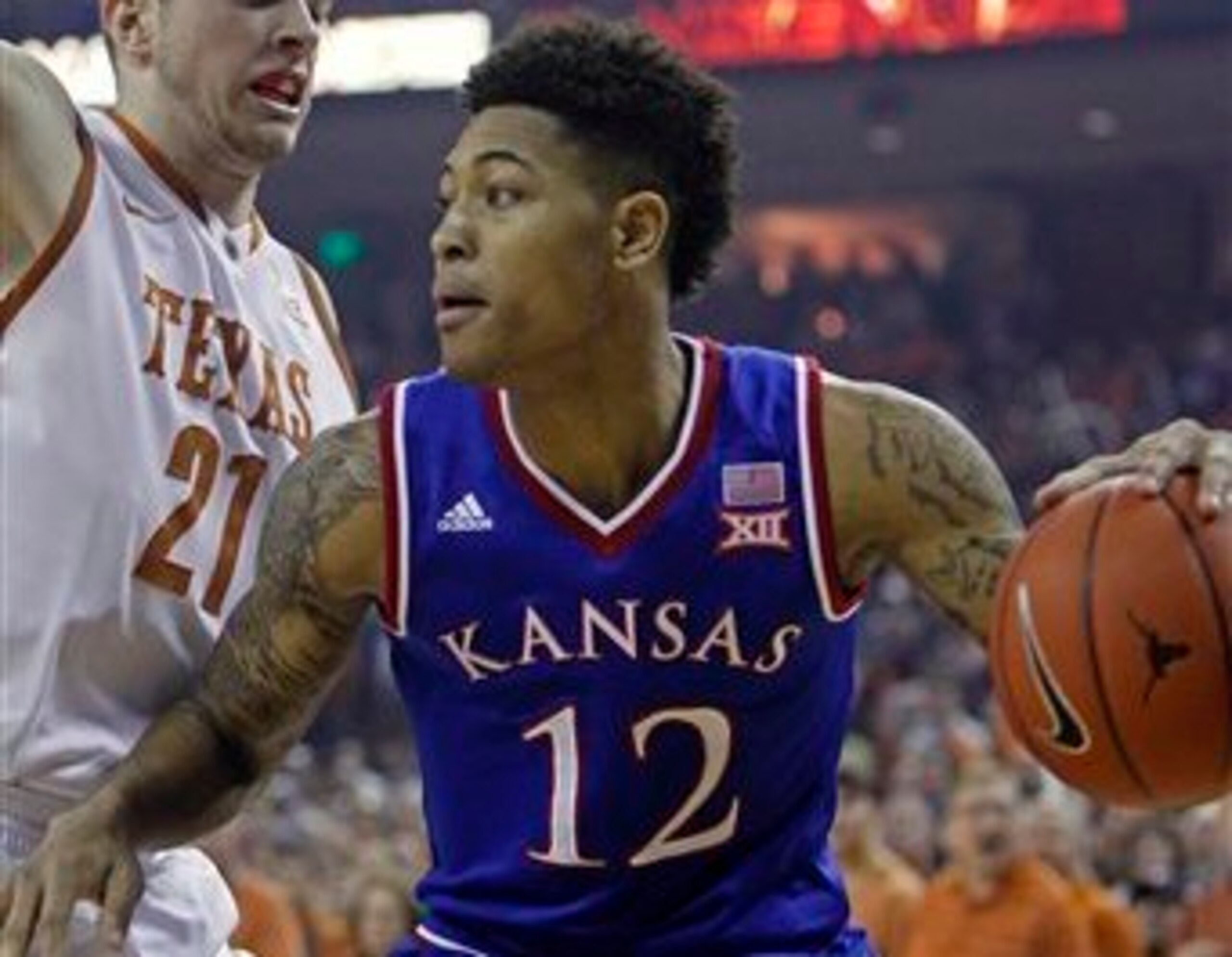
Must Improve: Defense, attacking
Kelly Oubre has the defensive tools, and when he locks in, he's capable of forcing turnovers with his size, length and quickness.
But his activity level and questionable defensive IQ have been exposed at times this season. He's been caught flat-footed or out of position, whether it's off a rotation or pick-and-roll. It's one of the reasons why it took coach Bill Self 10 games to trust Oubre in a 20-plus-minute role.
Offensively, Oubre has a beautiful shooting stroke and some strong scoring instincts on the move. But since joining the rotation back on December 20, he's taken two or fewer free throws in 10 of 12 games.
Only 26.7 percent of his shots come at the rim, a slightly low number for a 6'7" wing as athletic as Oubre.
Oubre is loaded with talent, but he'll have to become a more alert defender and aggressive attacker to maximize his potential.
Devin Booker, Kentucky, 6'6", SG, Freshman
13 of 14
Must Improve: In-between game (scoring in the second level)
Devin Booker has skyrocketed up draft boards thanks to that sweet 48.2 percent three-point stroke, better-than-advertised defense and high basketball IQ.
However, while he's been money from behind the arc and even in transition (18-of-19 at the rim), his mid-range game is lacking.
Booker struggles to convert when forced to put the ball on the floor first. He's made just 31.6 percent of his two-point jumpers, which is a lot lower than what he shoots from long range.
Pull-ups, floaters, runners, step-backs—these are the types of looks that could catapult Booker from a one-dimensional shot-maker to a multi-faceted scorer at the NBA level.
Montrezl Harrell, Louisville, 6'8", PF, Junior
14 of 14
Must Improve: Ball skills, shooting touch
As dominant as Montrezl Harrell is around the rim, he'll need to become a bigger threat away from it.
At 6'8", he's slightly undersized for the NBA interior as it is. I'm not sure he'll be able to rely on athleticism or bully ball down low for all of his offense.
In the post, Harrell still leans on his strength and explosiveness instead of polished footwork or touch. And the jumper remains a big question mark. After hitting three three-pointers on opening night, he's just 4-of-29 since. And he's shooting below 60 percent from the line.
At this point, he's looking more like an energy and rebounding specialist. Harrell's value would ultimately be a lot greater if he were able to present himself as a kick-out target in the stretch and pick-and-pop games.
All stats courtesy of Hoop-Math unless otherwise noted.

.jpg?w=2560 "Grading WWE Raw 🔠")

.jpg?w=2560 "Bijan's INSANE 1st Half 🤩")
.jpg?w=2560 "Viral Rams Coach Vid 🖕")
.jpg?w=2560 "Injury-stricken Seahawks signing veteran RB")

.jpg?w=2560 "2 NFL Officials Suspended")