

Ranking the Best NBA Players to Come from Coach K's Duke Program
On his way to 1,000 career victories at the college level, more than any other man in NCAA history, Mike Krzyzewski has coached quite a few NBA players.
While he was an assistant at Indiana in 1974-75, he provided direction for John Laskowski, Steve Green, Scott May, Quinn Buckner, Kent Benson, Bob Wilkerson, Tom Abernethy and Wayne Radford, all of whom would go on to enjoy careers of varying lengths in the Association. They don't count, as he was only the assistant to Bob Knight for that 31-1 squad.
At Army, where he spent five seasons as a head coach, he didn't produce a single professional player.
But then Coach K went to Duke, where he's been ever since. And that's where our focus lies here, as we parse through the many NBA players who learned under Krzyzewski on the courts at Durham, North Carolina, determining which ones had the most professional success by looking at a combination of skill, success and length of time spent at the sport's highest level.
From Kenny Dennard (a fourth-round pick of the Kansas City Kings in 1981 after spending his senior season under Krzyzewski's supervision) to Jabari Parker, the legendary coach has steered 46 players into the ranks of the Association. Soon, that number will rise even higher, with Jahlil Okafor, Justise Winslow and Tyus Jones preparing to make their eventual marks.
But this isn't about the future, even for those Duke products who are still putting up numbers during the 2014-15 season.
It's all about what's already come to pass. And for those 10 players (and the three honorable mentions, one of whom breaks the rule established in the last two sentences), that's a lot of high-quality basketball at the NBA level.
Honorable Mentions
1 of 11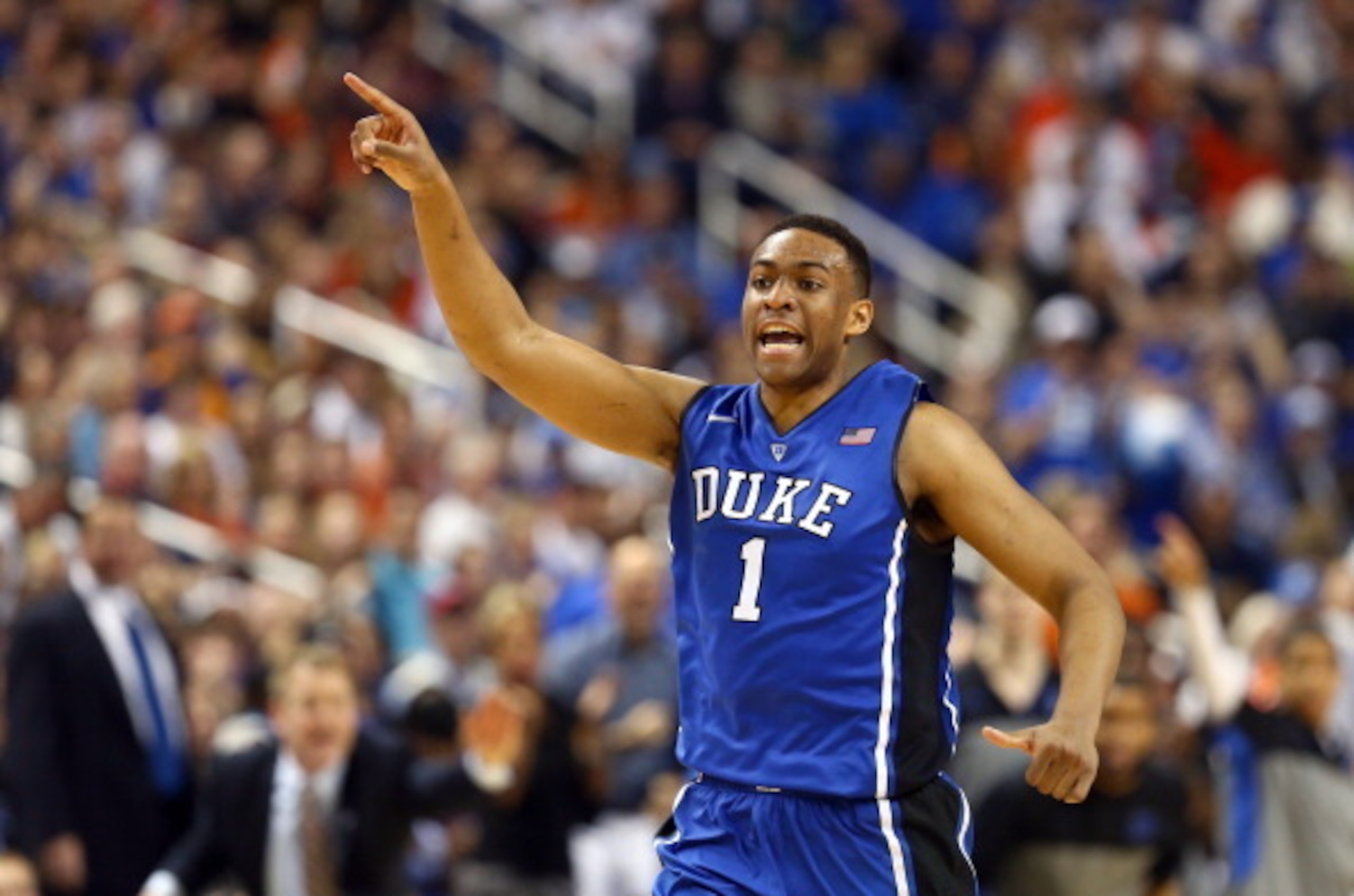
Mike Dunleavy
There have been plenty of Duke Blue Devils who have left Durham behind and turned into role players at the NBA level. Mike Dunleavy is one of them, but he's carved out a niche for himself—shooting from the perimeter—that has allowed him to stick around for quite some time.
It's hard to believe, since the sharpshooter is still averaging nearly 10 points per game for the Chicago Bulls, but Dunleavy was drafted all the way back in 2002. Though he only had one true standout season—2007-08 with the Indiana Pacers, when he averaged 19.1 points per game—he's been a consistent contributor for well over a decade.
Danny Ferry
Yes, the still-absent Atlanta Hawks general manager was a player once upon a time. After he was selected No. 2 in the 1989 NBA draft, Danny Ferry struggled to make an immediate impact, averaging just 8.6 points, 3.5 rebounds and 1.8 assists per game for the Cleveland Cavaliers.
Only twice in his entire professional life did he score in double figures during the average contest, and his career numbers are rather lackluster. But Ferry gets credit here for sticking around for such a long time, as his 917 games played leave him trailing only three other Krzyzewski products, and each of them ranks in the top four here.
Jabari Parker
The university's most recent top pick will make the rankings some day, just as Okafor will when he's actually played in some NBA games. But it's too soon for Parker to earn a featured spot, especially since his rookie season was cut short by an unfortunate ACL tear.
Still, it didn't take long for Parker to prove that he belonged in the NBA, and he was the clear front-runner for Rookie of the Year honors before he got hurt. Just give him some time to recover and then establish himself. There's no doubt there will eventually be a number before his name.
10. J.J. Redick
2 of 11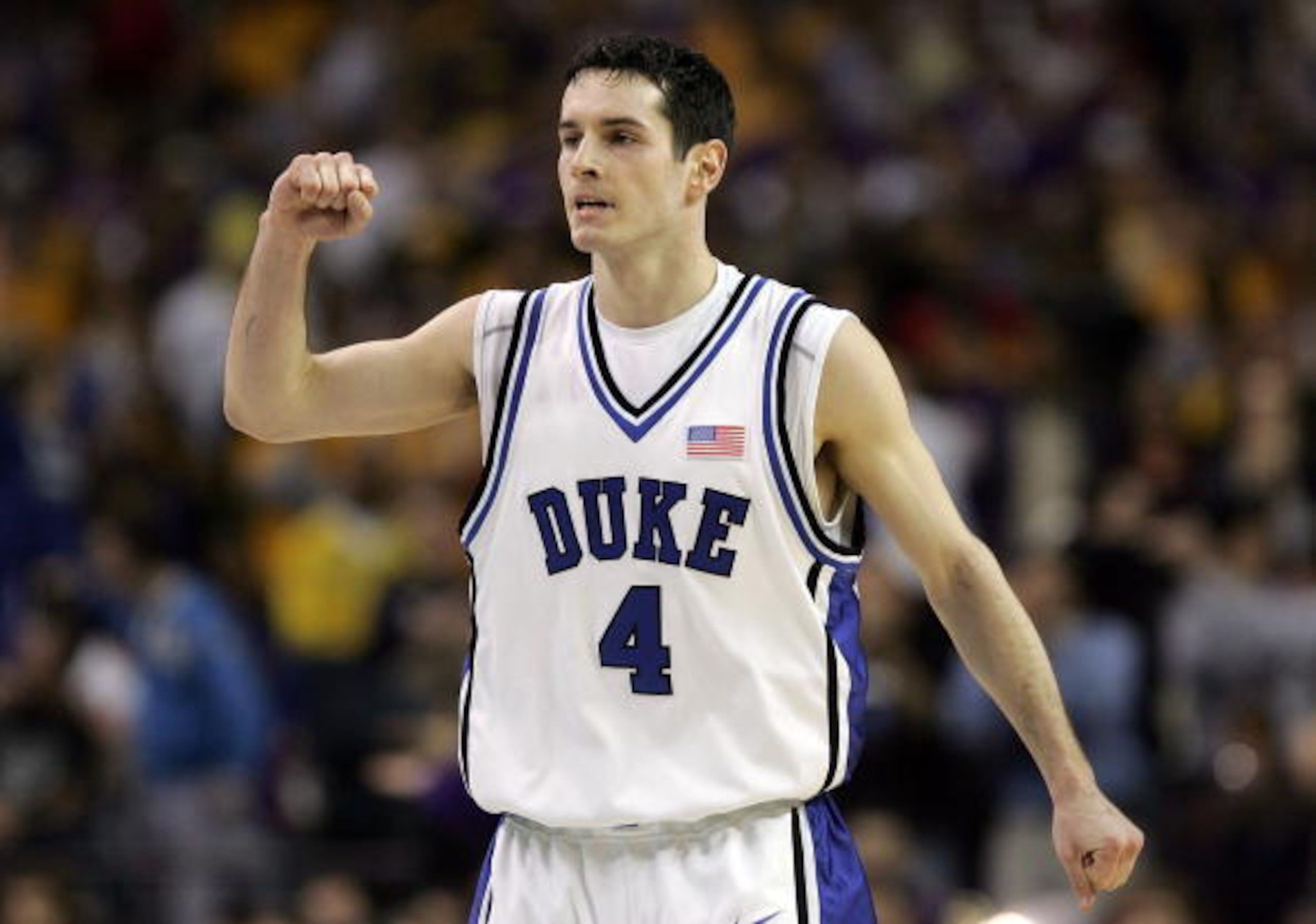
As a collegiate player, J.J. Redick was simply sublime.
Whether he was battling with Adam Morrison for Player of the Year honors or making free throws with such ease that the NCAA actually considered forcing him to shoot from the charity stripe while wearing a blindfold (note: One of these two things is not true), he built up his reputation as one of the most dangerous offensive threats in the country. And if you hated Duke, you despised Redick.
But after the Orlando Magic used the No. 11 pick on the sharpshooting prospect in the 2006 NBA draft, Redick was never the same. He struggled during his first few seasons at the professional level, making only a limited impact as a floor-spacing threat, and it wasn't until recently that he became a truly valuable asset.
In 50 games during the 2011-12 season, Redick averaged 15.1 points, 2.4 rebounds and 4.4 assists per contest, shooting 45.0 percent from the field, 39.0 percent from beyond the arc and 89.1 percent at the charity stripe. Then he was traded to the Milwaukee Bucks, where he struggled in his role off the pine.
But since then, Redick has been with the Los Angeles Clippers, and he's fared rather well.
Though he's no longer much of a combo guard, Redick can still stroke the ball from the outside, knocking down plenty of deep looks that open up driving lanes for Chris Paul and allow big men like Blake Griffin time to work around the basket. Just as has always been the case, his value goes beyond his individual numbers, simply because opposing teams still have to respect the shot that made him so infamous as an amateur standout.
9. Johnny Dawkins
3 of 11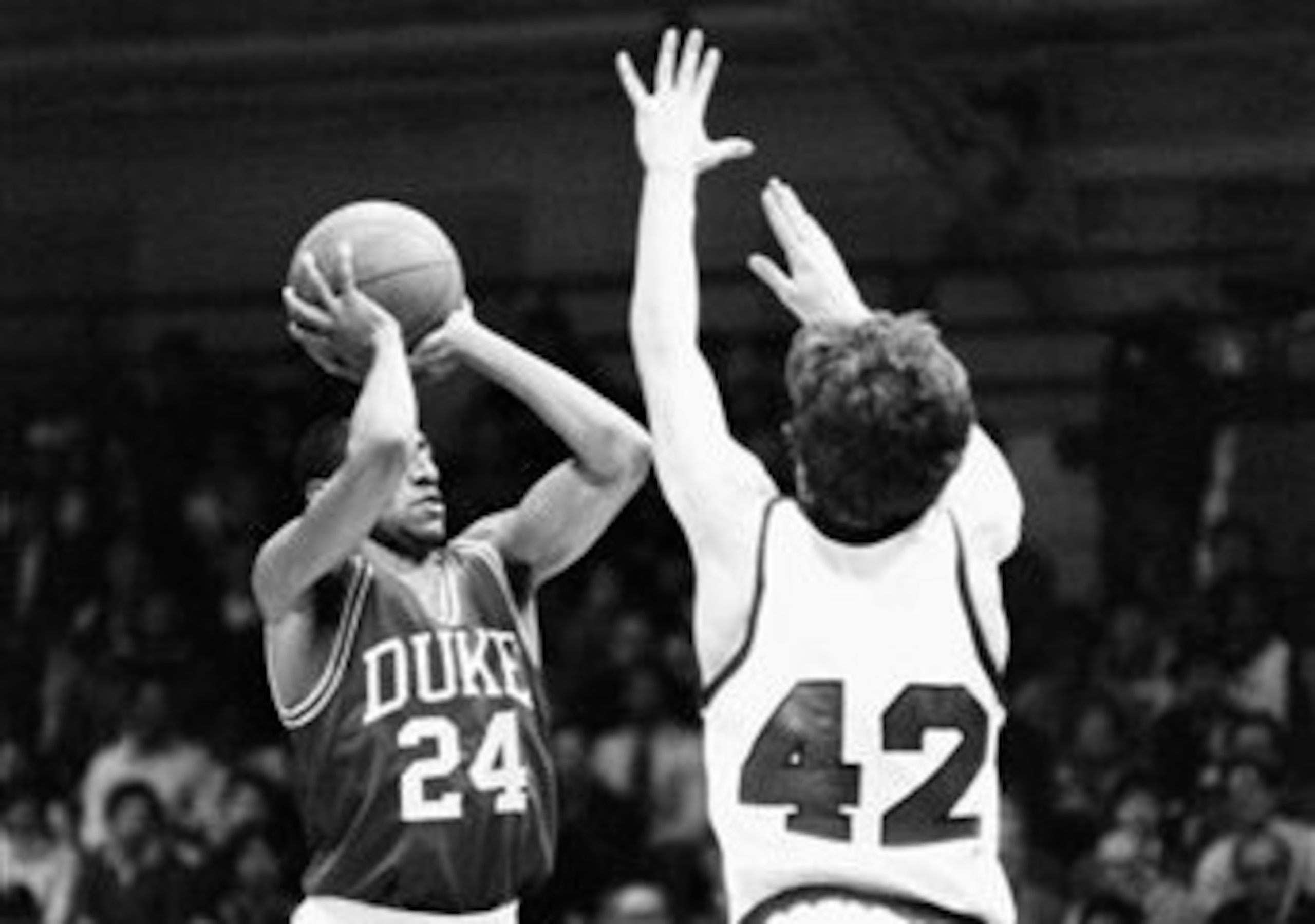
Johnny Dawkins was one of Krzyzewski's first big-time NBA draft prospects, enrolling at Duke in 1982. As a freshman, he averaged 18.1 points, 4.1 rebounds and 4.8 assists per game, and he steadily improved before dominating as a fourth-year player and becoming a Top 10 pick in the 1986 NBA draft.
With the San Antonio Spurs, the 6'2" point guard picked up where he left off.
In three seasons with the team, he averaged 13.0 points, 2.7 rebounds and 5.6 assists per game, though he failed to develop any sort of consistency from beyond the arc. He also had some trouble with nerves in the lower extremities on the left side of his body, and that limited him to only 32 outings during his final season in the Lone Star State.
Dawkins maintained his level of production during his next campaign, which came with the Philadelphia 76ers, but he only suited up four times throughout the 1990-91 season, suffering a torn ACL from which he'd never truly recover.
"He's missed more shots driving into the lane, where he has to plant. And I don't think the confidence is there yet in his knee," Philadelphia assistant coach Buzz Braman told Ira Winderman of Sun-Sentinel.com back in November 1991. "His outside shot actually has been very good. But he's been missing a lot of shots off the drive that he normally makes. And that's mental. And I think that will come."
But it didn't come back.
Dawkins was never the same after that devastating knee injury, and he retired at 31 years old, just four seasons after his four-game campaign.

8. Christian Laettner
4 of 11
Perhaps Christian Laettner's NBA career would've been even more successful if teams had run more full-court passes to him that led to turnaround jumpers at the end of the shot clock, quarter or game. But alas, he was never able to live up to the legend he created for himself during his collegiate career.
Still, Laettner's professional tenure was quite good, even if it was largely disappointing. Those two concepts can coexist, after all.
His first five years in the Association saw him average 17.2 points, 8.2 rebounds and 3.1 assists per game for the Minnesota Timberwolves and Atlanta Hawks. Going along with the theme, those are good numbers, but not great ones.
The Wolves drafted him No. 3 in 1992, and though his counting stats were rather impressive during those first few seasons, it's pretty telling that the team decided to trade him and Sean Rooks to the Hawks for only Andrew Lang and Spud Webb. His player efficiency rating in Minnesota, per Basketball-Reference.com, was just 17.4, which falls short of celestial levels, even if it's still an above-average mark.
With the Hawks, Laettner did manage to earn the only All-Star selection of his career. It was without question the best season of his professional life, as he stretched out the court with a newfound stroke from the perimeter and benefited from playing heavy minutes. His PER that campaign was a career-best 19.1, but it wouldn't save him from a quick decline shortly thereafter.
Had Laettner found more success with the Detroit Pistons and Washington Wizards, rather than becoming a nondescript role player for the final seven years of his NBA days, he would likely be remembered in a much more favorable light.
Still, his career, while ultimately a disappointment, featured plenty of impressive moments.
7. Kyrie Irving
5 of 11
Kyrie Irving is only going to keep moving up the ranks.
On a per-season level, he's already moved past the next four players in this countdown, and a case can be made that he'd be No. 2 if we were only using that criterion. But the point guard is still only 22 years old in a competition where longevity matters, and we can't overlook the indisputable fact that he's midway through his fourth season in the NBA.
Irving's defense remains terrible, but the young floor general is already an offensive phenom. This year, he's averaging 20.9 points and 5.2 assists per game while shooting an impressive 46.3 percent from the field, 38.7 percent from downtown and 83.9 percent at the stripe. And somehow, that might be his worst point-producing performance of the last three years, as he's not carrying the load now that LeBron James and Kevin Love are in town.
Coach K never received too many chances to shape Irving, as a freak toe injury kept him out for the vast majority of his lone season in blue and white. Sure, the two reunited while Irving was wearing a Team USA uniform, but he'd already experienced some serious development under the tutelage of the Cleveland Cavaliers.
Is the 22-year-old already an elite point guard? It depends on whom you ask, though there are easily a handful of players at his position who have been far superior in 2014-15.
But that may not remain true for too much longer. More so than any other Duke product since the No. 1 player in this countdown, Irving seems to possess interminable upside, especially if he ever fully commits on the less glamorous end of the floor.
6. Corey Maggette
6 of 11
Now we take a significant step up, moving into the realm of players who were stars—or at least came close to achieving that type of status—for a relatively lengthy amount of time. Corey Maggette, for example, might never have made an All-Star team, but he was a remarkably valuable player for an eight-year stretch in the middle of his career.
In 2002-03, the forward broke out for the Los Angeles Clippers, becoming a dangerous scorer who averaged 16.8 points per game. He'd move past the 20-point barrier the very next season, and he'd get beyond it twice more before he moved into the twilight of his career.
But during that eight-season stretch—six of which came with the Clippers and two with the Golden State Warriors—Maggette averaged 19.5 points, 5.6 rebounds and 2.6 assists per game while shooting 45.7 percent from the field, 32.2 percent from beyond the arc and 83.0 percent at the free-throw line. His PER, via Basketball-Reference.com, was a rock-solid 19.1, and he topped out at 20.3 during the 2009-10 campaign.
As a result, he remains one of the better players in NBA history who never received even a single All-Star nod. Playing a bit more defense would have helped his case, but the floor-slapping ways of the Duke Blue Devils never translated to the Association along with his offensive skills.
Then again, that may be because he left Krzyzewski behind after his freshman season, turning a fairly successful first go-round into lottery status.
5. Carlos Boozer
7 of 11
Carlos Boozer's lack of defensive ability—or desire, for that matter—has turned him into a bit of a punchline during his last few seasons. He was a late-game liability while with the Chicago Bulls, never truly justifying the massive free-agency deal he inked, and now he's been nearly devoid of value to the Los Angeles Lakers.
But we can't forget just how dominant Boozer was when he played for the Utah Jazz.
Fresh out of Duke, the power forward produced two impressive campaigns with the Cleveland Cavaliers at the beginning of his professional career. Then he signed with the Jazz as a young free agent and truly began the breakout process.
In 2006-07, Boozer made the first All-Star team of his career, averaging 20.9 points, 11.7 rebounds and 3.0 assists per game while shooting 56.1 percent from the field. With a mid-range jumper that seemed to scrape the rafters and his vast array of post moves, he was a force to be reckoned with when the ball was in his hands. He'd also back that season up with another selection to the midseason festivities in 2007-08, though his numbers dipped slightly.
Even factoring in his decline in recent years, Boozer still has some of the best career per-game stats of any Krzyzewski pupil. Only Irving and Grant Hill have averaged more points, and no one has found more success on the boards. In fact, Mike Lewis is the only Duke product—not just from the Coach K era—to average more rebounds per game, posting 11.9 per contest in 337 ABA games from 1968 to 1974.
4. Luol Deng
8 of 11
A bad season from Luol Deng at the NBA level is nearly impossible to find.
As a rookie, he was a starter and solid contributor for the Chicago Bulls. He'd keep improving on both ends of the court while playing in the Windy City, eventually turning his two-way prowess into a pair of All-Star appearances. The one truly poor portion of his career came last year with the Cleveland Cavaliers, when he was clearly uncomfortable after a midseason trade and failed to continue the magnificent campaign he'd started with Chicago.
Even now, he's putting up very respectable numbers for the Miami Heat.
That said, Deng has never been a superstar. In fact, even during his All-Star seasons with the Bulls, he was best as a tertiary option on the offensive end who could pour in efficient, floor-spacing points and save most of his energy for his work on the less glamorous end of the floor.
But since when do you have to be a superstar in order to be valuable?
It's now been over a decade since Deng played his freshman season at Duke, declared for the 2004 NBA draft and became the No. 7 pick of the Phoenix Suns, who quickly traded him to the Bulls for Jackson Vroman and a 2005 first-rounder that would become Nate Robinson. Since then, he's been a consistently key cog for a bunch of highly competitive teams, establishing himself as a two-way contributor all the while.
His career may not have earned too many awards or received all that much recognition from the public, but it's been stellar all the same. Plus, he may have been even better if Tom Thibodeau didn't overburden him with far too many minutes while Derrick Rose was injured.
3. Shane Battier
9 of 11
Shane Battier was a charge-taking, floor-slapping, defense-playing, all-around legend while he suited up in Durham. And though he never came close to matching the offensive exploits of his senior year once he joined the NBA, he was still a valuable player until he retired.
As a rookie with the Memphis Grizzlies, Battier averaged 14.4 points, 5.4 rebounds, 2.8 assists, 1.6 steals and 1.0 blocks per game. With the exception of blocks, every single one of those numbers would remain a career high, which has to be a rather unique feat. Plus, Basketball-Reference.com shows that only 10 rookies have ever matched or exceeded each of those per-contest marks during a qualified season: Battier, Grant Hill, Michael Jordan, LeBron James, Larry Bird, Michael Carter-Williams, Penny Hardaway, Magic Johnson, Clark Kellogg and Tom Gugliotta.
Not a bad group of players to be listed among.
But all the same, Battier didn't have to score in order to be valuable to his teams.
He was a key component of some huge runs by the Houston Rockets, locking down on defense and completely altering how teams had to approach his squads. With the Miami Heat later in his career, Battier served as a floor-spacing threat off the bench and drilled some big-time shots, even if he'd declined rather significantly as he moved past his prime.
The small forward never made an All-Star squad. He only made two All-Defensive squads throughout his professional life. He's not going to make the Hall of Fame.
But the man with a mind for basketball analytics was a consistent contributor to his teams and maximized his talents from his rookie year until he finally pulled the plug after last year's NBA Finals.
Despite playing 13 seasons in the NBA, Battier never authored a single offensive or defensive box plus/minus that was on the wrong side of zero, per Basketball-Reference.com. In simpler terms, his team was literally always better on both offense and defense when he was playing than if he'd been replaced with a league-average player, and that's not a statement that applies to many who spent over a decade in the Association.
2. Elton Brand
10 of 11
As Grantland's Zach Lowe once wrote while making a case for Chris Webber joining the Hall of Fame, Elton Brand actually has a similar resume to his fellow forward. Perception just lags behind:
"But people in and out of the league don't consider Brand a Hall of Famer. That might be because he has labored mostly for bad and mediocre teams; he has played in only 30 postseason games, compared to 80 for Webber. It might also be because Brand's workmanlike game didn't make the same stylistic imprint on the sport as Webber's all-around, all-court brilliance. How much should that matter?
"
Brand is still making an impact as a veteran presence and role player on the Atlanta Hawks, but it's the beginning of his career that's far more impressive.
He averaged 20.1 points and 10.0 rebounds per game during his first season out of Duke, carrying a lackluster Chicago Bulls squad that was still reeling from the retirement of Michael Jordan and the departure of Scottie Pippen. Per Basketball-Reference.com, Brand even earned 7.5 win shares on that 17-win Bulls team. If we accept that win shares are an approximation of how many wins an individual contributed to his team, that means the power forward single-handedly accounted for a higher percentage of his team's victories than any other player in the NBA during the 1999-00 season.
The same was true in 2000-01, which makes Brand one of only 11 players in NBA history to achieve the win-share feat at least twice. The others? Michael Jordan, Wilt Chamberlain, Kareem Abdul-Jabbar, Adrian Dantley, Neil Johnston, Kevin Garnett, Kevin Love, Paul Arizin, Bob Boozer and Chris Paul.
Once he left the reeling Bulls for the Los Angeles Clippers, Brand still didn't find much team-oriented success. But at least he managed to make his first All-Star squad—one of only two such selections he'd earn throughout his career.
With the Clippers, the power forward was a superstar. A quality defender, he still managed to average 20.3 points, 10.3 rebounds and 2.7 assists per game during his seven seasons with the team. And while he'd drop off once he joined the Philadelphia 76ers in 2008, that early production is still enough for him to claim this No. 2 spot with room to spare.
1. Grant Hill
11 of 11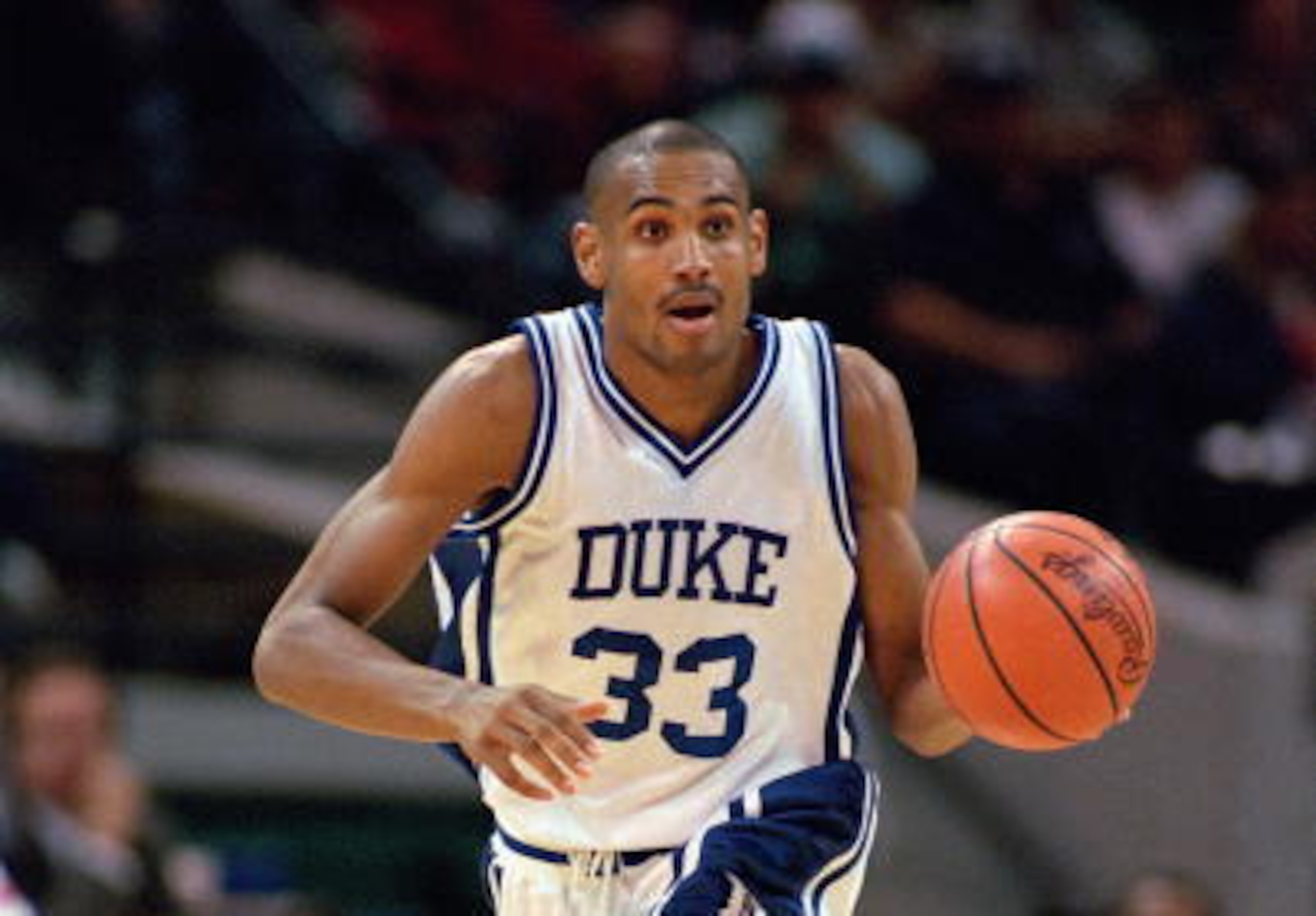
One of the greatest what-if players in NBA history, Grant Hill was on pace to be absolutely legendary during his first few seasons removed from Duke. And it's not as if that should have been too surprising to the Blue Devils, as he was a versatile stud while playing under Krzyzewski.
Through the first six seasons of his career with the Detroit Pistons, Hill averaged 21.6 points, 7.9 rebounds and 6.3 assists per game. He played superior defense, shot nearly 50 percent from the field and posted a standout 22.4 PER during that stretch, via Basketball-Reference.com. His accumulation of counting numbers, up to that point, had only been matched by Oscar Robertson and Larry Bird, though LeBron James would later join that club thanks to a stellar start with the Cleveland Cavaliers.
But then his ankles had to mess everything up.
Hill only played in 47 contests over the next three years, all of which were spent with the Orlando Magic. And after he healed, he never returned to the peak form he displayed in the late 1990s.
Instead, he adapted to become a defensive stopper and role player on the offensive end, providing steady value during the end of his time with the Magic and later with the Phoenix Suns. There's something to be said for making that type of transition, maintaining a good attitude and still contributing in positive fashion, but it pales in comparison to what could have been.
Thinking about Hill's unrealized potential is rather painful for anyone who watched him fill up the box score during his first few professional seasons. All the same, he should still be a Hall of Famer, and he certainly has a better chance of inclusion than any other player who wore a Duke uniform under Krzyzewski's watch.
The small forward isn't just the No. 1 NBA player to come out of Durham during the Coach K era. Even when accounting for the 17 players with Duke ties who turned pro before Krzyzewski arrived, Hill still reigns supreme.

.jpg?w=2560 "Chiefs, Steelers Eye WR Trades")





.jpg?w=2560 "Raiders Sticking with Cousins")