

10 Biggest 'Bang for Your Buck' Offseason Moves
In this baseball age of advanced scouting, statistics and analytics, rarely do you find an undervalued player or the “bargains” of the winter. With players analyzed so thoroughly, no asset or weakness slips past the watchful eyes of the front office.
Value is always recognized, now more than ever.
Yet it is still possible for a team to get plenty of bang for its buck or to not have to pay wildly for potential high value. Whether through free agency or via trade, there have been several moves this fall and winter where the acquiring team not only picked up the player but also a clear win for its 2015 agenda.
Some teams bought players relatively cheap, while others nabbed assets in trades that required them to part with relatively little. Whatever the case, each of these moves could go a long way in impacting division landscapes this coming season.
As spring training approaches in a few weeks, here are this offseason’s top 10 low-cost, high-reward moves, in no particular order.
Josh Donaldson, 3B, Toronto Blue Jays
1 of 10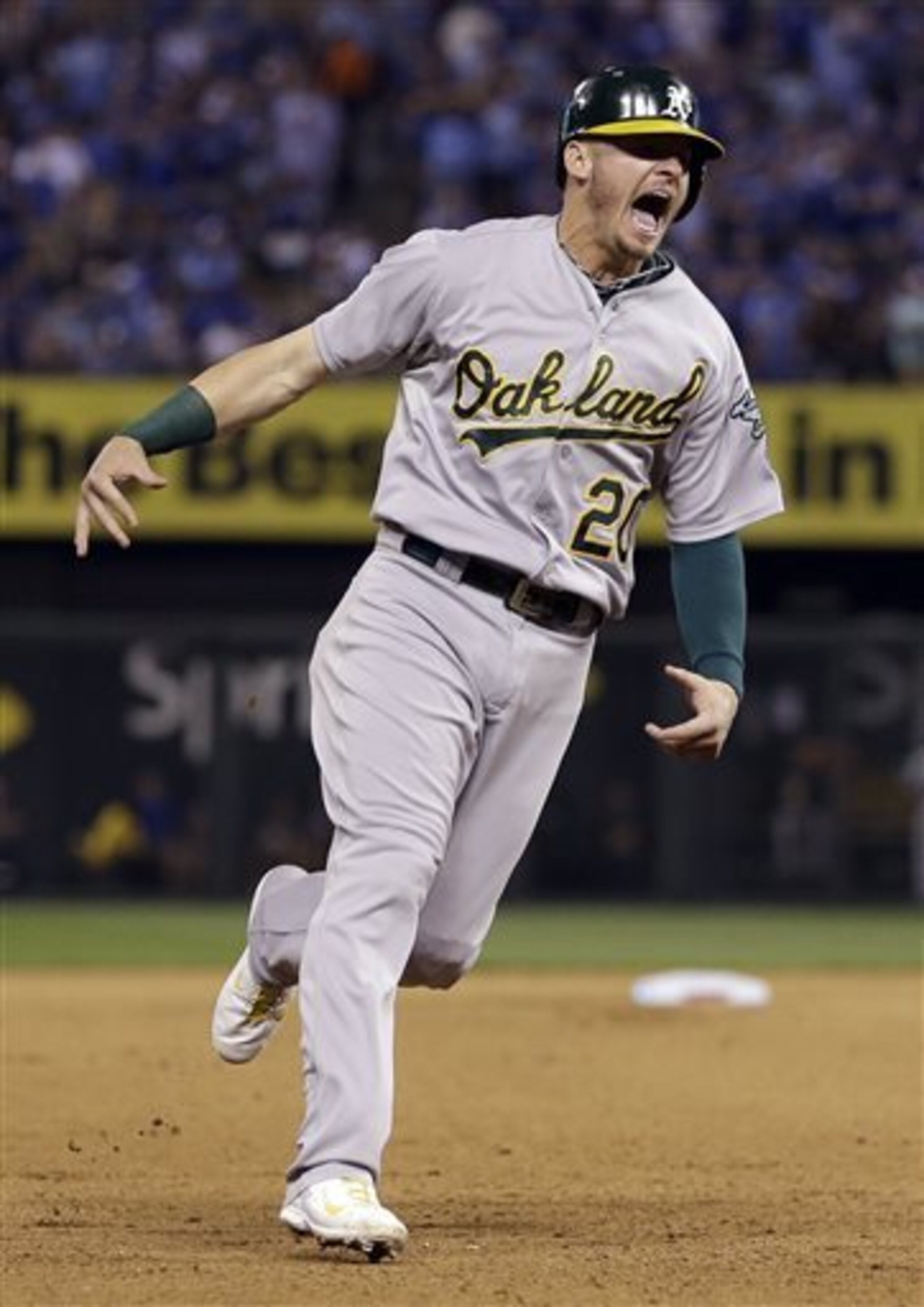
It is easy to see this trade as a big win for the Blue Jays, at least over the next four years. Donaldson has been one of the American League’s most productive players the last two seasons, and his 14.1 WAR, per Fangraphs calculations, is the second-highest mark in the AL behind Mike Trout in that time.
To get him, the Blue Jays parted with third baseman Brett Lawrie, who was once a big-time prospect but now something of a disappointment because of the high expectations. Lawrie will become a free agent a year before Donaldson.
The Jays also gave up two pitchers—Sean Nolin and Kendall Graveman—in their early 20s who can help the A’s this season, but the biggest piece going to Oakland is 18-year-old shortstop Franklin Barreto. He is still a long way from his major league debut, but he hit .311/.384/.481 with an .865 OPS in the Class A Northwest League, which is filled with college-age players.
It will be at least a few years before we know if Barreto makes this trade worth it for the A’s, but we can already give educated speculation for the Jays. Donaldson has spent his big league career in a nightmare park for hitters and still produced at an MVP level—he had two top-10 finishes in the AL MVP voting the last two years—and is now going to a launching pad in Toronto that could seriously boost Donaldson’s power numbers.
It is not inconceivable to think the Blue Jays acquired the 2015 AL MVP in this deal.
Giancarlo Stanton, RF, Miami Marlins
2 of 10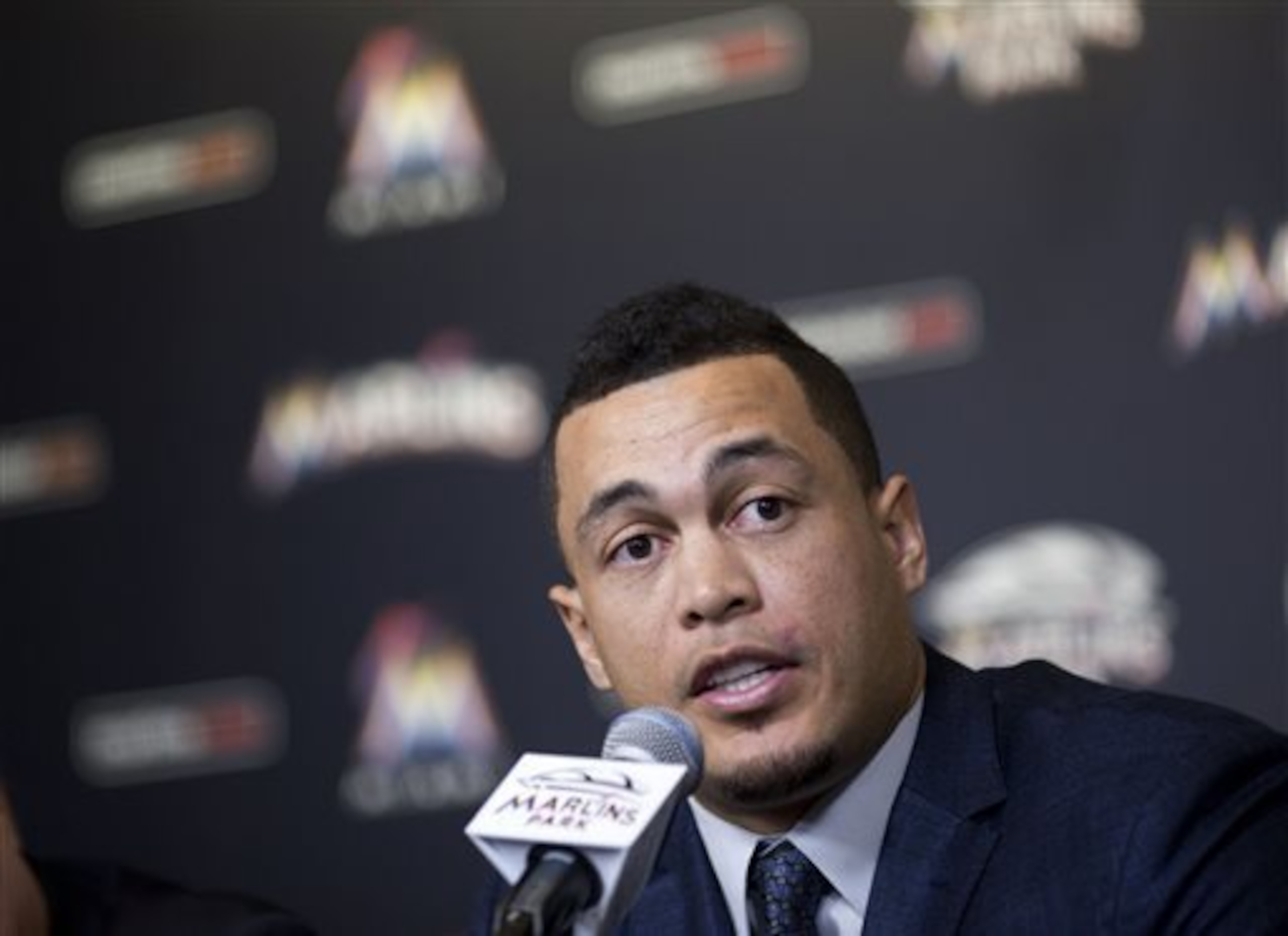
While 13 years and $325 million seems like a massive win for any player, and rightfully so, Stanton’s mega-deal is structured in a way that could make it a huge bargain for the Marlins.
Stanton, 25, can opt out of the deal after six seasons. Because the deal is heavily backloaded, it means the contract can end after six seasons and $107 million. That is an average annual value of less than $18 million for a player with MVP candidate written all over those first six years.
After that, the contract is worth at least $218 million. And there has already been a rumor that the Marlins are expecting, and hoping, Stanton opts out, according to Rob Biertempfel of TribLive.com.
If Stanton produces even at his current level for the next six seasons and then opts out, the contract would be a major victory for the Marlins. Not only are they getting a superstar player out of it, but they are also getting a ton of positive PR for a franchise that is in great need of it.
Matt Kemp, RF, San Diego Padres
3 of 10
The Padres won this deal on potential and money. Kemp has the potential to be a perennial MVP candidate when he is healthy, which has been a problem for him recently until the second half of last season. As for the money owed to him ($107 million over five years), the Dodgers are covering $32 million of it.
So, the Padres could have an elite-hitting right fielder for five years and $75 million or an average annual value of $15 million. If Kemp produces like he did before all the injuries—he finished second place in the 2011 NL MVP voting—and in the second half of last season—.971 OPS—the Padres would be getting an absurd bargain.
Of course, the Dodgers did this to clear their outfield logjam, and money grows on television cables for them these days, so they are fine with all this. If they were not, they would not have traded him to an up-and-coming division rival.
This trade is the signature moment to date for new Padres general manager A.J. Preller.



Chase Headley, 3B, New York Yankees
4 of 10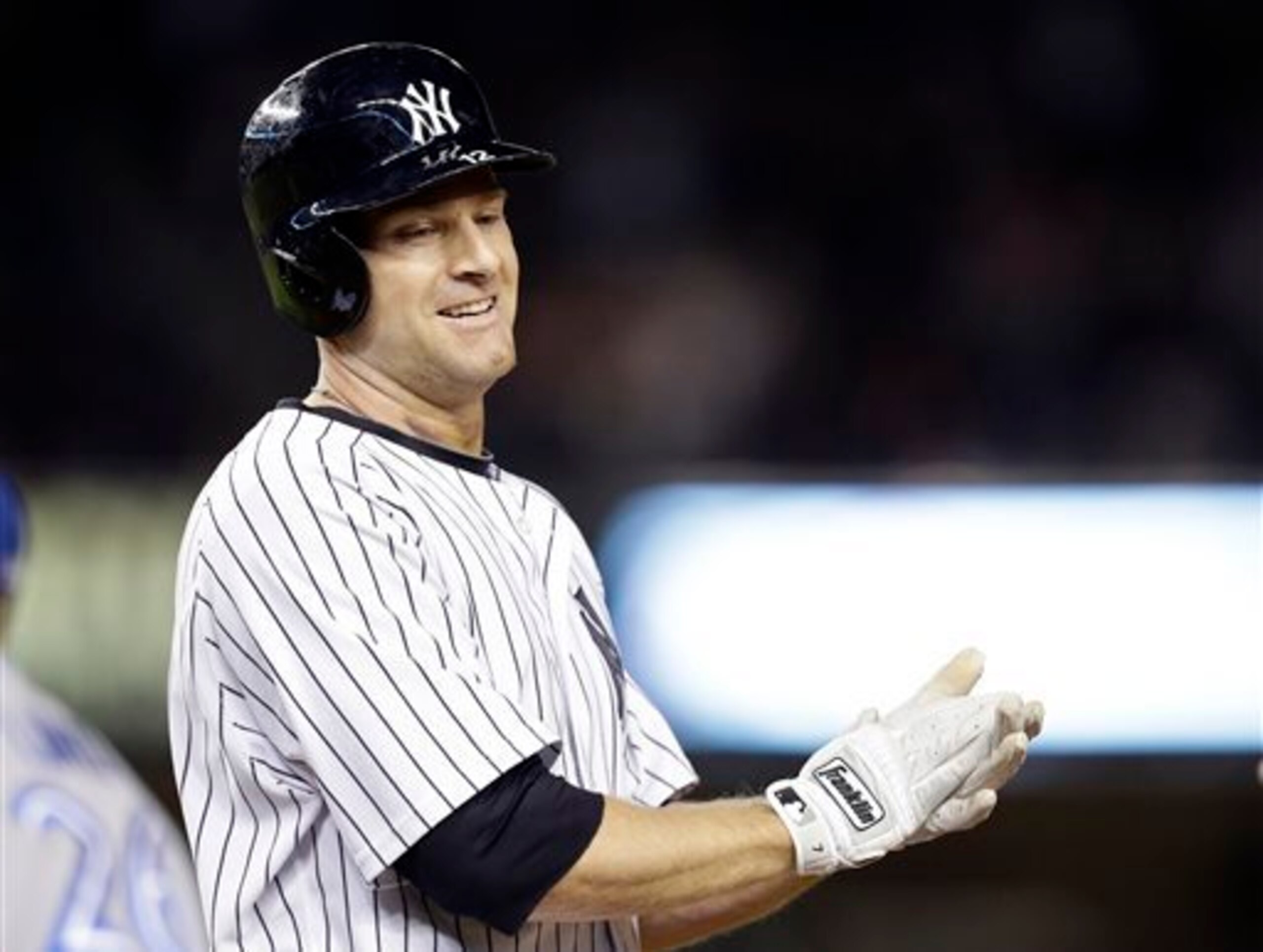
When you consider exactly what Headley is as a hitter and third baseman, his four-year, $52 million contract should seem like a bargain relative to what the Boston Red Sox gave Pablo Sandoval (five years, $95 million).
Last season Headley hit .243/.328/.372 with 13 home runs and a 102 OPS-plus in a down year by his standards. Sandoval hit .279/.324/.415 with 16 homers and a 111 OPS-plus.
Over the last three seasons, Headley hit .262/.352/.429 with a 123 OPS-plus. In the same time frame, Sandoval hit .280/.335/.424 with a 116 OPS-plus. For 2015, Steamer sees Sandoval being worth 124 wRC-plus and 3.9 wins (Fangraphs calculations), with Headley at 113 and 4.4.
Getting away from offense, Headley is far and away a better defensive third baseman than Sandoval and even Alex Rodriguez, who believes he will be the Yankees’ starting third baseman this year.
Since 2009, Headley has 30 defensive runs saved, the fifth-best number in the majors. Sandoval is at seven.
Headley is probably never going to repeat his MVP-caliber 2012 performance, but when compared with Sandoval, it appears the Yankees are getting just as much bang for a much smaller buck.
Jeff Samardzija, SP, Chicago White Sox
5 of 10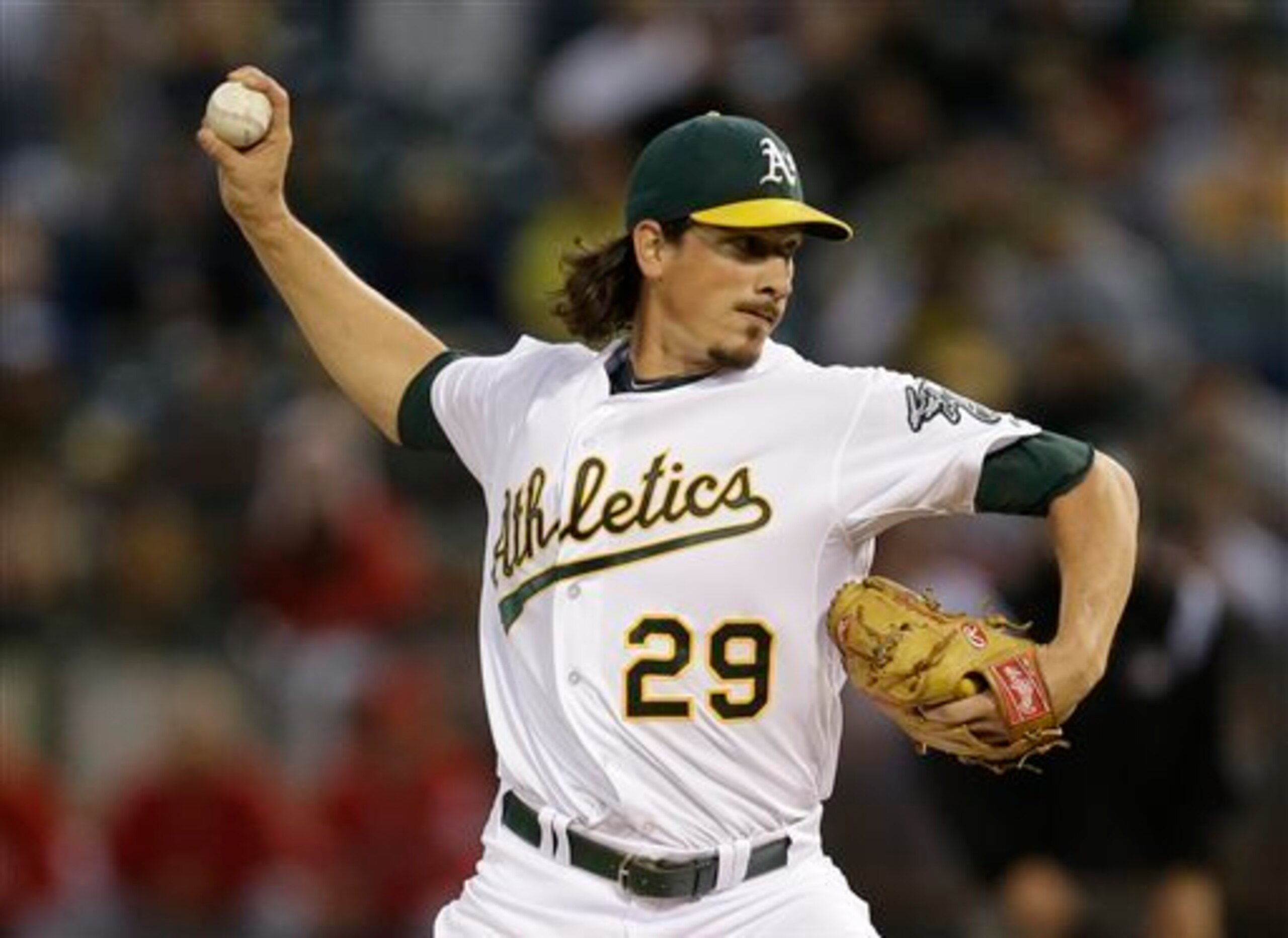
The White Sox didn’t steal Samardzija from the Oakland A’s. They had to give up someone who could have been a pillar in their infield and who torched the minors for an .839 OPS over four seasons and has 20-homer potential—Marcus Semien.
Still, it’s not like Semien has the ceiling of Addison Russell, the shortstop prospect the A’s gave up to the Chicago Cubs to land Samardzija last summer. Russell is a consensus top-10 prospect who was given up for 16 Samardzija starts in 2014. At least the White Sox are getting a full season.
The right-hander slots in as the No. 2 starter behind Chris Sale and gives the White Sox one of the American League’s best one-two rotation punches. With those two at the top, it is not unrealistic to see the White Sox as one of the favorites in the AL Central.
Samardzija can become a free agent after the upcoming season, but he is from Indiana, played at Notre Dame and views Illinois as a second home. That means the White Sox will have a full season to get him to fall for them if they decide they want to sign him to an expensive long-term contract next offseason.
Ben Zobrist, 2B/LF, Oakland A’s
6 of 10
Zobrist was the finishing touch on a crazy offseason for the A’s, one in which they traded away All-Star after All-Star. But the acquisition of Zobrist, one of the American League’s most valuable players over the last six seasons, was the stamp on the A’s as legitimate AL West contenders for this season.
Zobrist is in a contract year, and Oakland had to give up its top prospect as rated by Baseball America last month, shortstop Daniel Robertson. On the surface, it seems like a wash at best for the A’s.
That is quite wrong, though. Zobrist will cost the A’s $7.5 million, and considering he has been worth at least a 4.5 WAR in each of the last six seasons, per Baseball-Reference.com calculations—only Miguel Cabrera can match that—he is a bargain.
If the A’s do not contend in 2015, they can flip Zobrist at the non-waiver trade deadline. If they hang onto him, he will decline their qualifying offer, netting the A’s a compensation draft pick. After that, everyone should have enough faith in GM Billy Beane that he can find a way to replenish the farm system through other trades.
Mat Latos, SP, Miami Marlins
7 of 10
Latos’ health is the key to this grab for the newly competitive Marlins. After being healthy for the first four full seasons of his career, Latos had elbow and knee issues last season that limited him to 16 starts—the first time he had not made at least 31 starts in a season since his rookie year.
If Latos can stay healthy in Miami, he is quite capable of heading the rotation. The last time he was healthy, in 2013, he went 14-7 with a 3.16 ERA, 3.10 FIP, 120 ERA-plus and 8.4 strikeouts per nine innings. He also did that in a hitter-friendly environment in Cincinnati. Those numbers could improve in Miami.
The Marlins gave up one of their top five prospects, right-hander Anthony DeSclafani, and 23-year-old catching prospect Chad Wallach. Assuming good health and production from Latos, that is not a huge price tag for a potential ace.
Latos is not a big monetary cost, either. He has not settled his arbitration case, but his side filed at $10.4 million. He can become a free agent after the 2015 season, but he is a Coconut Creek, Florida, native, so the option of staying in Miami—the two cities are about 40 miles away—should be appealing to Latos, and that could further make this a win for the Marlins.
Justin Upton, LF, San Diego Padres
8 of 10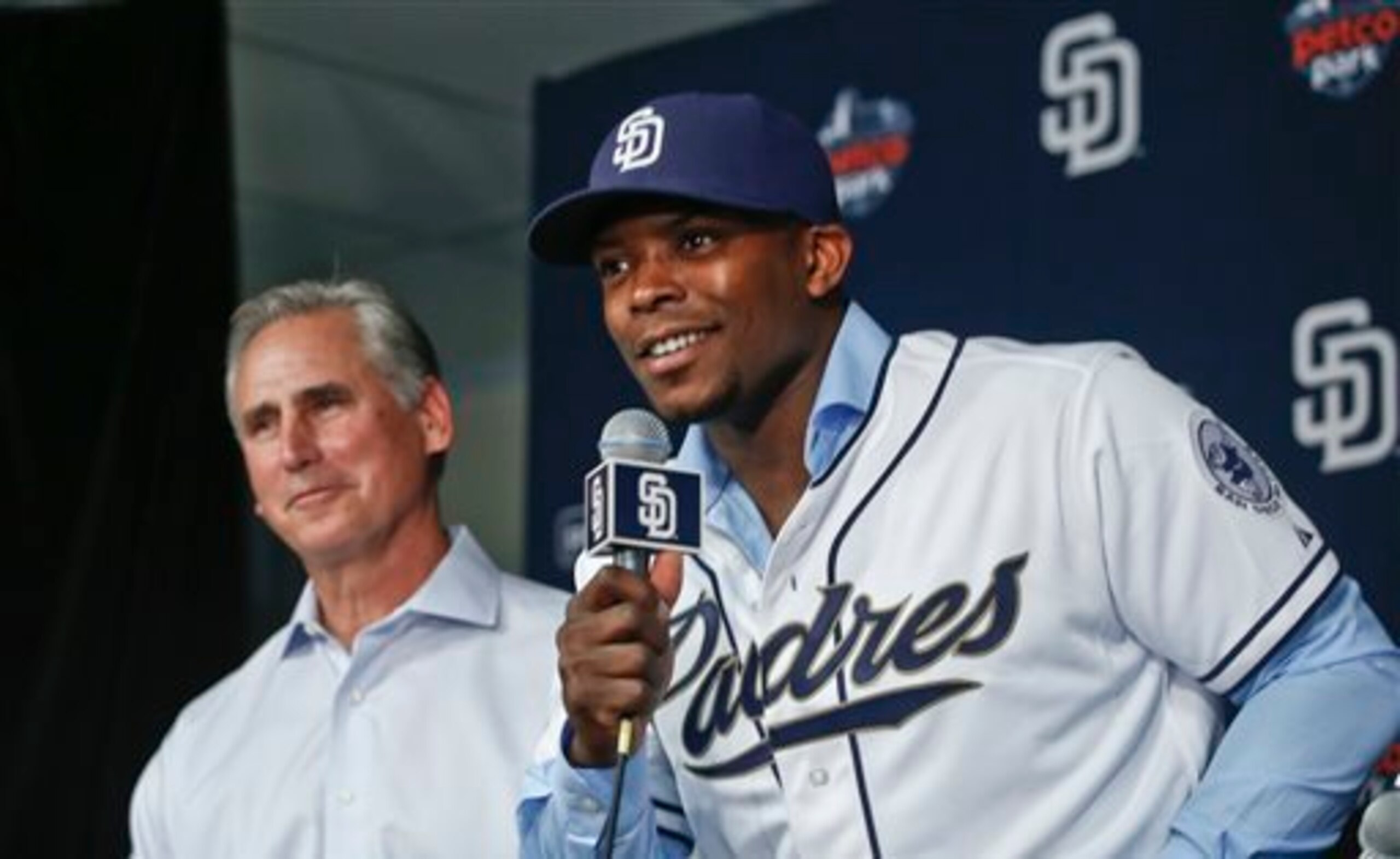
Sure, the Padres had to give up one of their better prospects, left-hander Max Fried, to get Upton. But the team is not hurting for arms, and Fried had Tommy John surgery in August and is not expected to return until next year. If Fried was not injured, there is no way he would have been included in any trade.
Aside from Fried, the Padres did not appear to give up any potential superstars in the four-prospect package they sent to the Atlanta Braves for Upton, who has MVP potential.
Making the deal more desirable for the Padres is that Upton will make $14.5 million next season before becoming a free agent. If he produces—he hit .270/.342/.491 with 29 homers and a 132 OPS-plus last year—he will be considered an elite slugger at a low price.
Upton’s defense hurts his overall value, but his potential—he is still only 27—is still high enough that he can neutralize that with his bat.
Colby Rasmus, OF, Houston Astros
9 of 10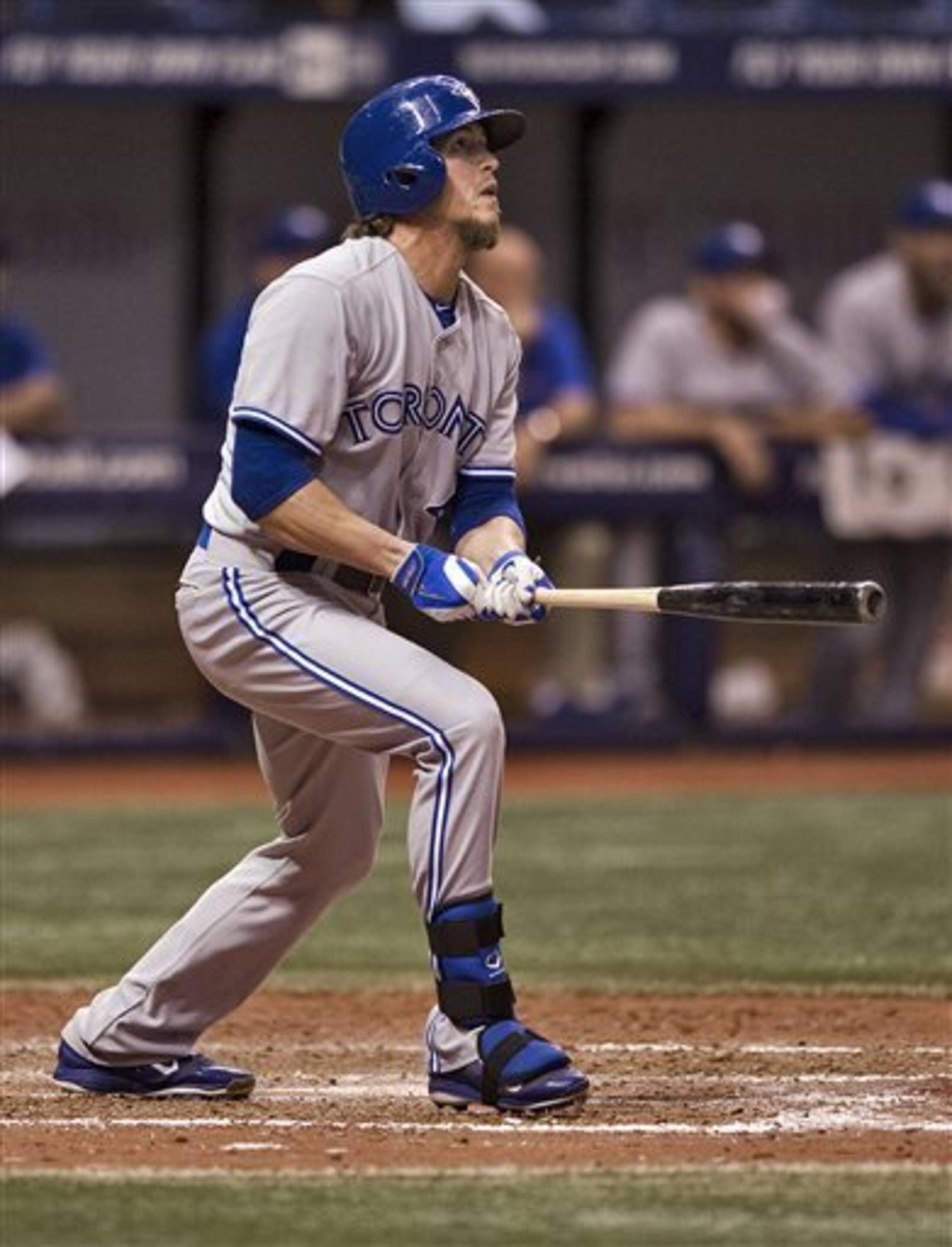
Rasmus has a checkered past, having moved on from St. Louis and Toronto despite being a high-ceiling player under the age of 30. That is why he came cheap, and that is why he can be a huge gain.
He did not have a good 2014 for the Blue Jays, barely producing more than the league average (104 OPS-plus). But he is just a season removed from posting an .840 OPS and 127 OPS-plus in 2013. If Rasmus can at least duplicate that kind of production, the one-year, $8 million contract the Astros gave him will turn into one of the best deals of this offseason.
Helping that hope is the fact that the Astros might keep Rasmus out of center field. A position change could take pressure off his mind and his body.
Clubhouse concerns and a down 2014 are the reason why Rasmus did not sign until earlier this week. But this one-year deal should be sufficient motivation for Rasmus to show he can still play at a high level.
Stephen Drew, SS, New York Yankees
10 of 10
Stephen Drew was a victim of the compensation pick last offseason, not signing with the Boston Red Sox until late May. If it were not for that huge delay to the start of his season, he would have been a candidate for a multiyear deal instead of the one-year, $5 million one the Yankees gave him.
Drew’s 2014 was a lost season—.162/.237/.299—and led to him being a buy-low option. But the year before he was a critical piece to the Red Sox winning the 2013 World Series, hitting 13 home runs and putting up a 111 OPS-plus. Had draft-pick compensation not been attached to Drew, who turned down Boston’s one-year qualifying offer, he likely would have gotten a multiyear contract.
Drew is not much with the bat, but he has been one of the better defensive shortstops in the game over the last two seasons. He is likely to play second base with the Yankees, probably improving his defensive value.
A full spring training of games to get ready for the major league season should help Drew forget last season.
“When I finally have a normal spring training and get into a routine with the guys,” Drew told David Waldstein of The New York Times in September, “I think it’s going to be a lot better.”
.jpg?w=2560 "Chiefs, Steelers Eye WR Trades")





.jpg?w=2560 "Raiders Sticking with Cousins")