
Power Ranking the Six Nations Sides on the Strength of Their Backs
Every Six Nations outfit has grand expectations coming into the 2015 tournament, some basing those aspirations around their forwards, while others rely more heavily on the talents of their backs.
Last week, we sorted the six participants based on their packs, but this week sees us ranking the more glamorous bunch, some of whom boast higher prospects than others.
In the end, it will assuredly be the most rounded team who secures Six Nations glory, but looking at star talent, depth and recent form, we've examined which back lines are in the best shape coming into this competition.
Irrespective of what's been achieved in the past, possessing an array of big names isn't enough in this grading, where gaping holes and notable deficiencies have been accounted for.
6. Italy
1 of 6
You know that your dreams of assembling a squad worthy of Six Nations title contention are slim when a 21-year-old Treviso starlet is not only the brightest prospect in your back line, but arguably the best talent in all.
That's not to do Michele Campagnaro any injustice—the Venice-born centre is an extremely gifted prospect—but not one yet ready to shoulder a burden Jacques Brunel may be forced to expect of him.
Four of Brunel's 14 summoned backs are uncapped at Test level, while another four have 10 caps or fewer to their name and 33-year-old Andrea Masi edges gingerly toward his twilight years.
Kelly Haimona looks to have stolen an edge over Tommaso Allan in the race for the No. 10 jersey, but the New Zealand native still isn't of an elite class, or at least not compared to his Six Nations counterparts.
In truth, this Italian crop could look very good in four years or so. Campagnaro is steadily ascending as a midfield force, Edoardo Gori is gaining experience as the steadfast scrum-half and the likes of Luca Morisi and Leonardo Sarto have big potential.
But, in the end, it's a familiar story for the Azzurri, who simply don't have enough world-class talent or experience to look all that threatening on paper.
5. France
2 of 6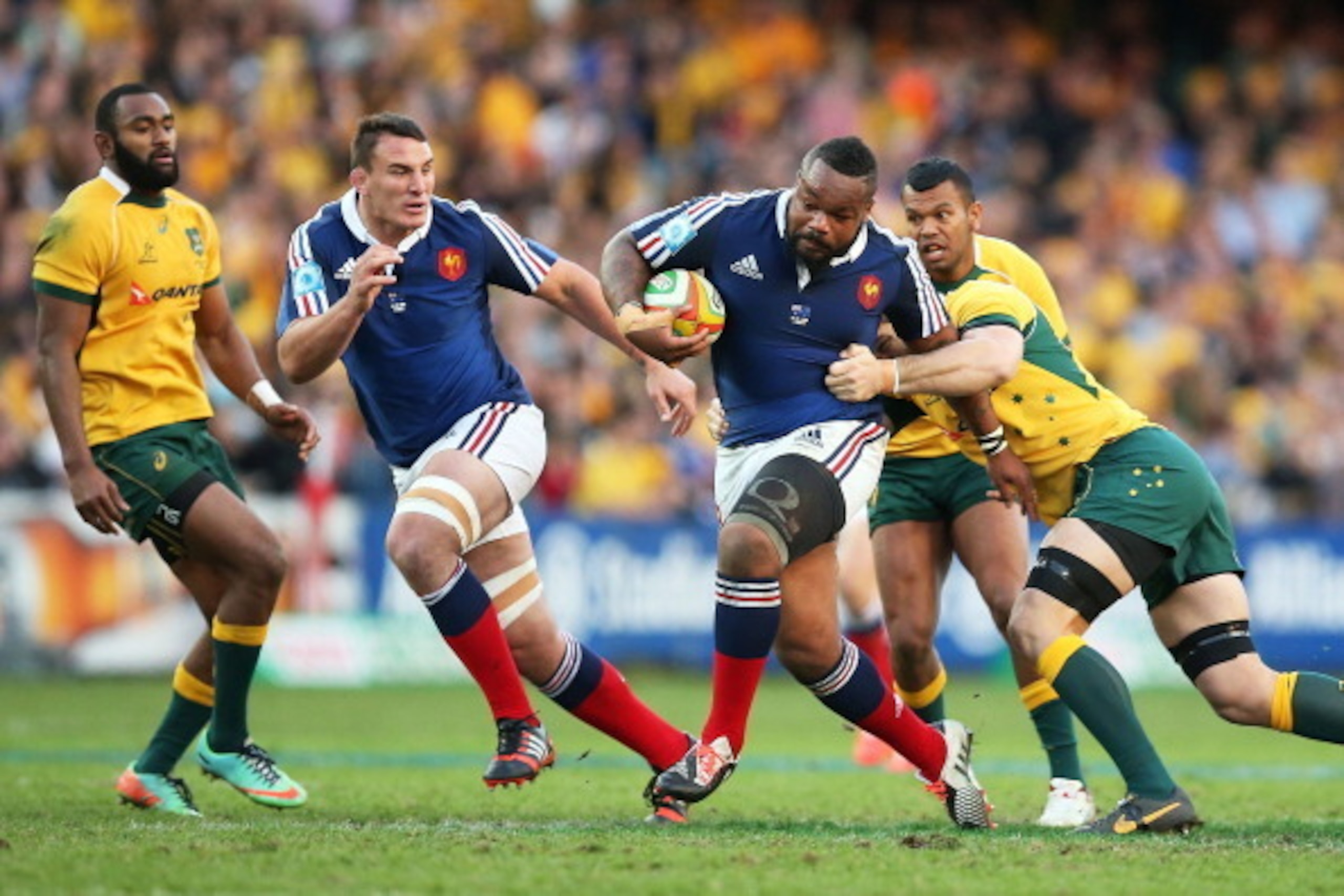
Philippe Saint-Andre is attempting to create a new wave of stars, one which could most certainly prove this ranking incorrect and move up in the Six Nations standings.
However, Les Bleus come into 2015 after finishing among the bottom three for the last three tournaments in succession, and their revolution is at risk of not going to plan.
Mathieu Bastareaud has no choice but to recall his best form if he's to retain a guaranteed starting berth. At the end of December, the out-of-form Toulon bulldozer "broke down in tears" following a loss to Stade Francais, quoted by ESPN Scrum as saying:
"You have to know how face up to things. Since the beginning of the season I haven't been able to find my form. I'm a zombie. I think that now I've come to the end of the road. There comes a time when you have to say stop!"
Taking the centre's recent shortcoming into account, it's a big blow for Saint-Andre. Wesley Fofana is still a majestic asset, but seeing Bastareaud so vulnerable is worrying.
Meanwhile, the foreign acquisitions continue to boost France's selection. South African Rory Kockott will look to cement his place as the team's new No. 9 and Fiji-born Noa Nakaitaci could be a triumphant acquisition, with South-African native Scott Spedding already impressing.
Burgeoning internationals Camille Lopez and Teddy Thomas are also rising as promising bastions at fly-half and wing, respectively, but a lack of experience could hurt France's chances.
In total, the 14 backs selected have 153 combined caps, an average of just under 11 caps each, which is far, far fewer than some of their opposition.
Admittedly, possessing the players with most appearances isn't everything, but coming onto a stage of the Six Nations variety, where five pressure-filled games are all you have to get the job done, wisdom doesn't hurt.
4. Scotland
3 of 6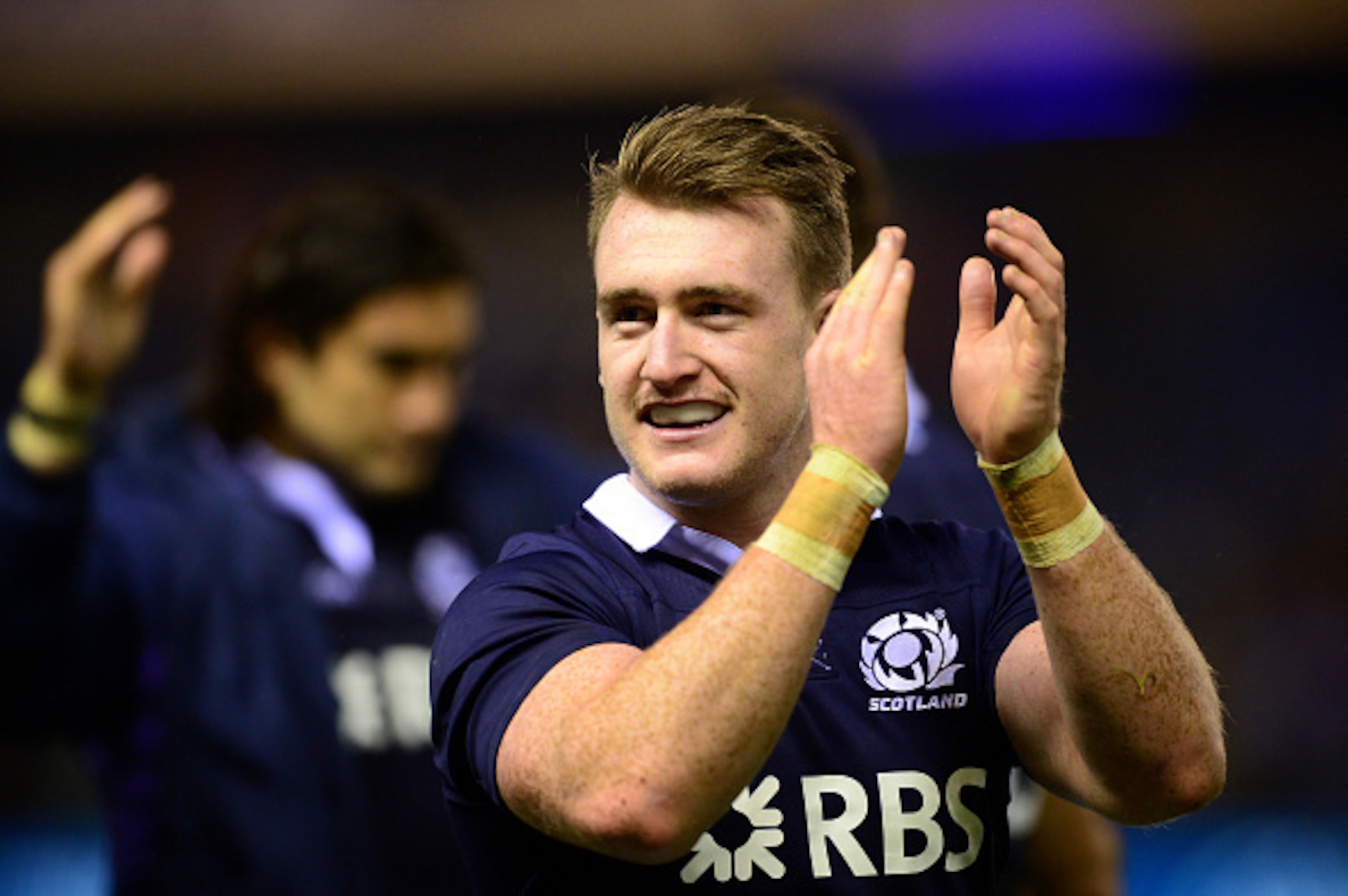
Thanks to the tutelage of Vern Cotter, Scotland have escaped their shackles over the past year and begun to display a more adventurous motif in their play, the back line being a particular benefactor.
When usually lined up against "the big four" of the Six Nations, they sit outside the hierarchy, but their Pro12 stars have shown good form in individual respects and deserve to be looked upon as a threatening force.
For the longest time, selection has afflicted Scotland's chances and having a talent pool limited largely to the stars of Glasgow Warriors and Edinburgh has seen their chances suffer.
No longer is that such a bad thing, though, and players such as Stuart Hogg, Tommy Seymour, Mark Bennett and Alex Dunbar can dish out serious damage. What's more, that inner-circle of club familiarity holds obvious benefits in terms of synchronicity.
In Gloucester's Greig Laidlaw, Cotter boasts a reliable first-choice scrum-half with the added extras of an accurate boot and Sam Hidalgo-Clyne, his former Edinburgh team-mate, looks set for big things, yet to get his first cap.
Fly-half is the team's main concern, though. Finn Russell did a stellar job of guiding the Warriors to last season's Pro12 final, but the international standard is a big ask of him. With Duncan Weir out injured, his cover is limited, too.
Dunbar and Bennett could solidify a Scottish midfield partnership for years to come, but both sit just below that level where one can truly say they're of the elite standard. In truth, Hogg may be the only back-line member who does.
.jpg?w=2560 "Seahawks Chiefs Football")


3. England
4 of 6
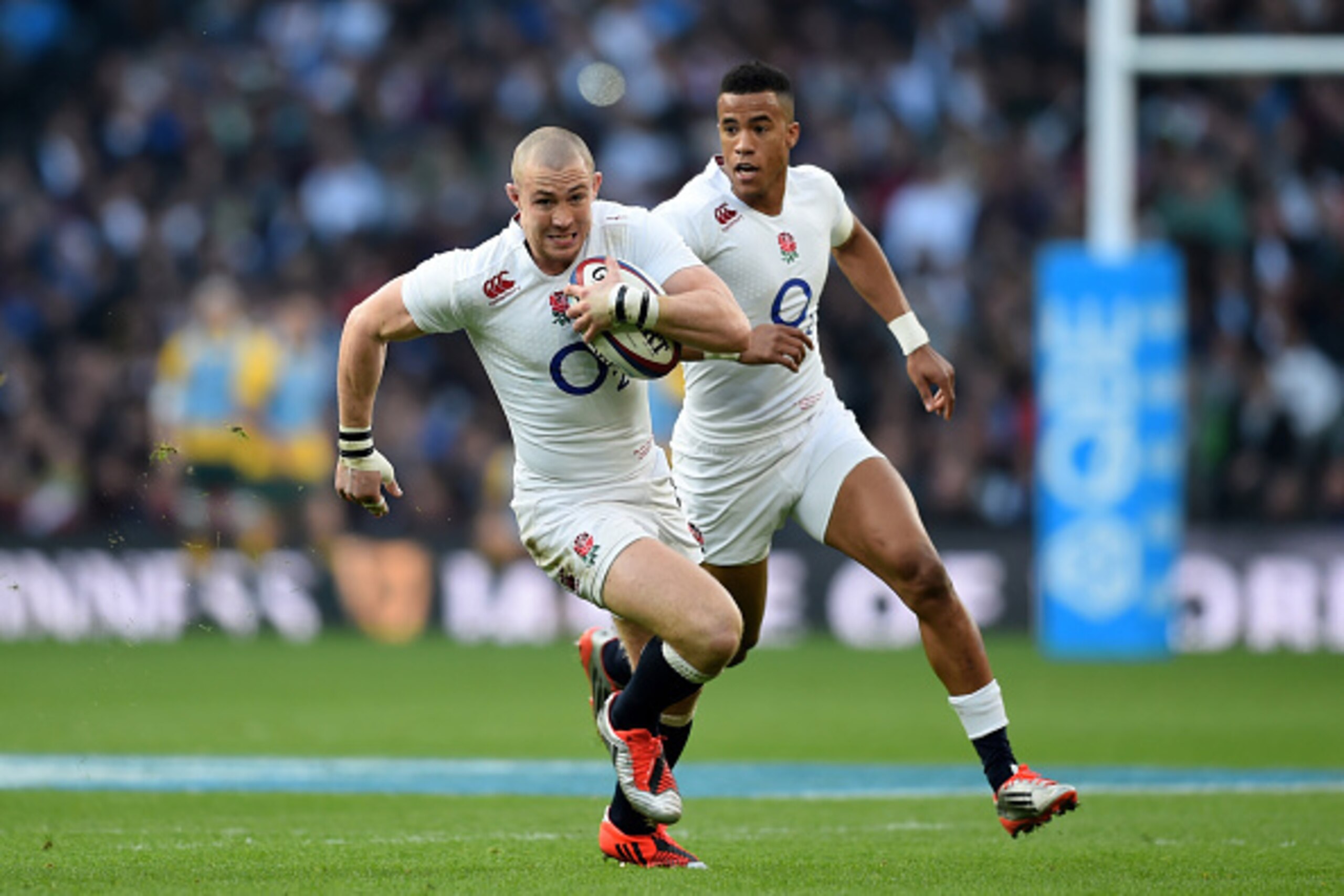
Even with a very obvious dilemma in midfield, Stuart Lancaster could well have the strongest back line of any Six Nations side, but consistency is the primary objective for England.
The Aviva Premiership's finest have once again been assembled under one roof, with Bath stars George Ford, Anthony Watson and Kyle Eastmond again in the mix, while Jonathan Joseph joins up in the hope of establishing his name in the starting XV.
The latter is hoping to be the answer to that centre formula, but the truth is that in the absence of an injured Manu Tuilagi, there still remains not one surefire selection at No. 12 or 13.
Brad Barritt, Luther Burrell and Billy Twelvetrees, each showing mixed form as midfield hopefuls in the past, are vying for inclusion, but Austin Healey writes for The Telegraph that it's the Bath duo who must start:
"I hope they will pick Kyle Eastmond and Jonathan Joseph but fear they will go with Brad Barritt and Luther Burrell. Again people will say what about Jamie Roberts coming down the middle against Eastmond and Joseph? My argument is that these guys play against big guys week in, week out. Just because someone might be 11lb heavier is not going to make a great deal of difference.
I would ask Roberts who would he rather play against: Barritt, who is going to tackle you, or Eastmond, who you have got no idea where he is going when he has got the ball? With Eastmond, 50 per cent of the time, you are worried; the other 50 per cent of the time you think, I am going to run over him. Then Eastmond knows what’s coming; Roberts certainly does not.
"
Eastmond was one of a number of players who had a mix of ups and downs in last summer's winless tour of New Zealand, but England showed improved promise during three-point defeats to the All Blacks and South Africa in the autumn.
The back-and-forth between Ford and Owen Farrell at fly-half will not take place in this year's tournament, however, after ESPN Scrum announced on Tuesday that a knee injury will keep the latter out of the entire Six Nations.
The temperamental Farrell wouldn't be first choice for the fly-half role in everyone's books, but his loss of cover in the position is a big blow for Lancaster.
Mike Brown is debatably among the most reliable full-backs in the world, albeit not always dazzling, but with Ben Foden now out of the tournament, cover at 15 has been shortened, though Alex Goode is a steady option, too.
What's more, with wing choices Jonny May, Jack Nowell and Watson boasting just 20 caps between them, the rest of the back three isn't as secure.
Sitting among this back line is a host of undercooked assets who, if capable of evolving as a national brand, could well compete for the World Cup on home soil. As of right now, though, they remain a disjointed bunch with many a chink in the armour still evident.
2. Wales
5 of 6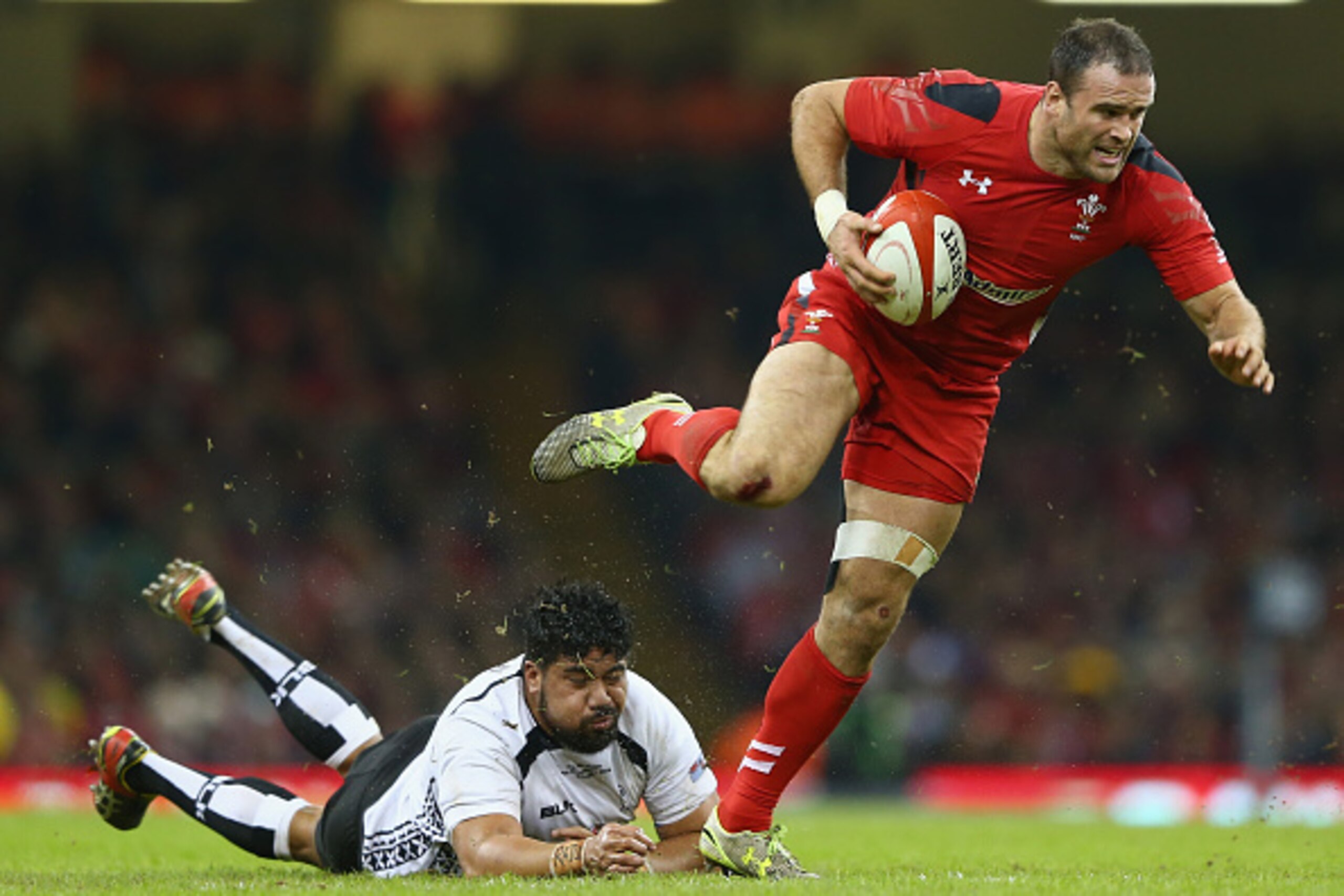
If these rankings were based on past credentials alone, Wales may well top the pile, but a failure to inspire throughout the November internationals saw the side lacking an attacking edge.
When fully fit, it's difficult to see where Warren Gatland's back line has any severe deficiencies. Rhys Webb and Mike Phillips make for good competition at No. 9, while Jamie Roberts and Jonathan Davies can be a centre pairing as strong as any other in world rugby on their day.
George North and Alex Cuthbert haven't been quite as prolific as usual on the international stage over the past year, but they, alongside Liam Williams and Leigh Halfpenny, are a stellar back three to have.
Williams in particular has shown terrific form with Scarlets, so much so that ex-Wales international Jonathan Davies says full-back competitor Halfpenny should be shifted onto the wing, per Gareth Griffiths of Wales Online:
"Where Wales have struggled is with strength in depth traditionally. That’s where the likes of New Zealand and Australia have the edge, with different levels of combinations. Leigh’s goal-kicking is phenomenal but I would quite like to see him as a winger. He’s not quite a natural playmaker at full-back in the same way that Liam is.
"
Davies is right in asserting depth as the concern at hand, but the first-string setup is one of world class, form permitting.
Former Chiefs utility back Gareth Anscombe has come into the squad following his move to Cardiff Blues and will contend with Dan Biggar and Rhys Priestland for the No. 10 slot. If only one of those can step up in class and consistency, the puzzle will be complete.
For some, Anscombe deserves the chance at doing so and will make for an intriguing experiment, with all the pieces potentially in place for this side to be a back crop of devastating quality in attack and defence.
1. Ireland
6 of 6
Ireland have a habit of defying the odds and proving their doubters wrong; at no point was this more clear than during the undefeated November Test series last year.
Jonny Sexton continues to pull the strings tremendously for this team and is entering a prime phase of his career. Almost single-handedly winning the title-clinching game against France last year, he's hoping for more plaudits in 2015.
His influence helps the likes of Tommy Bowe and Keith Earls bring up their game, neither of whom are considered the strongest or fastest wingers in the world, but often function so well in national colours that physical factors take a backseat.
And that's the story of Ireland in a way. Individually, their backs may not be considered elite in many cases, but banded together, they're capable of greatness.
Robbie Henshaw's journey to filling the gargantuan void left by Brian O'Driscoll in the No. 13 jersey went through some encouraging steps in November, with wins over South Africa and Australia coming through no small influence of the Connacht man.
He's one of numerous midfielders under Joe Schmidt looking to shine, with Darren Cave, Gordon D'Arcy, Jared Payne and Noel Reid making up the midfield numbers, each with a difference in potential and pedigree.
Schmidt has brought no fewer than seven wingers into his side, a couple of whom can fill other gaps if needed, but speedsters Craig Gilroy, Simon Zebo and Fergus McFadden may struggle for playing time, which says a lot of their depth.
The fitness of Conor Murray will be of grave importance. On his day, he's an industrious resource of considerable wit, but Eoin Reddan, Isaac Boss and Kieran Marmion make for a long, sturdy chain of second-string contenders.
Add a world-class full-back of Rob Kearney to that mix and you've got a World Cup-challenging back line on your hands. Six months ago, the centre situation was in some despair, but Ireland's youth and the help of Schmidt's guiding hand look to have laid any such doubts largely to one side.




