

Bellator MMA: 10 Ways Coker Can Take the Promotion to the Major Leagues
When news came of the lawsuit against the UFC, Scott Coker took exception with the idea that Bellator MMA was being considered as a minor league organization.
Coker addressed the issue with MMAfighting.com's Marc Raimondi), saying: “Do I think Bellator is a minor league? The answer is no.”
As a relatively new figure in the promotion, it is not surprising that Coker would come to the defense of his employer; he managed to keep Strikeforce going in the MMA scene for many years before the UFC finally bought it out.
“I would say four years ago, people would say that about Strikeforce. They’d say ‘Oh, UFC has the best fighters, the best champs.’ That can be debated.”
Then, Coker spoke of the future as proof positive that big things are to come Bellator’s way.
“Labeling a league based on the past can be misleading because the fighters that are here today fighting for us are going to be the next Luke Rockholds, the next Daniel Cormiers. They are going to be the next stars of MMA.”
It’s an optimistic point of view, to be sure. Coker has the acumen to grow Bellator into something much bigger, and he has made some big strides already in abandoning the tournament-based format for big cards with bigger names.
Sadly, those names are either seriously faded or being plucked from his roster by the UFC.
Right now, Bellator has three big names: Tito Ortiz, Stephan Bonnar and Kimbo Slice. The fact that Slice is even being considered as a major player in the Bellator scheme of things is telling.
Thus far, the kinds of fighters that a man like Coker could build an organization around have already been pulled from his stable or abandoned the promotion, through no real fault of his own.
Hector Lombard, Quinton “Rampage” Jackson, Ben Askren and Eddie Alvarez used to claim Bellator home, but no longer. None of this is Coker’s fault; he’s essentially been given a fixer-upper project that just happens to have a television deal and major backing.
And, of course, he has some very good fighters who are toiling in relative obscurity because hardly any of the MMA fanbase knows them.
So, how can he go about pulling his new promotion up by the bootstraps?
Well, going after fighters like Fedor Emelianenko, Mirko "Cro Cop" Filipovic and Slice is not the answer. Neither is signing professional wrestling notables. That makes Bellator look like it doesn't have any original ideas of its own.
If it is going to succeed at all, it needs to come to grips that it is in direct competition with the UFC; Bellator can no longer subsist from the scraps that fall off the Zuffa table. If it didn’t know that before, seeing the UFC lure away Jackson and yank Cro-Cop out from under its nose should be proof enough.
Zuffa is not about the business of abandoning resources that might feed the enemy. The UFC didn’t need either fighter; it reached out and took them because it would damage Bellator as a rival.
If Bellator ever wants to be taken seriously as a legitimate alternative to the UFC, for both fans and fighters, it has to start making serious moves, with full conviction.
So how can Bellator remake itself as a force in the sport?
Here are 10 basic ways it can get the job done.
No. 10: No More Reality Shows
1 of 10Any MMA promotion attempting to make headway in the world of reality television is always going to suffer by comparison to the UFC and The Ultimate Fighter. It was the first reality show, and it is still the best, even after all these years.
Any other versions on this theme will either miss the point or look like nothing more than a desperate attempt to copy the original, which in turn makes said promotion look like an imitator at best.
There are only so many ways to tell the story of combative sports outside of actual combat, and for the foreseeable future, the UFC has this area locked down.
Some battles need to be fought; others need to be avoided, and this is one of the latter.
For now and the future, Bellator should focus on the fights and the stories of the fighters; nothing else really matters, anyway.
No. 9: Keep the Flashy Entrances
2 of 10Normally, I am against confusing combative sport with professional wrestling, but at Bellator 131, the entrance of Tito Ortiz reminded me of the early days of the UFC, when Zuffa first acquired the company.
Those early days were something special, and in truth, they are the only version of the UFC that Bellator can afford to emulate.
Anything Coker can do to set his product apart from the UFC is a good thing because people will remember the contrast. Maybe they will love it, and maybe they won’t, but Bellator won’t look like a secondhand show; it will be doing things differently, and right now that is terribly important.
With the rising costs of pay-per-view events and the lack of name-powered cards, free events with a big-time feel and known names could be a huge coup for Bellator. Right now, it wants exposure, and in order to get it, the promotion will have to put itself out there in its own way—not the UFC’s way.
Bellator may be small compared to the UFC overall, but half the battle is not showing it. In other words, fake it until you make it and make it worthwhile for the fans.
Yes, this part is salesmanship, and Bellator should do it with passion and a parade.
No. 8: Get a Professional Broadcast Team
3 of 10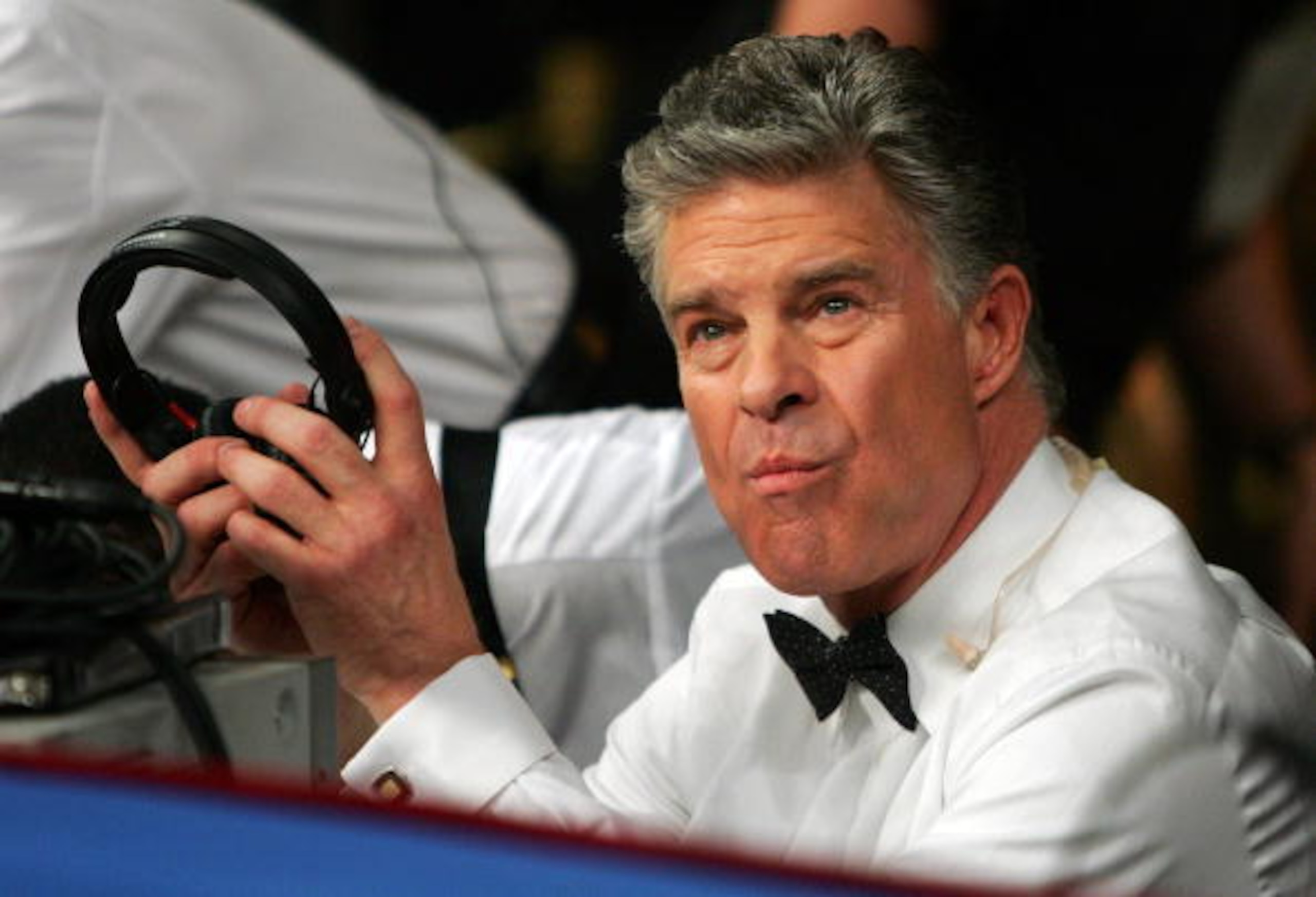
Just as HBO has Jim Lampley (and had Larry Merchant), the UFC has Mike Goldberg and Joe Rogan, so Bellator should look to get some serious people behind the microphones to give a meaningful reading of the narrative of its fights.
Off the top, Pat Miletich would be an excellent beginning. A good second would be someone like Randy Couture or Chael Sonnen—men who possess the necessary skills to not only educate but also illuminate the drama unfolding in the cage.
Good broadcasters not only know the sport but can understand the questions at hand and the story that such bouts tell, and every fight is a story. Good broadcasters have colorful personalities and are lucid and observant to the fact that combative sports are about unvarnished truth, personal reckoning and a burning desire in each fighter to tell an epic saga of personal pride and glory.
There are many men and women who can regurgitate basic facts and declare a knockout to be a knockout; good commentators navigate the obvious with a verve that makes us forget we are watching nothing more than legalized assault.
They help us appreciate the scope of a given victory and make it much easier to commiserate with those who suffer defeat, because they narrate in a language that brings it all home, to the human heart.
That is the magic of good commentary; it helps us recognize that we are seeing rare people striving to know great glories who are willing to risk crushing defeat on the public stage.
.jpg?w=2560 "Seahawks Chiefs Football")

No. 7: Establish a Code of Competition
4 of 10
While much is made these days of Codes of Conduct and the violations of such at the hands of men and women who are all too human, little seems to be done about the spirit of competition on a basic level.
Too often we see fighters declaring they will not fight one another due to team affiliation, personal admiration or both. Sadly, that is one thing Bellator cannot afford to deal with anytime in the future.
If it happens, it will no doubt occur at the least opportune time.
With the UFC, it happened the night of UFC 40, when Tito Ortiz decided he was going to hold the light heavyweight title hostage in order to force a renegotiation of his contract rather than face Chuck Liddell. This in turn saw the promotion create its first interim title, which took the wind out of its sails after such a successful night.
If it happened to the UFC, it could happen to Bellator, and the company cannot afford for anything to steal future momentum.
With a Code of Competition, fighters in the Bellator stable would understand that under no uncertain terms will avoidance of a fight due to team affiliation (or any reason, really) be tolerated. In exchange for this, they would be compensated fairly via contracts that allow them to make the most of all viable monies relative to their ranking and the significance of their bout.
Clearly, it would be a hellish situation for most fighters to have to battle their teammates, but fighters know that is a real possibility these days. While the company should handle the subject with compassion and understanding, when push comes to shove, it’s an exception Bellator shouldn’t make.
Such are the harsh and often unyielding demands of professional prizefighting.
No. 6: Stop Giving Away Fighters
5 of 10
No longer can Bellator afford to just give away fighters because the battle to keep them may be distasteful; if that requires loosening the purse strings and revamping contracts, then so be it. The UFC is the only promotion in MMA that can afford to look at its fighters as employees; the rest need to look at their fighters as business partners and treat them accordingly.
Combative sports have always had an “us against them” mentality; Bellator needs to show its fighters that it supports them and wants them to be successful. That will require exposure that, thanks to Viacom, Bellator should have available.
If that means staging more shows, then it needs to be done. Fighting sells itself and is the fighter's best friend and loudest advocate; a loss in one great fight can do more for a fighter’s career than five victories in average contests.
Then, there is the grassroots element of fighter promotion, which Bellator seems to represent, whether it likes it or not. Bellator should look at every new and upcoming fighter as a potential champion, rather than caulk to fill in the gaps of the next fight card. Promotional video should be crafted to make their entrances a thing of pride and a taste of what fans can expect.
It’s not simple salesmanship—it's showmanship, which has always been part of the craft of fight promotion.
The same kind of enthusiasm needs to be extended to existing fighters on the roster, without fail. Should a fighter appear unhappy, Coker and his staff need to go to all responsible ends in order to make sure they are not losing a fighter due to the mundane.
Obviously, if a fighter is not performing, Bellator cannot afford to keep him or her indefinitely. Many things affect a fighter’s performance, much of them negative; if Bellator can help its fighters manage these problems, it will benefit as a whole.
But Bellator just cannot give up fighters with potential—not anymore.
No. 5: Go After Olympians
6 of 10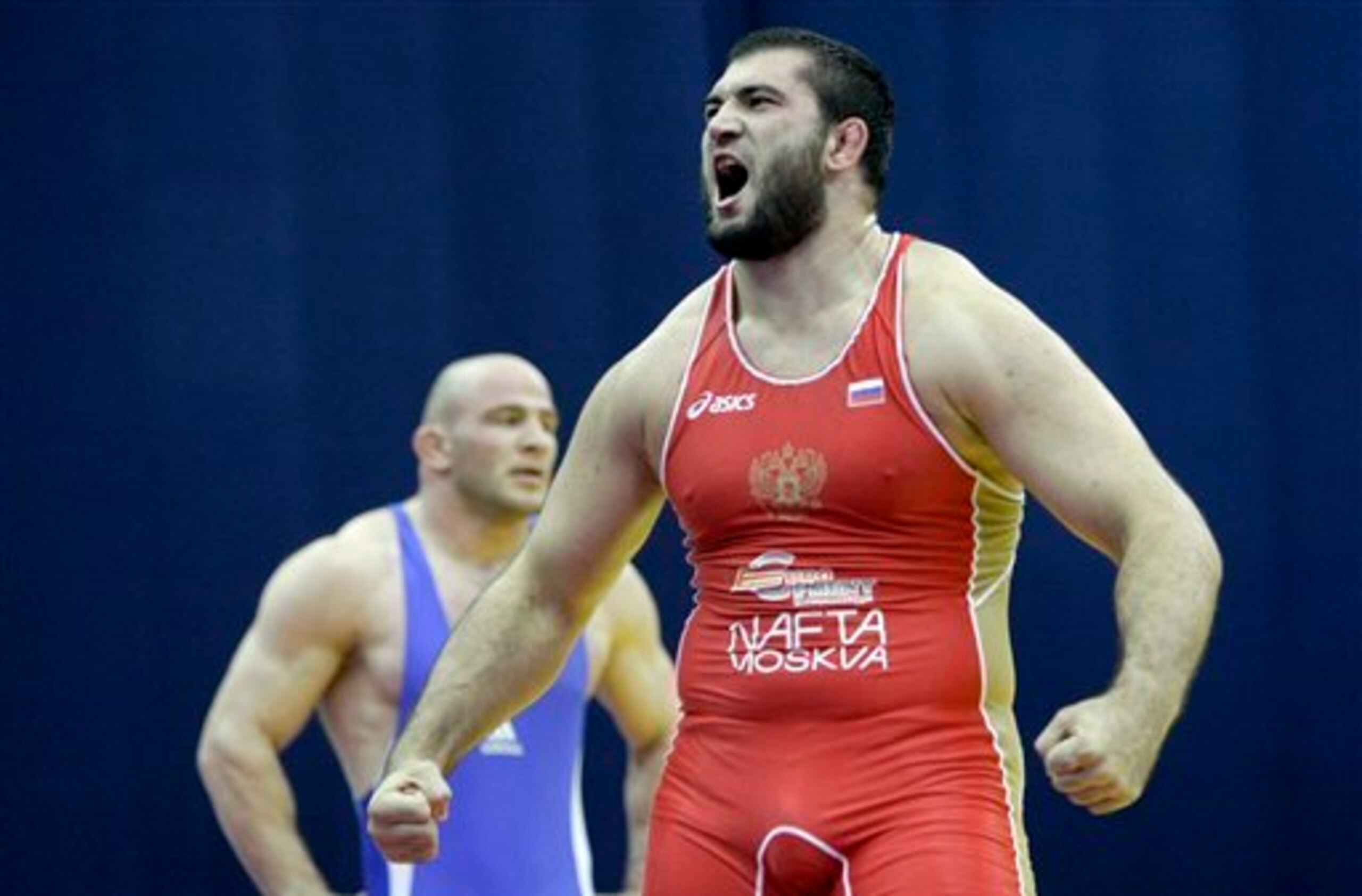
While it may be tempting to try to go back in time to drink from a once rich well, the sad facts are that fighters like Emelianenko and Cro-Cop should honestly retire.
Signing them to fights, while perhaps good in the short run, only taxes the idea that a promotion has anything of true value to offer.
And it severely undercuts the idea that the future stars are in your stable if you are so desperate to recruit from the seniors division.
In addition, the UFC owns the history of the sport, no matter how much Coker wishes it differently. The future, on the other hand, is indeed an open frontier for him, and with sponsorship money available, he has a real chance at acquiring the stars of tomorrow.
And one of the first places he should start looking, with checkbook in hand, is in the Olympics.
MMA is quickly becoming a viable financial option for Olympians of the combative sports. If Coker could sign some of them—even a small number at first—treat them well and give them the exposure due their accomplishments, Bellator could become known as the organization for Olympians to go after the Games.
Olympians would give an instant legitimacy to Bellator, something it needs in every division—especially at heavyweight. Make no mistake about it: There are some serious monsters out there in the world of wrestling alone, not to mention the fields of judo, karate and so on.
Seeing the likes of Tatsuhiro Yonemitsu or Bilyal Makhov in the cage would be simply incredible, especially on an international level. Either man, with a reasonable amount of time spent training MMA, could ply his core discipline to brutal advantage against anyone in the sport.
And that is just the beginning.
No. 4: Keep Putting Big Events on Spike TV
7 of 10Bellator 131 was a shocking success on Spike TV, peeking at just over two million viewers for the main event between Tito Ortiz and Stephan Bonnar.
Bellator needs to do more of the same, as often as it can, without airing watered-down cards.
Some events would need to be small in order to make way for the bigger shows, but on free television, the sponsors would be satisfied and so would the fighters.
Simply put, fans need an alternative to high-priced pay-per-view events, and that is one arena where Bellator could contend with the UFC and its Fight Night cards.
Chances are, if both promotions go head-to-head, fans would watch one event and record the other, and that is a win-win for Bellator, simply because it would no longer be ignored.
But to make the most of the big shows, Bellator needs to get some bigger names who are still relevant; it can’t have Ortiz fighting in every single big card.
This leads us to...
No. 3: Embrace Co-Promotion and Title Unification
8 of 10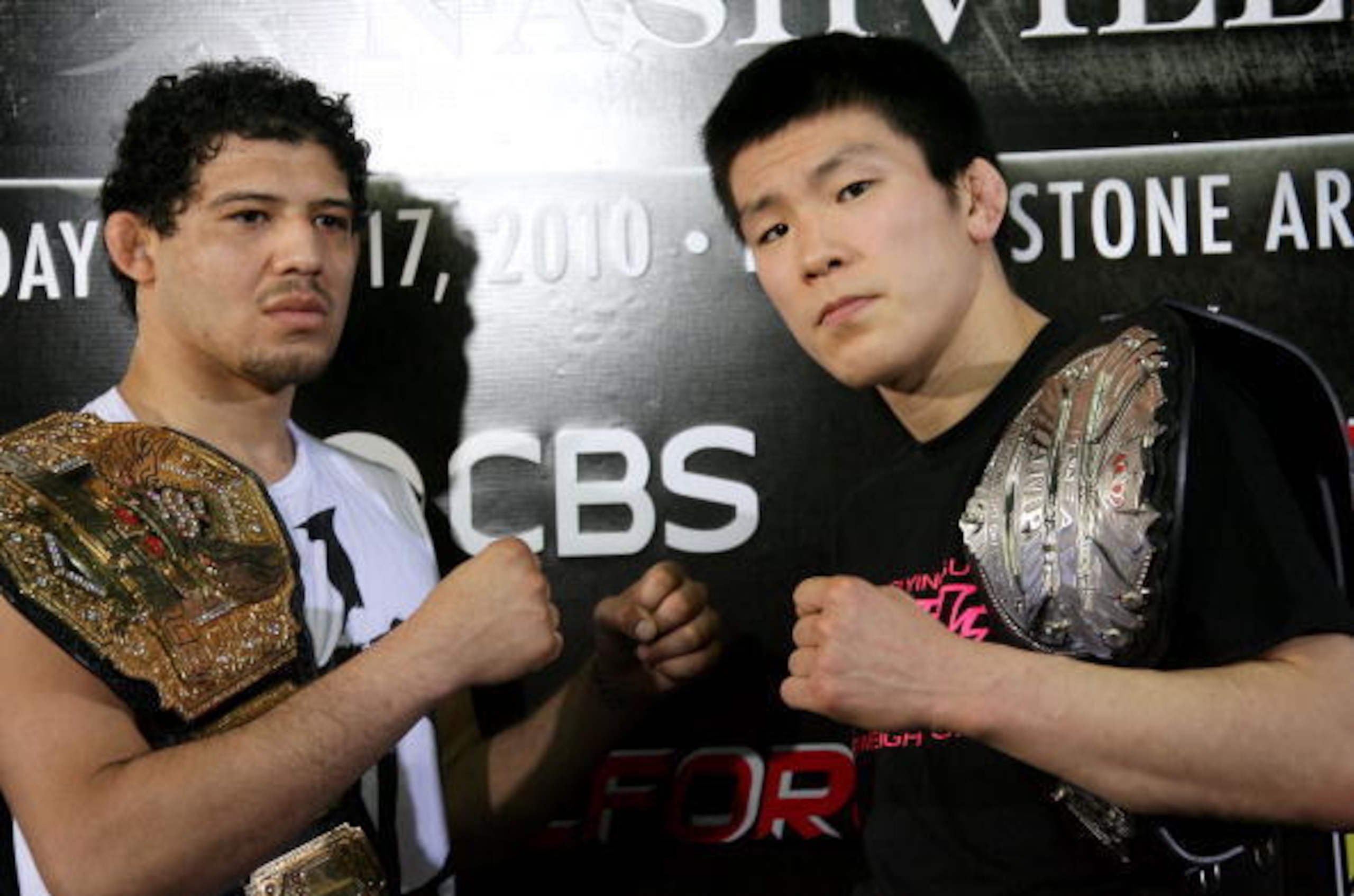
As it stands now, the UFC is a giant among modest men, roaming free and without contest, taking what it wants and laughing all the way.
Bellator, One FC and World Series of Fighting are about equal in second place, so far in the back that they don’t look like a threat at all.
Separately, they each have decent rosters comprised of good yet unknown fighters, bolstered by bigger names who, more often than not, are without any compelling opposition.
Co-promotion could change all of that, for the good of all—fans and fighters.
Bellator, One FC and WSOF cannot honestly claim that any of their title belts are significant in the sport—not alone, anyway. All such belts are secondary to the UFC titles, plain and simple.
But together, with one fighter owning two or three of those belts? That begins to paint a different picture—one of greater dominance over a wider and thus deeper talent pool.
While this seems difficult to imagine when pondering the logistics of such a union, it is only so because the idea has been so publicly defanged by the UFC and its longstanding opposition against co-promotion and title unification.
The simple fact is, it can work. Boxing has been doing it for decades, and Coker, when at the helm of Strikeforce, staged successful events using co-promotion—specifically, Strikeforce: Nashville, when DREAM champion Shinya Aoki faced Strikeforce champion Gilbert Melendez.
Talks of co-promotion have been bandied about before, but it would be good for Coker, who is the top promotional mind outside of the UFC, to take it to the next level. Chances are he could work out the logistics with the bosses at One FC and WSOF to come up with a calendar of events that works for all promotions and galvanizes them as more than just a farm league triumvirate.
And perhaps the biggest advantage of such a union is that it would see a large amount of meaningful title fights in each division, with no shortage of viable contenders.
And let’s be honest: Many would watch a Bellator vs. WSOF card just as quickly as they would watch a UFC Fight Night, not to mention some of the UFC’s less-than-stellar pay-per-view cards, especially given the promotional push two networks would give such events.
There would be some hurdles to overcome, but unless the bosses at Viacom suddenly decide they are all-in and ready to put their money on the table, banding together with WSOF and One FC is a good second option.
And we would see some very good fights.
No. 2: Ring the Bell for Fighter Sponsors
9 of 10
Ironically, the UFC’s move to abolish all former sponsors in favor of a massive deal with Reebok may be one of the biggest godsends Coker could have wished for.
Countless sponsors who are willing to put forth their money will no longer support the UFC when other promotions with television deals can get their products seen. Coker could take advantage of that by treating the fighters the way they should be treated, and that means stepping aside and letting all that money flow straight into their bank accounts, without restriction or a sponsor tax.
In the past, fighters made a great deal of money off sponsorships—oftentimes more than they earned from the fight. Sponsorship has always been one of the biggest assets for professional athletes, and suddenly, Coker is in a position to use that to Bellator’s advantage.
Fighters go where the money is, and they stay because they are treated well. In all probability, there are going to be many current UFC fighters who don’t find any kind of financial relief from the Reebok deal; the UFC has over 500 fighters on their roster, and the majority of them will not enjoy the Top 15 ranking that is required to gain financial relief from Reebok.
If those fighters were to start seeing their brethren in Bellator make good money off open sponsorships and singing the praises of their promotion, the grass on Viacom farm is going to look good.
And the best part is that it would cost Bellator nothing.
No. 1: Work Hard to Get Viacom to Go Big
10 of 10So far, it seems that having the backing of Viacom—a financial entity much larger than Zuffa—has done little for the cause of Bellator, save keeping it exactly where it is: no larger yet no smaller.
It’s this kind of middling attitude that has allowed the UFC to not only flourish but proceed as it will with little to no resistance.
This is in part why Bellator is considered a minor league; it puts up no true resistance to the UFC, shows no tangible ambition and thus poses no real threat.
The truth is, the sport of MMA is big business and is only going to get bigger in the years to come. If Viacom were to make the decision to throw its hat into the ring and act accordingly, it has enough money and in-house resources to become the next Pride-sized rival for Zuffa, if not bigger.
As it stands now, no one is sure just how committed Viacom is to making anything bigger of its place in the sport. If it is waiting for the UFC to implode on its own, Viacom is seriously underestimating the resolve of the competition.
The UFC may be in serious trouble with the lawsuit, but it got to where it is today because it fought for it; the UFC is not going to give anything away, ever. Coker needs to push for an answer from his superiors and find out just how far they are willing to go.
If he can convince them that they have the means to become the biggest and the best, then he has something to work with. If their greatest ambition for Bellator is to give Spike TV some programming for contractual reasons, then he needs to start looking elsewhere for advantage.
Either way, he can’t work in the dark anymore.





.jpg?w=2560 "WWE Raw Live Grades 🔠")