

Ahead of Cricket World Cup, Australia and England Are Playing a Different Game

As Australia and England fought out the opening match of the Carlton Mid Tri-Series on Friday, there were a number of similarities between the teams at the Sydney Cricket Ground. Not decisive ones, but similarities nonetheless.
Both teams wore coloured clothing. Both fielded 11 players. Both used roughly the same equipment. Both sent down a white ball. Both had 50 overs available to them. Both were in preparation mode. Both weren't entirely sure of their best XI. Both had one eye on the approaching World Cup. And both were in the same place—Sydney.
But those elementary similarities were where it ended. These teams couldn't, in terms of personnel, approach, depth of suitable talent and position on the limited-overs evolutionary curve, be further apart.
TOP NEWS
.jpg?w=2560 "Seahawks Chiefs Football")
Chiefs, Steelers Eye WR Trades

J-Dub, Wallace May Miss Entire Season
Alexia Wins Ballon d'Or 🏆
In fact, Australia and England—made so obvious in the hosts' three-wicket, bonus-point victory at the SCG—are not even playing the same game.
Consider these facts from Friday:
- Australia's most aggressive batsman opened the innings; England's came in at No. 7.
- Australia's XI on Friday had eight players with batting strike rates above 85; England's had four.
- Australia's XI had three truly dynamic fielders; England's had none.
- Australia's attack had two bowlers pushing 150 kph; England's had none.
- Australia's attack had four seamers of contrast; England's had four of the same.
- Australia's slowest scorer in the top seven (by career strike rate—Brad Haddin) is faster than four of England's top seven.
- Three of the team's four strongest strikers made up the top four for Australia; three of the team's four slowest batsmen made up the top four for England.
After a look over that list, perhaps the only surprise on the day was that the margin of Australia's victory wasn't wider.
And made obvious was that these teams are playing different games. From different eras.
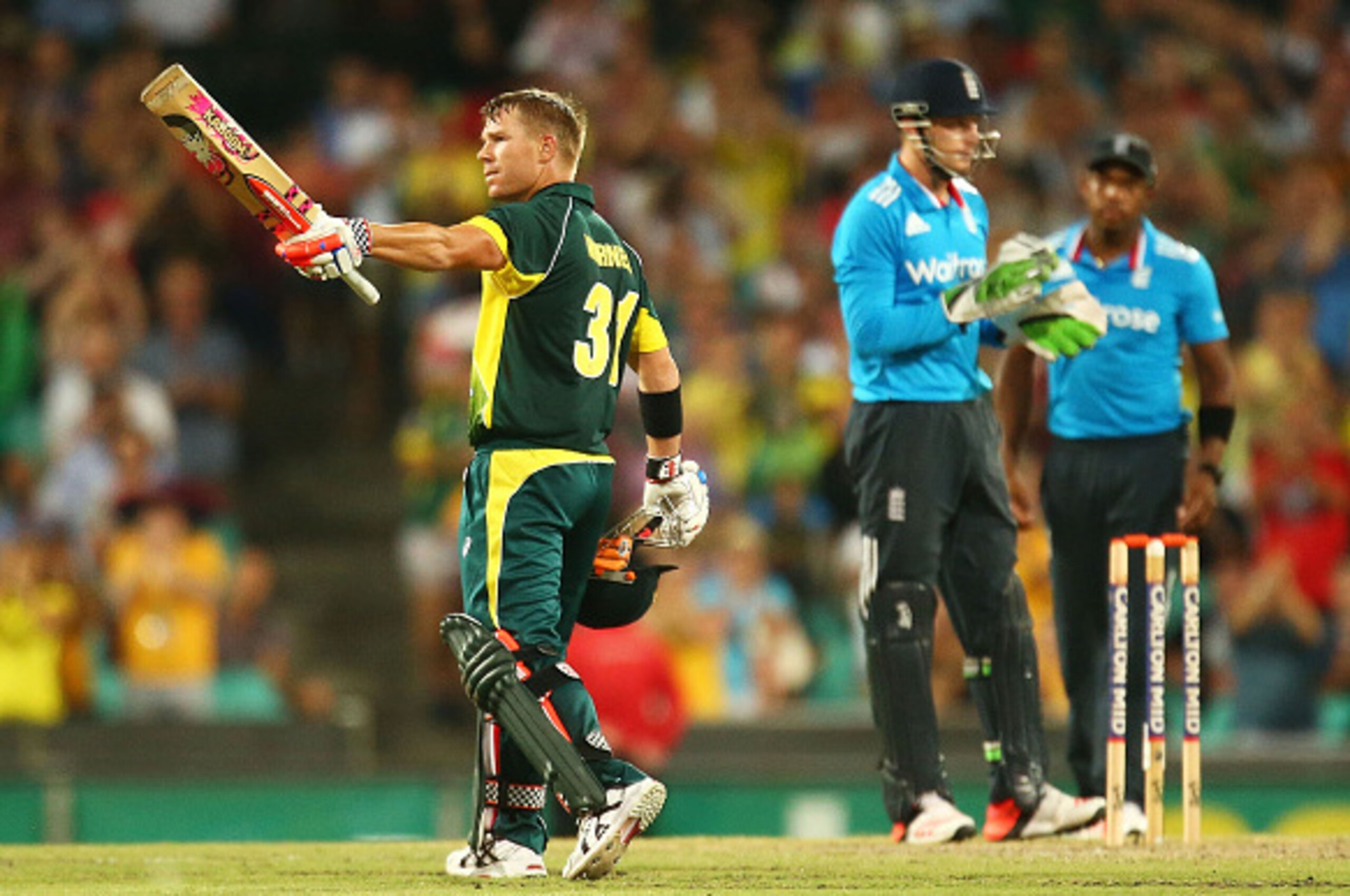
Of course, such inadequacies from England in the one-day international arena have been noticeable for some time. This dated feel to the side is nothing new; they've looked obsolete for a number of years now. It's why they were thrashed by India and Sri Lanka last year. Why they've won just two of their last 10 multi-match ODI series in the last two-and-a-half years.
But rarely has the gap between England and the world's best appeared as large as it did on Friday in Sydney.
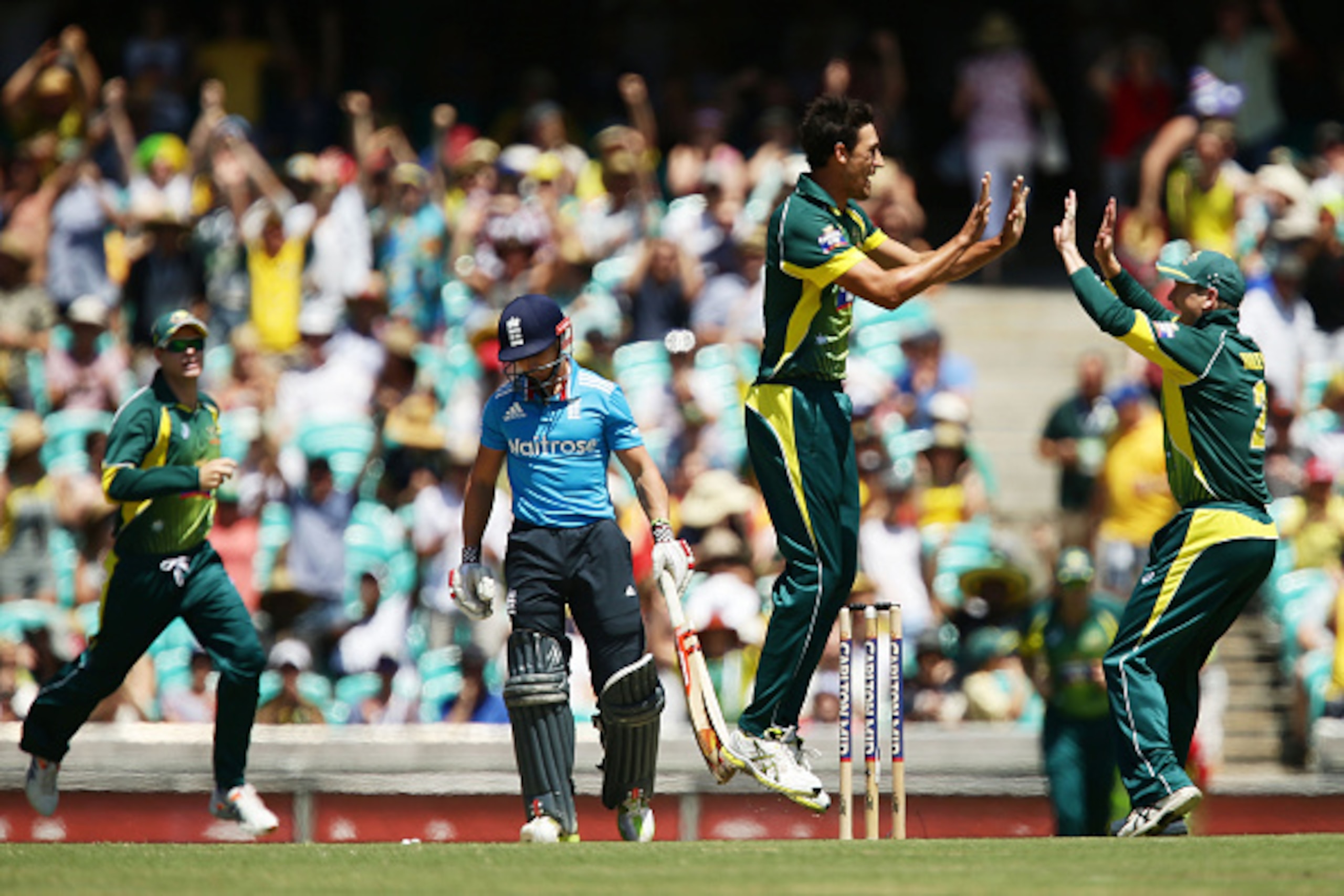
Within three balls, England were two down without a run on the board. Not long after, they stumbled to 12-3, once again—like they had been in Australia 12 months earlier—simply incapable of dealing with genuine pace.
Last time it was Mitchell Johnson and Ryan Harris. This time it was Mitchell Starc and Pat Cummins. Frankly, it doesn't seem to matter who it is, England can't deal with it if it's sent down with some heat on it.
From there, the visitors limped their way to 234, riding a fine but lonely innings from Eoin Morgan—perhaps the side's only world-class player in this format.
Between innings, England might have felt they were 40 short of a competitive target. In truth, the number was probably double that.
Australia, on the back of David Warner, cruised to the required total with 61 balls to spare.
Alarmingly, it's hard to know what's more damning for England: That such obvious flaws are evident so close to the beginning of a World Cup? Or that they're flaws, long recognised, that have already had an abundance of time to be addressed but haven't?
In December, Alastair Cook's sacking as one-day captain was expected to be a catalyst for change in the England 50-over setup. Released from Cook's unwavering conservatism, it was thought that England might begin to embrace an identity in coloured clothing that's in-tune with the limited-overs world they exist in.
The appointment of Morgan as his successor felt like a bold choice—well, bold for England—that would hasten the side's evolution away from the Test arena. The hope was that, finally, the nation would begin to look at the various formats in isolation rather than three spheres of overlapping influence.
But none of that has happened; anyone who crossed their fingers for that updated approach will have been disappointed on Friday when England selected three batsmen in the top four with ODI strike rates of 79 or less.
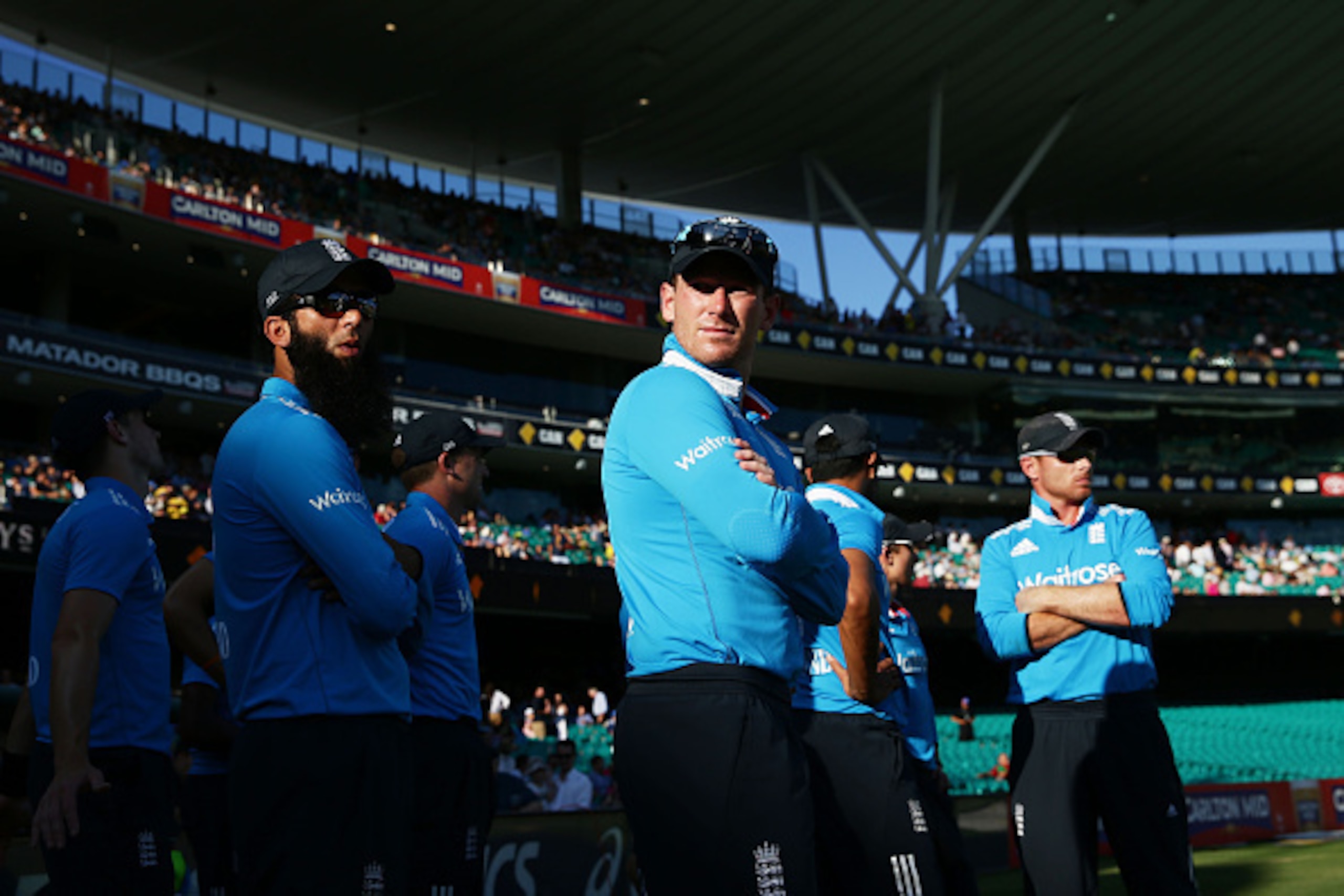
After almost three years of lurching between underachievement and overwhelming disappointment in 50-over cricket, England showed in Sydney on Friday that they hadn't learned a thing.
For Australia, as Starc put it after the match, this was a chance to embed the thought of "here we go again" in the England minds.
"Hopefully it reopened a few scars tonight," the left-arm fast bowler said without hesitation while referring to Australia's domination of their rivals in 2013-14, per Daniel Brettig of ESPN Cricinfo.
The thing is, though, that it's not just Australia inflicting the wounds; England do it to themselves. Defiantly insisting that a traditional (out of date) approach can succeed, Morgan, like Cook before him, watched an opposing team packed full of dynamism and explosiveness cruise past his side without ever needing to hit top gear.
England, stubbornly, appear to think the differences with their rivals are just a matter of style. They're not.
As the World Cup approaches, they're not even playing the same game.





.jpg?w=2560 "WWE Raw Live Grades 🔠")