


With a draw in the fourth and final Test in Sydney, Australia maintained their 2-0 lead against India and lifted the Border-Gavaskar Trophy after an arduous and emotional campaign.
Having already secured the prize on offer with a draw in the Boxing Day Test in Melbourne, there was little on the line at the SCG for both sides, with the primary focus for the Australians centred on honouring the late Phillip Hughes, who was tragically struck at the ground in November.
After posting 572-7 declared in the first innings, the hosts were able to control the match throughout and found themselves needing 10 wickets on the final day to force a victory.
But although Steve Smith's men were able to capture four wickets in a hurry late on Day 5, India held on for a second consecutive draw.
Across the following slides, we examine the winners and losers from the Sydney Test.
Winner: Steve Smith
1 of 9
It's practically impossible to overstate just how remarkable the form of Steve Smith has been in this Test series against India.
After hundreds in each of the first three Tests, the stand-in Australian captain made it four on the trot with a stunning 117 in the first innings in Sydney.
By doing so, and by adding another 71 in the second innings, Smith stormed into the record books:
- With his four glittering hundreds, the 25-year-old became only the third player in history after Sir Donald Bradman and Jacques Kallis to score centuries in four consecutive Tests in the same series.
- He's now also just the fifth Australian ever to reach three figures in any string of four straight Tests.
- His 769 runs for the series is the highest figure in history by a player in a four-match Test series.
- Those 769 runs are also the most runs ever scored in a series by an Australian against India.
It doesn't get much better than that.
Loser: Rohit Sharma
2 of 9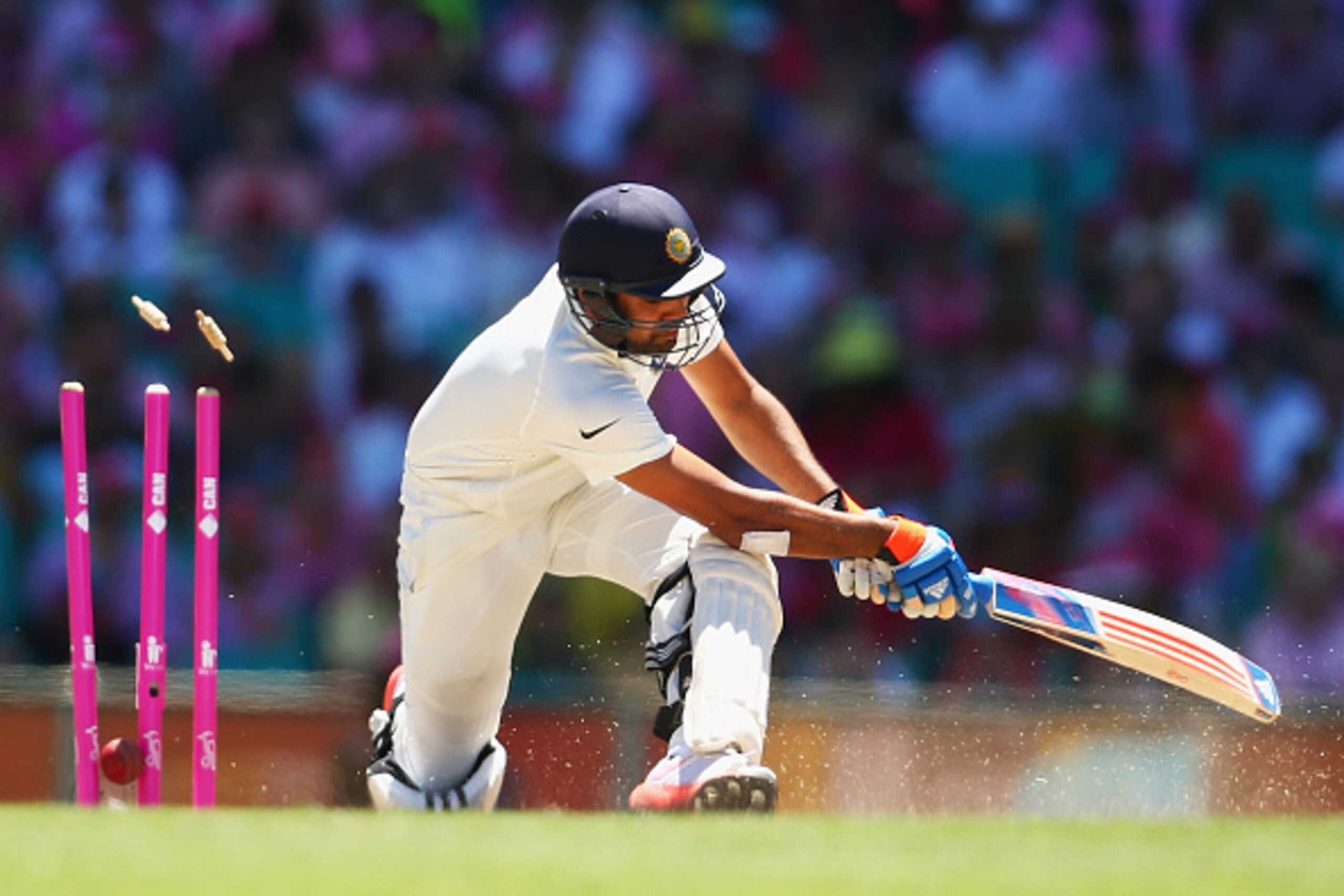
Earlier in this series, former Indian captain MS Dhoni expressed his unwavering confidence in Rohit Sharma, believing that "once he crosses that phase" he'll emerge as the prolific Test batsman his talent suggests he should be.
But as I wrote on Thursday, India's paradoxical right-hander currently lacks too many of the skills needed to succeed at Test level—skills that can't be acquired and honed while smacking "white balls over short boundaries for six overs as a DJ drops his 83rd repeat of the night."
If Rohit wants to thrive in the five-day game, he needs to be grafting in first-class cricket—he hasn't played a Ranji Trophy match in more than two years—rather than just being an eye-catching star in the limited-overs formats.
If he doesn't, he'll continue to fall behind players who've developed talents outside stroke-making—concentration, diligence and situational awareness.
In Sydney, Rohit again proved he lacks such qualities, falling for soft dismissals in each innings after making what looked like promising starts (53 and 39).
Winner: Lokesh Rahul
3 of 9
At the other end of the batting spectrum to Rohit Sharma stands India's newest Test player, Lokesh Rahul.
A 22-year-old who's modelled his game on that of his mentor, Rahul Dravid, Rahul showed off his classic technique and composed disposition in Sydney to cruise to a first-innings 110 against a high-quality Australian attack.
On Day 3 at the SCG when, at the other end, Rohit batted dreamily and without a clear purpose or intent, Rahul looked all business, with his strokes full of conviction and a defence that looked watertight.
A product of first-class cricket—not Twenty20 or 50-over cricket—he's an example for Rohit of what can be achieved by crafting a skill set that's specific to the longer formats.
.jpg?w=2560 "Seahawks Chiefs Football")


Loser: Umesh Yadav
4 of 9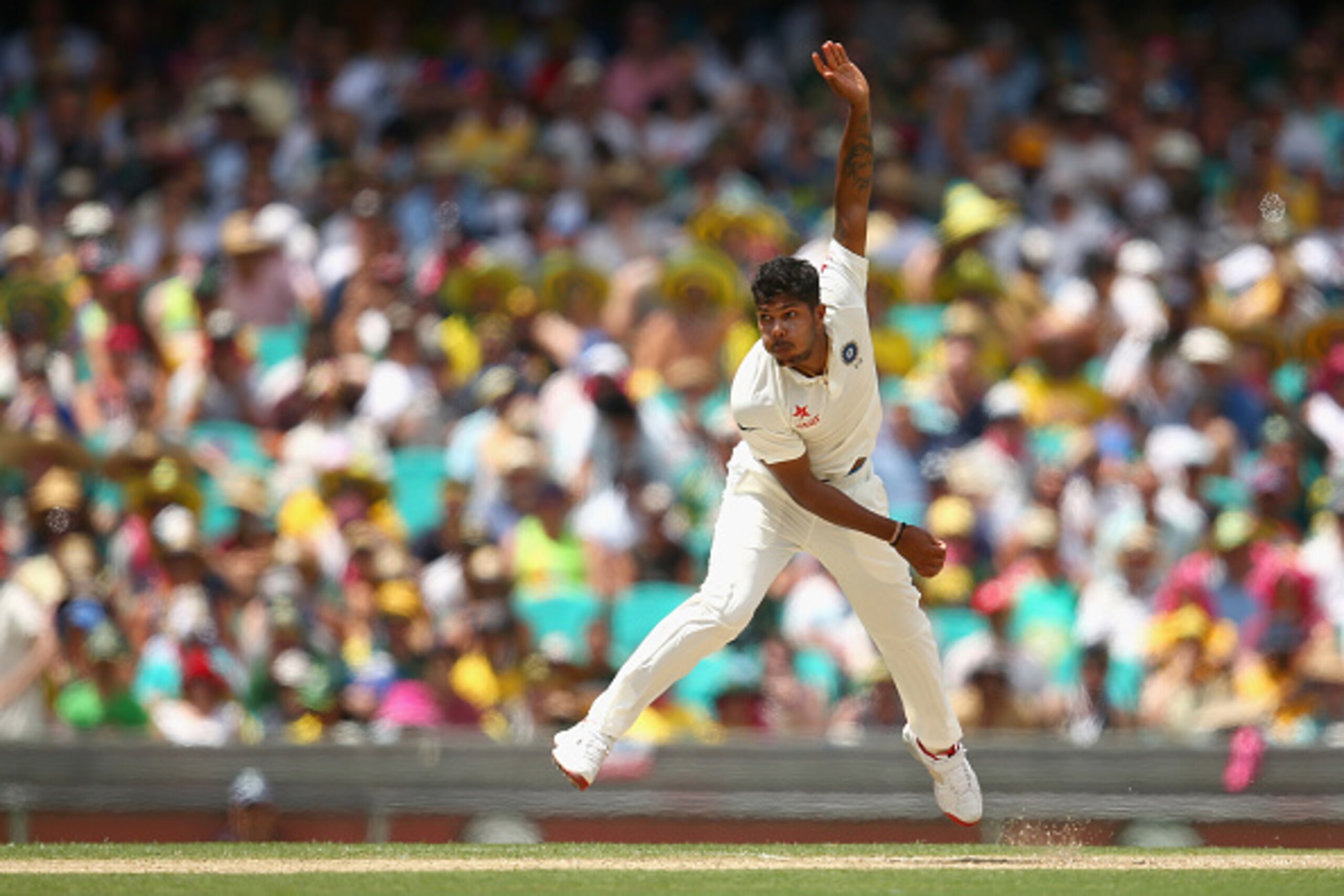
In Australia's first innings in Sydney, Umesh Yadav conceded 137 runs from just 27 overs. That's an economy rate of 5.07.
In the second innings, he conceded 45 runs. From three overs. For an economy rate of 15.00—the worst figure in history for any bowler with at least three overs in an innings.
In that disastrous spell, 10 of his 19 balls (he bowled one no-ball) went to the fence.
Need we say more?
Winner: David Warner
5 of 9
This was always going to be a difficult Test for David Warner. He was one of those on the field when Phillip Hughes was tragically struck at the SCG in November and had said in the lead-up to this Test that he was unsure of how he'd react emotionally until he was out in the middle.
In his first innings, it was clear Warner was struggling for concentration and clarity due to the emotional strain, as he flashed wildly at several balls and was lucky to get away with some inside edges when his footwork failed him.
But the pugnacious left-hander also showed he had the ability to fight through that mental barrier, shrugging aside his emotional turmoil to reach a memorable 101 on the opening day in Sydney.
Warner also made a touching gesture to the late Hughes when, upon reaching 63, he kissed the turf where the former Australian batsman fell after being struck during that fateful Sheffield Shield match.
Loser: Bodies of the Faster Men
6 of 9
As far as Australian pitches go, this surface in Sydney was as barren and lifeless as they get.
Across five days, 1,550 runs were scored for the fall of just 30 wickets—a staggering average of 51.67 runs per wicket from two batting lineups going through transitional phases.
For the faster men such as Ryan Harris, Mitchell Starc, Josh Hazlewood, Mohammed Shami and Umesh Yadav, there was nothing to relish about pounding in on such an uninspiring pitch under the hot Sydney sun.
And after seeing surfaces of a similar nature in previous stops in Adelaide, Brisbane and Melbourne, the bodies of those who thanklessly toiled away at the SCG will be worse for wear in the aftermath of the fourth and final Test.
Winner: Ravichandran Ashwin
7 of 9
During this Test in Sydney, ESPN Cricinfo's Sidharth Monga wrote about "India's other-end-problem."
Monga's message was a simple one: Ravichandran Ashwin continues to operate with patience, accuracy and guile at one end but is consistently let down by the inability of his fast-bowling team-mates to maintain pressure at the other.
That was certainly the case at the SCG where Ashwin, despite the alarming waywardness of Mohammed Shami, Umesh Yadav and Bhuvneshwar Kumar, admirably claimed five wickets in the Test while bowling 66 impressive overs.
Also displaying his talent with the bat, the all-rounder accumulated a valuable half-century in India's first innings to help the visitors avoid defeat.
Loser: The Crowd in Sydney Thanks to the Curator
8 of 9
Typically, the New Year Test at the Sydney Cricket Ground is one of the best-attended matches across the globe, with fans often pouring into the ground during the Australian holiday period.
But this Test suffered in that sense due to its scheduling, pushed back by several days from its customary slot after the series was adjusted in the wake of Phillip Hughes' tragic death in November.
As such, crowds were down at the SCG this week, but those who did attend the Test will have left underwhelmed with what they saw.
Indeed, due to a depressingly flat pitch, the Sydney crowd—who are normally treated to an intriguing contest on a surface that offers both seam and spin—was forced to watch a horribly lopsided contest between bat and ball that always felt destined to end in a stalemate.
Frankly, fans in Australia, and across the world, deserve better.
Loser: India's Away Record and Test Ranking
9 of 9
Another Test series away from home. Another winless result. Another round of questions.
It's a predictable theme for India on the road.
Since July 2011, the nation has played 21 Tests away from home and won one of them. With 15 losses and five draws.
It's simply not good enough.
Compounding the misery of this tour of Australia is that the 2-0 loss across four Tests has seen India plummet to seventh in the ICC Test Rankings—an appalling ranking given the country's size, depth of talent and staggering resources.




.jpg?w=2560 "Raiders Sticking with Cousins")