Previewing San Diego Chargers' 2015 Salary-Cap Situation
The San Diego Chargers will have loads of cap space in 2015 after narrowly missing the playoffs. This is typically a good situation to be in.
However, the Chargers will experience an exodus of veteran talent once the new league season officially begins. Ryan Mathews, Brandon Flowers, Eddie Royal, King Dunlap, Nick Hardwick, Dwight Freeney, Shareece Wright and Marcus Gilchrist will all be free agents. San Diego hasn’t developed quality replacements for these crucial starters and reserves.
So the Chargers’ estimated $23.8 million in cap space, per Spotrac, must be spent wisely. This is a team that wants to remain in playoff contention—doing that will require more than one or two notable free-agent signings to fix its myriad needs. For general manager Tom Telesco, this is his most crucial offseason yet.
TOP NEWS

New NFL Power Rankings 📊
.jpg?w=2560 "Seahawks Chiefs Football")
Chiefs, Steelers Eye WR Trades

Predicting Five Potential Shocking Trades 😲
The holes in San Diego’s roster are numerous and daunting. Quarterback Philip Rivers and safety Eric Weddle have done an excellent job compensating for this, but the bottom will fall out eventually, especially if the needs aren’t properly addressed this offseason. The Chargers are fine at quarterback, free safety, tight end and inside linebacker. Every other position could use additional talent.
".@eric_d_williams the fact that they will be 9-7 or 10-6 is a testament to Rivers. Team has LOTS of holes. #Chargers
— The Hunnyman (@Hunnyman78) December 28, 2014"
The frailty of the Chargers’ depth chart can explain their flexible cap situation—of the 11 NFL teams with more projected 2015 cap space than San Diego, only three made the playoffs, per Over the Cap.
Lots of cap space typically means lots of losses. This is usually because the team in question hasn’t developed its young talent sufficiently enough to warrant any lucrative and lengthy extensions. It’s no question the Chargers have faltered in that department in recent years.
The Chargers’ situation isn’t as bad as the Tampa Bay Buccaneers' or the Jacksonville Jaguars', but they could experience similar doldrums if Rivers, Weddle or Corey Liuget was forced to miss time.
It’s a thin team with high expectations, which means 2015 will be spending time for the Chargers. They will certainly try their best to re-sign Flowers, and a veteran pass-rusher is desperately needed alongside the inconsistent Melvin Ingram. Both moves would be pricey. The offensive line also needs a complete overhaul, especially on the left side.
Along with rookie contracts, these transactions will fill up the Chargers’ salary cap at a rapid rate. They have flexibility already, but they will need more of it shortly. Let’s figure out how to give the Chargers additional cap space without sacrificing their on-field product.
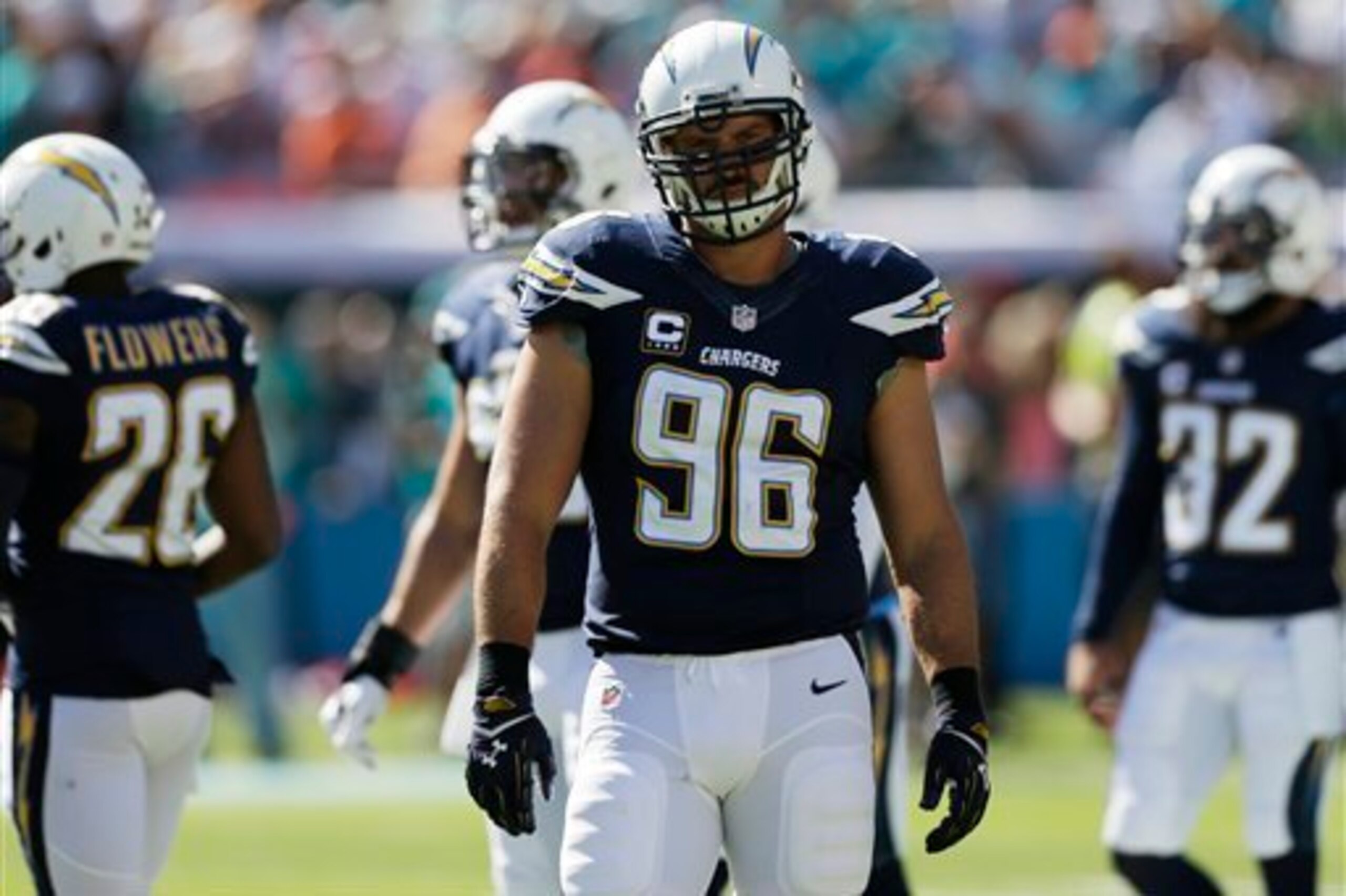
Cuts are a necessary part of the football offseason, and the Chargers are no exception. They aren’t burdened with numerous bad contracts, so release candidates are limited compared to other teams. However, there are a few players who aren’t living up to their current price tag.
Jarret Johnson is a run-stopping specialist and locker room leader at outside linebacker, but his pass-rushing abilities are nil at 33 years old. In a backup role at a cheap price, this would be fine. However, he has a $7.5 million 2015 cap number, the fourth-highest on the Chargers after Rivers, Weddle and Antonio Gates. The team would save $5 million by cutting him on the last year of his contract.
Since Johnson is a virtual lock to retire either this season or next, San Diego won’t be missing out on much by cutting him. Run-stuffers are abundant and cheap compared to quality pass-rushers.
Running back Donald Brown is less pricey than Johnson, but his release would be more publicized and well-received. His first season in San Diego was a disaster—he averaged 2.62 yards per carry, dropped passes as a receiver and made numerous gaffes on special teams.
Cutting Brown would save $1.9 million in cap space, and the Chargers could use some of that money to get a more effective option on a minimum contract—look at what Branden Oliver has done for the team as an undrafted rookie.
Telesco says Brown will be back, according to Michael Gehlken of U-T San Diego. We’ll see if that holds true when the Chargers need to free up some space.
Punter Mike Scifres has been with the team longer than Johnson and Brown have. Since 2003, he’s been consistent and reliable despite a lack of special teams talent around him. However, he has a $4.3 million cap number next season, which ranks fourth among punters.
Scifres is good, but he is not a game-changer at the position—the Chargers can find a similarly effective player on a cheaper deal. They would save $2.9 million against the cap by cutting him.
| Guaranteed Money | Cap Number | Dead Money (if cut) | Cap Savings (if cut) | Years on contract | |
| Jarret Johnson | $5 million | $7.5 million | $2.5 million | $5 million | 1 remaining |
| Donald Brown | $3 million | $4.08 million | $2.16 million | $1.91 million | 2 remaining |
| Mike Scifres | $3.56 million | $4.34 million | $1.38 million | $2.96 million | 2 remaining |
All three of these cuts have the same idea behind them—the Chargers can easily find replacements who are cheaper but just as good, if not better. The wiggle room gained by releasing these players isn’t much, but it could be enough to sway a prominent free agent toward San Diego. It’s a low-risk, high-reward proposition.
The Chargers could also gain cap space through restructuring some player contracts, especially via extensions of their biggest names. Rivers and Weddle are 2016 free agents and the Chargers’ two best players.
Neither player has publicly embraced the possibility of an extension. Rivers said he may want to retire or play somewhere else after his contract is up, per U-T San Diego’s Kevin Acee, despite Telesco wanting to get a deal done. Nothing has been reported on the Weddle front.
Rivers and/or Weddle leaving San Diego is a much bigger story than the Chargers’ salary-cap situation, but for now let’s say the Chargers have a good chance at retaining them.
For 2015, Rivers has a $17.4 million cap hit, while Weddle has a $10.1 million cap hit. With an extension, the Chargers could reduce both players’ 2015 salaries and put the money lost into a signing bonus or another year of the contract. Plus, it gives the Chargers two excellent players in the long term.
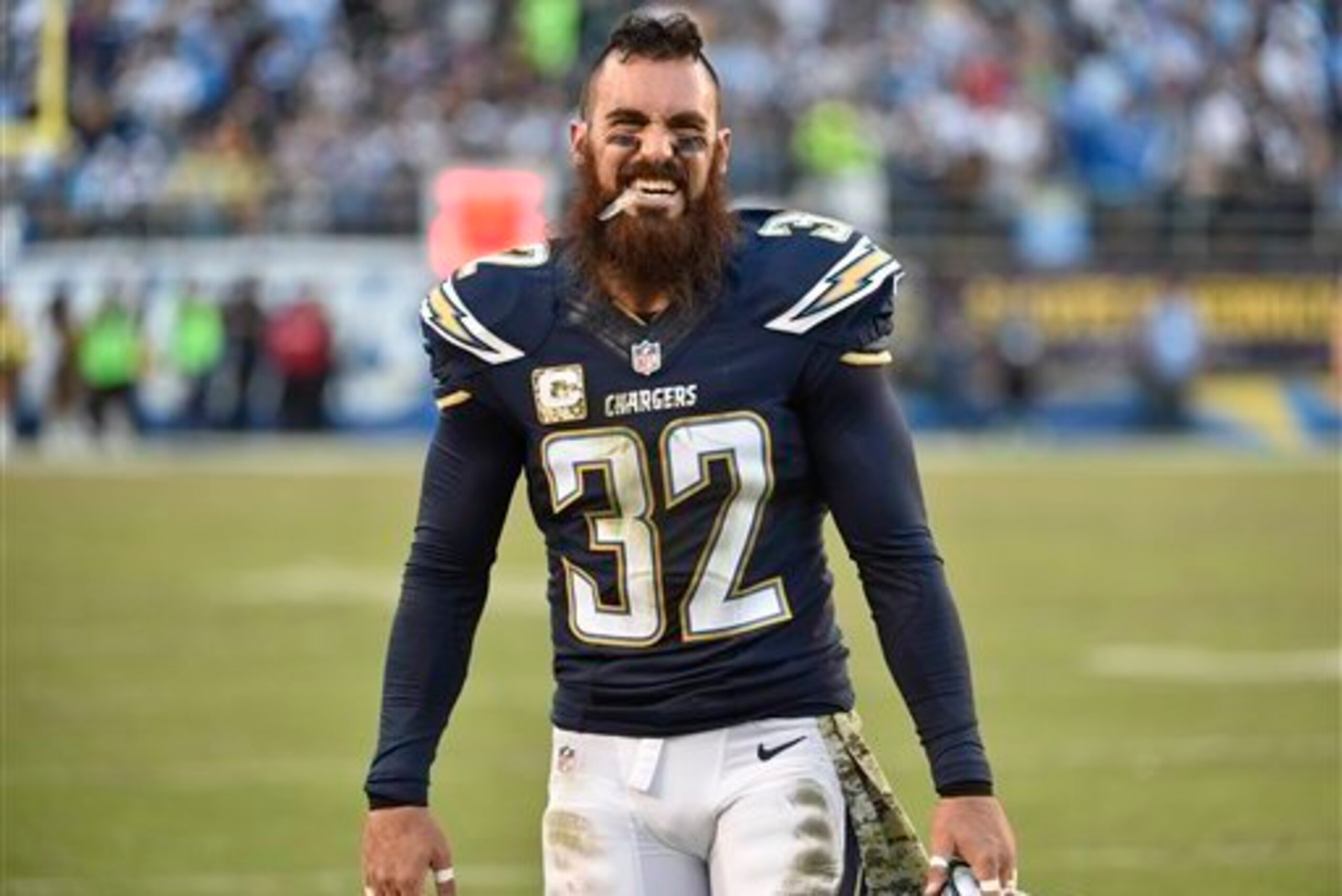
The Chargers should fully commit to the futures of both Rivers and Weddle. If they go—a 2015 without noticeable help for both players would make that highly probable—San Diego would officially be in rebuilding mode.
The shelf life for general managers and head coaches is minute, and it is doubtful Telesco and Mike McCoy would feel comfortable without their star quarterback and safety. Extensions would save cap space and jobs.
These cuts and extensions are the blueprint for the Chargers’ maximization of their salary cap. Is it too extensive? Absolutely not—the Chargers went 4-6 in their last 10 games. The team is already aged and thin, but with so many of its starters leaving for free agency, it could get worse.
Mass additions and improvements are needed to convince Rivers and Weddle to stay, to convince them that the Chargers are in fact on the upswing. That requires money. Cutting Johnson, Brown and Scifres is the first step toward great salary-cap flexibility.
With the additional room, the Chargers will be able to go fast and hard in free agency, showing their two most important players that the team isn’t content with missing the playoffs. It’s the beginning of the Chargers’ most important offseason yet, and it all starts with the salary cap.
All sourced cap data via OvertheCap.com unless otherwise noted.
.jpg?w=2560)