

Biggest Takeaways from Minnesota Vikings 2014 Season
A year of transition turned out to be a mildly successful one for a Minnesota Vikings team in a rebuilding phase. Turnover in the coaching ranks, at the quarterback position and at other spots in between lead to highs and lows throughout, but the arrow ultimately seems to be pointing in the right direction.
Minnesota was ravaged by injuries, suspension and other circumstances all season but showed its ability to compete on a weekly basis.
The offense was deflated from the get-go with the absence of Adrian Peterson, rushing Matt Asiata and Jerick McKinnon into unplanned duties. Similar circumstance elevated Teddy Bridgewater into his job. The regressed play of offensive tackle Matt Kalil and the entire offensive line caused problems as well. Little went as planned, especially on the offensive side of the ball, yet the Vikings persevered.
Mike Zimmer's defense provided many highlights. It showcased young talent at all three levels, and the schematic brilliance of the new head coach showed through in numerous outings.
The season's biggest takeaways have an eye toward the future, just as fans and the team itself have had all season long. Each point is a feature the Vikings will either bank on moving forward or find some way to address.
Teddy Bridgewater Is the QB of the Future
1 of 10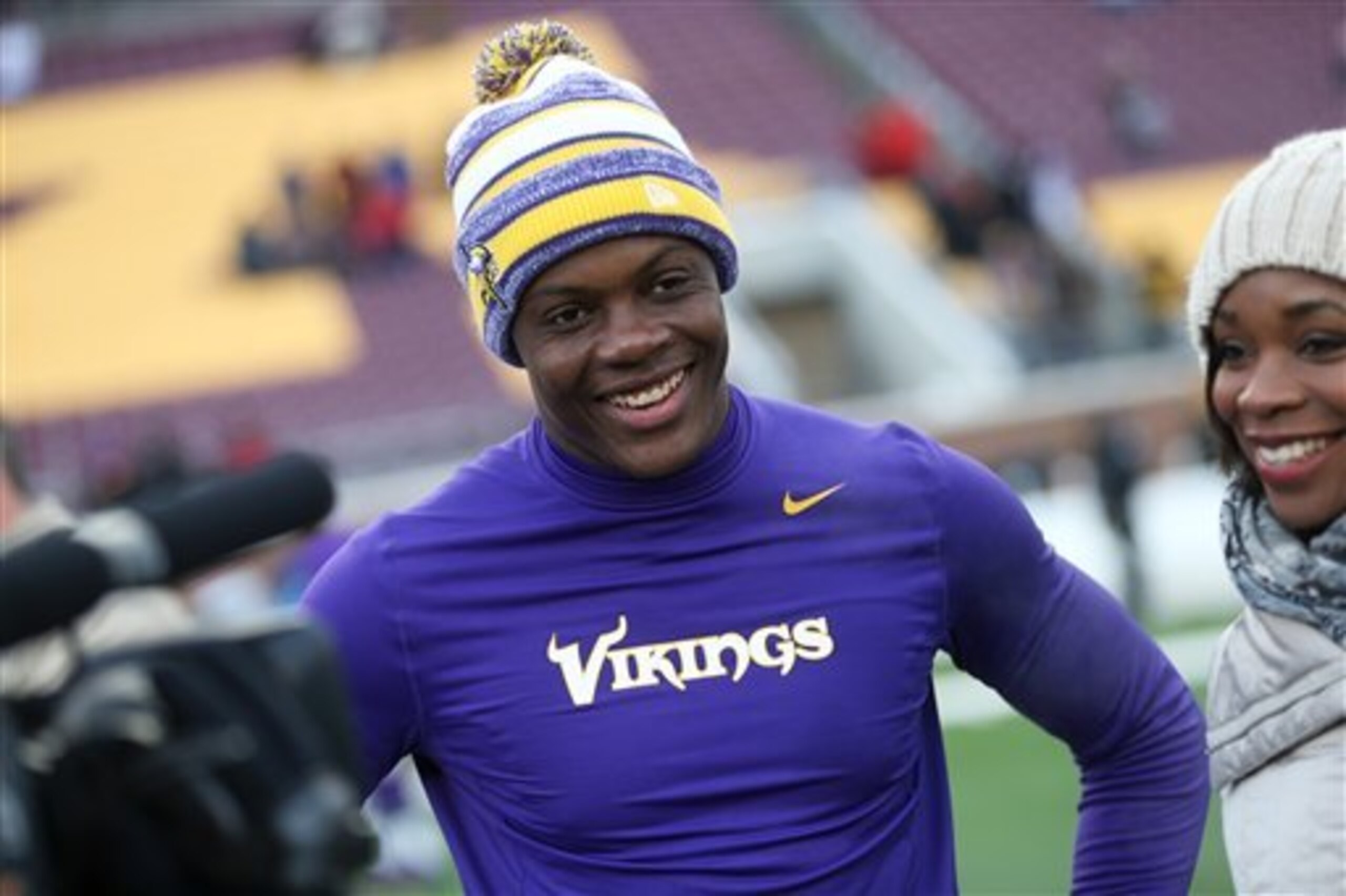
Bridgewater immediately became Minnesota's most important asset as soon as he was identified as a draft target and made a first-round pick back in May. So when he relieved an injured Matt Cassel back in Week 3, all involved knew they were about to get a glimpse into the future.
After a little more than first glance, the Vikings appear to be in good hands.
Bridgewater shined as a rookie quarterback after he was able to work through some growing pains. He looked like a lost puppy in his second and third starts against two of the league's best defenses, but he found success later in the season against other stingy opponents and continuously improved.
Ultimately, the rookie's statistics landed above the marks Minnesota would have set for him entering the season. Chris Tomasson of the St. Paul Pioneer Press provides the numbers:
"Teddy Bridgewater's 64.4 percent completion percentage is third in NFL history for a rookie quarterback. Passer rating of 85.2 7th best ever
— Chris Tomasson (@christomasson) December 28, 2014"
His on-field play, showing high-end qualities for a rookie QB, did not disappoint either, and may have been even more encouraging than the numbers. Bleacher Report's Matt Miller weighs in:
"Bridgewater, most importantly, continued to get better every week. Pocket poise, field vision, touch and mobility are all pluses.
— Matt Miller (@nfldraftscout) December 28, 2014"
That weekly improvement should greatly encourage all onlookers and give the Vikings something to bank on moving into next season. As Minnesota continues to try to build Bridgewater into one of the league's best quarterbacks, they have a strong base to fall back on.
Everything about Bridgewater's first season as a whole points to a long career under center for the Vikings.
Norv Turner's Offense Can Work
2 of 10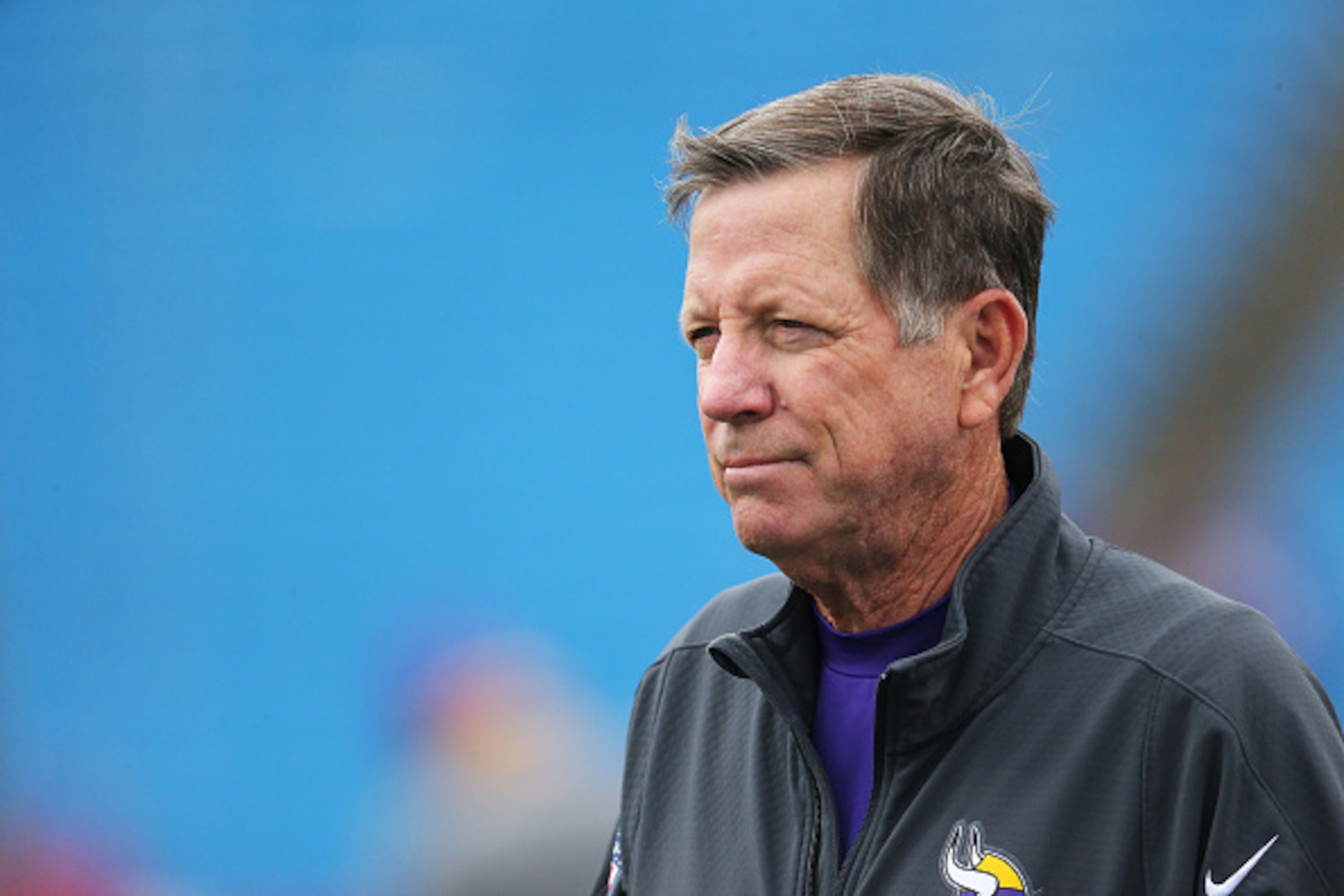
At the season's halfway point, newly-appointed offensive coordinator Norv Turner looked like the wrong guy for the job in Minnesota. His rigidity was holding back an offense that greatly needed adaptations.
The offense itself is demanding for quarterbacks and is much different than what Bridgewater operated in at Louisville. It calls for deep-to-short reads primarily, timing up downfield routes with deep drops from the line of scrimmage. That, combined with an offensive line that often resembled a breaking levee, left the offense in shambles on far too many occasions.
Then when Bridgewater came around in terms of offensive execution and aggressiveness throwing the ball down the field, the offense picked up. From Week 13 to Week 16, Minnesota ranked No. 13 in yards per drive, No. 8 in touchdown percentage and No. 4 in punt percentage.
It pulled that off despite having little continuity along the offensive line, no true feature back to establish a ground game and an average group of receivers for the rookie QB.
Moving forward, the Vikings can hitch their wagon to Turner's offense. Bridgewater has shown he can function, if not thrive in the system. Upgrades are required on almost all fronts of the offense, and they should be identified with an eye toward the current offensive scheme and maximizing offensive capabilities.
Norv and his son Scott Turner, Minnesota's quarterback coach, should also be commended for their roles in Bridgewater's growth. Keeping continuity in the coaching staff is important as the young QB and the entire offense tries to take that next step.
The OL Is Not What the Vikings Thought It Was
3 of 10
Not only was Minnesota's offensive line not what the team expected it to be, it was also not who they expected it to be quite often. Season-ending injuries to Brandon Fusco and Phil Loadholt threw the entire unit into flux. Then an injury to Charlie Johnson sent Minnesota back to the heap, essentially scraping the bottom of a notoriously barren offensive line market.
Fill-ins Vlad Ducasse and Mike Harris were predictably poor. Joe Berger held his own for stretches at right guard though.
Injuries don't fully excuse the play of the entire unit. Matt Kalil's regression at left tackle hit its steepest slope at numerous points in the 2014 season. Of tackles that played 50 percent or more of their team's snaps, Matt Kalil earned the worst mark in pass-blocking efficiency at Pro Football Focus (subscription required) before adding in Week 17 statistics. A few decent weeks to close out the season won't be enough to quell concerns about a player Minnesota once identified as its franchise left tackle.
Even center John Sullivan had issues at times. Normally one of the best centers in the league, Sullivan often seemed stretched by the discontinuity up front and poor play of his cohorts.
The Minnesota offensive line entered 2014 returning all five starters and was expected to be the offense's backbone, one of the reasons the Vikings were a great landing spot for a talented young QB. Instead, it struggled in Turner's system and left Bridgewater hanging all too often. Minnesota may still have anchors in Sullivan and Fusco, but re-evaluations must be done at the other spots.
.jpg?w=2560 "Titans Giants Football")
.jpg?w=2560 "Cardinals Giants Football")
The Cordarrelle Patterson Experiment Is Failing
4 of 10
Cordarrelle Patterson backed up a promising preseason by catching lightning in a bottle in Week 1 against St. Louis, where he dazzled with big gains on the ground. Then he disappeared altogether.
Coming out of Tennessee as a raw receiver, Patterson was an experiment as an NFL player to start with. He proved effective in manufactured plays as a rookie, whether they were quick-hitting passes or gadget plays in the run game that caught defenses off guard.
The Vikings utilized that again in 2014, but only for a single week. After that, their plan for Patterson materialized. They wished to transform the talented yet inconsistent playmaker into a true wide receiver, one who could be trusted to run the full route tree in Norv Turner's offense. The coaching staff may not have properly anticipated just how big of an undertaking that would be.
As a true receiver, Patterson labored against the contact of cornerbacks and generally struggled to create separation. He was also inconsistent as a pass-catcher, either letting the ball into his body or flat-out dropping passes.
It wasn't long before the Vikings put Patterson on the back burner, not willing to give him big responsibilities in the offense. He even struggled as a kick returner, often looking hobbled and down on confidence.
When asked about Minnesota's future plans for Patterson, Zimmer seemed exasperated but did indicate that a plan exists, per Ben Goessling of ESPN.com:
"Long pause from Zimmer before answering a Patterson question. Said he's got a plan for him this offseason, but "it's up to Cordarrelle."
— Ben Goessling (@GoesslingESPN) December 28, 2014"
If that plan asks for more growth as a route-runner and a receiver, more patience will be needed from the Vikings.
Jerick McKinnon Can Carry a Load
5 of 10
At the end of the third round back in May, the Vikings took a flier on Georgia Southern running back Jerick McKinnon. Though he possessed undeniable physical talent, having no experience in a pro-style running game made him a project. The Peterson suspension pushed that project into the spotlight.
McKinnon held his own. He had a promising handle on the decision-making required of NFL backs and finished runs consistently. So while short, the young back is certainly not small.
On the surface, McKinnon doesn't resemble a No. 1 back. On the field though, he flashed the abilities of one. In the three games in which the rookie carried his heaviest workloads, he averaged just over six yards per carry combined. When given more carries, McKinnon found bigger gains more frequently and certainly held up physically.
His receiving skills may still be a work in progress, and he also needs to sharpen up as a pass protector. Neither deficiency should make the Vikings anything less than bullish on his future.
The back injury that ended his season—which he suffered while lifting weights, as described by Goessling—should not point to a player that cannot hold up in the NFL, so long as it recovers properly.
The Vikings got everything they could have hoped for from McKinnon as a rookie, and then some. As the team builds its offense moving forward, he heavily factors into the running back plans—whether Peterson is in town or not.
Mike Zimmer Can Develop Young Talent
6 of 10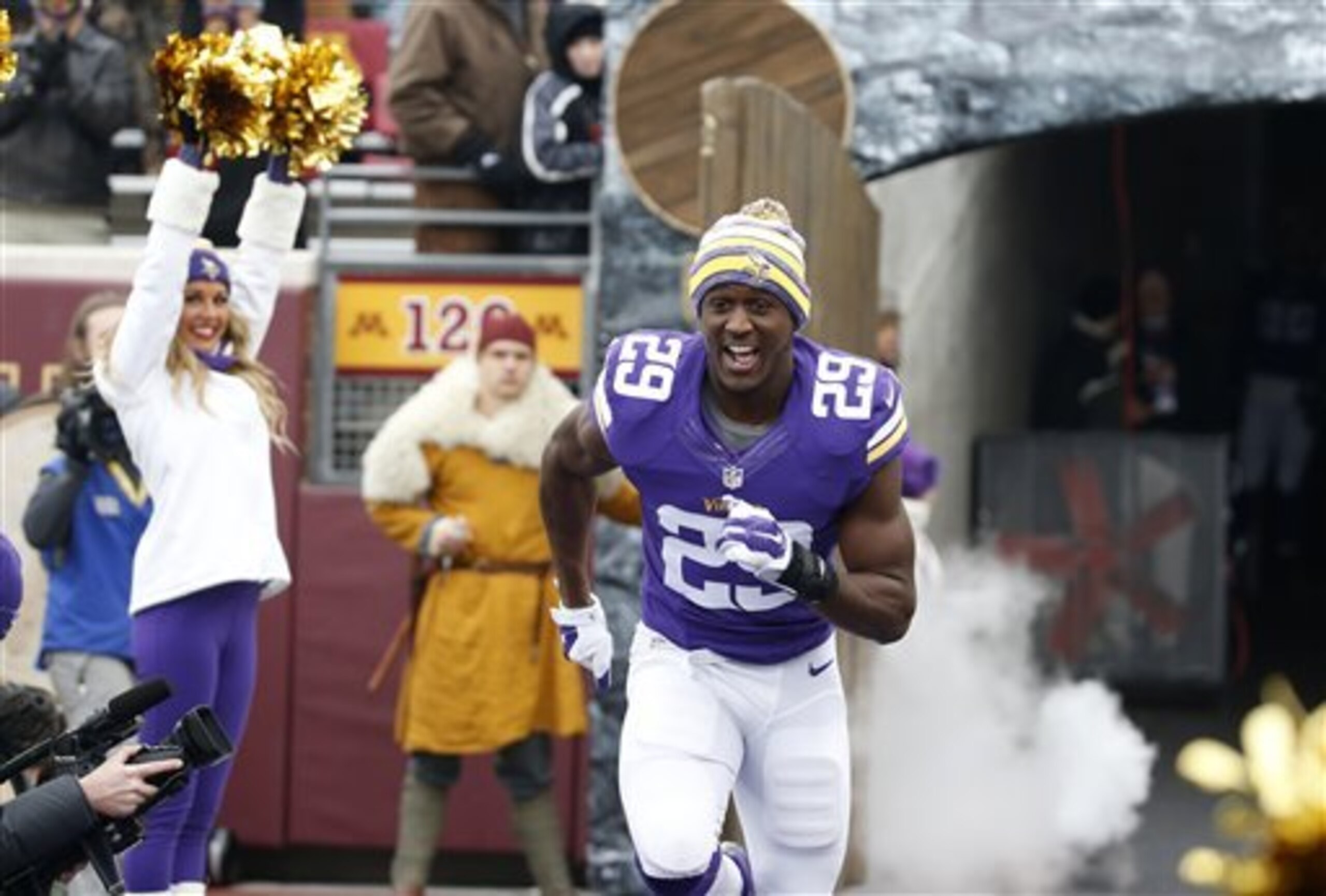
Developing talent in the secondary was Mike Zimmer's calling card at Cincinnati. The work he did with the likes of Leon Hall and Adam Jones deserved endless praise.
Xavier Rhodes was immediately Zimmer's new project upon becoming Minnesota's head coach. The results after the 2014 season are hard to argue. Rhodes battled referees with contact penalties off and on, but he was a downright dominant player for stretches of the season.
Everything came together for him in terms of footwork, ball skills and situational awareness. Respect clearly goes back and forth between Rhodes and Zimmer, two men whose fortunes in 2014 are certainly connected. Matt Vensel of the Star Tribune gives a look into how the coach talked about Rhodes' growth this season:
"Mike Zimmer got a little choked up when talking about how Xavier Rhodes thanked him after the game for helping him become a player. #Vikings
— Matt Vensel (@mattvensel) December 29, 2014"
Zimmer and his staff also deserve credit for the sharp growth in defensive tackle Sharrif Floyd, a player who struggled mightily in 2013 and was less than impressive in the earliest points of this season. He showed growth in quickness off the ball and became a more impactful player on the whole though. Zimmer seemed to unlock a little of the potential that made him a first-round pick.
Finally, the staff's quick integration of rookie linebacker Anthony Barr into a new position was impressive. Before an injury cut his season short, Barr was a strong contender for Defensive Rookie of the Year honors.
Everson Griffen Is Worth the Dough
7 of 10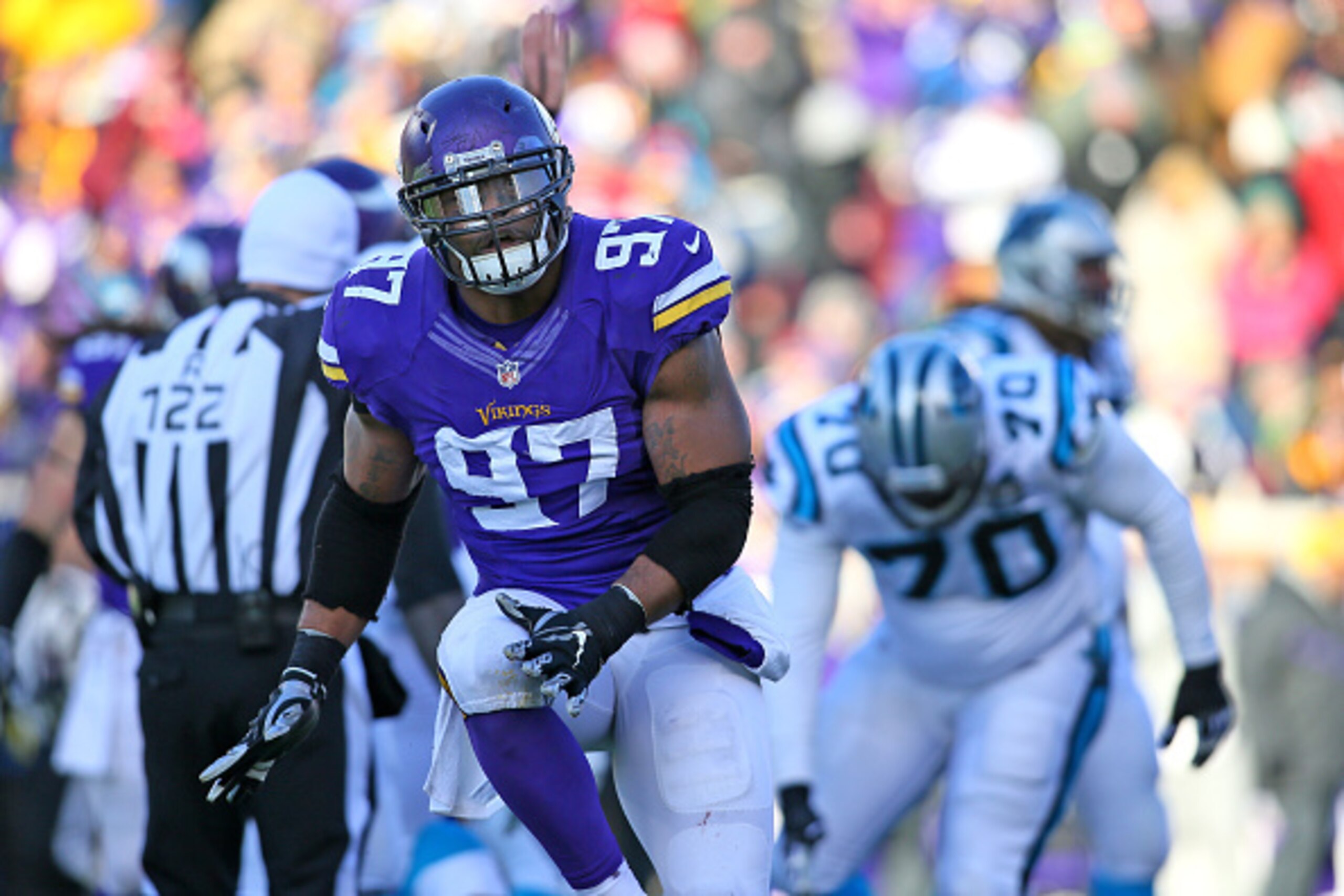
The Vikings stuck their necks out for Everson Griffen back in March, paying $42.5 million over five years, as Goessling reported, for a player who had never held a starting job in the NFL.
A year into his new contract, Griffen is earning every penny.
He recorded 12 sacks and 51 combined tackles, both career highs in 2014. With 60 total pressures, Griffen ranked No. 6 among 4-3 defensive ends, per Pro Football Focus. He may have been even more impactful against the run, often seen chasing down runners in the backfield or standing up blockers at the line of scrimmage.
Griffen also answered any questions about his ability to handle a heavier workload. He ended up playing over 89 percent of Minnesota's defensive snaps, per Football Outsiders, the fifth-highest percentage in the entire league among defensive linemen. The Vikings doubled down on Griffen by not only giving him a starting position and a big paycheck, but also asking him to play an enormous snap count.
Minnesota's faith in Griffen paid off. He was the team's most dominant defensive lineman in almost every single game. He is the type of player the Vikings will be glad to have, no matter the price.
The Defense Has Building Blocks
8 of 10
As Zimmer and his staff try to build their defense, the talented pieces the defense already possesses gives Minnesota a foundation for the future. All three levels have hallmark players.
Along the defensive line, both Griffen and Floyd figure to be foundational players. Both had promising seasons in 2014 against the run and the pass. Floyd is still only 23 years old at the conclusion of his second season, and Griffen is in the early stages of his prime at 27. Griffen's low snap count as a veteran player should keep him fresh as well.
At the defense's second level, Barr stands above the rest. He could conceivably become an even better player than he was in 2014 as he gains experience as a traditional linebacker. Barr is not yet 23 years old, so many good years remain.
On the back end, Rhodes and Harrison Smith are staples for the future. They were each consistent playmakers from the secondary and perfectly fit what Zimmer wants in coverage. Rhodes is still only 24 years old and Smith only 25. The other three starters in the secondary are only 26, 25 and 23 years old, respectively.
The experience young players gained in 2014 and the number of valuable years left in Minnesota's best defensive players should lead to drastic improvement in the unit's play in 2015 and beyond.
The Defense Is Not There Yet
9 of 10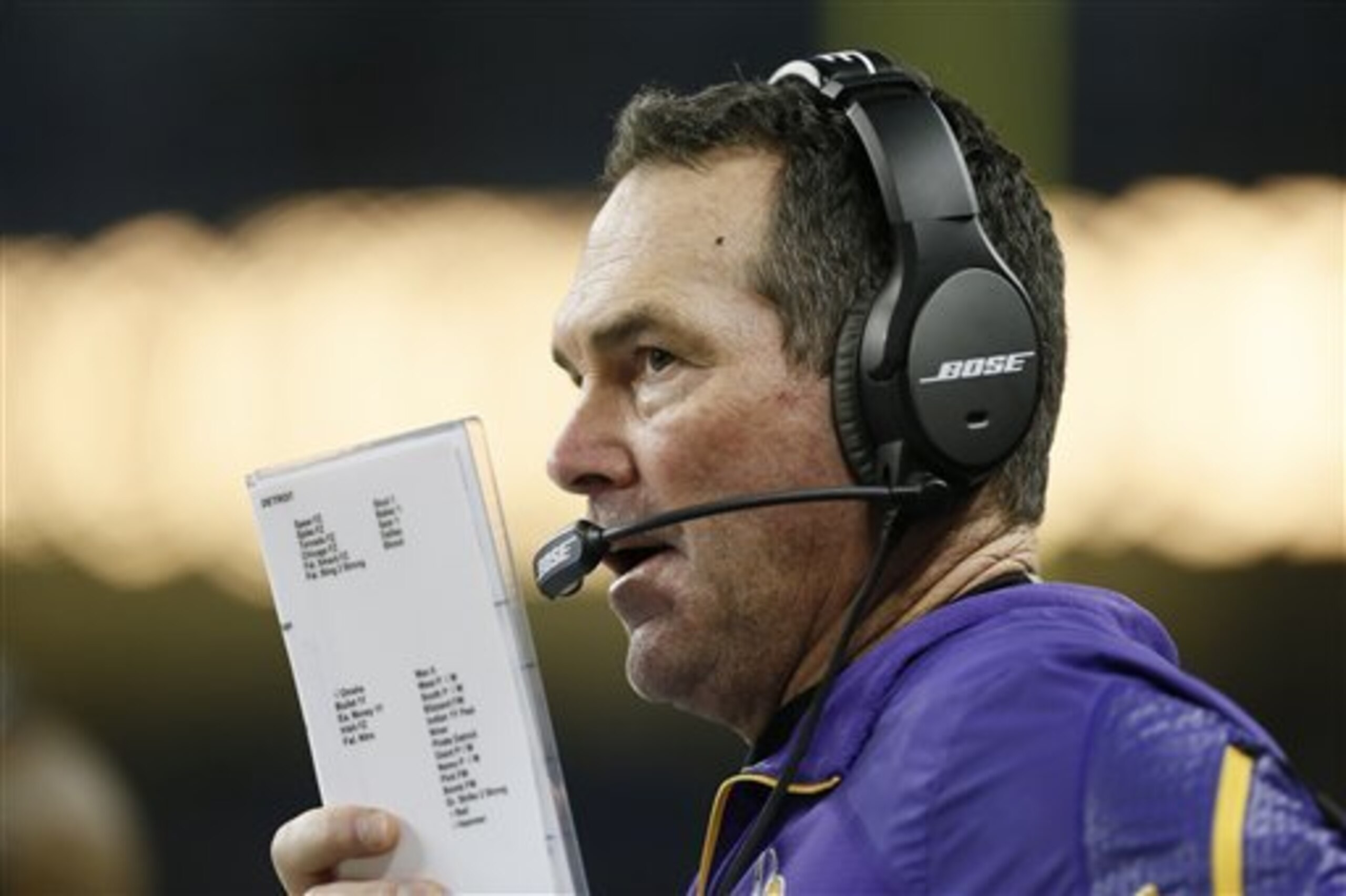
The youth throughout the defense's ranks and its lack of experience in the scheme contributed greatly to its ups and downs over the course of the season. More often than not, those ebbs and flows were dramatic and weekly.
Over the final four weeks of the season, Minnesota gave up 410 yards to the New York Jets, 233 yards to the Detroit Lions, 493 yards to the Miami Dolphins and 264 yards to the Chicago Bears.
The entire unit struggled to maintain its high level of play. If the defense was suffocating passing games, it was often leaky against the run at the same time. If it was holding its own in run defense, it would often bust in coverage and give up big plays.
The defense still has holes to plug too. Impact players are in tow, but the in-betweens need help.
Josh Robinson was up and down at best, and Captain Munnerlyn looked more and more like a free-agent bust as the season wore on. The safety position opposite Smith also lacks any kind of dependability, with neither Robert Blanton nor Andrew Sendejo proving to be the answer.
The linebacker corps has even more issues. Though Gerald Hodges shined at times, Chad Greenway and Jasper Brinkley are only short-term answers at best.
Zimmer and his staff still have answers to find at a few starter spots—and certainly with rotational players, as the defense had little depth in 2014.
A New Punter Is Needed
10 of 10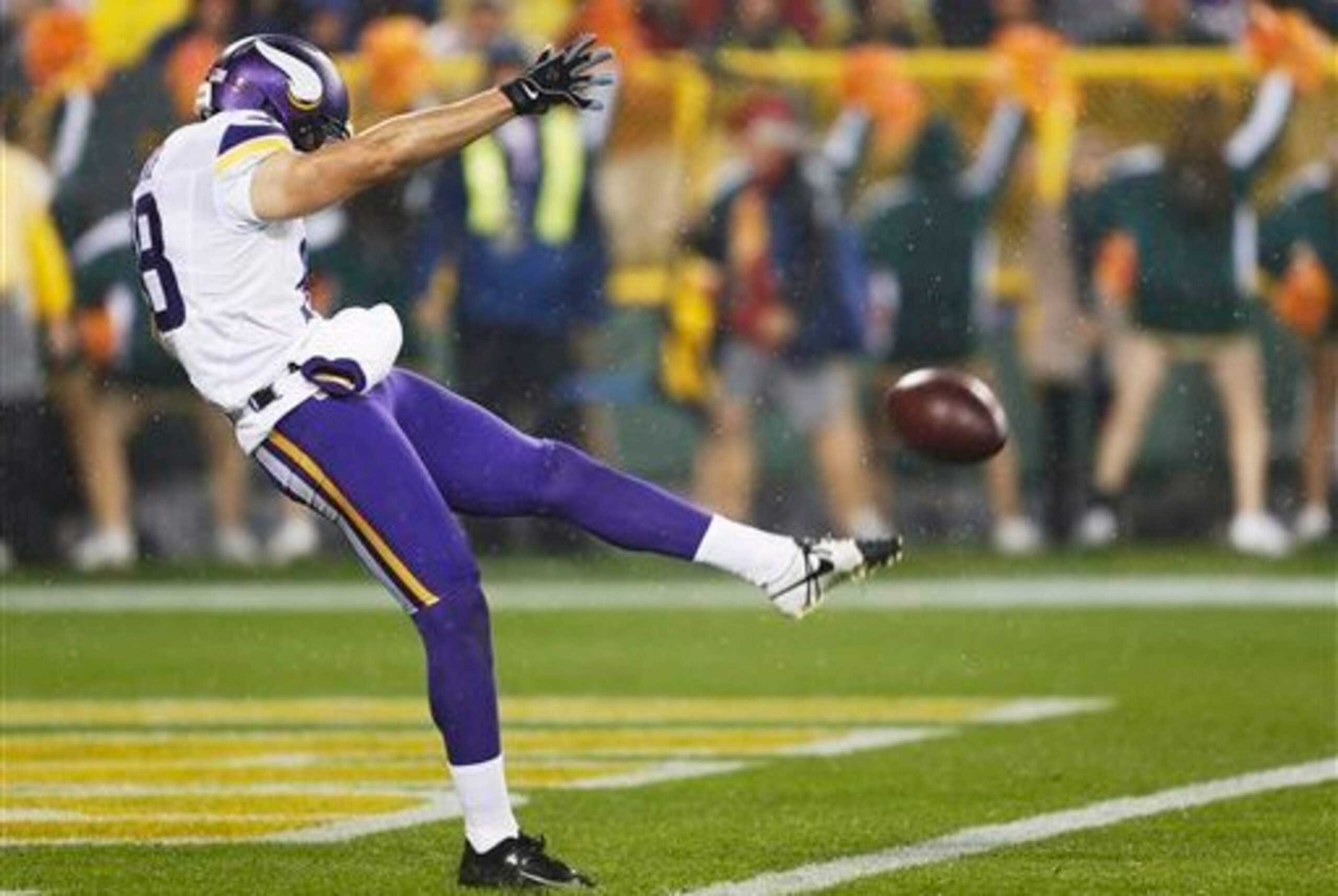
Special teams takeaways are mostly positive, but second-year punter Jeff Locke has not proved to be a dependable player for the Vikings.
Minnesota ranks No. 23 in average punt distance. Locke's short punts too often failed to flip the field for the defense. Locke's numbers do benefit from an incredibly reliable coverage unit though. The Vikings rank No. 20 in net punting, mostly the result of effective gunners and the discipline of coverage.
The Vikings made an investment in Locke by drafting him, but they should be able to find a more effective punter for cheap. Sam Monson of Pro Football Focus agrees:
"Man the Vikings need to change punters in offseason. Just shooting themselves in the field position foot
— Sam Monson (@PFF_Sam) December 28, 2014"
Numerous special teams aces should keep their jobs moving forward. Blair Walsh and Adam Thielen come to mind as valuable pieces for special teams coordinator Mike Priefer. Unfortunately for the Vikings though, Jeff Locke is not one of them.
Drive statistics via Pro-Football-Reference.com Drive Finder. Statistical totals via ESPN.com unless noted otherwise. Player ages via Vikings.com.





.jpg?w=2560 "LaFleur's Fumbling Warning ⚠️")