
O'Driscoll, Hammett Spot On: Skill and Aerobic Fitness Need More Emphasis
Brian O'Driscoll believes more emphasis needs to be placed on skill rather than size in the training of rugby players in the modern game. As was reported by Daniel Schofield of The Telegraph, O'Driscoll remarked that too many players are focused on weight training in the gym as opposed to developing their skills.
It is a culture he believes has become inherent, particularly in European rugby, while New Zealand have embraced it less. He cited this as his reason for favouring the All Blacks at next year's World Cup, stating that they have a good balance of skill and physicality.
TOP NEWS

🚨 NC State Fires Head Coach

Malachi Toney Sets ANOTHER Record
.jpg?w=2560 "NBA Gambling Charges")
Malik Beasley Negotiating Plea Deal (AP)
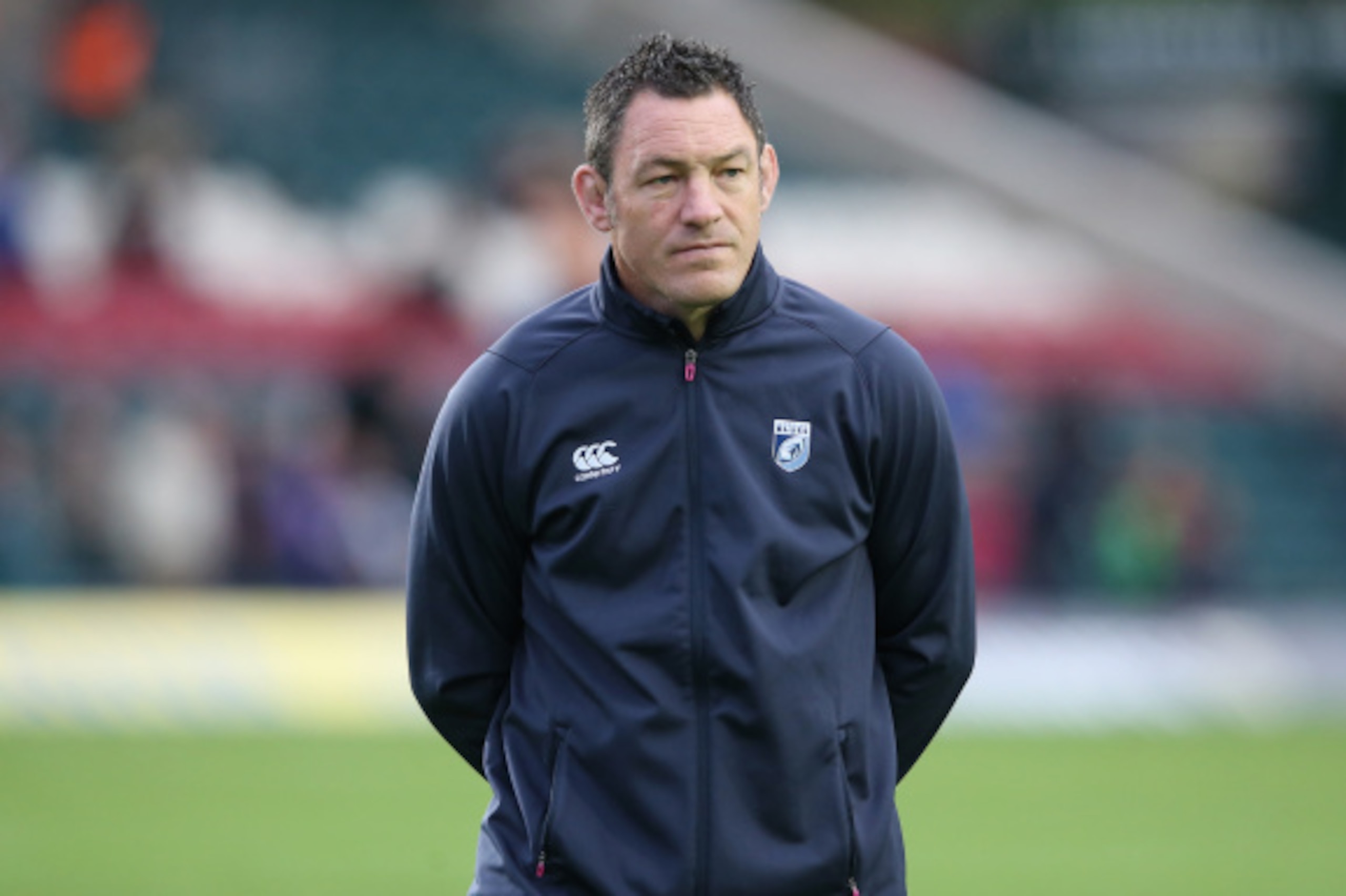
His comments come less than a month after Cardiff coach and former Hurricanes coach Mark Hammett suggested to Duncan Johnstone of Stuff.co.nz that Welsh rugby is years behind New Zealand. He went on to reveal that Welsh coach Warren Gatland is forced to put in significant fitness work with his team to get them up to the standard of Super Rugby.
Neither comment comes as a surprise. Looking at the way the game has been played in the Northern Hemisphere over the past 20 years, there has been a clear emphasis on tight play, kicking and a slow-paced game.
Over the last three or four years, we have seen the European nations make efforts to catch up. Indeed, they are improving in their skill levels. But it is taking time, and they are still limited in their ability to execute with precision, particularly in the final 20 minutes of a fast-paced game.
It is no accident that the All Blacks have been the dominant team in world rugby since 2010. Since the game took on a faster approach, they have flourished as the fittest and most skilful team in the world.
The two go hand in hand. It is all very well and good being able to pass, kick and tackle when you are fresh. Most teams in the world can do that. But where the New Zealand teams excel is in their ability to continue to do so after having played at a frenetic pace for 80 minutes.
So often it is the final quarter of a game where the world's best team put the hammer down. While many of their games remain close for 50 or 60 minutes, they wear their opposition down, and their ability to keep playing, thinking clearly and executing at such a high intensity in the closing stages of a game is where they beat teams.
The key is in development. As O'Driscoll said, New Zealand players do all of their fitness work with balls. They will mix up their fitness work with skill work, so they are practising their skills and having to make decisions while they are tired.
In contrast, O'Driscoll said that so many young players in Europe are so concerned about their performances in the gym that they are lacking in their basic ball skills.
How many European tight forwards do you see running like Dane Coles, passing like Brodie Retallick or playing at the pace of Owen Franks? It is common in New Zealand for players to specialize in a position quite late. As they develop, they are taught to be rugby players and then put in a position that suits them rather than filling a position and developing the abilities necessary to perform in it.

While being big, strong and powerful is important, it is not everything. By not establishing an aerobic fitness base and a good skill set, you limit yourself in how you can play.
It is that aerobic fitness base that is so crucial to develop. Rugby is a game that requires you to run, think and play for 80 minutes, so you need to be capable of doing that. By establishing the aerobic base, you ensure you have the endurance to last the whole game and can still be operating with the same efficiency toward the end of the game as you were at the start.
It also allows you to play at a higher intensity, commit more players to breakdowns and up the pace of the game.
Of course, you need to develop a certain level of anaerobic fitness on top of the aerobic one too due to the stop-start nature of rugby. You need to have the ability to play hard for a passage and then recover efficiently during the next break in play.
But you need to be able to do this for 80 minutes, and it is here where the All Blacks more than anyone are elite.
That is what fitness work needs to be focused on first and foremost, all intermingled with skill drills to imitate a game situation. The gym work can be worked around it, not done instead of it.
In the early to mid-2000s, many Northern Hemisphere teams did look painfully limited in their approach, and Hammett's comments could go a long way to explaining a reason for that.
They kept it tight, playing a game that revolved around forward runners, set pieces and kicking.
Now there is nothing wrong with that. But you need to have versatility, the ability to play a looser, faster game when your first-choice plan is not working.
The problem was that they just did not seem capable of it. Their basic skill level was so poor that it was almost comical at times, particularly in the forwards. O'Driscoll himself was one of the few who was world class in his ability with ball in hand and to create something from nothing.
For a time, New Zealand were almost at the other extreme. They were outstanding playing an open game but were nothing special when it came to a dogfight in close.
But they have developed that ability.
They can now play an open game, a kicking game or a tight game and do all with equal effectiveness. Their team is made up of a group of players who all possess the same basic skill set. And they remain the fittest team in world rugby by quite a margin.
That is why they have been so successful in recent years and why O'Driscoll has added his name to the list of people picking the New Zealanders to defend their world title in little under a year's time.

.jpg?w=2560 "Commanders 49ers Football")

.jpg?w=2560 "Jonathan Taylor Landing Spots")