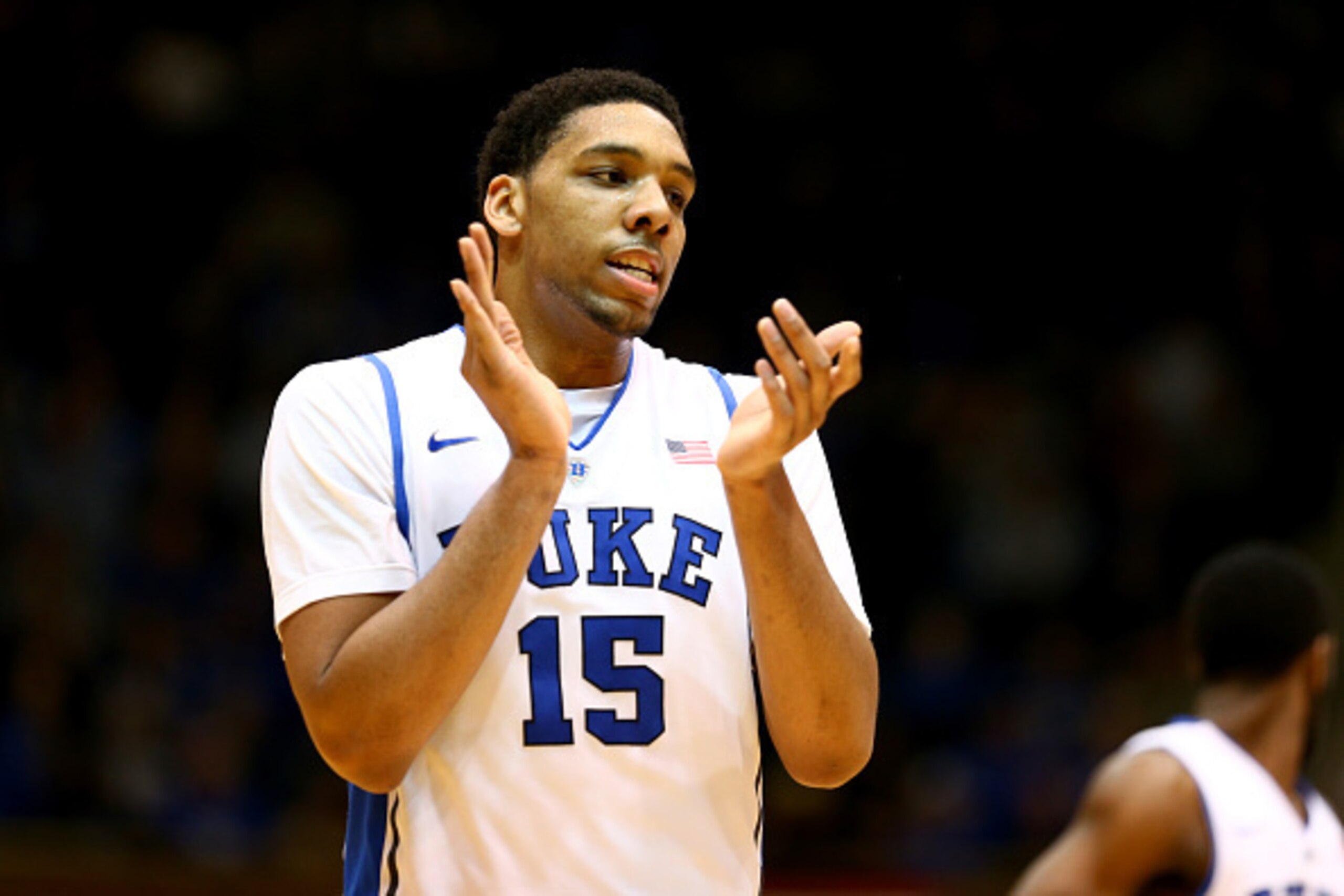


The ACC is dominating our latest edition of the 2014-15 college basketball Player of the Year rankings. The Atlantic Coast Conference is represented by three players in the top five, a fourth in the top 10 and a fifth in the top 20.
No other conference has more than four players on the list. This just goes to show how strong the top teams are in the ACC.
A couple of changes to note in the thought process for these rankings.
When we did the last round two weeks ago, one of the criteria (at least 0.25 win shares per 40 minutes) was a bit too extreme. It was pretty solid for the most part, but removing Georges Niang and D'Angelo Harrison from consideration because of a fraction of a win share was a mistake.
This time, we're doing away with that restriction and finding room for both Niang and Harrison in the top 10, where they belong.
Even with that significant change in criteria, we still have 13 of the same 20 names as last time, including the same big freshman at No. 1 overall.
One other thing that's different from two weeks ago: fewer honorable mentions.
Between the honorable mentions and "Super Honorable Mentions," we ranked 20 players and then had another 23 under the umbrella of "others considered." This time, we're limiting ourselves to just eight honorable mentions—meaning a lot of very good players won't even be noted.
That doesn't mean they weren't considered. They just weren't considered worthy enough.
Dropped from rankings (previous rank): Josh Scott, Colorado (6); Alan Williams, UC Santa Barbara (7); Caris Levert, Michigan (8); Karl-Anthony Towns, Kentucky (12); Aaron White, Iowa (18); Kevin Pangos, Gonzaga (19); Rondae Hollis-Jefferson, Arizona (20)
Honorable Mentions
1 of 21
Brad Waldow, Saint Mary's
Waldow was one of our honorable mentions two weeks ago, and he responded by posting four straight double-doubles. The big man for the Gaels is now averaging 21.7 points and 10.7 rebounds per game. He has recorded a double-double in eight of 10 games and has scored at least 22 points in six of the last eight.
Too bad it isn't helping Saint Mary's win games. Waldow scored 26 of his team's 47 points in a loss to St. John's on Friday.
Alan Williams, UC Santa Barbara
The decision to remove Williams from the top 20 was not made lightly. However, if Waldow doesn't get in because his team is struggling, how could we possibly justify ranking the best player from a team that is 3-6 against Division I opponents?
Williams did have a very nice 18 points, eight rebounds and seven blocks against San Diego two weeks ago. We'll find a spot for him if and when the Gauchos take care of business in the Big West Conference.
Josh Scott, Colorado
An even bigger drop than Williams, it's hard to wash away the taste of Scott's 35 minutes and two points in a home loss to Colorado State two weeks ago.
Devin Booker, Kentucky
Perhaps the streakiest shooter in the nation, Booker has five games with a three-point percentage below .170 and six games at .500 or above—and nothing in between. The freshman is 8-of-9 from downtown in the last two games against North Carolina and UCLA, scoring a total of 34 points in those contests.
Booker leads Kentucky in points per 40 minutes (22.1) and is currently second to Willie Cauley-Stein on the long, fluctuating list of Wildcats who could potentially be named Player of the Year.
Kyle Wiltjer, Gonzaga
Wiltjer has scored 60 more points than any other Gonzaga player and probably deserves to be ranked in the top 20, but we're trying not to get overly excited before the former 5-star recruit (according to 247Sports) goes on a rampage through WCC play. He'll sneak comfortably into the top 20 before long.
R.J. Hunter, Georgia State
Hunter is one of the best (mid-major) scorers in the country, but his stroke has failed him lately. He's shooting just 22.9 percent from three-point range over the past four games and has been held to just 13 points in back-to-back outings.
Vince Hunter, UTEP
Hunter is averaging 16.5 points and 10.4 rebounds per game and has already recorded eight double-doubles, including a 20-point, 13-rebound game against Washington in the Wooden Legacy that just keeps looking better and better.
Kevon Looney, UCLA
If you hadn't noticed, recording a good number of double-doubles is a great way to get on our radar. UCLA's freshman has seven double-doubles on the year and is averaging 13.5 PPG and 10.8 RPG. Like Waldow at Saint Mary's, though, his great post play hasn't exactly been leading to many wins for the Bruins.
20. Wesley Saunders, Harvard
2 of 21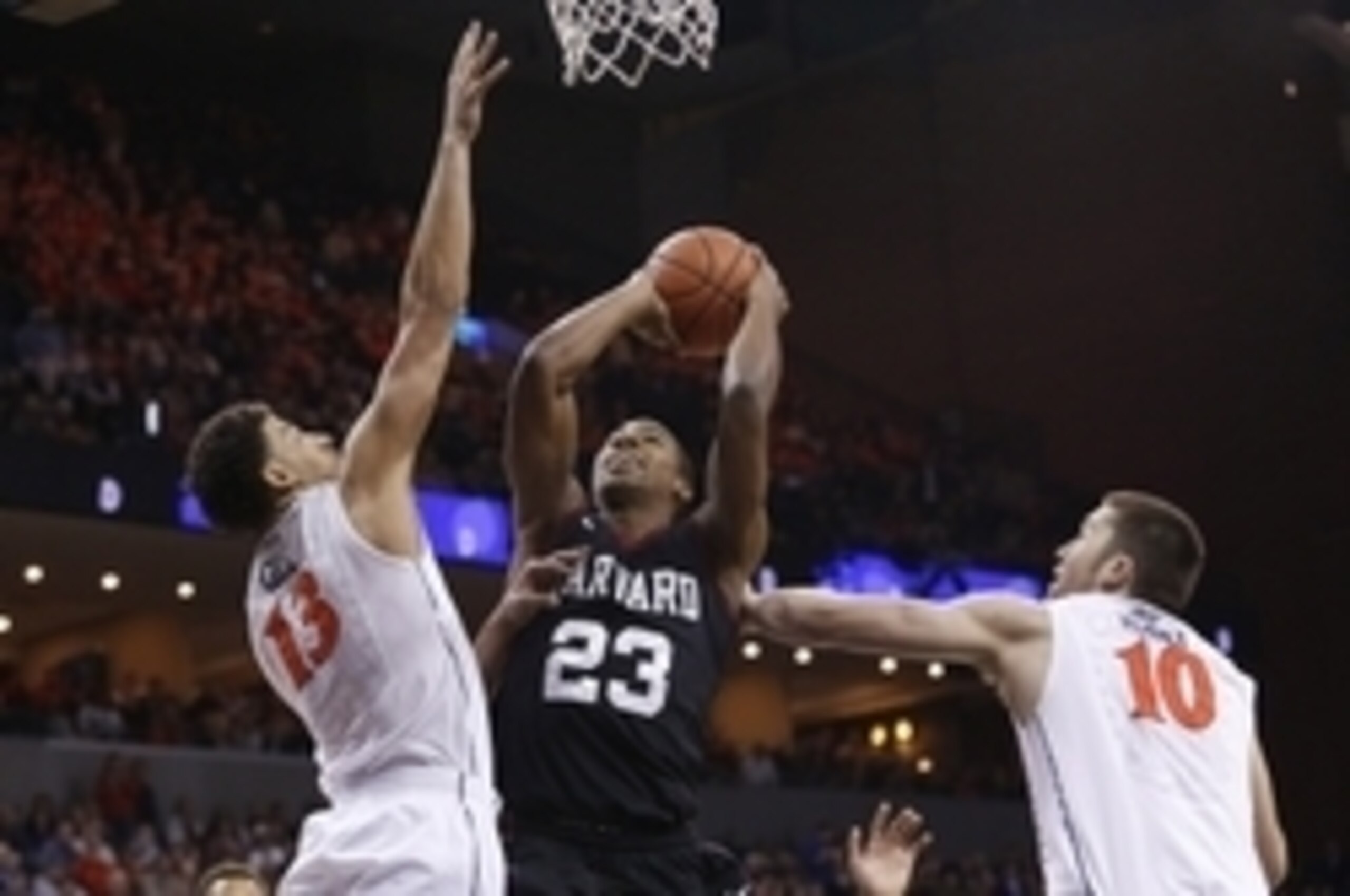
By the Numbers: 18.3 PPG, 6.3 RPG, 4.0 APG, 2.6 SPG, 0.277 WS/40
Best Game: 24 points, 12 rebounds, four steals, three assists, three blocks vs. Holy Cross
Previous Rank: 4
Why He's Here
Harvard has only played one game since the last rankings, but it was one of the most embarrassing games that any team will play this season.
The Crimson were slaughtered by Virginia and held to just 27 points. Wesley Saunders was averaging better than 20.0 PPG before being held to just four points on 0-of-7 shooting from the field.
He wasn't exactly alone in the struggle as Harvard's entire starting lineup shot 1-of-32. However, that doesn't make the outcome any less disappointing.
Harvard will bounce back and win the Ivy League. Saunders will be the Ivy League Player of the Year with at least a mile to spare. But this one game will be an eyesore on his National Player of the Year resume for the next several months.
19. Frank Mason III, Kansas
3 of 21
By the Numbers: 10.9 PPG, 3.9 APG, 3.7 RPG, 1.5 SPG, 0.158 WS/40
Best Game: 10 points, 10 rebounds, five assists, one steal vs. Michigan State
Previous Rank: NR
Why He's Here
Coming into the season, the biggest unknown at Kansas was the point guard situation.
Naadir Tharpe transferred away early in the summer, and Conner Frankamp announced his intentions to leave Kansas at the end of October, leaving the Jayhawks fairly devoid of options.
Freshman Devonte Graham was expected to lead the way, but he was pretty ineffective before dealing with shoulder and toe injuries that have since sent him to the "DL" for at least a month.
Good thing sophomore Frank Mason III has done a pretty incredible job of picking up the pieces.
Mason struggled early in the year but has scored at least 10 points in each of the past eight games while averaging 4.8 assists per game. He was the only Jayhawk who even showed up to play on Monday, more than doubling the scoring output of any teammate in the blowout loss to Temple.
If Cliff Alexander, Kelly Oubre and Wayne Selden ever start playing up to the level of our expectations for them, they would help Mason and Perry Ellis make Kansas an extremely difficult team to beat.

.jpg?w=2560 "NBA Gambling Charges")
18. Stanley Johnson, Arizona
4 of 21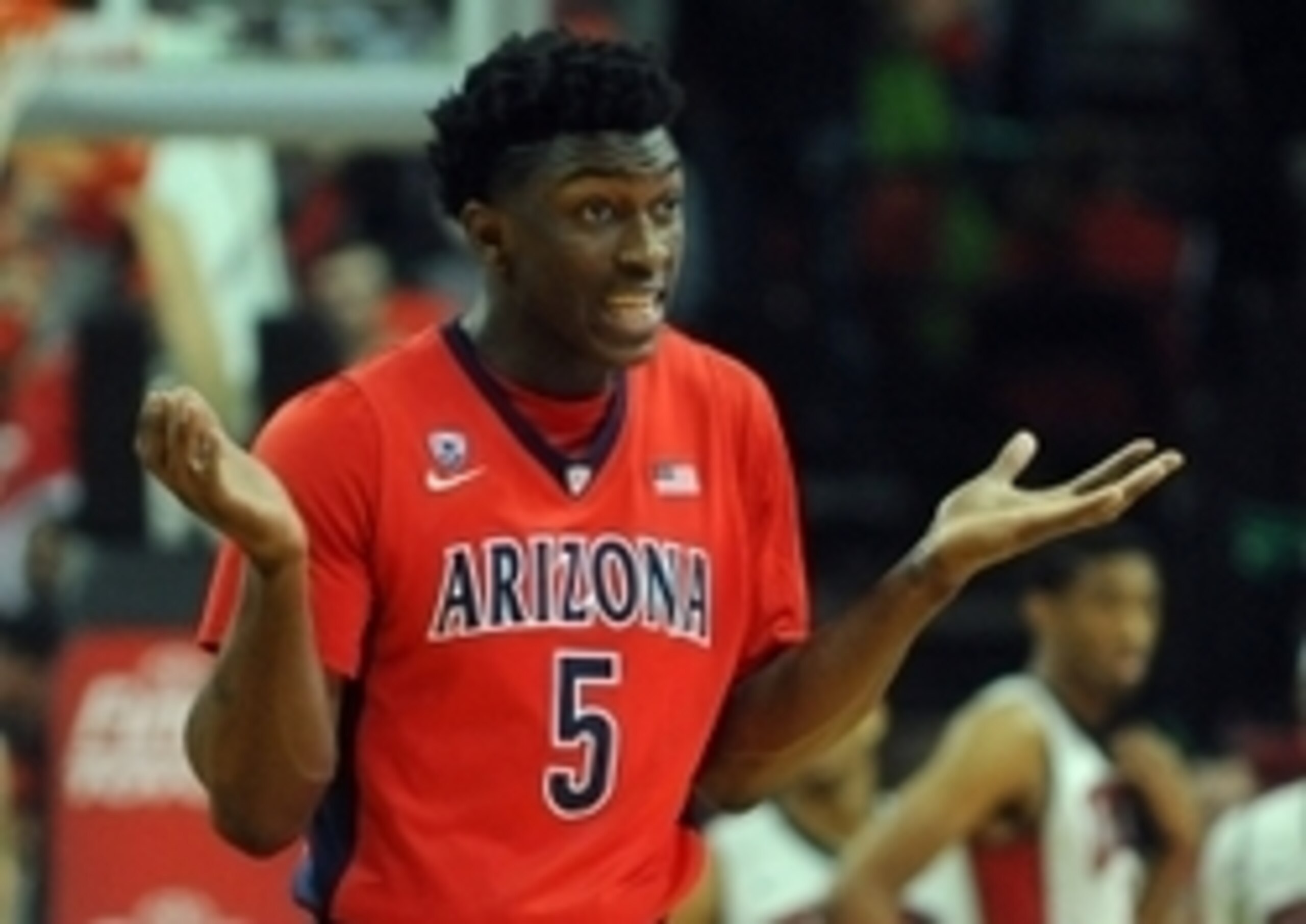
By the Numbers: 14.5 PPG, 6.8 RPG, 1.8 SPG, 1.7 APG, 0.244 WS/40
Best Game: 18 points, nine rebounds, three steals, one block, one assist vs. San Diego State
Previous Rank: NR
Why He's Here
The first of four freshmen in our top 20, Stanley Johnson has been some kind of special for Arizona.
Unfortunately, he's still committing way too many turnovers—a problem that reared its ugly head in a big way on Tuesday night in the first loss of the season for the Wildcats.
At first glance, Johnson had a nice box score—13 points, 13 rebounds, three assists and three steals—but then you get to the seven turnovers, and you're quickly reminded that he's just a freshman after all.
Now, he's only averaging 2.8 turnovers per game. That's normally a lot for someone who isn't the primary ball-handler, but Arizona is using Johnson a ton. According to KenPom.com (subscription required), he's being used on 28.1 percent of possessions when he is on the court. Not only is that the highest rate on the team, but Rondae Hollis-Jefferson (22.8 percent) is the only other player at 21 percent or above.
Therein lies his value.
On a team that otherwise distributes the scoring load pretty evenly, no offensive possession is complete without at least one touch for Johnson. Let's just hope he can start hanging on to the ball a little better.
17. Rayvonte Rice, Illinois
5 of 21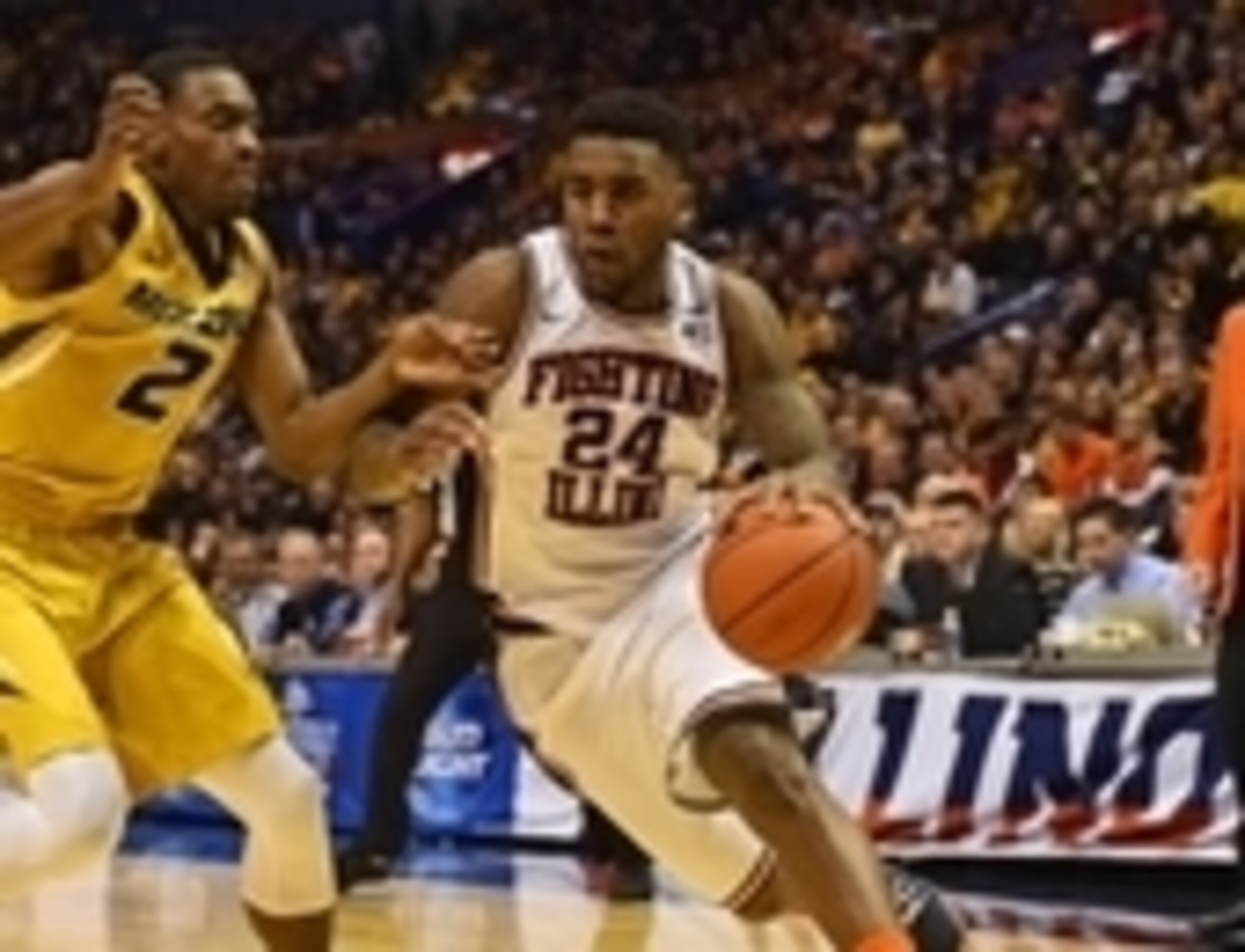
By the Numbers: 17.4 PPG, 6.6 RPG, 1.8 APG, 2.1 SPG, 0.308 WS/40
Best Game: 29 points, four rebounds, three steals, two assists vs. Oregon
Previous Rank: 15
Why He's Here
Rayvonte Rice's best game of the season came 10 days ago, but it deserves some sort of an asterisk because it came in a losing effort.
Illinois is one of the tougher teams in the country to get a grasp on. The Illini do have three losses, but they were close losses away from home against quality teams. They have a nice win over Baylor, but the Bears were without a key player (Kenny Chery).
Through five games, Illinois was averaging 95.6 points per game. Since then, the Illini are averaging 65.3 points per game and have not scored more than 73 in an individual game.
Whatever they are and wherever they're heading, Rice will be their leader.
The senior guard is shooting 45 percent from three-point range and has scored at least 10 points in all 12 games this season.
If Illinois can right the ship in time to become one of the top teams in the Big Ten, Rice will get a lot of the credit.
16. Ron Baker, Wichita State
6 of 21
By the Numbers: 17.3 PPG, 4.5 RPG, 2.5 APG, 0.7 SPG, 0.287 WS/40
Best Game: 21 points, six assists, five rebounds, two steals, one block vs. Memphis
Previous Rank: 17
Why He's Here
Look no further than Ron Baker for evidence of how badly Wichita State misses Cleanthony Early these days.
Baker has been a talented shooter from the day that he arrived in Wichita, but he has been forced to take an awful lot of shots this season because the Shockers don't really have any other options. Fred VanVleet and Tekele Cotton are capable scorers, and Darius Carter has been a force in the paint, but Baker has now led the team in field-goal attempts in four straight games.
According to KenPom.com, he has been responsible for 28.8 percent of the field-goal attempts when he is on the court—up substantially from 22.1 percent a season ago.
When he was shooting 53.8 percent from three-point range after seven games, it made perfect sense to give him all the shots he could handle. In the four games since then, however, he's 10-of-35 (28.6 percent) from downtown for a team playing a disturbing number of close games as of late.
There's no denying that this is Baker's team, though, and his team is 10-1 with a handful of good-not-great wins. If the Shockers beat George Washington on Christmas night and proceed to win 16 or 17 games in Missouri Valley Conference play, we'll inevitably be looking for someone on the roster to mention in the Player of the Year race.
Baker's our man.
15. Kennedy Meeks, North Carolina
7 of 21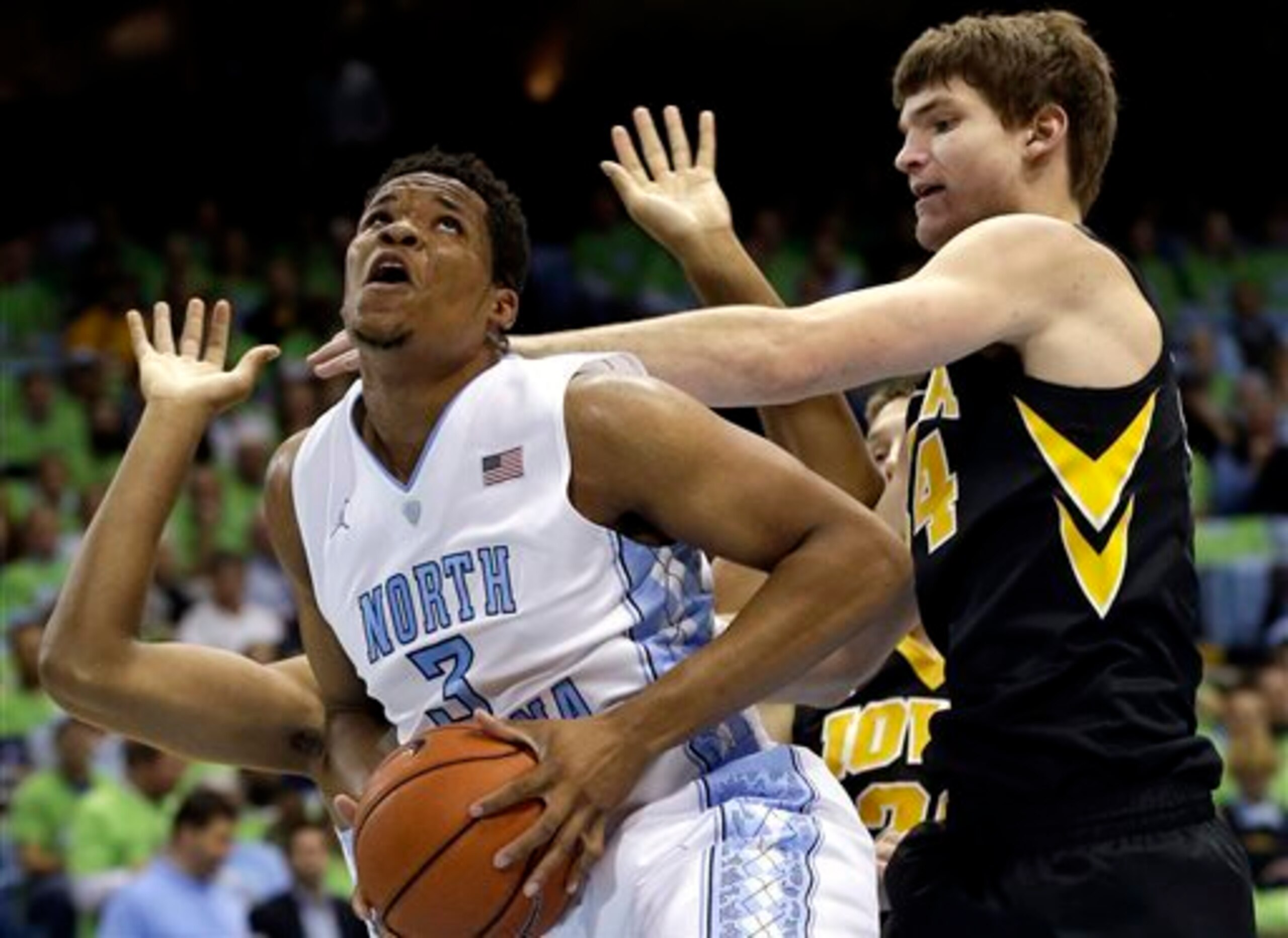
By the Numbers: 13.3 PPG, 9.5 RPG, 1.3 APG, 1.6 BPG, 0.295 WS/40
Best Game: 18 points, 13 rebounds, two blocks vs. Florida
Previous Rank: 14
Why He's Here
Kennedy Meeks has been for North Carolina what Perry Ellis has been for Kansas. When he's playing well, you barely even notice him. Yet, by the time you look at the box score midway through the second half, he's got 11 points and seven rebounds.
But in the rare situations where he doesn't match his season averages, you know the team is in trouble.
Meeks only plays 23.0 minutes per game, making his near double-double scoring and rebounding averages all the more impressive.
He is leading the team in rebounds and blocked shots and is just one point behind Marcus Paige for the team lead in scoring, too.
14. Tyler Haws, BYU
8 of 21
By the Numbers: 22.3 PPG, 4.3 RPG, 2.5 APG, 0.7 SPG, 0.272 WS/40
Best Game: 35 points, six rebounds, two assists, one steal vs. Utah State
Previous Rank: 13
Why He's Here
Playing the last two games on a bad ankle, Tyler Haws did some serious damage to his own scoring average on Tuesday afternoon against Massachusetts. He scored just four points in the overtime win, breaking a streak of nine straight games with at least 19 points.
However, he entered the game with the highest scoring average in the nation. If anyone has numbers that can absorb a dud and still look incredible, it's Haws.
The big question, though: Will that ankle be OK?
This has been an absolutely crucial stretch of the season for BYU. The Cougars have won consecutive games against Stanford and Massachusetts and will host Gonzaga on Saturday. Three wins don't guarantee them a spot in the NCAA tournament, but three losses would have likely put them in an auto-bid-or-bust situation.
When Haws sprained his ankle, he was expected to at least miss all three of these games, if not more. He's toughing them out, but at what cost? Keep an eye on his ability to take and make jump shots over the next few weeks. He might not be at 100 percent again this season.
13. D'Angelo Russell, Ohio State
9 of 21
By the Numbers: 17.2 PPG, 5.5 APG, 4.6 RPG, 1.8 SPG, 0.276 WS/40
Best Game: 32 points, nine rebounds, five assists, one steal vs. Sacred Heart
Previous Rank: 10
Why He's Here
Can D'Angelo Russell play against quality teams?
At the half in each of the losses to Louisville and North Carolina, Russell had just five points. He shot a combined 10-of-37 (27.0 percent) from the field between those two games, including 3-of-16 (18.8 percent) from three-point range.
In the other 10 games, though, he's been nothing short of magic, shooting 50.8 percent from the field and 49.1 percent from three-point range.
Of course, those 10 games were played at home against not very good teams.
So, is Russell actually one of the best freshmen in the country, or he is merely an above-average player who has been victimizing the likes of Sacred Heart, Campbell and North Carolina A&T?
Better question: Is the Big Ten even good enough to solve that riddle?
The Buckeyes don't play Wisconsin until the final day of the regular season. They only have one game against Maryland, and it isn't until the end of January. Both of those games come at home.
Even if he continues to average about 17 PPG, will it be impressive enough to warrant POY votes?
12. Tyrone Wallace, California
10 of 21
By the Numbers: 19.3 PPG, 8.8 RPG, 4.2 APG, 1.3 SPG, 0.220 WS/40
Best Game: 29 points, eight rebounds, four assists, two steals, one block vs. Nevada
Previous Rank: NR
Why He's Here
Tyrone Wallace has scored at least 10 points in every game this season for California and has put up at least 16 points in 11 of 12 contests.
Not only does he lead the Golden Bears in both points and rebounds by a country mile, but he's also their top dog in the assists and steals departments.
Similar to Utah's Delon Wright, Wallace is a 6'5" Engine That Could. He has done everything for this team in leading it to a 10-2 start to the season.
Without Wallace, California is a disaster of a team in a rebuilding year. With Wallace, California just might get back to the NCAA tournament without anything resembling a starting center.
11. Myles Turner, Texas
11 of 21
By the Numbers: 11.7 PPG, 6.8 RPG, 2.9 BPG, 1.1 APG, 0.392 WS/40
Best Game: 26 points, nine rebounds, six blocks, one assist, one steal vs. Lipscomb
Previous Rank: NR
Why He's Here
Myles Turner has been a bit hit or miss through the first six weeks of his college career, but when he's playing well, the other team might as well just go home.
Despite playing 20.9 minutes per night, Turner already has four games with at least five blocks and four games with at least 15 points. He's one of the better shot-blockers in the country and has by far the highest O-rating on the Longhorns roster, according to KenPom.com.
It's simply mind-boggling that he continues to receive fewer minutes than Connor Lammert on a nightly basis.
In an overtime loss to Stanford on Tuesday night, Turner attempted just four shots and scored only two points in the final 30 minutes. Even if the Cardinal were triple-teaming him all night long—they weren't—it's inexcusable for one of the most valuable players in the country to only attempt that many shots in a close game.
Yet, it's already the second time this season that it has happened. He had some key rebounds and blocks near the end of the one-point win over Connecticut, but he attempted just four shots in the game and scored just two points in the second half.
Turner is one of the best tools a coach could ask for. Rick Barnes just needs to learn how to properly use him.
10. D'Angelo Harrison, St. John's
12 of 21
By the Numbers: 18.8 PPG, 6.9 RPG, 1.7 APG, 1.2 SPG, 0.267 WS/40
Best Game: 31 points, 17 rebounds, two assists vs. Franklin Pierce
Previous Rank: NR
Why He's Here
If any player in the country could benefit from an East Coast bias, wouldn't it be D'Angelo Harrison? The senior shooting guard who plays for a team from New York City is eight or nine games away from reaching 2,000 career points.
Yet, despite averaging nearly 20 points per game for the No. 17 team in the country, I can't recall seeing anyone explicitly stating a case for or against Harrison for Player of the Year.
Chris Obekpa's short shorts have gotten 10 times the attention that Harrison has gotten for simply being the best player on the court night in and night out.
I'm not expecting Doug McDermott levels of adoration here, but could we at least start acknowledging the impressive year and career that Harrison is having?
9. Justin Anderson, Virginia
13 of 21
By the Numbers: 15.1 PPG, 4.8 RPG, 1.8 APG, 0.351 WS/40
Best Game: 21 points, eight rebounds, one block, one assist vs. VCU
Previous Rank: 11
Why He's Here
Justin Anderson is shooting 60.0 percent from three-point range for a Virginia team that trails only Kentucky in overall efficiency, according to KenPom.com.
We keep waiting for his inevitable regression, but he keeps shoving great games into the faces of his doubters.
The Cavaliers didn't need much from him in their destruction of Harvard, but he did shoot 2-of-3 from three-point range to improve to 24-of-40 for the season.
What makes his start particularly ridiculous is that he could miss 55 of his next 61 three-point attempts and still have a better three-point percentage than last season. Anderson was on the long list of players who surprised us with unexpectedly impressive long-range shooting in the first game or two of the season, but he hasn't slowed down.
If he can keep it up in conference play, he'll be a legitimate Player of the Year contender. Not a single ACC team is currently allowing opponents to shoot better than 34.0 percent from three-point range, so Anderson will have his work cut out for him.
8. Robert Upshaw, Washington
14 of 21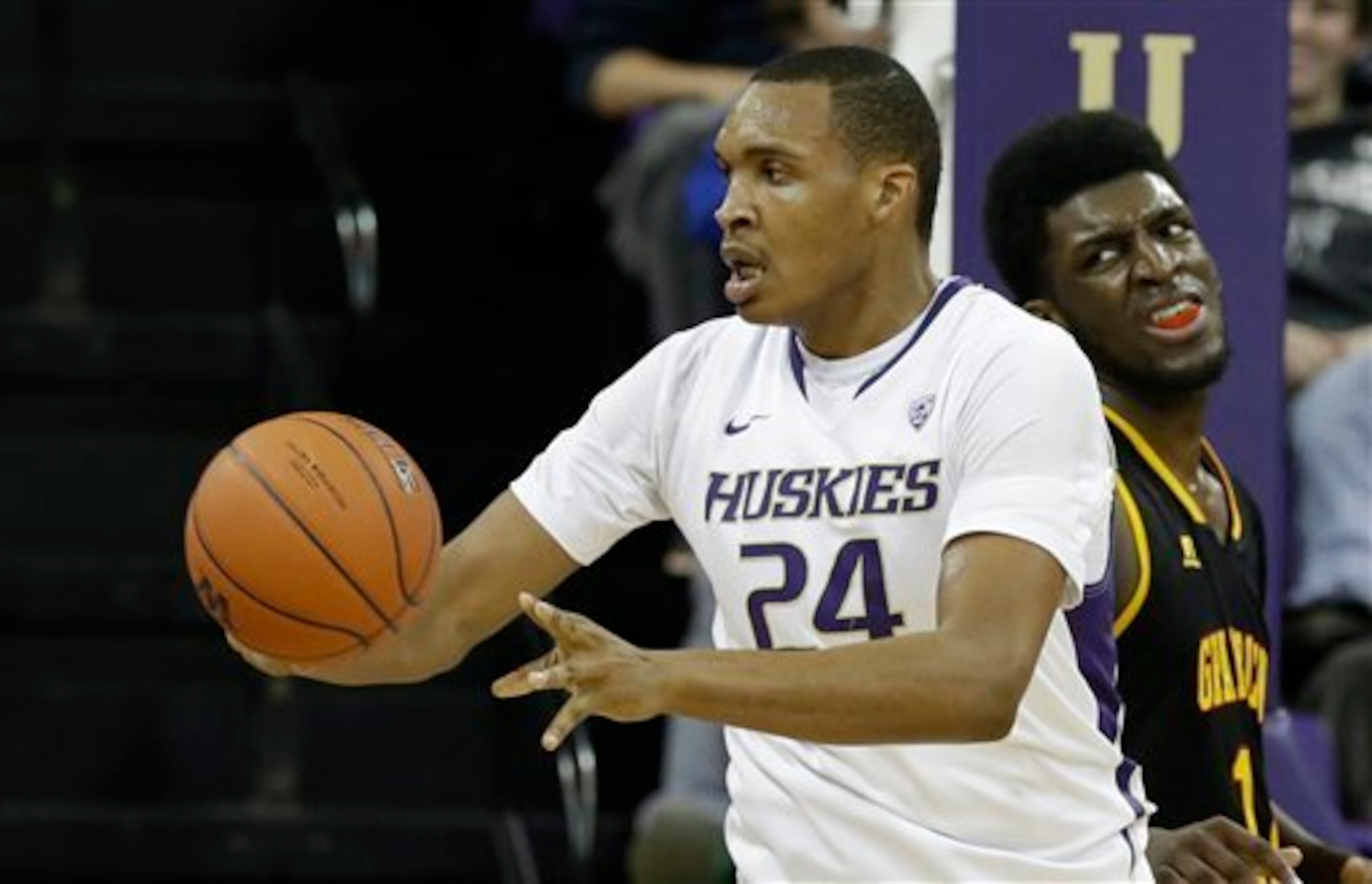
By the Numbers: 10.9 PPG, 7.1 RPG, 4.6 BPG, 0.275 WS/40
Best Game: 21 points, nine rebounds, six blocks vs. Eastern Washington
Previous Rank: NR
Why He's Here
Back at the beginning of October, I pegged Washington as an under-the-radar team that could do some serious damage, noting that Robert Upshaw was the biggest X-factor.
As things currently stand, he might be the most dominant big man in the entire country.
Washington's sixth man is only averaging 20.0 minutes per game, but he's shooting 62.3 percent from the field and leading the nation in block percentage by a sizable margin.
Upshaw has at least two blocks in all but one game this season—a disaster against Pacific in which he played just eight minutes before fouling out. He has already recorded at least six blocks in four different games.
As a nation, we've grown obsessed with Kentucky's Willie Cauley-Stein, but Upshaw is averaging marginally more points and rebounds per game than Cauley-Stein and blocking more than 2.5 times as many shots per game—all while playing 4.1 fewer minutes per night.
Last year, Washington went 17-15 and missed the postseason. This year, Washington is 11-0 and looking like one of the best teams in the country.
Nigel Williams-Goss and Andrew Andrews have been great, but they were already on last year's roster. The difference is clearly Upshaw, and it's enough of a difference that we're willing to take a leap of faith by vaulting Upshaw into the top 10.
7. Georges Niang, Iowa State
15 of 21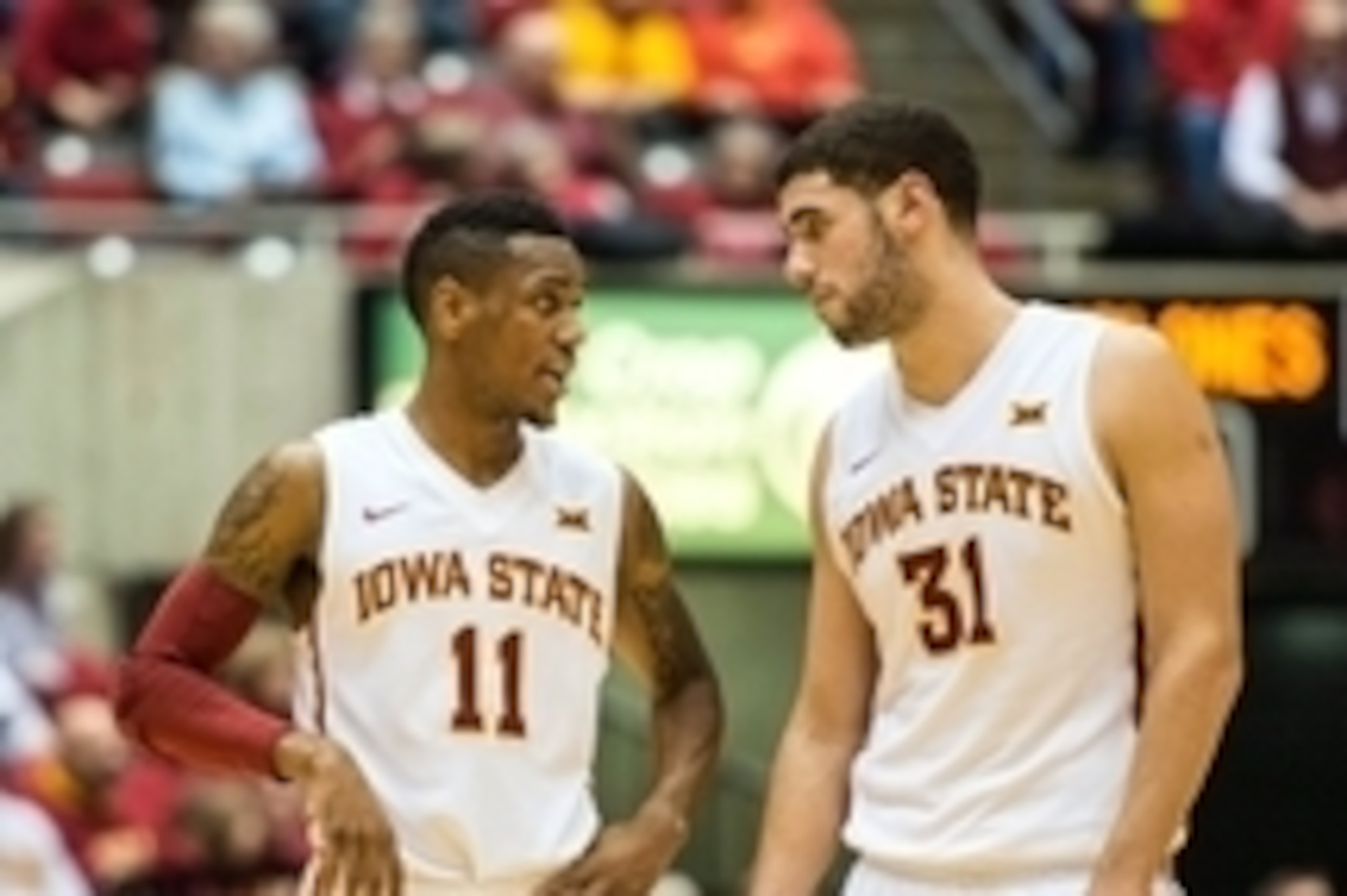
By the Numbers: 16.9 PPG, 5.5 RPG, 4.2 APG, 0.240 WS/40
Best Game: 26 points, eight assists, six rebounds vs. Arkansas
Previous Rank: NR
Why He's Here
Perhaps most impressive about Georges Niang's season is that he has effectively served as Iowa State's center for the first six weeks of the season. Things will be a little different now that Jameel McKay is eligible to play, but Niang was already remarkably effective while dealing with players a couple inches taller and a few pounds heavier than him.
How much more might he be able to do now that he'll be primarily playing against power forwards—or perhaps even small forwards when he's on the court with both McKay and Dustin Hogue?
Let's answer that question with another question: Remember back in April when we temporarily allowed ourselves to believe that Jabari Parker might actually come back for another year at Duke? Parker played out of position for an undersized team in 2013-14, but the thought of his being able to just do his thing while Jahlil Okafor manned the paint was enough to make us salivate.
Now, Niang gets a better chance to be a scoring machine, even though he was already shooting substantially better than last season.
Much has been made this year about the battle between Kansas and Texas atop the Big 12, but Niang and Iowa State will have something to say about that before long.
6. Delon Wright, Utah
16 of 21
By the Numbers: 16.4 PPG, 5.2 APG, 5.2 RPG, 2.1 SPG, 1.0 BPG, 0.310 WS/40
Best Game: 17 points, 10 assists, six rebounds, two steals vs. South Dakota State
Previous Rank: 16
Why He's Here
It took a little while for Delon Wright to get going this season, but he has been an unstoppable force over the past few weeks—despite playing games against the likes of Kansas, Wichita State, BYU and UNLV.
In his last seven games, Wright is averaging 19.3 PPG, 5.7 RPG and 5.6 APG.
Even with the first four less impressive games of the season included in his overall line, though, Wright joins Iona's A.J. English as the only players in the country currently averaging at least 15.0 points, 5.0 assists and 5.0 rebounds per game. Throw in the 2.0 steals or 1.0 block, and Utah's Swiss army knife is in a class of his own.
What's really impressed us, though, is that he has kept the train on the tracks as the Utes wait for Jordan Loveridge to get healthy. Arguably the second-best player on the team, Loveridge has missed the past seven games—it's hardly a coincidence that Wright started to really impose his will seven games ago.
During that window, the team is 6-1 with a couple of quality wins and a hard-fought loss to Kansas.
Before the year began, Wright was a popular "sleeper" pick for Player of the Year, and you're really starting to see why.
5. Jerian Grant, Notre Dame
17 of 21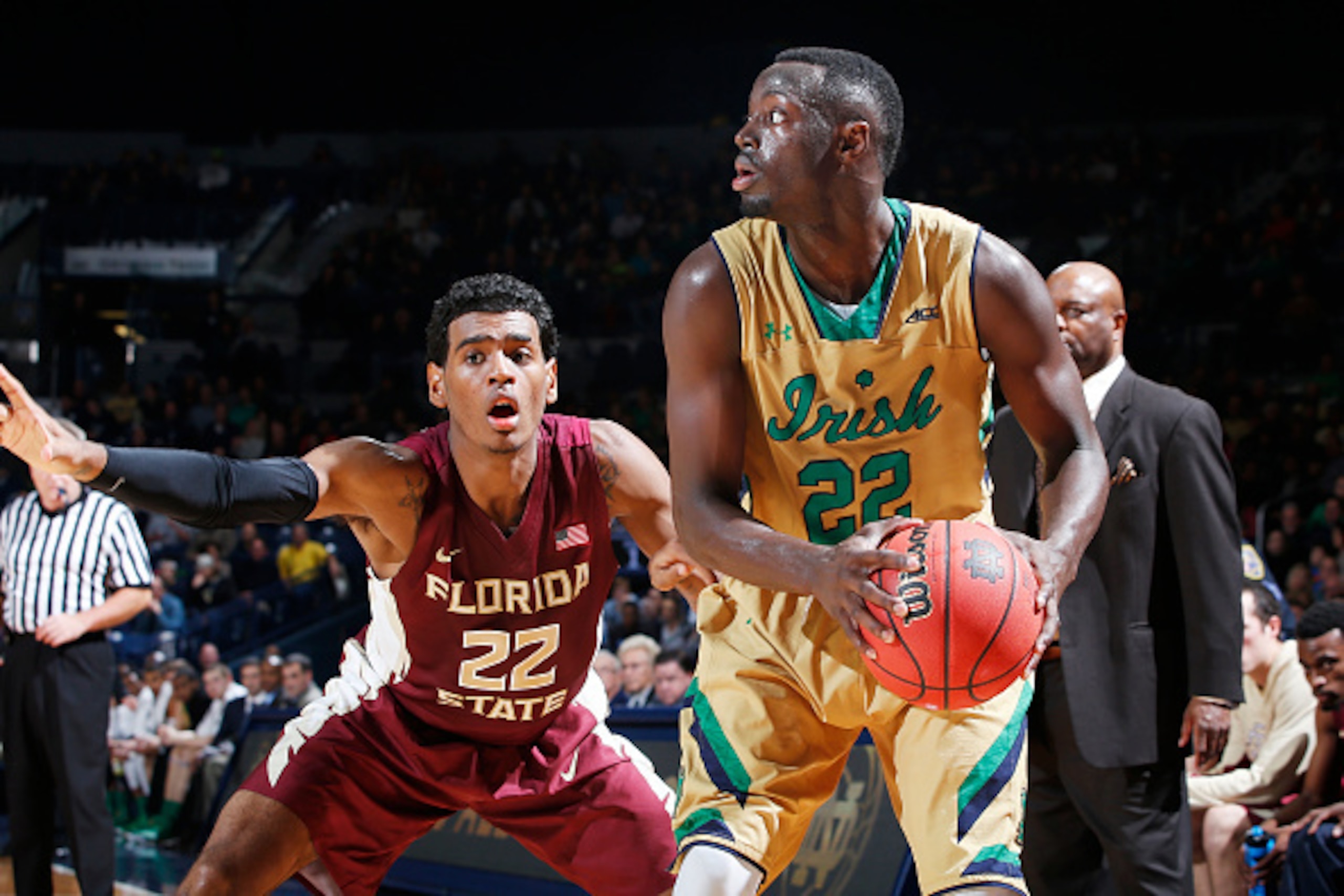
By the Numbers: 17.6 PPG, 6.2 APG, 3.4 RPG, 1.7 SPG, 0.334 WS/40
Best Game: 27 points, six assists, four rebounds, three steals, one block vs. Michigan State
Previous Rank: 3
Why He's Here
It's been a weird few weeks for Jerian Grant's POY campaign.
On the one hand, Notre Dame has been destroying all comers. The Fighting Irish have won their last five games by an average score of 87.2 to 63.2, gaining a fair amount of national recognition while climbing to No. 16 in the latest AP Top 25.
On the other hand, Grant has averaged just 14.6 PPG in those five games—and not because of a lack of trying or opportunity. He is 5-of-22 from the field over the past two games, just barely maintaining his 13-game streak of scoring at least 10 points.
He's still unarguably the most valuable player on the team. Here's hoping he can snap out of this miniature slump before Notre Dame actually goes out and plays its first true road game of the season.
4. Willie Cauley-Stein, Kentucky
18 of 21
By the Numbers: 10.5 PPG, 6.7 RPG, 1.0 APG, 1.8 SPG, 1.8 BPG, 0.350 WS/40
Best Game: 21 points, 12 rebounds, five steals, three blocks vs. Texas
Previous Rank: 5
Why He's Here
There are at least five different players on Kentucky's roster with a legitimate case for Player of the Year consideration.
Willie Cauley-Stein's case, however, is the strongest.
He ranks first on the team in rebounds and second in points and blocks. Breaking every height stereotype in the book, 7'0" Cauley-Stein is leading the Wildcats in steals. He had five steals in the win over Texas and another four recently against North Carolina.
We know he has great hands, because we see the highlights of his days as a wide receiver in high school in two out of every three games Kentucky plays. But the way that he controls the paint between blocks and steals is incredible.
It's almost as if he was also a soccer goalie when he wasn't too busy playing wide receiver.
Prior to the blowout win over UCLA where he wasn't needed for very long, Cauley-Stein had scored at least 10 points and logged at least 25 minutes in five consecutive games. Even before Alex Poythress' injury, John Calipari was already starting to give extra playing time to his most important player.
We'll see if and how much that trend continues.
3. Frank Kaminsky, Wisconsin
19 of 21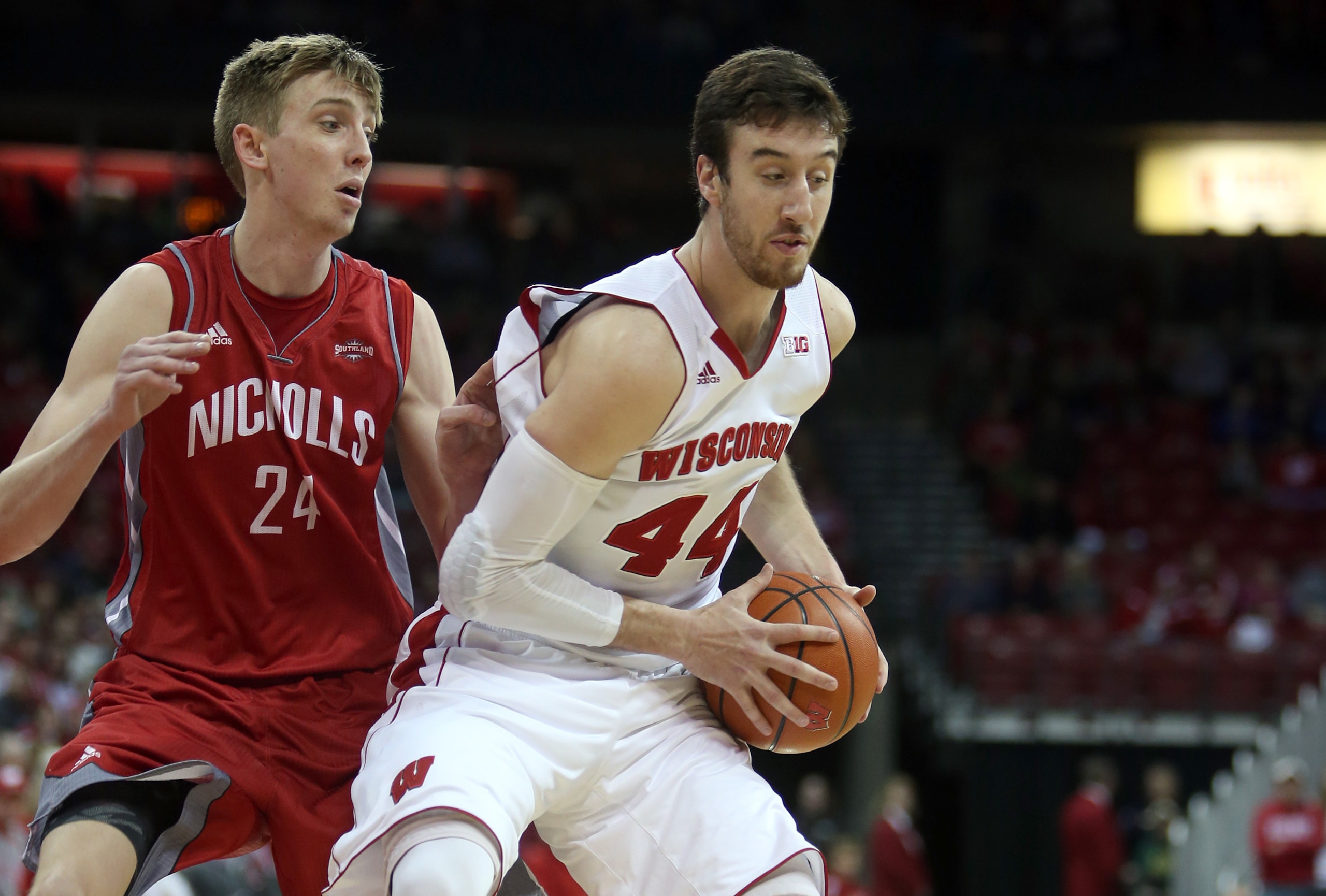
By the Numbers: 15.8 PPG, 7.7 RPG, 2.2 APG, 1.8 BPG, 1.2 SPG, 0.322 WS/40
Best Game: 20 points, 15 rebounds, seven blocks, two assists, one steal vs. Green Bay
Previous Rank: 2
Why He's Here
Since the last update, Frank Kaminsky has been less Frank the Tank and more Frank the Slightly Above Average.
The Badgers didn't need much from him in the blowout wins over Milwaukee and Nicholls State, but the fact remains that Kaminsky is averaging 14.0 points, 4.0 rebounds, 2.0 assists and 0.7 blocks per game over his last three outings.
He played pretty well on Monday night at California. Midway through the second half, the Golden Bears went on an 11-2 run to make things a little more interesting, but Kaminsky hit a back-breaking three-pointer with the shot clock winding down to put Wisconsin back up by 11. Cal never got it back to within 10.
Those are the types of things that Kaminsky brings to the table that can't be captured in box scores or stat lines.
However, Nigel Hayes was the star of the game, tallying 17 points and 13 rebounds. Sam Dekker was the key contributor in the prior two games. Kaminsky has been playing second fiddle for Wisconsin for a couple of weeks now.
It was enough to demote him to No. 3 for the time being.
2. Montrezl Harrell, Louisville
20 of 21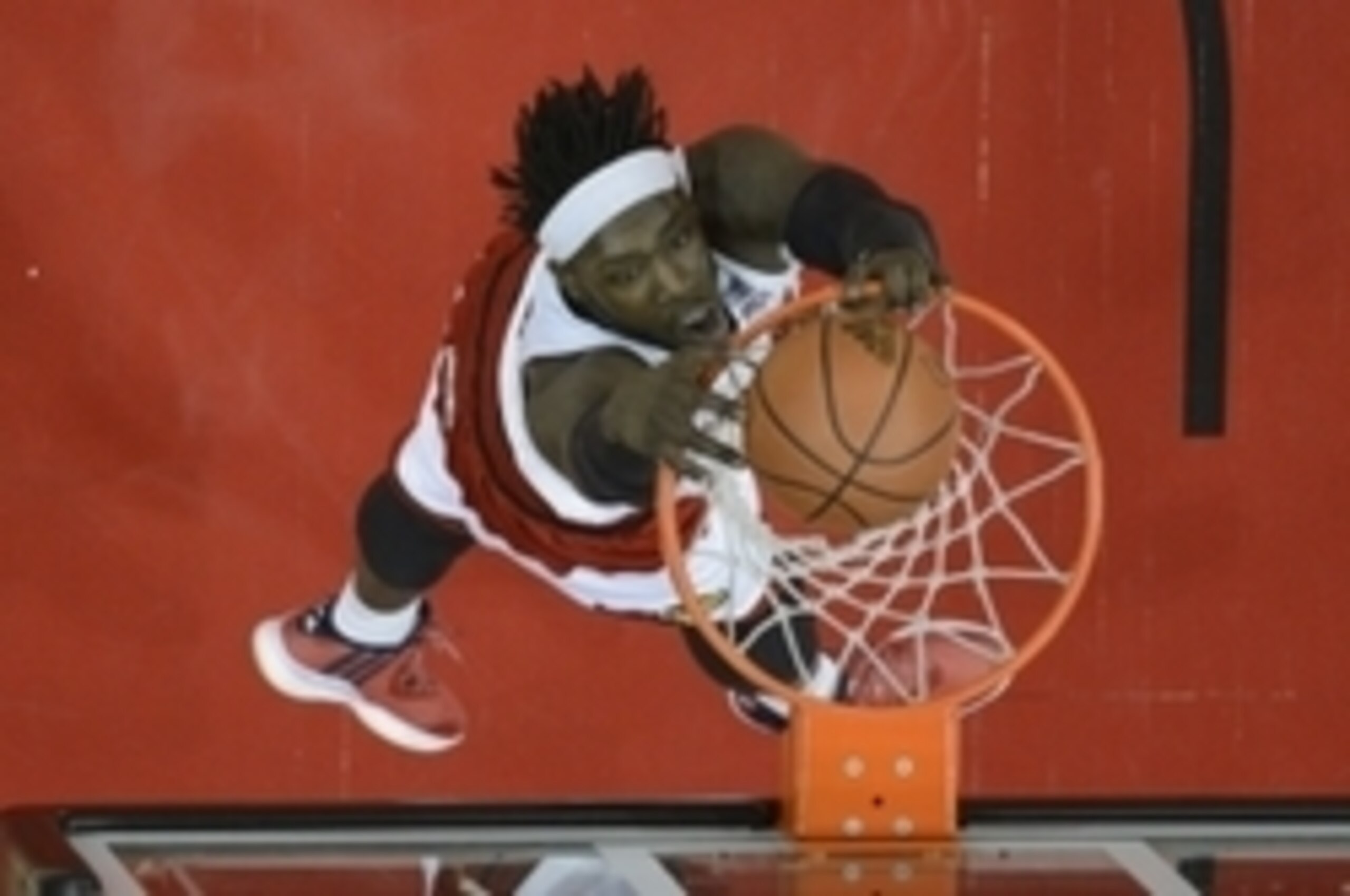
By the Numbers: 16.7 PPG, 10.0 RPG, 1.3 APG, 1.1 BPG, 0.9 SPG, 0.312 WS/40
Best Game: 19 points, 17 rebounds, two blocks, two steals, one assist vs. UNC-Wilmington
Previous Rank: 9
Why He's Here
Go ahead and make your boxing jokes. Heaven knows we've made a few of our own.
But missing one game against Cal-State Northridge for freaking out as four opponents stood menacingly over him as he lay on the court is no big deal to us. He served his punishment. Now let's move on and talk about the best power forward in the nation.
If he really wanted to, Harrell could go for at least 20 and 10 every night. At 6'8" and 240 pounds, he looks less like a man and more like a freight train flying at the rim for thunderous dunks.
The way he played against Indiana a couple weeks ago was like something out of a video game. Harrell finished the night with seven dunks, most of them in highlight-reel fashion.
Eddy Curry and Glen Davis were previously given the nickname "Baby Shaq," but Harrell quite adequately fits the description—right down to the painful inability to consistently make free throws.
Since making nine of 10 freebies in the season opener, Harrell is shooting 53.1 percent from the charity stripe. That's still better than his 46.4 mark from last year but too bad to justify keeping him on the court while trying to hang on to a late lead.
If that's his biggest issue, though, it isn't much of one. Given the choice between a 95 percent free-throw shooter and someone who can physically do the types of things Harrell can do, anyone in his right mind would take the latter.
1. Jahlil Okafor, Duke
21 of 21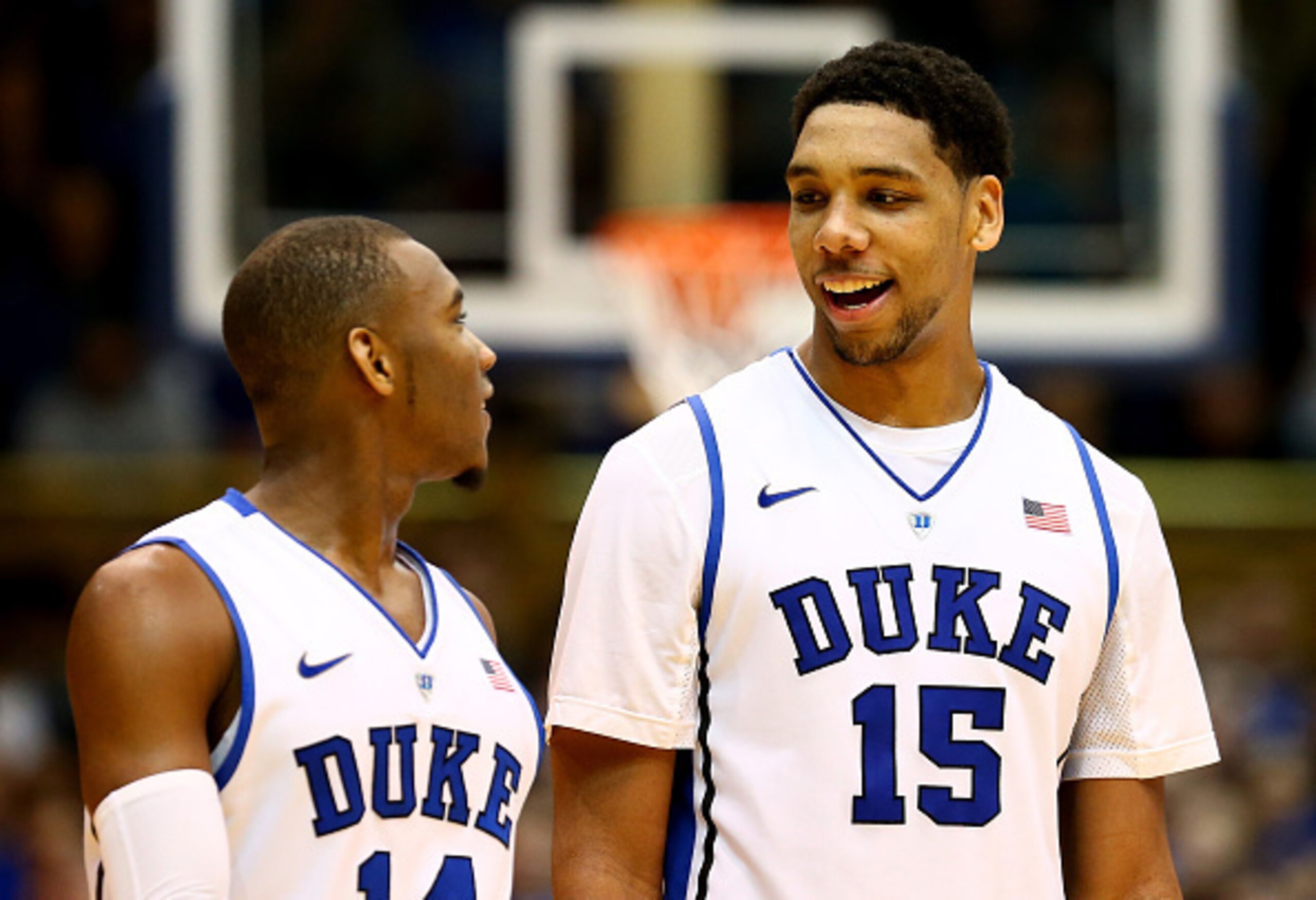
By the Numbers: 17.4 PPG, 8.9 RPG, 1.6 APG, 0.9 SPG, 1.5 BPG, 0.296 WS/40
Best Game: 25 points, 20 rebounds, three blocks, two steals, one assist vs. Elon
Previous Rank: 1
Why He's Here
Jahlil Okafor was already at No. 1 before last week's ridiculous game against Elon, so it's only logical that he hangs on to the top spot.
Duke's big man has been everything we hoped for and then some. He has scored in double figures in all 10 games while helping lead Duke to 10 wins by double figures.
He's shooting 70.9 percent from the field over his last five games, scoring at least 21 points in three of those contests.
What really stands out in his game log, though, are the free throws.
Yes, Okafor is shooting just 51.1 percent from the charity stripe, but at least he's getting there now. Through his first six games, Okafor attempted a grand total of 14 free throws while committing 15 fouls of his own.
In three of his last four games, he has been awarded at least nine free-throw attempts while committing one or no fouls.
Both Okafor and the refs are adapting to his sheer physicality. He's simultaneously getting more aggressive and more cautious, avoiding silly fouls while forcing the opposition to commit fouls to slow him down.
This will probably come as blasphemy to Duke fans, but in terms of the ratio of fouls drawn to fouls committed, he is essentially evolving into an even more dominant version of one of the best interior players in recent memory—North Carolina's Tyler Hansbrough.
That's great against the likes of Army and Elon, but if he can keep it up in ACC play, go ahead and start etching Okafor's name into every Player of the Year trophy in existence.
Statistics courtesy of Sports-Reference.com, ESPN.com and KenPom.com. Win shares per 40 minutes current through start of play on Tuesday, December 23.
Kerry Miller covers college basketball for Bleacher Report. You can follow him on Twitter @kerrancejames.

.jpg?w=2560 "Aikman Blasts Cowboys WR 🫣")

.jpg?w=2560 "Jonathan Taylor Landing Spots")