

Poor Execution, Injuries and Lack of Adjustment Derail 49ers' Efforts in Week 16
The San Francisco 49ers were plagued in Week 16 by many of the factors that have seemingly shadowed their 2014 campaign.
A 38-35 overtime loss signified more than just a tough defeat at the hands of a desperate San Diego Chargers team vying for a last-minute playoff berth. The game was a reflection of so many things that have have gone wrong with the 49ers this year.
As has been the case with so many contests, San Francisco got out to a strong start. The 49ers held a 28-7 lead entering halftime.
TOP NEWS
.jpg?w=2560 "Titans Giants Football")
OBJ Calls Out Giants After Release
Lamar Jackson Day-to-Day

Live Live: Updates from every NFL game
But a flurry of mistakes, injuries and a resurgent Chargers team thwarted any and all chances for San Francisco to retain that lead as regulation came to a close.
A game-tying fourth-quarter score with 29 seconds remaining all but pointed toward San Diego eventually coming away with a victory.
It did in overtime. And the Chargers' game-winning field goal followed a lost fumble by 49ers' second-year pro wideout Quinton Patton.
So what went wrong?
In many ways, the same stories unfolded in Week 16. The only substantial difference was the context. The 49ers entered this matchup versus the Chargers as spoilers only. San Francisco's playoff hopes had been dashed the previous week.
As had been the case prior to the regular season, turbulence followed the franchise all the way up to the opening kickoff. Head coach Jim Harbaugh's future and defensive end Ray McDonald's off-the-field issues marked the beginning of the story once more. McDonald is gone now and speculation points to Harbaugh also leaving, albeit for very different reasons.
Injuries played a substantial role in the eventual outcome as well.

Safety Eric Reid left in the first quarter with a concussion. He was initially reported as questionable to return, per Tyler Emerick of 49ers.com, but he was later ruled out.
Linebacker Aldon Smith and cornerback Leon McFadden also exited with head injuries. Wideouts Brandon Lloyd and Bruce Ellington were forced out with injuries as well. A number of other 49ers missed time too. Linebacker Aaron Lynch was injured, along with offensive linemen Mike Iupati, Marcus Martin and Alex Boone. Cornerback Perrish Cox was also shaken up.
All five were able to return at later points.
But combine these setbacks with the injuries suffered by the team prior to the contest, and it isn't hard to see just how much attrition played a role in the eventual defeat.
San Diego also suffered its fair share of injuries. But as Joey Levitt of Bleacher Report suggested, the Chargers had far more on the line during this contest.
One example of the injury setback is the play of backup safety Craig Dahl. Forced into a regular defensive role after Reid's injury, Dahl was repeatedly exposed in coverage throughout the remainder of the game.
Backup corner Marcus Cromartie was also targeted by Chargers quarterback Philip Rivers.
Injuries are part of the reason why the 49ers defense—so frequently the lone constant over the season—gave up 446 all-purpose yards, which marked the highest total allowed in 2014.
The defense did have some promising moments. Safety Antoine Bethea picked off Rivers in the second quarter and returned the interception for a 49-yard touchdown. Cornerbacks Cox and Chris Culliver also notched interceptions.

Yet there was a lack of pass rush up front. This forced defensive coordinator Vic Fangio to dial up more blitzes in the second half. San Francisco's secondary was not up to the increased challenge.
This wasn't the only problematic area for the 49ers.
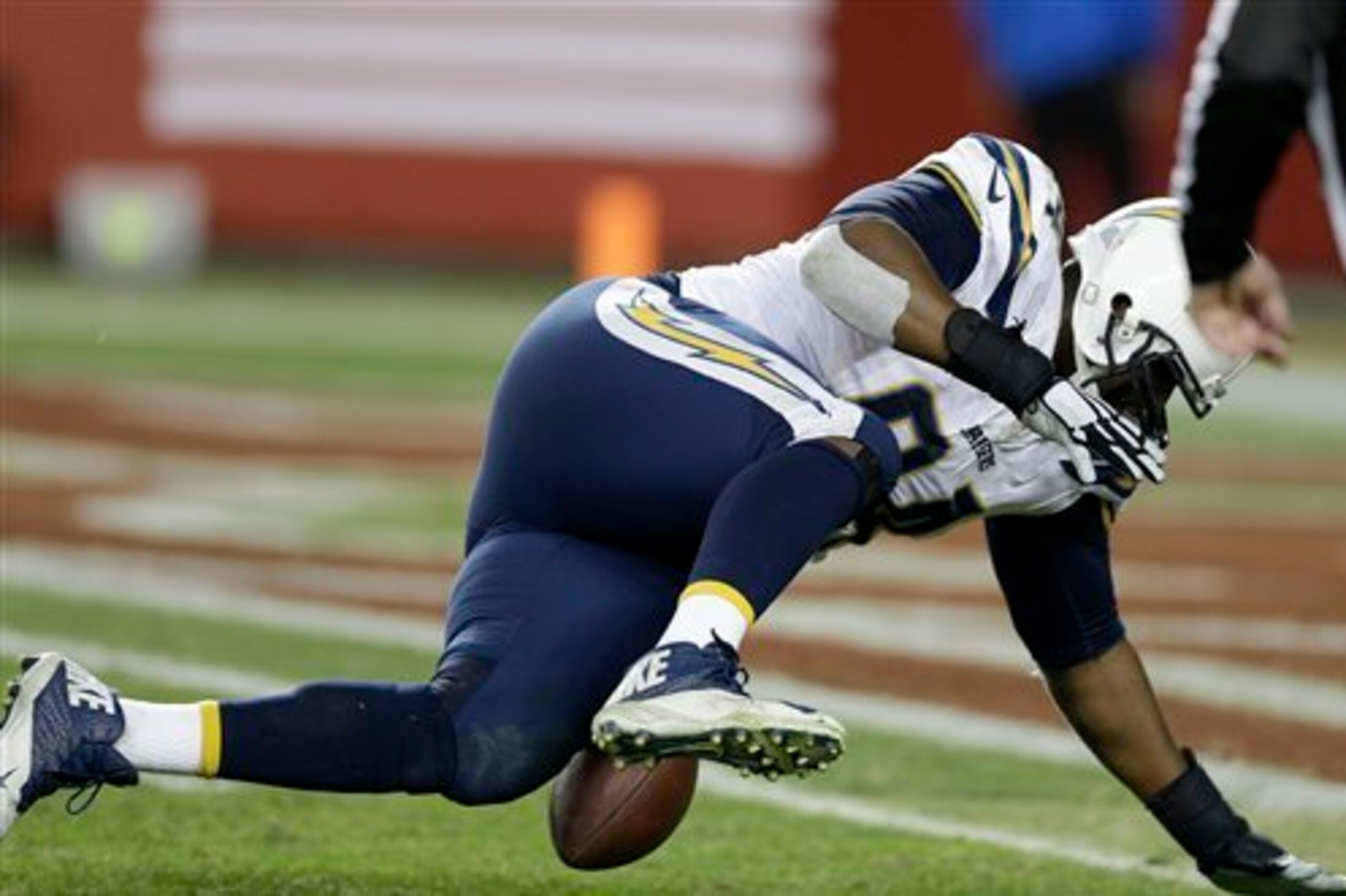
San Francisco lost three fumbles during the game. Quarterback Colin Kaepernick lost a goal-line fumble in the third quarter, upon which defensive end Corey Liuget pounced for a Chargers touchdown. That was San Diego's second of the half and brought the Chargers within one score.
The turnover followed a play in which tight end Vernon Davis appeared to have a 63-yard touchdown, but that would-be score was negated by an illegal chop block by running back Frank Gore.
Christian Gin of Examiner.com described what happened during this two-play sequence:
"The 49ers reverted to their poor offense to start the third quarter, but it took one play to bring life. San Diego scored a touchdown while Vernon Davis had a touchdown of his own called back by a penalty. Colin Kaepernick would fumble, resulting in a touchdown recovered by Corey Liuget in the end zone, bringing the Chargers within seven.
"
In all, the 49ers committed nine penalties for 92 yards—another element that haunted San Francisco's efforts against San Diego.
It was the turnovers, however, that ultimately proved to be the difference that worked against the 49ers.
While Kaepernick's turnover hurt, the 49ers' signal-caller responded with a 90-yard touchdown rush on the subsequent drive, which put San Francisco up by two scores.
But Patton's fumble in the overtime period proved to be the decisive mistake that led to the Chargers' victory.
Kaepernick elaborated, via Cam Inman of the San Jose Mercury News, about the fumbles: "We had three turnovers and that really was the difference in the game."
San Francisco was in this position once again due to a general lack of ability in the fourth quarter. It has been a problem with the 49ers offense all season; they have just two fourth-quarter offensive touchdowns in 2014.
None were added to that lowly total in Week 16.
San Diego outscored San Francisco 28-7 in the second half. Whatever the reason—the play-calling of offensive coordinator Greg Roman, Harbaugh's influence or a lack of execution—the 49ers simply cannot perform on offense after the half and, most notably, in the fourth quarter.
There were some positives, though.
Gore notched 158 yards and a touchdown during the contest. Kaepernick rushed for almost the same total. San Francisco put up more offensive points than it had all season—and did so against a Chargers team that was desperately fighting for a playoff berth.
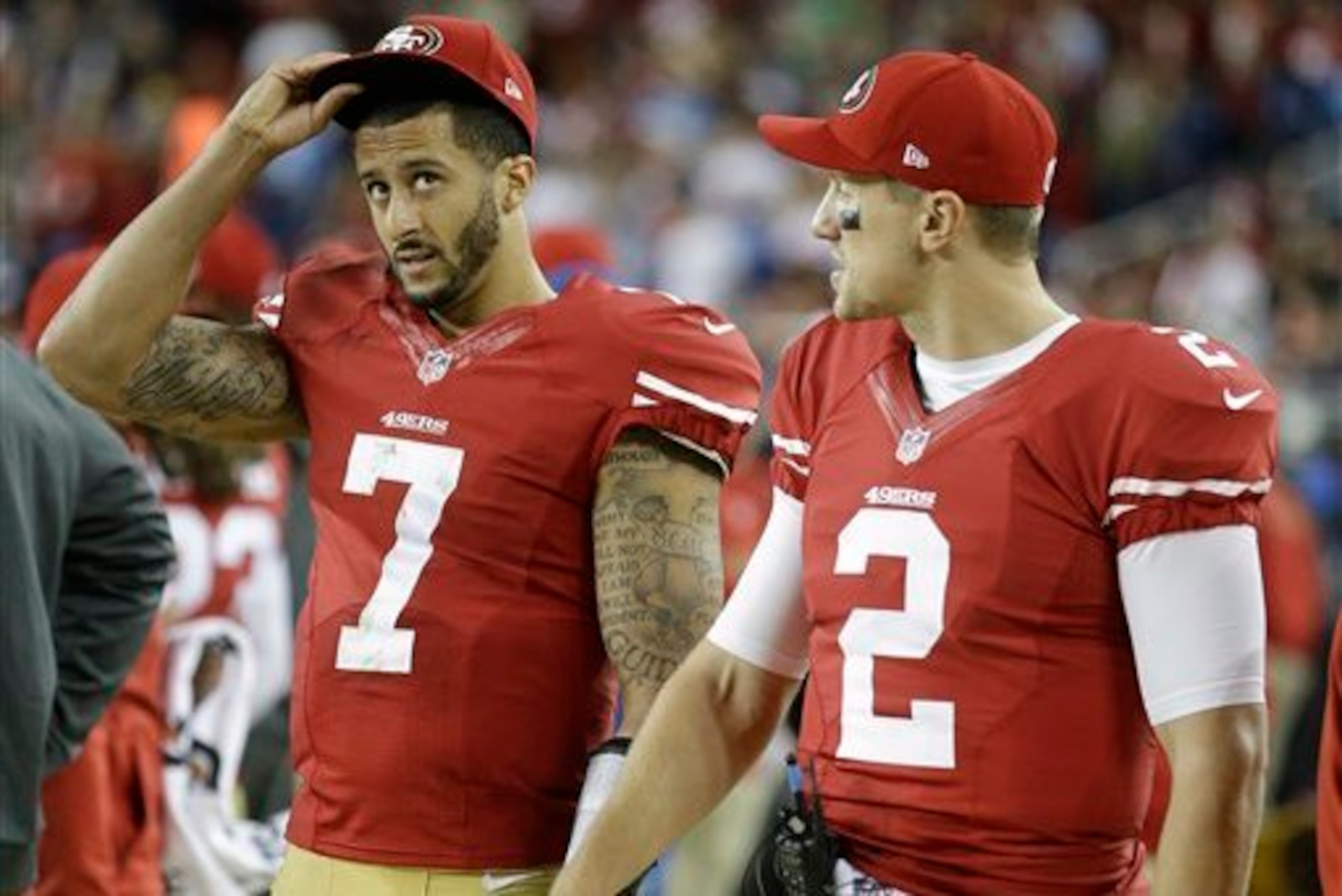
Yet these efforts were not enough. As has been the case seemingly all season, the 49ers sputtered, stalled and, ultimately, flopped at the point when it mattered most.
It's another disappointing loss in what has been more than a disappointing season.
At 7-8, the 49ers no longer have a chance at finishing above .500 in 2014, which marks the first time in Harbaugh's tenure that San Francisco will be associated with such a mark.
A best-case scenario would have the 49ers upending the visiting Arizona Cardinals in Week 17 to end the year. Still, this season has crashed to an ugly end. Many of the problems seen during the San Diego loss have paralleled San Francisco's efforts all year long.
This tumultuous season will assuredly prompt more of the questions that surround the team's uncertain future.
All statistics, records and accolades courtesy of Pro-Football-Reference.com and ESPN.com unless otherwise indicated.
Peter Panacy is a featured columnist for Bleacher Report, covering the San Francisco 49ers. Be sure to check out his entire archive on 49ers news, insight and analysis.
Follow him @PeterPanacy on Twitter.




.jpg?w=2560 "Saquon Out for Game")