

5 Statistics That Are Defining New York Knicks' Season So Far
The New York Knicks' 5-21 record is ugly, and the numbers behind the struggle do not offer much solace, either.
Phil Jackson and Derek Fisher set out to implement the triangle offense this season, and so far, scoring has not come naturally to these Knicks. According to ESPN.com, their 101.2 offensive rating places them 22nd in the NBA—not a disastrous start but one that hasn't yet inspired belief in the system as the long-term answer.
Meanwhile, the defensive end is still an abject mess. Though the thoughtless switching of the Mike Woodson days has mercifully and reasonably ceased, New York has still posted a 107.1 defensive rate, the result of scattershot perimeter D and negligible rim protection.
Together, those two stats present the basic picture of a thoroughly lackluster basketball team. From there, we'll dive even deeper to examine just how the Knicks have played so poorly on both ends, working up to the stat that reveals the most about New York's current state.
5. Amar'e Stoudemire's Points Per Game: 13.4 PPG
1 of 5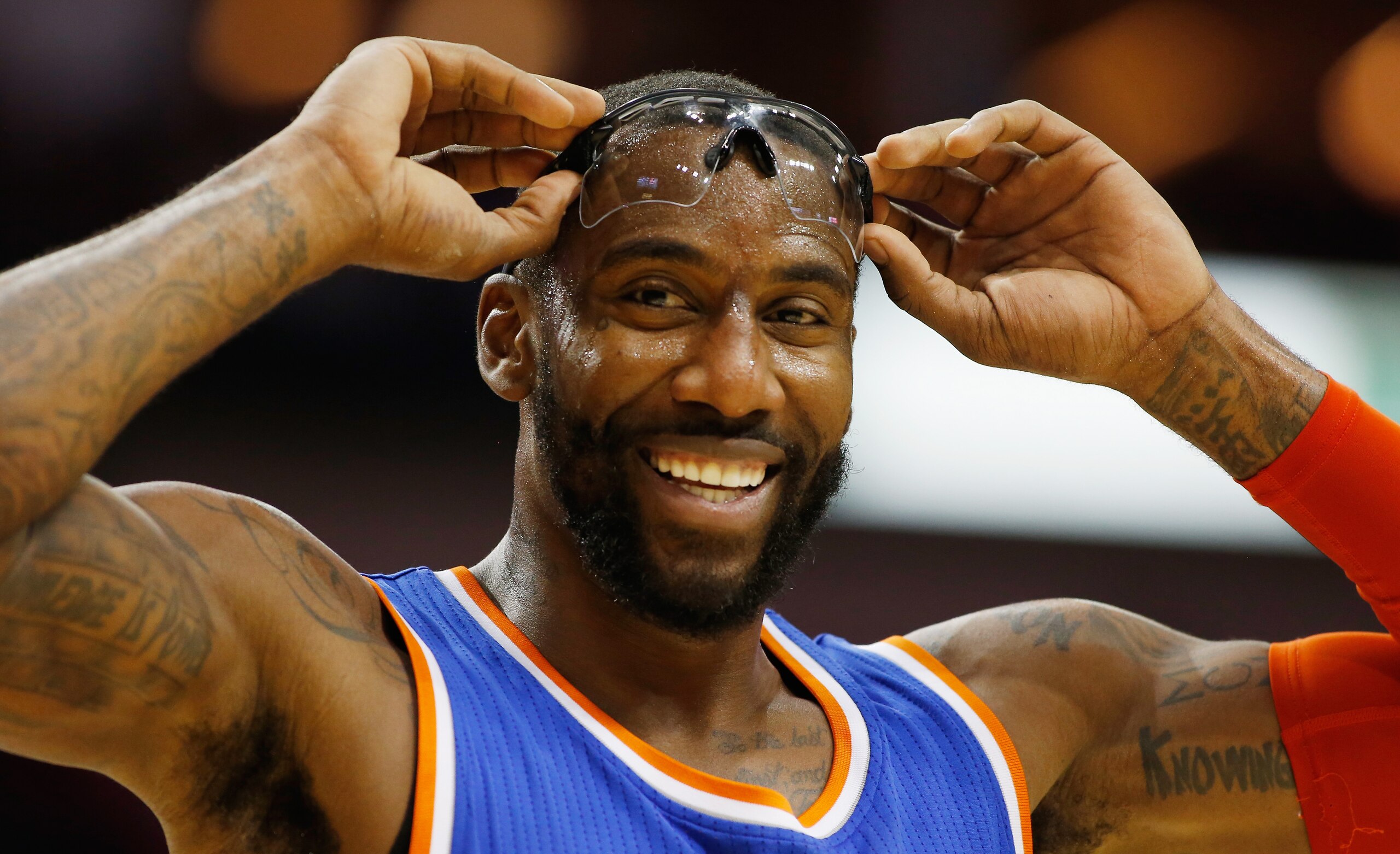
Before we look too hard at those 21 losses, let's take a moment to acknowledge those precious few victories.
Carmelo Anthony's scoring prowess is beyond dispute, but heading into the 2014-15 season, it was unclear on whom New York would play through when Melo sat.
Re-enter Amar'e Stoudemire, who is operating with impunity down low for the first time in years. The 6'10", 245-pound power forward doesn't have the all-world hops he once had, but his latter-year focus on his post moves is paying great dividends. He's shooting 56.7 percent from the field, including 69.4 percent in the restricted area.
That by no means represents a return to the star form of STAT's first year in New York, but he's still the second scorer the Knicks need. Alongside Melo, Stoudemire pulls defenses in toward the rim, which opens up more space for perimeter shooters, and he can anchor bench-heavy lineups as the lone reliable option.
Of course, Stoudemire's renewed offensive friskiness means his minus defense afflicts the Knicks even more. He complements his personal 104.2 offensive rating with a 106.2 on the other end, which means New York gives up two points per 100 possessions when he's in.
Don't forget that every bright spot for the Knicks is merely a silver lining enveloping darker realities.
4. Tim Hardaway Jr.'s Three-Point Percentage: 33.9 Percent
2 of 5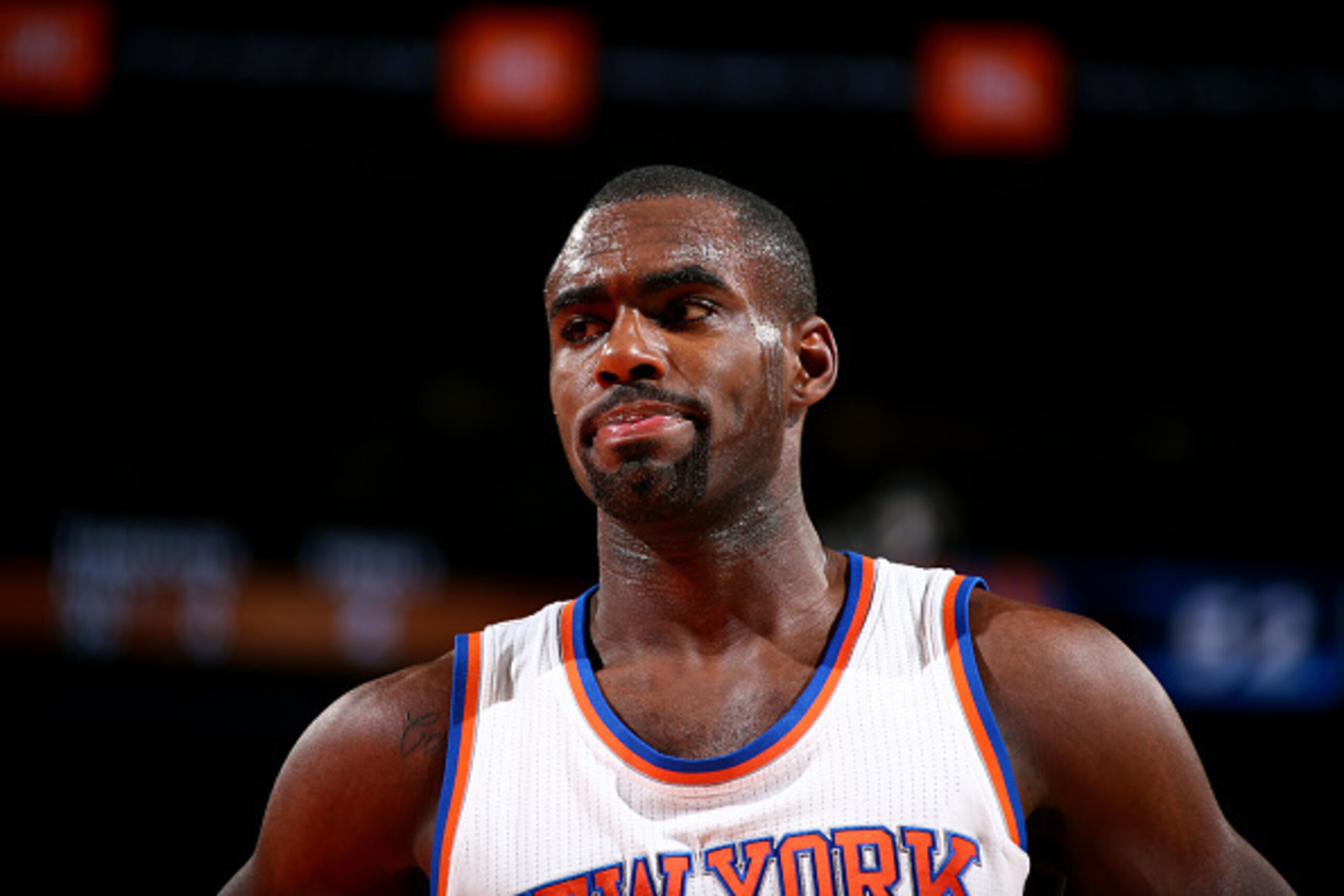
It's not as though Tim Hardaway Jr. was a deadeye long-range bomber in his rookie campaign. He knocked down 36.3 percent of his 4.4 three-point attempts per game—a slightly inefficient product of a liberal green light to shoot, but it was still a promising result for the 21-year-old out of Michigan.
Now Hardaway is a year older and more experienced, but the transition to the triangle seems to have made him less comfortable as a shooter.
That comes down to searching for his shooting rhythm rather than some flaw in his mechanics or in contested looks. Until he fully figures out how the ball moves within the offense, he's going to be off when the rock does reach him.
The good news is Hardaway should increase his three-point percentage back toward last year's rate in time. He's 8-of-28 from the corners this season—just 28.6 percent—while he's hit 35.9 percent of his longer above-the-break attempts.
Improving on those easier corner attempts will boost his efficiency, but the hope was Hardaway would make a marked stride forward this season, not scrap his way to breaking even. As the Knicks' best long-term prospect, the offense will grow as he does, and New York has to want more than he's giving the team now.
3. Iman Shumpert's Stats Since Jose Calderon's Return
3 of 5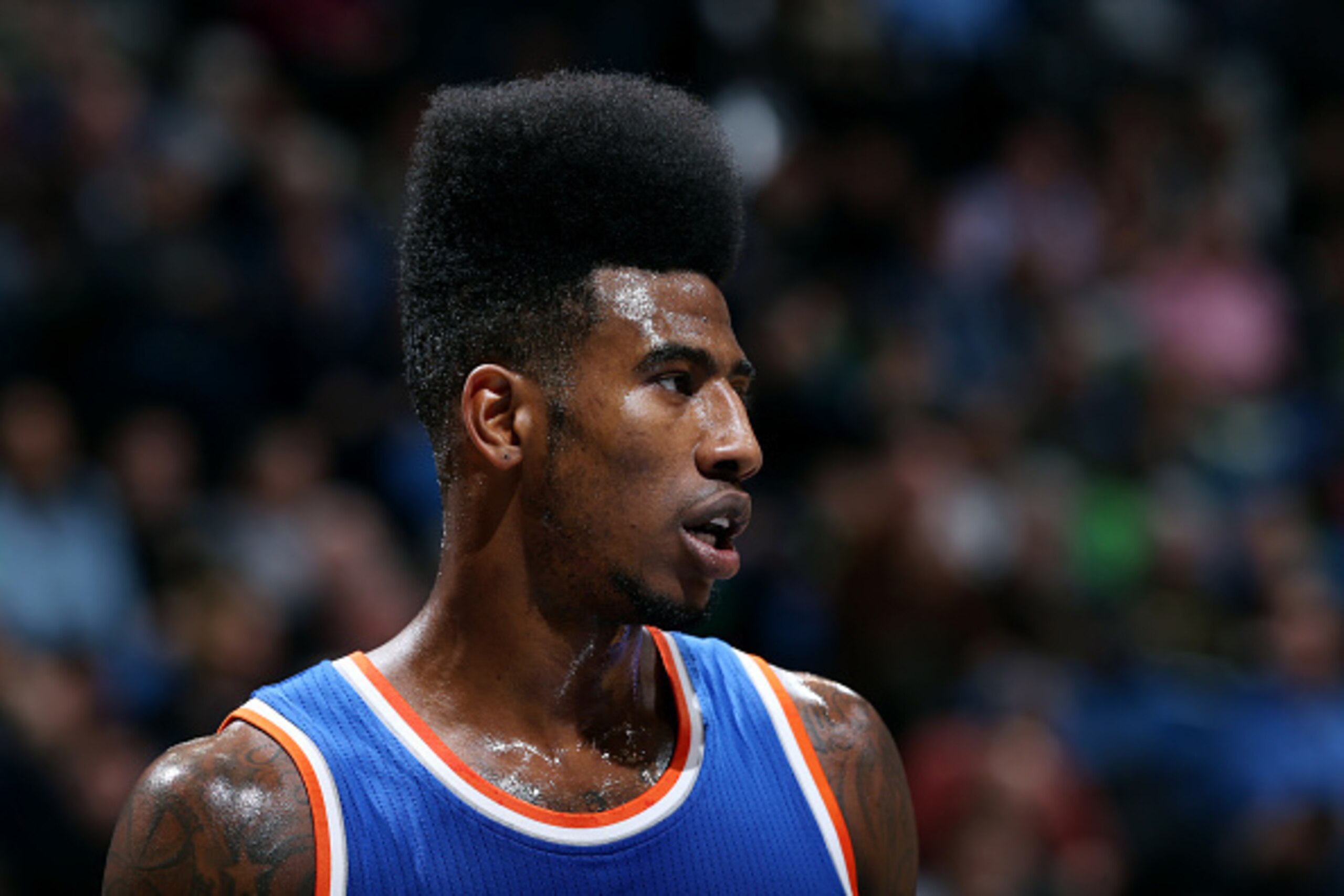
Freed from the crushing, arbitrary doghouse of the Woodson era, Iman Shumpert appeared rejuvenated under Fisher. In his first 12 games of 2014-15, he scored in double digits on nine different occasions. With starting point guard Jose Calderon out, Shump had the ball in his hands more than in years past, and his confidence showed through his production.
After Calderon made his Knicks debut, Shumpert fell off. He played 12 contests alongside Calderon before dislocating his shoulder, per Ian Begley of ESPN New York, and topped 10 points just twice in that span.
His slump has been comprehensive. He went from hitting 19 of 35 trey attempts with Calderon hurt to going 4-of-30 with the point guard healthy. The story inside the arc hasn't been any better, as he dropped from 38-of-83 pre-Calderon to 27-of-67 with him.
Caldy isn't to blame for his teammate's slide, but the timing of his return—and, significantly, the corresponding reduction of Shump's creation duties—indicates it's a partial factor.
The season started with Shumpert looking like he would be an important piece of New York's future. Once he's healthy again, he'll have to prove he can play with Calderon, or else he might not have a role as a Knick beyond this year.



2. Team Pace: 92.04 Possessions Per 48 Minutes
4 of 5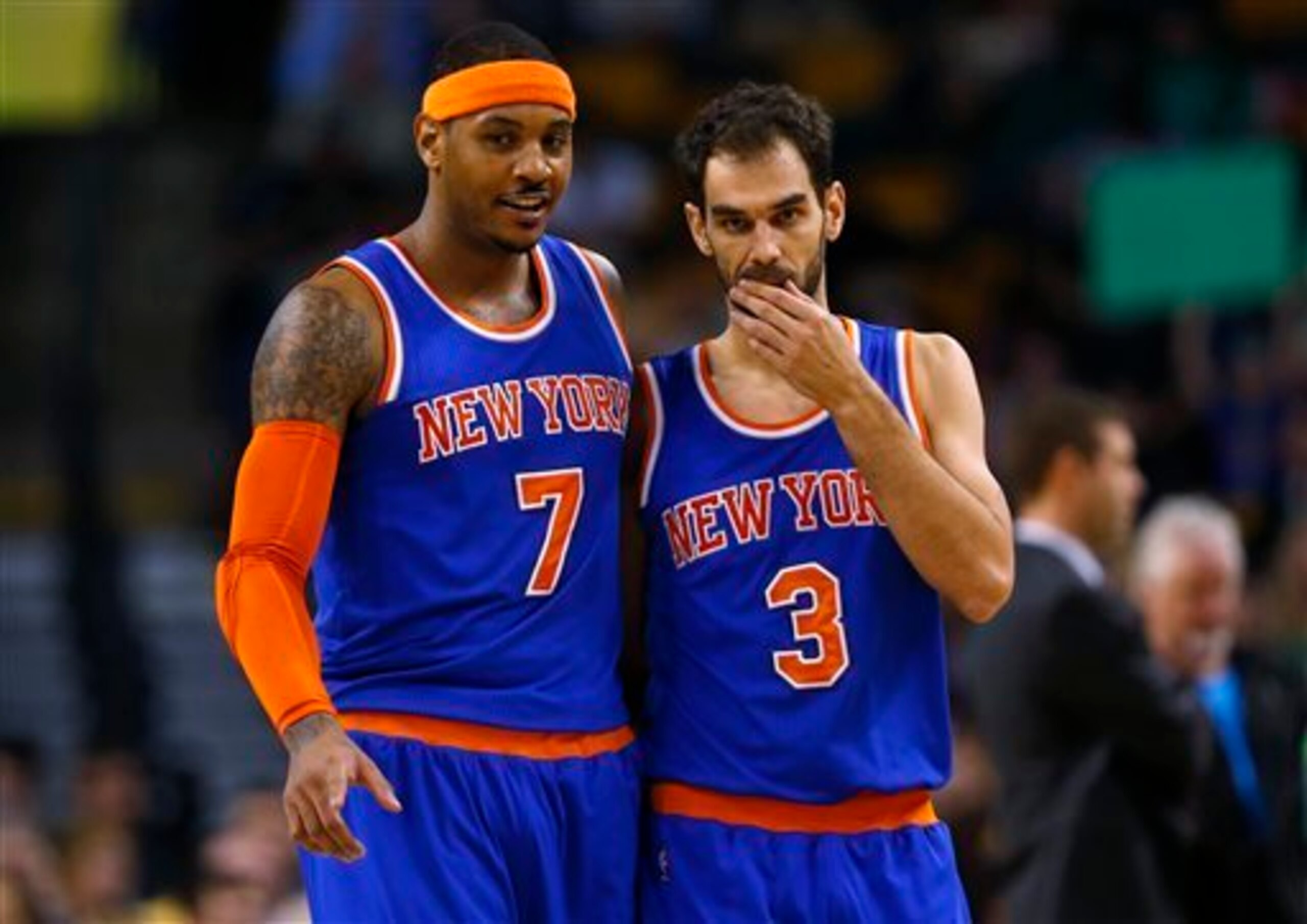
While the triangle isn't a heavy pick-and-roll system in the vein of many modern offenses, there's no philosophical reason for the Knicks' playing as slowly as they are.
Only the Miami Heat run things at a more glacial pace than the Knicks do. Without LeBron James as the offensive centerpiece, Miami is down a go-to guy who can create for himself and others, and so is retooling around a slow-footed roster without a natural facilitator. New York has Melo to work through and Calderon to quarterback the offense, but adjusting to the triangle has taken time.
It's akin to Hardaway's individual discomfort but extrapolated across the roster.
Even while some guys have grasped the offense better than others, any given five-man unit works well into the shot clock to develop a play. That means the Knicks are allowing the defense to get set as they assume their own formation and then have little time remaining if their first action does not succeed.
Calderon has pushed the ball more in transition since stepping into the starting five, but it's going to be a while before New York can quickly set up the triangle and attack early in a given possession. As of now, the Knicks' fastest shots are predominantly perimeter looks taken without first probing for a better opportunity.
New York's sloth is the product of offensive inexperience. As the Knicks settle into a groove, expect their pace to rise as well.
1. Games Within Five Points in Final Five Minutes: 17
5 of 5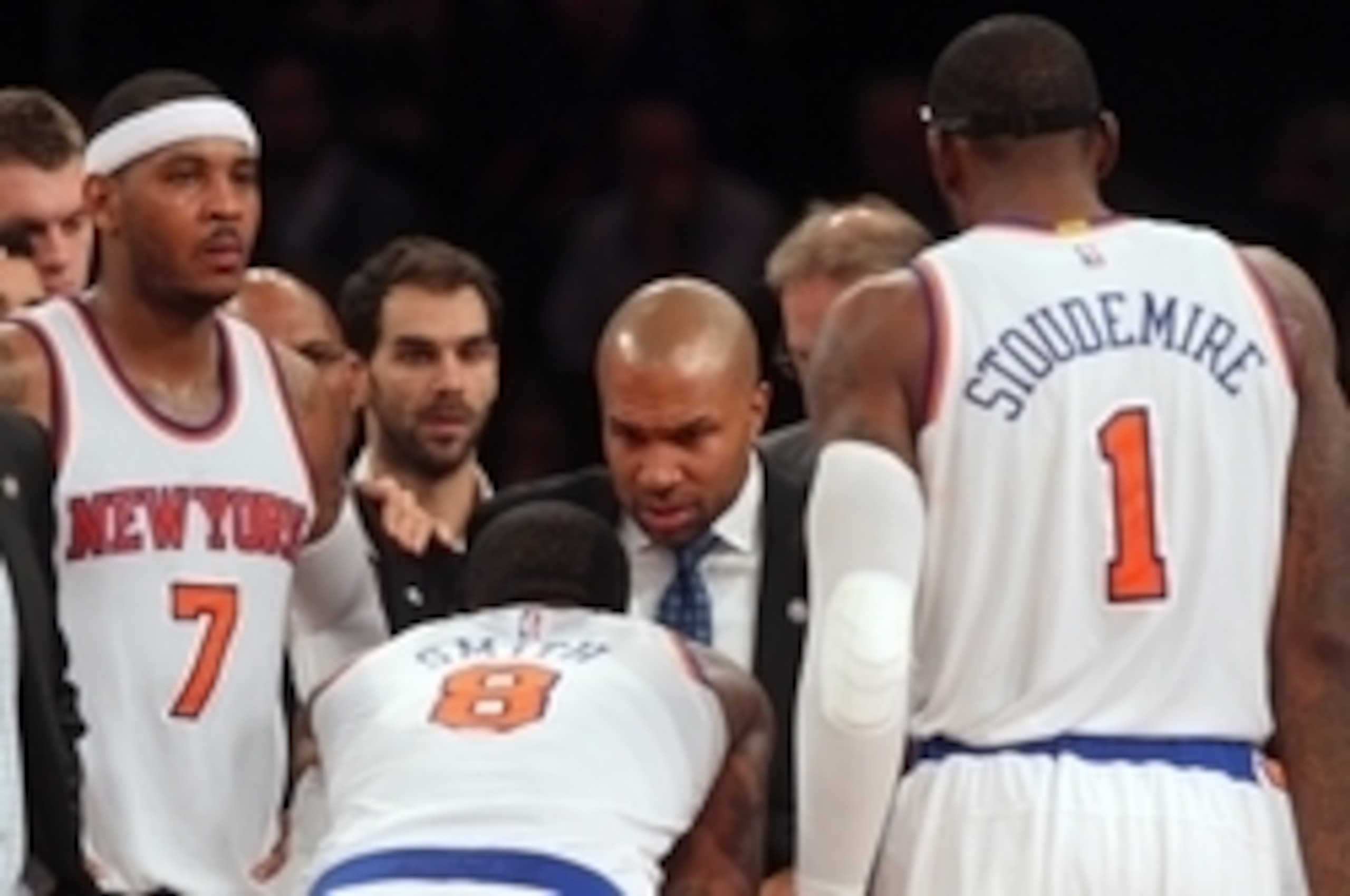
There's a niggling paradox about New York having the worst record of any team that isn't the Philadelphia 76ers.
The way they have played so far, the Knicks have looked the part of the lottery hopeful; you don't drop 21 of 26 games without being a truly bad squad. Such an inauspicious start also requires bad luck, and New York has had an absurd share of that.
As Chris Herring of The Wall Street Journal pointed out, New York has been within five points of its opponent in the last five minutes of a game 65 percent of the time. Though four of the five Knicks victories have come under those circumstances, that means they have been close late in 13 of their 21 defeats.
On one hand, dropping those tight contests is a hallmark of an inferior squad. But in all likelihood, the Knicks should find themselves with less late-game heartache going forward.
Remember, though, that the Knicks should get luckier as they continue to jell within the triangle while topping out as a subpar outfit. All three of these things are reasonable expectations together. It could ultimately be the difference between one of the very worst teams and a mid-lottery one.
Depending on how the pingpong balls bounce, it's unclear whether whatever slight improvement the Knicks make in the standings will be worth the decline in draft position.
All stats via NBA.com.
Josh Cohen writes about the NBA for Bleacher Report. Follow him on Twitter @arealjoshcohen.
.jpg?w=2560 "OBJ Calls Out Giants After Release")
.jpg?w=2560 "NFL investigating referee after viral exchange with player")



.jpg?w=2560 "LaFleur's Fumbling Warning ⚠️")