Assessing Changes to F1 Calendar and Rules from the World Motor Sport Council
On Wednesday, the FIA World Motor Sport Council (WMSC) met in Doha, Qatar to decide on a number of potential changes to the Formula One regulations. The results of the meeting are a mix of positive, negative and downright surprising.
The big surprise was the inclusion of the Korean Grand Prix on the calendar, although it does say that the race is to be confirmed. The grand prix was last run in 2013 at the Korea International Circuit in Yeongam, where it was hampered by a lack of spectators and a high race-hosting fee. According to Will Davies of The Wall Street Journal, the race lost $163 million from 2010 to 2012 before it was dropped.
TOP NEWS

Malachi Toney Sets ANOTHER Record
.jpg?w=2560 "NBA Gambling Charges")
Malik Beasley Negotiating Plea Deal (AP)

🚨 NC State Fires Head Coach
A Korean race is important for F1—the country is a substantial player in the automobile industry and is the 14th largest market in the world, per The World Bank. Yeongam, approximately four hours from Seoul, is not the right place for the race, though.
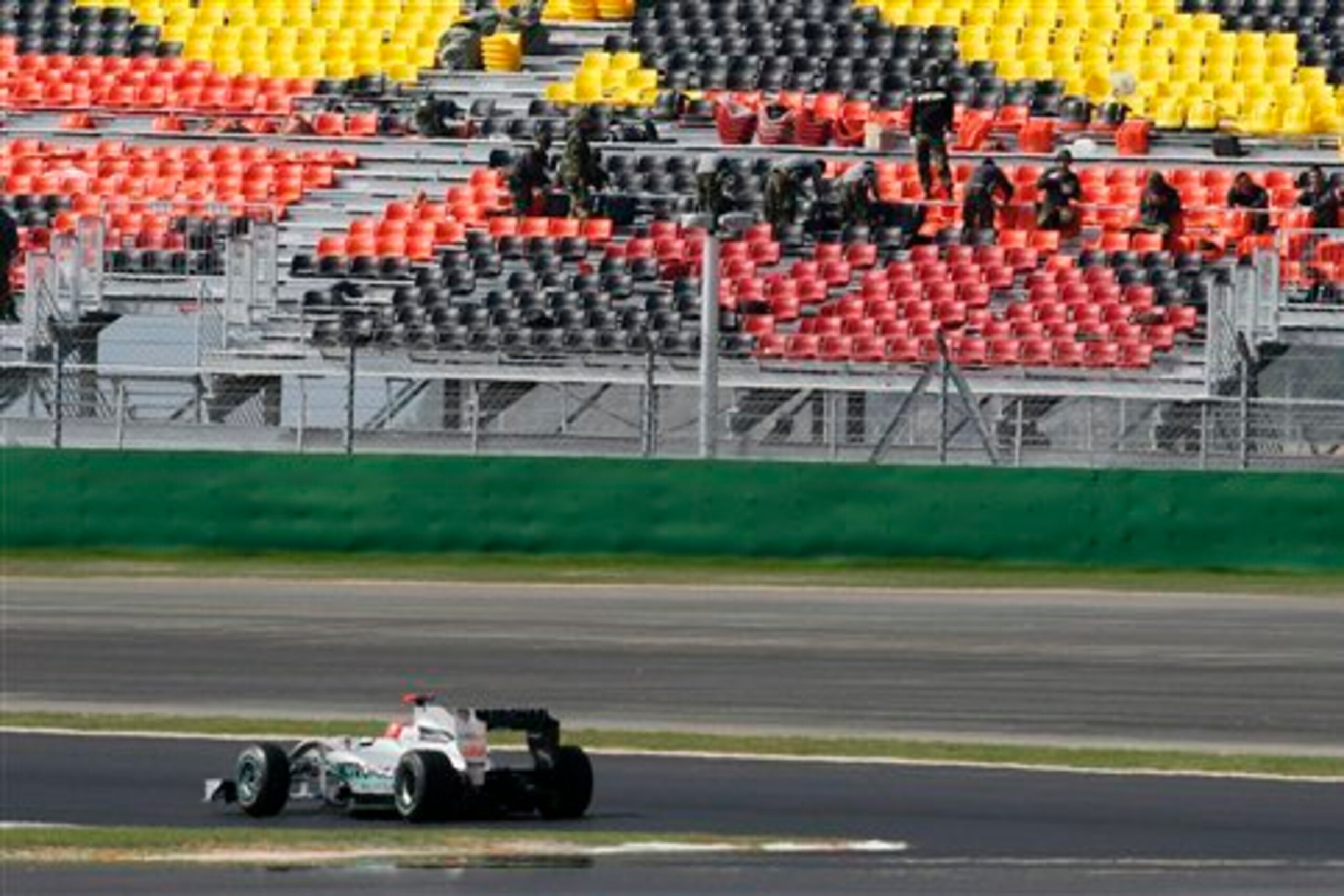
However, there have been reports that a group is trying to bring a street race to the Korean capital. Ian de Cotta of Singapore's Today newspaper wrote that Chung Yung-cho, one of the organisers of the Yeongam race, met with F1 CEO Bernie Ecclestone at the Singapore Grand Prix to pitch a race in Seoul...in 2016.
So why is the race on the provisional 2015 calendar? Well, as early as 2011, Korean Grand Prix promoter Won-Hwa Park told Autosport's Jonathan Noble, "We are still seeking for bigger support from the national government. They have provided us with a certain fund, but it is not as much as we expected."
With the race included on the 2015 calendar, even if it does not go ahead next year, it might show the Korean government that F1 is serious about a return to their country and help spur investment in the race. The same tactic was tried for the ill-fated Grand Prix of America in New Jersey, which was repeatedly included on provisional calendars as the organisers tried to raise enough money to hold the race.
Moving on to the positive changes from the WMSC's meeting, the controversial double-points rule was officially scrapped. Thankfully, it did not ruin the championship in its lone season of existence, but its demise could not come soon enough.
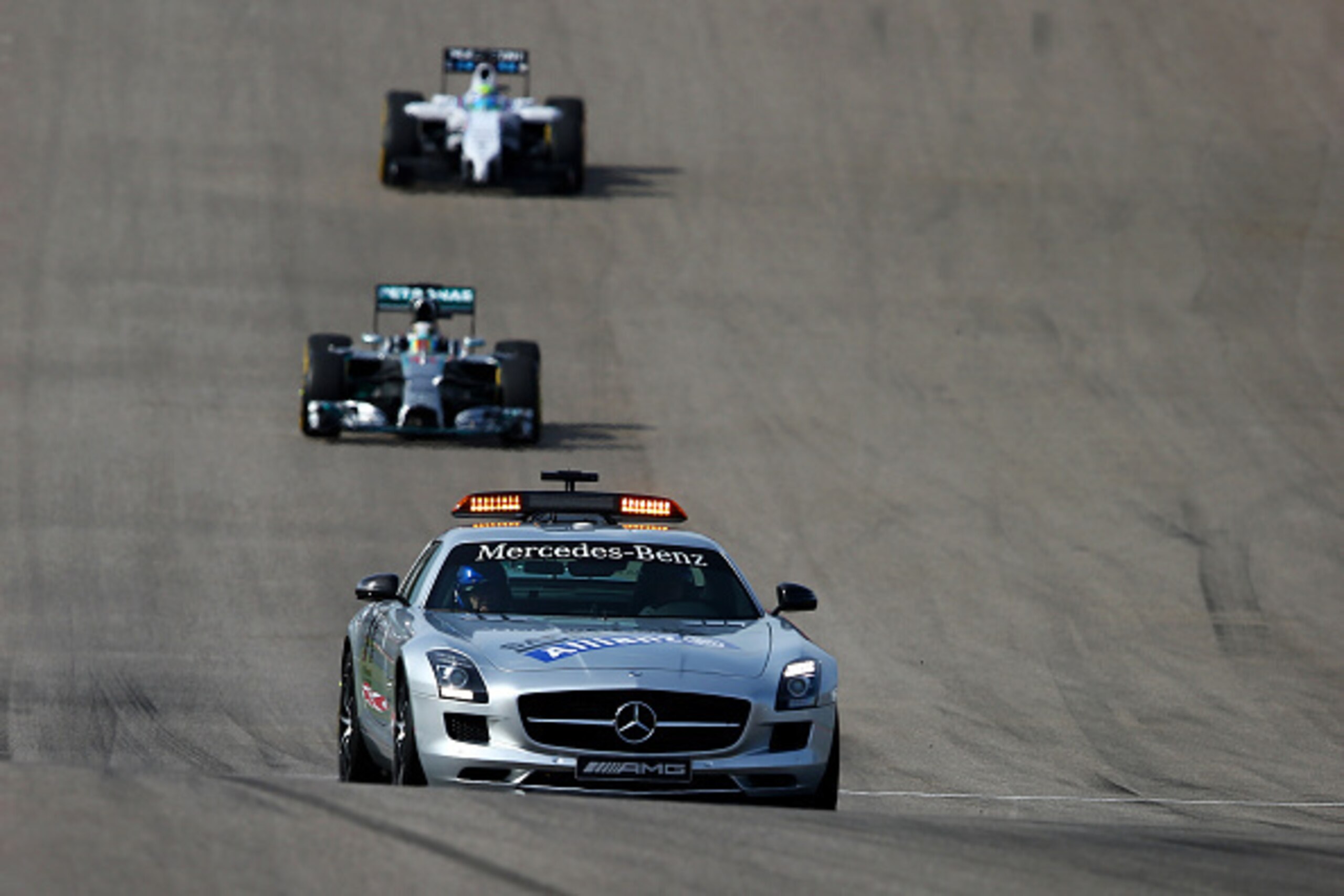
Meanwhile, the safety car regulations have also been improved. The virtual safety car, which was tested at the remaining 2014 races following Jules Bianchi's crash in Japan, has been approved for 2015. It is less disruptive than calling out the real safety car, but should still be effective at protecting marshals or medical personnel on the track, as it requires drivers to slow to a specified lap time.
Also, in cases when the actual safety car is called out, lapped cars no longer have to completely unlap themselves before the race is allowed to resume. In the past, any time a safety car was called when there were lapped cars on track, that requirement led to several laps of racing being wasted while the leaders waited...and waited...and waited for the back-markers to pass them and then catch the back of the pack.
Now, as soon as the lapped cars pass the leader, the safety car will be called in at the end of the lap. This strikes a sensible balance between the older rules, where the lapped cars remained in their positions with the potential to interfere with the leaders at the restart, and the version used in 2014, with its endless waiting.
As well, standing restarts, which had been proposed earlier as a way of spicing up the show, were rejected by the WMSC. A standing start, where all cars form up on the grid, is more dangerous than a rolling start, where they are already moving at race speed when the green flag waves.
While rolling restarts might be less exciting, in the interests of safety, this was certainly the correct decision.
In another positive development, the WMSC also approved an updated penalty system, where unserved grid-place penalties for extra power unit components will no longer carry over to the next race. Instead, drivers will serve additional time penalties in the same race.
The penalties for using additional power unit components are already steep enough, without having them apply in multiple grands prix. This change will particularly benefit teams near the back of the grid, who are unlikely to qualify high enough to use an entire five- or 10-place penalty at one race.
There is also a new 10-second penalty in the same format as the five-second one, which was introduced in 2014. That penalty proved effective for relatively minor incidents, where a full drive-through or stop-and-go penalty were not warranted (the five- and 10-second penalties are served in the course of a normal pit stop, whereas the others require a separate trip down the pit lane).
By giving them a wider range of possible punishments, the new 10-second penalty will further assist the stewards in the nuanced art of assigning the correct penalty for each on-track incident.
Not all the news out of the meeting was positive, though. For instance, the changes to the requirements for a Super Licence are a good idea in theory, but the execution may not be. The new requirements for experience in the junior formulas and with an F1 car make sense, but why the arbitrary decision to restrict the licences to drivers who are at least 18 years old?
If a team thinks a 17-year-old driver is good enough—as Red Bull obviously do with Max Verstappen—he should be allowed to race in F1 (provided he has met the experience criteria). If there must be an age restriction, it should be decided on a case-by-case basis, not a blanket ban.
As well, the WMSC accepted the accident panel's report on Jules Bianchi's accident in Japan. While the report includes some recommendations that should improve F1 safety, former F1 medical delegate Gary Hartstein also noted some problems with the report on his personal blog.
Specifically, he points out that Bianchi was not transported to the hospital as quickly as he should have been according to the FIA's regulations, despite the summary of the report claiming, "All rescue and medical procedures were followed."
Overall, though, the WMSC meeting produced more good than bad. The next meeting is not until March 2015, but further proposals for changes to F1's regulations could come out of the F1 Strategy Group meeting on December 18.
The focus of that meeting, according to the WMSC meeting summary, will be on, "reducing costs, improving the show, making cars quicker and more difficult to drive, and reviewing the technical and sporting regulations, with the aim of simplifying the rules where possible."
We can hope for more good than bad from that meeting, as well, but based on the current sniping between the teams over changes to the engine formula...well, let's not hold our breaths.
Follow me on Twitter for updates when I publish a new article and for other (mostly) F1-related news and banter:
.jpg?w=2560 "Commanders 49ers Football")

.jpg?w=2560 "Jonathan Taylor Landing Spots")