What Has Caused the Downfall of College Football's Blue Bloods?
Teenage me didn't understand this past Saturday. He watched as giants from another era fell in spectacular fashion. One after the next, they all came tumbling down.
The football gods he grew up marveling—the ones that drew him to the sport in the first place—were left in shambles by challengers who had no business causing such wreckage, at least not in his former life. All he could do was sit there, dumbfounded, wondering just how exactly we reached this point.
The vulnerability of college football's former powers—the teams that ran this sport for ages—became increasingly apparent in one 15-hour stretch. And perhaps the most shocking part of this collaborated failure was the harsh reality that it really wasn't that shocking at all. This particular piece of coordinated carnage had been a long time in the making.
TOP NEWS
Houston's Space Helmets 🧑🚀
Matt Campbell Rips Loss 🗣️
Caitlin Clark to appear on College GameDay
USC, Miami, Michigan, Tennessee, Notre Dame, Virginia Tech, Nebraska and Penn State all looked mortal. All eight teams lost last Saturday, and only one loss came at the hands of a Top 10 team. The rest came courtesy of teams such as Illinois, Virginia, Maryland and Wake Forest.
Losses such as these were unthinkable not long ago, although this wasn't some sort of one-week anomaly. Let's examine how each program reached this point and, more importantly, where they are on the road to recovery.
USC

From 2002 to 2008, USC went 82-9. The record, of course, may look different depending on how strictly you tally wins—with sanctions washing some of those victories off the books. But we saw them. We know these games took place.
This was one of the most dominant stretches in the history of the sport.
Since Pete Carroll departed to the NFL, however, the Trojans are just 42-21. The sanctions from the Reggie Bush investigation have unquestionably played a role in USC's demise, and the injuries of the Lane Kiffin era cannot be ignored.
| Year | National Rank |
| 2009 | 3rd |
| 2010 | 3rd |
| 2011 | 3rd |
| 2012 | 9th |
| 2013 | 12th |
| 2014 | 10th |
| 2015 | 9th |
The scholarship limitations resulting from the NCAA's destructive hammer have hindered the program's ability to blossom. This is more than simply an excuse; it's a necessary part of the picture and a way of understanding how we arrived at this point.
And yet, given some of the remarkable talent that has passed through the program—and the deep crop of starters it has right now—it feels as though there should be more positive outcomes. NFL players have cycled through, even as the program has searched for Carroll's successor.
With the Pac-12 poised for a talent exodus—especially with quarterbacks—the Trojans will enter 2015 with expectations to meet. It feels as though they are capable, even if the loss to UCLA this past Saturday told us otherwise.
Miami

Like USC, Miami has felt the wrath of the NCAA's influence. Although the sanctions handed down for various Nevin Shapiro-related incidents paled in comparison to those handed out elsewhere, the black cloud of the lengthy investigation—along with the investigation of the investigation—certainly hindered the Hurricanes' efforts to rebound.
All things considered, this fall has perhaps been the most perplexing and dramatic. That was evident as Miami lost in lifeless fashion to Virginia last weekend, which was the fourth time in five years the Cavaliers came away victorious in this particular matchup. The other harsh reality for Miami is that it hasn't won 10 games since 2003.
| Year | Record | Coach |
| 2004 | 9-3 | Larry Coker |
| 2005 | 9-3 | Larry Coker |
| 2006 | 7-6 | Larry Coker |
| 2007 | 5-7 | Randy Shannon |
| 2008 | 7-6 | Randy Shannon |
| 2009 | 9-4 | Randy Shannon |
| 2010 | 7-6 | Randy Shannon |
| 2011 | 6-6 | Al Golden |
| 2012 | 7-5 | Al Golden |
| 2013 | 9-4 | Al Golden |
| 2014 | 6-5 | Al Golden |
For a program with a plethora of football resources and a seemingly endless stream of local talent, this seems difficult to fathom. The reality, however, is that the talent hasn't flocked to Miami like it once did. The programs in the state of Florida—along with surrounding SEC schools—have created a much more competitive recruiting landscape.
The good news for Al Golden is that he appears to have found his quarterback in Brad Kaaya. There are also moments—like we saw against Florida State—when we see signs of a possible return. It will never be like it once was in the early 2000s, though. Unfortunately, we may never see anything like that again.
Michigan
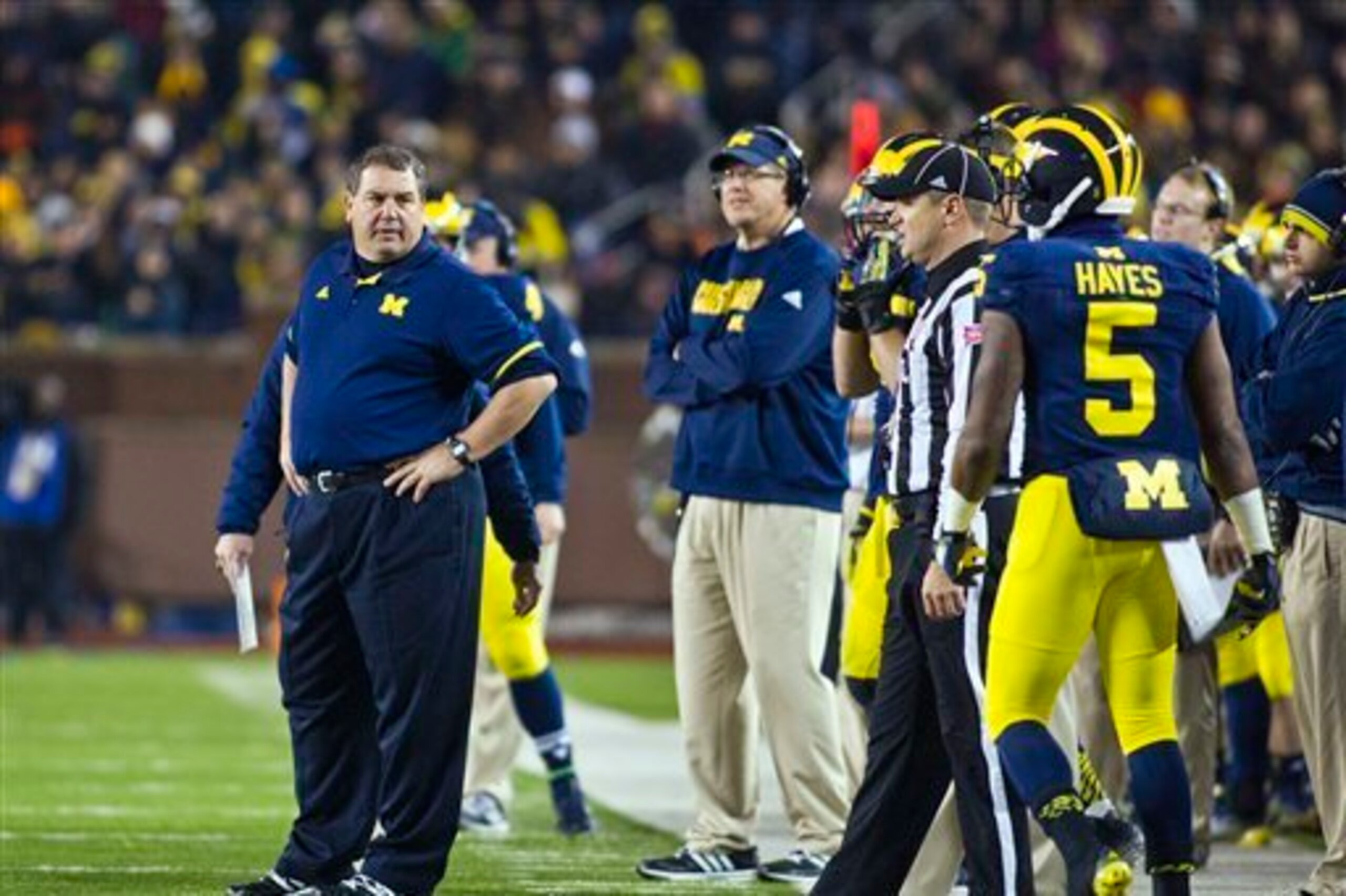
One week from now, Michigan's hopeful rebirth will likely begin once more. The Wolverines will almost certainly be seeking out a new head coach, hoping that their next hire will provide the spark Brady Hoke and Rich Rodriguez simply could not.
Since 2008, Michigan has won more than eight games in a season just once. That season came in 2011, Hoke's first year on the sideline. It feels like a different era now.
Of all the major programs to struggle in recent years, the Wolverines' issues might be the most difficult to process. They have met many of the necessary criteria for success.
Operating in a manageable conference with few top-end opponents—and doing so with a solid flood of recruiting, something that Hoke and his staff have excelled at—Michigan simply has not been able to win consistently enough.
It's been the quarterback play, the offensive line, the defense, and yes, injuries have played a role. As Michigan State has enjoyed a meteoric rise, its rival has simply been unable to develop talent at its former rate.
And yet, it's more than that. Although Michigan outgained Maryland in total yardage and made more first downs this past Saturday—while rushing for 6.5 yards per carry—it was still unable to offer up anything more than a 23-16 defeat.
This result does more than simply summarize one season; it encompasses an era.
Tennessee

Under Phillip Fulmer, Tennessee was a well-oiled machine. Not the 2008 or 2005 versions—let's leave those out of this—but Fulmer's average year is something that would now be embraced with open arms.
| Year | Class Ranking |
| 2011 | 14th |
| 2012 | 20th |
| 2013 | 24th |
| 2014 | 7th |
| 2015 | 5th |
Since 2007, the Vols have reached the seven-win threshold only once. The rise of other programs in the SEC has certainly hindered their rebuilding efforts along with the overall results, although instability in the coaching staff has aided this seesaw movement.
After Lane Kiffin stopped by for a cup of coffee, Derek Dooley followed with an emphatic thud. Butch Jones' arrival has shifted the perception of the program, even if the long-term results are still a tremendous work in progress.
Although the 29-21 loss to Missouri at home Saturday could be viewed as an opportunity lost—and it was—the long-term outlook with Tennessee is oozing with optimism.
Even after losing talent across both lines, the Vols look more competent and competitive than they have in quite some time. And with the No. 5-ranked recruiting class, according to 247 Sports, set to join a roster that has been infused with young talent, there are reasons to believe this is starting to turn.
Whether it will be enough for Tennessee to break through amidst the madness of the SEC is another conversation entirely. This is one to keep an eye on moving forward, assuming Jones stays in Knoxville to see his master plan through.
Notre Dame
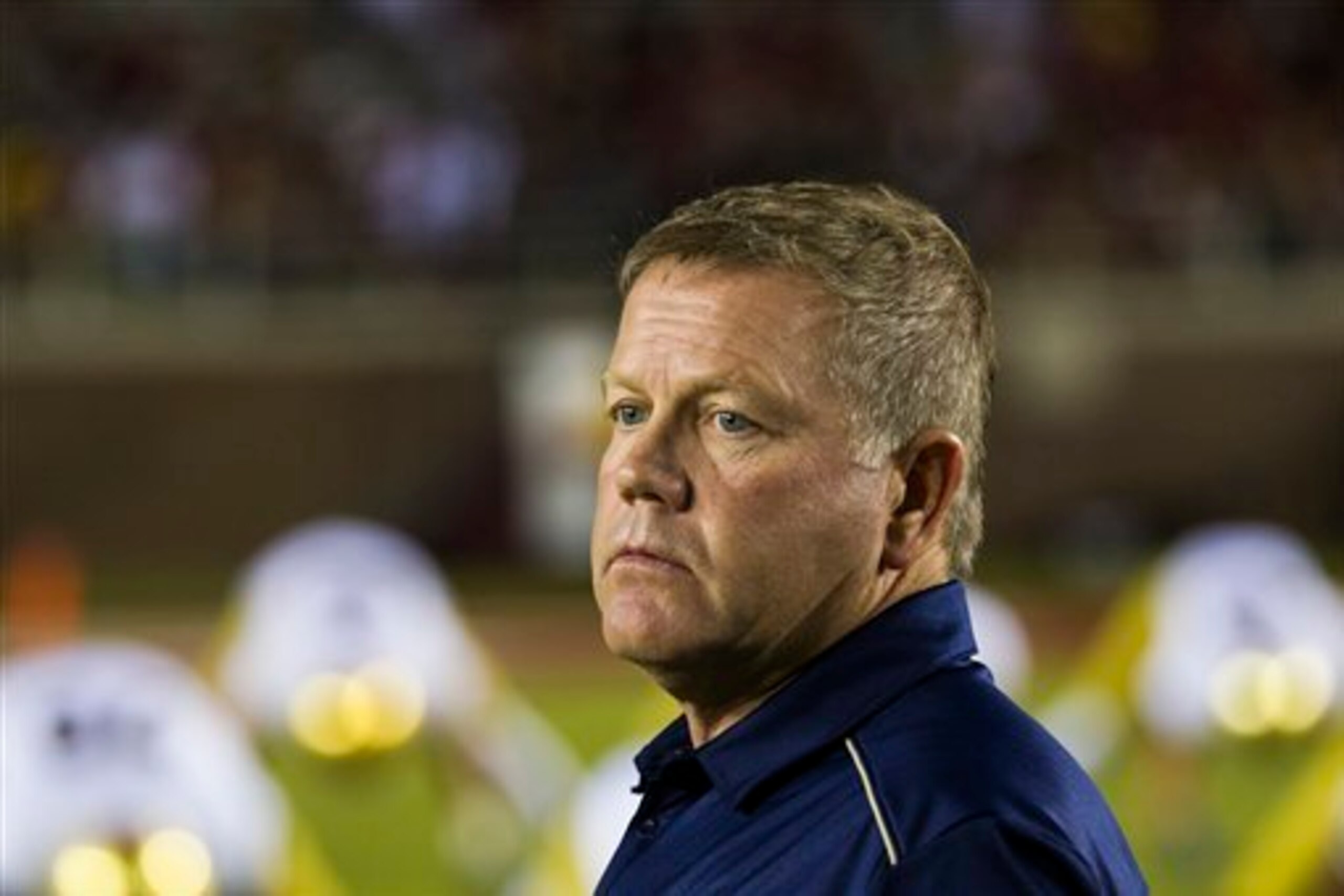
Perhaps my childhood memories were exaggerated some.
Since 1993, Notre Dame has won double-digit games only three times. It seems like it has to be more than that given the perception, especially with some glimpses of greatness over the past few years, although the overall results haven't budged much.
Our expectation clocks were turned sideways when Notre Dame tiptoed its way past minefield after minefield and into the national championship game only a few short seasons ago. The explosion came shortly after thanks to Alabama. A slew of Brian-Kelly-to-the-NFL roars followed.
Since then, the Irish have been unable to duplicate this success.
It looked as though that was changing in 2014, and then Florida State happened. Including the late loss to the Seminoles in controversial fashion, the Irish are 1-4 in the second half of the season. The lone victory came against Navy, although even this wasn't easy. It's the losses at home to Northwestern and then Louisville that have us wondering whether this team is starting to regress.
Injuries and youth have played a role in Notre Dame's late-season demise, although nothing has been more performance-draining than the turnovers.
In the grand scheme, the Irish have been unable to cope with a schedule that is year in, year out one of the most difficult in the country. But with years of successful recruiting and more help on the horizon, Notre Dame has a chance to capture lightning in a bottle once more.
There is so much talented youth on this current team; its development will be a story to watch moving forward.
Virginia Tech

No fall from grace has been less publicized and more pronounced than Virginia Tech, which just lost a game against a team that has run the ball 359 times for 415 yards this season.
The Hokies' 6-3 defeat to Wake Forest on Saturday was the culmination of its 2014 offensive woes. What's most concerning about Virginia Tech, however, is that this offensive outage has been in the works for quite some time.
"VT #Hokies points per game: 2010 33.9 2011 27.9 2012 25.1 2013 22.5 2014 23.3 (cc: @BillisKing)
— Ben (@GodsSport) November 25, 2014"
It was not long ago that Virginia Tech was competing for conference championships and regularly appearing in BCS bowls. After winning 10 games or more for eight consecutive seasons—a remarkable run, one that probably wasn't given the appropriate appreciation—the Hokies have lost at least five games each of the past three seasons.
A flurry of quality in-state talent has flocked elsewhere. And although the defense has consistently delivered, Virginia Tech has been unable to recruit and develop offensive talent.
As a result, it's currently in last place in the Coastal Division. Bigger for the long term, it's still hoping to compete for the top-flight in-state talent that is now heading elsewhere.
Still, a turnaround of some sort seems feasible. The defense will stay dominant under Bud Foster, and this part of the formula doesn't require tinkering. In terms of the overall product, however, one can't help but wonder what the future holds if changes aren't made.
Nebraska
The climate has shifted. The players who once flocked to Lincoln, Nebraska, are no longer traveling there in bulk. That's not to say the Cornhuskers are absent of football talent, but times have certainly changed since the days of Tommie Frazier and Eric Crouch.
Things could be better, although they could also be much worse. Nebraska's slide back toward the middle of the pack—a Top 25 team and rarely anything more—is a position some former powers would envy.
| Year | Record | Bowl Game |
| 2008 | 9-4 | Gator Bowl (W) |
| 2009 | 10-4 | Holiday Bowl (W) |
| 2010 | 10-4 | Holiday Bowl (L) |
| 2011 | 9-4 | Capital One Bowl (L) |
| 2012 | 10-4 | Capital One Bowl (L) |
| 2013 | 9-4 | Gator Bowl (W) |
| 2014 | 8-3 | TBD |
As was evident in the team's 28-24 home loss to Minnesota in Week 13, however, it's been a string of close calls blended with a handful of truly horrifying, stat-shattering losses that have limited this team's growth.
"I don't get into the big picture thing," Bo Pelini said, courtesy of The Associated Press' Eric Olson (via NCAA.com). "It's one football game. This program has won a lot of football games."
It's unreasonable to expect Nebraska to return to its 1993-2001 form. But it's not unreasonable to demand that the current head coach deliver more competitive performances when playing Top 25 opponents. There's a balance to be had. In recent years, it's been hard to find.
Pelini's future at the program will ultimately shape its tenure. It will never be in bad hands under his guidance, but you can't help but wonder just how high the ceiling is set.
Penn State
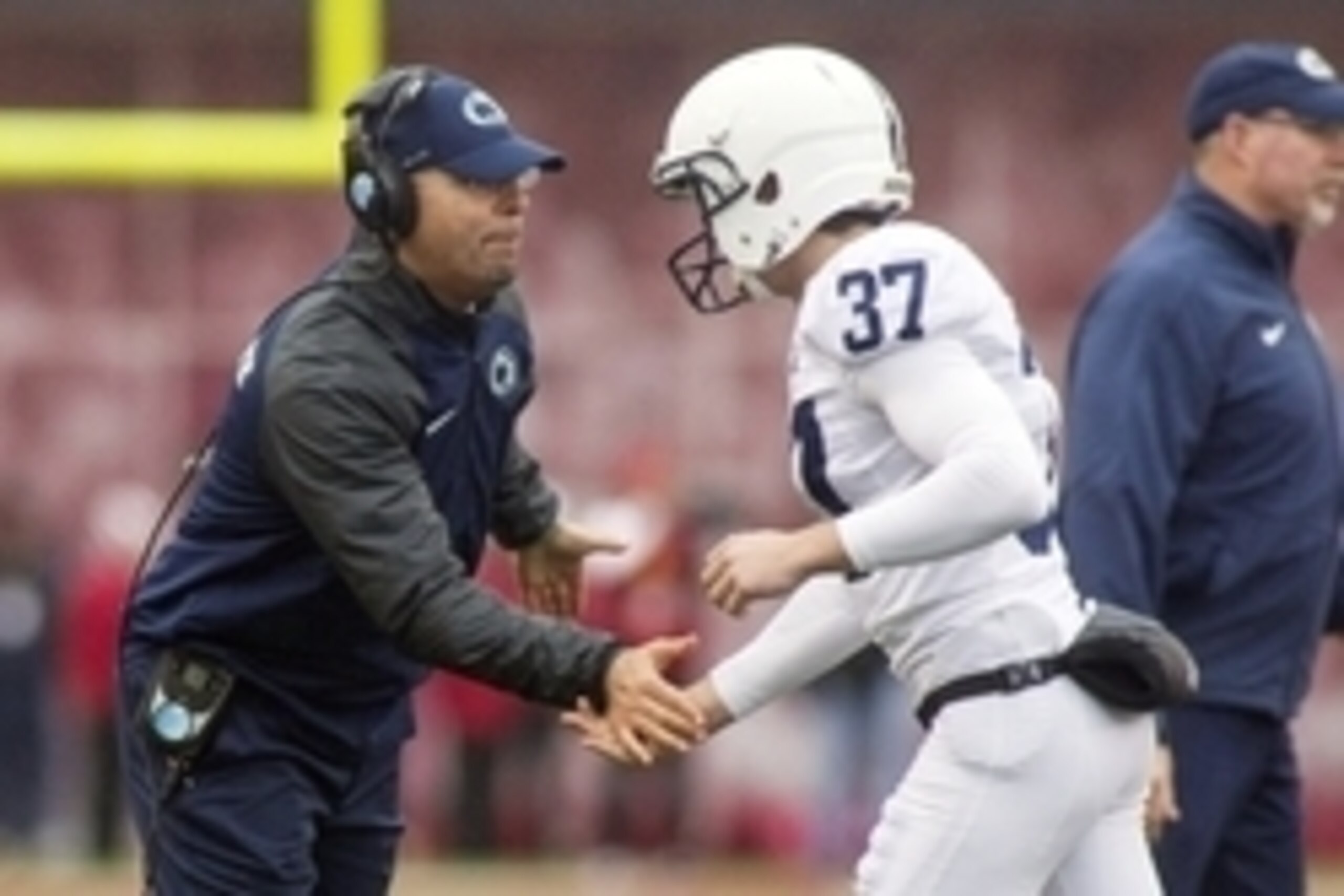
Any reasonable human being with reasonable expectations didn't think James Franklin would set the football world on fire in his first year in the Big Ten. With that out in the open—and the uniqueness of the situation taken into account—losing to Illinois, as Penn State did last Saturday, was never in the plans.
That performance served as a notice of sorts.
The scandal and sanctions that rocked Penn State put this program on a different path than any other program in the history of the sport. The roster attrition paired with various coaching changes and the lingering bowl ban made life incredibly challenging.
With the ban complete and scholarships restored, however, Franklin now has the task of adding depth and top-end talent to the roster. Penn State is currently ranked No. 12 in 247Sports' recruiting team rankings, which is a sign that help is coming.
There is room to grow in the Big Ten, especially given the way Michigan is fighting a similar—but also drastically different—uphill battle. The switch won't suddenly be flipped overnight, although Franklin's track record at Vanderbilt brings hope that the upward climb is inevitable.
Let Rebuilding Begin (or Continue)
The answer to all rebuilding problems is to hire Nick Saban. Given recent history, Jimbo Fisher wouldn't be a bad option either.
When these scenarios aren't feasible, other avenues must be explored.
In the end, it boils down to finding a coach capable of leading a program, providing this coach with the necessary financial means to assemble a strong staff (while also ensuring that he can keep this staff together) and, of course, recruiting. These checklist items are in many ways intertwined, although recruiting might as well be written in bold, size-128 font.
The premise is simple, although the execution is anything but. It's why some of the greatest college football powers of our lifetimes have been unable to find their previous, dominant selves.
There are reasons to believe this will change, at least with some of the proper pieces in place for some of the programs mentioned above. Turning these pieces into sustainable success is where the blueprint gets complicated.
At one point in time, this part was a given for these powers from a different life. Now, given the weekend that was and everything that came before it, nothing should be assumed. There is still so much work to be done.

.jpg?w=2560 "Every Trade's Best Trade Asset 🔁")
.jpg?w=2560 "Insiders: Cowboys Overpaid for Porter")
.jpg?w=2560 "Top NFL Trade Targets")