Breaking Down the New and Explosive Dallas Mavericks Offense
The Dallas Mavericks are far and away the best offensive team in the NBA right now.
Their 115.2 offensive rating (via NBA.com) leads the league, and their revamped lineup—which includes Tyson Chandler, Chandler Parsons and Jameer Nelson—has jelled very quickly.
Part of this is due to the growing synergy between Dirk Nowitzki and Monta Ellis, the team's two primary options. Part is a deeper roster with multiple on-ball creators off the bench, namely Devin Harris and J.J. Brea.
TOP NEWS
Jaylen Brown Calls Out Tatum 🧢
LeBron on President Trump's Criticism
Report: Knicks to Sign Knecht
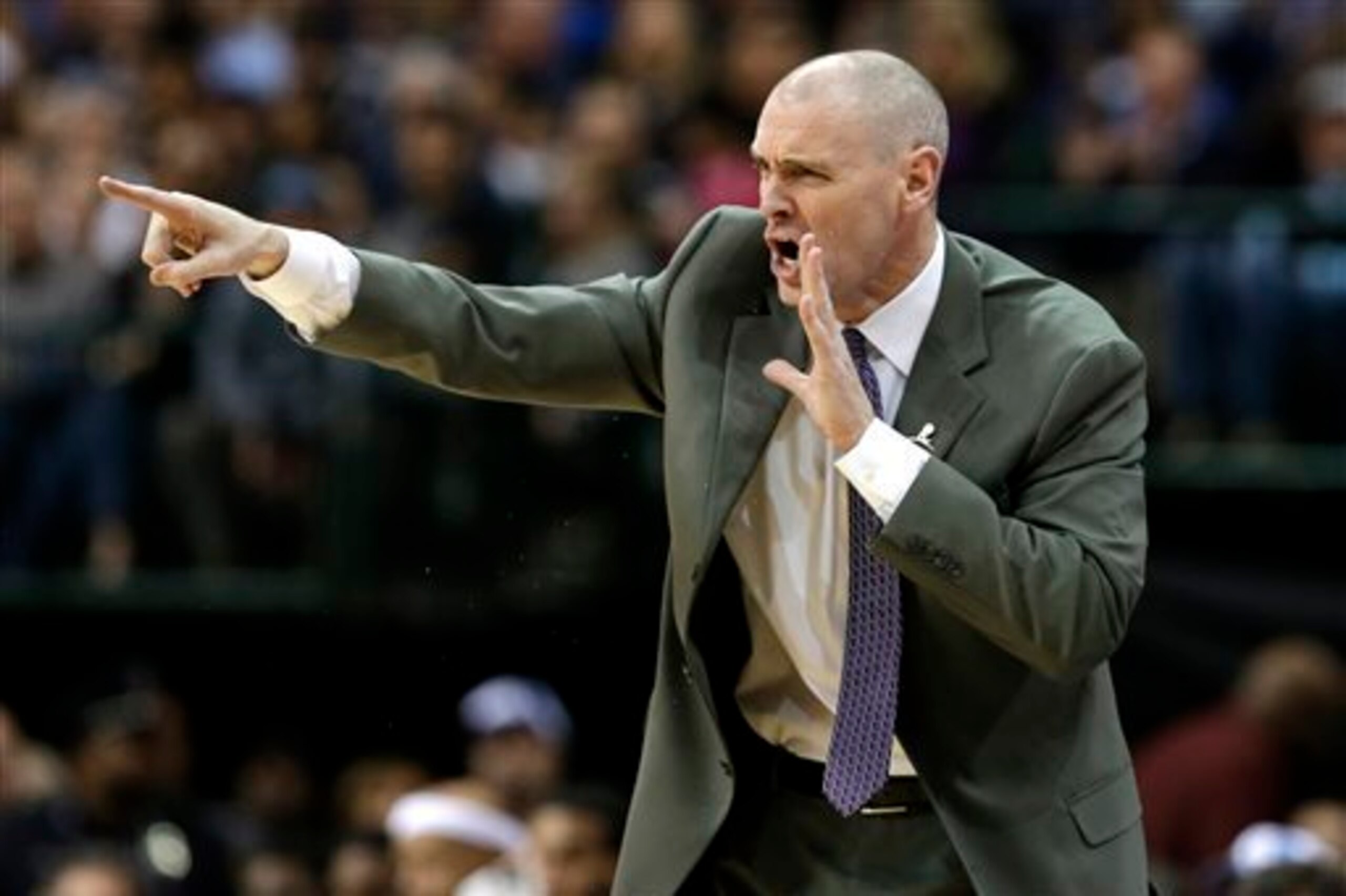
But ultimately it's about head coach Rick Carlisle and his ability to weave together different skill sets in a clever and smooth offense.
To chronicle Carlisle's entire offense is an impossible task. He's working with a never-ending catalogue of plays and on-the-fly creativity. Still, like any team, Dallas has a few pet plays outside of the run-of-the-mill spread pick-and-roll actions that have come to dominate most offenses.
The key to all of this is one position, and it's just a cog in the offense: center. This isn't to say that Nowitzki, Parsons or Ellis aren't important. Their value is clear, but it's Chandler and Brandan Wright who are the glue guys opening things up on the perimeter.
Their rolls and dives to the rim are the engine. There's shooting everywhere, with Nowitzki, Parsons and Nelson dotting the perimeter. Even Harris and Barea can drill shots from deep off the bench.
None of those shots become available, however, unless Chandler and Wright suck the defense in by rumbling down into the paint off pick-and-roll or other screening action.
Even though both players are non-threats outside the restricted area, they're so frighteningly effective around the basket that they cannot be ignored. Their athleticism adds another layer of difficulty, as they're able to gather in lobs from several feet away and finish them with power.
With most of Dallas' guards able to penetrate and dish, there's a constant barrage of rim pressure that defenses cannot completely handle.
According to Synergy Sports (subscription required), Dallas isn't even shooting the ball all that well. The Cowboys' 1.058 points per possession on spot-up jumpers ranks 11th in the NBA, and they're only shooting 35.2 percent as a team from the three-point line (16th in the league).
Most of that is because teams expect the Mavericks to jack it from deep and subsequently attempt to shut down the three-point line. Dallas' 26.9 attempts per game is second in the league, after all, so it's not the worst strategy.
The problem is that Chandler and Wright are such dangerous finishers that the decreased attention means they're feasting on easy baskets.
As a team, the Mavericks lead the league in points per possession around the rim—1.369, to be exact, and a scorching 66.1 field-goal percentage, according to Synergy Sports.
Chandler himself is shooting 74.6 percent, good for third in the league among all players with more than 50 attempts. Only two players are ahead of him, and one of those is Wright. His 87.5 percent (56 of 64) leads the league.
Here's the effect of these devastating numbers in a common Mavericks action that often generates baskets.
When Chandler flashes up to the free-throw-line, Parsons hits him before cutting off Chandler in what could be a dribble handoff.
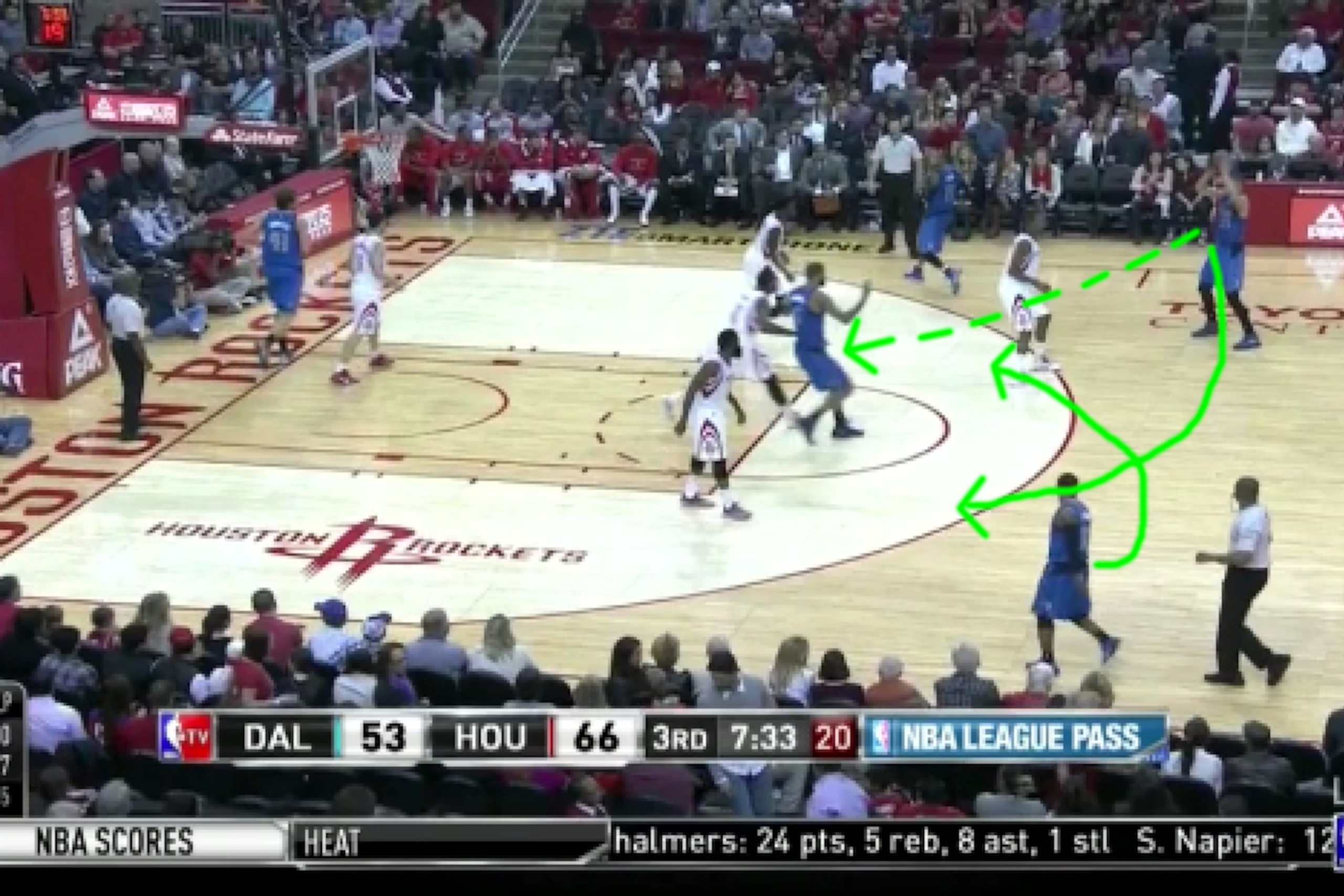
Instead, Chandler flips it back to Parsons as Parsons moves toward the weak-side corner.
As this develops, Nelson creeps in from the weak side and heads toward Parsons. Parsons then quickly drops it off to Nelson, who glides into an on-ball screen from Chandler. This quick volleyball-ing effect confuses the Houston Rockets defenders, as they don't know who's going to keep it and when the ball-screen is coming.
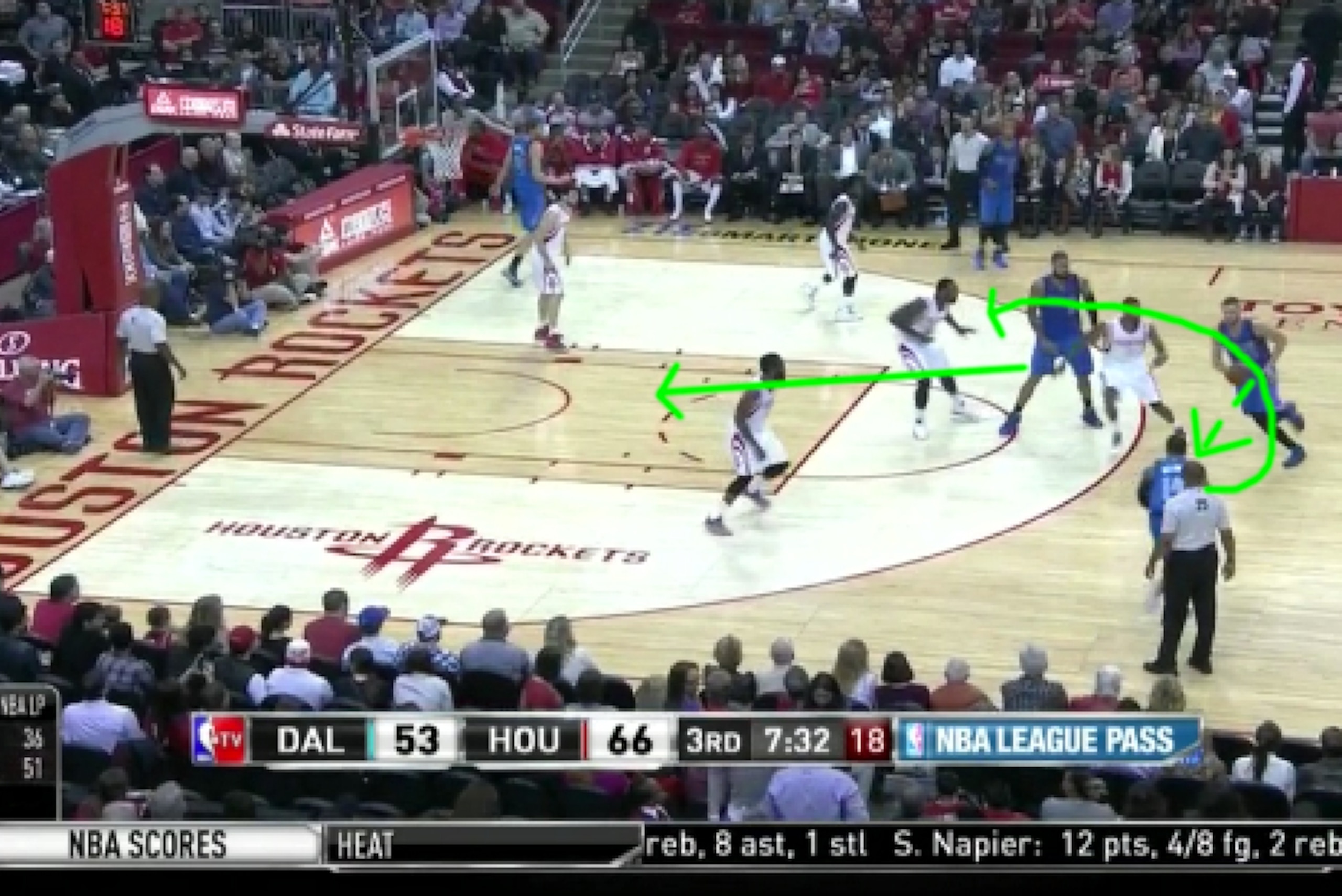
Notice how Tarik Black, who's guarding Chandler, is sliding the wrong way when the screen occurs because he had been following Parsons' movements.
Once Chandler rolls to the rim, there's no backside help because Trevor Ariza is glued to Parsons, and Kostas Papanikolaou cannot leave Dirk in the corner. They're trying to lock up the three-point line.
The result, however, is an easy dunk.
Here's a differently arranged play but with a similar misdirection theme. After Nelson Iverson cuts—heading in a straight line off two screens from one wing to the other—over both of Dallas' bigs on the elbows, he catches a pass from Ellis.
Parsons steps in as if he's going to set a pick but quickly slips away.

At the same instant Nelson swings the ball back to Ellis, who's floating back toward the other side of the floor.
The subtle timing here is brilliant. Just as Nelson makes the catch, Chandler hits Nick Young of the Los Angeles Lakers with an angled step-up screen—an on-ball screen in which the big's footwork is as perpendicular to the baseline as possible so he cracks the defender right in the back.
Young gets caught up in the pick, meaning the Lakers are in a full-help rotation to account for the possible rim attack. Jeremy Lin tries to "tag" Chandler as he rolls—a defensive maneuver in the pick-and-roll in which a weak-side player rotates to cover a roller before scrambling back to a shooter—but he gets caught in way too deep.
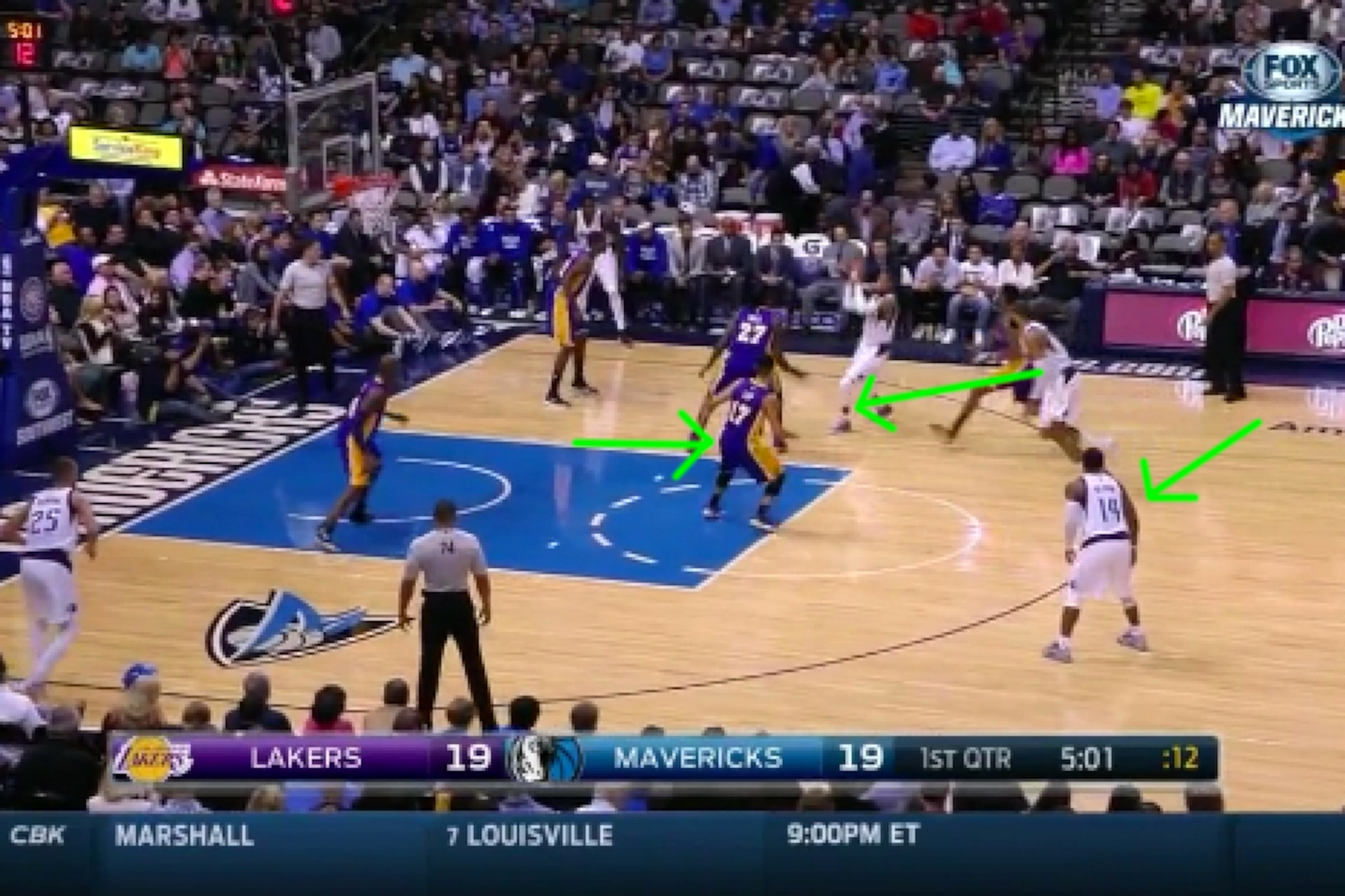
Ellis reads this and throws it back to Nelson, who drills the open three-pointer.
This is the problem an effective roller causes. If Lin doesn't tag, he's giving up a guaranteed dunk. If he does, it's a wide-open three-pointer. Most teams opt for protecting the paint and scrambling back to shooters, but Chandler makes the choice especially painful because he can't be weakly tagged.
He must be hit and slowed down; he's going to catch an easy lob otherwise. That extra tick, however, is enough to give his teammates plenty of room to bury threes.
Even though the Mavericks aren't shooting up to their potential, opponents know that they cannot simply abandon shooters. It's the increased attention that's driving the percentage down, and loosening up three-point line defense will lead to a skyrocketing shooting percentage.
This is why the pick-and-roll is the bread-and-butter option for most NBA offenses. Great coaches add a few wrinkles to make them even more lethal, and great teams have threats in every part of the play.
But it's the bigs that create everything.
Chandler and Wright are those players in Dallas.