Kevin Martin Injury Opens Yet Another Door for Andrew Wiggins' Development
This summer's exile from the stacked and star-laden Cleveland Cavaliers was the first key to Andrew Wiggins' early evolution.
The indefinite loss of Kevin Martin—the Minnesota Timberwolves' leading scorer this season—now puts the spotlight on that evolution, perhaps paving the way for last June's No. 1 overall draft pick to quickly establish his star credentials.
Just 10 games into his 11th season, Martin fractured his shooting hand with six minutes and 48 seconds remaining in the first quarter of the Minnesota Timberwolves' 115-99 win against the New York Knicks. The 31-year-old remained in the game and scored 37 points—34 of which he tallied after the injury. Timberwolves PR tweeted the team's injury-update press release:
TOP NEWS
Giannis' Warning to NBA ⚠️

NBA Power Rankings Entering Preseason 🔢
Wizards Guard Admits Tanking 😨
"I realize the situation, and after the guys worked so hard after the horrible road trip we had," Martin told reporters after the game. "Coach [Flip Saunders] challenged us in practice. There was never a thought to not playing. You have to get out there with your teammates and show them that you're dedicated to being here."
While Minnesota will miss Martin's 20.4 points per contest (and exceptional 48.1 percent success rate from beyond the three-point arc), this young team can certainly take something away from Martin's example.
And Wiggins can take something from his absence—namely the opportunity to become the Timberwolves' first or second scoring option alongside eighth-year veteran Thaddeus Young.
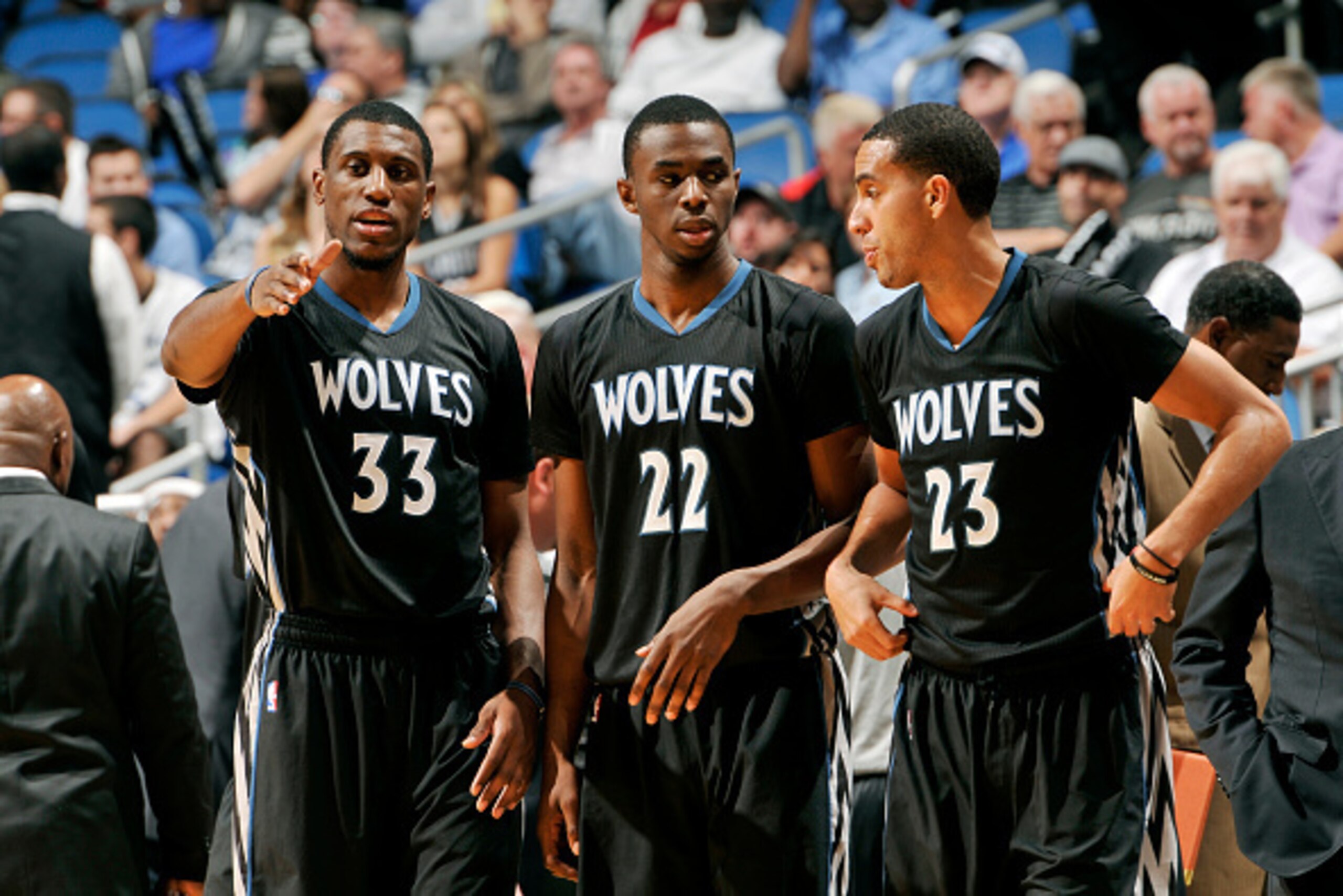
It remains unclear just how long Martin will be out—or whether he'll require surgery—but there's suddenly a decent chance Wiggins and Co. will play much of the season without Martin and starting point guard Ricky Rubio, who's sidelined until January or February with a sprained left ankle. Martin spent over two months recovering from a left wrist fracture back in 2009.
Though Wiggins' minutes may remain largely unchanged at 27.1 per contest, his touches should increase significantly. Based on this season's limited sample size, Martin and Rubio were averaging a combined 22.7 field-goal attempts per game prior to their respective injuries.
Wiggins won't inherit all of those, but he'll likely take more than the 9.3 shots he's currently averaging. Currently converting on 44.1 percent of those shots, the 19-year-old has already proven a reasonably efficient scorer.
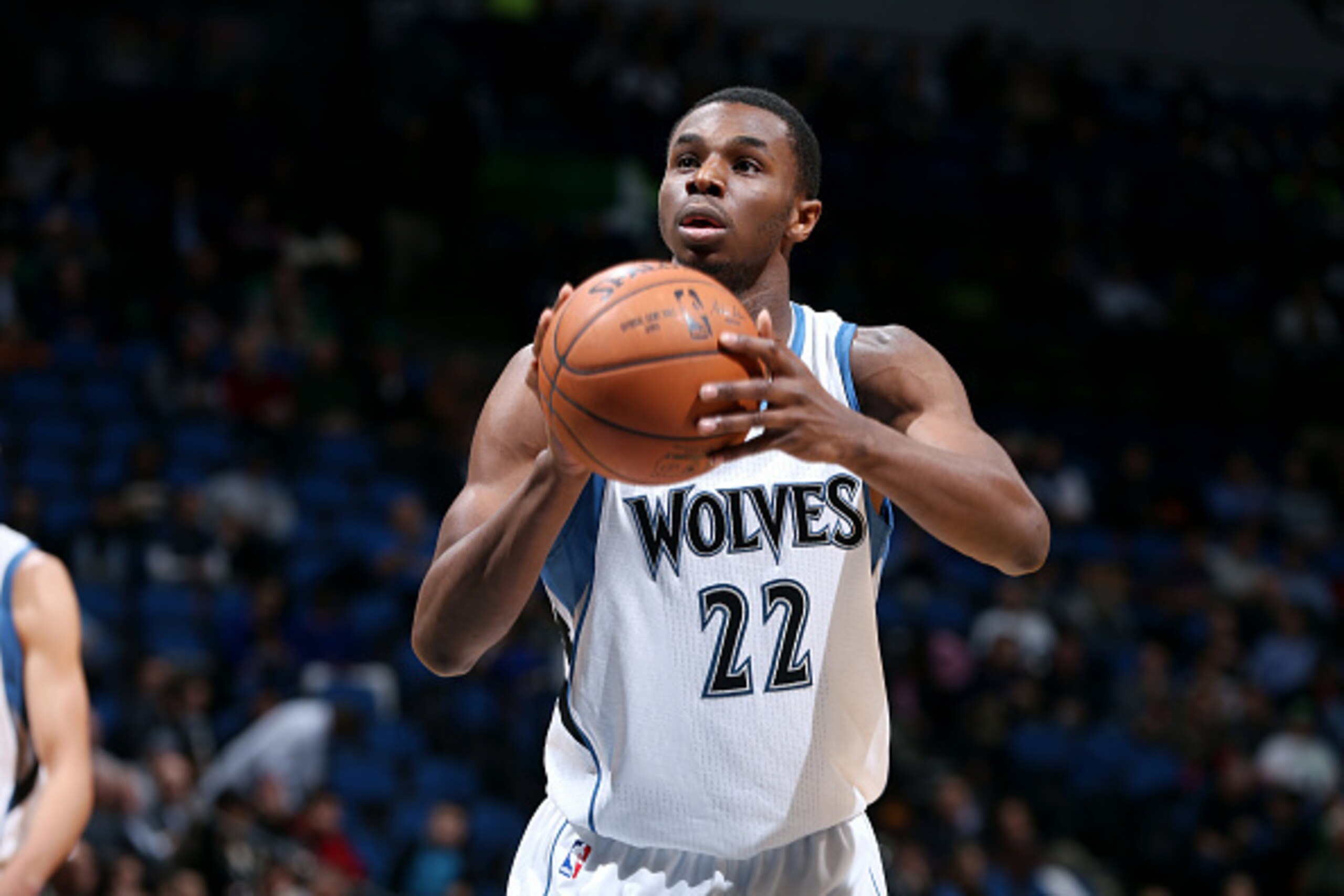
Now we'll find out just how much of the load he can carry.
While he's already demonstrated strong defensive instincts, there are still questions about his offensive upside.
"We've put him on other team's top players, defensively," Saunders told reporters this month. "And does he get some lessons learned? No question. That's what it means to be a rookie. But...he's not trying to do too much—play within a system. He's done it extremely well.
"People that have watched us play, we'll see a three- or four-minute stretch where he'll be able to take over a game offensively. Eventually, we're hoping he's going to be able to do that over the course of 48 minutes and not just three or four."
Wiggins will continue to share playing time on the wing with Corey Brewer and Shabazz Muhammad (and, to some degree, with rookie combo-guard Zach LaVine), but he should become more of an offensive focal point while on the floor. Young is averaging 14.3 points per contest, while center Nikola Pekovic has tallied 11.9. Wiggins is currently the team's fourth-most prolific scorer at 10.7 points per game.
Statistics aside, repetitions alone will pay dividends for the Kansas product.
Wiggins will draw more defensive attention on the perimeter without Martin and Rubio around. The more Saunders calls his number, the more comfortable Wiggins will become scoring under pressure. From decision-making to shooting form, only good things can come from that kind of unadulterated in-game experience.
As Saunders put it to media earlier this month, "There is growing pains. Listen, part of development, it's just coming out and letting a guy play. It's not just coming out and having the guy shoot jump shots at practice."

No one expects Wiggins to realize his potential in the coming weeks and months. His playmaking ability has a long way to go, and his scoring aptitude will almost certainly improve dramatically with further polish. Even with two of Minnesota's principal contributors out of action, Wiggins may not run away with any Rookie of the Year honors.
And that's perfectly fine.
This season is about the long term, about ushering Wiggins from his now complementary role to a more prominent one—and doing so patiently. A temporarily shorthanded lineup will help, especially as he navigates a balance between asserting himself and deferring.
"His greatest strength is that he is very much a team player, and he wants to play within a system," Saunders said in October, per Fox Sports North's Phil Ervin. "He's got to know when he's got to step out of the box a little bit and when he's got to stay in the box.
"That comes with experience and time and us nurturing along those lines."
There's a reason this organization is willing to wait. By all accounts, Wiggins will be worth it. Some of the best in the business see it coming, including the likes of Dwyane Wade, who spoke with Wiggins after the Miami Heat's 102-92 win against the Timberwolves earlier this month.
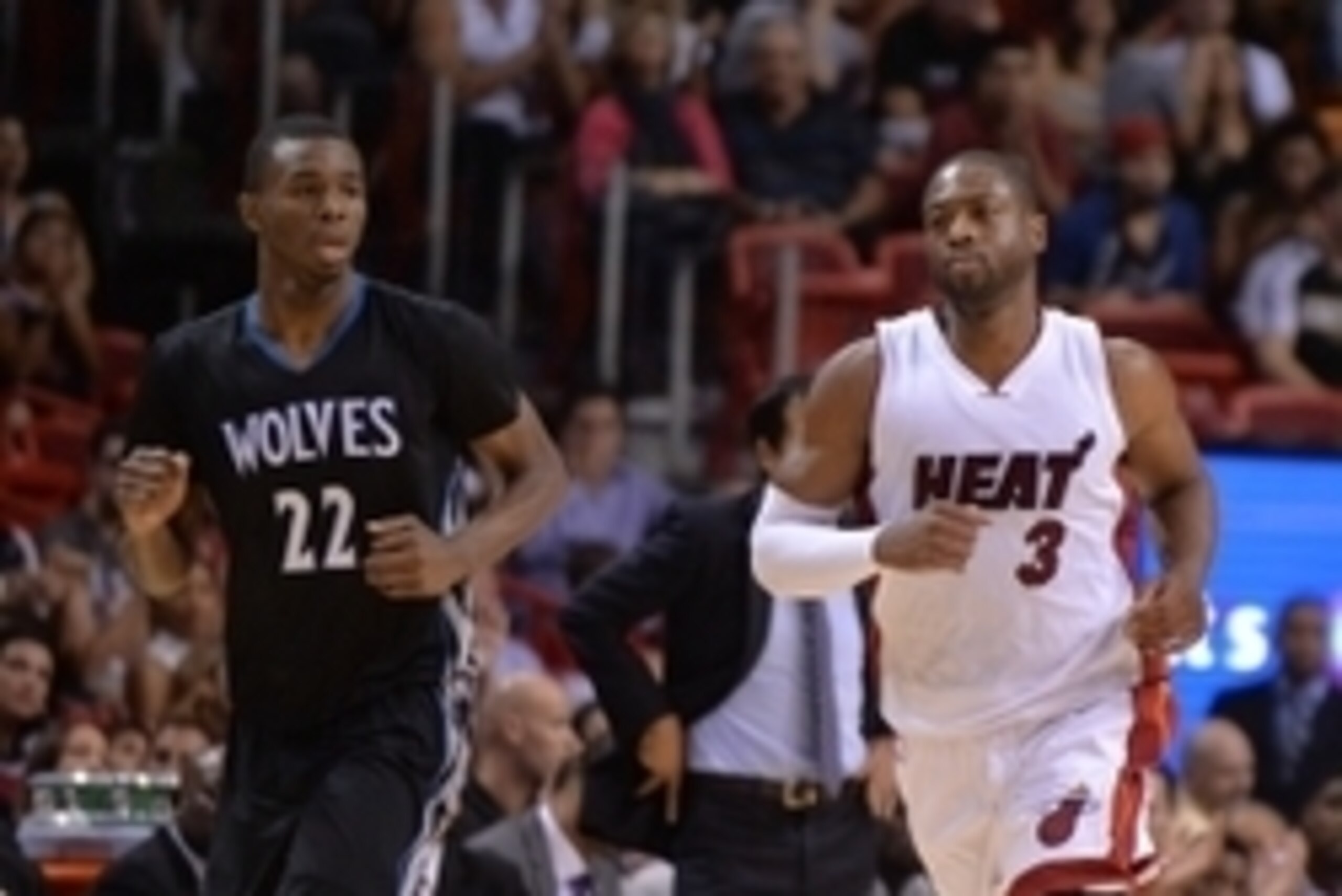
"He asked me if I wanted to be great," Wiggins told reporters after the game. "I said 'yes.' He said I've got all the tools to be great, just keep working."
It was an apparently formative moment.
"Those words at the end of the game just motivate me," Wiggins added at the time. "Already I'm thinking about what he said, and it's going to carry through for a long time now.
"He's one of the people I watched growing up, one of the people I idolized. That guy right there is great."
Wade averaged an impressive 16.2 points, 4.5 assists and four rebounds in 34.9 minutes per contest in his first pro campaign, losing the Rookie of the Year race to LeBron James. Wiggins is younger than Wade was at the time, a still-raw specimen whose real ceiling remains unknown.
The coming months will offer a hint, and—more importantly—ample room for growth.
.jpg?w=2560 "Every Trade's Best Trade Asset 🔁")
.jpg?w=2560 "Insiders: Cowboys Overpaid for Porter")
.jpg?w=2560 "MHJ's Potential Trade Value 📉")