
19 Years Later: Toronto Raptors and Memphis Grizzlies Meet at the Top of the NBA
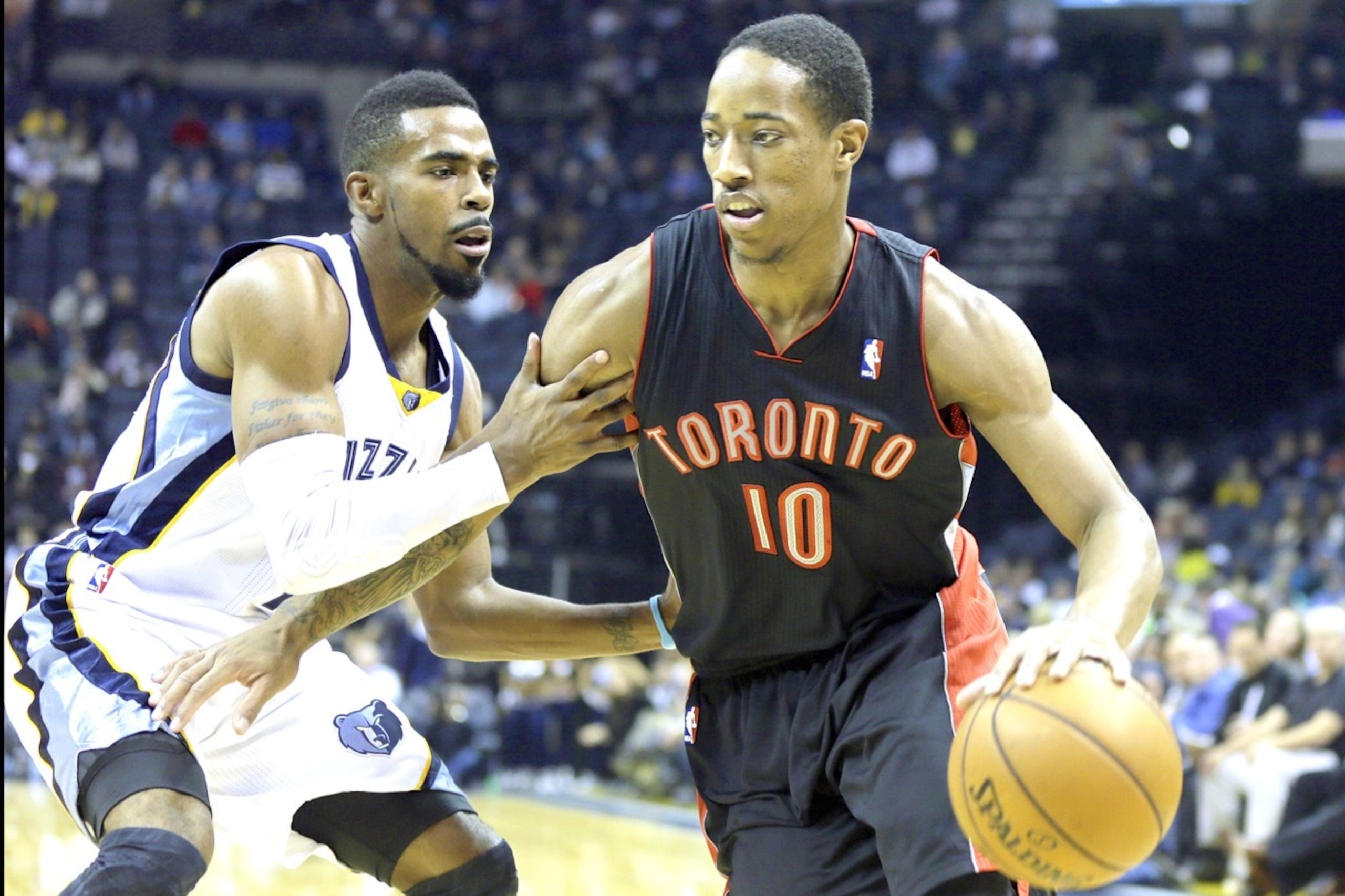
When the Toronto Raptors and Memphis Grizzlies meet inside the Air Canada Centre on Wednesday, the old rivals might have a hard time recognizing one another.
It's been a little less than two decades since the pair shared the distinction of being the new kids on the NBA block in 1995. For a while, the two were also linked by locale (as the league's first franchises based outside of the United States).
But, as many young companions often do, the two teams grew apart over time. The Grizzlies relocated from Vancouver to Memphis in 2001, ending their annual preseason battles with the Raptors for the Naismith Cup. They still cross paths twice a year, but it's hard to see traces of their old bond anymore when they do.
TOP NEWS
Giannis' Warning to NBA ⚠️

NBA Power Rankings Entering Preseason 🔢
Wizards Guard Admits Tanking 😨
Frankly, it's hard to see any remnants of the teams these used to be, given how both are playing at the moment. The Grizzlies (10-1) and Raptors (8-2) are both off to their best starts in franchise history. More importantly, both are sitting alone atop their respective conference standings.
It's been a wild ride to the top for both sides. It should be an even more exciting one going forward.
The Raptors' Highs, Lows and In-Betweens
The Raptors were the first of the two to land a franchise talent. In fact, they seemed to strike gold every time the draft came around early on.
During their first four years, they used their opening-round selections on Damon Stoudamire, Marcus Camby, Tracy McGrady and Antawn Jamison (who was moved on draft night for Vince Carter).
| Stoudamire | 7th in 1995 | 13 | 13.4 PTS, 6.1 AST | Rookie of the Year |
| Camby | 2nd in 1996 | 17 | 9.8 REB, 2.4 BLK | Defensive Player of the Year |
| McGrady | 9th in 1997 | 15 | 19.6 PTS, 5.6 REB | 7-Time All-Star |
| Carter | 5th in 1998 | 17+ | 20.1 PTS, 4.9 REB | 8-Time All-Star |
Though the Raptors knew how to identify talent, keeping it around was a different story.
Camby was traded after two seasons in Toronto. Stoudamire was sent out during his third. McGrady, who was drafted straight out of high school, started to emerge during his third season (15.4 points, 6.3 rebounds), but his real breakout didn't come until the following year—after he had left the Raptors and Carter, his cousin, behind to sign with the Orlando Magic.
Carter stuck around the longest and played the biggest role in putting Toronto on the basketball map. He was an 18.3 points-per-game scorer as a rookie—a number he bumped to 25.7 the following season. He made his first All-Star Game appearance as a sophomore, but he turned the most heads the night before the exhibition with an electrifying performance in the slam dunk contest.
The Raptors followed Carter's rise and qualified for postseason play three straight years from 2000-02. But those three trips only produced a single series victory, as Carter could not connect on a buzzer-beater in Game 7 of the Eastern Conference semifinals against the Philadelphia 76ers.
The Raptors were an exciting team, but they could have been something more substantial had their young talent stuck around.
"In hindsight, looking back, obviously I wish I had stayed in Toronto," McGrady told the Toronto Star's Dave Feschuk in September of 2013. "There's no doubt we could have contended for a championship."
McGrady, of course, didn't stay, and Carter wouldn't for long, either. After missing out on the playoffs in back-to-back years, the Raptors traded Carter to the then-New Jersey Nets early in the 2004-05 season. The deal would later be called "the worst trade in Raptors history [and] one of the worst trades in NBA history" by the Toronto Star's Doug Smith.
In return for Carter, by that point a five-time All-Star, the Raptors received Aaron Williams, Eric Williams, two mid-level first-round picks (one of which became Joey Graham) and Alonzo Mourning, who was not expected to play in Toronto and never did.
Fortunately, the Raptors already had their next franchise face on the roster. Toronto nabbed Chris Bosh with the fourth overall pick in 2004.
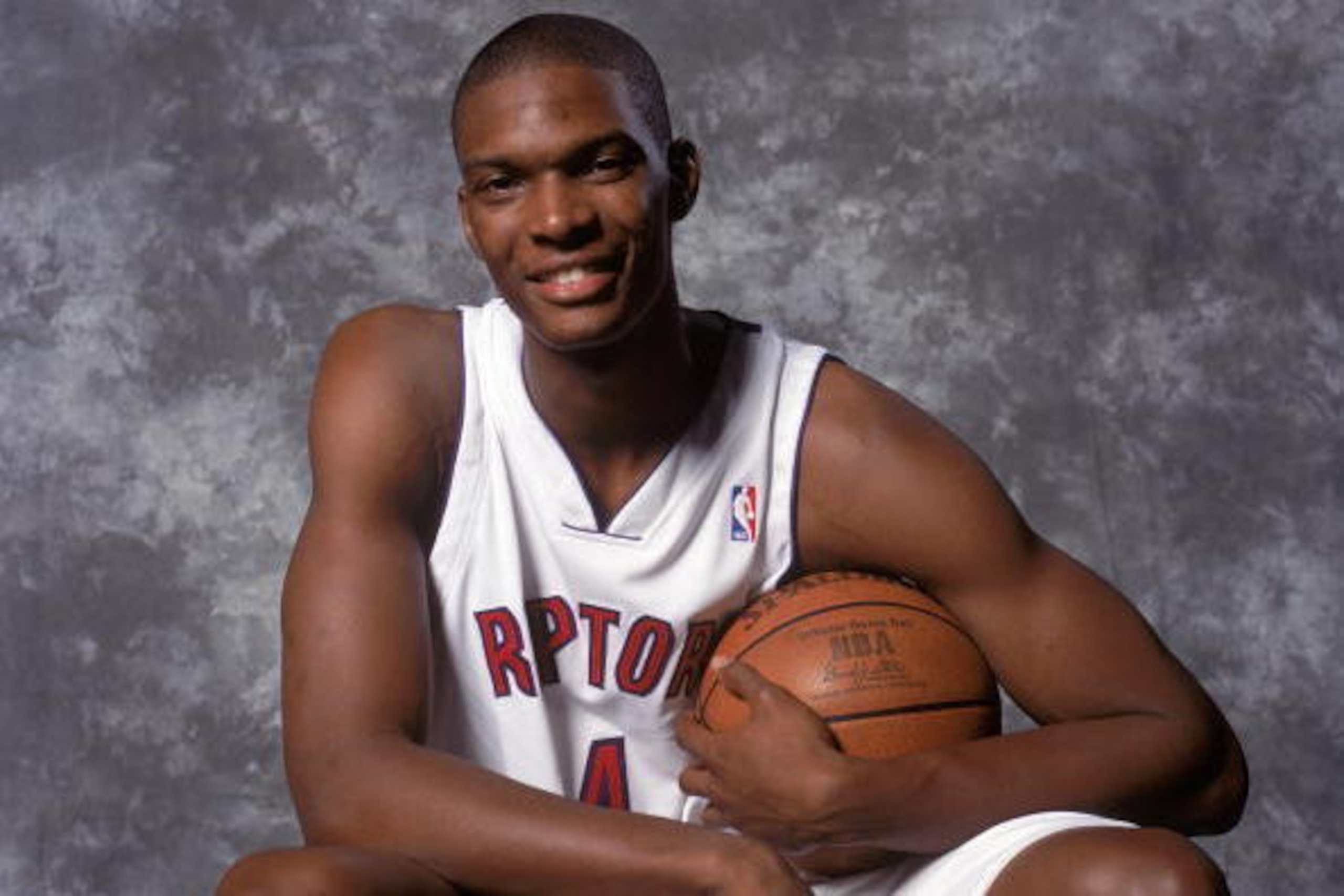
Once again, the Raptors had a leader, but putting pieces around him wasn't easy.
Toronto burned the eighth pick of the 2004 draft on Rafael Araujo, who was out of Toronto two years later and out of the NBA after the following season. The Raptors had the top pick in 2006 and tried their luck with 7-footer Andrea Bargnani, but his Toronto tenure wound up being defined by inefficient scoring (15.2 points on 43.7 percent shooting), poor rebounding (4.8 per game) and a host of injury problems.
Toronto made two playoff trips with Bosh on board (2007 and 2008), but it never made it out of the first round. After seven seasons with the team, Bosh left town in 2010 to join LeBron James and Dwyane Wade with the Miami Heat.
The Grizzlies' Slow Climb Up the Ladder
To say that the Grizzlies sputtered out of the gate would be like saying Kobe Bryant could use a little more help on offense this season. Both assertions are true, but severely understated.
The Grizzlies were severely hurting for talent out of the gate, which would be a constant theme throughout their six-year stay north of the border.
Some draft picks were solid (Shareef Abdur-Rahim at No. 3 in 1996, Mike Bibby at No. 2 in 1998), but none were game-changers. Other draft picks were just wasted: Bryant Reeves at No. 6 in 1995, Antonio Daniels at No. 4 in 1997 and a clearly disgruntled Steve Francis at No. 2 in 1999 (who was traded before ever suiting up for the Grizzlies).

The Grizzlies collected a pennies-on-the-dollar return for Francis in the form of Antoine Carr, Michael Dickerson, Othella Harrington, Brent Price and two future picks (only one of which was a first-rounder).
Without a stable foundation in place, the franchise could not survive a hit like that. The Grizzlies' six-year record in Vancouver was an anemic 101-359. That .220 winning percentage is worse than the unashamedly tanking Philadelphia 76ers posted last season (.232).
But things got better from nearly the moment they arrived in their new home. They left the 2001 draft with Shane Battier (taken sixth overall) and their first real building block Pau Gasol (acquired in a trade from the Atlanta Hawks).
With veteran coach Hubie Brown on the sidelines, the Grizzlies rattled off 50 wins and made their first ever playoff appearance in 2003-04. The roster had young and old talent, and the team struck a similar balance in efficiency (seventh on the offensive end, 11th at the opposite end).
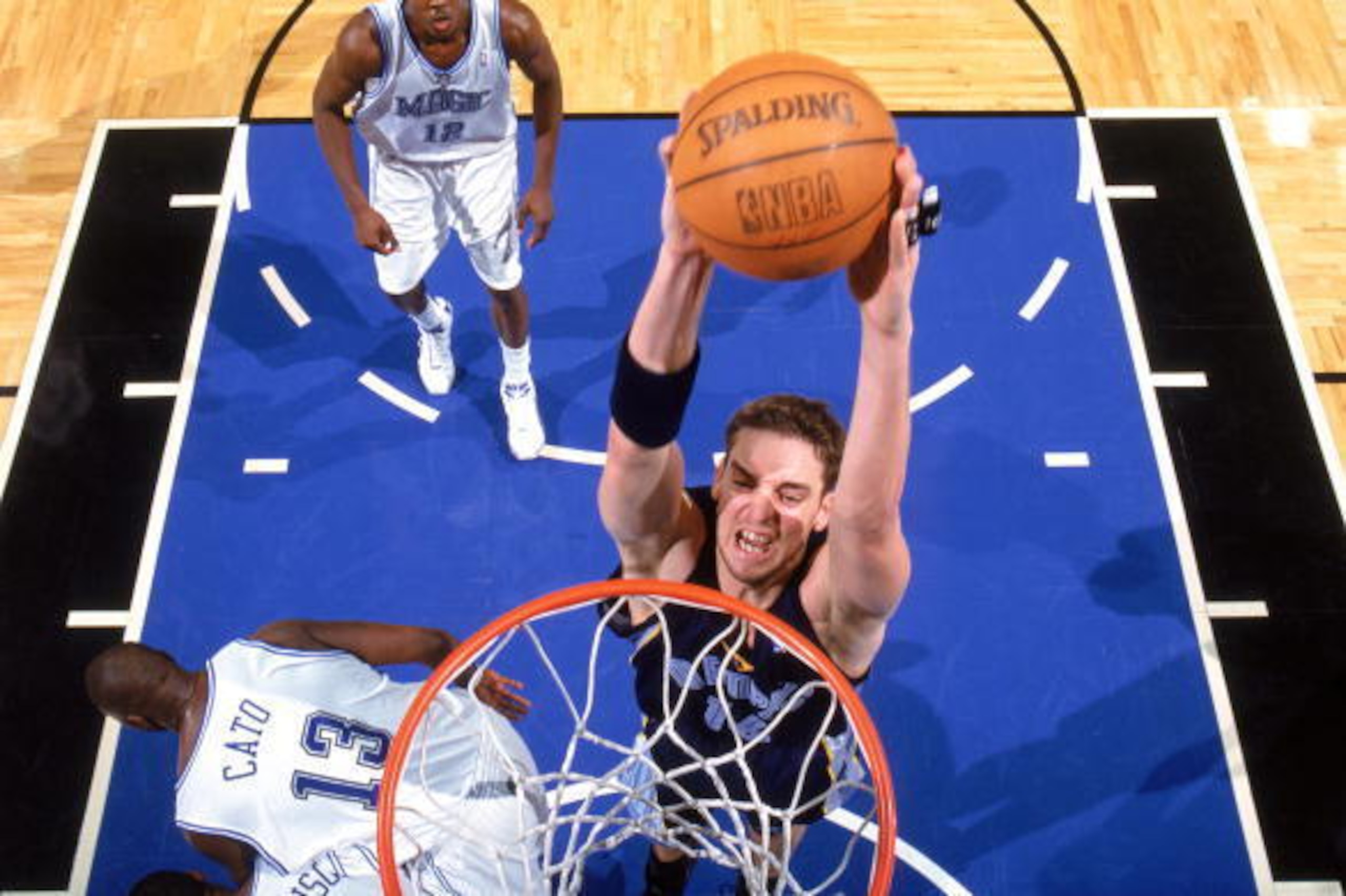
Gasol gave the Grizzlies a go-to option, but they lost their coach only 12 games into the following year. Brown walked away after citing "unexpected health-related issues" as the reason behind his decision, per The Associated Press (via the Los Angeles Times).
Memphis grabbed Mike Fratello as its next head coach, and the Grizzlies rebounded from a 5-11 start to post a 45-37 record and make their second straight playoff trip. They won 49 games the next year and booked another playoff trip.
But all three postseason trips ended the same way—a first-round exit by way of a sweep. There would not be a fourth.
Prior to the start of the 2006-07 season, Gasol fractured a bone in his left foot while playing in the FIBA World Championships. By the time he made his debut, Memphis held a 5-17 record. Once the record became 6-24, Memphis axed Fratello.
Gasol was sent packing the following year as part of a five-player trade with the Los Angeles Lakers. The Grizzlies missed the playoffs that season—and each of the next two—but that deal helped them down their rebuilding road.
Different Paths To the Top
Memphis' redemption story is one of patience, foresight and the building of an identity.
While shipping out Pau, the Grizzlies brought back his brother Marc, who has since developed into a Defensive Player of the Year and an offensive hub. In 2007, Memphis took point guard Mike Conley with the fourth overall pick, giving them both an offensive general and pesky defender.
The powerful Zach Randolph arrived in a 2009 trade, and perimeter stopper Tony Allen came via free agency the following summer. The Grizzlies have now assembled a defensive juggernaut with a balanced, versatile offensive attack.
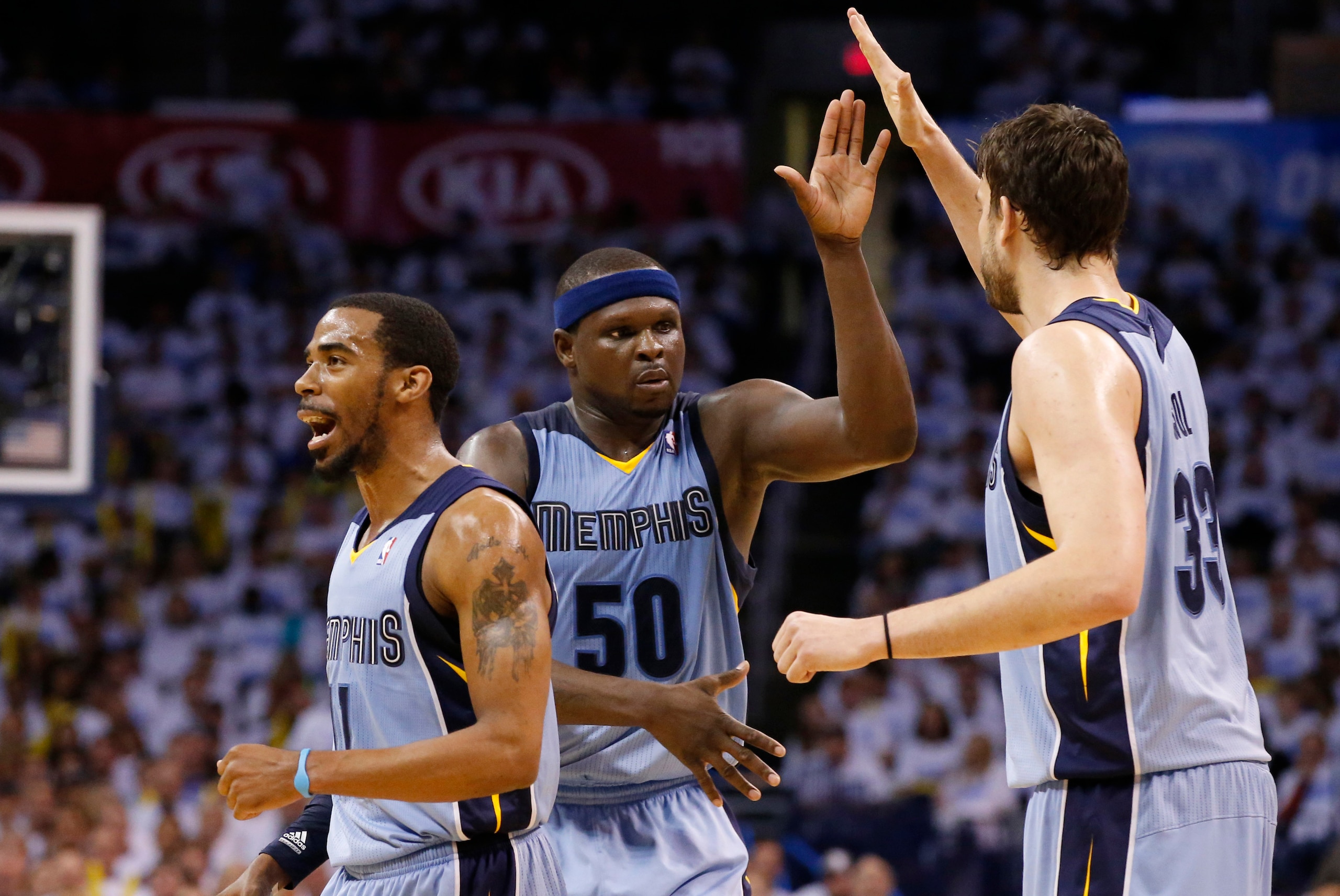
Memphis has outscored its opponents by 8.3 points per 100 possessions, the fifth-best net rating in the league. The team's defense is as fierce as ever, and the offense looks just as powerful.
As Bleacher Report's Tom Firme observed, the Grizzlies appear to have found the formula for crashing the elite ranks:
"The Grizzlies are more than the bruising defensive force they've been the past few years.
... With Gasol becoming more assertive offensively, Memphis poses problems for opponents on that end. Now, any member of the core trio is liable to light up the scoreboard.
Gasol's drive has helped ensure that the Grizzlies have multiple sources of volume scoring as Conley works out shooting issues.
Such a balanced attack cements the Grizzlies' place among the Western Conference's best teams.
"
The Raptors' rebound has been largely an in-house project.
Three of their top four scorers were drafted by the franchise: DeMar DeRozan (ninth in 2009), Terrence Ross (eighth in 2012) and Jonas Valanciunas (fifth in 2011).
It's hard to overstate the importance of hitting on high picks. And Toronto has had similar success on the trade market.
The Raptors landed a centerpiece in Kyle Lowry by sending out Gary Forbes and a future first-round pick (later used on Oklahoma City Thunder center Steven Adams). They picked up uber-valuable glue guy Amir Johnson in a 2009 trade for Carlos Delfino and Roko Ukic. They moved Rudy Gay and filler for key reserves Greivis Vasquez and Patrick Patterson.
All of the dealing and drafting has led to the creation of a deep roster with two-way talent. The Raptors sit fifth in offensive efficiency, eighth on the opposite end and fourth in net rating (plus-8.4 points per 100 possessions).

As early as it is for such statements, Toronto looks as if it could be a force all season.
"Consistency. Continuity. Balance. These are the qualities the Raptors engender," wrote Bleacher Report's Dan Favale. "And if there was ever a year to believe those qualities hold serious weight, it's this one—the same one in which prolific rises, however early, mean everything within an Eastern Conference that is ripe for the taking."
The Grizzlies and Raptors—two teams that faced different but similar paths to respectability—are now eyeing something so much greater than that.
When the old rivals lock horns Wednesday night, one will be looking to polish its resume with a win over an elite NBA team. And both should be thrilled to now qualify as such after what they encountered these past 19 years.
Unless otherwise noted, statistics used courtesy of Basketball-Reference.com and NBA.com.
.jpg?w=2560 "Every Trade's Best Trade Asset 🔁")
.jpg?w=2560 "Insiders: Cowboys Overpaid for Porter")
.jpg?w=2560 "MHJ's Potential Trade Value 📉")