

How Can Terry Stotts Make Best Use of Portland Trail Blazers' Bench?
During Terry Stotts' first two seasons with the Portland Trail Blazers, there was a common theme that was recognized across the NBA.
Rip City's bench simply couldn't hang.
| MPG | PPG | RPG | APG | BPG | SPG | O-EFF | D-EFF | |
| 2012-13 | 30 | 30 | 30 | 29 | 28 | 28 | 30 | 30 |
| 2013-14 | 30 | 30 | 25 | 17 | 29 | 29 | 30 | 27 |



Because of the obvious struggles, the reserves were hidden on the bench in fear by the coaching staff. However, in Year 3 under Stotts, Portland's second unit has seen enough improvement to warrant newfound faith from the man controlling the rotation.
| MPG | PPG | RPG | APG | BPG | SPG | O-EFF | D-EFF | |
| 2014-15 | 24 | 24 | 10 | 10 | 10 | 21 | 15 | 5 |
Following a recent 97-87 win over the Brooklyn Nets on Nov. 15, Stotts said, "It was definitely a team win because we needed everybody's contributions," via The Oregonian's Mike Richman.
The head coach was right. Portland's second unit (and a starting Meyers Leonard, as well as a starting Allen Crabbe) stepped up with LaMarcus Aldridge and Nicolas Batum sidelined.
Damian Lillard put together a very Lillard-like performance (28 PTS, 10 AST, 5 REB), but Wesley Matthews struggled, going just 3-of-13 from the floor.
"It just goes to show you that the young guys are getting better," Stotts said after Portland's bench outscored Brooklyn's 31-16.
At this point in the process, Stotts must take this confidence one step further by digging Portland out of the basement in terms of minutes played by a second unit. The team is currently 24th in that category, according to HoopsStats.com, but there's plenty of anecdotal evidence to support an expanded rotation.
Against the Dallas Mavericks on Nov. 6, the Blazers bench outscored the Dallas bench 52-35 in the fifth game of the season. It shot 57 percent and hit seven three-pointers en route to a 108-87 victory.
Then there was the Nov. 11 comeback against the Charlotte Hornets. Steve Blake and Joel Freeland made big plays on both ends down the stretch, helping Portland to a 102-100 win after a 23-point deficit.
And don't forget the 53 points the second unit dropped on the Denver Nuggets during the Nov. 12 130-113 win.
"When everybody's shooting decent percentages and making shots, we have just as much firepower or more than any team in the NBA," Chris Kaman said following the win over Denver, via The Oregonian's Joe Freeman. "I don't think there's anybody that has more than we do."
Consider Kaman's comments to be the ego-boosted result of a blowout victory. Portland's positive morale off the bench is good to see, but it comes primarily from not being dead last in most major categories.
Then again, we're certainly seeing individual players step up during the early part of 2014-15. For instance, Blake has been the pass-first floor general Mo Williams never was. He's also played a crucial role late in games with his three-point shooting and gritty defense.
Then there's Kaman. He's a reliable defender and can score in a multitude of ways. His personal efficiency rating (PER) of 21.3 is also third-highest on the team behind Damian Lillard and LaMarcus Aldridge, according to ESPN.com.
Unfortunately, the Blazers are now dealing with an injury to C.J. McCollum. According to the Trail Blazers PR Twitter account, the sophomore has fractured his right index finger and will be out for at least four weeks.
Luckily for Portland, injuries have already proven to be less debilitating this season than in years past. Batum and Aldridge have missed time, and the team has instilled a "next man up" mentality with Freeland, Leonard, Crabbe and Will Barton contributing—something Stotts should continue to practice even as players return.
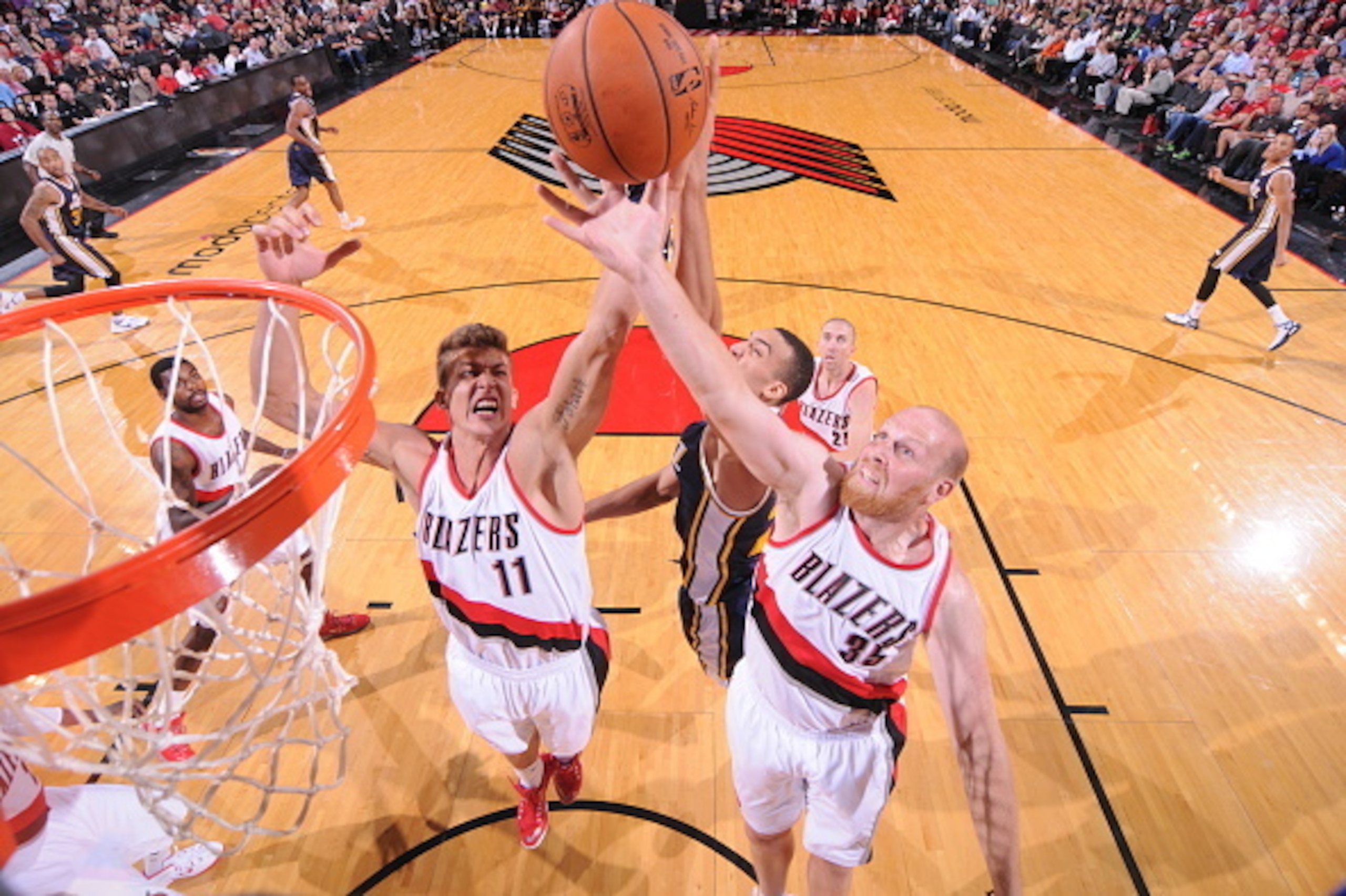
So, how can Stotts build upon the early success? A simple recipe of minutes and trust.
Despite the improvements, the second unit is still playing the seventh-fewest minutes among benches in the Association. That shouldn't be the case for a group that's posting a respectable 15th-best offensive efficiency, per HoopsStats.com, as well as an elite fifth-best defensive efficiency.
As far as the rotation goes, now is the time for Stotts to test guys such as Crabbe and Barton as backups. Crabbe has played 15.8 minutes per game this season, but only because of his four starts.
Getting Crabbe 10 minutes per game, even when the team is healthy, will allow Portland to see what kind of chemistry he has with the reserves.
Barton, on the other hand, is already averaging 10.3 minutes. However, we saw him put together impressive showings when given a chance last season. You have to believe he'd perform with 15 to 18 minutes per game. More importantly, he'd get comfortable in the rotation, which could be important late in the year.
"When I talked to Wesley Matthews a few weeks ago the two players he pointed out as having improved the most: Will Barton and Allen Crabbe.
— Dane Carbaugh (@danecarbaugh) November 12, 2014"
Furthermore, where in the world are Leonard, Thomas Robinson and Dorell Wright? Despite Leonard's impressive showing against Brooklyn, he's played just five games. Wright is averaging just 5.8 minutes per contest, and Robinson isn't much better at eight minutes per night.
The truth is, it would be unreasonable to play every reserve 15 minutes per game. But alternating which forwards and which guards get time to shine between contests would allow each player to get up to that 15-minute mark (or higher) when in the rotation.
This approach could cause a temporary dip in on-court chemistry, but with long-term goals in mind, it will help determine who the best options are when the playoffs arrive. The team can afford a slight dip at this time considering how comfortably it's leading the division.
| W | L | PCT | GB | |
| Portland | 8 | 3 | .727 | - |
| Utah | 5 | 7 | .417 | 3.5 |
| Denver | 3 | 7 | .300 | 4.5 |
| Oklahoma City | 3 | 9 | .250 | 5.5 |
| Minnesota | 2 | 7 | .22 | 5 |
Amid the bench-centric analysis, it's important to remember this isn't solely about improving the second unit. It's also about preserving the starters for long-term success.
"The greatest thing for us was losing to the Spurs," Damian Lillard recently told The Oregonian's Joe Freeman, referring to the 2014 postseason. "Because we got to see what brand of basketball makes you successful and we got to see fresh body after fresh body and guys coming in comfortable against us. I think that's what we're getting to."
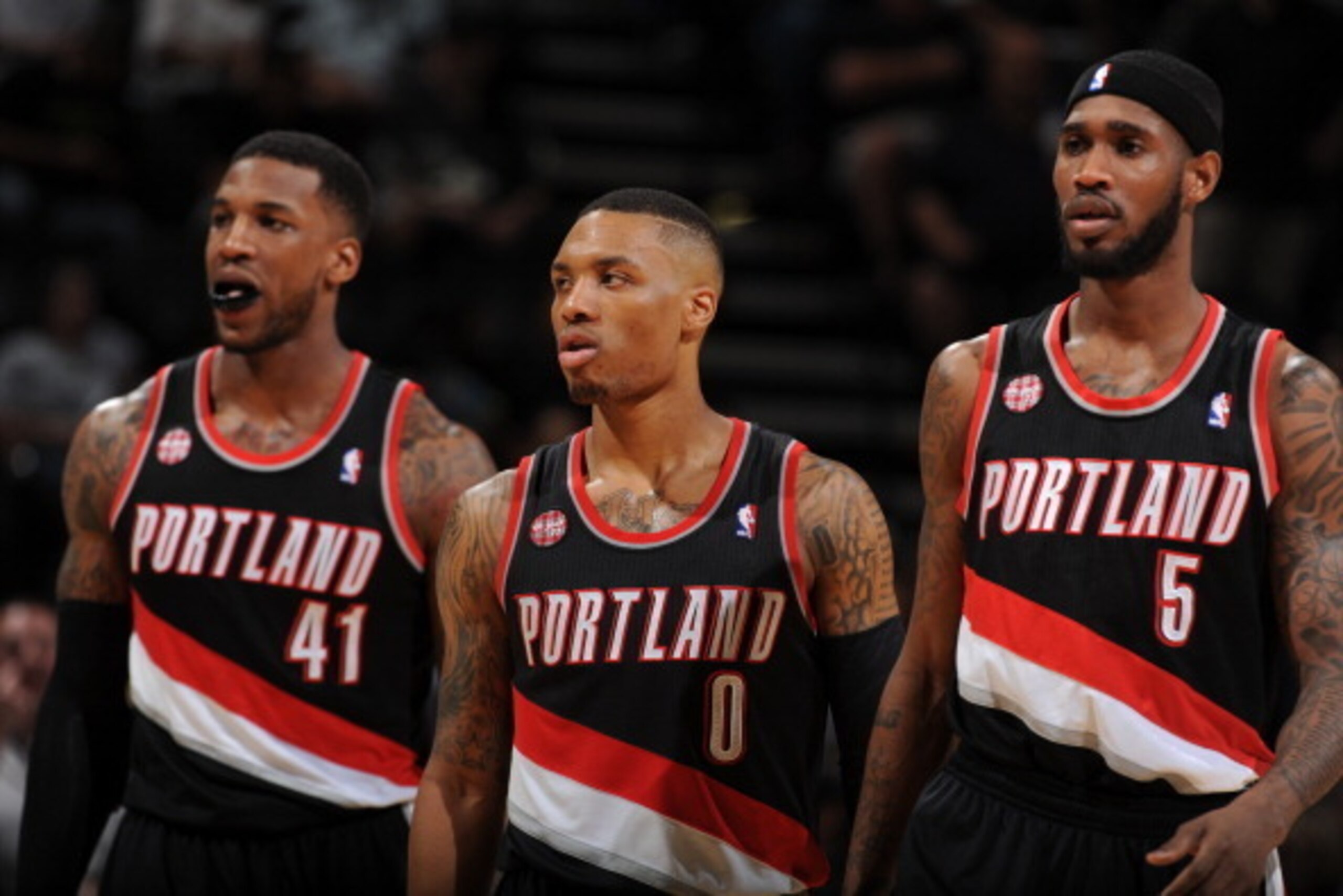
So, easy enough, right? Rest the starters, increase bench minutes and work toward a better, more balanced future.
Unfortunately, it's tough for coaches to convince themselves that rotation experiments are best when they already know what's working.
With the Blazers in win-now mode, they've taken their 8-3 start and jumped out front in a watered down Northwest Division. They're also about to enter a stretch in the schedule that (for the first time all year) takes them away from the friendly confines of the Moda Center on a more regular basis.
For any coach, that would be a frightening time to throw the reserves in the deep end. But if Stotts is smart, he'll take a Gregg Popovich approach now, preparing everyone in the rotation for a deep run in the 2015 postseason.
.jpg?w=2560 "Raiders Could Start Mendoza")

.jpg?w=2560 "Rodgers Iced Out on Plane 💎")
.jpg?w=2560 "🚨 Week 8 AP Top 25 Poll")
