Long Road Back from Foot Injury Can Be Blessing in Disguise for Aaron Gordon
Aaron Gordon needed all the developmental time he could get, perhaps more than any other high-profile member of the 2014 NBA draft class.
That's why, on the surface, his recent battle with the injury bug appears disastrous. With so much left to figure out about himself and his role with the Orlando Magic, the 19-year-old seems to be missing out on a prime opportunity to season his skills.
But looks can be deceiving. As frustrating as his injury might be, it does give him the chance to see where and how he will best fit in the franchise moving forward.
TOP NEWS
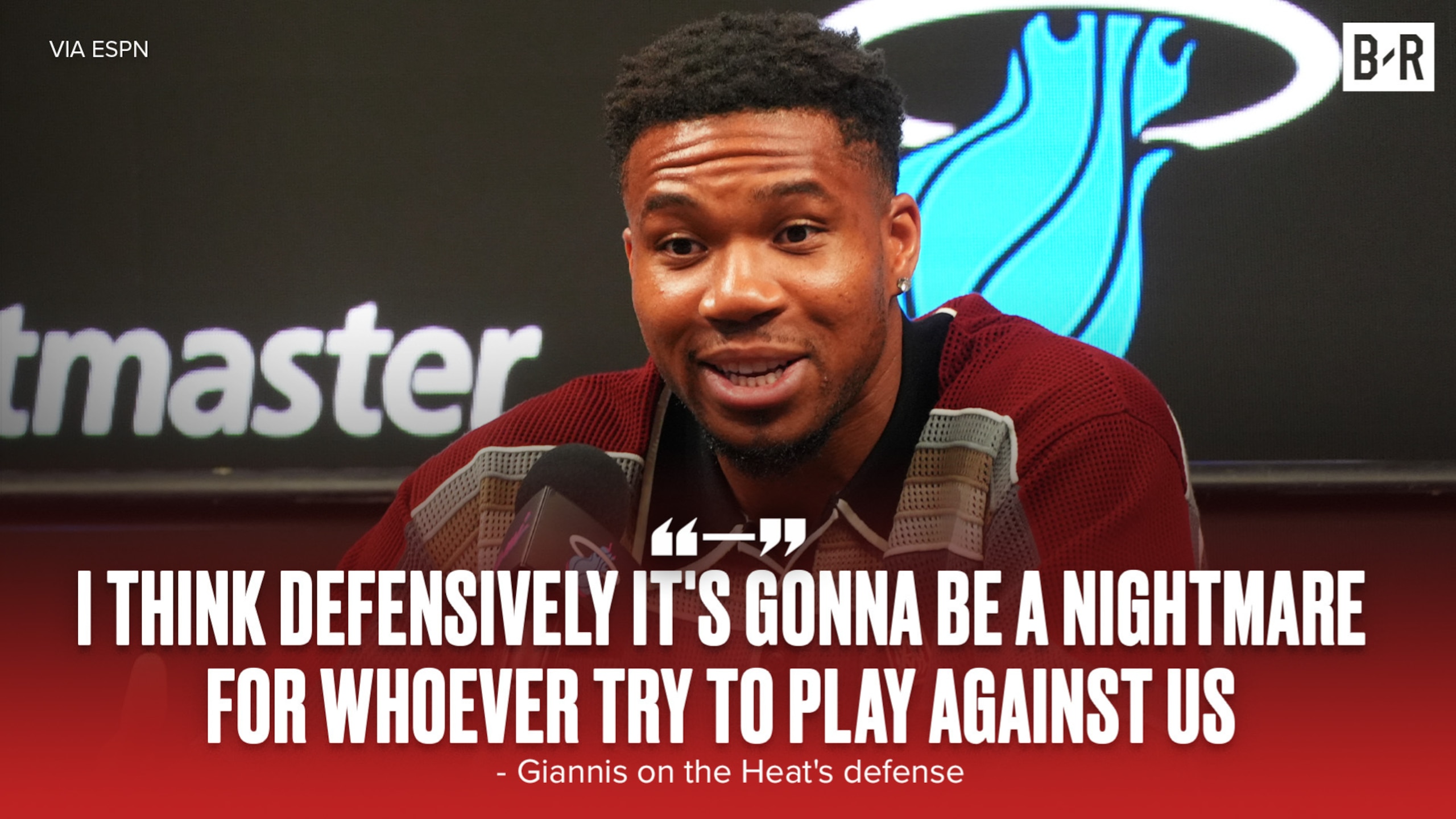
Giannis' Warning to NBA ⚠️

NBA Power Rankings Entering Preseason 🔢
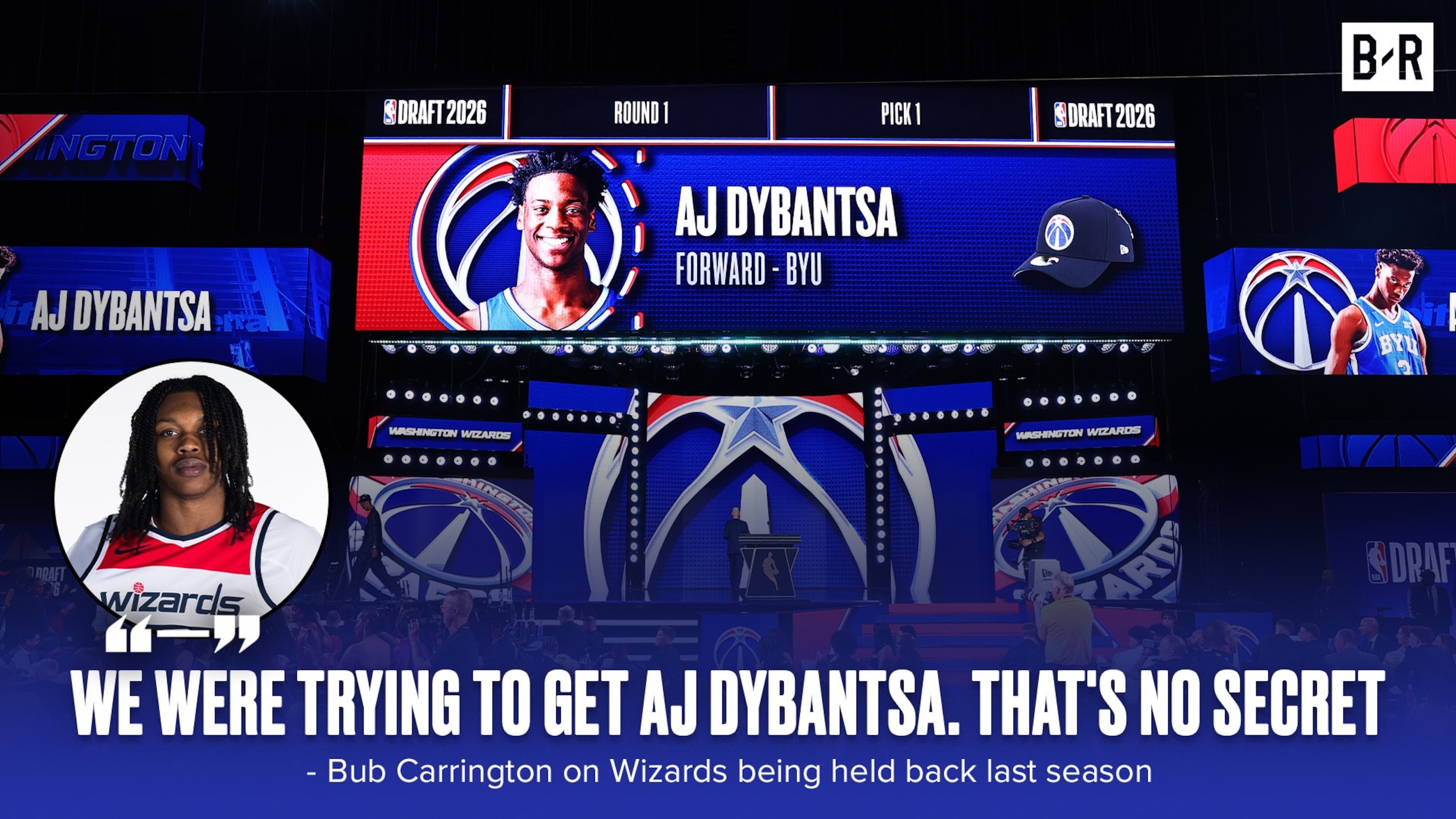
Wizards Guard Admits Tanking 😨
It's still unknown how long this chance will last. Josh Robbins of the Orlando Sentinel shared the details of Gordon's injury and noted the lack of a timetable for his return:
"Gordon, the fourth pick in the 2014 NBA Draft, was diagnosed with a fractured fifth metatarsal in his left foot after Saturday night’s loss to the Washington Wizards, and he will be out indefinitely, team officials said.
It's unclear whether Gordon will require surgery to stabilize the fracture and promote healing in the bone, league sources said. He will be evaluated by a foot specialist after the Magic return from their road trip following Monday night’s game against the Detroit Pistons in Auburn Hills, Mich.
"
Before the basketball world had time to process the injury, Gordon hit Twitter to show he is ready for the long road ahead:
It might be a cliched response, but like a lot of these time-tested sayings, there is plenty of truth at its root.
By most accounts, Gordon entered this league in dire need of seasoning. In July, NBA.com's Fran Blinebury cautioned that the No. 4 pick was "raw, unsure of himself and likely at least a season or two away from making a significant contribution."
Gordon remains a mystery, though not for the reasons Blinebury listed. In fact, Gordon had made some of the most significant contributions of any players in his draft class prior to his injury. He had the highest player efficiency rating (15.5) and true shooting percentage (64.5) of any rookie to have logged at least 100 minutes this season.
He's been an impact player out of the gate, or at least as much as one can be while getting 15 minutes a night. But the question marks stem from his versatility and Orlando's ongoing challenge to best make use of his natural gifts.
"I have no idea what position Gordon plays, and that is awesome," wrote Grantland's Zach Lowe. "He's clearly a forward, but sometimes he guards wing players—even as the opposing power forward defends him on the other end."
Defensively, there are obvious perks to being able to deploy Gordon all over the floor. With the strength to stop a scorer on the low block and the quickness to deny dribble penetrations from the perimeter, he can accept and pass whatever defensive assignment comes his way.
At that end, Gordon has already lived up to the Shawn Marion comparisons that followed him throughout the draft process.
That type of ability is critical for Orlando's future. The Magic are forming their identity as a defensive club (102.3 points allowed per 100 possessions, 12th overall), and Gordon already seems to fit perfectly with that vision.
But the opposite side could be a different story.
To date, he hasn't encountered nearly as many offensive hurdles as scouts expected. He has put up 14.0 points per 36 minutes while shooting 58.1 percent from the field and 50.0 percent from distance.
Of course, the sample size behind those stats makes them impossible to buy at face value. He has attempted only 43 shots from the field and all of eight triples on the year.
Credit him for converting the looks, but the workload hasn't quieted the concerns about his future as a shooter.
Gordon, who had an alarmingly low 42.2 free-throw percentage during his lone season of college basketball, explained his shooting woes and how he planned to address them in June, per Timberwolves.com's Mark Remme:
"I overhauled my free throws just because I didn’t have a consistent free-throw shot. I don’t have a consistent jumper or a consistent jump shot. I maybe have three different ones. But that’s not OK. You start with not having a specific jumper, and now I have one jumper that shoots every single time. What’s happening is my free throw was disconnected from my jumper. I was getting to the peak of my shot and then shooting. Now, what I’ve done is I’ve connected my 3 and my pull-up and my 17-footer and now my free throws. It’s all one shot. It’s all connected, and it feels great.
"

Gordon may have found a functional form over the summer but needs more time to prove it's a consistent piece of his arsenal. His free-throw shooting still isn't great (66.7 percent), and he has found a lot of his offensive success around the rim. Of his 25 made field goals, 13 have come from within three feet of the basket.
That isn't necessarily a bad thing. Given how many other things he does well, his shooting may not need to come much further along.
"Gordon was drafted as an elite athlete with the potential to one day be a competent shooter, too," ESPN Insider David Thorpe wrote last Friday (subscription required). "It's possible that day has already arrived, though, because his shot looks much cleaner than it did in college."
The Magic won't know how much they'll need Gordon to shoot until they decide how to use him. The more time he'll see on the wing, the more consistent that stroke will need to become.
Gordon has spent 73 of his 165 minutes alongside Orlando's small-ball 4, Tobias Harris. If Gordon cannot hold his defender on the perimeter, then the Magic cannot reap the full rewards of employing a stretchy power forward like Harris.
This time away should help Gordon focus his training on fine-tuning his shooting form, just like Nerlens Noel did while completely rebuilding his shot last season.
Gordon's defense has already looked as good as advertised, and he has been a promising presence on the glass (7.2 rebounds per 36 minutes). Finding comfort and effectiveness from distance could be the difference between being a glue guy and having a shot at stardom.
The Magic could get a lot out of him as a dominant defender and highlight-dunk artist. But if he can supplement his physical and intangible gifts with more well-rounded weapons, he could become the two-way force Orlando needs to help bring its rebuilding project along.

This indefinite absence will give Gordon the chance to see just what the Magic are missing without him. As much as he could use the on-court experience, his learning process doesn't have to stop just because he's been removed from the action.
Having a new perspective might actually be a good thing. The biggest challenge for his rookie year has always been to establish a foundation on which he can build the rest of his career.
"By the end of this season, I want to be extremely comfortable with the NBA game," Gordon said, per Sports On Earth's Howard Megdal. "And that's basically it. I want to learn the nuances, and understand, so that my sophomore season is something to marvel at."
He can still lay the groundwork for better days ahead.
Rather than filling a specific niche in a crowded Orlando frontcourt, Gordon can address the areas he needs to improve. His motor and athleticism help him hide his weaknesses during games. With nothing more than practice time in his foreseeable future, this is when he should focus on the subtle advancements that could blow the top off his current ceiling.
He can become a more complete player, then worry about finding his place within Orlando's blueprint.
Gordon doesn't appear nearly as raw as scouts billed him to be but still needs plenty of polish. This presumed setback could actually be a chance to spring himself forward as a better player and a bigger piece of Orlando's puzzle.
Unless otherwise noted, statistics used courtesy of Basketball-Reference.com and NBA.com.
.jpg?w=2560 "Every Trade's Best Trade Asset 🔁")
.jpg?w=2560 "Insiders: Cowboys Overpaid for Porter")
.jpg?w=2560 "MHJ's Potential Trade Value 📉")