Gordon Hayward Proving He Belongs as an NBA Star
It's happening. And not everyone believed it would.
But Gordon Hayward looks to have taken the next step toward NBA stardom in year No. 5.
There was all sorts of doubt and debate this summer after the Utah Jazz matched the Charlotte Hornets' offer to Hayward and signed him to the max.
TOP NEWS
Giannis' Warning to NBA ⚠️

NBA Power Rankings Entering Preseason 🔢
Wizards Guard Admits Tanking 😨
And don't get me wrong—Hayward was always a good, solid player. But 41.3 percent shooting and 30.4 percent from downtown on a 25-win team didn't exactly scream max contract.
"If I'm Utah, I shake Gordon Hayward's hand and wish him luck in Charlotte. He's an NBA player, but he's nowhere near a max player
— CJ Fogler (@cjzero) July 9, 2014"
It's still early, but based on what we've seen so far, I'm guessing Jazz fans are feeling pretty good about their team's commitment to the No. 9 pick from the 2010 NBA draft.
Obviously, the production and efficiency so far have been great. But physically, Gordon looks like a different guy from just a year ago. And so far this season, it's played to his effectiveness on the floor.
He's reportedly added up to 20 pounds of "good weight," per the Indy Star's Curt Cavin. "I'm able to be more on balance and not pushed around as much," Hayward told Cavin. "That's been huge for me, playing against bigger guys at the (small forward) position."
For what it's worth, he's shooting a career-best 65.2 percent at the rim through eight games played, per NBA.com. Hayward finished just 55.4 percent shots at the rim last year and only 53.8 percent in 2012-13.
And I don't know if it's the added muscle, the time he spent with Team USA this summer or the new Macklemore haircut, but Hayward's confidence appears to be at a whole other level.
It wasn't tough to spot the other night against Cleveland, when Hayward went into assassin mode on the final possession and sunk the Cavs on a game-winning step-back buzzer-beater.
In a recent one-point road win over the Detroit Pistons, Hayward made three big-time shots—two three-pointers and a long two—in the final four minutes and eight seconds of the game.
He's now shooting 57.1 percent in fourth quarters this season.
So far, Hayward has really stepped up and embraced the role of go-to scorer.
And credit the extra strength or just a cleaner overall delivery, but he's converting more shots while under physical pressure. I like to think one of the biggest differences between good players and stars is that stars don't let quality defense shut them down. The best scorers in the game are the guys who can consistently convert contested looks.
Hayward is shooting 53.8 percent when defenders are playing "tight" defense two to four feet away, per NBA.com. Last year, he shot 45 percent under similar pressure. Against tight defense, he's actually shooting a better percentage than wings like DeMar DeRozan, Chandler Parsons, Carmelo Anthony, Rudy Gay and Kawhi Leonard.
However, he's not taking as many shots as those guys under that type of pressure—only 3.3 a game. DeRozan, Anthony and Gay each take over six shots a night in tight coverage.
And while that might explain Hayward's superior percentages, it also reflects his shot selection. In addition to what looks like a more polished one-on-one repertoire, Hayward has also shown a great feel for getting himself open off screens and movement within new coach Quin Synder's offense.

He's been exceptionally efficient so far; Hayward is averaging more points per game on less shots this season—19.2 points on just 12.9 attempts (averaged 16.2 points on 13.4 shots last year).
It helps that's he's nailing two three-pointers a game. Hayward was fairly erratic from downtown last season, but again, I'm tying this year's shot-making accuracy to a more confident offensive approach.
And while he's managed to blow up as a scorer—Hayward dropped 30 points the other night in Indiana on just four missed shots—it hasn't taken away from his playmaking instincts.
That's one of the things that helps differentiate Hayward—his vision, basketball IQ and willingness to facilitate.
He's averaging over five assists a game again.
With Hayward, the Jazz didn't just pay for scoring; it's versatility that ultimately drives his NBA value.
Even on those off-shooting nights, Hayward still has the ability to remain an impact player, whether he's setting up teammates or crashing the glass.
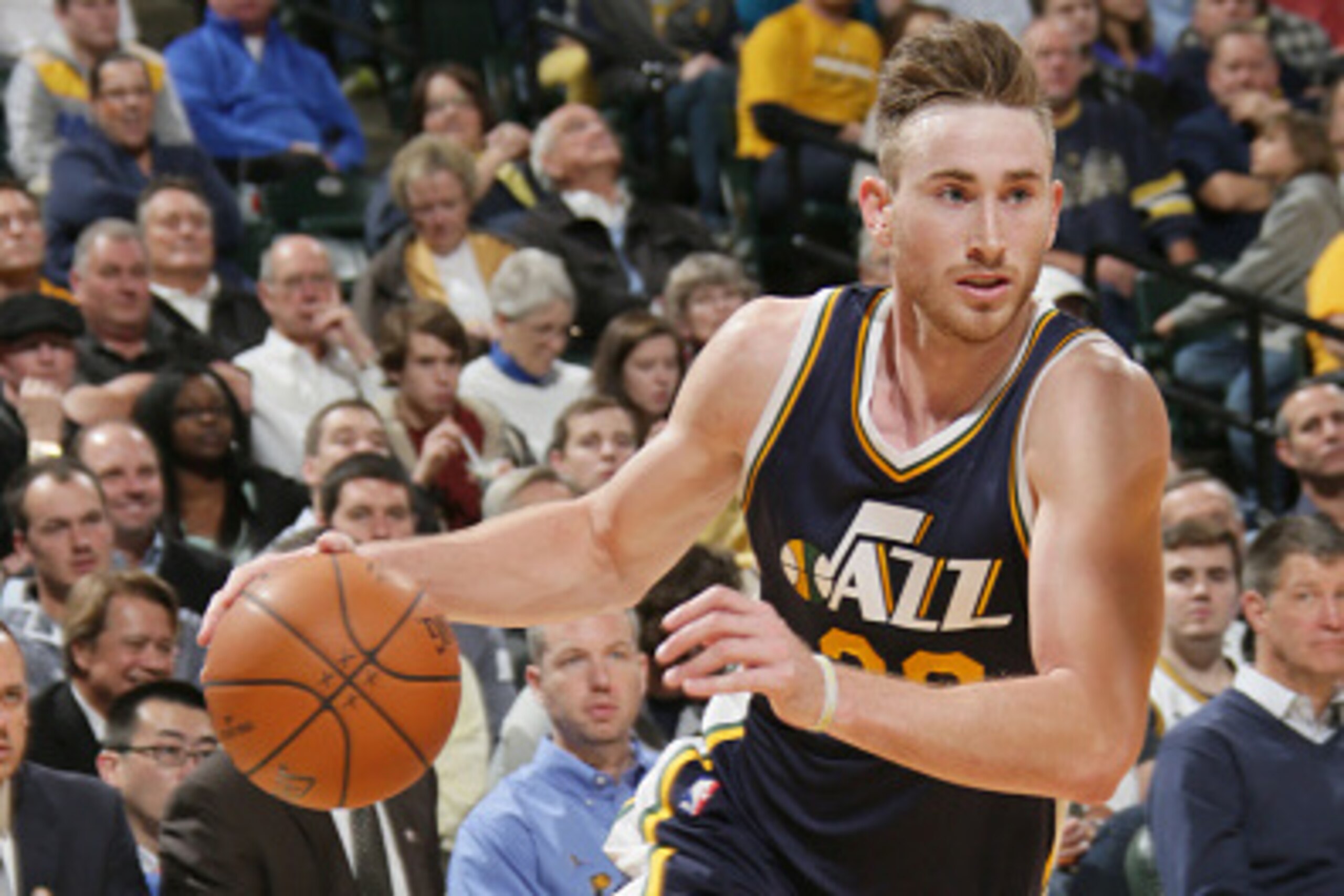
The next step, other than sustaining his current lights-out offensive output, is becoming a consistent plus-defender both on and off the ball. He's made strides mixed with mistakes over the past few seasons.
You'd like to think the bulk he added should pay off at the defensive end, particularly on the ball. Hayward recently had a signature stop in isolation against LeBron James in a face-up-and-attack situation.
He's really given off a different impression in 2014-15. You get the feeling Hayward is more of a hunter than the hunted, which is what he appeared to be in the past on a young, inexperienced team.
We're obviously still early in the season, but you can just feel the transformation happening.
I'll admit, I wasn't necessarily sold on Hayward as a max player either—even off a rookie deal—after last year. But between the way he's carried himself so far, the new NBA body and a more potent attack, it's been tough not to buy into Hayward's emergence as a star.
.jpg?w=2560 "Every Trade's Best Trade Asset 🔁")
.jpg?w=2560 "Insiders: Cowboys Overpaid for Porter")
.jpg?w=2560 "Top NFL Trade Targets")