Cleveland Browns Run Defense Taking Small Steps in the Right Direction
The Cleveland Browns' slide from the third-best rushing offense in the NFL to 15th has been widely publicized. People are looking for answers and wanting someone to take the blame.
But what about the rushing defense? True, it has struggled since Week 1. However, there are signs that the Browns are quietly cleaning up their act against the run.
They are tied for 30th in the NFL in rushing defense, allowing 139.6 yards per game. They are allowing 4.6 yards per carry, which is 29th in the league. Those numbers seem very alarming, but things might actually be looking up.
.jpg?w=2560 "Chargers Mack")
.jpg?w=2560 "Green Bay Steelers Football")
.jpg?w=2560 "Giants Football")
Over the last two weeks, the Browns have allowed just 92 rushing yards per game. Their YPC is still poor, but they're reducing the total yards against them despite still playing competitive football games.
Two weeks ago against the Oakland Raiders, they only allowed 59 yards on 12 carries to Darren McFadden. The Raiders rushed for just 71 total yards.
Last Sunday, the Browns held Bobby Rainey to 87 yards. Even though the Buccaneers had 113 total yards on the ground, that would still be good enough for the 15th-best run defense if that were the Browns' season average.
Another sign that the Browns' run defense isn’t so bad is the company it is keeping. The two teams that sandwich the Browns at the bottom of the league rankings are Green Bay and Cincinnati. They have a combined record of 10-5-1.
So maybe rushing defense isn’t as big a harbinger of poor play as once thought.
Either way, the Browns are trending in the right direction, and that is because of good assignment football. In the 3-4 defense, stopping the run is more about filling your gap and not being dominated in one-on-one matchups than scheme.
The Browns won’t be boasting a top-10 rushing defense anytime soon, but there are signs that things are getting better.
Let’s take a look at a few plays from Sunday which show the difference between the Browns' bad run defense and the Browns' good run defense.
Play 1
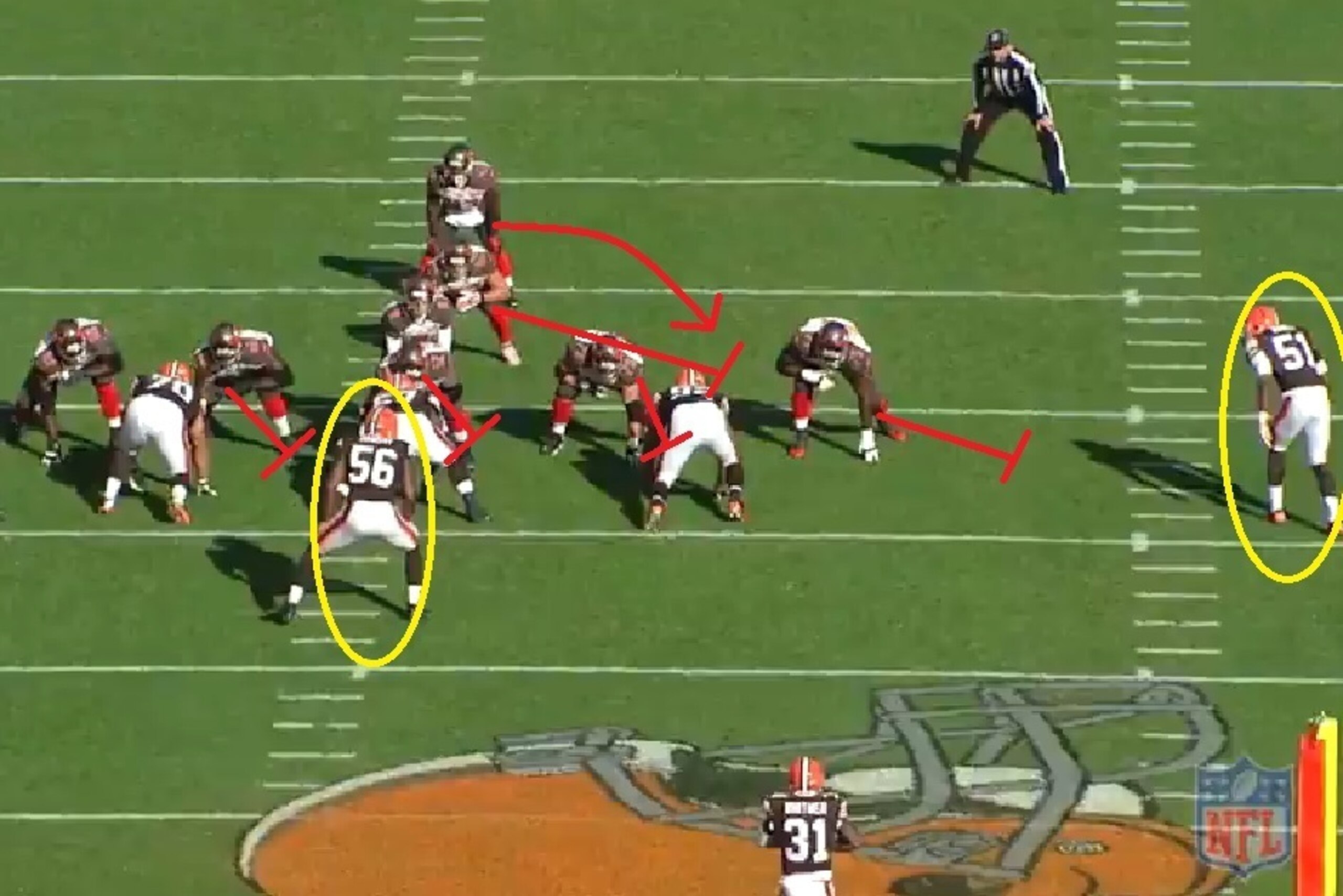
Here is an example of some of the bad with the Browns' rushing defense. So often, the difference between stopping a run play for a short gain and that same run breaking for a long gain is one or two players.
Can someone beat their block? Can someone maintain their gap and force the run where it doesn’t want to go?
On this play, Tampa’s offensive line will simply block down and have the fullback lead the running back into the B-gap. With the way the blocks are matching up, linebackers Karlos Dansby and Barkevious Mingo are the two guys who can disrupt the run most effectively.
If either of them can beat a block or stay in their gap, this run should be stopped for a short gain.
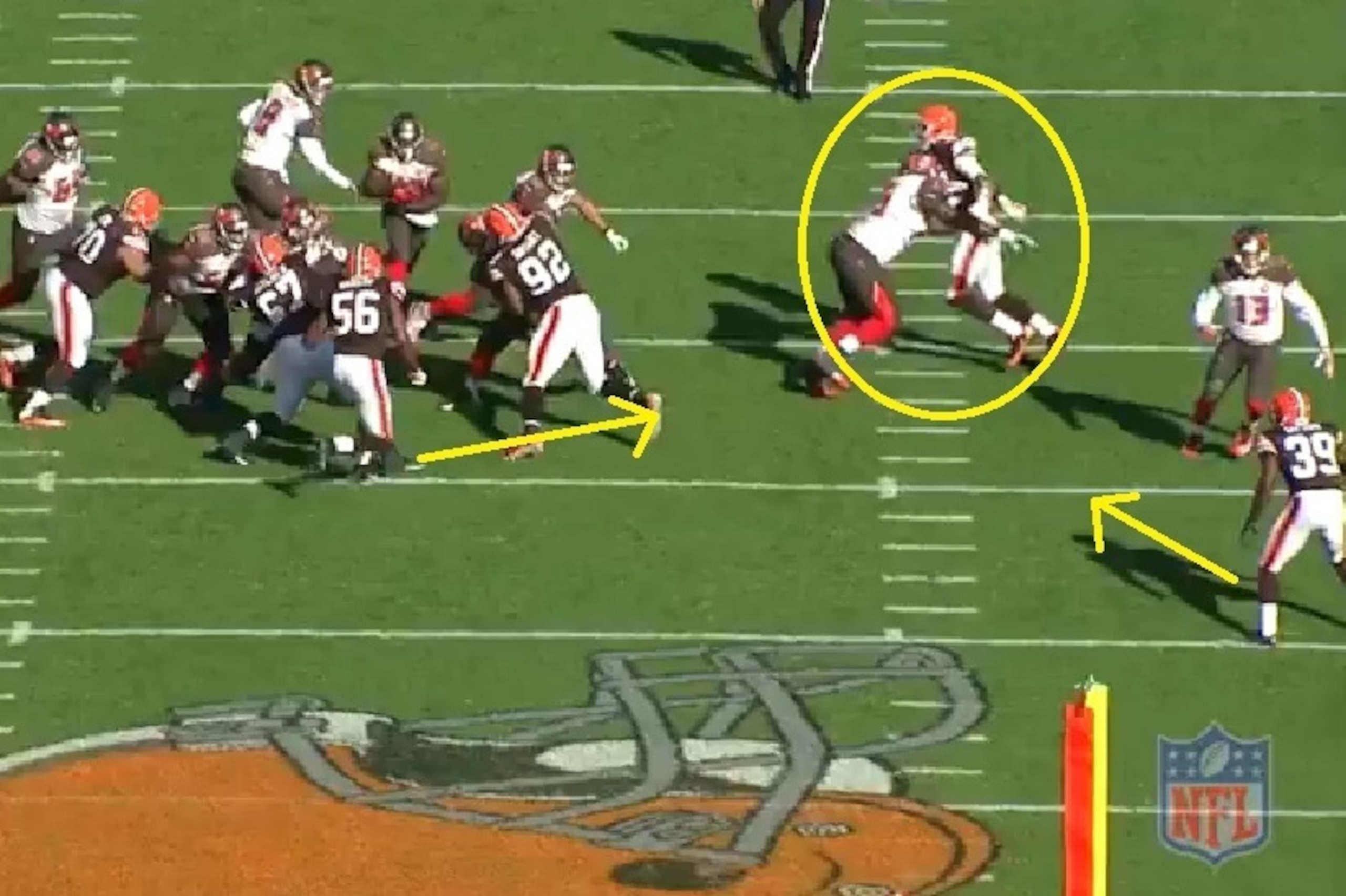
As the blockers match up against the defensive line, you can see Mingo get pushed out of his gap, opening a huge hole for Rainey to the outside. This leaves Dansby as the lone defender who can stop this run short.
If the play gets past him, then Rainey will be into the Browns' secondary and safety Tashaun Gipson will have to be the guy to make sure this does not become a touchdown.
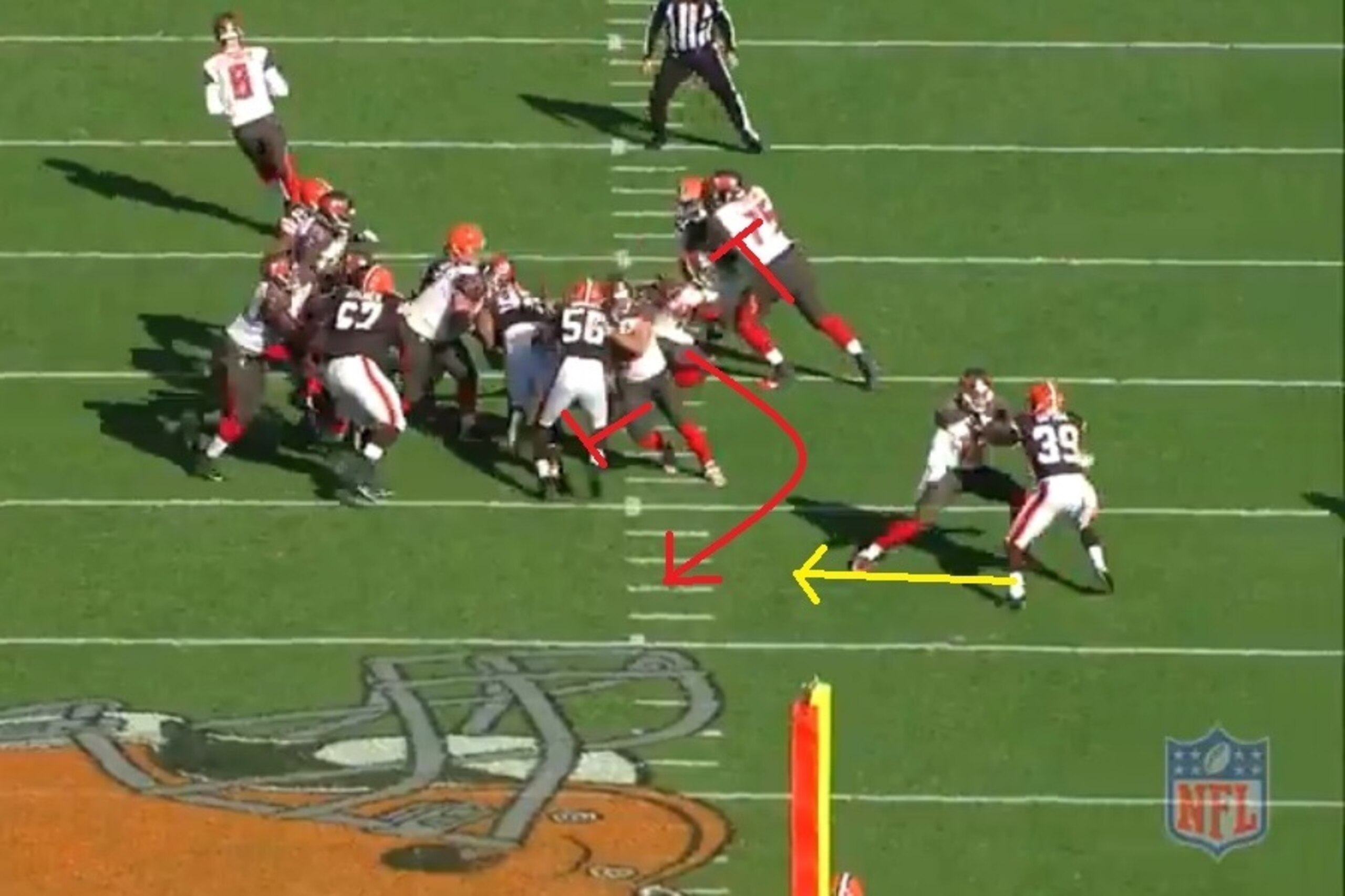
With Mingo pushed past the play and out of his gap, the fullback is able to focus solely on Dansby. He easily seals him out of the play and leaves Rainey with a huge hole to run through. Gipson is forced to make the tackle, but not before Rainey picks up nine yards.
If one player had beaten their block, this play goes for two or three yards instead of moving the chains and extending the drive for the Buccaneers.
Play 2

This play once again shows how the Browns have struggled so mightily against the run this season. This is a power-run play to the right side of their line. Tampa's center and left side will block out and the right tackle will push the defensive end toward the sideline.
The running back will follow the fullback through the hole, and because there are enough blockers for every defender, someone is going to have to beat their block and make a play.
No one can afford to be dominated and moved out of their gap.
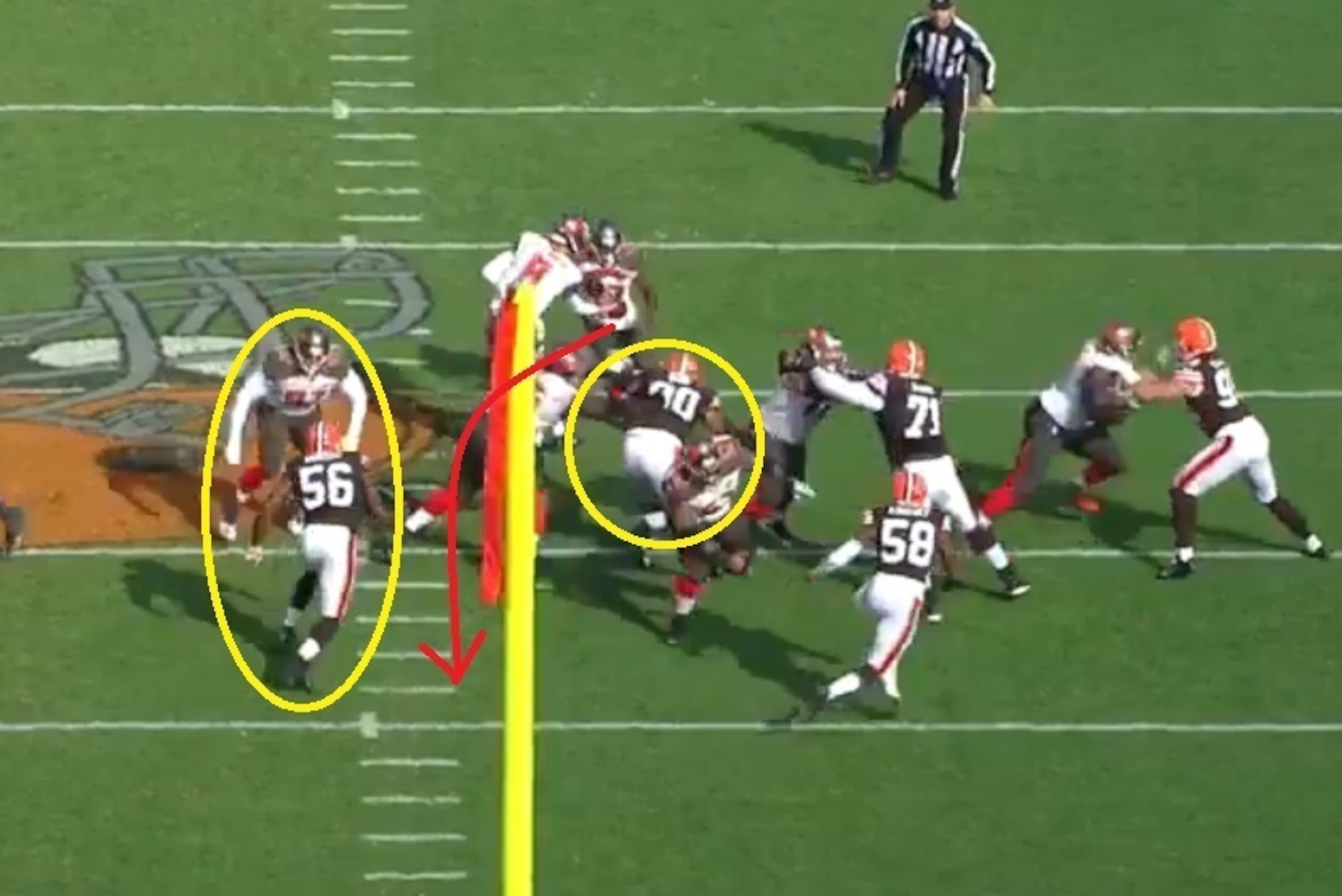
Right out of the gate, defensive lineman Billy Winn is tossed to the side, which opens up the hole for Rainey. This leaves Dansby one-on-one with the fullback, and there is a ton of room for Rainey to avoid that confrontation even if he does win that matchup.
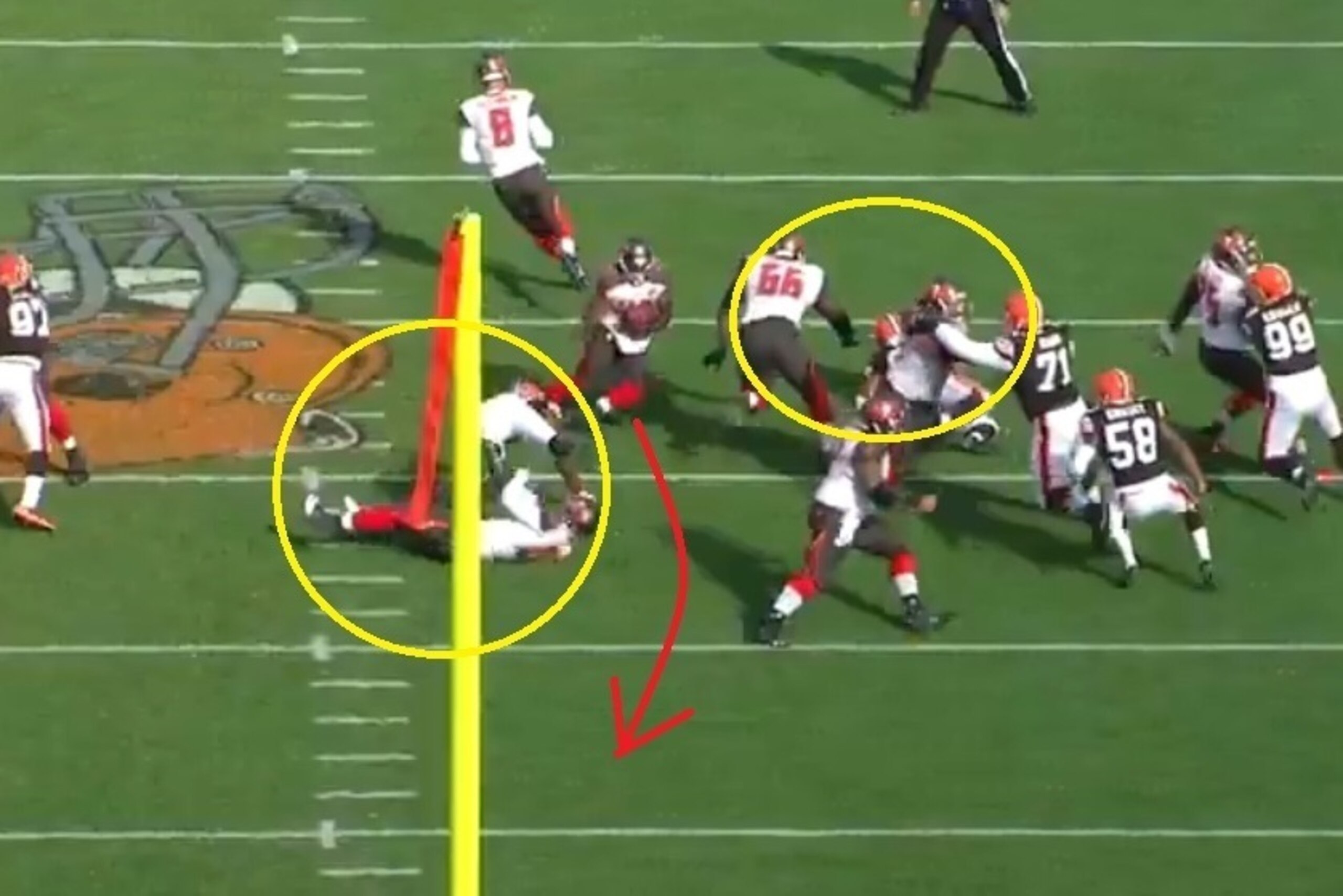
So how does a short run turn into a 21-yard gain? The defensive lineman and linebacker who are responsible for the gap which the run is designed to go through both get blocked to the ground—that’s how.
When both Winn and Dansby get blocked straight to the ground, it leaves Rainey with a huge area to run in. Allowing a shifty back like him to run into space and challenge secondary defenders one-on-one almost never ends in a positive result for the defense.
Play 3

Here is where the Browns are showing improvement. It is the small things which make the difference between a run defense being good and bad.
Once again, this is a power-run play where the Browns are matched up in even numbers. This time, they do a much better job of maintaining their gaps and forcing the run away from where it is designed to go.

The first thing you will notice in that the defensive line holds strong and does not get pushed backwards. On the left edge of the screen, linebacker Paul Kruger is not forced upfield and holds strong in his gap, which makes the wall formed by the defensive line even longer.
Not getting dominated on the line allows Craig Robertson to run free and track the run down the line of scrimmage. Now the Browns have three or four options to end this play rather than just one or two.

Both Kruger and Robertson beat their blocks and string the run out toward the sideline. There is no gap for Rainey to try and run through, so he will now have to try and beat four defenders to the edge, which is nearly impossible.
This is what a good run defense looks like. If everyone does their job and forms the wall that needs to be at the line of scrimmage, those yards-per-game numbers should continue to fall.
In the first half, it looked as though Rainey was going to have a huge day, but he ended up falling well short of the 100-yard mark. Tampa Bay ran the ball just four times for 17 yards from the 4:02 mark of the third quarter to the end of the game.
Part of that was because the Browns were playing the run a bit better, but part of that was also because the Buccaneers inexplicably abandoned the run in a tight ballgame.
Either way, the Browns are showing slight signs of improvement in their run defense, and that’s about all you can ask for.
Anything is better than the beatings the Browns’ run defense has taken so far this season.
.jpg?w=2560 "Seahawks Cardinals Football")
.jpg?w=2560 "Commanders Cowboys Football")